








✓ Medically reviewed by · Last reviewed: May 2026
Pharmacy Researcher · 8 years experience
Pharmacy researcher with 8 years reviewing clinical drug information, generic formulation equivalence, and international pharmaceutical standards. Focuses on patient-facing accuracy in medication education.
meloxicam vs ibuprofen — Meloxicam vs Ibuprofen: 7 Key Differences in Pain Relief & Safety. Read on for an evidence-backed guide covering everything you need to know.
Key Takeaways
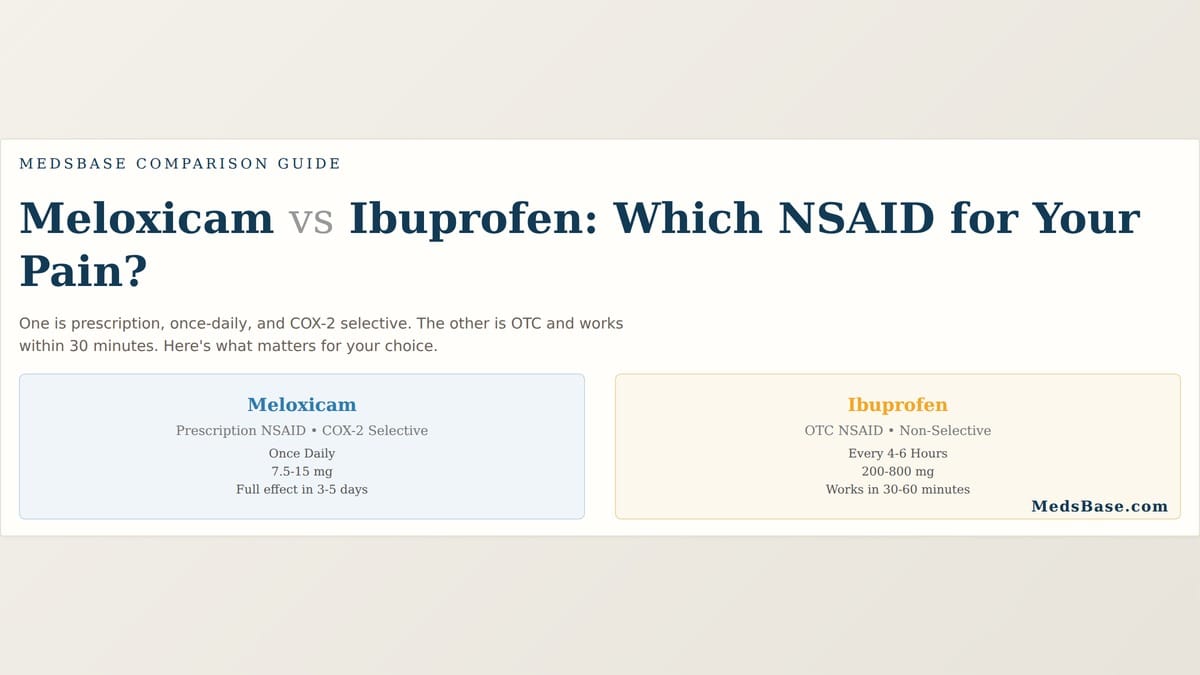
- Meloxicam is a prescription-only, COX-2-preferential NSAID taken once daily — ibuprofen is an OTC, non-selective NSAID taken every 4–6 hours
- The biggest practical difference: meloxicam is associated with lower gastrointestinal risk than ibuprofen — but this advantage narrows at higher doses and is not a free pass
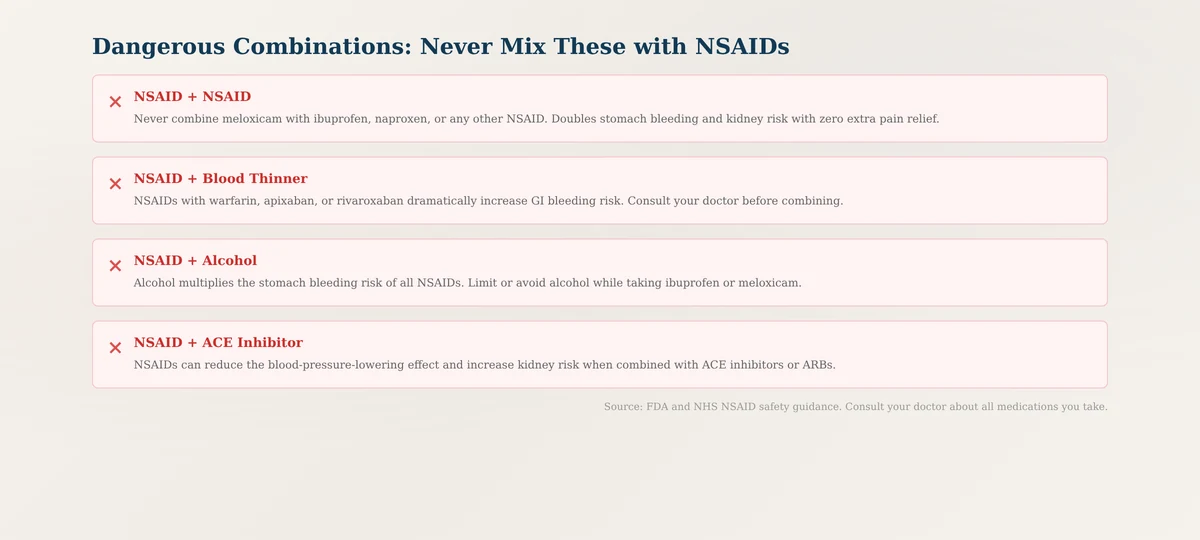
- One dangerous thing many patients do not realise: you CANNOT take meloxicam and ibuprofen together — combining NSAIDs multiplies stomach bleeding and kidney risk without improving pain relief
- Meloxicam is not simply “stronger ibuprofen” — the drugs have different COX selectivity profiles, half-lives, and ideal patient populations
- For occasional acute pain (headaches, menstrual cramps, sprains), ibuprofen’s OTC access and rapid onset make it the more practical choice. For chronic daily pain (osteoarthritis, rheumatoid arthritis), meloxicam’s once-daily dosing makes adherence far easier
Your knee has been aching all week. You have tried ibuprofen — it helps for about four hours, then the pain creeps back. Someone mentions meloxicam, a prescription NSAID you take just once a day. You wonder: is it simply stronger ibuprofen in a different box? Or is there a real reason one requires a prescription and the other sits on a supermarket shelf?
The answer is not about strength — it is about selectivity. By the end of this article, you will understand exactly how meloxicam and ibuprofen differ at the molecular level, which one is safer for your stomach, which fits your pain pattern better, and the one combination you must never attempt.
What Are Meloxicam and Ibuprofen?
Meloxicam and ibuprofen both belong to the non-steroidal anti-inflammatory drug (NSAID) class — see the NHS NSAIDs overview. They reduce pain, inflammation, and fever by blocking cyclooxygenase (COX) enzymes. But they do so with different selectivity, which changes their side effect profiles, dosing schedules, and ideal patient populations.
Quick Answer: Meloxicam is a prescription COX-2-preferential NSAID with a long half-life (~20 hours), taken once daily. Ibuprofen is an over-the-counter non-selective NSAID with a short half-life (~2 hours), taken every 4–6 hours. Meloxicam is associated with lower gastrointestinal side effects but similar cardiovascular risk at equivalent anti-inflammatory doses.
Ibuprofen was first patented in 1961 and became available OTC in the US in 1984. It is one of the most widely used medications in the world — the MedlinePlus ibuprofen guide provides full prescribing information. Meloxicam was developed later (patented in 1977, FDA-approved in 2000) — see the MedlinePlus meloxicam reference — as part of a deliberate effort to create NSAIDs with better gastrointestinal safety by selectively targeting COX-2 over COX-1.
How Do NSAIDs Work? COX-1 vs COX-2
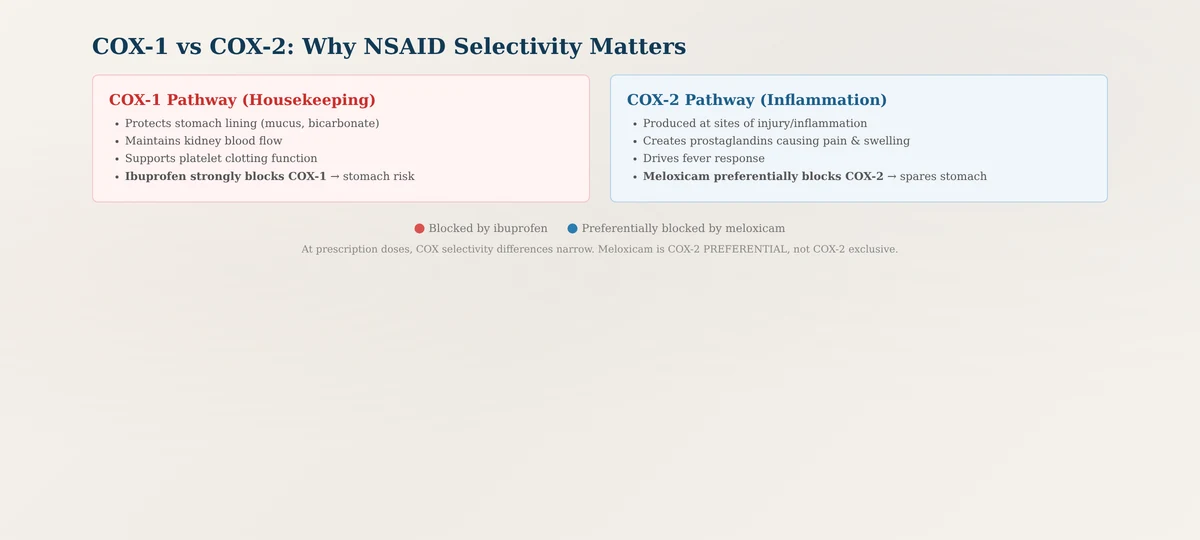
To understand why meloxicam and ibuprofen differ, you need to understand the two COX enzymes — because this is where the differences actually come from.
COX-1 is the “housekeeping” enzyme. It is present in most tissues all the time and produces prostaglandins that protect the stomach lining, support kidney blood flow, and help platelets clot. Block COX-1, and you lose these protective functions — which is why non-selective NSAIDs can cause stomach ulcers and bleeding.
COX-2 is the “inflammation” enzyme. It is produced mainly at sites of injury or inflammation and makes prostaglandins that cause pain, swelling, and fever. Block COX-2, and you reduce inflammation and pain.
Ibuprofen blocks both COX-1 and COX-2 roughly equally — it is non-selective. This means it reduces pain effectively but also interferes with the stomach’s protective lining at anti-inflammatory doses.
Meloxicam preferentially blocks COX-2 at lower doses (7.5 mg/day), with COX-1 inhibition increasing at higher doses (15 mg/day). This “COX-2 selectivity” is the basis for its lower reported rate of gastrointestinal side effects — but the selectivity is relative, not absolute. At the maximum 15 mg dose, meloxicam’s COX-1 inhibition becomes more significant.
Research Spotlight — Understanding COX Selectivity
This selectivity ratio is the thesis behind meloxicam: enough COX-2 inhibition to reduce inflammation, with enough COX-1 spared to protect the stomach. It is not a perfect separation — but it is a clinically meaningful one.
7 Key Differences Between Meloxicam and Ibuprofen
1. Prescription Status
Ibuprofen is available OTC in 200 mg tablets (brand names include Advil, Motrin). Prescription-strength ibuprofen (400 mg, 600 mg, 800 mg) requires a prescription. Meloxicam is a prescription-only medication in all doses.
2. COX Selectivity
This is the fundamental pharmacological difference. Meloxicam is COX-2-preferential; ibuprofen is non-selective. This affects everything downstream: stomach risk, platelet function, and dosing rationale.
3. Half-Life and Dosing Frequency
Meloxicam has a half-life of approximately 20 hours, meaning it is taken once daily. Ibuprofen has a half-life of approximately 2 hours, requiring dosing every 4–6 hours for continuous effect. For chronic daily pain, the difference in adherence between a once-daily pill and a 3–4× daily schedule is substantial.
4. Onset of Action
Ibuprofen reaches peak plasma concentration in 1–2 hours, with pain relief often noticeable within 30 minutes. Meloxicam reaches peak concentration in 4–5 hours, with full analgesic effect taking several days of consistent dosing. For acute pain (headache, sprain, post-surgical), ibuprofen’s speed is a clear advantage.
5. Duration of Effect
The corollary of half-life: meloxicam provides steady, 24-hour pain relief with once-daily dosing. Ibuprofen’s effect lasts 4–8 hours per dose. For chronic conditions like osteoarthritis where steady-state pain control matters, meloxicam’s pharmacokinetic profile is theoretically superior.
6. Gastrointestinal Safety
Multiple studies and meta-analyses report lower rates of GI ulcers, bleeding, and perforation with meloxicam compared to non-selective NSAIDs at equivalent anti-inflammatory doses. This is the primary clinical reason to choose meloxicam over ibuprofen when long-term NSAID therapy is needed.
7. Platelet Effect and Bleeding Risk
Ibuprofen reversibly inhibits platelet COX-1, causing a temporary anti-platelet effect lasting roughly 24 hours after the last dose. Meloxicam, at lower doses, has minimal effect on platelets. This difference matters for patients with bleeding disorders, those undergoing surgery, or those taking anticoagulants.
Side Effect Profile Comparison
| Side Effect | Meloxicam Rate | Ibuprofen Rate | Severity | What To Do |
|---|---|---|---|---|
| Stomach upset / dyspepsia | 5–10% | 10–20% | Mild-moderate | Take with food; consider PPI |
| Gastric ulcer | 0.5–1% | 1–3% (chronic use) | Moderate-serious | Stop NSAID; see doctor |
| GI bleeding | <0.5% | 0.5–2% (chronic, high-dose) | Serious | Emergency — seek immediate care |
| Kidney function reduction | 1–3% (at-risk patients) | 1–5% (at-risk) | Moderate-serious | Monitor kidney function; stop if eGFR drops |
| Blood pressure increase | 2–5 mmHg average | 2–5 mmHg average | Mild-moderate | Monitor BP; consider alternative if uncontrolled |
| Cardiovascular events (chronic use) | Small increased risk | Small increased risk | Serious | Minimise dose/duration; avoid if high CV risk |
| Dizziness / headache | 2–5% | 3–8% | Mild | Usually transient |
| Rash | <2% | <2% | Mild | Stop if severe or blistering |
Q: Who Is This For? / Who Should Avoid It?
A:
- Meloxicam is particularly suited for: Chronic osteoarthritis pain, rheumatoid arthritis, ankylosing spondylitis, patients who have experienced GI side effects with ibuprofen or naproxen, and anyone who strongly prefers once-daily dosing.
- Ibuprofen is particularly suited for: Acute pain (headache, menstrual cramps, dental pain, sprains/strains), fever reduction, short-term use (<10 days), and situations where OTC access is needed.
- Who should avoid ALL NSAIDs (meloxicam and ibuprofen): People with active peptic ulcer disease or GI bleeding, severe heart failure, advanced chronic kidney disease (eGFR <30), known aspirin/NSAID allergy, third trimester of pregnancy, or those taking anticoagulants without close monitoring.
- Who should prefer ibuprofen over meloxicam: People with sulfonamide allergy (meloxicam contains a sulfonamide moiety — rare cross-reactivity), those needing rapid pain relief for acute episodes, and those where cost/OTC access is a priority.
- Who should prefer meloxicam over ibuprofen: People needing chronic daily NSAID therapy, those with GI risk factors (age >65, prior ulcer, concurrent steroid use), and those who struggle with multi-dose medication schedules.
Safety: Cardiovascular, Kidney, and Stomach Risks
Cardiovascular Risk. All NSAIDs carry a small but real increase in the risk of heart attack and stroke, particularly with prolonged use at high doses. The risk is dose- and duration-dependent. Meloxicam, as a COX-2-preferential NSAID, does not appear to carry the same elevated cardiovascular risk as pure COX-2 inhibitors (coxibs), but the FDA requires the same boxed warning for all non-aspirin NSAIDs. The practical advice: use the lowest effective dose for the shortest necessary duration.
Kidney Risk. NSAIDs reduce blood flow to the kidneys by inhibiting prostaglandin-mediated vasodilation. This is usually clinically silent in healthy kidneys but can cause acute kidney injury in people with pre-existing kidney disease, dehydration, heart failure, or those taking ACE inhibitors, ARBs, or diuretics. The risk is similar between meloxicam and ibuprofen at equivalent anti-inflammatory doses.
Stomach Risk. This is where the drugs genuinely differ. Non-selective NSAIDs like ibuprofen carry a higher risk of gastric erosion, ulceration, and bleeding because they inhibit COX-1 in the stomach lining. Taking ibuprofen with food helps but does not eliminate this risk. Meloxicam’s COX-2 selectivity translates to a measurable reduction in GI adverse events — a 2015 Cochrane review of 29 studies found approximately 30% fewer GI complications with meloxicam compared to non-selective NSAIDs, though the absolute risk reduction was modest in low-risk patients.
The Triple Whammy. A dangerous combination that nephrologists warn about: NSAID + ACE inhibitor (or ARB) + diuretic. This combination can precipitate acute kidney failure, particularly in older adults or those who are volume-depleted. If you take blood pressure medication, always discuss NSAID use with your doctor.
Who Should NOT Take Each — And What to Take Instead
| Contraindication | Meloxicam Safe? | Ibuprofen Safe? | Alternative |
|---|---|---|---|
| Active GI ulcer/bleeding | No | No | Paracetamol, topical NSAID, or opioid (short-term, supervised) |
| eGFR <30 mL/min | No | No | Paracetamol; consult nephrologist |
| Severe heart failure | No | No | Paracetamol; non-pharmacological pain management |
| Pregnancy (3rd trimester) | No — may cause premature ductus closure | No — same risk | Paracetamol (preferred); consult obstetrician |
| Breastfeeding | Compatible (low milk levels) | Compatible (low milk levels) | Either is acceptable for short-term use |
| Aspirin allergy / asthma triad | Avoid (cross-reactivity possible) | Avoid (cross-reactivity possible) | Paracetamol; consult allergist |
| On warfarin or DOAC | Significant GI bleeding risk | Significant GI bleeding risk | Paracetamol; if NSAID unavoidable, add PPI and monitor INR closely |
| Sulfonamide allergy | Caution (rare cross-reactivity) | Safe | Ibuprofen preferred if only diclofenac/meloxicam/Piroxicam avoided |
Meloxicam vs Ibuprofen for Specific Conditions
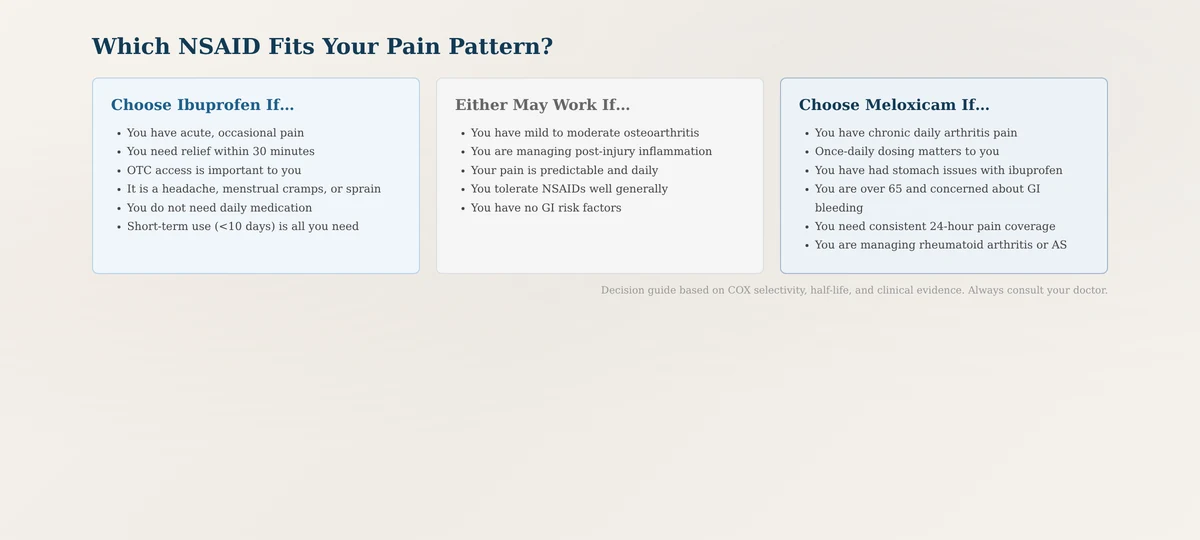
Osteoarthritis. Meloxicam is preferred for chronic OA pain because once-daily dosing improves adherence and it causes fewer GI complications with long-term use. Clinical trials show meloxicam 7.5–15 mg daily provides roughly equivalent pain relief to ibuprofen 2,400 mg/day in OA, with lower rates of GI adverse events.
Rheumatoid Arthritis. Meloxicam is commonly used in RA for the same reasons as OA — chronic daily dosing, better GI profile with long-term use. Disease-modifying antirheumatic drugs (DMARDs) are the primary RA treatment; NSAIDs are adjunctive for symptom relief.
Acute Pain (sprains, dental pain, post-operative). Ibuprofen is strongly preferred. Its rapid onset (30–60 minutes) and short half-life allow flexible dosing matched to pain intensity. Meloxicam’s slow onset makes it impractical for acute pain.
Dysmenorrhea (menstrual cramps). Ibuprofen is first-line. Its anti-prostaglandin effect addresses the underlying mechanism of menstrual pain. Meloxicam can work for dysmenorrhea but is rarely prescribed for this indication given ibuprofen’s OTC availability and effectiveness.
Gout Flare. Neither meloxicam nor ibuprofen is the first-line NSAID for acute gout (indomethacin, naproxen, or a COX-2 inhibitor are more commonly used). However, either can provide relief if other options are unavailable — at high doses and for short duration.
Headache / Migraine. Ibuprofen 400–800 mg is effective for tension headache and mild migraine. Meloxicam is not indicated for headache due to its slow onset.
Practical Guidance: How to Use Each Safely
If you are prescribed meloxicam:
- Take it once daily with food — same time each day helps build the habit
- Start with the lowest effective dose (7.5 mg daily); increase to 15 mg only if needed
- Do not expect immediate relief — full effect may take 3–5 days of consistent dosing
- Never take additional ibuprofen, naproxen, or aspirin for breakthrough pain — use paracetamol instead
- If you notice black/tarry stools, vomit that looks like coffee grounds, or severe stomach pain — stop immediately and seek medical care (signs of GI bleeding)
- Have your kidney function and blood pressure checked periodically if using long-term
If you are using ibuprofen (OTC or prescription):
- Take with food or milk to reduce stomach irritation
- OTC: do not exceed 1,200 mg/day without doctor supervision. Prescription: do not exceed 3,200 mg/day
- For acute pain, use the shortest effective duration — ideally less than 10 days
- If pain persists beyond 10 days, see a doctor rather than continuing OTC NSAIDs indefinitely
- Avoid alcohol — it multiplies the stomach bleeding risk
- If you take low-dose aspirin for heart protection, separate ibuprofen from aspirin by at least 30 minutes (or take aspirin first) — ibuprofen can interfere with aspirin’s anti-platelet effect
Related Reading
- Aleve vs Ibuprofen: Which Works Better?
- Gout attack treatment
- Wondering about topical alternatives? Explore: Pain Management
Frequently Asked Questions
Q: Which is better, meloxicam or ibuprofen?
A: Neither is universally “better” — they serve different clinical scenarios. Meloxicam is preferred for chronic daily pain (osteoarthritis, rheumatoid arthritis) because of once-daily dosing, lower GI risk with long-term use, and better adherence. Ibuprofen is preferred for acute, short-term pain because of its rapid onset, OTC availability, and flexible dosing. The right choice depends on your pain pattern, stomach sensitivity, and whether you need OTC or prescription-strength relief.
Q: Is meloxicam stronger than ibuprofen?
A: At prescription doses, meloxicam 15 mg provides roughly equivalent anti-inflammatory pain relief to ibuprofen 2,400–3,200 mg/day — they are comparable, not stronger. The difference is not potency but COX-2 selectivity, half-life, and GI safety profile. For acute pain, ibuprofen’s rapid onset makes it feel “stronger” because relief comes faster.
Q: Can I take meloxicam and ibuprofen together?
A: No. Never combine meloxicam with ibuprofen — or with any other NSAID (including naproxen, diclofenac, aspirin at anti-inflammatory doses, or celecoxib). Combining NSAIDs does not improve pain relief but dramatically increases the risk of stomach ulcers, GI bleeding, and kidney injury. If meloxicam alone is insufficient, talk to your doctor about adding paracetamol or a non-NSAID pain management option.
Q: What is the difference between meloxicam and ibuprofen?
A: The fundamental difference is COX selectivity: ibuprofen blocks both COX-1 and COX-2 enzymes equally (non-selective), while meloxicam preferentially blocks COX-2 at lower doses (COX-2 selective). This selectivity makes meloxicam less likely to cause stomach ulcers and GI bleeding. Practical differences: meloxicam is prescription-only, taken once daily, and takes longer to start working. Ibuprofen is available OTC, taken every 4–6 hours, and works within 30–60 minutes.
Q: Which NSAID has the fewest side effects?
A: It depends on which side effects you are concerned about. Meloxicam causes fewer GI side effects (stomach ulcers, bleeding) than ibuprofen because of its COX-2 selectivity. Cardiovascular risk is similar between the two at equivalent anti-inflammatory doses. Ibuprofen, at OTC doses for short-term use, has a lower overall side effect burden simply because the dose is lower and duration is shorter. Topical NSAIDs (diclofenac gel) have the lowest systemic side-effect risk of all NSAID options because absorption is localised.
Q: Is meloxicam safer for the stomach than ibuprofen?
A: Yes — this is the most consistent finding across comparative studies. Meloxicam’s COX-2 selectivity means it inhibits the stomach-protective COX-1 enzyme less than ibuprofen does. At meloxicam 7.5 mg/day, the GI risk is measurably lower. At 15 mg/day, the selectivity narrows and the GI advantage is smaller — but still present in most studies. If you have GERD, prior ulcer history, or are over 65 with concerns about GI bleeding, the data favours meloxicam over ibuprofen for long-term use.
Q: Can I take meloxicam for a headache?
A: Meloxicam is not recommended for headache. Its slow onset (4–5 hours to peak concentration, and 3–5 days for full effect) makes it impractical for acute, episodic pain. Ibuprofen, with onset within 30–60 minutes, is a much better choice for headaches. Reserve meloxicam for chronic, continuous pain conditions where its pharmacokinetic profile (once-daily, steady-state relief) is an advantage.
Q: What are the long-term side effects of meloxicam?
A: With long-term use, all NSAIDs carry risks of: gastrointestinal ulceration and bleeding (lower with meloxicam than non-selective NSAIDs), kidney function decline (monitor annually), blood pressure elevation (check periodically), and a small increased cardiovascular risk (similar across NSAIDs). The key to safe long-term use: the lowest effective dose, regular monitoring of kidney function and blood pressure, and adding a proton pump inhibitor (PPI) if GI risk factors are present.
The Bottom Line
Meloxicam and ibuprofen share an NSAID class but differ at the molecular level in a way that matters clinically. Ibuprofen works quickly and flexibly — perfect for the headache that needs to be gone now, the sprained ankle, the three days of menstrual cramps. Meloxicam is built for the long haul — the osteoarthritic knee that aches every morning, the rheumatoid hands that need steady 24-hour coverage, the patient whose stomach told them to stop taking ibuprofen.
The decision between them is not about which drug is inherently “better.” It is about whether your pain is acute or chronic, whether you need OTC access or can work with a prescription, and whether your stomach and kidneys can tolerate one profile versus the other. Your doctor can help you match the drug to your situation.
If you are exploring pain management options, browse our anti-inflammatory and autoimmune care range or compare how meloxicam’s cousin, ibuprofen, stacks up against naproxen in our Aleve vs Ibuprofen guide.
Medical Disclaimer: This article is for informational purposes only and does not constitute medical advice. Meloxicam is a prescription medication. Ibuprofen is available over the counter but prescription doses require a doctor’s supervision. Never combine NSAIDs. Do not start, stop, or change any medication without consulting a qualified healthcare provider.

Written by
Sophie ChenPharmaceutical Content Researcher · 8 years experience
Sophie Chen is a pharmaceutical content researcher with 8 years covering generic medication access and clinical pharmacology. She specialises in international regulatory frameworks, bioequivalence standards, and patient-facing education on therapeutic drug classes. She is not a clinician.