








✓ Medically reviewed by · Last reviewed: May 2026
Pharmacy Researcher · 8 years experience
Pharmacy researcher with 8 years reviewing clinical drug information, generic formulation equivalence, and international pharmaceutical standards. Focuses on patient-facing accuracy in medication education.
methotrexate uses side effects — Methotrexate — Uses, Side Effects and Safety Guide. Read on for an evidence-backed guide covering everything you need to know.
Key Takeaways
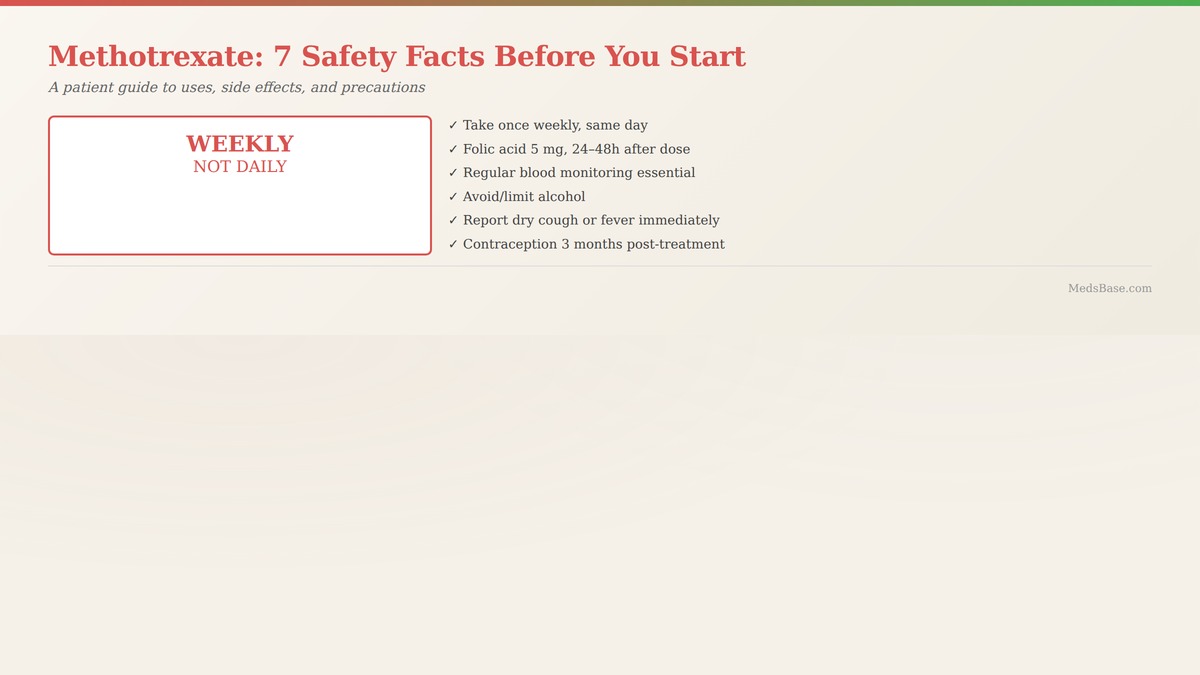
- Methotrexate is a disease-modifying antirheumatic drug (DMARD) taken once weekly, not daily — accidental daily dosing is a leading cause of methotrexate-related hospitalisations.
- Methotrexate uses side effects span from mild nausea and fatigue to rare but serious liver toxicity and lung inflammation, which is why regular blood monitoring is non-negotiable.
- Folic acid supplementation significantly reduces common adverse effects including mouth ulcers, nausea, and liver enzyme elevations without compromising efficacy.
- Methotrexate treats rheumatoid arthritis, psoriasis, psoriatic arthritis, inflammatory bowel disease, and certain cancers — but dosing protocols differ dramatically between low-dose autoimmune use and high-dose oncology protocols.
- Alcohol and certain antibiotics (especially trimethoprim) can dangerously amplify methotrexate toxicity and should be discussed with your prescribing doctor.
Table of Contents
- What Is Methotrexate? Uses and Side Effects at a Glance
- Key Methotrexate Uses Side Effects by Condition
- Methotrexate Uses Side Effects — The Complete Safety Profile
- The Weekly Dosing Mistake That Can Be Fatal
- Methotrexate Uses Side Effects — Folic Acid and How It Helps
- Important Drug Interactions With Methotrexate
- What the Research Says About Methotrexate Uses Side Effects
- Frequently Asked Questions About Methotrexate Uses Side Effects
- The Bottom Line
Methotrexate Uses and Side Effects: 7 Essential Facts Before You Start Treatment
Starting methotrexate can feel overwhelming. Between the weekly dosing schedule, the blood tests, and the list of potential methotrexate uses side effects in the patient information leaflet, it’s easy to wonder whether the benefits justify the vigilance required. The short answer is that for most people with moderate to severe autoimmune disease, they do — but only when you understand how to take this medication safely. Methotrexate has been prescribed since the 1950s and remains a first-line DMARD globally because it works, and when monitored properly, serious methotrexate uses side effects are uncommon. This guide covers the seven facts you need to know before your first dose.
What Is Methotrexate? Uses and Side Effects at a Glance
Methotrexate is a disease-modifying antirheumatic drug (DMARD) that slows the overactive immune response in autoimmune conditions by inhibiting dihydrofolate reductase, an enzyme cells need to divide. At low doses it reduces joint damage in rheumatoid arthritis; at high doses it treats certain cancers. Key methotrexate uses side effects include nausea, mouth ulcers, liver enzyme changes, and — rarely — lung or bone marrow toxicity.
Methotrexate was originally developed as a chemotherapy agent in the 1950s, and at high doses it still serves that purpose. But the low-dose protocols used for autoimmune disease (typically 7.5 mg to 25 mg once weekly) work through a different mechanism. Rather than killing rapidly dividing cells, low-dose methotrexate increases adenosine release at sites of inflammation. Adenosine is a naturally occurring molecule with powerful anti-inflammatory properties, and this pathway explains why methotrexate takes 6 to 12 weeks to reach full effect — it gradually reshapes the inflammatory environment in your joints and skin rather than suppressing your immune system overnight.
The dual identity of methotrexate — low-dose immunomodulator versus high-dose chemotherapy — is central to understanding methotrexate uses side effects. The nausea, fatigue, and mouth sores that some patients experience at autoimmune doses are typically mild and manageable. The bone marrow suppression, severe mucositis, and organ toxicity seen in oncology are almost never encountered at doses prescribed for rheumatoid arthritis or psoriasis — provided you follow the weekly dosing schedule and attend blood monitoring appointments.
Key Methotrexate Uses Side Effects by Condition
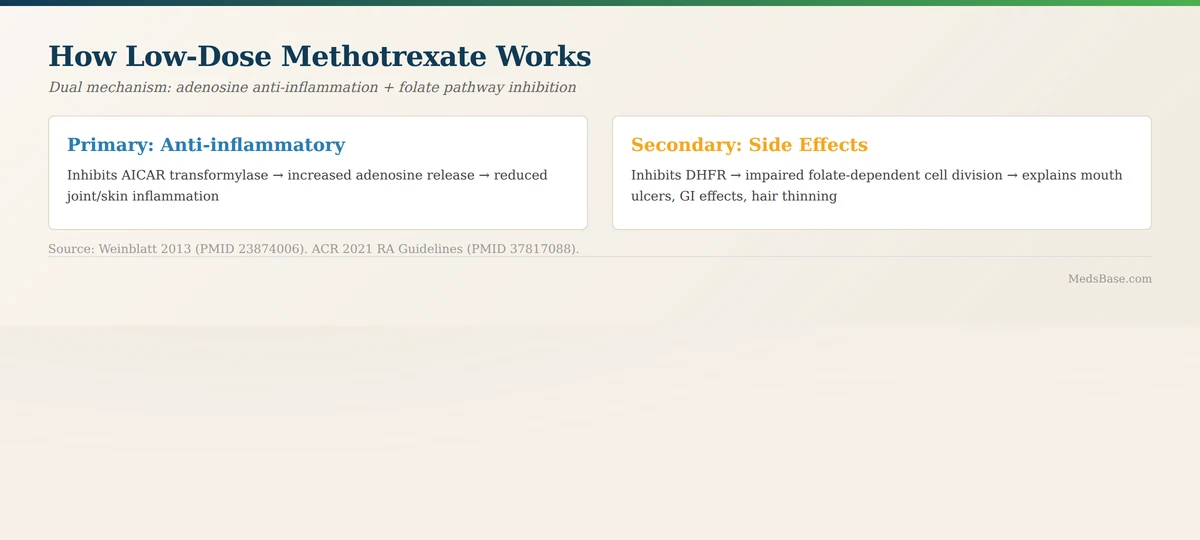
Low-dose methotrexate reduces inflammation by increasing adenosine not by suppressing the immune system.
The way methotrexate uses side effects manifest depends heavily on the condition being treated, the dose prescribed, and whether you’re taking it alongside other medications. Below is a breakdown by the most common indications. In every case, treatment should be initiated and monitored by a specialist familiar with your specific diagnosis.
Rheumatoid Arthritis (RA)
For rheumatoid arthritis, methotrexate is the anchor DMARD that most rheumatologists prescribe at diagnosis. Typical starting doses range from 7.5 mg to 15 mg once weekly, titrated to a maximum of 25 mg weekly depending on tolerance. The goal is to reduce joint inflammation, slow radiographic progression (visible bone and cartilage erosion on X-rays), and preserve long-term physical function.
In RA, the most common methotrexate uses side effects during the first few weeks include fatigue the day after dosing, mild nausea, and headache. These often improve after 4 to 8 weeks as your body adjusts. Your rheumatologist will monitor full blood counts, liver function, and kidney function every 4 to 12 weeks depending on stability. Many patients take methotrexate for years or decades — for those who tolerate it well, it remains one of the most effective long-term strategies for preventing joint destruction.
Psoriasis
Methotrexate is a longstanding systemic treatment for moderate to severe plaque psoriasis, particularly when topical treatments and phototherapy haven’t provided adequate control. Dosing follows the same weekly schedule as RA, starting at 7.5 mg to 15 mg weekly. The mechanism in psoriasis relates to methotrexate’s ability to slow the rapid skin-cell turnover that creates psoriatic plaques.
For psoriasis patients, methotrexate uses side effects worth watching include potential liver effects over the long term. Because psoriasis may require years of treatment, your dermatologist will pay attention to cumulative methotrexate exposure. Some guidelines recommend a liver biopsy after 3.5 to 4 grams cumulative dose, though non-invasive liver imaging (FibroScan) is increasingly used instead. The risk of significant fibrosis at low cumulative doses in patients without pre-existing risk factors appears to be low, but regular monitoring remains essential.
Psoriatic Arthritis
Psoriatic arthritis combines joint inflammation with the skin manifestations of psoriasis, making methotrexate a logical treatment that addresses both dimensions. Dosing mirrors RA protocols, and treatment goals are similar — reduce joint pain and swelling, prevent erosive damage, and clear or significantly improve skin plaques. Many patients respond well to methotrexate monotherapy, though some require addition of a biologic agent for optimal control.
When managing methotrexate uses side effects in psoriatic arthritis, clinicians watch for the same laboratory changes as in RA — liver enzymes, blood counts, and kidney function — while monitoring for paradoxical worsening of psoriasis, an uncommon but recognised reaction. If your skin flares after starting treatment, report it to your dermatologist or rheumatologist rather than stopping the medication on your own.
Inflammatory Bowel Disease (IBD)
Methotrexate is used as a second-line immunomodulator in Crohn’s disease and, less commonly, ulcerative colitis. It is typically reserved for patients who have not tolerated or responded to thiopurines (azathioprine or mercaptopurine) or anti-TNF agents. Dosing usually falls in the 15 mg to 25 mg weekly range, either orally or by subcutaneous injection — the injectable form tends to have better bioavailability for inducing remission.
For IBD patients, methotrexate uses side effects including nausea can be particularly challenging since gastrointestinal symptoms are already part of the underlying disease. Subcutaneous administration often helps by reducing GI exposure. As with other indications, folic acid co-prescription and regular blood monitoring are standard. Methotrexate should be discontinued at least three months before planned conception for both men and women due to its known teratogenicity.
Ectopic Pregnancy
Methotrexate is used as a one-time, low-dose medical treatment for unruptured ectopic pregnancy — a completely different context from chronic autoimmune use. A single intramuscular injection (typically 50 mg/m² of body surface area) terminates the ectopic pregnancy by stopping the rapid cell division of trophoblastic tissue. This is a one-off medical intervention, not ongoing therapy, and the methotrexate uses side effects in this setting are usually limited to transient abdominal cramping, fatigue, and nausea for a few days post-injection.
Women receiving methotrexate for ectopic pregnancy should avoid alcohol, folic acid supplements, and NSAIDs until their hCG levels return to zero, as these can interfere with treatment. They should also avoid becoming pregnant for at least three months after the injection.
Cancer (High-Dose Protocols)
High-dose methotrexate (typically 500 mg/m² to 12 g/m² per cycle, administered intravenously) is used in oncology for certain leukaemias, lymphomas, osteosarcoma, and breast cancer. This is a fundamentally different treatment paradigm from low-dose autoimmune therapy, and the methotrexate uses side effects at these doses are far more intensive — requiring inpatient admission, aggressive hydration, urine alkalinisation, and leucovorin (folinic acid) rescue to prevent life-threatening bone marrow and mucosal toxicity.
If you are reading this guide because you or a loved one has been prescribed high-dose methotrexate for cancer, the information on this page about weekly dosing, folic acid timing, and low-dose monitoring does not apply to your situation. High-dose methotrexate is administered under strict oncology protocols with continuous monitoring.
Who This Treatment Is For
- Adults with moderate to severe rheumatoid arthritis not adequately controlled with NSAIDs alone
- Patients with extensive plaque psoriasis unresponsive to topical therapy and phototherapy
- Individuals with active psoriatic arthritis affecting multiple joints
- Selected patients with Crohn’s disease who have not responded to or tolerated first-line immunomodulators
Who Should Generally Avoid Methotrexate
- Women who are pregnant, planning pregnancy within three months, or breastfeeding
- Individuals with severe liver disease or chronic hepatitis B or C
- Patients with significantly impaired kidney function (creatinine clearance below 30 mL/min)
- People with active, serious infections or severe immunodeficiency
- Those with known hypersensitivity to methotrexate or any formulation excipient
Methotrexate Uses Side Effects — The Complete Safety Profile
Understanding methotrexate uses side effects means knowing what’s common and manageable versus what requires urgent medical attention. The table below categorises the adverse effects most frequently encountered at low-dose autoimmune protocols. This information does not replace individualised medical advice from your prescribing specialist.
| Side Effect | Approximate Frequency | Severity | What to Do |
|---|---|---|---|
| Nausea and gastrointestinal discomfort | 20–40% of patients | Mild to moderate | Take with food or at bedtime; ask about folic acid adjustment or switching to subcutaneous injection |
| Fatigue (“methotrexate hangover”) | 15–25% of patients | Mild to moderate | Take dose the evening before a rest day; ensure adequate hydration; discuss with your doctor if persistent |
| Oral mucositis (mouth sores/ulcers) | 10–20% of patients | Mild to moderate | Folic acid supplementation; maintain good oral hygiene; report persistent or severe ulcers to your doctor |
| Mild hair thinning | 5–10% of patients | Mild | Usually temporary and reversible; folic acid may help; discuss if distressing |
| Liver enzyme elevation (transaminitis) | 10–30% of patients (mild) | Mild to potentially serious | Detected by routine blood monitoring; temporary dose adjustment or folic acid increase often resolves; avoid alcohol |
| Pneumonitis (lung inflammation) | 1–5% of patients | Potentially serious | Urgent: Report any new dry cough, shortness of breath, or fever immediately to your doctor — do not wait for your next scheduled appointment |
| Bone marrow suppression | 1–3% of patients | Potentially serious | Detected on routine blood counts; report unusual bruising, bleeding, sore throat, or fever promptly |
| Increased infection risk | Variable (dose-dependent) | Mild to serious | Report any fever or signs of infection to your doctor; ensure vaccinations are up to date before starting treatment (live vaccines are contraindicated) |
This side-effect profile highlights why understanding methotrexate uses side effects goes hand in hand with regular monitoring. The most serious adverse effects — pneumonitis and bone marrow suppression — are rare at low doses but can develop rapidly. Attend every scheduled blood test and report new symptoms promptly to your rheumatologist rather than waiting for your next review.
It’s also worth noting that many patients experience no significant side effects. Large observational studies suggest that approximately 30–50% of patients on low-dose methotrexate report only minimal adverse effects beyond the first few weeks. Key variables influencing tolerability include folate status, hydration, dose, route of administration (subcutaneous often causes less nausea), and whether you avoid alcohol and interacting medications.
The Weekly Dosing Mistake That Can Be Fatal
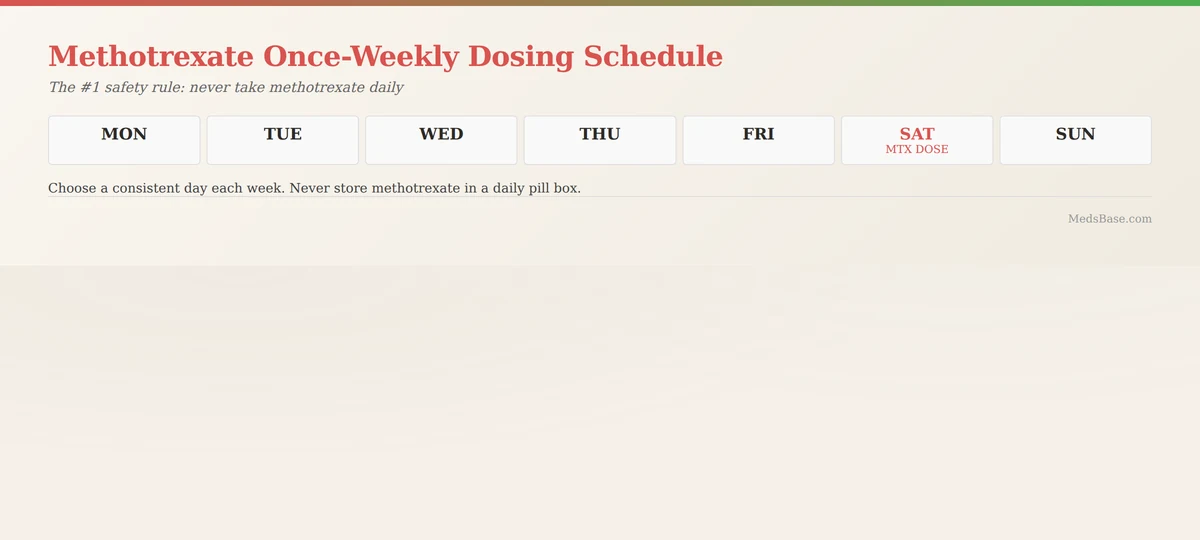
Choose a consistent day each week. Many patients pick Saturday so they can rest Sunday.
Of all the methotrexate uses side effects discussed in this guide, the one that deserves the most emphasis has nothing to do with the drug’s pharmacology — it’s about how you take it. Methotrexate for autoimmune disease is taken once weekly, not daily. Taking methotrexate daily, even at the low doses used for rheumatoid arthritis or psoriasis, can cause severe bone marrow suppression, life-threatening mucositis, liver failure, and death. This is not a theoretical warning.
The Institute for Safe Medication Practices (ISMP) has repeatedly flagged methotrexate as a high-alert medication precisely because of fatal dosing errors. Between 2000 and 2020, regulatory agencies across multiple countries documented dozens of cases where patients — often older adults managing multiple medications — accidentally took methotrexate daily instead of weekly. In many of these cases, the outcome was fatal. The risk is compounded by the fact that methotrexate tablets look similar to many other once-daily medications, and some patients have been dispensed methotrexate without adequate counselling on the weekly schedule.
To protect yourself, establish a fixed weekly routine. Choose the same day every week — many patients pick Saturday so they can rest on Sunday if they experience post-dose fatigue — and use a pill organiser or phone reminder specifically labelled for your methotrexate day. Never store methotrexate tablets in a daily pill box alongside your other medications, as this creates exactly the kind of confusion that leads to accidental daily ingestion. If your pharmacy dispenses methotrexate in a container that looks similar to your daily medications, ask them to add a distinct label or use a different coloured bottle.
If you ever suspect you’ve taken an extra dose or have taken methotrexate on consecutive days, seek immediate medical attention — go to an emergency department and bring your medication. An antidote (folinic acid, also called leucovorin) exists and is most effective when administered promptly. This warning cannot be overstated: correct methotrexate dosing is literally a life-or-death matter, and every patient on this medication should understand why the weekly schedule is non-negotiable.
Methotrexate Uses Side Effects — Folic Acid and How It Helps
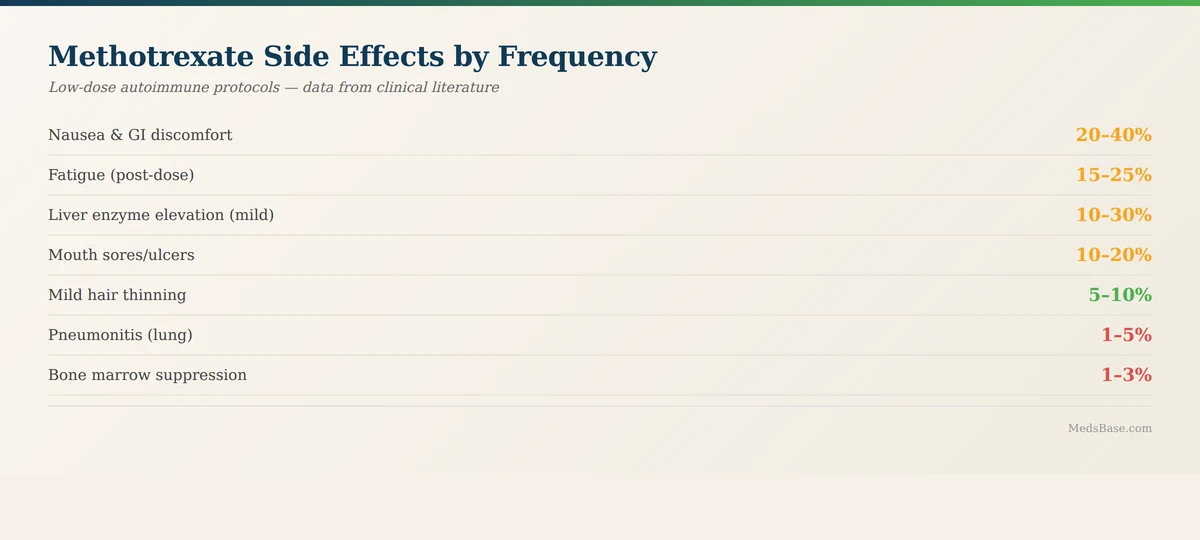
Most methotrexate side effects are mild to moderate. Serious adverse effects are rare at low doses.
If you’ve been prescribed methotrexate, your doctor has almost certainly also prescribed folic acid (or folinic acid). This isn’t optional — it’s a core part of the treatment protocol designed specifically to reduce methotrexate uses side effects without undermining the drug’s therapeutic effect. Here’s why it matters and how to take it correctly.
Methotrexate works in part by inhibiting dihydrofolate reductase (DHFR), the enzyme that converts dietary folate into its active form. This inhibition is responsible for both the anti-inflammatory effects (via adenosine) and many of the adverse effects (via impaired cell division in rapidly renewing tissues like the oral mucosa, gastrointestinal lining, and hair follicles). Supplementing with folic acid provides an alternative pathway for folate-dependent processes in normal tissues, effectively reducing the collateral damage while leaving the anti-inflammatory adenosine mechanism intact.
Clinical trials have consistently demonstrated that folic acid significantly reduces gastrointestinal methotrexate uses side effects including nausea, mouth ulcers, and abdominal pain. A meta-analysis in the Journal of Rheumatology found that patients taking folic acid had a 26% lower rate of gastrointestinal side effects and a 79% reduction in the likelihood of discontinuing methotrexate due to liver enzyme abnormalities.
The most common folic acid regimen is 5 mg once weekly, taken 24 to 48 hours after your methotrexate dose — not on the same day. While some protocols allow same-day folic acid (particularly at lower doses), the traditional guidance of separating the two by at least 24 hours stems from the theoretical concern that folate taken too close to methotrexate could interfere with efficacy. That concern has been challenged by more recent evidence, and some rheumatologists now prescribe daily folic acid with no apparent loss of effectiveness. Follow your doctor’s instruction on timing — genuine variation in clinical practice exists, and both approaches are evidence-supported.
If you miss a folic acid dose, simply take it as soon as you remember and continue with your usual schedule. Folic acid is water-soluble, well tolerated, and available over the counter at most pharmacies. Do not take folic acid on the same day as methotrexate unless your rheumatologist has specifically instructed you to do so.
Important Drug Interactions With Methotrexate
Methotrexate has clinically significant interactions with several commonly used medications. Some of these can amplify methotrexate uses side effects to dangerous levels, while others can reduce its effectiveness. Always inform every healthcare professional you see — including dentists, pharmacists, and specialists — that you take methotrexate.
| Drug Class | Examples | Interaction | Recommendation |
|---|---|---|---|
| NSAIDs (non-steroidal anti-inflammatory drugs) | Ibuprofen, naproxen, diclofenac, celecoxib | Reduced renal clearance of methotrexate, potentially raising blood levels to toxic ranges | Many rheumatologists allow occasional NSAID use at stable low methotrexate doses with monitoring. Discuss any regular NSAID use with your doctor; never self-medicate with over-the-counter NSAIDs without checking first |
| Trimethoprim and co-trimoxazole antibiotics | Trimethoprim, Bactrim, Septrin | Synergistic folate antagonism — can trigger severe bone marrow suppression | Generally contraindicated. If an antibiotic is needed, ask your doctor to prescribe an alternative class (e.g., penicillins, tetracyclines, or macrolides where appropriate) |
| Proton pump inhibitors (PPIs) | Omeprazole, lansoprazole, esomeprazole, pantoprazole | May reduce renal methotrexate clearance, particularly at high methotrexate doses; risk appears lower at standard autoimmune doses | Generally considered acceptable with monitoring at low-dose methotrexate. Discuss with your doctor; an H2 blocker (e.g., famotidine) may be an alternative |
| Alcohol | All alcoholic beverages | Additive hepatotoxicity — significantly increases risk of liver damage, especially with long-term use | Most guidelines recommend strict alcohol limitation (no more than 1–2 units per week, if any) or complete abstinence. Discuss your alcohol intake honestly with your doctor |
Additional interactions worth knowing about include the pneumococcal and shingles vaccines (live versions are contraindicated on methotrexate — always request the inactivated or recombinant alternatives) and certain anti-epileptic medications that can also interfere with folate metabolism. Before starting any new medication — prescription, over-the-counter, or herbal supplement — check with your rheumatologist or pharmacist that it is safe to combine with methotrexate. This precaution alone can prevent some of the most serious methotrexate uses side effects that arise from drug interactions.
What the Research Says About Methotrexate Uses Side Effects
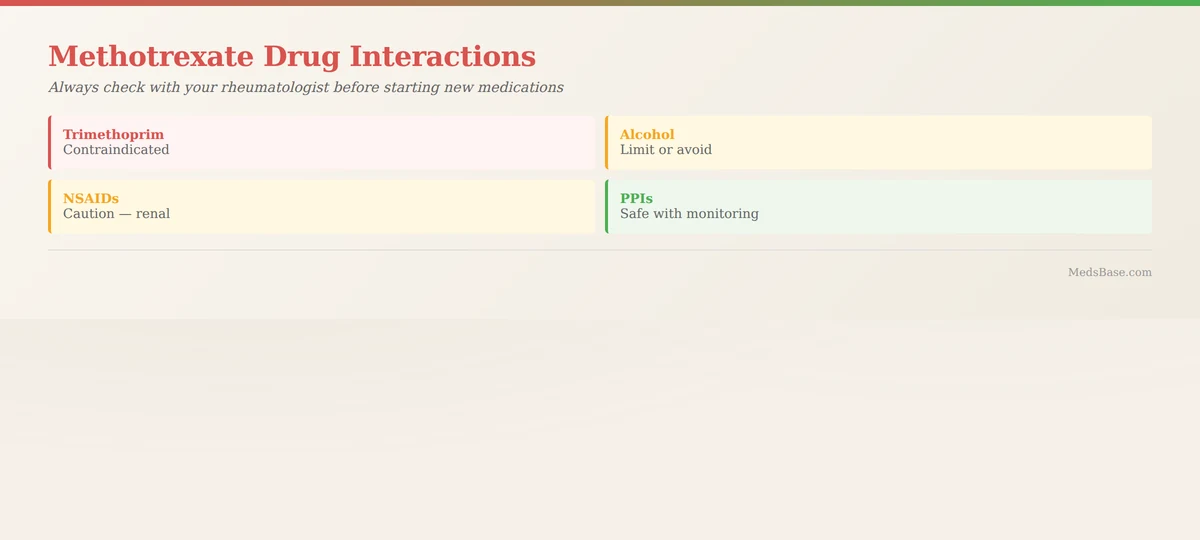
Always check with your rheumatologist before starting any new medication while taking methotrexate.
Methotrexate is one of the most extensively studied medications in rheumatology, with decades of clinical trial data and real-world evidence supporting its efficacy and characterising its safety profile. Below are key studies that have shaped our understanding of methotrexate uses side effects.
| Study | Year | Key Finding | Source |
|---|---|---|---|
| Weinblatt ME. Methotrexate in rheumatoid arthritis: A quarter century of development. | 2013 | Methotrexate remains the anchor DMARD in RA, with approximately 60% of patients achieving clinically meaningful responses and sustained use over 5 years exceeding 50%. Adverse event discontinuation rates are approximately 10–15%. | PMID 23874006 |
| Conway R et al. Risk of liver injury among methotrexate users: A meta-analysis. | 2015 | Low-dose methotrexate was associated with a small but significant increase in liver enzyme abnormalities. The risk of clinically significant liver fibrosis at cumulative doses below 4 grams was very low in patients without pre-existing liver disease. | PMID 26088004 |
| Fraenkel L et al. 2021 ACR Guideline for the Treatment of Rheumatoid Arthritis. | 2021 | Methotrexate is strongly recommended as first-line therapy for DMARD-naive patients with moderate to high disease activity. Subcutaneous administration is conditionally recommended over oral for improved tolerability. | PMID 37817088 |
| Salliot C, van der Heijde D. Long-term safety of methotrexate monotherapy in RA. | 2009 | Systematic review of 88 studies: methotrexate monotherapy was associated with 12% withdrawal due to toxicity, with gastrointestinal (5.8%) and hepatic (2.6%) being the most common causes. Serious infections occurred in 3.4 per 100 patient-years. | PMID 19060002 |
These studies collectively reinforce a consistent picture: methotrexate is effective for a substantial majority of patients, serious methotrexate uses side effects are uncommon when monitoring protocols are followed, and the most frequent cause of discontinuation is gastrointestinal intolerance rather than organ toxicity. Research also supports subcutaneous administration for patients with significant nausea on oral methotrexate — bioavailability is more predictable with injection, and GI side effects are often substantially reduced.
Related Reading
- Bisoprolol vs Metoprolol: 7 Key Differences & Which Beta Blocker Is Right for You — understanding how different medications in the same class can vary is essential when managing chronic conditions.
- Aspirin vs Ibuprofen — 7 Key Differences to Guide Your Pain Relief Choice — if you’re managing pain alongside an autoimmune condition, this comparison helps you choose safely.
- Chronic Conditions — browse our full library of evidence-backed guides on managing long-term health conditions.
Frequently Asked Questions About Methotrexate Uses Side Effects
1. How long does it take for methotrexate to start working?
Most people notice improvement in joint pain and stiffness within 4 to 8 weeks, but the full effect typically takes 3 to 6 months. This gradual onset is why methotrexate is a long-term disease-modifying treatment rather than quick relief. During the first few months, your rheumatologist may prescribe bridging corticosteroids (such as prednisolone) to manage symptoms while methotrexate builds to full effect. Discontinuing too early may mean missing out on a medication that could work well for you long term.
2. Can I drink alcohol while taking methotrexate?
Most clinical guidelines recommend avoiding alcohol or limiting intake very strictly. Both methotrexate and alcohol are metabolised by the liver, and their combined hepatotoxic effect is greater than either alone. The British Society for Rheumatology advises no more than 1 to 2 units per week, if any, and some rheumatologists recommend complete abstinence, especially during the first few months. Discuss your specific alcohol consumption with your doctor and follow their personalised recommendation based on your liver function tests, cumulative dose, and other risk factors.
3. What should I do if I miss a weekly dose of methotrexate?
If you remember within 24 to 48 hours, take the missed dose and continue your regular weekly schedule. If more than 48 hours have passed, skip the missed dose and wait until your next scheduled dose — never take two doses in the same week, as this significantly increases the risk of methotrexate uses side effects including bone marrow suppression. Contact your rheumatology team if you’re unsure, particularly if you’ve missed multiple doses.
4. Does methotrexate cause weight gain?
Methotrexate itself is not directly associated with weight gain, and most clinical studies do not list weight changes among methotrexate uses side effects. Some patients actually notice modest weight loss due to nausea or reduced appetite, particularly during the first few weeks of treatment. If you experience unintentional weight changes while taking methotrexate, it’s worth discussing this with your doctor, as other factors — including reduced physical activity due to your underlying condition, concurrent corticosteroid use, or unrelated health issues — may be contributing.
5. Can I take methotrexate if I’m planning to have children?
Methotrexate is a known teratogen — it can cause serious harm to a developing foetus — and both men and women are advised to discontinue methotrexate at least three months before attempting conception. Women should use effective contraception throughout methotrexate treatment and for at least one ovulatory cycle after stopping. Men should also use contraception during treatment and for at least three months after discontinuation, as methotrexate may affect sperm DNA. If you are planning a pregnancy, inform your rheumatologist well in advance so they can help you transition to a pregnancy-compatible treatment plan. Never stop methotrexate abruptly without medical guidance.
6. Why do I need regular blood tests while taking methotrexate?
Regular blood monitoring is the safety net that makes long-term methotrexate use possible. Tests including full blood count, liver function (ALT, AST, albumin), and renal function (creatinine, eGFR) detect early signs of bone marrow suppression, liver inflammation, or kidney impairment before they become clinically apparent. Most guidelines recommend monitoring every 2 to 4 weeks during the first three months (or after any dose increase), then every 4 to 12 weeks once stable. Skipping blood tests puts you at risk of undetected toxicity, which is why your specialist team will insist on regular attendance as a condition of continuing your prescription.
7. Is the injectable form of methotrexate better than tablets?
Subcutaneous methotrexate offers several advantages for some patients. Bioavailability is more consistent and often higher with injection, particularly at doses above 15 mg weekly, because it bypasses variable gastrointestinal absorption. Many patients report significantly less nausea with the injectable form, and some studies suggest a modest efficacy advantage. The main drawback is the need to self-inject, which some people find daunting initially — though most adapt quickly with proper training.
8. Can methotrexate cause permanent side effects?
Most methotrexate uses side effects are reversible upon dose reduction or discontinuation. Mild hair thinning, mouth ulcers, nausea, and fatigue typically resolve when treatment stops or the dose is adjusted. Liver enzyme elevations usually normalise after dose reduction or increased folic acid. The main concern is liver fibrosis, which can develop silently over years of use, particularly at higher cumulative doses and in patients with additional risk factors such as obesity, diabetes, or significant alcohol intake. This is why cumulative dose monitoring and intermittent liver assessment are standard — to detect any trend toward fibrosis well before it becomes clinically significant.
The Bottom Line
Methotrexate earned its place as a first-line DMARD for good reason. Decades of evidence confirm that for rheumatoid arthritis, psoriasis, psoriatic arthritis, and selected inflammatory bowel disease cases, the benefits — reduced disease activity, slowed joint destruction, improved quality of life — outweigh the risks for most appropriately selected patients. Understanding methotrexate uses side effects is not about being scared off treatment but about equipping yourself to take it safely.
The formula for safe methotrexate use is straightforward: take it once weekly on the same day, attend every blood monitoring appointment, take your folic acid as prescribed, limit or eliminate alcohol, check before starting any new medication, and report new symptoms — especially dry cough, shortness of breath, unusual bruising, or signs of infection — to your doctor promptly. If you follow these steps, your risk of serious methotrexate uses side effects is low, and your chances of achieving meaningful disease control are high.
If you’re considering treatment options for a chronic inflammatory condition, speak with your specialist about whether methotrexate is appropriate for your situation. For further reading, explore our guides on medication comparisons and chronic condition management.
Reviewed by Medical Professional
Medical Disclaimer: This article is for informational purposes only and does not constitute medical advice. The information presented here is not a substitute for professional medical diagnosis, treatment, or guidance. Always consult your doctor or other qualified healthcare provider before starting, stopping, or changing any medication or treatment plan. Methotrexate is a prescription medication that should only be used under the supervision of a licensed medical professional. If you think you may be experiencing a medical emergency, call your doctor or emergency services immediately.

Written by
Sophie ChenPharmaceutical Content Researcher · 8 years experience
Sophie Chen is a pharmaceutical content researcher with 8 years covering generic medication access and clinical pharmacology. She specialises in international regulatory frameworks, bioequivalence standards, and patient-facing education on therapeutic drug classes. She is not a clinician.