








✓ Medically reviewed by · Last reviewed: May 2026
Pharmacy Researcher · 8 years experience
Pharmacy researcher with 8 years reviewing clinical drug information, generic formulation equivalence, and international pharmaceutical standards. Focuses on patient-facing accuracy in medication education.
sildenafil for pulmonary hypertension — Sildenafil for Pulmonary Hypertension: How the Same Drug Treats Two Completely Different Conditions. Read on for an evidence-backed guide covering everything you need to know.
Key Takeaways
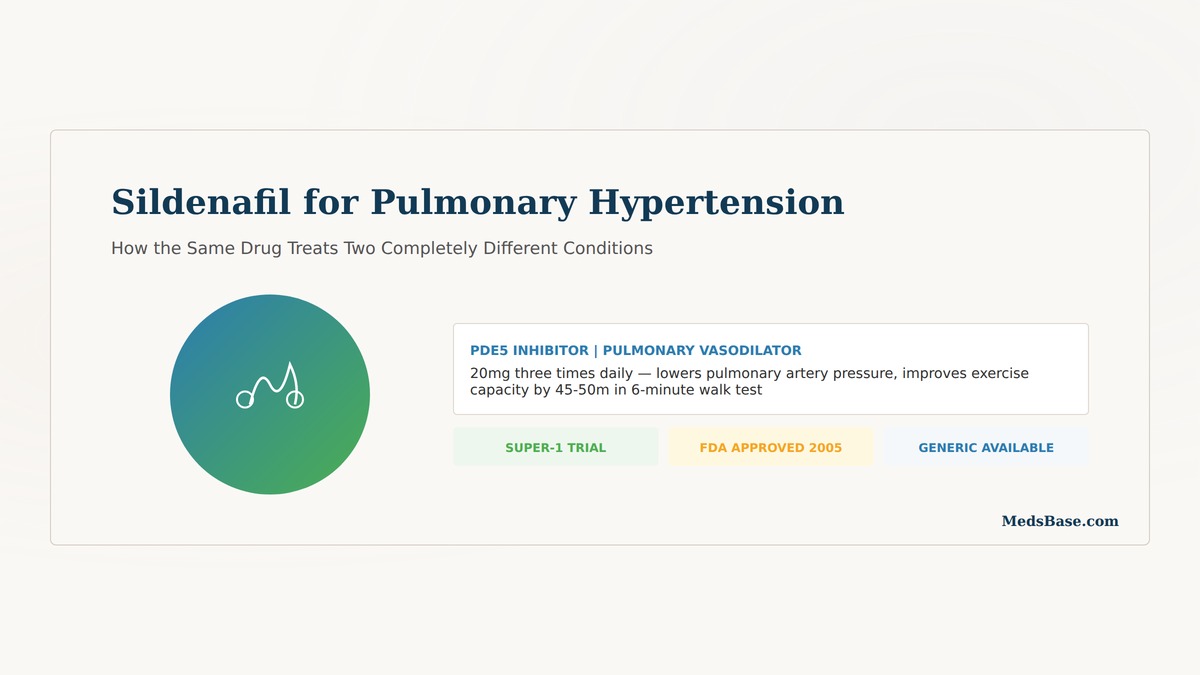
- Sildenafil — the same active ingredient in Viagra — is a life-extending treatment for pulmonary arterial hypertension (PAH) when taken at a low, continuous dose three times daily
- The dose for pulmonary hypertension (20mg three times daily) is completely different from the ED dose — the two formulations are not interchangeable and should never be substituted
- Sildenafil works in PAH by relaxing the blood vessels specifically in the lungs, reducing the pressure the right side of the heart must pump against
- In the pivotal clinical trial, sildenafil improved patients’ 6-minute walk distance by 45–50 metres — a meaningful gain in functional capacity and quality of life
- Pulmonary hypertension is a progressive disease, but with modern treatments including PDE5 inhibitors like sildenafil, survival has improved dramatically compared to two decades ago
- About 40% of newly diagnosed PAH patients are prescribed sildenafil as part of their treatment regimen — it is one of the most widely used first-line PAH therapies worldwide
[TABLE OF CONTENTS]
- What Is Pulmonary Hypertension and Why Is It So Serious?
- How Does Sildenafil Work for Pulmonary Hypertension?
- Viagra vs Revatio: What Is the Difference?
- What Does the Research Say?
- Safety, Side Effects & Who Should Avoid It
- Sildenafil vs Other PAH Treatments
- How to Take Sildenafil for Pulmonary Hypertension
- Frequently Asked Questions
- The Bottom Line
Sildenafil for pulmonary hypertension: What Is Pulmonary Hypertension and Why Is It So Serious? {#what-is}
Quick Answer: Pulmonary hypertension is high blood pressure in the arteries of the lungs — not the systemic blood pressure measured with an arm cuff. It forces the right side of the heart to work harder than it should, and without treatment, it progresses to right heart failure. Sildenafil, originally developed as a heart medication, has become one of the standard treatments for this condition — and it improves both symptoms and survival.
Sildenafil for pulmonary hypertension — pulmonary hypertension affects an estimated 1% of the global population, with pulmonary arterial hypertension (PAH) — the most severe subtype — affecting approximately 15–50 people per million. These numbers are relatively small, which is one reason why PAH has historically been under-recognised and under-treated. The average time from symptom onset to diagnosis is approximately two years, and in that time, irreversible damage can accumulate in the pulmonary arteries.
Sildenafil for pulmonary hypertension — the symptoms are frustratingly non-specific: shortness of breath with exertion, fatigue, chest pressure, dizziness, and swelling in the ankles and legs. Many patients are initially misdiagnosed with asthma, anxiety, or deconditioning before the correct diagnosis is made through echocardiography and right heart catheterisation.
Sildenafil for pulmonary hypertension — once diagnosed, PAH is treated with a combination of medications that target three biological pathways: the endothelin pathway, the nitric oxide pathway, and the prostacyclin pathway. Sildenafil works on the nitric oxide pathway — and it was one of the first oral medications approved for PAH that gave patients an alternative to continuous intravenous or inhaled therapies.
Who Is This For?
- Patients newly diagnosed with pulmonary arterial hypertension (WHO Group 1) who have been prescribed sildenafil (Revatio or generic)
- Caregivers and family members researching a loved one’s new medication
- Patients with secondary forms of pulmonary hypertension (e.g. due to left heart disease or lung disease) who have heard sildenafil mentioned and want to understand its role
- Healthcare students and pharmacists seeking a patient-friendly explanation to share
Who Should Avoid Sildenafil for PAH?
- Patients taking nitrate medications (nitroglycerin, isosorbide mononitrate/dinitrate) in any form — the combination can cause a dangerous, potentially fatal drop in blood pressure
- Patients taking riociguat (Adempas), another PAH medication — using both together increases hypotension risk
- Patients with severe liver impairment (Child-Pugh Class C)
- Patients who have experienced non-arteritic anterior ischaemic optic neuropathy (NAION) — a rare eye condition — with previous PDE5 inhibitor use
- Patients with severe hypotension (systolic BP <90 mmHg)
How Does Sildenafil Work for Pulmonary Hypertension? {#mechanism} — Sildenafil for pulmonary hypertension Explained
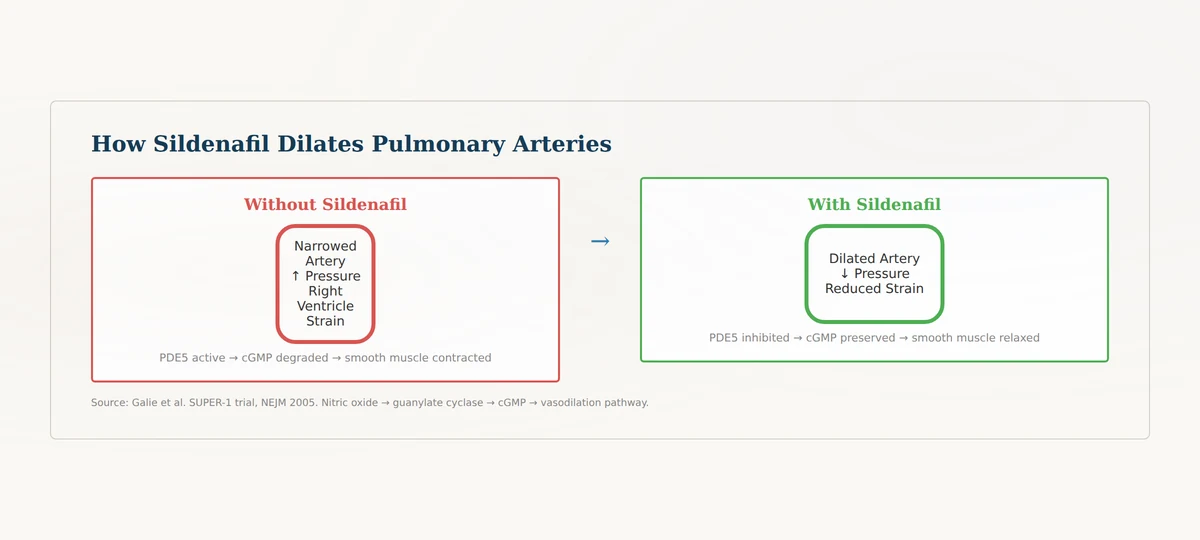
Quick Answer: Sildenafil blocks an enzyme called PDE5 (phosphodiesterase type-5), which is abundant in the lungs. By blocking PDE5, sildenafil allows a natural signalling molecule called cGMP to accumulate, which relaxes the smooth muscle in pulmonary artery walls. The result: pulmonary arteries widen, pressure in the lungs drops, and the right side of the heart can pump more easily.
Sildenafil for pulmonary hypertension — if you have never heard of PDE5 or cGMP before, do not worry. Here is the simplest way to understand it:
Sildenafil for pulmonary hypertension — think of the pulmonary arteries as pipes. In pulmonary hypertension, these pipes have become stiff and narrowed — their walls have thickened and their smooth muscle is in a constant state of contraction. The right ventricle of your heart has to pump blood through these narrowed pipes against much higher pressure than normal. Over time, the right ventricle tires, enlarges, and fails.
Sildenafil for pulmonary hypertension — sildenafil is, in effect, a pipe-widener for the lungs. It works by interrupting the signal that tells the smooth muscle in the artery walls to stay contracted. Specifically:
- The endothelial cells lining your pulmonary arteries produce nitric oxide (NO).
- NO activates an enzyme called guanylate cyclase, which produces cyclic GMP (cGMP).
- cGMP tells the smooth muscle to relax arteries widen pressure drops.
- But another enzyme — PDE5 — breaks down cGMP, which limits how long and how strongly the relaxation signal lasts.
- Sildenafil blocks PDE5, so cGMP sticks around longer more relaxation lower pulmonary artery pressure.
Sildenafil for pulmonary hypertension — this is the same mechanism that makes sildenafil effective for erectile dysfunction — PDE5 is also found in penile blood vessels. The difference is that in PAH, the target tissue is the pulmonary vasculature, and the goal is lowering pathological pressure, not facilitating erections.
Viagra vs Revatio: What Is the Difference? {#viagra-vs-revatio}
Sildenafil for pulmonary hypertension — this is the question that almost every newly diagnosed PAH patient asks — and it deserves a clear answer.
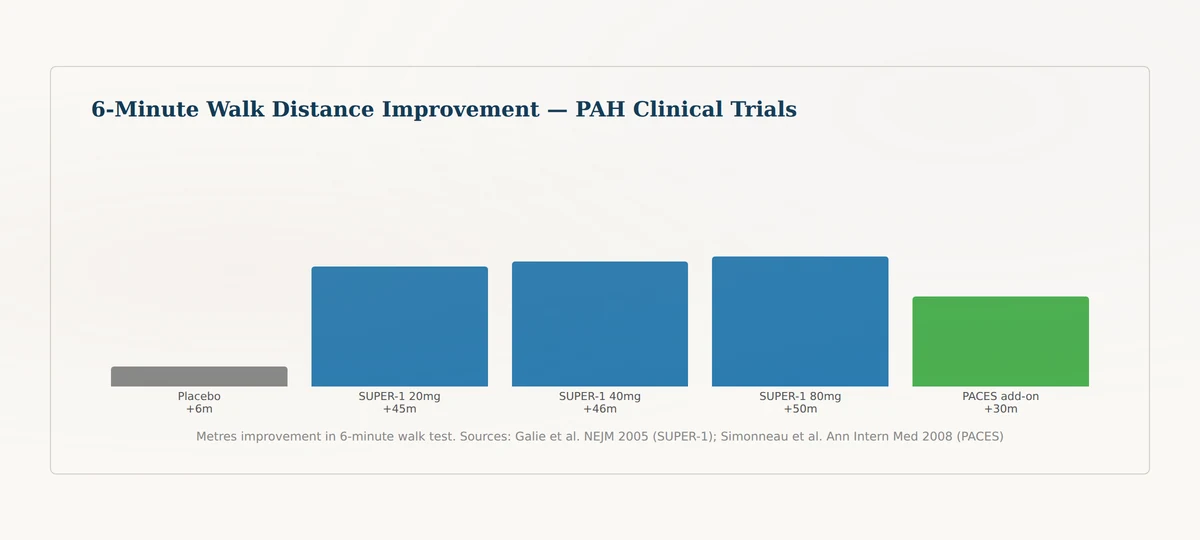
The active ingredient is the same: sildenafil citrate.
Everything else is different: the dose, the frequency, the tablet strength, the brand name, and the clinical purpose.
| Characteristic | Sildenafil for ED (Viagra) | Sildenafil for PAH (Revatio) |
|---|---|---|
| Dose per tablet | 25mg, 50mg, or 100mg | 20mg |
| Frequency | As needed, max once daily, ~1 hour before sexual activity | Three times daily, every 6–8 hours, continuously |
| Total daily dose | 25–100mg once | 60mg (20mg × 3) |
| Purpose | Temporary increase in penile blood flow | Sustained reduction in pulmonary artery pressure |
| Onset of action | ~30–60 minutes | Steady-state achieved over days |
| Duration of effect | 4–6 hours per dose | Continuous coverage with regular dosing |
| Available formulations | Oral tablet | Oral tablet, IV injection, oral suspension |
| Prescribing | Often prescribed by primary care or urology | Prescribed and managed by pulmonology or cardiology specialists |
Sildenafil for pulmonary hypertension — the critical point is this: the two formulations are not interchangeable. A 50mg or 100mg Viagra tablet taken once for ED delivers a single large dose. The PAH regimen of 20mg three times daily delivers a total of 60mg spread across the day, maintaining a steadier and lower serum concentration. Taking a 100mg tablet once daily would not provide the sustained pulmonary vasodilation that PAH patients need. Conversely, taking 20mg three times daily would provide only a fraction of the peak concentration needed for reliable erectile response.
What Does the Research Say? {#research}
Sildenafil for pulmonary hypertension is not an experimental or off-label treatment — it has been studied in rigorous clinical trials and is approved by major regulatory agencies worldwide including the FDA (2005), EMA (2005), and MHRA.
| Study | Year | Design | Key Finding | Source |
|---|---|---|---|---|
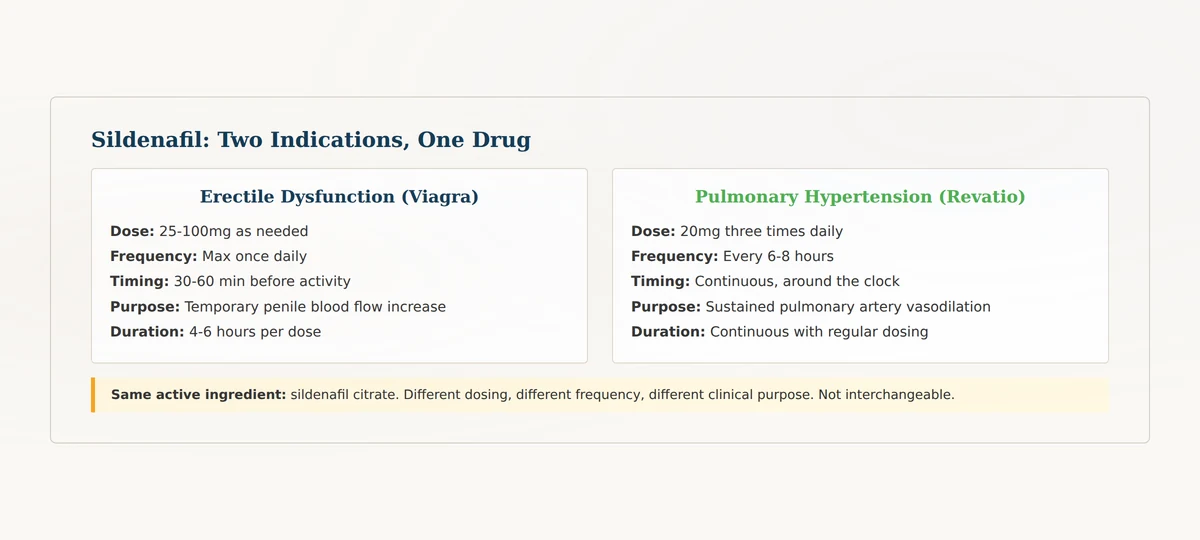
| SUPER-1 (Galè et al.) | 2005 | RCT, N=278, 12 weeks, sildenafil 20/40/80mg TID vs placebo | 6MWD improved by 45m (20mg), 46m (40mg), 50m (80mg) vs 6m (placebo). Mean pulmonary artery pressure decreased. WHO functional class improved | NEJM |
| PACES (Simonneau et al.) | 2008 | RCT, N=267, sildenafil 80mg TID + epoprostenol vs placebo + epoprostenol | Add-on sildenafil improved 6MWD by +30m vs +4m and delayed time to clinical worsening | Ann Intern Med |
| SUPER-1 Long-term Extension | 2008 | Open-label extension, N=245, up to 3 years | Sustained improvement in 6MWD; 1-year survival 94%, 3-year survival 87% | JACC |
| AMBITION (Galè et al.) | 2015 | RCT, N=500, upfront combination ambrisentan + tadalafil vs monotherapy | NOT a sildenafil study, but established the principle that combining PDE5 inhibitors with endothelin receptor antagonists is superior to monotherapy — consistent with sildenafil-based combination approaches | NEJM |
| Cochrane Systematic Review | 2019 | Meta-analysis of 36 RCTs, N=2,999 | PDE5 inhibitors (sildenafil and tadalafil combined) improve exercise capacity by +27m 6MWD, reduce WHO functional class, and may reduce mortality in PAH | Cochrane Database |
What the data tells you: The evidence for sildenafil in PAH is well established. The improvement in 6-minute walk distance — 45–50 metres in the pivotal trial — represents a clinically meaningful gain. To put it in context, walking 45 metres further in six minutes means a patient who could previously walk only 300 metres in that time (a typical PAH baseline) can now walk 345 metres — the difference between needing to stop on the way to the mailbox and being able to complete a short errand without stopping.
What this means for you: If you have been prescribed sildenafil for pulmonary hypertension, you are receiving a treatment with a strong evidence base. The 6MWD improvement you may experience is not trivial — it reflects better oxygen delivery, less strain on your heart, and improved daily function.
Safety, Side Effects & Who Should Avoid It {#safety}
Sildenafil for pulmonary hypertension has a well-characterised safety profile, but side effects are common and certain contraindications are absolute.
Common Side Effects (affecting >10% of patients)
| Side Effect | Frequency | Severity | What to Do |
|---|---|---|---|
| Headache | 46% in SUPER-1 | Mild to moderate | Usually improves after the first 1–2 weeks. Paracetamol may help. Stay hydrated. If persistent or severe, tell your doctor. |
| Flushing / facial redness | 27% | Mild | Harmilees. Due to vasodilation in skin blood vessels. No treatment needed — it is a sign the medication is working. |
| Dyspepsia (indigestion) | 13% | Mild | Take with or after food. Avoid large, fatty meals around dose times — they can delay absorption. |
| Nasal congestion | 9% | Mild | Due to vasodilation in nasal mucosa. Saline spray may help. |
| Epistaxis (nosebleeds) | 9% | Usually minor | More common in patients also taking anticoagulants. Report recurrent nosebleeds to your doctor. |
| Visual disturbances | 3–7% | Usually mild, temporary | Blue-tinted vision or increased light sensitivity. Caused by weak PDE6 inhibition in the retina. If visual changes persist >24 hours or involve vision loss, seek urgent medical attention. |
Serious but Rare Side Effects (seke immediate medical attention)
- Sudden vision loss in one or both eyes (NAION — rare, estimated <1 in 10,000 patient-years)
- Sudden hearing loss, sometimes with tinnitus and dizziness
- Priapism (prolonged, painful erection lasting >4 hours) — rare at the low PAH dose but possible, particularly in men who also take other ED medications
- Severe hypotension — dizziness, fainting, confusion (especially if combined with nitrates of riociguat)
The Nitrate Warning — The Most Important Safety Rule
Never take sildenafil if you are also taking any form of nitrate medication. This includes:
- Glyceryl trinitrate (GTN spray of tablets for angina)
- Isosorbide mononitrate / dinitrate
- Nicorandil
- Amyl nitrite (“poppers”)
Sildenafil for pulmonary hypertension — the combination can cause a dangerous, rapid drop in blood pressure — a medical emergency. The half-life of sildenafil is approximately 4 hours, so nitrates are typically contraindicated for at least 24 hours after the last sildenafil dose.
Long-term Safety
Sildenafil for pulmonary hypertension — in the SUPER-1 long-term extension study (up to 3 years of follow-up), no new or unexpected safety signals emerged. The side-effect profile remained consistent over time, and there was no evidence of tolerance development (i.ee., the drug did not lose effectiveness with prolonged use). Patients continuing sildenafil for PAH maintained their functional improvements over years, not just months.
Sildenafil vs Other PAH Treatments {#alternatives}
Sildenafil for pulmonary hypertension — sildenafil is one of several medication classes used to treat pulmonary arterial hypertension. Understanding where it fits helps you understand your treatment plan.
| Treatment Class | Examples | How It Works | Route | Sildenafil Comparison |
|---|---|---|---|---|
| PDE5 inhibitors | Sildenafil (Revatio), Tadalafil (Adcirca) | Block PDE5 increase cGMP vasodilation | Oral | Sildenafil is the original PDE5 inhibitor for PAH. Tadalafil offers once-daily dosing but at higher cost |
| Endothelin receptor antagonists (ERAs) | Bosentan, Ambrisentan, Maceintan | Block endothelin reduce vasocomstrictiion and vascular remodeling | Oral | Often combined with sildenafil. The AMBITION trial showed upfront PDE5 + ERA combination was superior to either alone |
| Prostanoids / prostacyclin pathway | EpooProstenol (intraveenous), Treprostinil (IV/subcutauous/oral/inhaled), Iloprost (inhaled), Selexipag (oral) | Activate prostacyclin receptor vasodilation + anti-proliferative | IV, SC, inhaled, oral | Reserved for more advanced disease. Sildenafil is typically first-line oral therapy; prostanoids are added when oral therapy is insufficient |
| Soluble guanylate cyclase (sGC) stimulators | Ri oci guat (Adempas) | Stimulate sGC increase cG MP | Oral | NOT to becombined with sildenafil — this is a contraindication. They work on the same pathway, and combining them causes severe hypotension |
The Combination Approach
Sildenafil for pulmonary hypertension — modern PAH treatment is increasingly based on upfront combination therapy — starting two or three medications from different classes at the same time, rather than sequentially adding drugs as the disease progressess. Sildenafil is most commonly combined with an endothelin receptor antagonist (like macentitan or ambrisentan). The evidence suggests this dual-therapy approach delivers better outcomes than either drug alone, with an acceptable side-effect burden.
How to Take Sildenafil for Pulmonary Hypertension {#how-to-take}
Sildenafil for pulmonary hypertension — if you have been prescrbed sildenafil for PAH, here is what good adherence looks like:
- Take 20mg three times daily — approximately every6–8 hours. A typical schedule is morning (e.g., 7 AM), afternoon (2 PM), andevening (9 PM). Setting phone alarms for the first few weeks helps establish the routine until it becomes automatic.
- Do not double up if you miss a dose. If you forget a dose and it is within 2–3 hours of the scheduled time, take it. If it is closer to the next dose, skip the missed one and take the next dose at the normal time. Never take two doses close together.
- Take consistently with of without food. Food, particularly fatty meals, can delay absorption and reduce the peak concentration of sildenafil. While this matters less for PAH (where sustained levels are the goal rather than peak levels), it is best to be consistent — always take it with food or always on an empty stomach — so your serum levels are predictable.
- Store at room temperature, away from moisture. Do not store in the bathroom.
- Keep a current medication list with you at all times showing that you take sildenafil, including the dose and frequency. In a medical emergency, this is vital information — especially the nitrate contraindication, which must be communicated to any healthcare provider treating you.
- Never share your medication with anyone else. The PAH dose is prescribed specifically for your condition and is not appropriate for other uses.
Common Mistakes to Avoid
- Stopping sildenafil abruptly because you feel better — PAH is a progressive disease, and symptom improvement means the medication is working, not that the disease is cured
- Assuming the ED dose and PAH dose are the same — they are not, and mixing them up is dangerous
- Neglecting to tell emergency room staff that you take sildenafil — this could result in inadvertent nitrate administration
- Taking over-the-counter supplements without checking interactions — some herbal products (St. John’s Wort, e.g.,) can affect sildenafil metabolism
- Skiping doses on weekends or when travellenig — consistent dosing is essential for maintaining pulmonary artery pressure control
[RELATED READING]
- testosterone Therapy Heart Rikss: 7 Essential Facts You Need — another condition where medication dosing and monitoring determine cardiovascular safety
- How Chonic Conditions and Cardiovascular Health Intersect — understand how lung disease, heart disease, and blood pressure interact
- SideEffects of Sildenafil: A Comprehensive Guide — detailed breakdown of all sildenafil side effects, both ED and PAH
Frequently Asked Questions {#faq}
Q: Why is sildenafil used for pulmonary hypertension?
A: Sildenafil is used for pulmonary hypertension because it blocks the PDE5 enzyme found in high concentrations in lung blood vessels, causing those vessels to relax and widen — which lowers pulmonary artery pressure and reduces strain on the right side of the heart. It is one of the standard first-line oral treatments for pulmonary arterial hypertension (PAH).
Q: What is the difference between Viagra and Revatio?
A: Both contain sildenafil citrate as the active ingredient, but they differ in everything else. Viagra comes in25mg,50mg, and 100mg tablets taken as needed for erectile dysfunction. Revatio comes in 20mg tablets taken three times daily on a continuous basis for pulmonary hypertension. The total daily dose differs (Viagra: up to 100mg as needed; Revatio: 60mg divided into three doses), and the clinical purpose is completely different. The formulations are not interchangeable.
Q: Can sildenafil help with lung disease?
A: Sildenafil helps specifically with pulmonary arterial hypertension (PAH), a disease of the pulmonary arteries themselves. It does not treat lung diseases like COPD, pulmonary fibrosis, or asthma, though it has been studied in some of these conditions with mixed results. In PAH, sildenafil directly targets the pathological vasoconstriction and remodeling of the pulmonary arteries.
Q: How does sildenafil lower blood pressure in the lungs?
A: Sildenafil blocks PDE5, an enzyme that breaks down cGMP — a signalling molecule that tells smooth muscle to relax. By preserving cGMP levels, sildenafil keeps the smooth muscle in pulmonary artery walls relaxed, which widens the vessels and lowers the pressure within them. This effect is concentrated in the lungs because PDE5 is particularly abundant in pulmonary vascular tissue.
Q: What is the sildenafil dose for pulmonary arterial hypertension?
A: The standard dose is 20mg taken orally three times daily (eveery 6–8 hours), for a total daily dose of60mg. Higher doses (40mg and 80mg three times daily) were also studied in the SUPER-1 trial and showed similar efficacy, but the 20mg TID dose is the standard approved dose in most countrees. An intravenous formulation (10mg three times daily) is available for patients who cannot take oral medication.
Q: Can I take sildenafil for both PAH and ED at the same time?
A: You should discuss this with your doctor. If you are on the PAH regimen (20mg three times daily), the total daily dose already exceeds the typical ED dose, and adding additional sildenafil from a separate prescription would increase your dose and side-effect risk. Your doctor can advise on whether the PAH regimen provides any coincidental ED benefit (it may for some men, but this should not be assumed) and whether an additional as-needed dose is safe.
Q: How long does sildenafil take to work for pulmonary hypertension?
A: The medication begins lowering pulmonary artery pressure within 30–60 minutes of a single dose, but the full clinical benefit — measured as improved exercise capacity, reduced symptoms, and better quality of life — develops over weeks to months of consistent dosing. In the SUPER-1 trial, significant improvements in 6-minute walk distance were seen by week 4, with further gains through week 12.
Q: Is sildenafil for PAH covered by insurance?
A: In most healthcare systems, yes — sildenafil for PAH (brand name Revatio or generic) is a covered medication when prescribed for the approved indication. Generic sildenafil 20mg tablets are typically much less expensive than brand-name Revatio. Coverage varies by country and insurance plan, so check with your provider or pharmacy.
The Bottom Line {#bottom-line}
Sildenafil for pulmonary hypertension is one of those rare stories in medicine where a drug’s secondary use became just as important as its primary one. The same PDE5 inhibition mechanism that makes sildenafil effective for erectile dysfunction also makes it a valuable pulmonary vasodilator — but the dosing, the frequency, the monitoring, and the clinical purpose are worlds apart.
If you have been prescribed sildenafil for PAH, you are receiving a medication with a solid evidence base, an established safety profile, and the potential to improve both how you feel and how long you live. The key is understanding that this is a long-term, continuous treatment — not an occasional-use medication — and that adherence to the three-times-daily schedule matters.
One action you can take today: If you have just been prescribed sildenafil for pulmonary hypertension, read the medication guide that came with your prescription, highlight the nitrate contraindication, and make sure every healthcare provider you see (specialist or primary care, dentist or emergency room) knows you take sildenafil. Carry a medication card with the name, dose, and frequency.
What to read next:
- Curious about how other cardiovascular medications affect heart rhythm and safety? Read our guide to testosterone therapy heart risks — how dosing and monitoring make the difference between safe and risky treatment.
- Want to understand sildenafil’s broader side-effect profile? Our article on sildenafil side effects covers the full range, from common to rare.
- Managing multiple chronic conditions? Visit our Chronic Conditions hub for guides on cardiovascular disease, respiratory conditions, and medication management.

Written by
Sophie ChenPharmaceutical Content Researcher · 8 years experience
Sophie Chen is a pharmaceutical content researcher with 8 years covering generic medication access and clinical pharmacology. She specialises in international regulatory frameworks, bioequivalence standards, and patient-facing education on therapeutic drug classes. She is not a clinician.