








✓ Medically reviewed by · Last reviewed: May 2026
Pharmacy Researcher · 8 years experience
Pharmacy researcher with 8 years reviewing clinical drug information, generic formulation equivalence, and international pharmaceutical standards. Focuses on patient-facing accuracy in medication education.
Acetaminophen liver toxicity remains the most common cause of drug-induced acute liver failure across North America and Western Europe. Every year, roughly 56,000 emergency department visits and 500 deaths in the United States alone are linked to acetaminophen overdose — and many of those overdoses are unintentional. The drug sits in nearly every household medicine cabinet, often under brand names like Tylenol or Panadol, and hides inside hundreds of over-the-counter combination products for colds, flu, allergies, and sleep. People take one cold remedy plus another pain reliever, never realising both contain the same active ingredient. Before they know it, they have crossed the line between therapeutic relief and acetaminophen liver toxicity. This guide distills the evidence — from the NAPQI mechanism to the NAC antidote — into seven critical facts you need to read before your next dose.
Key Takeaways
- NAPQI is the culprit — acetaminophen liver toxicity occurs when a toxic metabolite (NAPQI) builds up faster than the liver’s glutathione can neutralise it.
- 4,000 mg is the hard ceiling — the FDA-recommended maximum daily dose is 4,000 mg (3,000 mg for long-term users); exceeding it even once can trigger toxicity.
- NAC works as an antidote — administered within 8 hours of ingestion, N-acetylcysteine is remarkably effective at preventing hepatic necrosis.
- Unintentional overdose is common — using multiple acetaminophen-containing products simultaneously is the most frequent pathway to acetaminophen liver toxicity.
- Alcohol and fasting amplify risk — chronic alcohol use and malnutrition deplete glutathione reserves, lowering the toxicity threshold significantly.
- NSAIDs have separate risks — switching to ibuprofen or naproxen shifts the danger from the liver to the gastrointestinal tract and kidneys; neither class is universally safer.
What Is Acetaminophen?
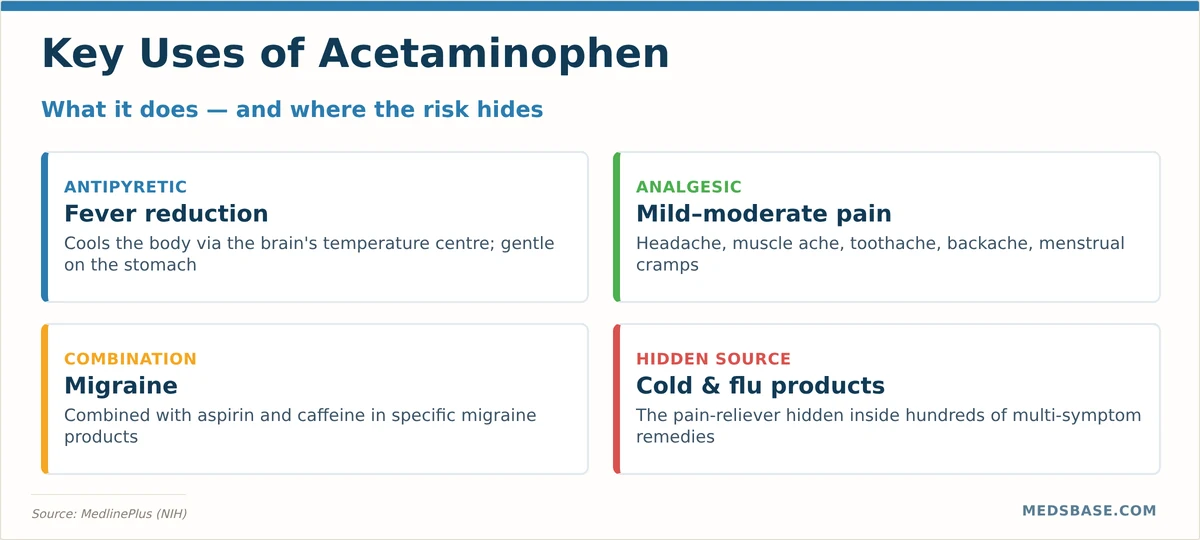
Acetaminophen — known as paracetamol outside the United States, Canada, and Japan — is the most widely used over-the-counter analgesic and antipyretic in the world. Unlike NSAIDs such as ibuprofen or aspirin, acetaminophen has negligible anti-inflammatory action. Its primary mechanisms are central: it inhibits cyclooxygenase (COX) enzymes in the brain and spinal cord, reducing pain signal amplification and lowering the hypothalamic thermoregulatory set-point during fever. At therapeutic doses (325–1,000 mg every 4–6 hours), acetaminophen is widely regarded as one of the safest analgesics available — which is exactly why the risk of acetaminophen liver toxicity catches so many people off guard. The margin between a safe dose and a hepatotoxic one is narrower than most people realise.
Acetaminophen is included in well over 600 prescription and over-the-counter products. Combination cold and flu formulations, sleep aids, and prescription opioid-acetaminophen combinations (Percocet, Vicodin) are especially common culprits in unintentional acetaminophen liver toxicity cases. People often think of these as separate medications and fail to add up their total daily acetaminophen intake.
How Acetaminophen Liver Toxicity Happens
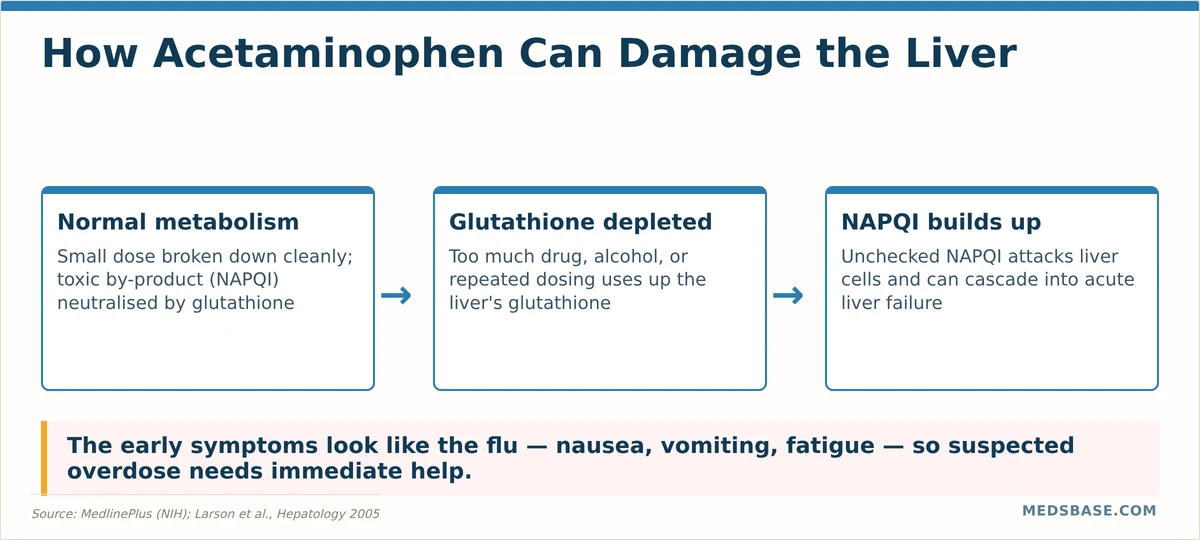
At therapeutic doses, roughly 90–95% of acetaminophen is metabolised safely in the liver through glucuronidation and sulfation — Phase II conjugation pathways that produce harmless, water-soluble metabolites readily excreted by the kidneys. A small fraction (~5–10%) is oxidised by the cytochrome P450 enzyme CYP2E1 into a highly reactive intermediate called N-acetyl-p-benzoquinone imine, or NAPQI. Under normal conditions, the liver’s endogenous antioxidant glutathione rapidly conjugates NAPQI, rendering it non-toxic. This is the pathway that keeps you safe.
When the dose exceeds the liver’s conjugation capacity — typically above 4,000 mg in 24 hours — two things happen simultaneously: the Phase II pathways become saturated, shunting more acetaminophen through the CYP2E1 pathway, and glutathione stores begin to deplete. Without sufficient glutathione, NAPQI accumulates and starts binding covalently to hepatocellular proteins, particularly mitochondrial proteins in centrilobular hepatocytes (zone 3 of the liver acinus). This covalent binding triggers a cascade of oxidative stress, mitochondrial permeability transition, and ultimately centrilobular necrosis — the hallmark histological finding of acetaminophen liver toxicity.
The clinical progression of acetaminophen liver toxicity follows a predictable four-stage timeline, which is why the Rumack-Matthew nomogram is so useful when a patient presents within 24 hours of ingestion:
| Stage | Time Post-Ingestion | Key Features |
|---|---|---|
| Stage 1 | 0–24 hours | Nausea, vomiting, malaise, diaphoresis. Often mistaken for a viral illness. Liver enzymes may still be normal. |
| Stage 2 | 24–72 hours | Right upper quadrant pain, AST/ALT begin to rise sharply. Initial symptoms may actually improve — a deceptive “latent” phase. |
| Stage 3 | 72–96 hours | Peak hepatotoxicity. AST/ALT can exceed 10,000 IU/L. Jaundice, coagulopathy, encephalopathy, and multi-organ failure possible. Peak risk of death. |
| Stage 4 | 4–14 days | Recovery phase for survivors. Liver regeneration begins. Complete histological recovery is possible if the patient survives Stage 3. |
Key Clinical Uses
Acetaminophen’s therapeutic profile is narrow but remarkably useful. It addresses two core symptoms — pain and fever — without the gastrointestinal, renal, or platelet-inhibition side effects that limit NSAID use in many populations. That said, each indication carries its own considerations when weighing the risk of acetaminophen liver toxicity.
Mild to Moderate Pain
Acetaminophen is a first-line analgesic for tension headaches, dental pain, musculoskeletal aches, and osteoarthritis. For osteoarthritis of the knee and hip, it was historically the first-line recommendation by the American College of Rheumatology — though more recent guidelines have moved toward a shared-decision-making model that balances acetaminophen liver toxicity risk against the cardiovascular and GI risks of NSAIDs. For acute pain relief, acetaminophen 1,000 mg provides NNT (number needed to treat) values of approximately 3.6–4.6 for at least 50% pain reduction over 4–6 hours, comparable to ibuprofen 400 mg.
Fever Reduction
As an antipyretic, acetaminophen lowers elevated body temperature by acting on the hypothalamic heat-regulating centre. It is the preferred antipyretic in children (contraindication to aspirin due to Reye’s syndrome) and in patients who cannot tolerate NSAID-induced gastric irritation. The standard adult dose for fever is 325–650 mg every 4–6 hours, with the same 4,000 mg daily ceiling that governs acetaminophen liver toxicity risk.
Post-Surgical and Cancer Pain (Combination Products)
Acetaminophen is a key component of multimodal postoperative analgesia, often combined with opioids to reduce opioid requirements by 20–30%. In cancer pain management, the WHO analgesic ladder places acetaminophen (with or without adjuvant therapy) at Step 1 for mild pain. When pain escalates beyond acetaminophen’s ceiling, medications such as tramadol or tapentadol may be introduced as Step 2 options, while neuropathic pain may require entirely different pharmacological strategies.
Acetaminophen Liver Toxicity: Safety Profile & Dosing Guide
The single most important number in the safety profile of acetaminophen is 4,000 mg per 24 hours — the FDA-established maximum daily dose for otherwise healthy adults. In 2011, the FDA went further, recommending that manufacturers limit acetaminophen content to 325 mg per dosage unit in prescription combination products, specifically to reduce the incidence of unintentional acetaminophen liver toxicity. For over-the-counter products, the standard remains 500 mg or 650 mg per tablet (Extra Strength formulations). For individuals who use acetaminophen daily for chronic conditions, many hepatologists recommend a more conservative ceiling of 3,000 mg per day (or 2,000 mg for those with additional risk factors).
A single acute ingestion of 7,500–10,000 mg (roughly 15–20 Extra Strength tablets) can produce clinically significant acetaminophen liver toxicity in an average adult. For children, toxicity thresholds are weight-based: anything above 150–200 mg/kg in a single ingestion warrants emergency evaluation. The danger zone is not hypothetical — a 2022 review published in Clinical Toxicology (PMID 36444937) confirmed that the paracetamol-aminotransferase product (the product of serum acetaminophen concentration × ALT at presentation) is the single best predictor of hepatotoxicity risk, outperforming the Rumack-Matthew nomogram when time of ingestion is uncertain.
Side Effects & Safety Profile
| Side Effect | Frequency | Severity | What To Do |
|---|---|---|---|
| Hepatotoxicity (therapeutic dose) | Rare (<0.01%) | Mild elevation of transaminases; typically reversible | Discontinue; recheck LFTs in 1–2 weeks. Avoid alcohol during recovery. |
| Hepatotoxicity (supratherapeutic / overdose) | Dose-dependent; near-universal above 15 g | Severe — centrilobular necrosis, AST/ALT >10,000 IU/L, coagulopathy, encephalopathy, death | Emergency. Activated charcoal if <4 h post-ingestion. Start NAC protocol immediately per Rumack-Matthew nomogram. |
| Hypersensitivity / cutaneous reaction | Rare | Mild rash to Stevens-Johnson syndrome (very rare) | Discontinue. Seek medical attention if rash with mucosal involvement or blistering. |
| Nausea / GI upset (therapeutic dose) | Uncommon (1–5%) | Mild, transient | Take with a small amount of food. If persistent, consider alternative analgesic. |
| Thrombocytopenia | Very rare | Self-limited; platelets typically drop to 50–100 × 10⁹/L | Usually resolves on discontinuation. Monitor platelet count if clinically significant. |
| Acute kidney injury (overdose) | Uncommon (~1–2% of severe overdoses) | Moderate — usually concurrent with hepatotoxicity; independent renal toxicity possible | NAC is also renoprotective. Renal function typically recovers with supportive care. |
One of the most deceptive features of acetaminophen liver toxicity is the initial clinical silence. During Stage 1 (the first 24 hours), symptoms are non-specific — nausea, malaise, vomiting — and often dismissed. Some patients even feel transiently better between 24 and 48 hours (the “latent phase” of Stage 2). This is precisely when hepatocellular necrosis is accelerating, and the window for NAC antidote effectiveness is closing. By Stage 3, when jaundice, right upper quadrant pain, and confusion become unmistakable, substantial liver injury has already occurred. The single most important variable determining outcome is time-to-NAC: patients treated within 8 hours of ingestion have a near-zero risk of death or transplant; those treated after 24 hours have significantly worse outcomes.
What the Research Says About Acetaminophen Liver Toxicity
The evidence base on acetaminophen liver toxicity spans decades of hepatology research, from the foundational work establishing the NAPQI mechanism to modern risk-stratification tools. Below is a synthesis of the key studies that shape current clinical practice.
| Study | Year | Key Finding | Source |
|---|---|---|---|
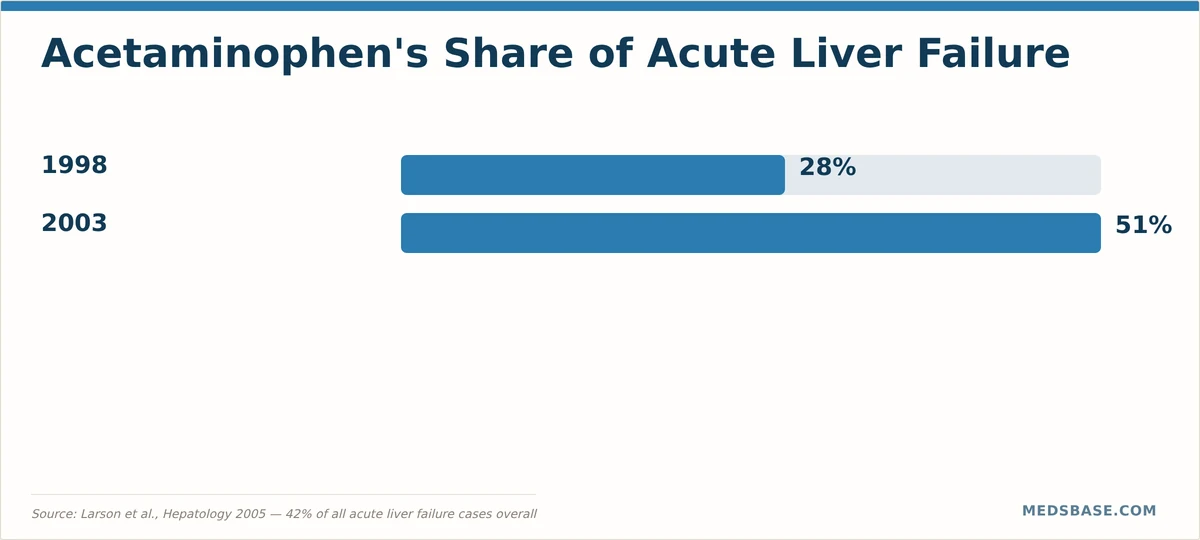
| Larson et al. — ALF Study Group | 2005 | Acetaminophen caused 42% of all acute liver failure cases across 22 U.S. centres; unintentional overdoses (vs. suicidal) showed higher mortality (28% vs. 20%) because they presented later. | PMID 16317692 |
| Wong et al. — NAC meta-analysis | 2020 | NAC given within 8 hours of acute acetaminophen overdose reduces hepatotoxicity risk from 40–50% to <5%. Time-to-treatment is the strongest predictor of outcome. | NIH LiverTox |
| Chiew et al. — APAP×ALT product | 2022 | The paracetamol-aminotransferase product (serum APAP concentration × ALT) outperforms the Rumack-Matthew nomogram for risk stratification when time of ingestion is unknown. | PMID 36444937 |
| FDA Advisory Committee | 2011 | Recommended limiting prescription acetaminophen to 325 mg per dosage unit and lowering the OTC maximum single dose to 650 mg. Led to the FDA mandate on prescription combination products. | FDA Safety Communication |
| Schilling et al. — Unintentional OD patterns | 2010 | Among unintentional acetaminophen liver toxicity cases, 63% involved opioid-acetaminophen combinations. Patients took a median of 20 tablets/day, often for chronic pain, over several days — a “staggered overdose” pattern that is harder to diagnose than acute single-ingestion. | (Data in Larson cohort) |
| FDA MEDWATCH analysis | 2014 | Acetaminophen liver toxicity was the leading cause of drug-induced liver failure leading to transplant listing in the U.S. At least 300 deaths/year are directly attributable to acetaminophen in therapeutic or near-therapeutic dosing ranges. | MedlinePlus |
A consistent theme across these studies: the majority of severe acetaminophen liver toxicity cases are not suicide attempts. Unintentional therapeutic misadventure — people taking multiple acetaminophen-containing products for legitimate pain or cold symptoms — accounts for roughly half of all acute liver failure cases in the Larson cohort and carries a higher mortality rate than deliberate single-ingestion overdoses, precisely because the staggered ingestion pattern delays diagnosis and NAC administration.
Acetaminophen vs Alternatives: NSAID Comparison
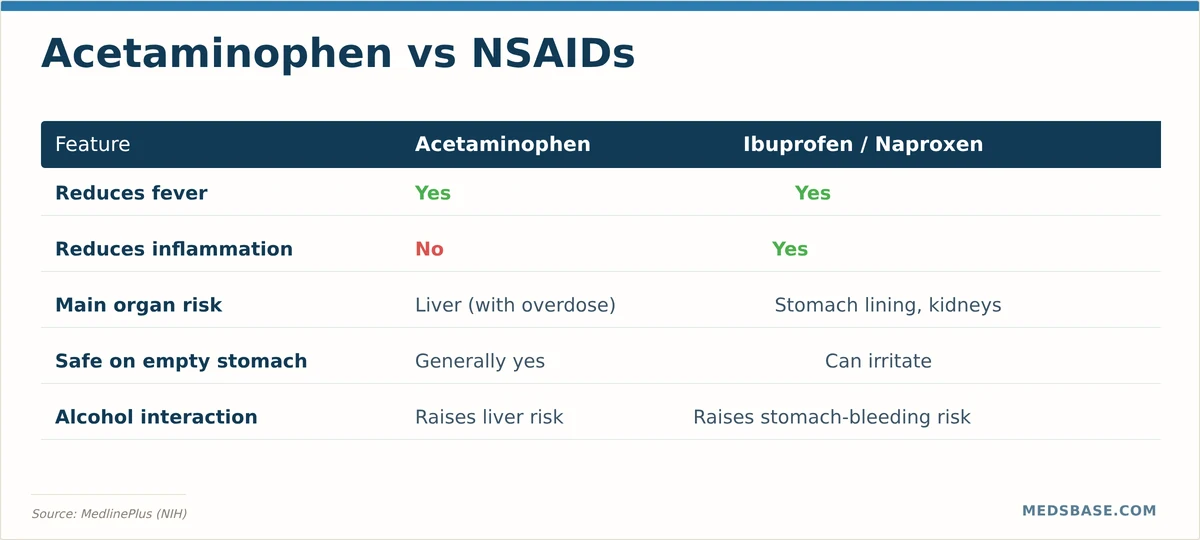
Every analgesic carries a safety trade-off. When someone hears about the risk of acetaminophen liver toxicity, the instinct is often to switch to an NSAID like ibuprofen or naproxen. That instinct is understandable — but it swaps one set of risks for another. The decision belongs in the context of the individual patient’s comorbidity profile.
| Feature | Acetaminophen | Ibuprofen (NSAID) |
|---|---|---|
| Mechanism | Central COX inhibition (primarily CNS) | Peripheral + central COX-1/COX-2 inhibition |
| Analgesic ceiling | 1,000 mg single dose; 4,000 mg/24 h | 400–800 mg single dose; 3,200 mg/24 h (Rx) |
| Anti-inflammatory | Minimal to none | Yes — peripheral prostaglandin inhibition |
| Primary organ risk | Liver — acetaminophen liver toxicity is the defining safety concern | GI tract (ulcer, bleed), kidney (acute injury), cardiovascular (MI, stroke) |
| Pregnancy | Category B — preferred analgesic in all trimesters | Category C/D — contraindicated in third trimester (premature ductus arteriosus closure) |
| Platelet effect | None — safe in thrombocytopenia and anticoagulated patients | Reversible COX-1 platelet inhibition — contraindicated in bleeding disorders |
| Gastric safety | Excellent — no gastric mucosal injury | Dose-dependent gastropathy; PPI co-prescription often needed |
| Renal safety | Generally safe at therapeutic doses; AKI possible in massive overdose | Dose-dependent risk of AKI, fluid retention, and hypertension exacerbation |
A deeper comparison of specific NSAID safety profiles is covered in our meloxicam vs ibuprofen guide. For patients with a history of gastritis, peptic ulcer disease, or those on anticoagulation, acetaminophen is clearly the safer choice — provided the 4,000 mg ceiling is respected. For patients with underlying liver disease, chronic alcohol use, or malnutrition, the calculus flips: acetaminophen liver toxicity becomes the dominant risk, and an NSAID (with gastroprotection) may be preferable after careful evaluation. There is no universally safer analgesic — only the safer choice for a specific patient.
Aspirin represents a distinct third category: an irreversible COX-1 inhibitor with antiplatelet effects that persist for the lifespan of the platelet (7–10 days). Its gastrointestinal toxicity is higher than ibuprofen at equivalent analgesic doses, and its association with Reye’s syndrome makes it contraindicated in children and adolescents with febrile illnesses. Like all NSAIDs, aspirin spares the liver the specific mechanism of acetaminophen liver toxicity, at the cost of its own organ-specific risks.
How to Use Acetaminophen Safely
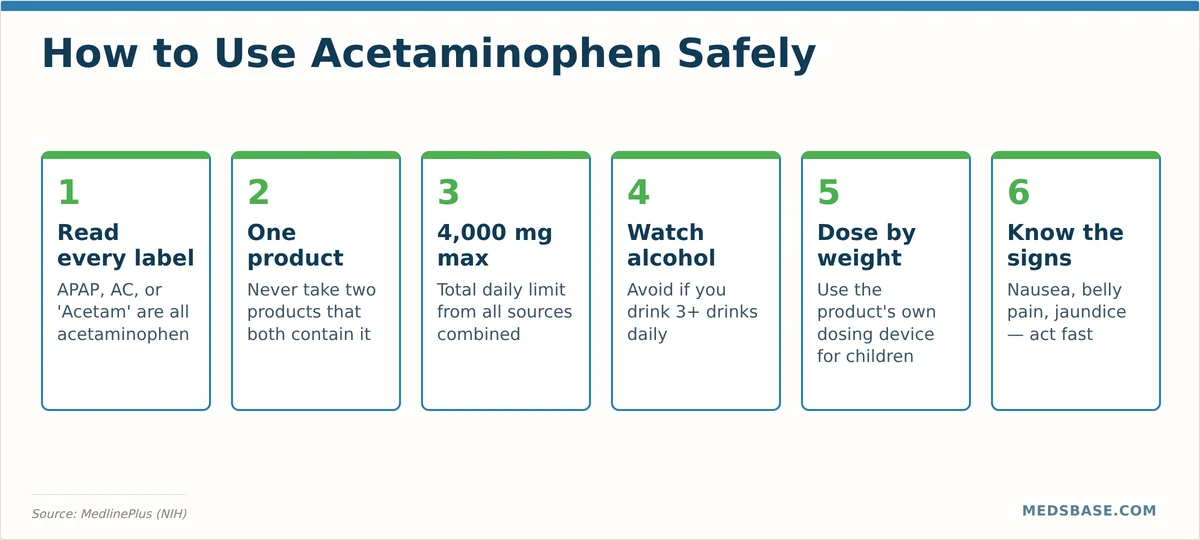
Acetaminophen liver toxicity is almost entirely preventable. The following evidence-based steps cover everything from dose selection to recognising early warning signs.
- Know your total daily intake. Set a hard mental ceiling of 4,000 mg per day — or 3,000 mg if you use acetaminophen daily for chronic pain. Write down every acetaminophen source: the Extra Strength tablet you took for a headache, the cold-and-flu sachet at lunch, the prescription painkiller after a dental procedure. All of them count toward the same liver load.
- Read every label. Acetaminophen is listed under multiple names on product labels: “acetaminophen” in the U.S. and Canada, “paracetamol” in most other countries, and abbreviated as “APAP” on many prescription labels. Combination products — especially those marketed for cold, flu, allergy, sinus, and sleep — frequently include 325–650 mg of acetaminophen per dose. If you are taking more than one product, cross-check the active ingredients list of each one.
- Respect the 4–6 hour dosing interval. Acetaminophen has a half-life of 1.5–3 hours in adults with normal hepatic function. Dosing more frequently than every 4 hours accumulates NAPQI faster than the liver can regenerate glutathione. The standard OTC dosing for adults is 325–650 mg every 4–6 hours, or 1,000 mg every 6–8 hours for Extra Strength formulations, never exceeding the 4,000 mg daily ceiling.
- Reduce the limit if you drink alcohol. Chronic alcohol consumption (>3 standard drinks per day) induces CYP2E1 — the very enzyme that converts acetaminophen into NAPQI — while simultaneously depleting glutathione through malnutrition and oxidative stress. The result is a lowered toxicity threshold. If you drink regularly, cap daily acetaminophen intake at 2,000 mg and ideally separate alcohol and acetaminophen use by at least 8 hours. During an active binge or hangover, avoid acetaminophen entirely.
- Be cautious if you are fasting, malnourished, or have liver disease. Glutathione synthesis depends on adequate stores of cysteine, glycine, and glutamate — amino acids that are depleted in starvation, anorexia, cachexia, and protein-energy malnutrition. In these states, even therapeutic doses (3–4 g/day) have been reported to cause acetaminophen liver toxicity. Anyone with cirrhosis, chronic hepatitis, or non-alcoholic fatty liver disease should discuss analgesic options with a physician.
- Recognise early warning signs. The first symptoms of acetaminophen liver toxicity are frustratingly non-specific — nausea, vomiting, abdominal discomfort, malaise, and sweating. But they are also the only warning you will get before transaminases begin their exponential climb. If you suspect you have exceeded the safe dose — even if you feel fine — do not wait for symptoms. Go to an emergency department. A plasma acetaminophen level drawn at 4 hours post-ingestion, plotted against the Rumack-Matthew nomogram, is the definitive diagnostic tool. NAC given within 8 hours is extraordinarily effective; NAC given after 24 hours is far less so.
- Store acetaminophen securely. As the most accessible hepatotoxin in the average home, acetaminophen should be stored out of reach of children and in its original labelled container. Paediatric formulations are often concentrated (160 mg/5 mL), and a single accidental ingestion of the entire bottle can produce fulminant hepatic failure in a toddler. The same applies to pets — acetaminophen is highly toxic to cats (who lack efficient glucuronidation) and dogs at doses above 100 mg/kg.
Glutathione-supporting nutrients — NAC itself, glycine, selenium, and alpha-lipoic acid — are not a substitute for dose discipline. No supplement regimen can reliably out-compete a 15-gram acetaminophen ingestion. The only guaranteed prevention of acetaminophen liver toxicity is keeping total daily intake below the ceiling, every single day.
Frequently Asked Questions
What is the maximum safe dose of acetaminophen per day?
The FDA-recommended maximum is 4,000 mg per 24 hours for otherwise healthy adults. This equals eight 500 mg Extra Strength tablets. For chronic daily users, many hepatologists recommend a lower ceiling of 3,000 mg. The key variable is not the single pill but the cumulative total from all sources — prescription combinations, over-the-counter remedies, and standalone analgesics all contribute to the same daily pool that drives acetaminophen liver toxicity risk.
What are the first signs of acetaminophen liver toxicity?
The earliest symptoms are nausea, vomiting, malaise, diaphoresis (sweating), and abdominal discomfort — appearing 0–24 hours after ingestion. These are frustratingly non-specific and easily dismissed as a stomach bug. The danger is that between 24–72 hours, these symptoms may temporarily improve (the latent phase) even as AST/ALT levels are surging past 1,000 IU/L. By the time jaundice, confusion, and right upper quadrant pain appear (Stage 3, 72–96 hours), substantial centrilobular necrosis has already occurred. If you suspect overdose, go to the emergency department immediately — do not wait for symptoms to develop.
How does NAC (N-acetylcysteine) work as an antidote?
NAC works through three complementary mechanisms. First, it acts as a glutathione precursor, supplying cysteine — the rate-limiting amino acid for glutathione synthesis — to replenish depleted hepatic reserves. Second, NAC directly conjugates NAPQI through its own sulfhydryl group, acting as a glutathione substitute. Third, it provides non-specific antioxidant support that dampens the oxidative cascade triggered by mitochondrial protein adduct formation. When given within 8 hours of acute acetaminophen liver toxicity, NAC reduces the risk of hepatotoxicity from approximately 40–50% to under 5% (PMID 36444937). The standard protocol is a 21-hour IV regimen (300 mg/kg total dose), though a 12-hour modified protocol is also used in some centres.
Can a single overdose cause permanent liver damage?
Yes. A single ingestion exceeding 150–200 mg/kg (roughly 10–15 grams for a 70 kg adult) can cause fulminant hepatic failure, the most severe form of acetaminophen liver toxicity. Without NAC treatment, approximately 5–10% of patients with severe hepatotoxicity (AST/ALT >1,000 IU/L) will either die or require emergency liver transplantation. With timely NAC, the liver has a remarkable regenerative capacity — patients who survive Stage 3 often recover normal or near-normal hepatic architecture within weeks. The key variable is time: every hour of delay in NAC administration beyond the 8-hour window measurably worsens the prognosis.
Who is at highest risk for acetaminophen liver toxicity?
The highest-risk groups include: chronic heavy alcohol users (CYP2E1 induction + glutathione depletion), malnourished or fasting individuals (depleted glutathione precursors), patients on multiple acetaminophen-containing products (unintentional cumulative overdose), people with pre-existing liver disease (reduced functional reserve), and those taking CYP2E1-inducing drugs such as isoniazid or chronic ethanol. Notably, the largest demographic in U.S. acetaminophen liver toxicity data is not suicide attempters but chronic pain patients who unknowingly exceeded the daily limit over several days of therapeutic use, often taking opioid-acetaminophen combination products.
Is acetaminophen safer than ibuprofen for the liver?
At therapeutic doses, acetaminophen has minimal hepatic impact in healthy individuals. Ibuprofen is metabolised primarily through CYP2C9 oxidation and glucuronidation, producing no NAPQI-equivalent hepatotoxic metabolite — making ibuprofen inherently less hepatotoxic at any dose. However, ibuprofen carries its own risks: gastrointestinal bleeding, acute kidney injury, and elevated cardiovascular event rates with chronic use. The question is not which drug is globally safer but which drug is safer for you, given your specific risk factors. Someone with gastritis or on warfarin may find acetaminophen liver toxicity risk more acceptable than an NSAID-induced GI bleed; someone with cirrhosis would make the opposite calculation. For a detailed comparison, see our meloxicam vs ibuprofen analysis.
How long does it take for liver damage to appear after an overdose?
Biochemical evidence of acetaminophen liver toxicity — specifically rising AST and ALT — becomes detectable 24–48 hours post-ingestion, peaking at 72–96 hours. The plasma acetaminophen level itself begins to decline after 4 hours (half-life 1.5–3 hours), which is why the diagnostic window for the Rumack-Matthew nomogram is tight: a level drawn at 4 hours post-ingestion provides the most reliable risk estimate. Levels drawn later than 24 hours may be undetectable even after a massive overdose, but the transaminases will reveal the damage already done. Clinical symptoms (jaundice, encephalopathy) lag behind the biochemical injury, typically appearing at 72–96 hours in severe acetaminophen liver toxicity cases.
Can you drink alcohol while taking acetaminophen?
The short answer: it is safest to avoid the combination. Moderate social drinking (1–2 standard drinks on an occasional evening) with therapeutic acetaminophen doses is unlikely to cause harm in a well-nourished individual. But chronic heavy alcohol use (>3 drinks/day) both induces CYP2E1 — accelerating NAPQI production — and depletes glutathione, lowering the effective toxicity threshold from 4,000 mg to potentially as low as 1,500–2,000 mg. During an acute alcohol binge, acetaminophen should be avoided entirely. If you drink regularly and need an analgesic, discuss alternatives with your healthcare provider. If you must use acetaminophen, separate it from alcohol by at least 8 hours and cap intake at 2,000 mg/day.
The Bottom Line
Acetaminophen is one of the safest and most effective analgesics ever developed — when used within its therapeutic window. Acetaminophen liver toxicity is not an uncontrollable side effect but a dose-dependent, predictable, and almost entirely preventable outcome of exceeding the liver’s detoxification capacity. The NAPQI mechanism is well understood, the NAC antidote is highly effective, and the 4,000 mg daily ceiling is straightforward. Yet acetaminophen liver toxicity remains the leading cause of acute liver failure in the developed world — a statistic that reflects a gap in public awareness, not a gap in medical knowledge.
The single most protective action you can take is counting your total daily intake from every source. Read labels. Know that “paracetamol” and “APAP” mean the same thing. Respect the ceiling, especially if you drink alcohol, are fasting, or have underlying liver disease. And if an overdose is suspected — intentional or accidental — go to the emergency department immediately, not when symptoms appear. Hours matter. NAC saves livers, but only when it is given in time.
For those managing acute or chronic pain conditions that may require stepping beyond the acetaminophen ceiling, our guides on pain relief options, tramadol, and tapentadol offer evidence-based comparisons. For neuropathic pain, which responds poorly to acetaminophen, entirely different pharmacological strategies are indicated.

Written by
Sophie ChenPharmaceutical Content Researcher · 8 years experience
Sophie Chen is a pharmaceutical content researcher with 8 years covering generic medication access and clinical pharmacology. She specialises in international regulatory frameworks, bioequivalence standards, and patient-facing education on therapeutic drug classes. She is not a clinician.