








✓ Medically reviewed by · Last reviewed: May 2026
Pharmacy Researcher · 8 years experience
Pharmacy researcher with 8 years reviewing clinical drug information, generic formulation equivalence, and international pharmaceutical standards. Focuses on patient-facing accuracy in medication education.
Diabetes and menopause form a two-way feedback loop. Declining estrogen during perimenopause reduces insulin sensitivity by 15–25%, making blood sugar harder to control. At the same time, unstable blood glucose amplifies hot flashes, night sweats, and mood disturbances by triggering stress hormones that disrupt the brain’s thermoregulatory centre. Women with type 2 diabetes experience menopause symptoms that are both more severe and longer-lasting — but targeted strategies including timed glucose monitoring, eating-pattern adjustments, and informed medication reviews can significantly improve both conditions.

If you are navigating diabetes and menopause at the same time, you already know it feels like fighting two battles with one body. Your blood sugar swings unpredictably. Hot flashes hit without warning. You wake at 3 a.m. drenched in sweat — and then your morning glucose reading is higher than it should be, even though you ate nothing.
You are not imagining the connection. A growing body of research confirms that diabetes and menopause create a tightly coupled feedback loop. Declining estrogen makes your cells more resistant to insulin. Unstable blood glucose, in turn, intensifies vasomotor symptoms like hot flashes and night sweats through stress-hormone activation. Each condition worsens the other.
The upside? Understanding the mechanisms behind diabetes and menopause gives you a clear roadmap. When you know why your glucose spikes after a hot flash, or why estrogen loss makes metformin less effective than it used to be, you can target both problems with specific, evidence-backed strategies. This guide covers the full picture — from the underlying science to seven practical interventions you can start today.
- Estrogen directly regulates insulin sensitivity — as it declines during perimenopause, cells become 15–25% more resistant to insulin, making diabetes and menopause management more challenging.
- Hot flashes spike blood sugar — each vasomotor event triggers cortisol and adrenaline release, which can raise glucose by 20–40 mg/dL within 30 minutes, independent of food intake.
- The relationship is bidirectional — unstable blood glucose disrupts the hypothalamic thermoregulatory centre, making hot flashes more frequent and intense. Research on diabetes and menopause confirms both directions of this loop.
- Metformin may ease menopause symptoms — beyond glucose control, metformin improves hypothalamic insulin sensitivity and is associated with fewer and less severe hot flashes in observational studies.
- HRT is not off-limits for women with diabetes — transdermal estrogen at low doses carries less cardiovascular risk than oral formulations, but individualised assessment is essential.
- Seven strategies work better together — timed glucose checks, eating-pattern adjustments, cycle-aware exercise, sleep prioritisation, stress management, medication review, and informed HRT discussion target the root mechanisms of diabetes and menopause simultaneously.
What Happens to Blood Sugar During Menopause?
Perimenopause — the transitional years leading to menopause — typically begins between ages 45 and 55, with the average age of menopause at 51 in the United States. During this window, ovarian estrogen production declines substantially and erratically. What many women do not realise is that estrogen does far more than regulate reproduction.
Estrogen is a metabolic hormone. It enhances insulin signalling at the cellular level, helping glucose transporters move from inside your cells to the cell surface where they can pull sugar out of your bloodstream. When estrogen drops, this signalling pathway weakens. Your cells become less responsive to insulin — a state known as menopause insulin resistance. The pancreas compensates by producing more insulin, but for women with prediabetes or type 2 diabetes, this compensatory mechanism is already strained. The result: fasting glucose creeps up, post-meal spikes grow larger, and HbA1c can rise by 0.2–0.5% even when diet and activity remain unchanged.
Progesterone fluctuations add another layer. During the luteal phase of the menstrual cycle (and during the erratic cycles of perimenopause), progesterone dominance temporarily worsens insulin resistance. Women tracking their perimenopause blood sugar patterns often notice higher readings in the second half of their cycle — a phenomenon that becomes more pronounced as cycles become irregular.
Sleep disruption compounds the problem. Night sweats fragment sleep architecture, and even a single night of poor sleep can reduce insulin sensitivity by 20–30% the following day. When poor sleep becomes chronic — as it often does during diabetes and menopause — the cumulative effect on glucose control is substantial.
The takeaway: if your blood sugar numbers are climbing despite doing everything “right,” it is not a personal failure. It is a predictable physiological response to declining estrogen, progesterone instability, and sleep disruption — all of which are hallmarks of the menopausal transition.
How Diabetes and Menopause Interact — The Hormone-Glucose Connection
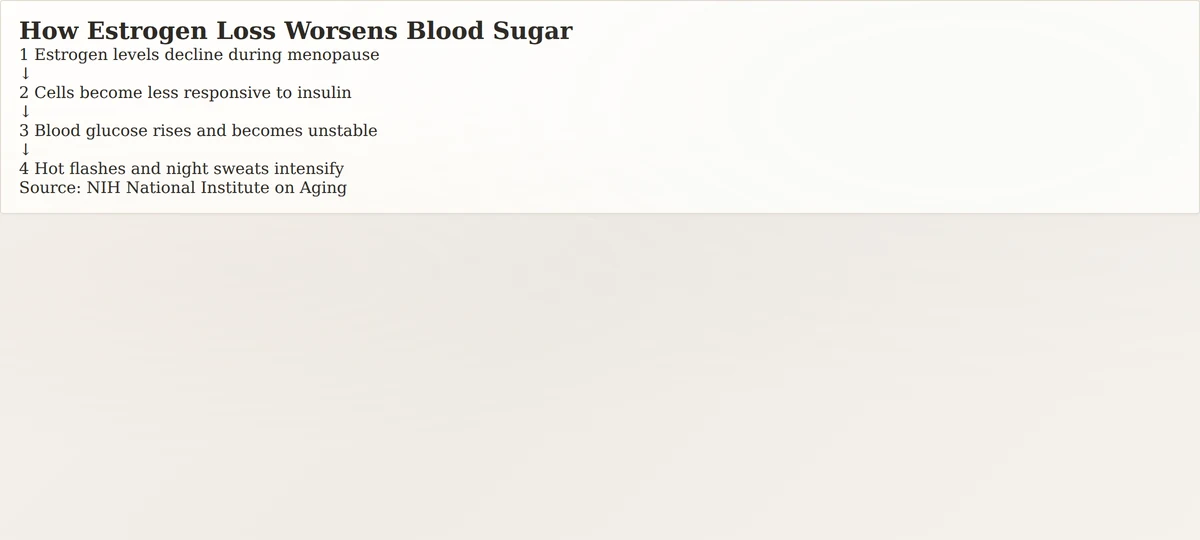
The interaction between diabetes and menopause is not a one-way street. It is a bidirectional feedback loop with at least three distinct mechanisms driving it.
Mechanism 1: Estrogen Loss → Insulin Resistance
Estrogen binds to estrogen receptors on pancreatic beta cells and on insulin-sensitive tissues including muscle, liver, and adipose tissue. At the cellular level, estrogen promotes the translocation of GLUT4 glucose transporters to the cell membrane — the step that allows glucose to enter cells. It also reduces inflammatory cytokines that interfere with insulin receptor signalling.
When estrogen declines during perimenopause, GLUT4 translocation becomes less efficient, inflammatory markers rise, and cells require more insulin to achieve the same glucose uptake. This is the core mechanism behind menopause insulin resistance. Studies estimate that insulin sensitivity drops by approximately 15–25% across the menopausal transition, independent of age, body weight, and physical activity.
For women without pre-existing metabolic dysfunction, the pancreas simply produces more insulin. For women with type 2 diabetes or prediabetes, this additional demand often exceeds pancreatic capacity, and blood glucose rises.
Mechanism 2: High Blood Glucose → Worse Hot Flashes
The reverse pathway is equally important. Chronic hyperglycaemia increases systemic inflammation and oxidative stress. These processes directly affect the hypothalamus — the brain region that regulates body temperature. When the hypothalamic thermoregulatory centre is already destabilised by estrogen withdrawal (the primary driver of hot flashes), the additional inflammatory burden from high blood glucose makes it more reactive.
This is why blood sugar hot flashes are more frequent, more intense, and longer-lasting in women with poorly controlled diabetes. The SWAN study (Study of Women’s Health Across the Nation) found that metabolic factors — including insulin resistance and elevated fasting glucose — were independently associated with vasomotor symptom severity, after adjusting for estrogen levels and body mass index.
Mechanism 3: The Hot Flash → Glucose Spike → More Hot Flashes Loop
Here is where the physiology gets particularly unfair. A hot flash is a full-body stress event. When the hypothalamus triggers a vasomotor flush, the sympathetic nervous system activates, releasing cortisol and adrenaline. These stress hormones signal the liver to release stored glucose (glycogenolysis) and simultaneously make peripheral tissues temporarily more insulin-resistant.
The result: a single hot flash can spike blood glucose by 20–40 mg/dL within 30 minutes. That glucose spike then feeds back into the inflammatory-hypothalamic pathway, increasing the likelihood of the next hot flash. This is the vicious cycle at the heart of diabetes and menopause — and breaking it requires interventions that target both sides of the loop.
7 Surprising Ways Diabetes and Menopause Affect Each Other
Beyond the core feedback loop, diabetes and menopause interact in several ways that are less obvious but clinically significant. Understanding these interactions helps explain why managing both conditions feels harder than managing either one alone.
1. Night Sweats and Nocturnal Hypoglycaemia Look Identical
Waking up drenched in sweat at 3 a.m. could be a night sweat, a low blood sugar episode, or both. The symptoms — sweating, racing heart, and anxiety — are nearly indistinguishable. This diagnostic uncertainty creates a real problem: treating a hot flash as hypoglycaemia by eating unnecessary carbohydrates pushes glucose higher and disrupts the next day’s control. Treating hypoglycaemia as a hot flash by ignoring it risks a dangerous low.
Women managing diabetes and menopause simultaneously should consider wearing a continuous glucose monitor (CGM) during the menopausal transition. A quick glance at your glucose reading when you wake up sweating tells you exactly which problem you are dealing with.
2. Diabetes Lengthens the Menopause Symptom Window
The average woman experiences vasomotor symptoms for 7.4 years. Women with type 2 diabetes report symptoms persisting for 10 or more years — a nearly 35% longer duration. Researchers believe the chronic inflammatory state created by hyperglycaemia prolongs the period during which the brain’s thermoregulatory system remains unstable. This extended diabetes and menopause symptom window means your management strategies need to be sustainable for the long term.
3. Mood Disturbance Is Doubly Amplified
Perimenopause already doubles the rate of new-onset depression. Diabetes compounds this through additional pathways: glucose variability disrupts serotonin and dopamine regulation, and the cognitive burden of managing two fluctuating chronic conditions increases psychological distress. Research on type 2 diabetes menopause symptoms shows that women with both conditions score significantly higher on depression inventories than women with either condition alone.
“Brain fog” — the cognitive clouding many women report during perimenopause — also has a metabolic component. Poor glycaemic control is independently associated with worse cognitive performance during the menopausal transition, above and beyond the effects of estrogen decline.
4. Vaginal and Sexual Health Suffer From Dual Mechanisms
Vaginal dryness during menopause results from declining estrogen, which thins the vaginal epithelium and reduces lubrication. Diabetes adds a second mechanism: microvascular damage from chronic hyperglycaemia reduces blood flow to vaginal tissues, worsening dryness and impairing arousal. Women with diabetes and menopause report more severe genitourinary symptoms than women experiencing menopause without diabetes.
5. Weight Gain Accelerates Both Conditions
The menopausal transition is associated with an average weight gain of 2–5 kg (5–11 lbs), driven by declining estrogen, loss of lean muscle mass, and a shift toward central adiposity (belly fat). This fat distribution pattern is particularly harmful for insulin sensitivity. Visceral fat releases inflammatory adipokines that directly interfere with insulin signalling, creating a third pathway — alongside estrogen loss and sleep disruption — that worsens menopause glucose control. Weight gain from menopause thus accelerates insulin resistance, which in turn makes further weight gain more likely.
6. Cardiovascular Risk Compounds Silently
Both diabetes and menopause independently increase cardiovascular risk. When they co-occur, the risk is more than additive. Estrogen is cardioprotective — it maintains arterial flexibility, supports healthy cholesterol profiles, and reduces vascular inflammation. When estrogen declines during menopause, those protective effects diminish. When superimposed on the endothelial dysfunction and accelerated atherosclerosis caused by diabetes, the combined cardiovascular risk is substantial. This is why women with diabetes and menopause need more aggressive cardiovascular risk monitoring than guidelines for either condition alone would suggest.
7. Medication Responses Change During the Transition
The same diabetes medication that worked well at age 42 may produce different results at age 50. Declining estrogen alters drug metabolism, renal clearance, and tissue sensitivity. Sulfonylureas become more problematic because their hypoglycaemia risk overlaps with the diagnostic uncertainty of night sweats. Metformin’s gastrointestinal side effects may worsen as perimenopausal digestive changes occur. Even newer agents like SGLT2 inhibitors and GLP-1 receptor agonists have different risk-benefit profiles during diabetes and menopause — particularly regarding bone density and genitourinary health — that merit a dedicated medication review.
Diabetes and Menopause — Safety Profile & Management Strategies

Managing diabetes and menopause effectively requires strategies that address both conditions through their shared mechanisms. Here are seven evidence-backed approaches.
1. Time Blood Glucose Checks Around Symptoms
Instead of checking glucose only at standard times (fasting, before meals), add a check 30–60 minutes after each hot flash or night sweat episode. This reveals the real-time glucose impact of vasomotor events and helps distinguish hot-flash-driven hyperglycaemia from dietary or medication issues. CGM users can review glucose traces against symptom diaries — many women discover their highest spikes occur not after meals but following clusters of hot flashes. This changes how you think about menopause glucose control entirely.
2. Shift Carbohydrates Earlier in the Day
Insulin sensitivity follows a circadian rhythm — it is naturally highest in the morning and declines throughout the day. During perimenopause, nocturnal insulin resistance is further amplified by sleep disruption and night sweats. Moving a larger portion of daily carbohydrates to breakfast and lunch (rather than dinner) and avoiding food within two hours of bedtime can reduce fasting glucose by 5–15 mg/dL. This simple timing adjustment works with your body’s metabolic rhythm rather than against it.
3. Match Exercise Intensity to Your Cycle (While You Still Have One)
During the follicular phase (days 1–14), when estrogen is relatively higher, insulin sensitivity peaks — this is the window for higher-intensity workouts. During the luteal phase (days 15–28), progesterone dominance increases insulin resistance, and moderate consistent activity (walking, swimming, cycling) produces better glucose results than intense bursts that spike cortisol. Once cycles become irregular, prioritise consistency: 30 minutes of moderate activity daily, ideally after the largest meal.
4. Treat Sleep as a Medical Intervention
Sleep deprivation from diabetes night sweats and hot flashes directly worsens insulin resistance. Even a single night of poor sleep reduces insulin sensitivity by 20–30% the following day. Practical steps: keep the bedroom at 16–18°C (60–65°F), use moisture-wicking bedding and sleepwear, run a bedside fan, and if night sweats and hypoglycaemia are both in play, a CGM is the most reliable way to distinguish them. Treat sleep quality as a core component of your glucose management plan.
5. Practise Deliberate Stress Reduction
Chronic stress elevates cortisol, which raises blood glucose and increases hot flash frequency. The two effects reinforce each other. Evidence-based stress management — mindfulness meditation, cognitive behavioural therapy, and regular gentle exercise — has measurable benefits for both glucose control and vasomotor symptom severity. Even 10 minutes of daily deep breathing lowers cortisol and directly affects the hormonal environment driving diabetes and menopause symptoms.
6. Review Medications Annually During Perimenopause
The medication regimen that worked at 42 may not be ideal at 50. Perimenopause alters how your body responds to diabetes drugs. Metformin remains first-line and may even reduce hot flash frequency through improved hypothalamic insulin sensitivity. Sulfonylureas, however, become more problematic — their hypoglycaemia risk overlaps confusingly with night sweat symptoms. A yearly medication review with your prescribing clinician — and exploring whether a different diabetes treatment approach fits your current needs — is one of the highest-impact, lowest-effort interventions for managing diabetes and menopause.
7. Discuss HRT With Current Evidence — Not Outdated Assumptions
For years, many clinicians avoided prescribing hormone replacement therapy to women with diabetes, concerned about cardiovascular and thrombotic risk. The evidence has evolved. Transdermal estrogen (patch or gel) at the lowest effective dose does not appear to increase cardiovascular risk in women with well-controlled diabetes and no pre-existing heart disease — unlike oral estrogen, which undergoes first-pass liver metabolism that can raise triglycerides and clotting factors.
Factors that favour HRT use include severe vasomotor symptoms impairing quality of life, early menopause (before age 45), and good baseline cardiovascular health. Factors that weigh against include uncontrolled hypertension, history of blood clots, active liver disease, and poorly controlled diabetes. HRT diabetes safety requires individualised assessment — this is not a decision to make alone, but it is a conversation worth having with a provider who understands the updated evidence. If HRT is not appropriate, non-hormonal options including certain antidepressants (SSRIs/SNRIs), gabapentin, and fezolinetant can provide meaningful relief.
This is for: Women aged 40–60 with type 2 diabetes or prediabetes experiencing perimenopause or menopause symptoms — hot flashes, night sweats, mood changes, sleep disturbance, or worsening glucose control. If you feel like you are losing ground on both fronts, the strategies here address the root mechanisms connecting diabetes and menopause.
Caution for: Women with type 1 diabetes (the insulin-resistance pathway applies differently); women who are pregnant or trying to conceive; women with an HbA1c above 9% who should prioritise glucose stabilisation before tackling menopause-specific interventions.
What the Research Says About Diabetes and Menopause
The clinical evidence linking diabetes and menopause has grown substantially over the past decade. Below is a summary of key studies that have shaped our understanding of how these two conditions interact.
| Study / Finding | Key Result | Clinical Implication |
|---|---|---|
| SWAN Study — Vasomotor symptoms & metabolic risk Thurston RC, et al. Menopause. 2012. PMID: 22760087 | Women with metabolic syndrome and insulin resistance reported significantly more severe and more frequent hot flashes and night sweats, independent of estrogen levels. | Improving insulin sensitivity may reduce vasomotor symptom burden — metabolic health directly affects thermoregulation. |
| Estrogen & Insulin Sensitivity — Mechanism study Mauvais-Jarvis F, et al. Endocr Rev. 2013. PMID: 23820242 | Estrogen enhances GLUT4 translocation and insulin receptor signalling at the cellular level. Estrogen loss reduces insulin sensitivity by 15–25% across the menopausal transition. | The decline in glucose control during perimenopause is hormonally driven — not a failure of diet or discipline. |
| Metformin & Hot Flashes — Observational analysis Kim C, et al. Menopause. 2014. PMID: 24473538 | Women taking metformin during perimenopause reported fewer and less severe hot flashes compared to non-users, possibly through improved hypothalamic insulin sensitivity. | Metformin may offer dual benefit for women managing both diabetes and menopause — glucose control plus symptom relief. |
| HRT & Diabetes — KEEPS Trial Harman SM, et al. Ann Intern Med. 2014. PMID: 25023291 | Transdermal estrogen did not worsen insulin resistance or increase cardiovascular events in recently menopausal women, including those with insulin resistance at baseline. | Transdermal HRT is a safer option than oral estrogen for women concerned about metabolic and cardiovascular effects. |
| Menopause Symptom Duration in T2D — Cross-sectional study 2026 Healthline-covered study; postmenopausal women with vs. without T2D | Women with T2D scored 2.3 points higher on vasomotor symptom severity (0–10 scale); 67% reported ≥3 night sweats/week vs. 41% without diabetes. | Women with diabetes should expect a more intense and longer menopausal transition — proactive management is warranted. |
| GLP-1 RAs & Weight Loss → Hot Flash Reduction Wilding JPH, et al. N Engl J Med. 2021. PMID: 33567185 | Significant weight loss from semaglutide (14.9% mean body weight reduction) improves thermoregulation indirectly — adipose tissue acts as an insulator. | GLP-1 receptor agonists may reduce hot flash severity through weight loss, even though they have not been studied specifically for this outcome. |
What this means for you: The evidence is consistent — diabetes and menopause amplify each other, but aggressive glucose management during the menopausal transition can meaningfully reduce symptom severity. Women in the studies with well-controlled diabetes (HbA1c below 7%) reported symptom scores much closer to those of women without diabetes. Glucose control is a modifiable factor, not a fixed destiny.
Frequently Asked Questions About Diabetes and Menopause
Does menopause affect blood sugar levels?
Yes. Declining estrogen during perimenopause reduces insulin sensitivity by 15–25%, making cells less responsive to insulin. This can raise fasting glucose by 10–20 mg/dL and amplify post-meal spikes. Many women first discover prediabetes or notice worsening diabetes control during the menopausal transition — this is the biological intersection of diabetes and menopause that makes both conditions harder to manage.
Can diabetes make hot flashes worse?
Yes. Chronic high blood glucose triggers systemic inflammation and oxidative stress that directly destabilise the hypothalamus — the brain region controlling body temperature. This is why blood sugar hot flashes are more frequent, more intense, and longer-lasting in women with diabetes. The stress hormones released during a hot flash (cortisol, adrenaline) then raise blood glucose further, creating a self-reinforcing cycle. Breaking this loop requires interventions that target both glucose control and vasomotor symptom management.
Is HRT safe for women with type 2 diabetes?
It can be, with careful patient selection and the right formulation. Transdermal estrogen (patch or gel) at the lowest effective dose does not appear to increase cardiovascular risk in women with well-controlled diabetes and no pre-existing heart disease. Oral estrogen, which passes through the liver, can raise triglycerides and clotting factors — risks magnified by diabetes. HRT diabetes safety requires an individualised risk-benefit conversation with a healthcare provider who understands the current evidence. Read our hormone replacement therapy overview for a fuller picture of risks, benefits, and alternatives.
How does insulin resistance change during menopause?
Estrogen directly enhances insulin signalling at the cellular level by promoting GLUT4 glucose transporter translocation and reducing inflammatory interference with insulin receptors. As estrogen declines during the menopausal transition, these protective effects diminish. Menopause insulin resistance increases by an estimated 15–25%, which is why many women need medication dose adjustments during this period — even without changes in diet, weight, or activity.
Can metformin help with menopause symptoms?
Observational studies suggest metformin is associated with fewer and less severe hot flashes in perimenopausal women, possibly by improving insulin sensitivity specifically within the hypothalamus — the brain region governing thermoregulation. While metformin is not approved specifically for menopause symptom relief, this potential dual benefit makes it an attractive first-line option for women managing both diabetes and menopause. Learn more about metformin formulations and dosing.
Why are my blood sugars higher during perimenopause?
Three converging factors drive perimenopause blood sugar elevation: (1) declining estrogen directly reduces insulin sensitivity, (2) sleep disruption from night sweats independently worsens insulin resistance by 20–30% the day after a poor night, and (3) elevated cortisol from the stress of managing bothersome symptoms raises hepatic glucose output. The combination often requires proactive medication adjustments — do not assume rising numbers mean you are doing something wrong.
What is the best diet for managing diabetes during menopause?
There is no single “best” diet, but the Mediterranean dietary pattern has the strongest evidence for both glucose control and menopausal symptom reduction. Key elements: 30+ grams of fibre daily, lean protein at every meal, healthy fats (olive oil, nuts, fatty fish), and shifting a larger share of carbohydrates to earlier in the day when insulin sensitivity peaks. Limiting alcohol — which triggers hot flashes in many women and adds empty glucose-disrupting calories — provides additional benefit for menopause glucose control.
Should I check my blood sugar when I wake up with night sweats?
Absolutely. Waking up drenched in sweat can be a night sweat, nocturnal hypoglycaemia, or both — the symptoms are nearly identical. Checking your glucose at that moment tells you which problem you are dealing with. Low glucose needs treatment with fast-acting carbohydrates. Normal or high glucose means you are managing a hot flash and should not eat. This simple check is one of the most practical strategies for women navigating diabetes night sweats and hot flashes simultaneously.
The Bottom Line
The relationship between diabetes and menopause is real, bidirectional, and backed by a growing body of clinical research. Declining estrogen makes blood sugar harder to control. Unstable blood glucose makes menopause symptoms more intense and longer-lasting. Neither condition is your fault — both are rooted in well-documented hormonal and metabolic mechanisms.
But this is also a situation where targeted interventions make a measurable difference. The seven strategies outlined here — timed glucose checks, carbohydrate timing adjustments, cycle-aware exercise, sleep prioritisation, deliberate stress reduction, annual medication review, and an informed HRT discussion — work because they target the root mechanisms connecting diabetes and menopause, not just the surface symptoms.
Your first step: Start tracking your glucose levels around hot flash and night sweat episodes for one week. Whether you use a CGM or fingerstick checks, the data will reveal the pattern driving your symptoms — and give you something concrete to bring to your next healthcare appointment. Managing diabetes and menopause together is challenging, but understanding the connection is the first and most important step toward regaining control.
For more information on diabetes treatment options — including metformin and GLP-1 receptor agonists — visit our diabetes treatment category. If diabetes and menopause symptoms include severe hot flashes, hormone replacement therapy may be worth discussing with your provider. And if hypertension is also part of your health picture, as it is for many women managing diabetes, understanding your blood pressure medication options is equally important.
This article is for informational purposes only and does not constitute medical advice. Always consult your doctor or a qualified healthcare provider before making changes to your medication, diet, or exercise routine. Diabetes and menopause management decisions should be individualised based on your full medical history, current medications, and overall health status.

Written by
Sophie ChenPharmaceutical Content Researcher · 8 years experience
Sophie Chen is a pharmaceutical content researcher with 8 years covering generic medication access and clinical pharmacology. She specialises in international regulatory frameworks, bioequivalence standards, and patient-facing education on therapeutic drug classes. She is not a clinician.