








✓ Medically reviewed by · Last reviewed: May 2026
Pharmacy Researcher · 8 years experience
Pharmacy researcher with 8 years reviewing clinical drug information, generic formulation equivalence, and international pharmaceutical standards. Focuses on patient-facing accuracy in medication education.
You finally got the pimple to clear — and now there’s a brown mark sitting exactly where it used to be that looks like it might be permanent. If this sounds familiar, you’re not imagining it: more than 65% of people who experience acne also develop post-inflammatory hyperpigmentation, and the marks can take months to fade on their own. The good news is that PIH is genuinely treatable — it’s a pigment problem, not a structural one, and dermatology has identified specific ingredients that fade it reliably.
This guide explains exactly what post-inflammatory hyperpigmentation (PIH) after acne is, why it happens, why it’s more common in some skin types than others, and the seven evidence-based treatments that genuinely fade it. You’ll learn how to tell PIH apart from acne scars, the realistic timeline for fading, and the everyday mistakes that make pigmentation worse instead of better.
Key Takeaways
- PIH is the flat brown, black, or grey marks left behind after acne lesions heal — not the same as raised or indented acne scars.
- It is caused by inflammation triggering melanocytes to overproduce melanin in and around the healing skin.
- PIH is significantly more common and more persistent in skin of colour (Fitzpatrick types IV–VI).
- Most marks fade gradually over 3–24 months without treatment — and faster with the right topicals.
- The most effective fading ingredients are azelaic acid, retinoids, vitamin C, niacinamide, and (for stubborn cases) hydroquinone.
- Daily broad-spectrum SPF 50+ is non-negotiable — UV exposure makes existing PIH darker.
Last updated: April 9, 2026 · Reviewed by [Board-Certified Dermatologist]
Jump to section:
What PIH is · How it forms · Treatments · Safety & side effects · Research · PIH vs scars · How to use treatments · Common mistakes · FAQ · Bottom line
Post-Inflammatory Hyperpigmentation (PIH) After Acne: A Complete Evidence-Based Guide
What Is Post-Inflammatory Hyperpigmentation (PIH)? (Definition & Background)
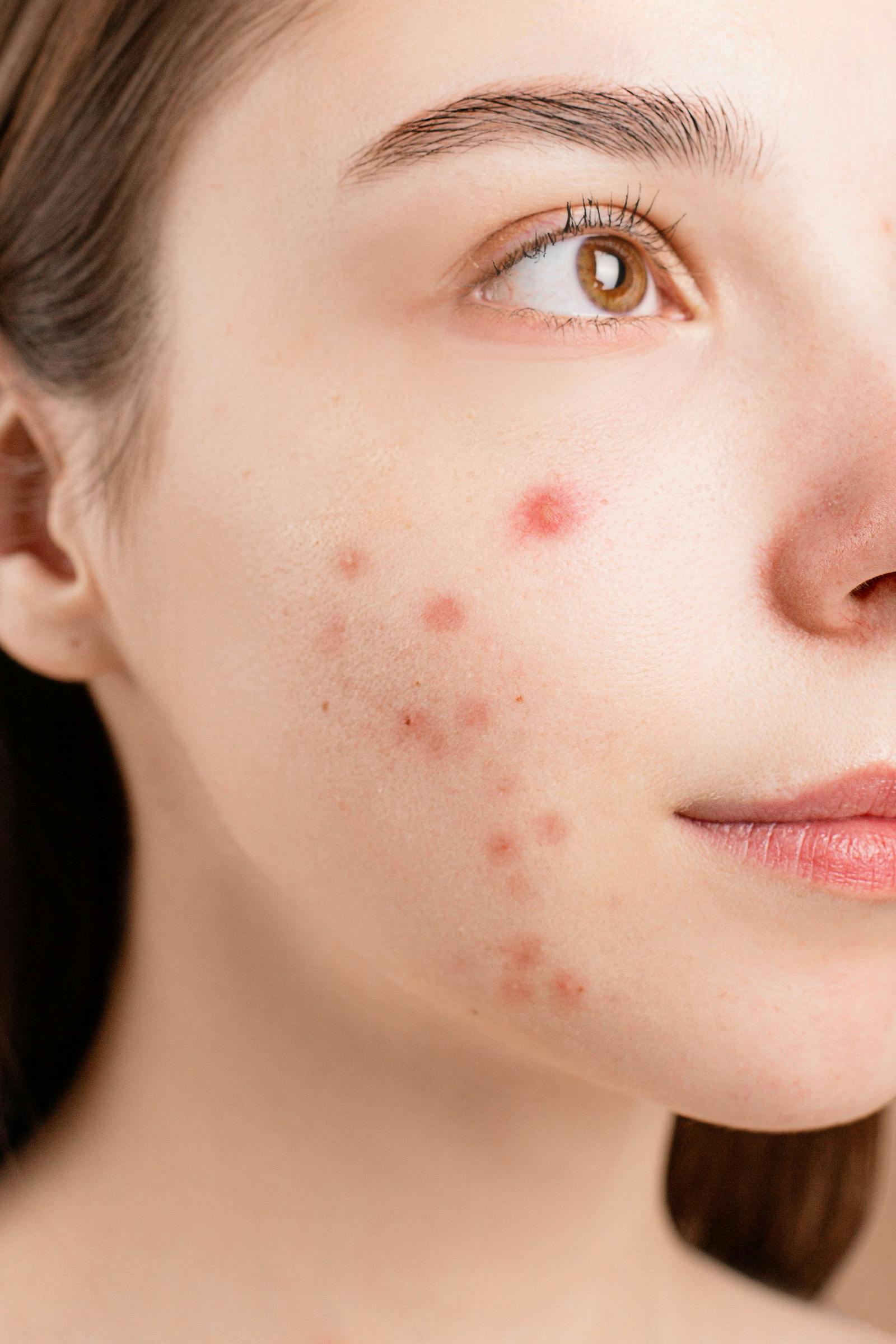
Post-inflammatory hyperpigmentation (PIH) is the flat, discoloured patch of skin left behind after an inflammatory skin event — most commonly an acne lesion — has healed. The marks range from light tan to dark brown, deep red, or grey-purple, and can persist for months or years before fading on their own.
How common is it really
PIH is one of the most common pigmentation disorders dermatologists see. A 2017 epidemiology paper in the Journal of Clinical and Aesthetic Dermatology estimated that up to 65% of acne patients develop PIH, and the rates climb to over 80% in patients with Fitzpatrick skin types IV–VI (medium to dark skin tones).
Crucially, PIH affects more than acne sufferers. Eczema, psoriasis, ingrown hairs, bug bites, burns, surgical scars, and even aggressive cosmetic procedures can all trigger the same response. But acne is by far the most frequent cause, and the marks tend to cluster in the same places — chin, jawline, cheeks, and forehead — where breakouts most often occur.
PIH vs other pigmentation problems
It’s worth understanding how PIH differs from other dark marks, because they don’t all respond to the same treatments:
- PIH — flat, follows the shape of the original lesion, triggered by inflammation, fades with time
- Melasma — symmetric facial patches, hormonal trigger, chronic and relapsing
- Solar lentigines (sun spots) — flat brown patches from cumulative UV exposure
- Acne scars — textured (raised or indented) skin changes, not pigment
- Post-inflammatory erythema (PIE) — pink or red marks (not brown), more common in lighter skin types
For a detailed look at how PIH fits into the wider treatment landscape, see our evidence-based hyperpigmentation treatment guide.
Why it matters
PIH is not dangerous and it’s not permanent — but it’s a major source of distress for people dealing with acne. Many patients say the marks bother them more than the original breakouts. The good news is that post-inflammatory hyperpigmentation (PIH) after acne is one of the most treatable forms of facial pigmentation when approached with the right combination of ingredients and patience.
How Does PIH Form? (The Science of Inflammation and Pigment)
PIH forms because inflammation directly stimulates melanocytes — the pigment-producing cells in the basal layer of the epidermis. Understanding the cascade helps explain why some people get PIH and others don’t, and why certain treatments work better than others.
The inflammation-pigment cascade in 4 steps
When an acne lesion forms, several inflammatory mediators get released into the surrounding skin: prostaglandins, leukotrienes, interleukins, and reactive oxygen species. These molecules act as signals that wake up melanocytes — the cells whose job is to produce melanin in response to stress signals.
Here’s the four-step process in plain language:
- Inflammation triggers melanocyte activation. The melanocytes near the lesion ramp up production of melanin in response to inflammatory signals.
- Excess melanin is deposited. The new melanin is packaged into melanosomes and pushed into the surrounding keratinocytes (the main cells of the epidermis).
- Some melanin “leaks” deeper. If the inflammation is severe enough to disrupt the basement membrane, melanin can fall through into the dermis. This is called dermal pigment, and it’s much harder to fade than epidermal pigment.
- The visible mark settles in. Once the original lesion has healed, the pigmented patch remains. Over weeks to months, normal skin turnover gradually clears it — but slowly.
Why darker skin types get more PIH
Melanocytes in skin of colour are not more numerous than in lighter skin — they are more reactive. When triggered by inflammation, they produce significantly more melanin, faster, and the resulting marks are darker and more persistent. This is why PIH is the number-one pigmentation complaint in patients with Fitzpatrick types IV–VI.
Two factors compound the problem: melanocytes in darker skin are also more likely to deposit pigment in the deeper dermal layer (where it is much harder to fade), and the marks often appear darker against the surrounding skin tone, making them more noticeable.
Why some lesions cause PIH and others don’t
The single biggest predictor of PIH is the depth and severity of the inflammation. Surface comedones (whiteheads and blackheads) rarely cause PIH because they don’t involve much inflammation. Cystic acne, deep papules, and any lesion you’ve picked, popped, or scratched almost always cause PIH because the inflammation is severe and prolonged.
The takeaway: treating the active acne aggressively and not picking at lesions are the two most effective forms of PIH prevention.
🔬 Research Spotlight. A 2010 study published in the Journal of Clinical and Aesthetic Dermatology by Davis and Callender reviewed PIH in skin of colour and found that aggressive early treatment of the underlying acne — not just topical fading — was the single most effective long-term strategy. Patients whose acne was controlled within 3 months had significantly less persistent PIH at 12-month follow-up than patients whose acne remained active.
Evidence-Based PIH Treatments — What Actually Works
The seven most evidence-backed PIH treatments work through three mechanisms: blocking melanin production, accelerating cell turnover, and treating the underlying inflammation that triggered the marks in the first place.
1. Daily Broad-Spectrum SPF 50+ (the foundation)
This is the single most important step in any PIH protocol. UV exposure stimulates melanocytes to produce more pigment, which actively darkens existing PIH marks and slows their fading. Without daily sunscreen, even the strongest fading creams will fail.
Use a broad-spectrum SPF of at least 50, applied every morning. Tinted mineral sunscreens with iron oxides offer additional protection against visible light, which is particularly relevant for skin of colour where visible light contributes to pigmentation.
2. Azelaic Acid 15–20% (the all-rounder)
Azelaic acid is the most evidence-backed first-line topical for PIH. It is a mild tyrosinase inhibitor with strong anti-inflammatory and anti-acne properties — meaning it treats both the existing pigment and the underlying acne that causes more PIH. It is also one of the few brighteners safe in pregnancy and breastfeeding.
Apply twice daily to the entire affected area (not just the spots) for 12–24 weeks. Visible improvement is typically apparent at 8–12 weeks. Side effects are minimal — mild stinging or transient redness in the first 2 weeks is common.
3. Topical Retinoids (Tretinoin or Adapalene)
Retinoids accelerate cell turnover, pushing pigmented keratinocytes to the surface where they shed faster than the natural 28-day cycle. Tretinoin 0.025–0.05% applied nightly is the most-studied retinoid for PIH; over-the-counter adapalene 0.1% is a gentler alternative.
Both also have direct anti-acne effects, which prevents new PIH from forming. Start every other night, build tolerance gradually, and use a moisturiser. Visible fading typically appears at 8–12 weeks. For the practical differences between formulations, see our tretinoin cream vs gel guide.
4. Vitamin C Serum (10–20% L-ascorbic acid)
Vitamin C is a mild tyrosinase inhibitor and a potent antioxidant. It works in the morning under sunscreen, where it neutralises free radicals that would otherwise trigger more pigment production and gives gradual brightening of existing PIH.
Vitamin C is well-tolerated, pregnancy-safe, and pairs beautifully with stronger nightly treatments. Expect 12–24 weeks for visible results.
5. Niacinamide 5% (the easy add-on)
Niacinamide blocks the transfer of pigment-loaded melanosomes from melanocytes to surrounding keratinocytes. The result: less pigment ends up in the visible upper layers of the skin even when melanin production hasn’t fully stopped.
Niacinamide is one of the most well-tolerated brightening ingredients — most users experience zero irritation at 5% — and it pairs well with virtually every other active. It is also pregnancy-safe.
6. Hydroquinone 2–4% (for stubborn cases)
Hydroquinone remains the most powerful single-agent topical pigment blocker after 60 years of clinical use. For PIH that hasn’t responded to gentler ingredients, a short course of 4% hydroquinone (8–12 weeks) under medical supervision can produce visible fading in 4–8 weeks.
Hydroquinone is contraindicated in pregnancy and should never be used continuously beyond 12 weeks. For the full breakdown of safety, alternatives, and product picks, see our hydroquinone cream guide.
7. In-Office Procedures (for resistant PIH)
For PIH that has been present for years or hasn’t responded to topical treatment, in-office procedures can speed things up:
- Superficial chemical peels (mandelic acid, salicylic acid, glycolic acid) — performed in a series of 4–6 sessions every 2–4 weeks
- Picosecond and Q-switched lasers — break apart pigment particles for the body to clear away
- Microneedling — creates microscopic channels that boost penetration of topical brighteners
Procedural treatments must be performed by an experienced provider, particularly for skin of colour, where the risk of causing more PIH with the procedure itself is real.
👤 Who Is This For?
A PIH treatment routine is best suited for:
- People with flat brown, red, or grey marks left behind by acne lesions (not raised or indented scars)
- Anyone whose active acne is also being treated — fading PIH while breakouts continue is a losing battle
- Patients committed to daily broad-spectrum SPF 50+ and a multi-month treatment plan
- Those who can start gentle, build tolerance, and resist the urge to layer too many actives at once
It is not the right approach for:
- Textured (raised or indented) acne scars — these need procedural treatment, not topical fading
- Pregnant or breastfeeding women considering hydroquinone or tretinoin (use pregnancy-safe options)
- Anyone with active inflammatory acne that hasn’t been brought under control first
- People expecting overnight results from a single product
PIH Treatment Safety, Side Effects & Realistic Timelines
Each PIH treatment has its own safety profile. Here’s a quick reference for the most common side effects across the seven methods.
Common side effects by treatment
| Side Effect | Frequency | Severity |
|---|---|---|
| Mild stinging on application (acids, retinoids) | 20–40% | Mild, transient |
| Dryness or peeling (tretinoin, AHAs) | 30–50% | Mild–moderate |
| Redness/erythema (most actives) | 15–25% | Mild |
| Photosensitivity (retinoids, hydroquinone) | Common | Manageable with SPF |
| Contact dermatitis | 3–8% | Mild–moderate |
| Worsening PIH from irritation | 5–10% | Moderate (paradoxical) |
| Post-procedural PIH (peels, lasers) | 5–15% | Moderate |
| Hypopigmentation halos (hydroquinone) | Rare | Cosmetic |
Realistic fading timelines
PIH fading is slow, even with the right products. Here’s what to expect:
- Without treatment: most marks gradually fade over 3–24 months
- With azelaic acid + SPF: visible improvement at 8–12 weeks
- With tretinoin + SPF: visible improvement at 8–12 weeks
- With hydroquinone + SPF (short course): visible improvement at 4–8 weeks
- With combination therapy + procedures: faster but still typically 6–12 weeks
Marks that have been present for over 12 months are usually deeper (involving dermal pigment) and take significantly longer to fade than fresh PIH.
Pregnancy and breastfeeding
Several PIH treatments are off-limits during pregnancy. Hydroquinone, tretinoin, and oral tranexamic acid should all be avoided. Pregnancy-safe alternatives include:
- Azelaic acid 15–20% — anti-inflammatory, mild tyrosinase inhibitor
- Niacinamide 5% — virtually no irritation
- Vitamin C serum — antioxidant + mild brightening
- Daily SPF 50+ — non-negotiable
Most pregnancy-related PIH fades on its own within several months postpartum.
What Does the Research Say? (Evidence & Clinical Studies)
The evidence base for PIH treatment has grown significantly in the last 20 years, with controlled trials of every major active ingredient.
| Study | Year | Finding | Source |
|---|---|---|---|
| Davis & Callender (review) | 2010 | Comprehensive review of PIH in skin of colour found early treatment of underlying inflammation was the single most effective long-term strategy. | J Clin Aesthet Dermatol 3(7):20–31 |
| Kircik (review) | 2011 | Azelaic acid 15% gel produced significant PIH improvement in 12 weeks; well-tolerated with minimal side effects. | J Drugs Dermatol 10(6):586–590 |
| Bulengo-Ransby et al. | 1993 | RCT showed tretinoin 0.1% cream produced significant PIH fading in patients with skin of colour after 40 weeks. | N Engl J Med 328(20):1438–1443 |
| Hakozaki et al. | 2002 | Niacinamide 5% produced significant pigment reduction in 8 weeks, comparable to but slower than 4% hydroquinone. | Br J Dermatol 147(1):20–31 |
| Callender et al. (review) | 2014 | Combination regimens consistently outperformed single-ingredient approaches for PIH; SPF was identified as the single most important step. | Dermatol Clin 32(2):287–301 |
| Taylor et al. | 2009 | Microdermabrasion combined with topical agents produced faster PIH improvement than topicals alone in patients with darker skin. | Dermatol Surg 35(5):800–805 |
Proven, emerging, and overhyped — what to take seriously
- Proven (multiple controlled trials): Azelaic acid, tretinoin, niacinamide, hydroquinone, daily SPF, and combination regimens are all backed by RCTs. They work — provided you also treat the underlying acne.
- Emerging: Tranexamic acid (topical and low-dose oral), cysteamine, and combination peptide-based serums show early promise for stubborn PIH. Long-term safety data is still being collected.
- Overhyped: Lemon juice, baking soda, toothpaste, and “DIY” remedies. Not only do these not fade PIH, but lemon juice can cause phytophotodermatitis (chemical burn from sun exposure) — which causes more PIH.
For original clinical data, see PubMed and the Cochrane Library. The American Academy of Dermatology also maintains a useful patient overview of hyperpigmentation.
PIH vs Acne Scars — Why the Difference Matters
This is the single most important distinction to understand. PIH and acne scars look like related problems, but they are biologically different and respond to completely different treatments. Treating PIH like a scar — or treating a scar like PIH — wastes time, money, and skin barrier health.
| Feature | PIH (post-inflammatory hyperpigmentation) | Acne Scars (textured) |
|---|---|---|
| Texture | Flat — same level as surrounding skin | Raised, indented, or pitted |
| Colour | Brown, black, or grey-purple | Same colour as surrounding skin (or pink/red for fresh) |
| Cause | Inflammation triggering excess melanin | Damage to dermal collagen during healing |
| Permanence | Temporary — fades over months to years | Permanent without procedural treatment |
| Treatment | Topical fading agents + SPF | Microneedling, lasers, fillers, subcision, TCA cross |
| Best ingredients | Azelaic acid, tretinoin, vitamin C, niacinamide, hydroquinone | Retinoids (mild improvement); procedures for real results |
| Realistic outcome | Significant fading in 8–24 weeks | 30–80% improvement after multiple procedures |
The single test: gently glide your finger across the mark with eyes closed. If you feel a bump, dip, or texture change, it’s a scar. If the surface feels smooth, it’s PIH.
For textured acne scars specifically, see our guide to treating acne scars. For the broader pigmentation toolkit, see our guide to fading dark spots.
How to Build a PIH Treatment Routine — Practical Guidance
Here’s how to put the seven evidence-based methods together into a routine that actually works.
Step-by-step starter protocol
- Get the active acne under control first. No fading regimen will work if new breakouts keep producing fresh PIH. Address the underlying acne through topical retinoids, benzoyl peroxide, salicylic acid, or oral medications as appropriate.
- Start with daily SPF 50+. This is non-negotiable. Apply every morning, reapply every two hours during sun exposure. Tinted mineral sunscreens with iron oxides are the gold standard for PIH-prone skin.
- Add azelaic acid 15–20%. Apply twice daily to the entire affected area (not just the spots). This treats both PIH and active acne in one product.
- Add a nightly retinoid. Tretinoin 0.025% or adapalene 0.1%. Start every other night, build tolerance gradually, use a moisturiser. The retinoid also helps prevent new acne lesions.
- Add a morning antioxidant. Vitamin C 10–20% L-ascorbic acid serum on clean skin before sunscreen.
- Add niacinamide 5% as a maintenance step. It pairs well with everything else and is one of the easiest brighteners to tolerate.
- Consider hydroquinone or procedures only after 12 weeks. If topical alone hasn’t produced the results you want, a short course of 4% hydroquinone or a series of superficial chemical peels with a board-certified dermatologist are reasonable next steps.
- Track progress with photos. PIH fades gradually — without photos, the change is hard to notice in the mirror. Take photos in the same lighting every 2–4 weeks.
What to use when
- Morning: Cleanser → vitamin C serum → niacinamide → azelaic acid → moisturiser → SPF 50+
- Evening: Cleanser → tretinoin (or adapalene) → moisturiser. On non-retinoid nights, swap in azelaic acid.
- Weekly (optional): Gentle mandelic or lactic acid exfoliation — skip on retinoid nights
Best PIH treatment products at MedsBase
Browse our range of evidence-based PIH-fighting creams and serums:
- Aziderm Cream — azelaic acid 20% (first-line, pregnancy-safe)
- Tretinoin 0.05% Cream — accelerates cell turnover and prevents new acne
- Melalite Forte Cream — 4% hydroquinone for stubborn PIH
- Melalite 15 Cream — 4% hydroquinone in lighter base for sensitive skin
- Kojiglo Forte Cream — kojic acid combination cream
- Triluma Cream — gold-standard triple combination (HQ + tretinoin + fluocinolone)
Common Mistakes That Make PIH Worse
These are the seven mistakes that cause most PIH treatment failures — and the ones that can actively make pigmentation worse.
- Picking, popping, or scratching active acne. The single biggest cause of severe PIH. Mechanical trauma adds inflammation on top of inflammation, virtually guaranteeing a darker, longer-lasting mark. Hands off, even when it itches.
- Skipping sunscreen. UV exposure makes existing PIH darker. Without daily SPF 50+, even the best fading creams fail. This is the number-one cause of treatment failure.
- Not treating the active acne. Fading old PIH while new acne keeps producing fresh marks is a losing battle. Always treat both at the same time — ideally with ingredients like azelaic acid or retinoids that do both jobs in one product.
- Stacking too many actives. Layering tretinoin + hydroquinone + glycolic acid + benzoyl peroxide all in one routine causes severe irritation — and irritation triggers more PIH. Pick two compatible actives, alternate nights for the rest, and respect the skin barrier.
- Using lemon juice or DIY remedies. Lemon juice on skin exposed to sunlight causes phytophotodermatitis — a chemical burn that produces a much darker, much harder-to-treat patch of PIH than the original acne mark. Toothpaste, baking soda, and apple cider vinegar are similarly damaging.
- Quitting after 4 weeks. PIH fades on the cellular turnover cycle, which takes about 28 days for one full round. Visible improvement typically appears at 8–12 weeks of consistent use, not 2–4 weeks.
- Aggressive scrubbing or “purging” routines. Physical exfoliation, abrasive cleansers, and harsh acid layers cause inflammation — which triggers more PIH. Gentle is better, especially for skin of colour.
Frequently Asked Questions
Q: How long does PIH from acne take to fade?
A: Without treatment, most PIH fades gradually over 3–24 months, depending on depth, original inflammation, and your skin type. With consistent topical treatment (azelaic acid, retinoids, vitamin C, daily SPF 50+) visible improvement is typically apparent at 8–12 weeks. Hydroquinone short courses can produce visible fading in 4–8 weeks. Marks that have been present for over a year usually involve deeper dermal pigment and take significantly longer.
Q: Is PIH a scar?
A: No. PIH is a pigment problem, not a structural one — the skin texture is normal, only the colour is changed. True acne scars involve damage to the dermal collagen and have a raised or indented texture. The simple test: glide your finger across the mark with eyes closed. If you feel a bump or dip, it’s a scar. If the surface is smooth, it’s PIH. PIH fades with topicals; textured scars need procedures.
Q: Why is PIH worse in dark skin?
A: Melanocytes in skin of colour are not more numerous, but they are significantly more reactive to inflammation. They produce more melanin, faster, and are more likely to deposit some of that pigment in the deeper dermal layer where it’s much harder to fade. The result: PIH in Fitzpatrick types IV–VI is darker, more persistent, and more visible against the surrounding skin tone — making it the number-one pigmentation complaint in patients with darker skin.
Q: Will PIH fade on its own?
A: Yes, most PIH eventually fades on its own — but it can take anywhere from 3 months to 2 years depending on the depth and your skin type. With daily SPF 50+ and a basic topical routine (azelaic acid or vitamin C), the timeline shrinks substantially. Without sun protection, healing slows dramatically because UV exposure continually re-stimulates melanocytes. Patience and prevention of new lesions are the two keys to natural fading.
Q: What is the best cream for PIH after acne?
A: For most users, azelaic acid 15–20% is the best first-line topical because it treats both the underlying acne and the existing PIH. Tretinoin 0.025–0.05% is the best second-line option for non-pregnant adults. For stubborn PIH that hasn’t responded to either, a short course of 4% hydroquinone (8–12 weeks under medical supervision) is the most powerful option. The “best” cream always depends on your skin type, severity, and tolerance.
Q: Can I use hydroquinone for acne PIH?
A: Yes — hydroquinone 2–4% is one of the most evidence-backed treatments for stubborn PIH. It works by blocking tyrosinase, the enzyme melanocytes use to make melanin. Use it as a short course of 8–12 weeks under medical supervision, never indefinitely. Apply only to the dark marks (not the whole face), use mandatory daily SPF 50+, and follow with a non-hydroquinone maintenance regimen after the initial course. Hydroquinone is contraindicated in pregnancy and breastfeeding.
Q: Does niacinamide really help PIH?
A: Research suggests yes. A 2002 study by Hakozaki et al. showed niacinamide 5% produced significant pigment reduction in 8 weeks, with effects approaching but not matching 4% hydroquinone. Niacinamide blocks the transfer of pigment-loaded melanosomes from melanocytes to surrounding keratinocytes — meaning less pigment shows up in the visible upper layers of the skin. It’s pregnancy-safe, well-tolerated, and pairs well with virtually every other active ingredient.
Q: Is it safe to treat PIH while pregnant?
A: It depends on the method. Hydroquinone, tretinoin, and oral tranexamic acid should all be avoided in pregnancy. Pregnancy-safe alternatives include azelaic acid 15–20% (also useful for pregnancy-related acne), niacinamide 5%, vitamin C serum, and daily SPF 50+. Most pregnancy-related PIH fades on its own within several months postpartum. If you want to start a more aggressive regimen, wait until after you’ve finished breastfeeding and consult a dermatologist.
The Bottom Line — Treating PIH After Acne
Post-inflammatory hyperpigmentation (PIH) after acne is genuinely frustrating, but it is one of the most treatable forms of facial pigmentation when you take the right approach. The science is clear: treat the underlying acne, protect with daily SPF 50+, fade with evidence-based topicals like azelaic acid and retinoids, and be patient. Visible improvement typically takes 8–12 weeks, and stable long-term results require months of consistent use.
The biggest mistakes are picking at active lesions, skipping sunscreen, ignoring the underlying acne while treating only the marks, and stacking too many actives at once. Avoid those four traps, and most PIH fades dramatically — even in darker skin types where the marks are typically more persistent.
Best suited for: adults with flat brown, red, or grey marks left behind by acne, who are also addressing the underlying breakouts and committed to daily sun protection.
Not suited for: textured (raised or indented) acne scars — those need procedural treatment, not topical fading.
Ready to start? Browse our range of Aziderm, tretinoin, Melalite Forte, and Kojiglo Forte. For the wider context, see our guide to fading dark spots, our hydroquinone cream guide, and our kojic acid skin lightening guide. For textured scars specifically, our acne scars guide covers procedural options.
⚕️ Medical Disclaimer: This article is for educational purposes only and is not medical advice. Topical and procedural treatments for post-inflammatory hyperpigmentation have known side effects, contraindications, and regulatory restrictions that vary by country. Always consult a qualified healthcare professional before starting any new pigmentation treatment, especially if you are pregnant, breastfeeding, taking other medications, or have a chronic skin condition. If a pigmented mark bleeds, itches, changes rapidly, or has irregular borders, it should be evaluated by a dermatologist before any treatment is attempted. The studies referenced are publicly available on PubMed and the Cochrane Library.
Reviewed by [Board-Certified Dermatologist] · Last updated: April 9, 2026

Written by
Sophie ChenPharmaceutical Content Researcher · 8 years experience
Sophie Chen is a pharmaceutical content researcher with 8 years covering generic medication access and clinical pharmacology. She specialises in international regulatory frameworks, bioequivalence standards, and patient-facing education on therapeutic drug classes. She is not a clinician.