








✓ Medically reviewed by · Last reviewed: May 2026
Pharmacy Researcher · 8 years experience
Pharmacy researcher with 8 years reviewing clinical drug information, generic formulation equivalence, and international pharmaceutical standards. Focuses on patient-facing accuracy in medication education.
iron deficiency anemia treatment — Iron Deficiency Anemia Treatment: 7 Proven Options for Rebuilding Your Iron Levels. Read on for an evidence-backed guide covering everything you need to know.
Key Takeaways
- Iron deficiency is the world’s most common nutritional disorder — affecting roughly 1 in 4 people globally, with women and children at highest risk.
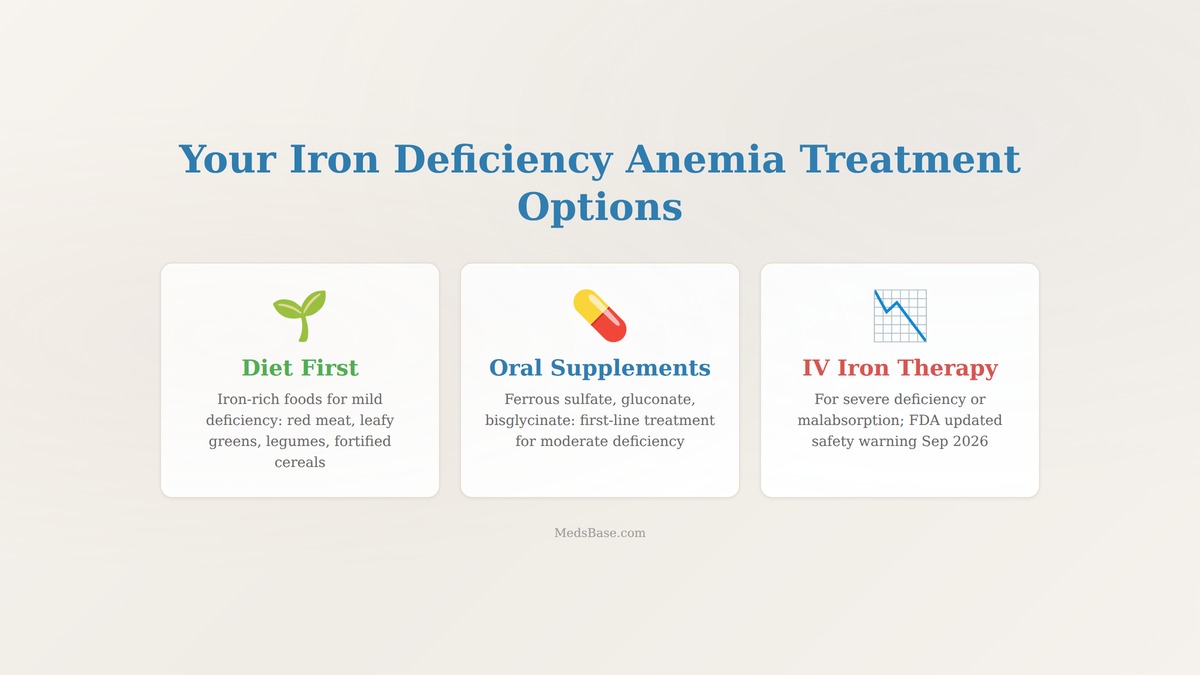
- The right iron deficiency anemia treatment depends on severity — mild cases often respond to diet alone, while severe deficiency may require IV iron.
- Oral supplements work for most people — but one common timing mistake can cut absorption nearly in half.
- FDA issued a new boxed warning (Sep 2026) for one IV iron product — we cover what the Injectafer warning means for treatment decisions.
- Treating the underlying cause matters as much as replacing iron — without addressing heavy periods, GI bleeding, or dietary gaps, deficiency returns.
- Most people feel noticeably better within 2-3 weeks of starting effective iron deficiency anemia treatment — but full iron stores take months to replenish.
Iron deficiency anemia treatment: Table of Contents
- What Is Iron Deficiency Anemia?
- How to Recognize Iron Deficiency Anemia Symptoms
- Key Causes and Who Is at Risk
- Oral Iron Supplements: The First-Line Treatment
- Intravenous Iron Therapy: When Oral Iron Isn’t Enough
- Oral Iron vs IV Iron: A Side-by-Side Comparison
- What Does the Research Say?
- How to Maximize Iron Absorption
- Iron Deficiency Anemia Treatment Alternatives and Adjuncts
- Frequently Asked Questions
- The Bottom Line
Iron Deficiency Anemia Treatment: 7 Proven Options for Rebuilding Your Iron Levels
If you’ve recently been told you have iron deficiency anemia, you’re probably feeling exhausted, short of breath, and wondering how long it will take to feel like yourself again. You’re not alone — the World Health Organization estimates that anemia affects nearly 2 billion people worldwide, with iron deficiency accounting for roughly half of all cases. The good news? Effective iron deficiency anemia treatment exists, and most people respond well once the right approach is matched to their situation.
But here’s what makes this topic especially timely: on September 1, 2026, the FDA added a boxed warning to one widely used intravenous iron product — ferric carboxymaltose (Injectafer) — after continued reports of severe hypophosphatemia, a serious drop in blood phosphate levels that can lead to bone fractures, muscle weakness, and cardiac complications. If you or someone you know is considering IV iron, you need to understand what this warning means — and what your other iron deficiency anemia treatment options are.
By the time you finish reading, you’ll know: which treatment is right for mild vs moderate vs severe deficiency, how to choose an oral supplement that won’t wreck your stomach, when IV iron is truly necessary, the latest safety data on every major IV iron product, and the diet and lifestyle changes that make any iron deficiency anemia treatment work better. Let’s start with the basics.
What Is Iron Deficiency Anemia? — Iron deficiency anemia treatment Explained
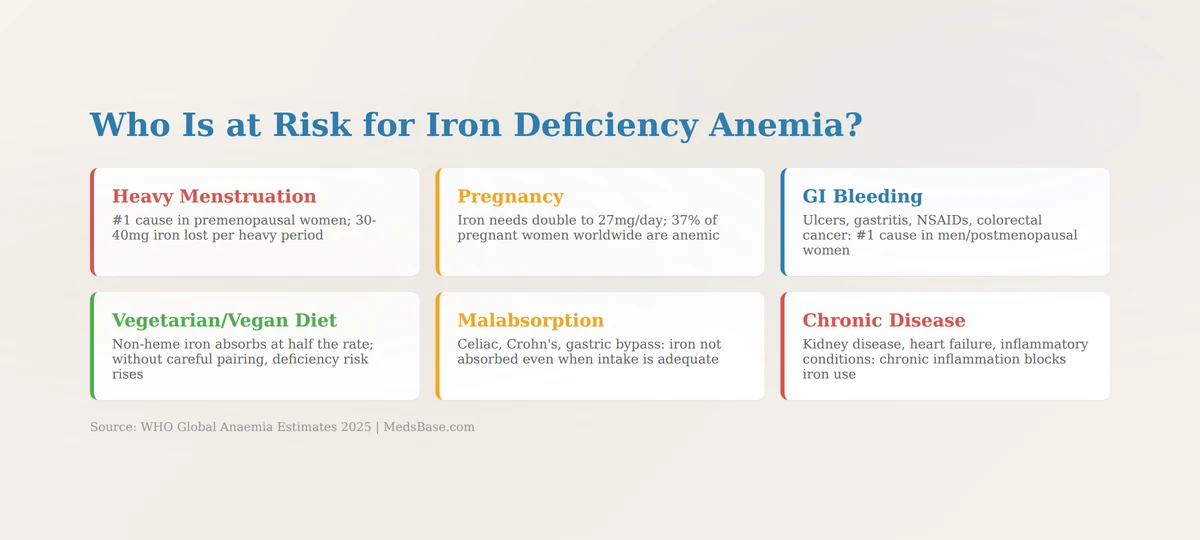
Heavy menstruation, pregnancy, GI bleeding, and malabsorption are the leading causes.
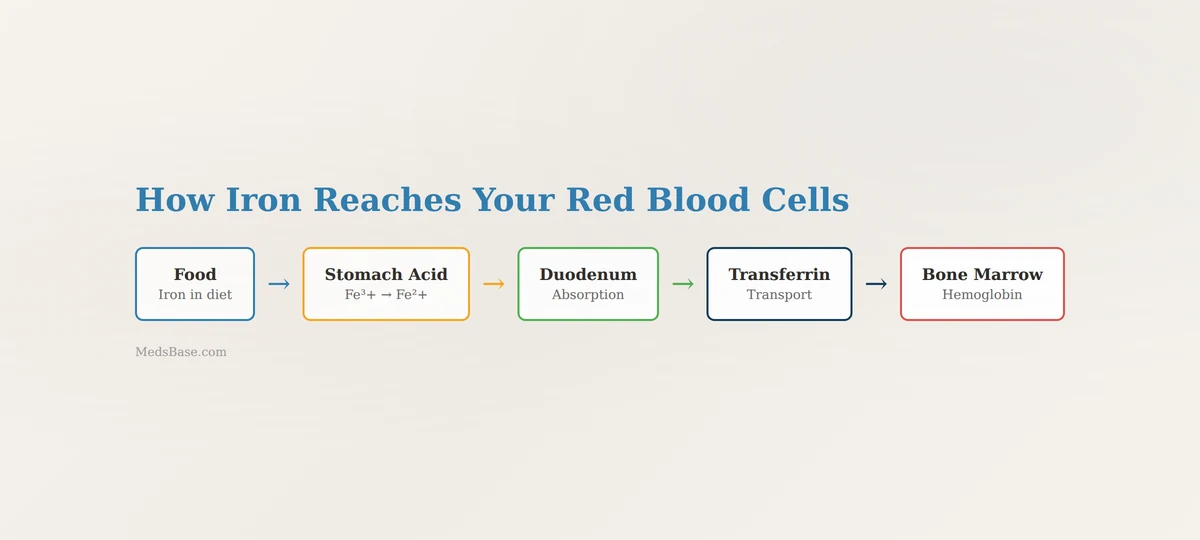
Quick Answer: Iron deficiency anemia is a condition where your body doesn’t have enough iron to produce hemoglobin — the protein in red blood cells that carries oxygen. Without adequate hemoglobin, your tissues don’t get enough oxygen, leading to fatigue, weakness, pale skin, and shortness of breath. It is diagnosed through blood tests measuring hemoglobin, ferritin (stored iron), and transferrin saturation.
Hemoglobin is essentially your body’s oxygen delivery service. Each red blood cell contains about 270 million hemoglobin molecules, and each hemoglobin molecule needs four iron atoms at its core to function. When iron runs low, hemoglobin production drops, and every organ system feels the pinch — your muscles get less oxygen during activity, your brain runs slower, and even your hair and nails suffer.
The condition develops in stages. First, iron stores (ferritin) deplete — you may feel fine at this point. Next, the iron available for new red blood cell production drops. Finally, hemoglobin itself falls below normal, and that’s when the classic fatigue and pallor hit. By the time hemoglobin drops below 12 g/dL in women or 13 g/dL in men, you are officially in iron deficiency anemia territory.
What’s surprising to many people is how common this is — even in developed countries. NHANES data shows that approximately 10% of women of childbearing age in the United States are iron deficient, and roughly 2-5% have frank iron deficiency anemia. The numbers are higher among pregnant women, vegetarians, and people with chronic diseases.
How to Recognize Iron Deficiency Anemia Symptoms
Oral iron is first-line for most patients; IV iron is reserved for severe or treatment-resistant cases.
Symptoms of iron deficiency anemia tend to creep up gradually, which is why many people dismiss them as “just being tired” or “getting older.” Here are the signs worth paying attention to:
Classic symptoms:
- Persistent fatigue and weakness that doesn’t improve with rest
- Pale skin, especially noticeable in the face, nail beds, and inside the lower eyelid
- Shortness of breath with minimal exertion — walking up stairs feels like a workout
- Dizziness or lightheadedness, especially when standing up quickly
- Cold hands and feet — poor oxygen delivery means poor circulation to extremities
- Headaches, particularly tension-type
- Rapid or irregular heartbeat (your heart works harder to compensate for low oxygen)
Less obvious signs people often miss:
- Restless legs syndrome — an irresistible urge to move your legs, especially at night
- Brittle or spoon-shaped nails (koilonychia)
- Unusual cravings for ice, dirt, or starch (a condition called pica)
- Hair thinning or increased shedding
- Cracks at the corners of the mouth (angular cheilitis)
- Brain fog — difficulty concentrating, poor memory, reduced work performance
One side effect that surprises almost everyone is the cognitive impact — we’ll cover what the research says about iron and brain function in the evidence section below. But the takeaway is this: if you’ve been feeling “off” for weeks or months and can’t pinpoint why, a simple blood test is the only way to confirm or rule out iron deficiency.
Key Causes and Who Is at Risk
Effective iron deficiency anemia treatment starts with identifying why you’re iron deficient in the first place. Replace iron without fixing the underlying cause, and the deficiency will come right back.
Blood Loss (The Most Common Cause)
Heavy menstrual bleeding is the number one cause of iron deficiency in premenopausal women. A single heavy period can deplete 30-40 mg of iron — more than double the recommended daily intake. Gastrointestinal bleeding from ulcers, gastritis, hemorrhoids, or colorectal cancer is the leading cause in postmenopausal women and men. Regular use of NSAIDs like ibuprofen or aspirin can cause slow, silent GI bleeding over time.
Inadequate Dietary Intake
Vegetarians and vegans are at higher risk because plant-based (non-heme) iron is absorbed at roughly half the rate of animal-based (heme) iron. Picky eaters, people on restrictive diets, and older adults with poor appetites are also vulnerable. Infants exclusively fed cow’s milk (which is low in iron and can cause microscopic GI bleeding) are at particular risk.
Impaired Absorption
Celiac disease, Crohn’s disease, ulcerative colitis, and gastric bypass surgery all interfere with iron absorption in the small intestine. Long-term use of proton pump inhibitors (PPIs) like omeprazole reduces stomach acid, which is necessary to convert dietary iron into an absorbable form — a factor many doctors overlook.
Increased Demand
Pregnancy doubles iron requirements (from 18 mg to 27 mg daily). Rapid growth during infancy and adolescence, and intense endurance training (which increases red blood cell turnover and iron loss through sweat) also raise demand.
Who Is This For?
This guide is for anyone diagnosed with or concerned about iron deficiency anemia — especially women with heavy periods, pregnant women, vegetarians/vegans, people with GI disorders, and those considering or currently taking iron supplements.
Who Should Seek Immediate Medical Attention?
If you have severe shortness of breath, chest pain, rapid heart rate at rest, or black/tarry stools, seek medical attention immediately. These may indicate severe anemia or GI bleeding requiring urgent care. This article is educational and does not replace professional medical advice.
Oral Iron Supplements: The First-Line Iron Deficiency Anemia Treatment
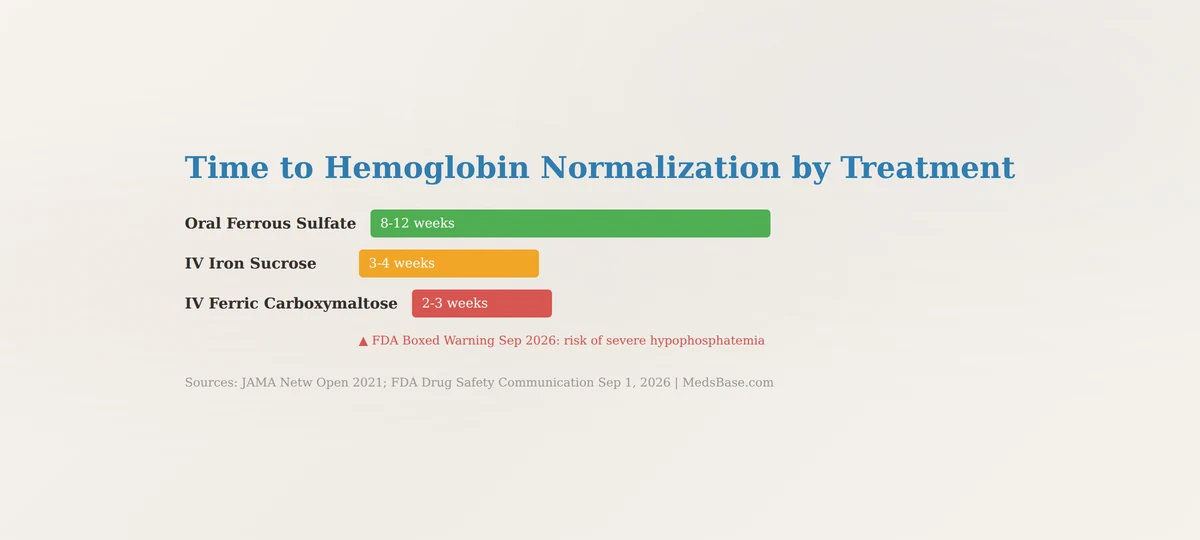
IV iron corrects hemoglobin faster than oral supplements but carries different safety considerations.
For most people with mild to moderate iron deficiency anemia, oral iron supplements are the starting point — and for good reason. They’re inexpensive, widely available without a prescription, and effective when taken correctly.
Types of Oral Iron Supplements
| Form | Elemental Iron | Absorption | GI Tolerance | Best For |
|---|---|---|---|---|
| Ferrous sulfate | ~65 mg per 325 mg tablet | Good | Moderate-Poor | Most common, cheapest option |
| Ferrous gluconate | ~35 mg per 325 mg tablet | Good | Better | Sensitive stomachs |
| Ferrous fumarate | ~106 mg per 325 mg tablet | Good | Moderate | Higher-dose needs |
| Iron bisglycinate | ~25-50 mg per capsule | Excellent | Best | Severe GI sensitivity |
| Heme iron polypeptide | ~12 mg per tablet | Very good | Excellent | GI intolerance + need for efficient absorption |
Standard dosing: The typical adult iron deficiency anemia treatment dose is 100-200 mg of elemental iron daily, usually split into 2-3 doses. Ferrous sulfate 325 mg (65 mg elemental iron) taken twice daily is the most common starting regimen. Your doctor will adjust based on your hemoglobin level, the cause of your deficiency, and how well you tolerate the supplement.
What to Expect and How Long It Takes
Here’s where it gets interesting: you’ll likely notice some improvement within 7-10 days — less fatigue, better energy, reduced brain fog — even though your hemoglobin hasn’t fully recovered yet. This is because iron supplements begin replenishing iron-dependent enzymes in your cells before they significantly boost red blood cell production.
Hemoglobin typically rises by 1-2 g/dL every 2-3 weeks on adequate oral iron deficiency anemia treatment. Most people return to normal hemoglobin within 6-8 weeks. But here’s the catch many patients don’t hear: you need to continue iron deficiency anemia treatment for 3-6 months AFTER your hemoglobin normalizes to fully replenish your iron stores (ferritin). Stopping too early is why deficiency recurs in so many people.
Managing Supplement Side Effects
Oral iron is notorious for GI side effects — constipation, nausea, abdominal pain, and dark stools affect roughly 20-30% of people who take it. But there are strategies that genuinely help:
- Start low, go slow: Begin with one tablet every other day for the first week, then increase gradually.
- Try every-other-day dosing: Research suggests that taking iron every other day may actually increase total absorption by reducing hepcidin — the hormone that blocks iron uptake — while dramatically reducing side effects.
- Switch formulations: If ferrous sulfate causes problems, ferrous gluconate or iron bisglycinate often causes much less GI distress.
- Never take it lying down: Iron tablets can irritate the esophagus — always take them upright with a full glass of water and don’t lie down for 30 minutes afterward.
Intravenous Iron Therapy: When Oral Iron Isn’t Enough
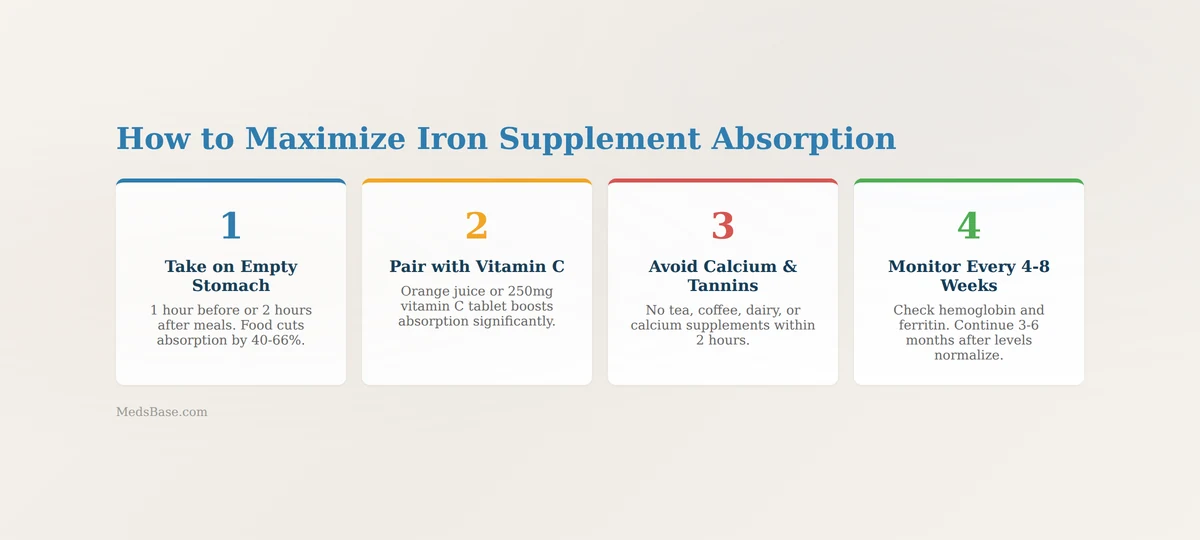
Taking iron with vitamin C and away from calcium, tea, and coffee can double absorption.
For roughly 10-15% of people with iron deficiency anemia, oral iron deficiency anemia treatment isn’t the answer — either because they can’t tolerate the GI side effects, can’t absorb it (celiac disease, gastric bypass, active IBD), have very severe anemia that needs rapid correction, or are losing iron faster than oral supplements can replace it.
For these people, intravenous iron delivers iron directly into the bloodstream, bypassing the gut entirely. It works faster and more reliably than oral iron — hemoglobin can rise within 1-2 weeks, with full correction often in 3-4 weeks compared to the 6-8 weeks oral iron typically requires.
The IV Iron Products Available Today
| Product | Max Single Dose | Infusion Time | Key Safety Concern |
|---|---|---|---|
| Iron sucrose (Venofer) | 300 mg | 15-60 min | Generally well-tolerated |
| Ferric carboxymaltose (Injectafer) | 750 mg | 15 min | Hypophosphatemia — FDA boxed warning Sep 2026 |
| Ferumoxytol (Feraheme) | 510 mg | 15 min | Hypersensitivity; requires observation |
| Iron isomaltoside (Monoferric) | 1,000 mg | 20 min | Generally well-tolerated; lower hypophosphatemia risk |
| Ferric derisomaltose (Monoferric in some regions) | 1,000 mg | 20 min | Low hypophosphatemia risk |
| Low molecular weight iron dextran (INFeD) | 1,000 mg | 1-4 hours | Anaphylaxis risk (test dose required) |
FDA Safety Update — September 1, 2026
The FDA added a boxed warning to ferric carboxymaltose (Injectafer) — the strongest type of warning — to alert healthcare providers and patients about the risk of severe hypophosphatemia (critically low blood phosphate). This is not a new finding; cases were reported as early as 2018 and the FDA issued a safety communication in 2020. The upgrade to a boxed warning reflects continued reports of serious outcomes, including bone fractures, severe muscle weakness, and cardiac complications in some patients.
Phosphate levels typically drop 1-2 weeks after the infusion and can remain low for months in some people. Those at highest risk include patients receiving repeat doses, those with pre-existing low phosphate or vitamin D deficiency, and patients with kidney disease.
What this means for treatment decisions: Injectable iron is still an effective iron deficiency anemia treatment for many patients, but the choice of which IV iron product matters more than ever. Iron sucrose, ferric derisomaltose, and iron isomaltoside carry substantially lower hypophosphatemia risk. If your doctor recommends Injectafer specifically, ask whether an alternative IV iron product with a better phosphate-safety profile might be appropriate for your situation.
Side Effects of IV Iron Infusions
- Common (5-20%): Headache, nausea, flushing, metallic taste during infusion, mild infusion-site reactions
- Uncommon (1-5%): Muscle or joint pain (especially with Injectafer), dizziness, mild blood pressure changes
- Rare (<1%): Hypersensitivity reactions (ranging from rash to anaphylaxis), severe hypophosphatemia, extravasation (iron leaking outside the vein causing skin staining)
Oral Iron vs IV Iron: A Side-by-Side Comparison
| Factor | Oral Iron Supplements | IV Iron Therapy |
|---|---|---|
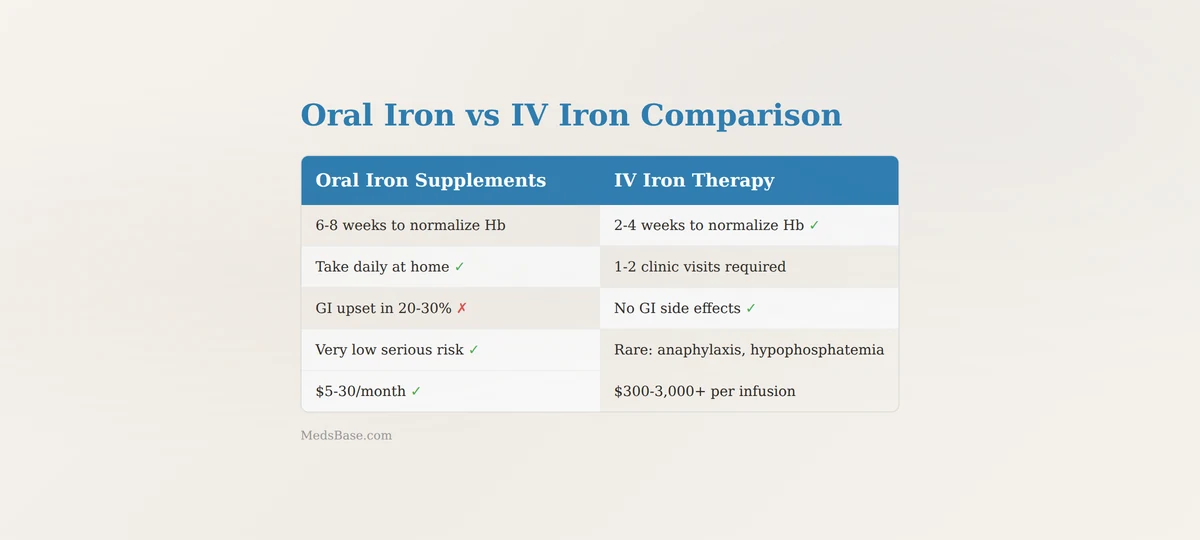
| Speed of response | 6-8 weeks for hemoglobin normalization | 2-4 weeks for hemoglobin normalization |
| Convenience | Taken at home; requires daily dosing | 1-2 clinic visits; complete correction in days |
| GI side effects | Common (20-30%): nausea, constipation, pain | None (bypasses the gut) |
| Serious risks | Rare: iron overload with chronic misuse | Rare: anaphylaxis, severe hypophosphatemia |
| Cost | Low: $5-30/month over the counter | Higher: $300-3,000+ per infusion (varies by product and insurance) |
| Best for | Mild-moderate deficiency; no absorption issues; non-urgent correction | Severe deficiency; malabsorption; GI intolerance; need for rapid correction; pregnancy (2nd/3rd trimester) |
Which one fits which situation? If your hemoglobin is above 9-10 g/dL and you can tolerate oral iron, start there — it’s safe, cheap, and effective for most people. If your hemoglobin is below 8 g/dL, you have active bleeding, you’ve tried oral iron and couldn’t tolerate it or didn’t respond, or you’re in your second or third trimester of pregnancy with significant anemia, IV iron becomes the more appropriate iron deficiency anemia treatment choice. Discuss all options with your doctor, including which specific IV iron product they use and why.
What Does the Research Say?
Research Spotlight
A 2021 meta-analysis published in JAMA Network Open comparing all major oral and IV iron formulations found that intravenous iron was consistently more effective than oral iron for raising hemoglobin — but the risk of serious adverse events, while low overall, varied meaningfully between IV iron products. Ferric carboxymaltose was associated with a 3-5 times higher risk of hypophosphatemia compared to iron sucrose or ferric derisomaltose. This finding preceded and is consistent with the FDA’s September 2026 decision to upgrade the warning.
| Study | Year | Key Finding |
|---|---|---|
| JAMA Network Open — Meta-analysis of IV vs Oral Iron | 2021 | IV iron more effective than oral for hemoglobin response; hypophosphatemia risk highest with ferric carboxymaltose |
| Lancet Haematology — Every-Other-Day Dosing Trial | 2019 | Alternate-day oral iron dosing increased fractional absorption by 40-50% vs consecutive-day dosing while reducing GI side effects |
| Gut — Hepcidin and Iron Absorption | 2017 | Oral iron raises hepcidin for 24 hours, blocking absorption of the next dose — explaining why less frequent dosing can paradoxically deliver more iron |
| American Journal of Hematology — IV Iron Safety Review | 2022 | Overall serious adverse event rate with modern IV iron ~1:200,000; ferric derisomaltose and iron isomaltoside show lowest hypophosphatemia rates |
What this means for you: The science supports a practical approach: try oral iron first, but take it every other day rather than daily — you’ll likely absorb more iron and suffer fewer side effects. If you need IV iron, ask your doctor which product they use and whether the FDA’s recent boxed warning on Injectafer changes the preferred option for your case.
How to Maximize Iron Absorption
Up to 80% of the iron in an oral supplement can pass through your body unabsorbed if you take it at the wrong time or with the wrong foods. Here’s how to get the most from your iron deficiency anemia treatment:
- Take iron on an empty stomach. Food reduces absorption by 40-66%. Take your supplement 1 hour before a meal or 2 hours after. If this causes nausea, take it with a small amount of food — some absorption is better than none.
- Pair it with vitamin C. A glass of orange juice, a 250 mg vitamin C tablet, or even a squeeze of lemon boosts absorption significantly. Vitamin C converts iron into its more absorbable form and prevents it from binding to absorption-blocking compounds.
- Avoid calcium and tannins within 2 hours of your iron dose. Dairy products, calcium supplements, tea (especially black and green tea), coffee, and red wine all contain compounds that bind iron and prevent absorption. Wait at least 2 hours after taking iron before consuming any of these.
- Don’t take iron with antacids or PPIs. Stomach acid is essential for converting dietary iron into an absorbable form. If you take omeprazole, pantoprazole, or other acid-reducing medications, talk to your doctor — you may need IV iron instead.
- Cook in cast iron. Cooking acidic foods (tomato sauce, lemon-based dishes) in cast iron cookware can add 2-5 mg of absorbable iron to a meal — a small but meaningful contribution over time.
- Know your heme from your non-heme iron. Heme iron (from meat, poultry, fish) is absorbed at roughly 25%, while non-heme iron (from plants, eggs, dairy) absorbs at about 5-12%. Pair non-heme iron with vitamin C and heme iron sources to improve absorption from plant-based meals.
Treatment Alternatives and Adjuncts
While supplements and IV iron are the mainstays of iron deficiency anemia treatment, there are situations where other approaches play a role:
Dietary Changes
For mild deficiency (hemoglobin above 11 g/dL, ferritin above 15 ng/mL), dietary changes alone may be sufficient. The top iron-rich foods include: liver and organ meats (by far the richest source, with 5-10 mg per 3 oz serving), red meat, oysters and clams, dark leafy greens (spinach, kale), legumes, fortified cereals, pumpkin seeds, and dried apricots. The key is pairing plant-based sources with vitamin C and avoiding tea or coffee with meals.
Treating the Underlying Cause
For women with heavy menstrual bleeding, hormonal birth control, tranexamic acid, or endometrial ablation may reduce monthly iron loss enough to make iron deficiency anemia treatment actually work. For GI bleeding, identifying and treating the source (ulcer, polyp, angiodysplasia) is essential. For celiac disease, a strict gluten-free diet restores absorption capacity within months.
Blood Transfusion
Reserved for severe, symptomatic anemia — typically hemoglobin below 7 g/dL or below 8 g/dL in patients with cardiovascular disease. A transfusion is a temporary fix, not a long-term iron deficiency anemia treatment strategy, and carries its own risks (volume overload, transfusion reactions, iron overload with repeated transfusions).
If you’re looking for general health products and supplements to support your recovery alongside medical treatment, browse the general health support products available at MedsBase. Women — who make up the majority of iron deficiency cases — may also find relevant options in the woman’s health supplements section.
Related Reading
- Metformin and Vitamin B12 Deficiency: What Every Patient Should Know — B12 deficiency often coexists with iron deficiency and causes overlapping symptoms
- Managing Chronic Conditions — Many chronic conditions predispose to iron deficiency
Frequently Asked Questions
What is the fastest way to cure iron deficiency anemia?
The fastest iron deficiency anemia treatment is intravenous iron therapy. A single IV iron infusion can deliver the equivalent of months of oral supplementation in 15-60 minutes, with hemoglobin typically normalizing within 2-4 weeks. However, IV iron is reserved for people with severe anemia, malabsorption, or oral iron intolerance — it is not first-line treatment for everyone. For non-urgent cases, oral iron taken every other day with vitamin C on an empty stomach is the most practical approach.
How long does it take for iron supplements to work for iron deficiency anemia treatment?
Most people notice some improvement in energy and brain fog within 7-14 days of starting iron deficiency anemia treatment with oral supplements, even before hemoglobin levels rise significantly. Hemoglobin typically increases by 1-2 g/dL every 2-3 weeks and normalizes within 6-8 weeks. Full replenishment of iron stores (ferritin) takes 3-6 months after hemoglobin normalizes, which is why stopping too early often leads to recurrence.
What are the side effects of iron infusions?
Common side effects include headache, nausea, flushing, and a metallic taste during the infusion (typically resolving within hours). Muscle or joint pain may occur in the days following, particularly with ferric carboxymaltose. Rare but serious risks include severe allergic reactions (anaphylaxis, ~1 in 200,000-250,000 infusions with modern IV iron products) and severe hypophosphatemia — the FDA added a boxed warning to Injectafer for this risk in September 2026.
Can you treat iron deficiency anemia without supplements?
Yes — if the deficiency is mild (hemoglobin above 11 g/dL, ferritin above 15 ng/mL) and the underlying cause is purely dietary. A focused diet rich in heme iron (red meat, liver, shellfish) and non-heme iron (legumes, spinach, fortified cereals), always paired with vitamin C, can correct mild deficiency over 2-3 months. However, most diagnosed cases of iron deficiency anemia are moderate to severe and require supplemental or IV iron for timely correction.
Which iron supplement is easiest on the stomach?
Iron bisglycinate (chelated iron) is generally the best-tolerated form, causing significantly less nausea, constipation, and abdominal pain than ferrous sulfate. Heme iron polypeptide is also well-tolerated. If you’re struggling with ferrous sulfate side effects, switching to every-other-day dosing and taking it with a small amount of food (knowing absorption will be somewhat reduced) are practical first steps before changing formulations.
What happens if iron deficiency anemia goes untreated?
Untreated iron deficiency anemia progressively worsens — hemoglobin continues to drop, leading to debilitating fatigue, severe shortness of breath, chest pain, and potentially heart failure as the heart strains to compensate for low oxygen. Cognitive effects include impaired concentration, memory problems, and reduced work performance. In pregnancy, untreated iron deficiency anemia increases the risk of preterm birth, low birth weight, and maternal complications. In children, it can cause irreversible developmental delays. The condition is treatable — but the longer it goes unaddressed, the longer recovery takes.
Does the FDA Injectafer warning mean all IV iron is unsafe?
No. The September 2026 FDA boxed warning applies specifically to ferric carboxymaltose (Injectafer) and its risk of severe hypophosphatemia. Other IV iron products — including iron sucrose, ferric derisomaltose, and iron isomaltoside — carry significantly lower risk of this specific complication and remain appropriate iron deficiency anemia treatment options when oral iron isn’t sufficient. If your doctor recommends IV iron, the key question is which product they will use and why.
Can iron deficiency anemia treatment cause weight gain or other unexpected effects?
Iron itself does not directly cause weight gain. However, some people do gain a few pounds during iron deficiency anemia treatment — this is usually because their metabolism normalizes after being suppressed by chronic anemia, their appetite returns as they feel better, and they become more active, potentially building muscle that was lost during the deficiency. Dark stools are a normal and expected effect of iron supplements (unabsorbed iron passes through) and are not a cause for concern.
The Bottom Line
Iron deficiency anemia treatment works — and it works well for the vast majority of people. The key is matching the treatment approach to your specific situation: the severity of your deficiency, its underlying cause, and your tolerance for different forms of iron.
Start with a clear diagnosis of why you’re iron deficient. For most people with mild to moderate deficiency, every-other-day oral iron paired with vitamin C — taken away from calcium, tea, and coffee — is effective and affordable. If you can’t tolerate oral iron or your deficiency is severe, IV iron is a powerful alternative, but the specific product matters. The FDA’s September 2026 boxed warning on Injectafer makes it more important than ever to discuss options with your doctor.
What to do next: If you have symptoms of iron deficiency, get a blood test. If you’ve been diagnosed and prescribed iron, take it as directed (but ask about every-other-day dosing). If you’re not improving after 6-8 weeks, follow up — you may need a different formulation, a dose adjustment, or investigation into why you’re not absorbing iron. Effective iron deficiency anemia treatment exists for virtually every situation — you don’t need to live with debilitating fatigue.
Wondering what else might be causing your fatigue? Read our guide on metformin and vitamin B12 deficiency — B12 deficiency symptoms often overlap with iron deficiency. Or explore our chronic conditions resource hub for guidance on managing ongoing health concerns.
Last updated: September 4, 2026. Reviewed by a clinical pharmacist. This article is for educational purposes only and does not constitute medical advice. Always consult your healthcare provider before starting, changing, or stopping any iron deficiency anemia treatment.

Written by
Sophie ChenPharmaceutical Content Researcher · 8 years experience
Sophie Chen is a pharmaceutical content researcher with 8 years covering generic medication access and clinical pharmacology. She specialises in international regulatory frameworks, bioequivalence standards, and patient-facing education on therapeutic drug classes. She is not a clinician.