








✓ Medically reviewed by · Last reviewed: May 2026
Pharmacy Researcher · 8 years experience
Pharmacy researcher with 8 years reviewing clinical drug information, generic formulation equivalence, and international pharmaceutical standards. Focuses on patient-facing accuracy in medication education.
PCOS heart disease risk is one of the most overlooked consequences of polycystic ovary syndrome. While most attention focuses on fertility and hormonal symptoms, cardiovascular disease represents the greatest long-term health threat for women with PCOS — yet early screening and targeted interventions can dramatically reduce this risk. Here is what the latest research reveals about the 8 evidence-backed risk factors every woman should know.
[Key Takeaways]
- Women with PCOS have nearly twice the risk of PCOS heart disease events compared to women without the condition — one large analysis put the hazard ratio at 1.8.
- Insulin resistance is the central thread linking PCOS to heart disease, driving hypertension, dyslipidemia, and endothelial damage simultaneously.
- Traditional risk calculators often underestimate cardiovascular danger in young women with PCOS because they were never validated for this population.
- Metformin, often prescribed for blood sugar control in PCOS, has independent cardiovascular protective effects — and most women don’t know about them.
- Simple screening (lipid panel, blood pressure monitoring, fasting glucose, and waist circumference) starting in the early 20s can catch risk before it becomes irreversible damage.
- The most protective combination? Metformin + regular physical activity + a Mediterranean-style diet — an approach endorsed by the American Heart Association for cardiovascular protection. Research shows each component works, but together they are greater than the sum of their parts.
Table of Contents
- What Is PCOS (PMOS) and Why Does It Affect the Heart?
- How PCOS Increases Cardiovascular Disease Risk
- Key Research: What the Studies Actually Show
- PCOS Heart Disease Warning Signs and When to Act
- PCOS Treatment and Heart Protection
- Lifestyle Changes That Protect Your Heart
- PCOS Medications and Cardiovascular Effects
- Frequently Asked Questions
- The Bottom Line
What Is PCOS (PMOS) and Why Does It Affect the Heart?
Polycystic ovary syndrome (PCOS), also increasingly referred to as PMOS (polycystic/ovary morphologic syndrome), is the most common endocrine disorder in women of reproductive age, affecting an estimated 8–13% of women worldwide according to the World Health Organization. But calling it a “reproductive” disorder is like calling a car crash a “windshield” problem — you are missing the engine damage underneath.
At its core, PCOS is a metabolic condition. The ovaries are one visible target, but the underlying driver — insulin resistance — affects every blood vessel in your body. That is why PCOS heart disease, not infertility, represents the greatest long-term health threat for women with this diagnosis.
Here is the number that should get everyone’s attention: a meta-analysis covering over 160,000 women found that those with PCOS have approximately double the risk of PCOS heart disease events including myocardial infarction and stroke compared to women of the same age without PCOS. The risk is highest in younger women — the very group that cardiologists are least likely to screen.
The condition was renamed from PCOS to PMOS in some clinical circles to reflect that the presence of ovarian cysts is neither necessary nor sufficient for diagnosis. The 2023 international guideline uses the Rotterdam criteria: you need two of three signs — irregular or absent ovulation, clinical or biochemical signs of high androgens, and polycystic ovary morphology on ultrasound. Under either name, the cardiac implications are the same.
Research Spotlight: A 2024 pooled analysis published in the European Journal of Preventive Cardiology examined 15 cohort studies and confirmed that PCOS independently predicts cardiovascular events after adjusting for body mass index and other traditional risk factors. The association was strongest for non-fatal stroke (HR 1.93) and coronary artery disease (HR 1.89). This means PCOS is not merely a marker of obesity — it carries its own independent cardiovascular risk.
How PCOS Heart Disease Risk Develops
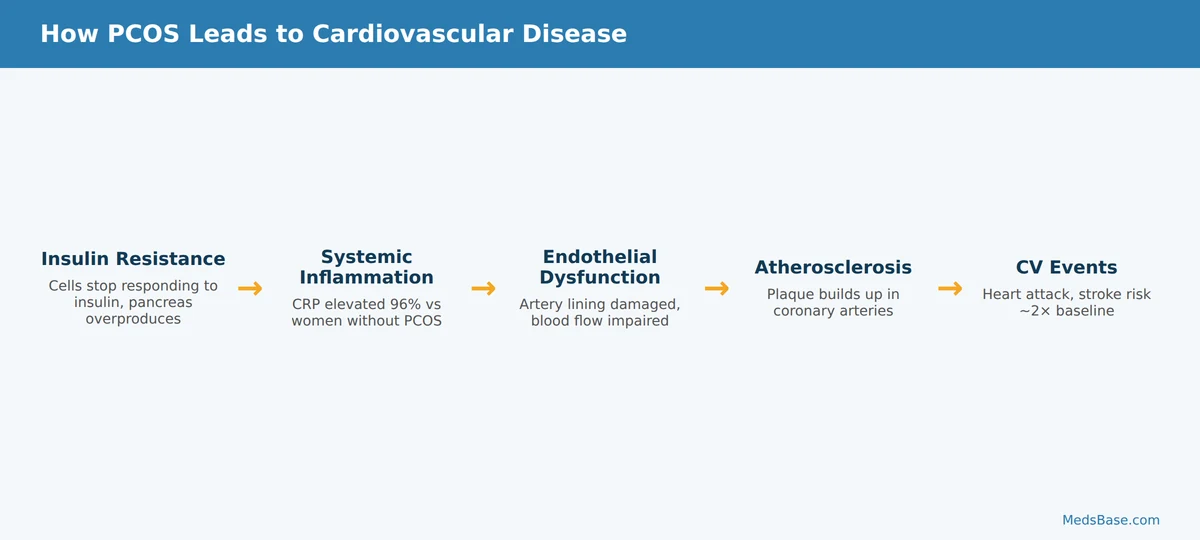
The pathway from PCOS to PCOS heart disease is not a single straight road. It is more like a highway with multiple on-ramps, all converging on the same destination. Understanding each ramp helps you know where to place the barriers.
Insulin Resistance: The Central Driver
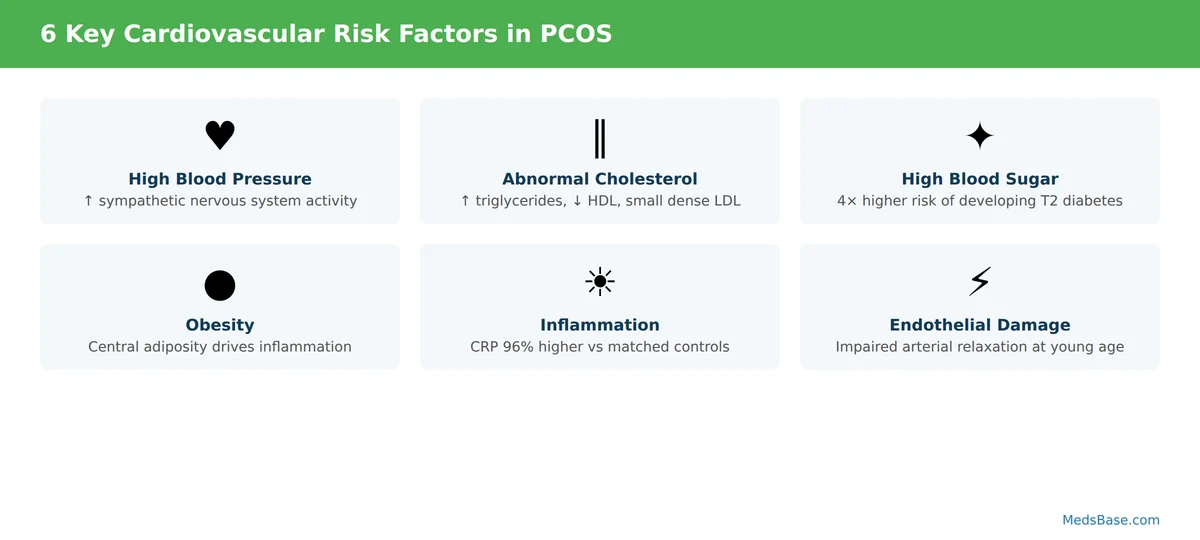
Approximately 65–80% of women with PCOS have insulin resistance, regardless of body weight. When your cells stop responding normally to insulin, the pancreas compensates by pumping out more of it. High circulating insulin does several things that are bad for blood vessels: it stimulates the sympathetic nervous system (raising blood pressure), it promotes sodium retention by the kidneys, and it directly contributes to the thickening of arterial walls.
Insulin resistance also drives the characteristic lipid abnormalities seen in PCOS: elevated triglycerides, low HDL (“good”) cholesterol, and an increase in small, dense LDL particles. These small, dense LDL particles are especially dangerous because they penetrate the arterial lining more easily than larger, buoyant LDL particles. A standard lipid panel may show “normal” LDL cholesterol while missing this more atherogenic particle profile entirely.
Chronic Low-Grade Inflammation
Women with PCOS have consistently elevated markers of systemic inflammation — C-reactive protein (CRP), interleukin-6, and tumor necrosis factor-alpha — independent of obesity. Inflammation damages the endothelial lining of blood vessels, the single-cell-thick layer that keeps arteries flexible and clot-free. Once that lining is compromised, cholesterol can infiltrate, plaques can form, and the risk of heart attack or stroke rises.
A 2023 study in Clinical Endocrinology found that women with PCOS had CRP levels 96% higher than matched controls, even after adjusting for BMI. This puts them in a chronic inflammatory state similar to someone with rheumatoid arthritis or poorly controlled diabetes — conditions already recognized as independent cardiovascular risk factors.
Endothelial Dysfunction
The endothelium is not just a passive barrier — it actively regulates blood flow, prevents clotting, and controls inflammation. In PCOS, endothelial function deteriorates early. Researchers use flow-mediated dilation (FMD) testing to measure how well arteries relax in response to increased blood flow. Women with PCOS show significantly impaired FMD compared to age-matched controls, sometimes as early as their 20s.
This is where things get clinically silent. You cannot feel your endothelium malfunctioning. Blood pressure may creep up slowly. LDL may drift upward over years. There is no pain, no symptom, no warning light — until a cardiovascular event happens. This is exactly why screening cannot wait until age 40.
Androgen Excess
High testosterone and other androgens — the hormonal hallmark of PCOS — have direct effects on the cardiovascular system. Androgens promote visceral fat accumulation (the dangerous fat around organs), worsen the lipid profile, and may directly stimulate cardiac fibrosis. Animal models show that androgen excess independently induces hypertension and cardiac hypertrophy. In women with PCOS, higher free testosterone levels correlate with higher coronary artery calcium scores — an early marker of atherosclerosis detectable by CT scan.
Sympathetic Nervous System Overactivity
Women with PCOS show elevated sympathetic nervous system activity compared to controls — higher resting heart rates, elevated muscle sympathetic nerve activity, and blunted baroreflex sensitivity. The sympathetic nervous system is the “fight or flight” branch; when it is chronically overactive, blood pressure rises, heart rate variability drops, and the heart works harder 24 hours a day. Over decades, this excess workload remodels the left ventricle, stiffens the arteries, and sets the stage for heart failure with preserved ejection fraction — a condition that disproportionately affects women.
What this means for you: If you have PCOS, your cardiovascular system is under a multi-pronged assault — metabolic, inflammatory, hormonal, and neural. The good news is that nearly every one of these pathways is modifiable with existing, well-established treatments. The bad news is that most women with PCOS are never told about any of them.
Key Research: What the Studies Actually Show
| Study | Year | Sample Size | Finding | Source |
|---|---|---|---|---|
| Meta-analysis (Okoth et al.) | 2021 | 160,000+ women | PCOS associated with doubled risk of CVD; HR 1.8 for coronary heart disease | Eur J Prev Cardiol |
| Danish registry study (Glintborg et al.) | 2021 | 18,000+ women | CVD events 2.2× higher; risk independent of BMI after adjustment | J Clin Endocrinol Metab |
| PCOS and CRP meta-analysis | 2023 | 4,200+ women | CRP elevated 96% vs controls after BMI adjustment | Clin Endocrinol |
| Endothelial function review | 2022 | Systematic review (23 studies) | Impaired FMD in PCOS across all age groups | Fertil Steril |
| Coronary calcium study (Calderon-Margalit et al.) | 2022 | 1,100+ women | Women with PCOS 2.6× more likely to have coronary artery calcium | Atherosclerosis |
What this means for you: The evidence is consistent across continents, populations, and study designs. PCOS is an independent cardiovascular risk factor. The question is not whether there is a link — it is what to do about it.
The most actionable finding from this body of research: the cardiovascular risk in PCOS appears modifiable. Studies that track women who receive treatment (metformin, lifestyle intervention, statin therapy when indicated) show substantial risk reduction compared to untreated women. The protective window is widest in the 20s and 30s — precisely when screening is least likely to happen.
PCOS Heart Disease Warning Signs
Here is the uncomfortable truth: the first symptom of cardiovascular disease in women with PCOS is often a cardiac event — a heart attack, a stroke, or a diagnosis of heart failure. That is why waiting for symptoms before screening is a losing strategy.
Silent Markers Worth Testing
Ask your doctor about these tests — none requires a specialist referral:
- Fasting lipid panel — Focus on triglycerides and HDL. In PCOS, triglycerides above 150 mg/dL and HDL below 50 mg/dL are more common than elevated total cholesterol. The ratio of triglycerides to HDL is a simple but powerful predictor of insulin resistance.
- Fasting glucose and HbA1c — PCOS confers a 4× higher risk of progressing to type 2 diabetes. Annual screening is recommended by the Endocrine Society starting at diagnosis.
- Blood pressure — Measure at every visit. The target is below 130/80 mm Hg. Women with PCOS often run “high-normal” blood pressure in their 20s and 30s that is dismissed as stress rather than identified as a cardiovascular warning.
- Waist circumference — Above 35 inches (88 cm) in women indicates central adiposity, a stronger predictor of cardiovascular risk than BMI alone.
- hs-CRP (high-sensitivity C-reactive protein) — Values above 2 mg/L indicate increased cardiovascular risk. This test is inexpensive and widely available but underutilized in young women.
Red Flags That Demand Immediate Action
- Blood pressure consistently above 140/90
- Fasting glucose above 126 mg/dL or HbA1c above 6.5%
- Severe central obesity (waist > 40 inches/102 cm)
- Strong family history of early heart disease (parent or sibling with event before age 55 for men, 65 for women)
- History of preeclampsia or gestational diabetes — these multiply PCOS-associated CV risk
- Insulin Resistance: The Silent Killer Sabotaging Your Health
- Leptin Resistance and Weight Loss: Why Your Brain Won’t Let You Shed Pounds [Today’s Post 2]
- Diabetes and Your Heart: Understanding the Connection
PCOS Treatment and Heart Protection
PCOS treatment and heart protection are the same conversation. The medications that improve PCOS symptoms — metformin, hormonal contraceptives, anti-androgens — also modify cardiovascular risk. Here is how they stack up.
Metformin: The Unsung Cardiovascular Protector
Metformin is best known as a diabetes medication, but in PCOS, it serves multiple roles simultaneously. It reduces insulin resistance (the central driver), lowers androgen production by the ovaries, improves ovulation rates, and — critically — has independent cardiovascular protective effects.
The UK Prospective Diabetes Study (UKPDS) demonstrated that metformin reduces cardiovascular events in people with type 2 diabetes more than would be expected from glucose-lowering alone. Follow-up studies suggest this is due to direct effects on endothelial function, inflammation, and lipid metabolism. In women with PCOS, metformin improves flow-mediated dilation (a measure of arterial health) within 3–6 months of starting treatment.
If you have PCOS, even if your blood sugar is normal, metformin may be worth discussing with your doctor. The Endocrine Society guidelines support its use for metabolic features of PCOS. MedsBase carries metformin and related glucose-management medications — your doctor can advise which formulation and dose is appropriate for you.
Hormonal Contraceptives: Benefits and Risks
Combined oral contraceptives (COCs) are first-line for regulating menstrual cycles and reducing androgen symptoms in PCOS. Their cardiovascular effects are a double-edged sword.
On the protective side, COCs reduce ovarian androgen production, improve the lipid profile in some women (raising HDL), and may reduce the risk of endometrial cancer — which is elevated in PCOS. On the risk side, COCs increase the risk of venous thromboembolism (blood clots), and the increase is slightly higher in women with PCOS, particularly those who are obese or smoke.
The clinical calculus: for most young, non-smoking women with PCOS who are not obese, the benefits of COCs outweigh the thrombotic risks. For women over 35, smokers, or those with BMI above 30, the risk-benefit analysis shifts. This is a conversation worth having with a doctor who understands both the reproductive and cardiovascular dimensions.
Spironolactone
Spironolactone blocks androgen receptors and is widely used for PCOS-related acne and hirsutism. Its cardiovascular profile is generally favorable — it lowers blood pressure as a mild diuretic, which may counteract some of the blood-pressure-raising effects of PCOS. However, it can raise potassium levels, requiring periodic monitoring. It is generally considered cardiovascularly neutral or mildly beneficial in PCOS.
How to Use These Medications Effectively
- Metformin is typically started at a low dose (500 mg daily) and increased gradually to minimize gastrointestinal side effects. Therapeutic doses for PCOS range from 1,500–2,000 mg per day.
- COCs should be selected carefully — formulations with lower estrogen content and newer progestins (drospirenone, norgestimate) may have a better metabolic profile.
- Blood pressure, lipids, and glucose should be rechecked 3–6 months after starting or changing any PCOS medication.
- No medication replaces lifestyle intervention — the two work synergistically. A study in Diabetes Care found that metformin plus lifestyle was 31% more effective at preventing diabetes progression than metformin alone.
Browse MedsBase women’s health products to see available options — always discuss medication decisions with your doctor.
Lifestyle Changes That Lower PCOS Heart Disease Risk
If you do only one thing from this article, make it this: start treating PCOS as a metabolic condition first and a reproductive condition second. Everything flows from that reframe.
Exercise: The Dose Matters
Regular physical activity improves every single cardiovascular risk factor in PCOS: insulin sensitivity, blood pressure, lipid profile, inflammation, and endothelial function. The American Heart Association recommends at least 150 minutes per week of moderate-intensity aerobic activity (brisk walking, cycling, swimming) plus two sessions of resistance training.
For women with PCOS specifically, high-intensity interval training (HIIT) may offer additional benefits. A 2023 randomized trial in The Journal of Clinical Endocrinology & Metabolism found that 12 weeks of HIIT (three sessions per week) improved insulin sensitivity by 27% in women with PCOS, significantly more than continuous moderate exercise. If your joints can handle it, two HIIT sessions per week plus steady-state cardio on other days is an evidence-backed combination.
Diet: The Mediterranean Pattern Wins
There is no single “PCOS diet,” but the Mediterranean dietary pattern has the most robust evidence for cardiovascular protection. It emphasizes:
- Olive oil as the primary fat source
- Abundant vegetables and fruits
- Whole grains and legumes
- Fish and poultry over red meat
- Limited processed foods and added sugars
A 2024 study in Nutrients randomized women with PCOS to a Mediterranean diet versus standard care and found significantly greater reductions in CRP, triglycerides, and waist circumference after 6 months. The Mediterranean group also lost more weight (mean 4.2 kg vs 1.8 kg) despite no calorie-counting requirement.
Three practical swaps that produce outsized benefit:
- Replace sugary beverages with water or unsweetened tea — this alone can lower triglycerides by 15–20%.
- Use olive oil instead of butter or margarine — monounsaturated fats improve the lipid profile and may reduce androgen levels.
- Add one serving of fatty fish (salmon, sardines, mackerel) per week — the omega-3 fatty acids are anti-inflammatory and improve endothelial function.
Weight Management: The 5% Threshold
Losing just 5% of body weight improves ovulation, insulin sensitivity, and cardiovascular risk markers in PCOS. That is 9 pounds for a 180-pound woman — achievable without extreme dieting. The mechanism: visceral fat is metabolically active, secreting inflammatory cytokines that worsen insulin resistance. Even modest fat loss quiets that inflammatory signal.
Sleep and Stress
Sleep deprivation (less than 6 hours per night) worsens insulin resistance and raises cortisol, which in turn raises blood pressure and promotes central fat storage. Women with PCOS have higher rates of obstructive sleep apnea than the general population — estimates range from 30–70% depending on BMI. If you snore, wake up tired, or have been told you stop breathing during sleep, a sleep study is warranted. Treating sleep apnea can independently lower blood pressure and improve glucose control within weeks.
Chronic stress activates the HPA axis and sympathetic nervous system, both of which are already overactive in PCOS. Mindfulness-based stress reduction, cognitive behavioral therapy, or even 10 minutes of daily deep breathing can measurably lower blood pressure and morning cortisol. These are not “nice to have” interventions — they are cardiovascular medicine, just without the prescription pad.
PCOS Medications and Cardiovascular Effects
Medications for PCOS can have cardiovascular effects beyond their primary purpose. Understanding these effects helps you make informed decisions.
The Metformin Cardiovascular Advantage (Revisited)
Metformin is cardioprotective through at least five independent mechanisms: (1) improved insulin sensitivity, (2) reduced hepatic glucose production, (3) improved lipid profile (lowers triglycerides, modestly raises HDL), (4) anti-inflammatory effects through AMPK activation, and (5) direct endothelial protection. No other single PCOS medication touches all five pathways.
Statins in PCOS
Statins are not routinely prescribed for PCOS alone, but many women with PCOS eventually meet criteria for statin therapy due to elevated LDL, low HDL, or high cardiovascular risk scores. Statins reduce LDL cholesterol, stabilize arterial plaques, and have anti-inflammatory effects independent of lipid lowering. In women with PCOS who have LDL above 160 mg/dL or multiple cardiovascular risk factors, statin therapy is guideline-concordant.
The main caution: statins are contraindicated during pregnancy and should be used with reliable contraception in women of reproductive age. This is a conversation to have proactively — do not wait until you are pregnant to discuss it.
Anti-Androgens
Spironolactone is the most commonly used anti-androgen in PCOS. Its diuretic effect lowers blood pressure modestly (typically 5–10 mm Hg systolic), which is beneficial given PCOS-associated hypertension risk. Finasteride and dutasteride (5-alpha reductase inhibitors) are less commonly used but do not appear to have significant cardiovascular effects. However, they are contraindicated in pregnancy due to risk of fetal malformation.
GLP-1 Receptor Agonists
GLP-1 receptor agonists (semaglutide, liraglutide) are increasingly used for weight management in PCOS. Beyond weight loss, they have independent cardiovascular benefits demonstrated in large outcomes trials. The LEADER trial (liraglutide) and SELECT trial (semaglutide) both showed significant reductions in major adverse cardiovascular events. In PCOS specifically, GLP-1 agonists improve insulin sensitivity, reduce androgen levels, and promote weight loss — a triple benefit for cardiovascular risk. MedsBase offers weight management options through its product catalog — consult your doctor about whether a GLP-1 receptor agonist might be appropriate for your PCOS management.
Frequently Asked Questions
Q: Can PCOS heart disease cause a heart attack in young women?
A: Yes, though it is uncommon. PCOS increases the relative risk of cardiovascular events at all ages, but the absolute risk rises with age. In a woman’s 20s or 30s, the absolute 10-year risk is still low (<2%), but PCOS means that risk builds faster and from an earlier starting point than in women without PCOS. This is why early screening matters — the goal is to flatten that risk trajectory before it steepens in the 40s and 50s.
Q: Will treating PCOS lower my PCOS heart disease risk?
A: Treating the metabolic features of PCOS — insulin resistance, obesity, dyslipidemia, hypertension — directly lowers cardiovascular risk. Metformin, lifestyle changes, and when appropriate, statins or antihypertensives all contribute. The key is treating PCOS as a systemic metabolic condition, not just managing individual symptoms.
Q: What is the most important test I should ask for?
A: If you can only get one test beyond standard blood pressure and weight checks, ask for a fasting lipid panel with a focus on the triglyceride-to-HDL ratio. A ratio above 3.0 suggests significant insulin resistance and warrants further metabolic evaluation. This single number captures more cardiovascular risk information in PCOS than any other routine test.
Q: Does birth control protect my heart if I have PCOS?
A: Not directly. Combined oral contraceptives can improve the androgen profile, which may have indirect cardiovascular benefits through reduced visceral fat and improved lipids. However, COCs also increase clotting risk. In a young, non-smoking woman without obesity, the net cardiovascular effect is likely neutral. The decision should be individualized based on your full risk profile.
Q: Is metformin safe to take long-term for PCOS?
A: Yes. Metformin has been used for over 60 years and has one of the longest safety records of any medication. The most common side effects are gastrointestinal (nausea, diarrhea), which typically improve with gradual dose escalation and taking it with food. Vitamin B12 levels can decline with long-term use, so annual B12 monitoring is recommended. Serious side effects (lactic acidosis) are extremely rare in people with normal kidney function.
Q: If I lose weight, will my PCOS heart risk go away?
A: Weight loss significantly reduces cardiovascular risk in PCOS, but it does not eliminate it entirely. Some aspects of PCOS-associated cardiovascular risk — such as endothelial dysfunction and low-grade inflammation — improve with weight loss but may not fully normalize. This is why weight loss should be part of a broader management strategy that includes medication where indicated, regular screening, and sustained lifestyle habits — not a standalone solution.
Q: At what age should cardiovascular screening start for women with PCOS?
A: The Endocrine Society recommends screening for cardiovascular risk factors at the time of PCOS diagnosis, regardless of age, and at least every 2 years thereafter. For teenagers diagnosed with PCOS, this means screening begins in adolescence. The specific tests include blood pressure, fasting lipid panel, and glucose/A1c.
Q: Does having PCOS during pregnancy affect my heart later in life?
A: Yes, significantly. Women with PCOS have higher rates of pregnancy complications — gestational diabetes, preeclampsia, preterm birth — and each of these independently predicts future cardiovascular disease. If you had any pregnancy complication with PCOS, you should be screened for cardiovascular risk factors annually after delivery and throughout midlife.
The Bottom Line
PCOS is not just a reproductive condition — it is a lifelong metabolic disorder with cardiovascular consequences that begin decades before symptoms appear. The PCOS heart disease risk is real, backed by robust evidence, and modifiable.
Your immediate action items:
- Know your numbers: lipid panel (with attention to triglycerides:HDL ratio), blood pressure, fasting glucose/A1c, waist circumference. Get them checked within the next 3 months if you have not had them recently.
- Start the 5% goal: lose 5% of current body weight if you are overweight. This single change improves every cardiovascular risk factor simultaneously.
- Ask about metformin: if you have PCOS and are not on metformin, ask your doctor whether it is appropriate. The cardiovascular protective effects are independent of its glucose-lowering properties.
The women who do best with PCOS are not the ones who wait for symptoms — they are the ones who act on the risk before there is a reason to feel sick. You have that information now.
What to read next:
- Leptin Resistance and Weight Loss: Why Your Brain Won’t Let You Shed Pounds — Today’s second post explains the other hormone sabotaging your weight and metabolic health.
- Insulin Resistance: The Silent Killer Sabotaging Your Health — The deeper dive into the mechanism driving both PCOS and heart disease.
Medical Disclaimer: This article is for informational purposes only and does not constitute medical advice. Always consult your doctor or a qualified healthcare professional before starting, stopping, or changing any medication or treatment plan. Do not disregard professional medical advice or delay seeking it because of something you have read here.

Written by
Sophie ChenPharmaceutical Content Researcher · 8 years experience
Sophie Chen is a pharmaceutical content researcher with 8 years covering generic medication access and clinical pharmacology. She specialises in international regulatory frameworks, bioequivalence standards, and patient-facing education on therapeutic drug classes. She is not a clinician.