








✓ Medically reviewed by · Last reviewed: May 2026
Pharmacy Researcher · 8 years experience
Pharmacy researcher with 8 years reviewing clinical drug information, generic formulation equivalence, and international pharmaceutical standards. Focuses on patient-facing accuracy in medication education.
Quick Answer
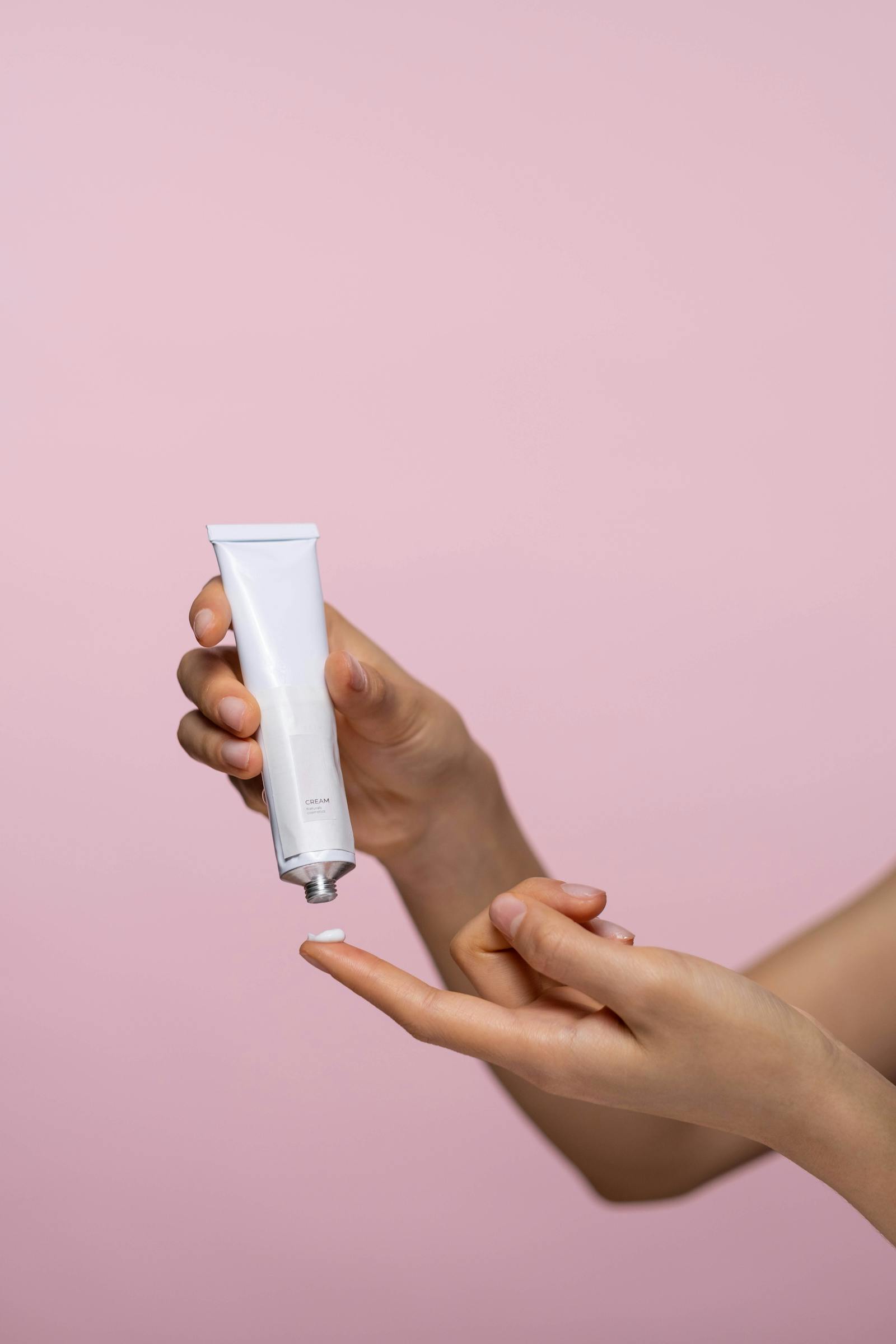
Tretinoin cream 0.05% is the mid-tier strength in the tretinoin ladder — twice as potent as 0.025% and half the strength of 0.1%. It is the strength most clinicians step beginners up to after 8–12 weeks of 0.025% tolerance, and it is the strength with the deepest evidence base for both acne clearance and photoaging reversal. Apply a pea-sized amount to dry skin at night, 3–7 nights per week. Buffer with moisturiser if your barrier flares. Always pair with daily SPF.
What “0.05%” actually means in the tretinoin ladder
Tretinoin (all-trans retinoic acid, the same molecule prescribed under the brand names Retin-A and Renova) is sold in three standard strengths in cream and gel vehicles: 0.025%, 0.05%, and 0.1%. The number is the percentage of active retinoid in the tube — so a 20 g tube of 0.05% cream contains 10 mg of tretinoin.
The strengths are not linear in irritation. The jump from 0.025% to 0.05% is the one most clinical studies frame as “the productive zone” — significantly more anti-acne and anti-aging effect, only a small step up in side effects for most skin types. The jump from 0.05% to 0.1% is where irritation often outpaces benefit unless skin has been on tretinoin for many months.
That is why 0.05% is the strength most dermatologists pick as a long-term maintenance dose — and why it is the strength used in nearly all of the landmark photoaging trials (Weiss 1988, Olsen 1992, Kang 2005). If you have read one of those “tretinoin reverses sun damage” abstracts, the strength being discussed is almost always 0.05%.
How tretinoin works in skin
Tretinoin binds to retinoic acid receptors (RAR-α, RAR-β, RAR-γ) inside the keratinocyte nucleus. Activation of those receptors does four things simultaneously:
- Increases epidermal cell turnover. Dead corneocytes shed faster, which is why pores empty out and comedones — the seed material of acne — lose their environment.
- Normalises follicular keratinisation. The plug of dead keratin that turns a pore into a whitehead stops forming.
- Stimulates collagen synthesis. Type I and type III procollagen production rises within weeks of starting; biopsies show measurable dermal collagen density after 6–12 months.
- Inhibits melanin transfer. Pigment from melanocytes is delivered to keratinocytes less efficiently, which is why hyperpigmentation and post-inflammatory dark spots fade.
This four-mechanism profile is the reason tretinoin is the only topical molecule that is FDA-approved for both acne and photoaging — no other prescription topical does all four jobs.
Who 0.05% is for — and who should pick a different strength
0.05% is the right strength for you if…
- You have used 0.025% nightly for at least 8–12 weeks with no significant peeling, and want stronger results.
- You are in your 30s or 40s starting tretinoin primarily for fine lines, photoaging, or uneven tone.
- You have moderate hormonal acne and have outgrown 0.025% or benzoyl peroxide.
- You want a single workhorse strength you can stay on for years.
Pick 0.025% instead if you are a true beginner, have sensitive or dry skin, are in your teens or early 20s with mild acne, or live in a dry/cold climate. Detailed step-up timing is in our A-Ret vs Retino-A vs Tretin comparison.
Pick 0.1% instead if you have been on 0.05% for 9–12 months and plateaued, have stubborn cystic acne supervised by a dermatologist, or have visible deep wrinkles and want maximum collagen response.
How to apply tretinoin cream 0.05% correctly
The application protocol is the single biggest determinant of whether you tolerate tretinoin. Do this every step:
- Wash with a gentle, low-pH cleanser. Avoid foaming sulfates, salicylic-acid washes, or anything labelled “exfoliating” on the same night.
- Wait 20–30 minutes until skin is bone dry. Damp skin absorbs more tretinoin and irritates faster — this is the most common rookie mistake.
- Dispense a pea-sized amount. For the entire face. Not per cheek, not per zone — one pea total. More cream does not equal more results; it equals more peeling.
- Dot it across forehead, cheeks, chin, and nose, then spread thinly. Avoid the corners of the eyes, the corners of the nose, and lip vermillion.
- Wait 20 minutes, then layer a bland moisturiser. Ceramide or hyaluronic-acid moisturisers buffer irritation without blocking absorption. (This is the “moisturiser sandwich” — see the A-Ret tretinoin guide for the full technique.)
- Use SPF 30+ every morning, even indoors near windows. Tretinoin makes skin photosensitive; an unprotected sunny weekend can undo months of progress. The mechanism is detailed in our tretinoin and sun exposure guide.
Frequency: how often to apply 0.05%
Start lower than you think you need. Most skins tolerate this ramp:
| Weeks | Frequency | What to watch |
|---|---|---|
| 1–2 | 2 nights/week (e.g. Mon, Thu) | Mild tingling normal; flaking should be minimal |
| 3–4 | 3 nights/week (Mon, Wed, Fri) | First “purge” wave may surface around now |
| 5–8 | Every other night | Cheeks may peel slightly; back off if barrier flares |
| 9–12 | 5–6 nights/week | Acne clearance becoming visible |
| 12+ | Nightly (maintenance) | Most people sit here long-term |
If you peel hard at any stage, drop one frequency tier for two weeks before stepping back up. There is no medal for nightly — consistency over six months beats heroics over six weeks.
Retinization: what the first 8–12 weeks look like
“Retinization” is the dermatology term for the adjustment period your skin needs to acclimate to tretinoin. Here is the realistic timeline at 0.05%:
- Week 1–2: Skin feels tight; mild flaking around the corners of the mouth and nose. Pores look slightly bigger as plugs loosen.
- Week 3–6: The “purge” — comedones that were already forming below the surface push up and resolve faster than usual. This can look worse before it looks better. It is not a failure; it is the treatment working.
- Week 6–10: Acne lesions reduce in size and frequency. Texture starts smoothing. Post-inflammatory pigmentation begins fading.
- Week 10–16: Visible clearer skin. Fine lines around the eyes look less etched.
- Month 6+: Photoaging response peaks. Pigment evens out. Pore appearance reduces. This is when “you look great, are you doing something different?” comments start.
Side effects and how to manage them
Common side effects (expected)
Redness, dryness, peeling, mild stinging on application, brief worsening of acne in weeks 3–6. These are dose-dependent and usually fade by week 8–12.
Less common
Eczema-like flares, persistent burning, severe peeling, hyperpigmentation paradox (rare in lighter skin tones; more relevant in Fitzpatrick IV–VI — start at 0.025% if this applies to you).
Stop and consult a clinician if
You develop hives, blistering, eyelid swelling, or a rash spreading beyond the application area. These suggest contact allergy, not retinization.
Five practical fixes for the most common irritation patterns:
- Sandwich your tretinoin between moisturiser layers (moisturiser → wait 20 min → tretinoin → wait 20 min → moisturiser again). Cuts irritation by roughly 30–40% in trials without measurably reducing efficacy.
- Drop frequency before dropping strength. Three nights a week of 0.05% beats nightly of 0.025% over a year.
- Stop all acid actives (glycolic, salicylic, mandelic) for the first 12 weeks. You can reintroduce a low-strength AHA at 3 months if your skin is calm.
- Niacinamide 5% mornings. Reduces redness and supports the barrier. See pairing details in our acne treatments comparison.
- Bland sunscreen, no fragrance. Tretinoin-irritated skin is hyper-reactive; this is not the time for a perfumed SPF.
What 0.05% does for hyperpigmentation and dark spots
Tretinoin 0.05% is one of the three legs of the Kligman triple — the gold-standard prescription protocol for melasma and stubborn post-inflammatory hyperpigmentation. The other two legs are hydroquinone 4% and a low-potency corticosteroid. Patients see measurable lightening within 8–12 weeks; the protocol is detailed in our Melalite hydroquinone guide.
If you are using tretinoin 0.05% alone (without hydroquinone) for hyperpigmentation, expect a slower but real result — usually 4–6 months for visible fading. Daily SPF is non-negotiable; without it the pigment simply re-darkens.
Tretinoin 0.05% for anti-aging: what the studies actually show
The Weiss 1988 trial — 6 months of 0.05% tretinoin cream, vehicle-controlled, biopsy-confirmed — showed measurable reduction in coarse and fine wrinkles, hyperpigmentation, and skin sallowness. The Kang 2005 trial extended this to 12 months and showed sustained collagen-density increase. Olsen 1992 demonstrated the dose-response curve flattens above 0.05% for most photoaging endpoints — i.e., 0.1% is not measurably better than 0.05% for aging skin, but it is measurably more irritating.
Translation: 0.05% sits at the efficacy sweet spot for anti-aging. Going higher buys irritation, not results.
Tretinoin 0.05% products at MedsBase
We carry tretinoin from three WHO-GMP-certified manufacturers, all in 0.05% strength:
- Retino-A Cream 0.05% — Janssen-Cilag (Johnson & Johnson). The legacy reference brand; the one most clinical trials used. 20 g tube, available in 1/2/3/6 tube packs. Standard cream vehicle, suits dry-to-normal skin.
- A-Ret Gel 0.05% — Menarini. The gel-based alternative — same 0.05% tretinoin in an alcohol/glycol gel base, which dries quickly and is better suited to oily or acne-prone skin. 20 g tube, 3/6/9 tube packs.
- Tretiheal Cream — Healing Pharma. Available in 0.025%, 0.05%, and 0.1%; useful if you want to keep all three strengths in your routine on the same vehicle.
- Tretinex Cream — alternative cream-base option for sensitive skin.
- Tazret Forte Cream 0.1% — Glenmark. The next-step-up strength once 0.05% has been tolerated for 9–12 months.
- Retino-A Micro Gel 0.04% / 0.1% — Janssen-Cilag. Microsphere technology; slower release, lower irritation. The closest-to-0.05% strength is the 0.04% microsphere — a good option for sensitive skin that found 0.05% standard cream too harsh.
Compare brands head-to-head in our A-Ret vs Retino-A vs Tretin breakdown, or read the tretinoin vs adapalene comparison if you are not sure tretinoin is the right retinoid for you.
Frequently Asked Questions
Is tretinoin cream 0.05% stronger than retinol?
Yes — significantly. Retinol must be converted by your skin into retinoic acid (the active form) in two steps; the conversion efficiency is roughly 1:20. So 0.05% tretinoin is approximately equivalent to a 1.0% retinol product — except tretinoin gets to work immediately while retinol needs the conversion window.
How long does a 20 g tube of tretinoin 0.05% last?
If you use a true pea-sized amount nightly, a 20 g tube lasts 4–6 months. Most people use too much in the first month; learning the pea-size discipline is the cheapest part of the routine.
Can I use tretinoin 0.05% under my eyes?
Generally yes, but cautiously. Apply it to the orbital bone and the lateral canthi (crows-feet area), not directly to the lid or the under-eye hollow. Start at one night a week in that area and ramp slower than the rest of the face.
Can I use tretinoin 0.05% while pregnant or breastfeeding?
No. Tretinoin is FDA pregnancy category C and is not recommended during pregnancy or while breastfeeding due to potential risk to the foetus and the lack of safety data in nursing infants. Stop tretinoin if you are planning to conceive and discuss alternatives (azelaic acid, niacinamide) with your clinician.
Should I use tretinoin 0.05% in the morning or at night?
Night. Tretinoin is broken down by UV light and is also a photosensitiser, so morning application both reduces its efficacy and increases your sunburn risk. Night-only is the universal recommendation.
Can I use tretinoin 0.05% with vitamin C, niacinamide, or peptides?
Niacinamide and peptides — yes, they pair well and reduce tretinoin-related irritation. Vitamin C — yes but separate the application times: vitamin C in the morning, tretinoin at night. Glycolic, salicylic, mandelic, lactic acids — avoid for the first 12 weeks; reintroduce cautiously after 3 months if your skin is calm.
What is the difference between tretinoin cream 0.05% and tretinoin gel 0.05%?
Same molecule, same concentration, different vehicle. Cream is moisturising and better for dry/normal skin; gel dries faster and is preferred for oily/acne-prone skin. Gels can be slightly more irritating because they often contain alcohol or propylene glycol. Pick by skin type, not by perceived “strength” — there is no strength difference.
When can I move up from 0.05% to 0.1%?
Only after 9–12 months of stable nightly use of 0.05% with no irritation, and only if you have a clear reason — plateau on acne, deeper wrinkles, or stubborn melasma. Many people never need to move up; 0.05% sustained over years outperforms a few months of 0.1% punctuated by skin barrier crashes.
Does tretinoin 0.05% expire?
Yes. Tretinoin is sensitive to light, heat, and oxygen. Store the tube tightly closed, away from sunlight and above 25°C. An unopened tube is stable for ~24 months; an opened tube is generally usable for ~12 months. If the cream goes yellow-brown or smells rancid, replace it.
Is there a non-prescription alternative to tretinoin 0.05%?
Adapalene 0.1% gel (sold over the counter in many countries) is the closest comparable. It targets acne well but is weaker on photoaging. Retinol 0.5–1.0% serums are gentler but slower. For full mechanism details see our tretinoin vs adapalene comparison.
Where can I order tretinoin cream 0.05% online?
You can order Retino-A Cream 0.05%, A-Ret Gel 0.05%, Tretiheal Cream 0.05%, and other tretinoin generics directly from MedsBase. We ship worldwide, no prescription needed at checkout, with WHO-GMP-certified manufacturer sourcing and Reshipment Assurance on every order. See our Reshipment Assurance Policy and credit card payment guide for full ordering details.
📦 Reshipment Assurance: Every MedsBase order is covered. If your package has not arrived after 20 business days, we reship at no extra cost. Read the policy.
Why order tretinoin from MedsBase
- 🌍 Worldwide Shipping — discreet packaging, no medication or pharmacy names on the outside.
- 🏭 WHO-GMP-certified manufacturers only — Janssen-Cilag (Cipla), Menarini, Glenmark, Healing Pharma.
- 💳 No prescription needed at checkout — your statement shows the licensed card-payment processor, never “MedsBase” or any medication name.
- 🛡️ Reshipment Assurance — covered on every order, no extra charge.
Last updated by Sophie Chen, MedsBase Editorial. References available on request. This guide is for informational purposes and is not a substitute for individualised medical advice.

Written by
Sophie ChenPharmaceutical Content Researcher · 8 years experience
Sophie Chen is a pharmaceutical content researcher with 8 years covering generic medication access and clinical pharmacology. She specialises in international regulatory frameworks, bioequivalence standards, and patient-facing education on therapeutic drug classes. She is not a clinician.