








✓ Medically reviewed by · Last reviewed: May 2026
Pharmacy Researcher · 8 years experience
Pharmacy researcher with 8 years reviewing clinical drug information, generic formulation equivalence, and international pharmaceutical standards. Focuses on patient-facing accuracy in medication education.
If you’ve spent ten minutes on skincare TikTok, you’ve heard both names tossed around like they’re interchangeable. They aren’t. Tretinoin vs retinol is the single most confused comparison in all of skincare — and getting it wrong can cost you months of useless effort or a face full of unnecessary irritation.
Here’s the headline: tretinoin and retinol are cousins from the same vitamin A family, but tretinoin is roughly 20 times more potent at the receptor level. One is a prescription medication. The other sits next to the cleansers at your local drugstore. They share the same end goal — clearer, smoother, younger-looking skin — but they get there on very different timelines and at very different costs in tolerability.
This guide breaks down exactly how each one works, who should use which, what the clinical evidence actually says, and how to climb the “retinoid ladder” without scorching your face along the way.
Key Takeaways
- Tretinoin is prescription-strength all-trans retinoic acid — the active form your skin uses immediately.
- Retinol is an over-the-counter precursor that your skin must convert through two enzyme steps before it becomes active.
- At the receptor level, tretinoin is approximately 20× more potent than retinol at equivalent concentrations.
- Retinol is gentler and slower; tretinoin is faster, stronger, and harsher in the first 8 weeks.
- With consistent long-term use, retinol can deliver comparable results — it just takes 2–3 times longer.
- Neither is safe in pregnancy or breastfeeding.
Last updated: April 8, 2026 · Reviewed by [Board-Certified Dermatologist]
Jump to section:
What they are · How they work · Key uses · Safety & side effects · Research · Side-by-side · How to use · FAQ · Bottom line
What Are Tretinoin and Retinol? (Definition & Background)
Tretinoin and retinol are both topical vitamin A derivatives used to treat acne, fine lines, hyperpigmentation, and uneven skin texture. Tretinoin is a prescription-strength medication containing all-trans retinoic acid — the active form. Retinol is an over-the-counter cosmetic ingredient that must be converted by skin enzymes into retinoic acid before it can do its job. Both belong to the broader retinoid family.
Vitamin A’s role in skin health was first documented in the 1930s, when researchers noticed dietary deficiency caused dry, scaly skin. By the late 1960s, dermatologists had figured out how to apply vitamin A topically, and tretinoin became the first FDA-approved retinoid for acne in 1971 under the brand name Retin-A.
Retinol entered the cosmetic market a couple of decades later as cosmetic chemists looked for a gentler, non-prescription alternative that delivered some of tretinoin’s benefits without the prescription requirement or aggressive side-effect profile.
Where they sit on the retinoid ladder
Dermatologists talk about a “retinoid ladder” — a hierarchy of vitamin A derivatives ranked by potency:
- Retinyl esters (retinyl palmitate, retinyl acetate) — gentlest, weakest
- Retinol — moderate, OTC
- Retinaldehyde — slightly stronger than retinol
- Tretinoin (all-trans retinoic acid) — prescription, highly potent
- Tazarotene — prescription, most potent
Each step up the ladder brings more potency and more potential irritation. The trick is climbing only as high as your skin can comfortably handle.
How Do Tretinoin and Retinol Work? (The Science)
This is where the tretinoin vs retinol comparison gets concrete. Both molecules ultimately do the same job — they bind to retinoic acid receptors inside your skin cells and trigger genetic changes that improve skin function. The difference is how they get there.
The conversion problem
Tretinoin is already the biologically active molecule (all-trans retinoic acid). The moment it touches your skin, it can bind to retinoic acid receptors (RAR-α, RAR-β, RAR-γ) and start working immediately.
Retinol, by contrast, is two enzymatic steps away from being active:
- First, alcohol dehydrogenase converts retinol to retinaldehyde.
- Then, aldehyde dehydrogenase converts retinaldehyde to retinoic acid — only now is it the same molecule as tretinoin.
Each conversion step is inefficient. Research suggests roughly 90% of the active equivalent is lost at each step, which is why a 1% retinol product delivers only a small fraction of the receptor-level activity of an equal-concentration tretinoin product.
🔬 Research Spotlight. A foundational 1986 study by Kligman and colleagues, published in the Journal of the American Academy of Dermatology, established that topical tretinoin produces measurable epidermal thickening, increased collagen, and reversal of solar elastosis within 4–10 months of nightly use. Subsequent reviews (Mukherjee et al., Clinical Interventions in Aging, 2006) confirm that retinol’s slow conversion is exactly why it is gentler: less active drug reaches the receptor at any given moment, so the irritation cascade is muted.
The strength gap isn’t marketing. It is enzymatic.
What happens after binding
Once either molecule binds the receptor, the downstream effects are identical:
- Accelerated cell turnover — old surface cells shed faster, unclogging pores and refining texture.
- Increased collagen synthesis — fibroblasts produce more type I and III collagen, plumping fine lines.
- Pigment normalisation — melanocytes distribute pigment more evenly, fading dark spots over months.
- Reduced sebum production — relevant for acne control.
The mechanism is the same; the speed and intensity are not.
Key Uses and Applications of Tretinoin and Retinol
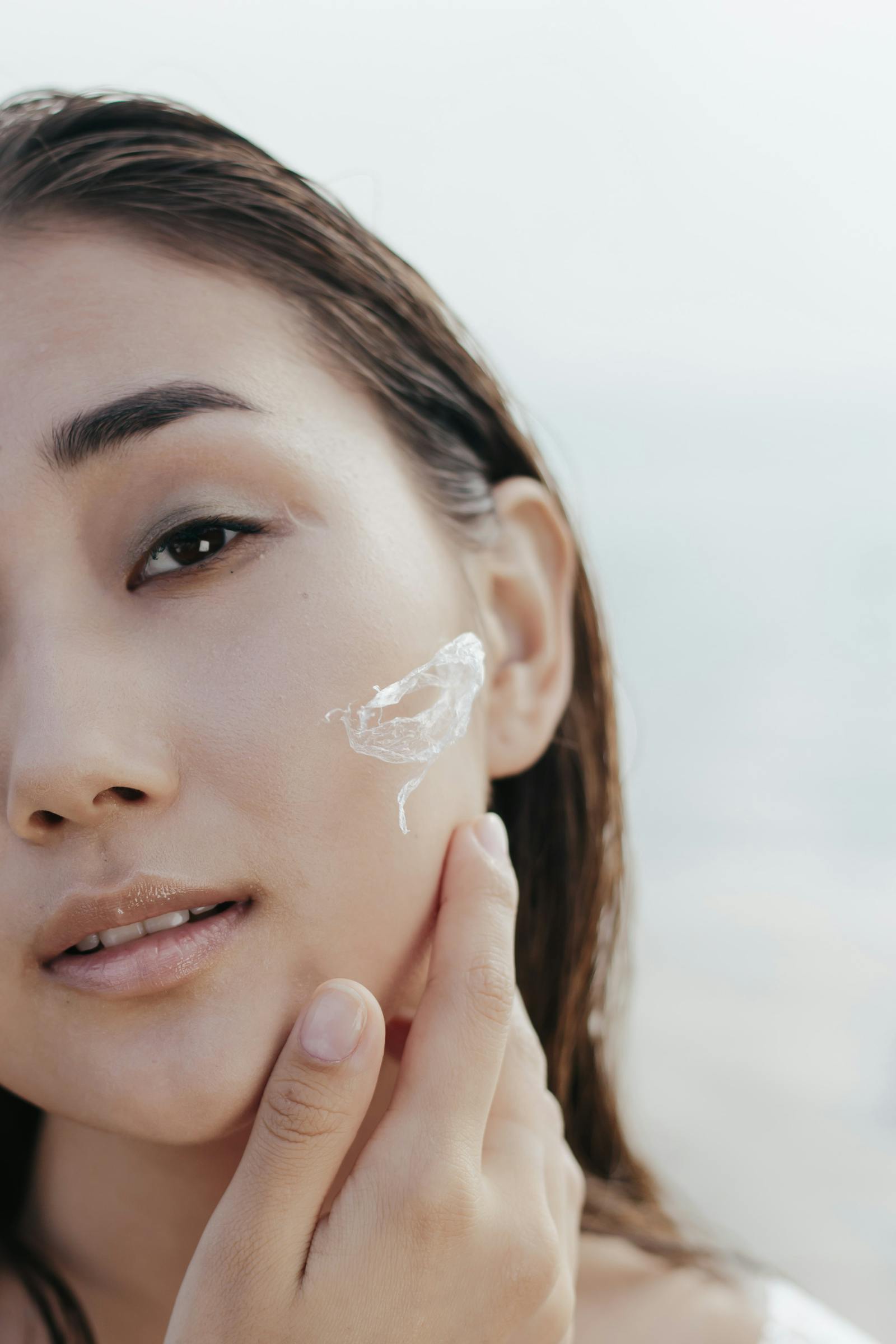
Both retinoids are used for the same broad set of skin concerns. The clinical question is rarely “does it work?” — it is “how much, how fast, and at what tolerability cost?”
Acne (especially hormonal and comedonal)
Tretinoin is first-line topical therapy for inflammatory and comedonal acne. It works by preventing microcomedones — the precursors to pimples — from forming in the first place. Most patients see meaningful improvement after 8–12 weeks. Retinol can also help with mild acne, but the conversion lag means it is far less effective for moderate or severe cases. For practical guidance, see our guide on how to use tretinoin for acne treatment.
Fine lines and wrinkles
This is the use case where retinol earns most of its reputation. For mild, early-stage fine lines and crêpey texture, retinol at 0.5%–1% can produce visible smoothing over 6–12 months. Tretinoin delivers comparable results in about a third of the time but with a longer adjustment period.
Hyperpigmentation, melasma, and dark spots
For post-inflammatory hyperpigmentation and melasma, tretinoin is the gold standard — usually combined with hydroquinone in the Kligman formula. See our complete guide to melasma triple combination therapy for the full breakdown. Retinol can fade mild pigmentation slowly, but is rarely effective enough on its own for moderate or severe cases.
Smoothing texture and refining pore appearance
Both retinoids refine texture and visually tighten enlarged pores by accelerating cell turnover. Retinol is the gentler option for ongoing maintenance; tretinoin is the more dramatic intervention.
Sun damage and photoaging
Tretinoin remains the most-studied topical for reversing photoaging — a category retinol struggles to match in head-to-head trials. If sun damage is your primary concern, tretinoin almost always wins.
👤 Who Is This For?
Reach for tretinoin if you:
- Have moderate-to-severe acne
- Want fastest possible anti-ageing results
- Have already tolerated retinol or adapalene
- Have access to a prescriber and can commit to a strict SPF and moisturiser routine
Reach for retinol if you:
- Are completely new to retinoids
- Have sensitive, reactive, or rosacea-prone skin
- Cannot easily get a prescription
- Want gentle anti-ageing maintenance with low tolerance for the “purge and peel” phase
Tretinoin vs Retinol Safety, Side Effects & Dosage
Both retinoids carry the same family of side effects — but the severity and frequency differ dramatically. Knowing what to expect from each is the difference between sticking with treatment and quitting at week 3.
Side effects compared
| Side Effect | Tretinoin Frequency | Retinol Frequency | Severity |
|---|---|---|---|
| Dryness & flaking | Very common (>50%) | Common (20–35%) | Mild |
| Redness (erythema) | Common (30–50%) | Uncommon (10–20%) | Mild–moderate |
| Stinging on application | Common (20–40%) | Uncommon (5–15%) | Mild |
| Initial “purge” breakout | Common (20–30%) | Uncommon (5–15%) | Mild–moderate |
| Photosensitivity | Very common | Common | Moderate |
| Severe peeling / dermatitis | Uncommon (<5%) | Rare (<2%) | Moderate–severe |
| Allergic contact dermatitis | Rare (<1%) | Rare (<1%) | Variable |
The pattern is clear: tretinoin causes the same side effects as retinol but more often and more intensely, especially in the first 4–8 weeks.
Contraindications (apply to both)
- Pregnancy and breastfeeding — both should be avoided. Although topical absorption is low, the entire vitamin A class carries theoretical teratogenic risk.
- Active eczema or rosacea flares — without dermatologist supervision.
- Combined with other strong actives — benzoyl peroxide can oxidise both, AHAs/BHAs multiply irritation.
- Around the eyes, nostrils, and mouth corners — both can trigger severe local irritation in these thin-skin areas.
Dosage guidance
- Tretinoin: start with 0.025% cream or gel, 2–3 nights per week for the first 2 weeks, then build up.
- Retinol: start with 0.25% to 0.5%, 2–3 nights per week, and only graduate to 1% after 6–8 weeks of comfortable tolerance.
- Both: pea-sized amount for the full face, applied to completely dry skin, always followed by morning SPF.
Always consult a licensed clinician before starting either retinoid, particularly if you have a chronic skin condition or take photosensitising medications.
What Does the Research Say About Tretinoin vs Retinol?
The body of clinical evidence on retinoids is enormous — over 2,000 indexed PubMed studies. Here’s a snapshot of the most directly relevant findings.
| Study | Year | Key Finding | Source |
|---|---|---|---|
| Kligman et al. | 1986 | First RCT showing tretinoin reverses fine wrinkles and pigmentation | J Am Acad Dermatol |
| Weiss et al. | 1988 | 0.1% tretinoin produced significant clinical improvement in 16 weeks | JAMA |
| Kang et al. | 1995 | Retinol produced similar biological effects to tretinoin with less irritation | J Invest Dermatol |
| Mukherjee et al. | 2006 | Comprehensive review confirming tretinoin as best-evidenced topical anti-ageing agent | Clin Interv Aging |
| Kafi et al. | 2007 | 0.4% retinol significantly reduced fine wrinkles vs vehicle in elderly skin over 24 weeks | Arch Dermatol |
| Babamiri & Nassab | 2010 | Retinol efficacy comparable to tretinoin at higher concentrations and longer treatment | J Clin Aesthet Dermatol |
What we can say with confidence (proven)
- Tretinoin reliably reduces inflammatory acne and photodamage — this is among the strongest evidence bases in dermatology.
- Retinol at 0.4% or higher can produce measurable improvements in fine lines and texture, although the timeline is longer.
- Both significantly improve skin texture, fine wrinkles, and uneven pigmentation when used consistently.
What’s emerging (promising but limited)
- New encapsulated retinol delivery systems may close the irritation gap with tretinoin.
- Combination products pairing retinol with niacinamide or peptides show synergy in early studies.
What’s anecdotal (use caution)
- Claims that “retinol is just as good as tretinoin in 6 months” — research suggests it may approach but rarely fully match prescription tretinoin’s outcomes at the same timeline.
- Internet claims that retinol is “safer” — both share the same fundamental side-effect profile; retinol is just less intense.
Tretinoin vs Retinol — The Side-by-Side Comparison
Here’s the head-to-head readers usually want.
| Feature | Tretinoin | Retinol |
|---|---|---|
| Active form | Already retinoic acid | Must be converted (2 steps) |
| Prescription needed | Yes (most countries) | No |
| Relative potency | High (~100%) | Low (~5%) |
| Time to visible results | 8–12 weeks | 16–24 weeks |
| Initial irritation | Moderate–high | Low |
| “Purge” risk | High | Low |
| Best for | Acne, photoaging, melasma | Maintenance, beginners, sensitive skin |
| Long-term equivalence | Reference standard | Approaches with consistent use |
| Pregnancy safe | No | No |
The headline takeaway: tretinoin is the express train; retinol is the local. Both arrive at the same destination, but the express gets there faster, hits harder, and rattles you around more on the way. The local is gentler but takes considerably longer.
Which is “stronger”?
Strength depends on what you measure. By receptor binding, tretinoin is roughly 20 times more potent than retinol at equivalent concentrations because retinol loses approximately 90% of its active equivalent at each conversion step. By clinical results over 12 months, the gap narrows significantly — well-formulated 1% retinol products produce real, measurable improvements that approach (though rarely fully match) tretinoin.
For the formulation question — cream or gel — see our companion guide on tretinoin cream vs gel.
How to Use Tretinoin or Retinol Correctly
The application routine is identical for both. The only thing that changes is the strength you start at and the patience required.
Step-by-step nightly routine
- Cleanse with a gentle, non-foaming cleanser. Skip salicylic or glycolic cleansers.
- Wait 20–30 minutes until your skin is completely dry. Damp skin dramatically increases irritation for both retinoids.
- Dispense a pea-sized amount. That’s enough for the full face. More is not better.
- Dot onto forehead, cheeks, chin, and nose, then spread in a thin even layer. Avoid eye area, mouth corners, and nostrils.
- Wait 10–15 minutes, then apply a bland barrier-supporting moisturiser. Look for ceramides, hyaluronic acid, or squalane.
- Always apply broad-spectrum SPF 30+ the next morning. Non-negotiable for both — sun exposure reverses the gains you’re paying for.
The “sandwich method” for sensitive skin
Apply moisturiser → wait → tretinoin or retinol → wait → moisturiser. This buffers the active without significantly reducing long-term efficacy. Especially helpful in the first 6 weeks of tretinoin or for retinol on reactive skin.
Climbing the retinoid ladder
A common dermatologist-recommended progression for absolute beginners:
- Months 0–3: OTC retinol 0.25%, alternate nights.
- Months 4–6: Retinol 0.5%, then 1%, gradually increasing frequency.
- Months 7+: If you’ve tolerated retinol well and want faster results, transition to tretinoin 0.025% under clinician supervision.
This staged approach prevents the most common reason people quit: starting too strong, too fast.
Sourcing and quality
For tretinoin, only buy from a licensed pharmacy with a valid prescription. For retinol, look for products that specify the percentage clearly (many cosmetic brands hide it), use airtight opaque packaging (retinol is photo-unstable), and have a printed batch number and expiry date.
Browse our verified range of prescription tretinoin formulations: Retino-A Cream, A-Ret Gel, Retino-A Micro Gel, Tretiheal Cream, and Tretinex Cream.
Frequently Asked Questions About Tretinoin vs Retinol
Q: Is tretinoin stronger than retinol?
A: Yes — significantly. Tretinoin is roughly 20 times more potent than retinol at the receptor level because it is already in its active form (all-trans retinoic acid). Retinol must undergo two enzymatic conversion steps in the skin before becoming active, and approximately 90% of the activity is lost at each step. That’s why a 1% retinol product delivers only a fraction of what an equivalent-concentration tretinoin product does at any given moment.
Q: How much retinol equals 0.025% tretinoin?
A: There is no exact conversion, but research suggests you would need somewhere around 1% retinol to approximate the long-term clinical effect of 0.025% tretinoin — and even then, the retinol takes considerably longer to deliver comparable results. This is why dermatologists describe retinol as the “slow lane” of the retinoid family. The active drug exposure at any given moment remains lower with retinol, which is also why it is gentler.
Q: Can you switch from retinol to tretinoin safely?
A: Yes, and many dermatologists recommend exactly this progression. If you have used retinol consistently for 3–6 months without irritation, your skin is “primed” — meaning it has built up tolerance to retinoid effects. Transitioning to tretinoin 0.025% is usually well-tolerated under clinician guidance. The reverse is also fine: stepping down from tretinoin to retinol works for people who want gentler maintenance after achieving their initial results.
Q: Which is better for wrinkles — tretinoin or retinol?
A: For pure anti-ageing efficacy, tretinoin has the strongest evidence base — it is the most-studied topical for wrinkles, with decades of randomised controlled trials showing measurable collagen-level improvements. Retinol can produce real wrinkle improvements too, particularly at concentrations of 0.4% or higher, but research suggests it typically takes 2–3 times longer to reach the same clinical endpoint. Tretinoin wins on speed; retinol wins on accessibility.
Q: Does retinol work as well as tretinoin over time?
A: With consistent long-term use (12+ months), high-concentration retinol can approach — though rarely fully match — tretinoin’s results. A 2007 trial in Archives of Dermatology showed 0.4% retinol produced significant fine wrinkle improvement in elderly skin over 24 weeks. The trade-off is clear: retinol asks for more patience but demands less tolerance for irritation. For people who can’t or don’t want to use prescription tretinoin, retinol is a legitimate alternative.
Q: How long does retinol take to work compared to tretinoin?
A: Tretinoin typically produces visible improvements in 8–12 weeks. Retinol typically takes 16–24 weeks to deliver comparable visible changes — sometimes longer at lower concentrations. Both follow a similar pattern: an initial adjustment period (mild for retinol, often dramatic for tretinoin), then gradual texture improvement, then measurable wrinkle and pigmentation changes. The patience tax with retinol is real.
Q: Can I use tretinoin and retinol together?
A: No — there is no benefit to layering them, and the combined irritation would be intense. They target the same receptors via the same pathway, so doubling up wastes one product and amplifies side effects. Pick one. If you want the speed of tretinoin but find it too aggressive, consider alternating nights with a bland moisturiser, or switch to a microsphere (slow-release) tretinoin formulation.
Q: Is retinol safe during pregnancy if tretinoin isn’t?
A: No. Both retinol and tretinoin should be avoided during pregnancy and breastfeeding. Although topical absorption of retinol is lower than tretinoin, dermatology guidelines recommend avoiding the entire vitamin A retinoid class as a precautionary measure due to the theoretical teratogenic risk. Safer alternatives during pregnancy include azelaic acid, niacinamide, and bakuchiol — discuss options with your obstetrician or dermatologist.
The Bottom Line — Tretinoin vs Retinol, Which Should You Choose?
After all the science, the verdict is refreshingly simple: the right choice is the one you’ll actually stick with.
Choose tretinoin if you:
- Want the fastest, most powerful evidence-based results
- Have moderate-to-severe acne, deep wrinkles, or stubborn hyperpigmentation
- Have access to a prescriber and can commit to a strict SPF/moisturiser routine
- Have already tolerated retinol or adapalene without major issues
Choose retinol if you:
- Are completely new to retinoids
- Have sensitive, reactive, rosacea-prone, or barrier-compromised skin
- Don’t have easy access to a prescription
- Want gentle, low-friction long-term anti-ageing maintenance
- Are afraid of the “purge and peel” phase
For most people, the smartest path is the retinoid ladder: start with retinol, build tolerance for 3–6 months, then graduate to tretinoin under a clinician’s guidance if you want faster, deeper results. That progression gives you the gentle on-ramp of retinol and the firepower of tretinoin without the brutal first month most beginners can’t survive.
Whichever you pick, the rules are the same. Start low. Go slow. Moisturise generously. Never skip morning SPF. Do those four things consistently for 6–12 months and both tretinoin and retinol will visibly transform your skin.
Ready to make your move? Browse our verified selection of prescription tretinoin formulations: Retino-A Cream for dry and mature skin, or A-Ret Gel and Retino-A Micro Gel for oily, acne-prone skin.
⚕️ Medical Disclaimer
This article is for informational purposes only and does not constitute medical advice. Tretinoin is a prescription medication and retinol, while available over the counter, is a clinically active ingredient — both should be used under the guidance of a qualified healthcare professional. Always consult your doctor or dermatologist before starting, stopping, or changing any topical treatment. Do not use either product if you are pregnant, planning to become pregnant, or breastfeeding. Individual results vary significantly. The information above does not replace a personalised clinical assessment. MedsBase.com and its authors accept no responsibility for decisions made solely on the basis of this content.

Written by
Sophie ChenPharmaceutical Content Researcher · 8 years experience
Sophie Chen is a pharmaceutical content researcher with 8 years covering generic medication access and clinical pharmacology. She specialises in international regulatory frameworks, bioequivalence standards, and patient-facing education on therapeutic drug classes. She is not a clinician.