








✓ Medically reviewed by · Last reviewed: May 2026
Pharmacy Researcher · 8 years experience
Pharmacy researcher with 8 years reviewing clinical drug information, generic formulation equivalence, and international pharmaceutical standards. Focuses on patient-facing accuracy in medication education.
warfarin vs NOACs — Warfarin vs NOACs. Read on for an evidence-backed guide covering everything you need to know.
Key Takeaways
- Warfarin vs NOACs: both prevent strokes in atrial fibrillation, but they differ fundamentally in how they work, how they are monitored, what you can eat, and what they cost.
- NOACs (apixaban, rivaroxaban, dabigatran, edoxaban) reduce intracranial bleeding by roughly 50% compared to warfarin — the single most compelling safety advantage.
- Warfarin requires regular blood tests (INR monitoring) and dietary consistency with vitamin K-rich foods; NOACs require neither — but they do require reliable kidney function.
- All four NOACs proved at least as effective as warfarin for stroke prevention in landmark trials involving over 70,000 patients — dabigatran 150mg and apixaban showed statistical superiority.
- Cost is the factor that often tips the scale: generic warfarin costs pennies per day, while brand-name NOACs can cost hundreds per month without insurance — though generic rivaroxaban is now available in some markets.
- Both classes now have specific reversal agents for emergency bleeding, closing a safety gap that once favored warfarin.
Warfarin vs NOACs — if you have been diagnosed with atrial fibrillation, your doctor has almost certainly handed you a prescription for a blood thinner — and there is a good chance the conversation included the phrase “you have options.” For sixty years, the only oral option was warfarin. Today, four newer drugs — collectively called NOACs (non-vitamin K oral anticoagulants) or DOACs (direct oral anticoagulants) — have reshaped the landscape. But the warfarin vs NOACs decision is more nuanced than most patients realize.
Warfarin vs NOACs — the convenience pitch is easy: NOACs do not require monthly blood tests, and you can eat spinach without worrying about it. But warfarin has advantages that matter for specific patients — it costs pennies, it works even when kidneys are failing, and decades of experience mean doctors know exactly how to manage it. The evidence from four landmark trials enrolling over 70,000 patients tells a consistent story, but that story has important asterisks.
Warfarin vs NOACs — here is what this article will not do: it will not tell you which drug to take. That is a conversation between you and your doctor, based on your kidney function, your bleeding risk, your lifestyle, and your budget. What it will do is give you the clearest possible evidence so you can have that conversation as an informed participant — not a passive recipient. And before we are done, one specific finding about a type of bleeding that terrifies patients more than any other may surprise you.
What Is Warfarin? — Warfarin vs NOACs Explained
Quick Answer: Warfarin (brand name Coumadin) is a vitamin K antagonist — it blocks the recycling of vitamin K in the liver, which reduces the production of several clotting factors (II, VII, IX, X). The result is thinner blood and a lower risk of clot-related strokes. It has been in use since 1954 and remains the most prescribed anticoagulant worldwide, particularly in lower-income settings.
Warfarin vs NOACs — warfarin has a fascinating origin story: it was discovered after farmers noticed that cattle were bleeding to death after eating spoiled sweet clover hay. The compound responsible — dicoumarol — led to the development of warfarin, which was first used as rat poison before being repurposed (at much lower doses) as a human medicine. It received FDA approval in 1954, and for decades, it was the only oral anticoagulant available.
Warfarin vs NOACs — the central challenge of warfarin therapy is its narrow therapeutic window. Too little warfarin, and stroke risk remains; too much, and the risk of serious bleeding rises sharply. This is why patients on warfarin need regular blood tests to measure their INR (International Normalized Ratio). The target INR for most AFib patients is 2.0–3.0 — roughly two to three times the normal clotting time. Staying in that range consistently is harder than it sounds, because warfarin interacts with dozens of foods, other medications, and even changes in gut bacteria from illness or antibiotics.
In the warfarin vs NOACs comparison, warfarin’s biggest strength is its track record and reversibility. With vitamin K and prothrombin complex concentrates, doctors can rapidly reverse warfarin’s effects in an emergency. Warfarin also works regardless of kidney function — a critical advantage for patients with chronic kidney disease, who are common in the AFib population. And at roughly 5–10 cents per tablet, warfarin is by far the most affordable option.
Warfarin vs NOACs: What Are NOACs?
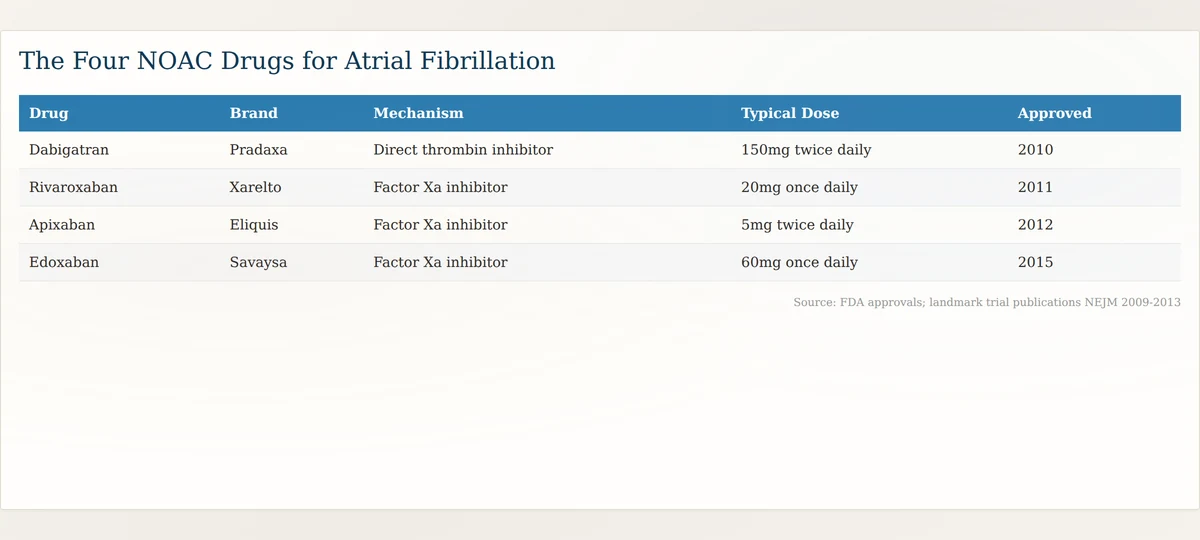
Quick Answer: NOACs (non-vitamin K oral anticoagulants), sometimes called DOACs (direct oral anticoagulants), are a class of four drugs that directly inhibit specific clotting factors rather than depleting multiple factors like warfarin does. The four drugs, approved between 2010 and 2015, are dabigatran (Pradaxa), rivaroxaban (Xarelto), apixaban (Eliquis), and edoxaban (Savaysa/Lixiana).
| Drug | Brand Name | Mechanism | Typical AFib Dose | Year Approved (US) |
|---|---|---|---|---|
| Dabigatran | Pradaxa | Direct thrombin (Factor IIa) inhibitor | 150 mg twice daily | 2010 |
| Rivaroxaban | Xarelto | Factor Xa inhibitor | 20 mg once daily | 2011 |
| Apixaban | Eliquis | Factor Xa inhibitor | 5 mg twice daily | 2012 |
| Edoxaban | Savaysa/Lixiana | Factor Xa inhibitor | 60 mg once daily | 2015 |
The fundamental appeal of NOACs in the warfarin vs NOACs debate is simplicity. They have predictable pharmacokinetics — meaning the same dose produces the same anticoagulant effect in most people, without the wide variability that makes warfarin so tricky to manage. No routine blood monitoring is required. Fewer food interactions. And, as the clinical trials demonstrated, a significantly lower risk of the most feared bleeding complication: intracranial hemorrhage.
Warfarin vs NOACs — however, NOACs are not a one-size-fits-all upgrade. All four are partially cleared by the kidneys, which means they require adequate renal function. Doses must be reduced — or the drugs avoided entirely — in patients with significant kidney impairment. They are also dramatically more expensive than generic warfarin in most healthcare systems, though prices have fallen as some have gone generic. And until recently, the lack of specific reversal agents for NOACs was a major concern — a gap that has now been largely addressed.
Warfarin vs NOACs: How They Work: Different Mechanisms
Quick Answer: Warfarin is an “upstream” drug — it blocks vitamin K recycling, which reduces production of multiple clotting factors (II, VII, IX, X) and the natural anticoagulants protein C and protein S. NOACs are “downstream” drugs — each directly blocks a single, specific clotting factor (thrombin for dabigatran; Factor Xa for the other three). This mechanistic difference explains most of the practical differences between the two classes.
Warfarin vs NOACs — think of the coagulation cascade as a waterfall. Warfarin works at the top of the waterfall, reducing the total amount of water (clotting factors) available at multiple levels. This makes it broad and powerful, but also harder to fine-tune — small changes in diet, other medications, or metabolism can produce large swings in effect. Warfarin also has a slow onset and offset: it takes several days to reach full effect after starting, and several days to wear off after stopping.
Warfarin vs NOACs — nOACs work at a single, specific point in the cascade — either directly blocking thrombin (the enzyme that converts fibrinogen to fibrin, the final step in clot formation) or Factor Xa (one step upstream). This precision gives NOACs several practical advantages: they start working within 2–4 hours, they wear off within 12–24 hours (allowing safer timing around surgeries), and they produce much more consistent anticoagulation between patients and over time.
The downstream mechanism is also why NOACs do not require INR monitoring. Warfarin’s effect varies dramatically between individuals because it depends on dietary vitamin K intake, liver metabolism, and genetic differences in the enzymes that process warfarin (CYP2C9 and VKORC1). NOACs bypass most of this variability because each tablet directly inhibits a clotting factor that is already present, rather than trying to reduce its production.
Stroke Prevention: How Do They Compare?
Research Spotlight: Four Landmark Trials, 70,000+ Patients
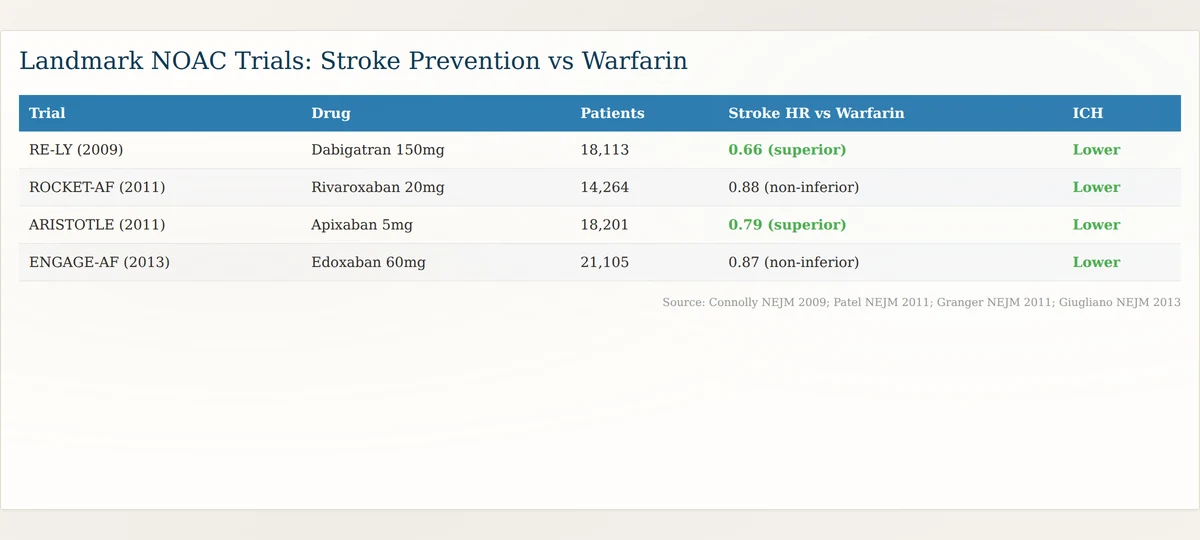
The warfarin vs NOACs efficacy question was answered definitively by four large, randomized, phase III trials between 2009 and 2013. Each compared a specific NOAC against warfarin in patients with non-valvular atrial fibrillation. Here are the results:
RE-LY (Dabigatran, NEJM 2009) — 18,113 patients. Dabigatran 150 mg twice daily reduced stroke or systemic embolism by 34% compared to warfarin (HR 0.66, 95% CI 0.53–0.82). The 110 mg dose was non-inferior to warfarin. Intracranial hemorrhage was significantly lower with both doses.
ROCKET-AF (Rivaroxaban, NEJM 2011) — 14,264 patients. Rivaroxaban 20 mg once daily was non-inferior to warfarin for stroke prevention (HR 0.88, 95% CI 0.74–1.03). Intracranial hemorrhage was significantly lower. Notably, the warfarin group in this trial had a lower time-in-therapeutic-range (TTR) than other trials — about 55% vs 64–68% — which may have influenced the comparison.
ARISTOTLE (Apixaban, NEJM 2011) — 18,201 patients. Apixaban 5 mg twice daily was superior to warfarin for stroke prevention (HR 0.79, 95% CI 0.66–0.95), caused less major bleeding (HR 0.69), and reduced all-cause mortality (HR 0.89). This is generally considered the strongest overall result among the NOAC trials.
ENGAGE-AF TIMI 48 (Edoxaban, NEJM 2013) — 21,105 patients. Both edoxaban 60 mg and 30 mg once daily were non-inferior to warfarin for stroke prevention. The 60 mg dose showed significantly less major bleeding. The 30 mg dose showed less stroke prevention but markedly less bleeding.
| Trial | Drug | Patients | Stroke/SE HR vs Warfarin | Intracranial Hemorrhage |
|---|---|---|---|---|
| RE-LY | Dabigatran 150mg | 18,113 | 0.66 (superior) | Significantly lower |
| ROCKET-AF | Rivaroxaban 20mg | 14,264 | 0.88 (non-inferior) | Significantly lower |
| ARISTOTLE | Apixaban 5mg | 18,201 | 0.79 (superior) | Significantly lower |
| ENGAGE-AF | Edoxaban 60mg | 21,105 | 0.87 (non-inferior) | Significantly lower |
The consistent message from these four trials: all four NOACs are at least as effective as warfarin for preventing strokes in AFib, and all four reduce intracranial hemorrhage — the most dangerous type of bleeding — by approximately 50%. The warfarin vs NOACs efficacy comparison favors the newer agents, but the margin varies by drug and by how well-controlled the warfarin group was.
Bleeding Risk: The Critical Trade-Off
Quick Answer: The single biggest safety advantage of NOACs over warfarin is the dramatic reduction in intracranial hemorrhage (bleeding into the brain) — roughly 50% lower across all four drugs. For gastrointestinal bleeding, the picture is more mixed: dabigatran and apixaban show rates similar to warfarin, while rivaroxaban and high-dose edoxaban show slightly higher GI bleeding rates. Overall major bleeding is generally lower or similar with NOACs.
Why do NOACs cause fewer brain bleeds? The mechanism is not fully understood, but it may relate to warfarin’s inhibition of Factor VII — a clotting factor that appears to be particularly important for protecting the fragile blood vessels in the brain. NOACs do not affect Factor VII. Additionally, warfarin’s variable pharmacology means patients frequently overshoot their INR target, creating periods of excessive anticoagulation that increase bleeding risk.
In the warfarin vs NOACs safety comparison, intracranial hemorrhage is the outcome that matters most to patients — it is the complication they fear, and it carries the highest mortality and disability rates. A meta-analysis of the four landmark trials confirmed that NOACs reduced intracranial hemorrhage by 51% compared to warfarin (RR 0.49, 95% CI 0.36–0.66). This finding alone has shifted clinical guidelines to recommend NOACs over warfarin for most patients with atrial fibrillation.
However, there is an important caveat: the safety advantage of NOACs depends on appropriate dosing. All NOACs require dose reduction in patients with reduced kidney function, low body weight, or advanced age. When NOACs are prescribed at inappropriately high doses — which happens more often than it should, particularly with rivaroxaban in older patients — the bleeding risk advantage diminishes or disappears. Proper prescribing is as important as the drug choice itself.
Monitoring, Diet, and Daily Life
This is where the warfarin vs NOACs comparison becomes intensely practical:
Warfarin lifestyle: You need regular INR blood tests — initially every few days until stable, then every 2–4 weeks once stable. You must maintain relatively consistent vitamin K intake — not zero, but consistent. If you normally eat a spinach salad every day, keep eating it every day; if you suddenly binge on kale, your INR will drop and your stroke risk rises. Alcohol must be moderated. Dozens of medications — antibiotics, antifungals, anti-seizure drugs, even some over-the-counter pain relievers — can interact with warfarin.
NOAC lifestyle: No routine blood tests. No dietary restrictions — eat as much spinach, kale, or broccoli as you want. Far fewer drug interactions. The twice-daily drugs (dabigatran, apixaban) do require remembering a second dose, and missing doses is more consequential because NOACs wear off faster than warfarin. Compliance matters — if you miss doses frequently, your stroke protection drops because these drugs have short half-lives.
For many patients, the warfarin vs NOACs lifestyle comparison is the deciding factor. An older patient who struggles with transportation to a lab for monthly INR checks may do vastly better on a NOAC. A patient who is meticulous about routines and cannot afford the higher copay for a NOAC may do perfectly well on warfarin. Neither choice is wrong — they serve different realities.
One underappreciated practical point: warfarin’s blood tests, while inconvenient, provide a safety net. If your INR is too high, your dose gets adjusted before you bleed. NOACs have no such early warning system — the first sign of over-anticoagulation could be a bleeding event. This is one reason why kidney function monitoring is essential for NOAC patients (at least annually, more often for rivaroxaban and edoxaban).
Reversal Agents: What Happens in an Emergency?
For years, the warfarin vs NOACs reversal question was warfarin’s strongest selling point: vitamin K and prothrombin complex concentrates can reverse warfarin quickly and reliably. The NOACs had no specific antidotes — a frightening prospect if you were in a car accident or needed emergency surgery.
That gap has closed. Today, specific reversal agents exist for all major NOACs:
- Idarucizumab (Praxbind) — specifically reverses dabigatran. FDA approved 2015. Works within minutes.
- Andexanet alfa (Andexxa) — reverses Factor Xa inhibitors (rivaroxaban, apixaban, edoxaban). FDA approved 2018. Works within minutes.
- Ciraparantag — a universal reversal agent in late-stage development that would reverse all anticoagulants including NOACs, heparin, and possibly warfarin.
These reversal agents are stocked in most hospitals with emergency departments, though their cost is significant — andexanet alfa in particular can cost tens of thousands of dollars per dose. In practice, most NOAC-related bleeding is managed supportively (fluids, transfusions, holding the drug) because the short half-life of NOACs means the drug clears from the body within 12–24 hours on its own.
The availability of specific reversal agents has largely neutralized the reversal advantage that warfarin once held. Both classes now have emergency-management pathways, and current guidelines no longer cite reversibility as a reason to choose warfarin over a NOAC.
Cost Comparison
Cost is where the warfarin vs NOACs comparison gets uncomfortable — because it is often the factor that most directly affects real-world prescribing, and it is the one factor the clinical trials do not help with.
Warfarin: Generic tablets cost approximately $4–10 per month. INR monitoring adds approximately $15–50 per month depending on insurance and testing frequency. Total monthly cost: roughly $20–60. This is affordable in virtually every healthcare system.
NOACs: Brand-name prices in the United States range from $400–600 per month without insurance. With insurance, copays vary widely — from $10–100 per month for well-covered plans to $150–400 for high-deductible plans. Generic rivaroxaban has recently entered the market in some regions, which may bring prices down for that specific drug. Generic apixaban is expected in the coming years but is not yet widely available.
The cost disparity has real health consequences. Studies consistently show that higher out-of-pocket costs reduce NOAC adherence — patients skip doses or stop taking the drug entirely when it costs too much. A warfarin you take every day is far better protection than a NOAC you take three times a week because you cannot afford the copay. Cost-driven non-adherence may partly explain why real-world NOAC outcomes sometimes fall short of clinical-trial results.
For patients in countries with national health systems or comprehensive insurance, the cost difference may be irrelevant — the government or insurer pays either way. But for patients in the United States and other market-based systems, cost is often the single most important practical factor in the warfarin vs NOACs decision.
Which One Is Right for You?
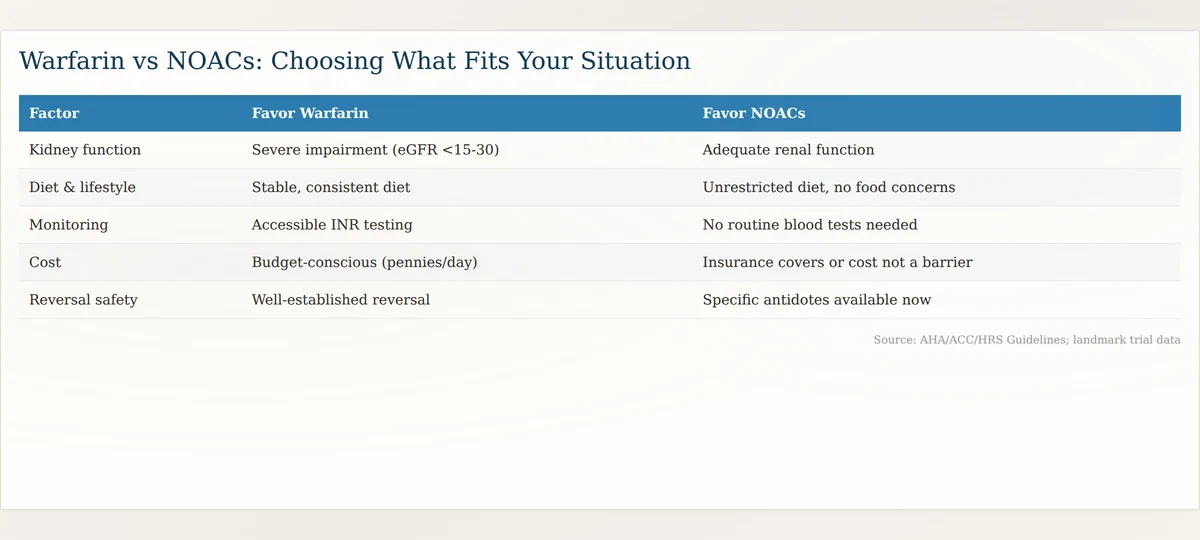
Quick Answer: For most patients with non-valvular atrial fibrillation, current guidelines — including the American Heart Association / American College of Cardiology — recommend NOACs over warfarin as first-line therapy. However, warfarin remains the preferred choice in specific situations: severe kidney disease (CrCl <15–30 mL/min depending on the NOAC), mechanical heart valves (NOACs are contraindicated), antiphospholipid syndrome, extreme cost sensitivity, and patients with excellent INR control (TTR >70%) who are stable on warfarin.
Here is a practical decision framework your doctor will likely use:
Favor NOACs when: kidney function is adequate (CrCl >30 mL/min for most, >15 for apixaban), you value convenience and dietary freedom, you have difficulty maintaining stable INR on warfarin (TTR <65%), you are at elevated risk for intracranial bleeding (history of falls, prior ICH, cerebral amyloid angiopathy), or cost is not a barrier.
Favor warfarin when: you have severe kidney disease (CrCl <15–30 mL/min), you have a mechanical heart valve, you have antiphospholipid syndrome, you are already stable on warfarin with excellent INR control (TTR >70%), cost is a primary consideration, you struggle with medication adherence (warfarin’s long half-life is more forgiving of missed doses), or you have a history of GI bleeding (some NOACs, particularly rivaroxaban, may increase GI bleeding risk).
A special note on mechanical heart valves and mitral stenosis: The RE-ALIGN trial tested dabigatran in patients with mechanical heart valves and was stopped early due to excess thromboembolic and bleeding events in the dabigatran group. NOACs are absolutely contraindicated in mechanical heart valves and in moderate-to-severe mitral stenosis. For these patients, warfarin remains the only option. This is not a preference — it is a safety imperative.
Frequently Asked Questions
Q: Are NOACs better than warfarin?
A: For most patients with atrial fibrillation and adequate kidney function, yes — current guidelines recommend NOACs over warfarin. The evidence from four major trials shows NOACs are at least as effective at preventing strokes and cause roughly 50% fewer intracranial hemorrhages. However, warfarin remains superior for patients with mechanical heart valves, severe kidney disease, or antiphospholipid syndrome, where NOACs are either less effective or contraindicated.
Q: Can you eat green vegetables on warfarin?
A: Yes — the key word is consistency, not avoidance. You do not need to eliminate vitamin K-rich foods like spinach, kale, or broccoli from your diet. You need to eat them consistently from week to week so your warfarin dose can be calibrated to your usual intake. A sudden binge on leafy greens can lower your INR, while suddenly cutting them out can raise it. Your doctor adjusts your warfarin dose to match your diet, not the other way around.
Q: How often do you need blood tests on warfarin?
A: Initially every few days until your INR stabilizes in the target range (2.0–3.0 for AFib). Once stable, testing every 2–4 weeks is typical, though some patients with very consistent INRs may extend to every 6–8 weeks. Any change in other medications, illness, or significant dietary change usually triggers more frequent testing.
Q: What happens if you miss a dose of a NOAC?
A: Because NOACs have short half-lives (roughly 12 hours for the twice-daily drugs, 24 hours for once-daily), missing doses reduces your protection against stroke more quickly than missing a warfarin dose. For twice-daily NOACs (dabigatran, apixaban): if you remember within 6 hours of the missed dose, take it. If more than 6 hours, skip it and take the next dose on schedule. For once-daily NOACs (rivaroxaban, edoxaban): if you remember within 12 hours, take it; otherwise skip. Never double-dose to make up for a missed dose.
Q: Is there a generic NOAC available?
A: Generic rivaroxaban has recently launched in some markets. Generic apixaban is anticipated but not yet widely available as of 2026. Generic dabigatran and edoxaban remain under patent in most countries. The availability of generics will likely transform the cost side of the warfarin vs NOACs equation in the coming years.
Q: Can you drink alcohol on blood thinners?
A: Moderate alcohol consumption (1–2 drinks per day) is generally acceptable on both warfarin and NOACs. Heavy or binge drinking is dangerous on any anticoagulant — it increases fall risk, can cause gastritis that leads to GI bleeding, and may impair liver metabolism of the drug. For warfarin specifically, heavy alcohol use can also destabilize INR. The safest approach: discuss your typical alcohol intake honestly with your doctor.
Q: What is the safest blood thinner for the elderly?
A: For elderly patients (≥75 years), NOACs generally maintain their safety advantage over warfarin, particularly for intracranial hemorrhage reduction. However, dose adjustment is critical: all NOACs require reduced doses at older ages in the presence of additional risk factors (low body weight, reduced kidney function). Apixaban has the most favorable risk profile in the elderly across multiple observational studies, which is why it is often preferred in geriatric AFib patients, but individual factors always guide the decision.
Q: Can you switch from warfarin to a NOAC or vice versa?
A: Yes — but the transition must be managed carefully. Switching from warfarin to a NOAC: stop warfarin, monitor INR, and start the NOAC when INR falls below 2.0–2.5 (specific threshold varies by NOAC). Switching from a NOAC to warfarin: start warfarin while continuing the NOAC (a “bridging” period of 3–5 days), then stop the NOAC once INR is in the therapeutic range. This is not something to attempt without your doctor’s explicit guidance and monitoring plan.
Related Reading
- Apixaban vs rivaroxaban: choosing between two NOACs
- Blood thinners and cognitive decline: what the latest research says
- Managing cholesterol alongside blood thinners
The Bottom Line
The warfarin vs NOACs comparison has a clear consensus for most patients: NOACs offer equivalent or superior stroke prevention with roughly half the risk of intracranial hemorrhage and far fewer lifestyle restrictions. The evidence is robust, the reversal gap has closed, and major guidelines now recommend NOACs as first-line therapy for non-valvular atrial fibrillation. If you have the kidney function to take one and can afford it, a NOAC is likely the better choice.
But — and this is a big but — “better on average” does not mean “better for everyone.” Warfarin remains the right choice for patients with mechanical heart valves, severe kidney disease, certain autoimmune clotting disorders, or those who simply cannot afford NOACs. And for patients who have been stable on warfarin for years with excellent INR control, switching carries its own risks and may not offer enough incremental benefit to justify the disruption.
If you are newly diagnosed with atrial fibrillation, the single most useful thing you can do before your next doctor’s appointment is understand which side of the warfarin vs NOACs equation you fall on. Know your kidney function (your doctor can tell you your creatinine and eGFR). Be honest about whether you can reliably take a pill twice a day. And if cost is a barrier, say so — your doctor needs to know that to prescribe appropriately. An affordable warfarin taken every day protects you far better than an unaffordable NOAC left at the pharmacy.
Medical Disclaimer: This article is for informational purposes only and does not constitute medical advice. Anticoagulation decisions carry serious risks including stroke and major bleeding — they must be made in consultation with your prescribing physician. Never start, stop, or switch anticoagulants without your doctor’s direct supervision. The clinical trial data discussed applies to non-valvular atrial fibrillation; different conditions (mechanical heart valves, venous thromboembolism, antiphospholipid syndrome) have different evidence bases.

Written by
Sophie ChenPharmaceutical Content Researcher · 8 years experience
Sophie Chen is a pharmaceutical content researcher with 8 years covering generic medication access and clinical pharmacology. She specialises in international regulatory frameworks, bioequivalence standards, and patient-facing education on therapeutic drug classes. She is not a clinician.