








✓ Medically reviewed by · Last reviewed: May 2026
Pharmacy Researcher · 8 years experience
Pharmacy researcher with 8 years reviewing clinical drug information, generic formulation equivalence, and international pharmaceutical standards. Focuses on patient-facing accuracy in medication education.
colchicine vs NSAIDs for gout — Colchicine vs NSAIDs for Gout: Which Works Faster for Pain Relief?. Read on for an evidence-backed guide covering everything you need to know.
It is 3 a.m. and your big toe feels like it is on fire.
You know it is a gout attack. You have a bottle of colchicine in the cabinet and a packet of ibuprofen in the drawer. Which one do you reach for? And more importantly — which one will stop the pain faster?
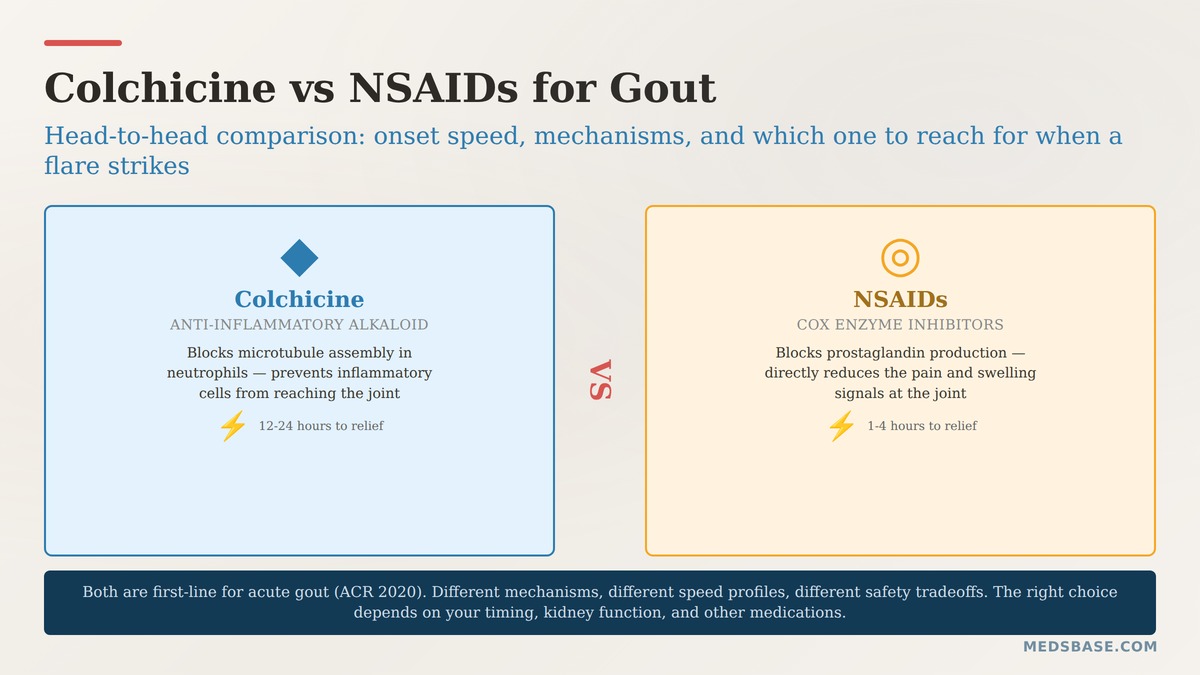
The choice between colchicine vs NSAIDs for gout is one of the most common treatment decisions patients face in acute gout management. Both are recommended as first-line therapies by major rheumatology guidelines, including the American College of Rheumatology’s 2020 recommendations. But they work through completely different mechanisms, kick in at different speeds, and carry different risks. Understanding the colchicine vs NSAIDs for gout comparison can mean the difference between rapid relief and hours of unnecessary pain.
By the end of this article, you will know exactly how the colchicine vs NSAIDs for gout comparison plays out on speed, safety, and suitability — and which one the evidence suggests you should reach for first when a gout flare strikes. One of the side-effect tradeoffs in the colchicine vs NSAIDs for gout debate is much more important than it first appears.
Key Takeaways
- Both colchicine and NSAIDs are recommended — the colchicine vs NSAIDs for gout decision depends on timing, your medical history, and your other medications.
- NSAIDs work faster (1-4 hours for initial relief) while colchicine takes 12-24 hours — but colchicine is most effective when taken within the first 24 hours of an attack.
- Low-dose colchicine (1.2 mg followed by 0.6 mg one hour later) is as effective as high-dose colchicine but causes dramatically fewer gastrointestinal side effects — this was established in a landmark NEJM trial.
- Kidney function is the critical decision point: colchicine requires dose adjustment in kidney disease, while NSAIDs should generally be avoided if kidney function is significantly impaired.
- One option reduces your risk of another attack within the next 48 hours — and it is not the one most people assume.
- How Colchicine and NSAIDs Work for Gout
- Colchicine vs NSAIDs for Gout: Head-to-Head Comparison
- Which Works Faster for Gout Pain?
- Side Effects and Safety: Which Is Safer?
- How to Choose Between Colchicine and NSAIDs for Gout
- What the Research Says
- Beyond Acute Gout Attacks: Long-Term Management
- Frequently Asked Questions
- The Bottom Line
How Colchicine and NSAIDs Work for Gout — Colchicine vs NSAIDs for gout Explained
To understand the colchicine vs NSAIDs for gout comparison, you first need to understand what is happening inside your joint during an attack.
A gout attack begins when uric acid crystals that have accumulated in a joint trigger a massive inflammatory response. Your immune system attacks the crystals, releasing inflammatory chemicals that cause the classic symptoms: intense pain, redness, swelling, and heat. Both colchicine and NSAIDs interrupt this process — but at different points.
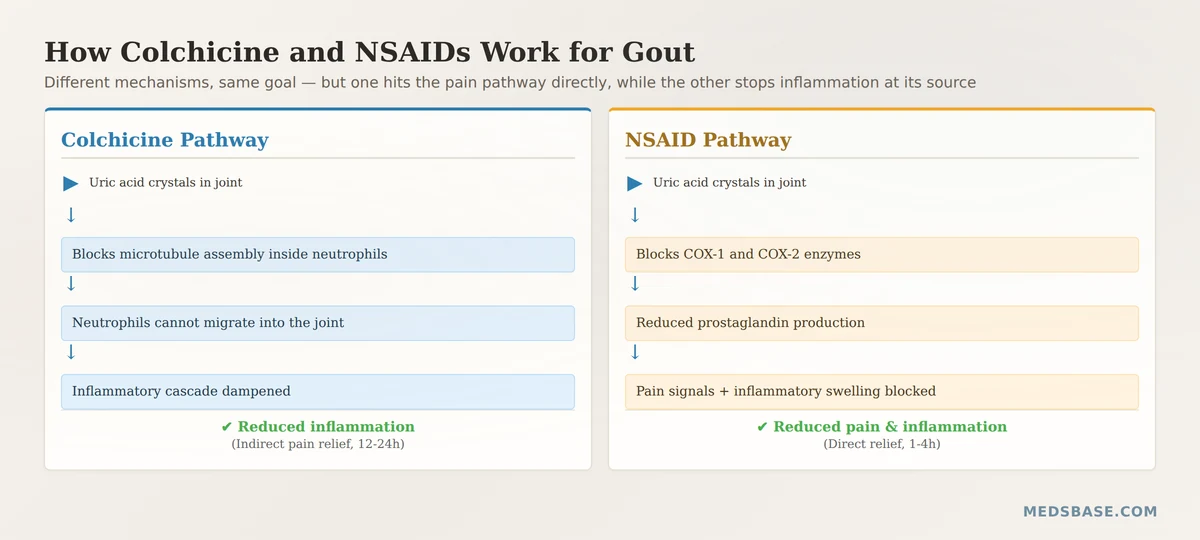
Colchicine works by blocking microtubule assembly inside inflammatory cells called neutrophils. Without functioning microtubules, neutrophils cannot migrate into the joint, cannot release their inflammatory molecules, and the entire inflammatory cascade is dampened. Colchicine is essentially an anti-inflammatory that works through cellular-level interference rather than through the pain pathways that NSAIDs target. It does not directly relieve pain — it reduces inflammation, which secondarily reduces pain.
NSAIDs (like ibuprofen, naproxen, and indomethacin) work by blocking cyclooxygenase (COX) enzymes — specifically COX-1 and COX-2. These enzymes produce prostaglandins, which are the chemical messengers that signal pain, inflammation, and fever. By blocking prostaglandin production, NSAIDs directly reduce both the pain sensation and the inflammatory swelling at the gout-affected joint.
The practical difference: NSAIDs hit the pain pathway directly and quickly. Colchicine takes longer because it needs to stop inflammatory cells from arriving at the joint — a process that is already in motion by the time you feel pain.
Quick Answer: Colchicine reduces gout inflammation by preventing inflammatory cells from migrating into the affected joint. NSAIDs reduce gout pain by blocking the chemical signals (prostaglandins) that produce pain and swelling. Different mechanisms, different speed profiles, different side effects.
Colchicine vs NSAIDs for Gout: Head-to-Head Comparison
Here is the direct colchicine vs NSAIDs for gout comparison across the eight factors that matter most:
| Factor | Colchicine | NSAIDs (e.g. indomethacin, naproxen) |
|---|---|---|
| Mechanism | Blocks neutrophil migration into the joint | Blocks COX enzymes reduces prostaglandins |
| Onset of pain relief | 12-24 hours | 1-4 hours |
| Best timing for use | Within 12-24 hours of first symptoms | Effective at any point during an attack |
| GI side effects | Diarrhea (23-77% at high doses; much lower with low-dose regimen) | Stomach pain, ulcers, GI bleeding (higher risk with prolonged use) |
| Kidney safety | Dose adjustment needed if eGFR <30; generally safer than NSAIDs in mild CKD | Avoid if eGFR <30; can reduce kidney blood flow |
| Cardiovascular safety | Neutral (no increased CV risk) | Increased risk with prolonged use (especially in patients with existing CV disease or heart failure) |
| Drug interactions | CYP3A4 inhibitors (clarithromycin, ketoconazole, some HIV drugs), P-gp inhibitors | Anticoagulants (warfarin, apixaban), other NSAIDs, some blood pressure medications |
| Cost and availability | Generic, widely available, inexpensive | Generic, widely available, over-the-counter options exist |
Colchicine vs NSAIDs for gout: Which Works Faster for Gout Pain?
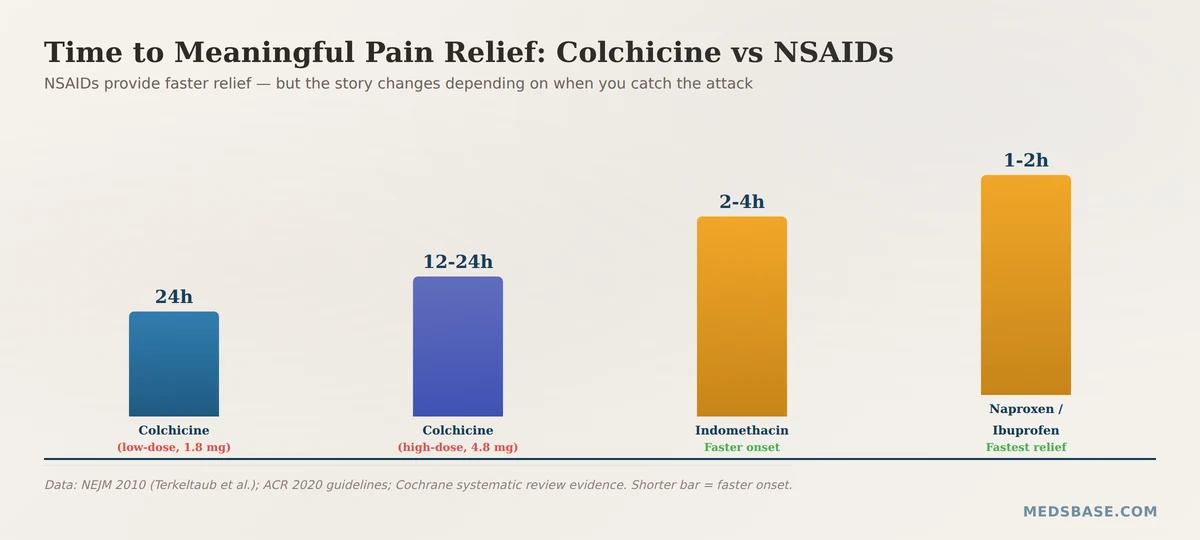
If speed is your only consideration, NSAIDs win the colchicine vs NSAIDs for gout speed comparison — providing meaningful pain relief within 1 to 4 hours.
NSAIDs typically provide meaningful pain relief within 1 to 4 hours of the first dose because they directly block the chemical signals producing pain. Indomethacin, historically the most-studied NSAID for gout, has a rapid onset. Naproxen and high-dose ibuprofen are also effective and may be better tolerated by the stomach.
Colchicine takes longer — typically 12 to 24 hours for meaningful relief. The landmark 2010 trial published in the New England Journal of Medicine by Terkeltaub and colleagues found that low-dose colchicine (1.2 mg followed by 0.6 mg 1 hour later) provided significant pain reduction by 24 hours compared to placebo, with response rates similar to high-dose colchicine (4.8 mg total) but with far fewer side effects.
But here is the catch: colchicine is most effective when taken early — ideally within the first 12-24 hours of symptom onset. Once the inflammatory cascade is fully established, colchicine’s mechanism (blocking new neutrophils from entering the joint) is less effective against the cells already there. An NSAID, by contrast, can block ongoing pain signals at any stage of the attack.
So the colchicine vs NSAIDs for gout speed comparison is not as simple as “NSAIDs are always faster.” If you catch a gout attack at the very first twinge, colchicine may abort the attack before it fully develops — and the slower onset is irrelevant because you have stopped the escalation. This is the nuance that makes the colchicine vs NSAIDs for gout decision different from other medication comparisons.
Research Spotlight: The 2010 NEJM trial (Terkeltaub et al.) fundamentally changed colchicine dosing. Before this study, colchicine was typically dosed at 0.6 mg every hour until symptom relief or gastrointestinal toxicity. The trial showed that low-dose colchicine (total 1.8 mg over 1 hour) was equally effective as high-dose (total 4.8 mg over 6 hours) but caused GI side effects in only 23% of patients versus 77% in the high-dose group. Modern guidelines universally recommend the low-dose regimen.
Side Effects and Safety: Which Is Safer?
The safety comparison between colchicine vs NSAIDs for gout is not about which medication is “safer” in absolute terms — it is about which is safer for you specifically, given your medical history.
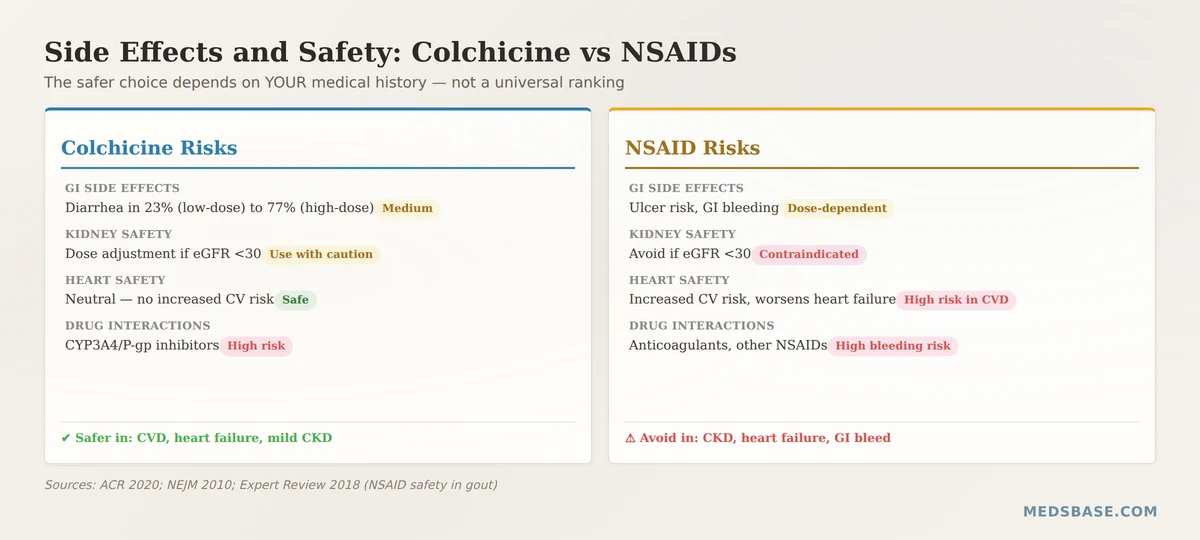
Colchicine side effects: The dominant side effect of colchicine is gastrointestinal — primarily diarrhea, nausea, and abdominal cramping. At the modern low-dose regimen (1.8 mg total over 1 hour), diarrhea occurs in approximately 23% of patients. At the older high-dose regimen (4.8 mg over 6 hours), diarrhea affected 77% of patients. This is why the low-dose regimen is now standard — and why exceeding the recommended dose is dangerous.
Colchicine has a narrow therapeutic window. Toxicity can occur at doses not far above the therapeutic dose, and toxicity is potentially fatal (multiorgan failure). This risk is highest in people with kidney impairment, because colchicine is partially excreted by the kidneys. Doses must be reduced in moderate-to-severe chronic kidney disease, and colchicine should be used with extreme caution — if at all — in severe renal impairment.
NSAID side effects: The main risks of NSAIDs are gastrointestinal (stomach ulcers, GI bleeding), renal (reduced kidney blood flow, acute kidney injury), and cardiovascular (increased risk of heart attack and stroke with prolonged use, and exacerbation of heart failure due to sodium and fluid retention).
The GI risk is dose- and duration-dependent. Short courses of NSAIDs for an acute gout attack (typically 5-7 days) carry lower risk than chronic daily NSAID use. But even short courses can trigger GI bleeding in susceptible individuals — particularly older adults, those with a history of peptic ulcer disease, and those also taking anticoagulants or corticosteroids.
The renal risk is particularly relevant for gout patients, because gout and chronic kidney disease frequently coexist. A 2018 review highlighted that NSAIDs should generally be avoided in patients with eGFR below 30 mL/min and used with caution — at the lowest effective dose for the shortest possible duration — in those with eGFR 30-60.
The cardiovascular risk of NSAIDs is dose- and duration-dependent and is highest in patients with established cardiovascular disease, heart failure, or multiple cardiovascular risk factors. Because gout is itself associated with increased cardiovascular risk, this concern is relevant to a substantial portion of the gout population.
Q: So which is safer?
A: For a young, otherwise healthy person with normal kidney function and no cardiovascular disease, the colchicine vs NSAIDs for gout safety comparison is a wash — either colchicine or a short-course NSAID is generally safe. For an older person with chronic kidney disease, heart failure, or a history of GI bleeding, colchicine is often the safer choice in the colchicine vs NSAIDs for gout risk analysis.
Who Is This For? Anyone experiencing an acute gout attack who needs to choose between colchicine and an NSAID. This comparison is most useful for people with diagnosed gout who are familiar with their treatment options and want to understand the evidence-based tradeoffs.
Who Should Take Extra Caution? If you have kidney disease (eGFR <30), active or recent GI bleeding, heart failure, are taking blood thinners (warfarin, apixaban, rivaroxaban), or are taking CYP3A4 inhibitors (clarithromycin, certain HIV or antifungal medications), do not self-select your gout medication — consult your doctor or pharmacist. The wrong choice could cause serious harm. Pregnant women should avoid both colchicine and NSAIDs unless specifically prescribed.
How to Choose Between Colchicine and NSAIDs for Gout
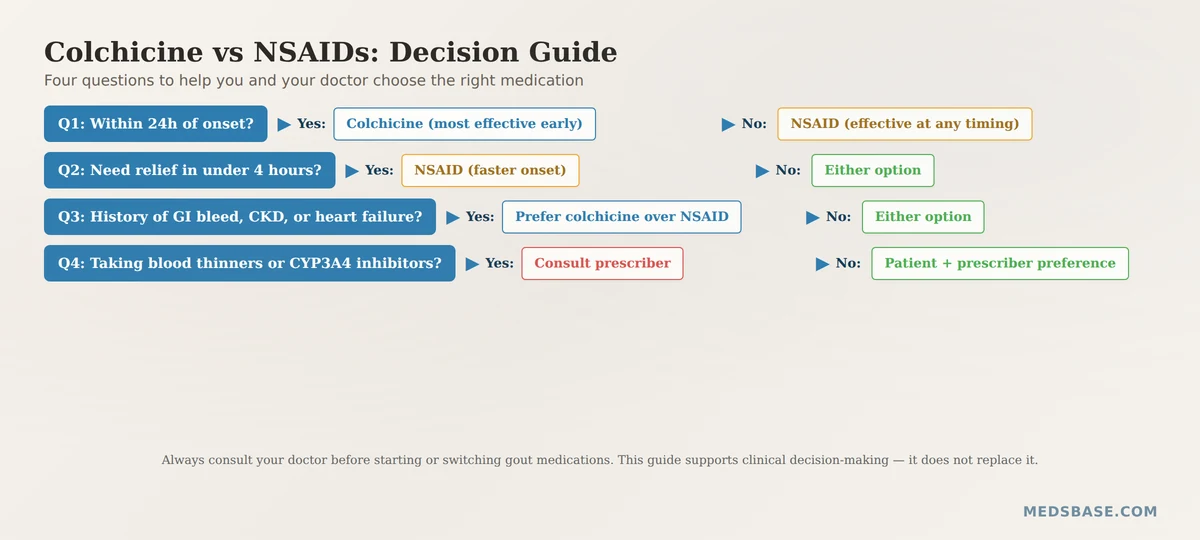
The decision between colchicine vs NSAIDs for gout comes down to four questions:
1. How fast do you need relief? If the attack is severe and you need relief within hours, an NSAID (naproxen or indomethacin) will likely work faster. If you have caught the attack early — at the very first sign — colchicine may prevent it from escalating while sparing you from the GI and renal risks of NSAIDs.
2. What is your kidney function? If you have known kidney disease, this is the most important question. NSAIDs should be avoided if eGFR is below 30, and used cautiously if eGFR is 30-60. Colchicine needs dose reduction but can often still be used at a lower dose. This is one of the most common scenarios where your doctor or pharmacist will specifically recommend colchicine over an NSAID.
3. Do you have cardiovascular disease or heart failure? NSAIDs can worsen heart failure through sodium and fluid retention and may increase cardiovascular event risk with prolonged use. If you have heart failure or established coronary artery disease, colchicine is generally the preferred choice for acute gout treatment.
4. What other medications are you taking? Colchicine interacts with CYP3A4 inhibitors (clarithromycin, erythromycin, ketoconazole, itraconazole, ritonavir) and P-gp inhibitors (cyclosporine, verapamil, amiodarone). Taking colchicine with these drugs can lead to toxic colchicine levels, even at standard doses. NSAIDs interact with anticoagulants (increased bleeding risk) and other NSAIDs (additive toxicity). Always review your full medication list with your prescriber or pharmacist.
If you need a reliable source for gout medications, you can explore options through MedsBase’s pain management category. As with all medications, consult your doctor before starting or switching treatments.
What the Research Says
| Study | Year | Finding | Source |
|---|---|---|---|
| Terkeltaub et al. (AGREE trial) | 2010 | Low-dose colchicine equally effective as high-dose but with 54% fewer GI side effects; established modern dosing | NEJM |
| ACR Gout Guideline | 2020 | Colchicine, NSAIDs, and corticosteroids all recommended as first-line for acute gout; choice guided by patient factors | Arthritis & Rheumatology |
| Systematic review of acute gout treatments | 2014 | NSAIDs and colchicine both effective; limited head-to-head trials; treatment choice should be individualized based on contraindications | Cochrane Database |
| NSAID safety in gout | 2018 | NSAIDs effective for gout but renal and cardiovascular risks require careful patient selection, particularly given high comorbidity rates in gout population | Expert Review |
What this means for you: The evidence supports that both colchicine and NSAIDs work — but no single study can tell you the winner of the colchicine vs NSAIDs for gout debate for your specific situation. The guidelines deliberately keep both options available because the right choice depends on the individual patient’s kidney function, cardiovascular status, concurrent medications, and attack timing. Understanding the colchicine vs NSAIDs for gout tradeoffs is the key to using both medications effectively.
Beyond Acute Gout Attacks: Long-Term Management
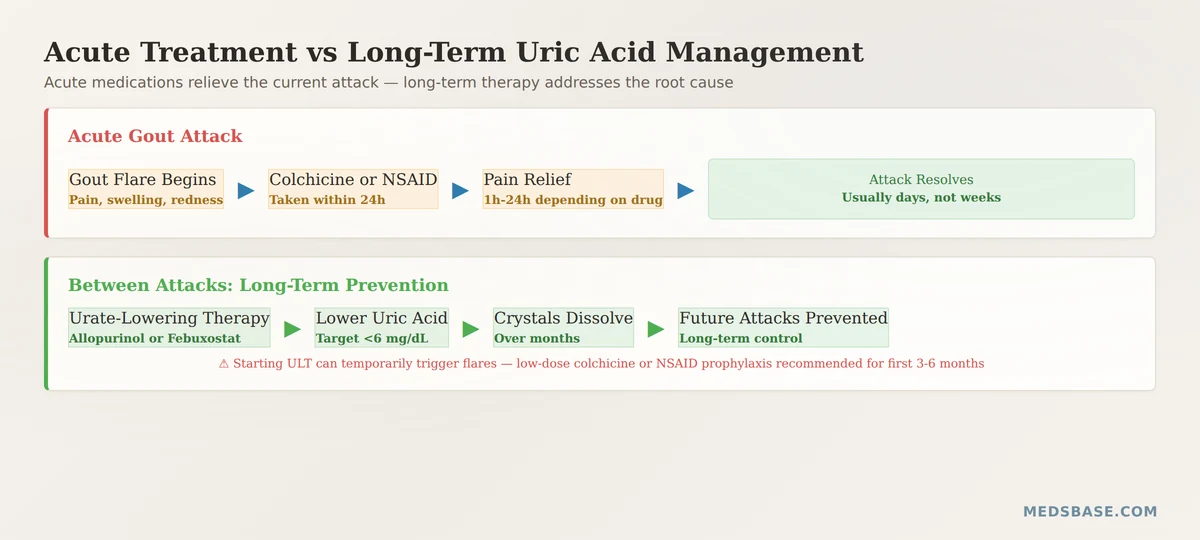
Colchicine and NSAIDs treat the acute attack — but they do not lower uric acid or prevent future attacks. Once the acute flare resolves, the long-term strategy shifts to uric acid-lowering therapy (ULT).
Medications like allopurinol and febuxostat reduce the body’s production of uric acid, gradually dissolving the crystal deposits in the joints that cause gout attacks. The goal is to bring serum uric acid below 6 mg/dL (or below 5 mg/dL in more severe cases), at which point crystals begin to dissolve and future attacks become progressively less likely.
Importantly, starting a uric acid-lowering medication can temporarily trigger gout flares as crystals begin to dissolve and release inflammatory particles. For this reason, guidelines recommend low-dose colchicine or low-dose NSAID prophylaxis for the first 3-6 months of uric acid-lowering therapy to prevent these “mobilization flares.”
Related Reading
- Gout Attack Treatment: Steps to Fast Relief — our Jul 28 post covering the full acute management approach
- Living with Chronic Conditions: Managing Multiple Medications
- Cardiovascular-Kidney-Metabolic Syndrome: Why Your Conditions Are Connected — gout is a metabolic condition linked to cardiovascular and kidney health
- Blood Pressure Management and Medication Options — gout frequently clusters with hypertension
Frequently Asked Questions
Q: Which is better for gout — colchicine or NSAIDs?
A: Neither is universally “better.” The colchicine vs NSAIDs for gout decision is a personalized one. NSAIDs work faster (1-4 hours vs 12-24 hours) but carry higher GI and renal risks, particularly in patients with kidney disease, heart failure, or a history of stomach ulcers. Colchicine has a slower onset but is often the safer choice in patients with cardiovascular disease or mild-to-moderate kidney impairment (with dose adjustment). The ACR 2020 guidelines recommend both as first-line options, leaving the colchicine vs NSAIDs for gout choice to individual patient factors.
Q: How fast does colchicine work for gout?
A: Colchicine typically provides meaningful pain relief within 12-24 hours when started early — one of the key metrics in any colchicine vs NSAIDs for gout comparison. It is most effective when taken within 12-24 hours of the first symptoms. If the attack has been ongoing for more than 2 days, colchicine is less effective — this is the central timing consideration in the colchicine vs NSAIDs for gout decision framework — and an NSAID or corticosteroid may be a better choice.
Q: Can I take colchicine and ibuprofen together for gout?
A: This should only be done under medical supervision. In the colchicine vs NSAIDs for gout framework, the two are alternatives, not companions — while some clinicians do combine them for severe attacks, the combination increases the risk of side effects from both medications.
Q: What is the first-line treatment for acute gout?
A: All three of the following are considered first-line by current guidelines — the colchicine vs NSAIDs for gout comparison is joined by oral corticosteroids (e.g. prednisone) as a third first-line option. The choice depends on the patient’s kidney function, cardiovascular status, gastrointestinal history, concurrent medications, and attack timing.
Q: Which NSAID is best for gout pain?
A: Indomethacin was historically the most studied NSAID in the colchicine vs NSAIDs for gout literature, but naproxen and ibuprofen are also effective and may be better tolerated.
Q: Does colchicine have fewer side effects than NSAIDs?
A: At the modern low-dose regimen, colchicine causes diarrhea in approximately 23% of patients. NSAIDs, in short courses for gout, cause GI upset in a similar proportion but carry additional risks of GI bleeding, kidney injury, and cardiovascular events. The side effect profile in the colchicine vs NSAIDs for gout risk analysis is different, not necessarily “fewer.”
Q: Can I take colchicine if I have kidney disease?
A: It depends on severity. In mild-to-moderate CKD, colchicine can be used but may require dose reduction. In severe CKD (eGFR <30), colchicine should be used with extreme caution. NSAIDs are generally contraindicated in severe CKD, making colchicine or corticosteroids the preferred option. This is one of the most common scenarios where the colchicine vs NSAIDs for gout choice is tilted toward colchicine.
Q: Is gout medication available without a prescription?
A: Some NSAIDs (ibuprofen, naproxen) are available over the counter, but using them for gout should ideally be discussed with a doctor — the anti-inflammatory doses needed for gout are often higher than standard OTC doses, and kidney function should be assessed first. The colchicine vs NSAIDs for gout discussion is ultimately one your doctor will want to have with you. Colchicine is prescription-only. If you need consistent access to gout medications for either side of the colchicine vs NSAIDs for gout equation, MedsBase offers a range of generic options — always with a prescription from your healthcare provider.
The Bottom Line
Colchicine vs NSAIDs for gout — each patient deserves a personalized assessment. NSAIDs win the speed comparison — meaningful pain relief within hours. Colchicine wins the safety comparison in specific populations — particularly people with cardiovascular disease, mild-to-moderate kidney disease, or a history of GI bleeding. Both work, and both are guideline-recommended as first-line treatments. This makes the colchicine vs NSAIDs for gout question one of the most individualized treatment decisions in acute rheumatology care.
If you are experiencing acute gout symptoms and are unsure which medication to take, the single most important step is to contact your doctor or pharmacist — ideally within the first 24 hours of the attack, when treatment is most effective and the attack may be aborted before it fully escalates. And once the acute attack is controlled, discuss long-term uric acid-lowering therapy to prevent the next one.
If you are experiencing acute gout symptoms and are unsure which medication to take, the single most important step is to contact your doctor or pharmacist — ideally within the first 24 hours of the attack, when treatment is most effective and the attack may be aborted before it fully escalates. And once the acute attack is controlled, discuss long-term uric acid-lowering therapy to prevent the next one.
What to read next:
- Need a broader treatment approach? Read: Gout Attack Treatment: Proven Steps to Fast Relief
- Want to understand the metabolic connections? Read: Cardiovascular-Kidney-Metabolic Syndrome: The Chronic Disease Framework
Medical Disclaimer: This article is for educational purposes only and does not constitute medical advice. Gout treatment decisions — particularly in the setting of kidney disease, cardiovascular disease, or interacting medications — should be made with your healthcare provider. Do not start, stop, or change any medication without consulting your doctor or pharmacist.

Written by
Sophie ChenPharmaceutical Content Researcher · 8 years experience
Sophie Chen is a pharmaceutical content researcher with 8 years covering generic medication access and clinical pharmacology. She specialises in international regulatory frameworks, bioequivalence standards, and patient-facing education on therapeutic drug classes. She is not a clinician.