








✓ Medically reviewed by · Last reviewed: May 2026
Pharmacy Researcher · 8 years experience
Pharmacy researcher with 8 years reviewing clinical drug information, generic formulation equivalence, and international pharmaceutical standards. Focuses on patient-facing accuracy in medication education.
postpartum depression medication options — Postpartum Depression Medication Options: 7 Evidence-Based Treatments That Work. Read on for an evidence-backed guide covering everything you need to know.
One in seven new mothers develops postpartum depression — yet fewer than half receive treatment. The CDC’s latest Pregnancy Risk Assessment Monitoring System data confirms what obstetricians have been warning: U.S. mothers are not recovering from postpartum depression at the rates they should. For many, the barrier isn’t recognition of the problem — it’s uncertainty about what to do next. Specifically, the question that brings thousands of women to search engines every month: what are the safest, most effective postpartum depression medication options, and will they affect my baby if I am breastfeeding?
Postpartum depression medication options — this guide answers that question directly. By the end, you will know which antidepressants have the strongest evidence for postpartum use, how they compare on safety during breastfeeding, what the research says about combining medication with therapy, and when — for your specific situation — medication becomes the right call.
Key Takeaways
- ✔ SSRIs are first-line postpartum depression medication options — but not all SSRIs are equal for breastfeeding. Sertraline (Zoloft) and escitalopram have the most extensive lactation safety data.
- ✔ Medication typically begins working within 2 to 4 weeks — but one factor determines whether you stick with it long enough to feel the benefit.
- ✔ Combining medication with cognitive behavioral therapy produces better outcomes than either approach alone — yet most women are never offered this combination.
- ✔ Untreated postpartum depression carries its own risks for the baby, including attachment difficulties and developmental delays — a fact that reframes the medication-safety conversation.
- ✔ Most antidepressants transfer into breastmilk at extremely low levels — measured in nanograms — and the American Academy of Pediatrics classifies sertraline and escitalopram as compatible with breastfeeding.
Table of Contents
- What Is Postpartum Depression?
- When to Consider Postpartum Depression Medication Options
- SSRIs for Postpartum Depression — The First-Line Choice
- Breastfeeding and Antidepressants: What the Evidence Shows
- Beyond SSRIs: Other Postpartum Depression Medication Options
- How Long Until Postpartum Depression Medication Starts Working?
- Medication Combined with Therapy — The Research on Doing Both
- The Hidden Risk: What Happens When Postpartum Depression Goes Untreated
- Frequently Asked Questions
- The Bottom Line
What Is Postpartum Depression? — Postpartum depression medication options Explained
Postpartum depression is a clinical mood disorder that develops within the first year after childbirth, characterized by persistent sadness, anxiety, fatigue, and difficulty bonding with the baby — and it is not the same as the “baby blues.” While up to 80% of new mothers experience the brief, mild baby blues (tearfulness, mood swings, irritability that resolves within two weeks), postpartum depression is more severe, lasts longer, and does not lift without treatment.
The distinction matters because it determines whether postpartum depression medication options should be on the table. Baby blues resolves on its own with rest and support. True postpartum depression — defined by symptoms lasting more than two weeks and interfering with daily function — typically requires active treatment, and medication is one of the most effective tools available.
Postpartum depression medication options — risk factors include a personal or family history of depression, a difficult pregnancy or delivery, lack of social support, financial stress, and having a baby with health problems or special needs. Crucially, however, postpartum depression can strike any new mother — including those with perfectly healthy pregnancies, stable relationships, and wanted babies. This unpredictability is part of why so many women blame themselves. It is not your fault, and it is treatable.
Postpartum depression medication options — according to the CDC’s PRAMS surveillance system, approximately one in seven women experiences postpartum depression, but the rate rises to one in five among low-income populations and to one in three among women with a prior depression diagnosis. Despite this prevalence, fewer than half of affected women receive any treatment at all — a gap driven partly by stigma, partly by lack of screening, and partly by confusion about whether postpartum depression medication options are safe during breastfeeding.
Research Spotlight: PPD Screening Gap
Postpartum depression medication options — a 2023 analysis published in the Journal of the American Medical Association found that while 91% of obstetricians report screening for postpartum depression at the six-week visit, only 43% of women who screen positive receive a follow-up mental health appointment within 30 days. This gap — between identifying the problem and actually treating it — is where many women lose momentum. Knowing your postpartum depression medication options in advance can help you advocate for timely care rather than waiting.
Postpartum depression medication options — symptoms to watch for include: feeling sad, hopeless, or empty most of the day; loss of interest in activities you used to enjoy; trouble sleeping even when the baby sleeps; difficulty concentrating or making decisions; intense irritability or anger; withdrawing from family and friends; thoughts of harming yourself or the baby. If you experience thoughts of harming yourself or your baby, this is a medical emergency — contact your doctor, call 988 (Suicide and Crisis Lifeline), or go to the nearest emergency room immediately.
When to Consider Postpartum Depression Medication Options
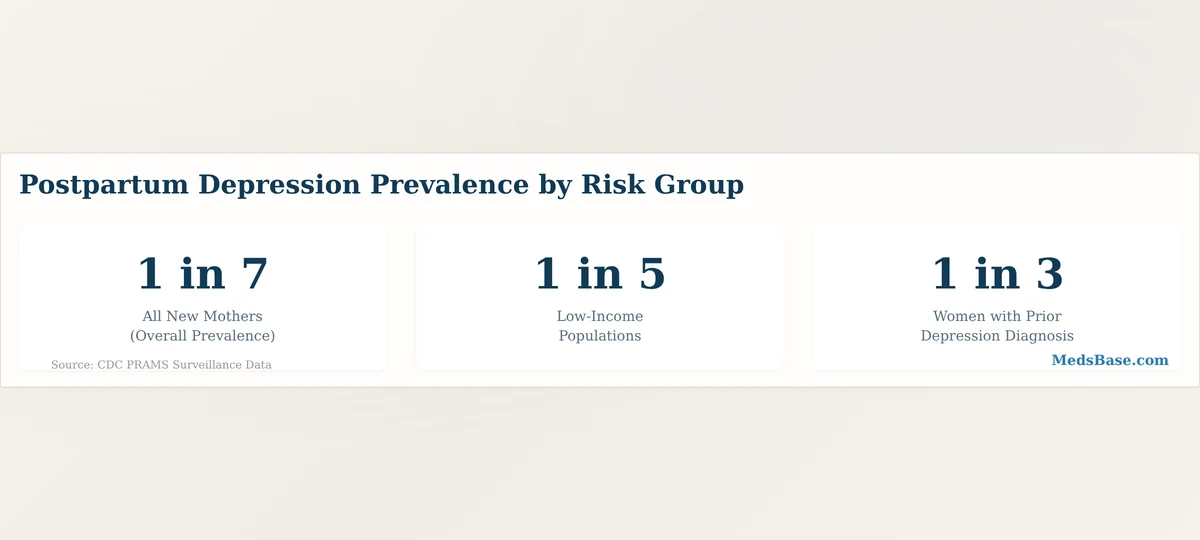
Postpartum depression affects approximately 1 in 7 new mothers.
Postpartum depression medication options — the decision to start medication for postpartum depression is personal, but there are clear clinical indicators that medication is the right next step.
Here is where it gets interesting. Many women wait far too long to consider medication because they believe they should be able to “push through” with willpower and self-care. But postpartum depression is a neurochemical condition, not a character flaw — and delay in treatment has measurable consequences for both mother and baby. The NICE clinical guidelines for antenatal and postnatal mental health recommend that medication should be discussed as a treatment option when symptoms are moderate to severe, when psychological therapy has not been sufficient on its own, or when the woman expresses a preference for medication.
Consider postpartum depression medication options when:
- Symptoms have persisted for more than two weeks and are getting worse, not better
- You are unable to function in daily tasks — caring for the baby, yourself, or other children feels impossible
- Talk therapy alone has not produced enough improvement after 6 to 8 weeks
- You have a history of depression that responded well to medication in the past
- Symptoms are severe — including panic attacks, inability to eat or sleep, or thoughts of self-harm
Postpartum depression medication options — here is something that surprises many new mothers: untreated postpartum depression is itself a risk to the baby. Research has consistently linked untreated maternal depression to attachment difficulties, behavioral problems, and cognitive and language delays in children. When you reframe medication as something you do not just for yourself but because your baby needs a well mother, the decision often becomes clearer.
Who Should Consider Medication
Consider medication if: symptoms are moderate to severe, have lasted more than two weeks, interfere with daily function, or talk therapy alone has not helped enough. Women with a prior history of depression that responded to antidepressants are particularly good candidates.
Who Should Explore Other Options First
Explore therapy and support first if: symptoms are mild, you have strong social support, you are highly motivated for non-medication approaches, or you have medical contraindications to the most commonly prescribed antidepressants. Mild PPD sometimes responds to structured cognitive behavioral therapy alone, and starting there is completely reasonable.
SSRIs for Postpartum Depression — The First-Line Choice
Selective serotonin reuptake inhibitors (SSRIs) are the most extensively studied and most commonly prescribed postpartum depression medication options. They work by increasing the availability of serotonin, a neurotransmitter that regulates mood, in the brain. For most women with moderate to severe postpartum depression, an SSRI is the recommended starting point.
But there is a catch. Not all SSRIs are equal for postpartum use. The two factors that differentiate them — lactation safety and side-effect profile — matter enormously when you are also caring for a newborn on very little sleep.
Here are the SSRIs most commonly considered for postpartum depression, with the evidence for each:
| Medication | Breastfeeding Safety | Starting Dose | Key Consideration for New Mothers |
|---|---|---|---|
| Sertraline (Zoloft) | Excellent — extensive data; undetectable in most infant serum tests | 25-50mg/day | Most-prescribed PPD medication worldwide. Low milk transfer. AAP compatible. |
| Escitalopram (Lexapro) | Very good — low milk transfer; well-studied | 5-10mg/day | Clean drug-interaction profile. Fewer side effects than some alternatives. |
| Fluoxetine (Prozac) | Good — but long half-life means slower clearance in infants | 10-20mg/day | Longer half-life is a double-edged sword: gentler withdrawal but longer infant exposure. |
| Paroxetine (Paxil) | Generally acceptable — but some reports of neonatal adaptation issues | 10-20mg/day | Often avoided as first-line due to slightly higher milk transfer and withdrawal concerns. |
Sertraline is the most-studied antidepressant in breastfeeding and is consistently the first choice recommended by perinatal psychiatrists. The NIH’s LactMed database classifies sertraline as having very low levels in breastmilk — often undetectable in infant serum — and reports that adverse effects in breastfed infants are uncommon. For most women starting postpartum depression medication options for the first time, sertraline at 25mg or 50mg daily is the standard starting point.
Fluoxetine deserves a special note. Its long half-life means it stays in the body longer after each dose — which can be an advantage if you sometimes forget to take your medication (common when you are sleep-deprived with a newborn). However, the same long half-life means it takes longer to clear from a breastfed infant’s system if any transfer occurs. For this reason, sertraline and escitalopram are usually preferred as first-line choices.
For a deeper comparison between two of the most commonly prescribed SSRIs, see our detailed guide: Sertraline vs Fluoxetine: 7 Proven Differences to Know.
Breastfeeding and Antidepressants: What the Evidence Shows
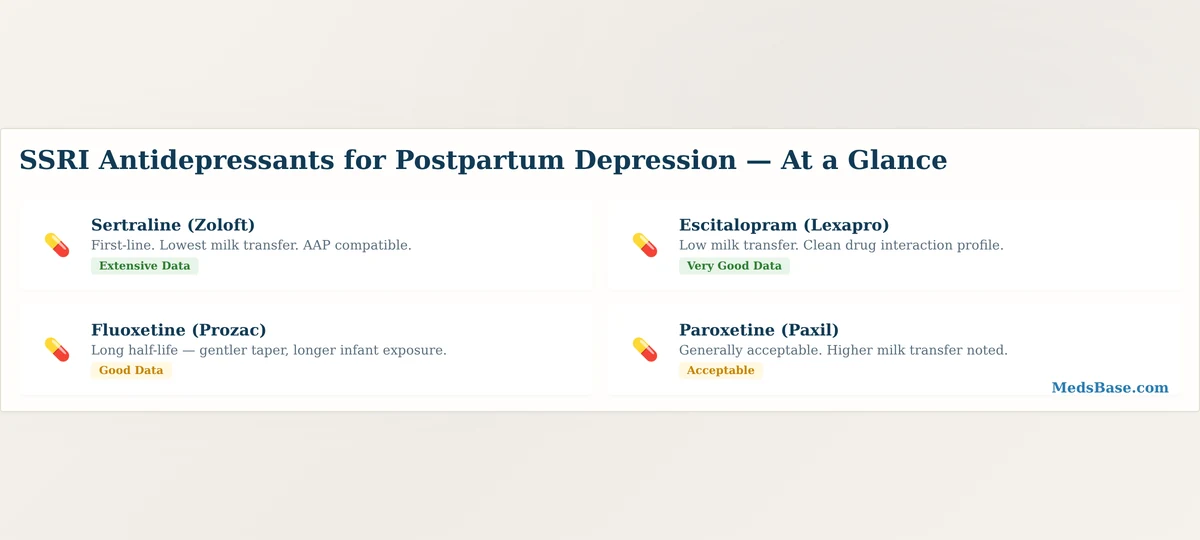
SSRIs like sertraline and escitalopram are first-line postpartum depression medication options with strong breastfeeding safety data.
This is the question that keeps new mothers awake at night — often literally: if I take an antidepressant, will it pass into my breastmilk and affect my baby?
Here is the short answer, backed by decades of research: all antidepressants transfer into breastmilk to some degree, but for most SSRIs the amount is extremely small — measured in nanograms — and adverse effects in breastfed infants are uncommon. The American Academy of Pediatrics classifies sertraline and escitalopram as compatible with breastfeeding. The benefits of treating maternal depression nearly always outweigh the small theoretical risk of infant exposure through breastmilk.
What the data actually shows, according to the LactMed database:
| Medication | Relative Infant Dose | Infant Serum Detection | Adverse Events Reported |
|---|---|---|---|
| Sertraline | 0.5-2.4% | Usually undetectable | Rare — occasional drowsiness |
| Escitalopram | 3-5% | Low or undetectable | Rare — mild irritability in isolated reports |
| Fluoxetine | 1-7% | Detectable in some infants | Uncommon — colic, irritability in some case reports |
| Paroxetine | 1-3% | Usually undetectable | Uncommon — neonatal adaptation concerns when used in late pregnancy |
So what does this mean for you? If you are breastfeeding and need medication, sertraline at standard doses results in such a tiny amount in your breastmilk that most infant blood tests cannot detect it at all. This does not mean zero risk — no medication during breastfeeding carries a zero-risk guarantee — but it does mean the risk profile is reassuringly low and well-characterized after decades of use.
One practical tip that perinatal psychiatrists often recommend: if you are especially concerned about infant exposure, time your daily dose so that you take it immediately after a feeding session. Since medication levels in breastmilk peak a few hours after you take the pill, this maximizes the gap between peak milk concentration and the next feeding. Is this strictly necessary with sertraline? Probably not — the levels are so low. But if it gives you peace of mind, it is a harmless precaution.
Beyond SSRIs: Other Postpartum Depression Medication Options
While SSRIs are the first-line choice for most women, they are not the only postpartum depression medication options — and they are not right for everyone. Some women cannot tolerate SSRI side effects; others have a history that suggests a different class of medication may work better.
SNRIs (Serotonin-Norepinephrine Reuptake Inhibitors): Medications like venlafaxine (Effexor) and duloxetine (Cymbalta) target both serotonin and norepinephrine. They may be considered when SSRIs have not worked or when the depression has prominent physical symptoms like pain and fatigue — both common in postpartum depression. Lactation data for SNRIs is less extensive than for SSRIs, but venlafaxine in particular has been reasonably well-studied and is considered acceptable during breastfeeding when clinically indicated.
Bupropion (Wellbutrin): This medication works differently — on dopamine and norepinephrine rather than serotonin — and has the advantage of being less likely to cause sexual side effects or weight gain, two issues that can compound the distress of postpartum recovery. Bupropion transfers into breastmilk at low levels and the American Academy of Pediatrics considers it compatible with breastfeeding, though it is typically not a first-line choice for PPD because the data is less extensive than for sertraline.
Brexanolone (Zulresso): This is the first FDA-approved medication specifically for postpartum depression. It is an allopregnanolone analog — a synthetic form of a neurosteroid that drops sharply after childbirth — administered as a 60-hour intravenous infusion in a certified healthcare facility. It works rapidly, often within 24 to 48 hours, which is strikingly faster than the 4 to 8 weeks typical for SSRIs. The catch: it requires hospitalization, is expensive, and is not available everywhere. But for severe postpartum depression where a rapid response is needed, it represents an entirely new category of postpartum depression medication options.
Zuranolone (Zurzuvae): Approved in 2023, this is an oral version of a similar neurosteroid approach — a 14-day course taken at home. Clinical trials showed significant improvement in depressive symptoms by day 15, sustained through day 45. It shares the same mechanism as brexanolone but in pill form, making it far more accessible. Breastfeeding data is limited given its recent approval, so this is a conversation to have carefully with your doctor if you are nursing.
How Long Until Postpartum Depression Medication Starts Working?
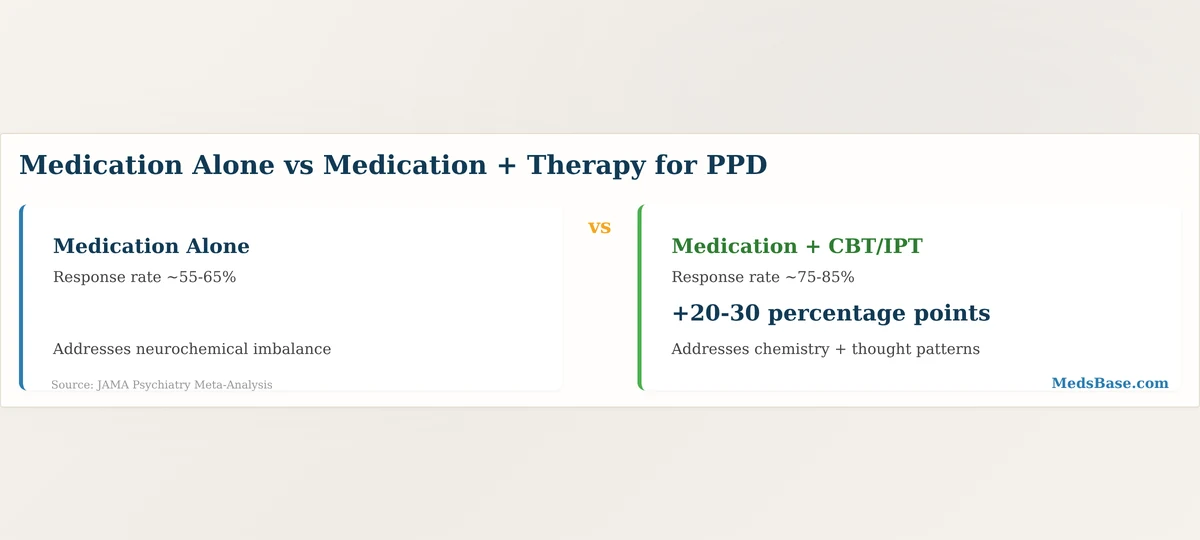
Combining antidepressant medication with cognitive behavioral therapy produces better outcomes than either approach alone.
This is the question that follows “is it safe?” almost immediately — and it matters because managing expectations prevents the early dropout that keeps many women from getting the full benefit of treatment.
Antidepressants do not work overnight, but they do not take months either. Here is the typical timeline:
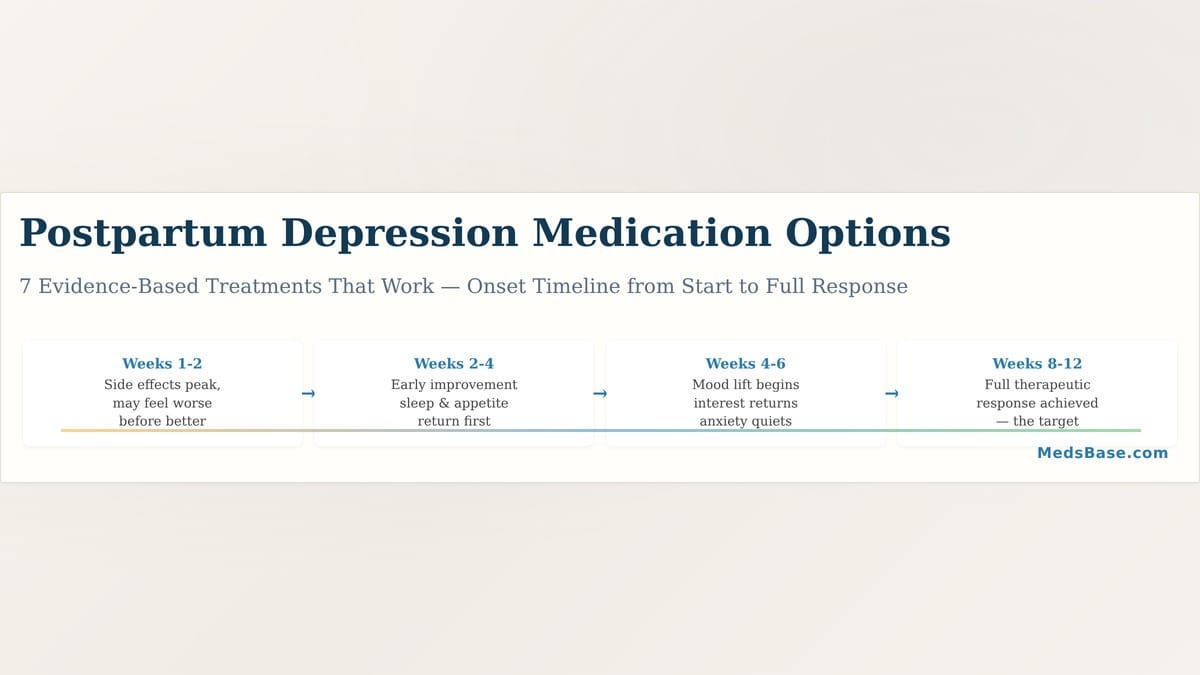
- Week 1 to 2: This is the side-effect window. You may experience nausea, headache, drowsiness, or increased anxiety. These side effects are usually temporary and often resolve within the first two weeks. This is the most common dropout point — women stop the medication because they feel worse before they feel better.
- Week 2 to 4: Early improvement begins. Physical symptoms of depression — sleep, appetite, energy — often improve first. This is encouraging but incomplete; you may still feel emotionally flat.
- Week 4 to 6: The mood lift typically becomes noticeable. You start to feel more like yourself. Interest in activities returns. The intrusive, anxious thoughts begin to quiet.
- Week 8 to 12: Full therapeutic response — this is the target. If you have not improved meaningfully by 8 weeks, your doctor may adjust the dose or consider switching medications.
One of the most important things to know about all postpartum depression medication options is that they require patience. The first two weeks can be hard — side effects without clear benefits. If you can push through that window with support from your partner, family, and doctor, the odds of meaningful improvement are excellent. According to the Cochrane systematic review of antidepressant treatment for postnatal depression, SSRIs are significantly more effective than placebo for PPD, with response rates of approximately 55-65% compared to 30-35% for placebo.
One more thing about the timeline: if sertraline or escitalopram does not work after an adequate trial at a therapeutic dose (typically 6 to 8 weeks), do not assume medication will not help you. A different SSRI, an SNRI, or a combination approach may work. Approximately 30% of women who do not respond to their first antidepressant do respond to a different one. This is not a one-shot proposition — it is a process.
Medication Combined with Therapy — The Research on Doing Both
If you had to pick the single most effective approach to postpartum depression based on the evidence, it would not be medication alone or therapy alone — it would be doing both at the same time.
Multiple studies, including a large meta-analysis published in JAMA Psychiatry, have shown that combining antidepressant medication with cognitive behavioral therapy (CBT) or interpersonal therapy (IPT) produces significantly better outcomes than either treatment alone. The effect is not subtle: combination treatment increases remission rates by approximately 20 to 30 percentage points over medication alone.
Why does combining work better? The two approaches target different mechanisms. Medication addresses the neurochemical imbalance — raising serotonin levels so your brain has the raw materials to regulate mood. Therapy addresses the thought patterns and behaviors — the guilt spirals, the catastrophic thinking, the withdrawal from friends and family. Each makes the other more effective. Medication gives you enough emotional bandwidth to engage meaningfully in therapy; therapy teaches you skills that outlast the medication.
In practical terms, if you are considering medication, ask your doctor about therapy at the same appointment. Many women wait until medication has “taken the edge off” before pursuing therapy, but starting both simultaneously from the beginning gives you the best odds of the fastest and most complete recovery.
Take an illustrative scenario: Maria, 32, a first-time mother of a four-month-old, started sertraline 50mg for postpartum depression. At her two-week follow-up, she reported that her sleep and appetite were improving but she still felt “not myself” and was consumed with guilt about not bonding with her baby. Her doctor recommended adding six sessions of CBT focused on maternal role transition and guilt management. By week eight, Maria reported that the combination — medication for the physiological symptoms and therapy for the thought patterns — had brought her closer to her pre-pregnancy baseline than she had felt since delivery.
The Hidden Risk: What Happens When Postpartum Depression Goes Untreated
When women are reluctant to consider postpartum depression medication options because of potential risks — to the baby, to breastfeeding, to their sense of self-reliance — they rarely weigh the risk on the other side of the equation: the risk of leaving the depression untreated.
The evidence is clear and consistent. Untreated postpartum depression is associated with:
- Impaired mother-infant bonding: Women with untreated PPD are less likely to engage in the responsive, attuned interactions that build secure attachment. They smile less, talk less, and make less eye contact with their babies — and babies notice.
- Developmental consequences for the child: Longitudinal studies have found that children of mothers with untreated postpartum depression have higher rates of behavioral problems, language delays, and lower cognitive scores at school age. The effect is lasting, not transient.
- Marital strain and family disruption: Postpartum depression doubles the risk of relationship dissatisfaction and conflict, which in turn worsens depression — a vicious cycle.
- Increased risk of chronic depression: An untreated postpartum episode significantly raises the lifetime risk of recurrent major depressive episodes.
- In severe cases, risk of self-harm or infanticide: Postpartum psychosis — a related but distinct emergency — affects 1 to 2 per 1,000 births and requires immediate hospitalization.
Framing the decision this way — not “is medication risky?” but “which carries more risk: treating the depression or leaving it untreated?” — often clarifies the choice for women who have been agonizing over it. The data consistently shows that the risks of untreated postpartum depression to both mother and child are greater than the small, well-characterized risks of first-line medications like sertraline.
Medical Disclaimer
This article is for informational purposes only and does not constitute medical advice. Postpartum depression is a serious medical condition that requires professional evaluation. Always consult your doctor, psychiatrist, or other qualified healthcare provider before starting, changing, or stopping any medication — especially while pregnant or breastfeeding. If you are experiencing thoughts of harming yourself or your baby, seek emergency help immediately by calling 988 (Suicide and Crisis Lifeline) or going to your nearest emergency room.
Related Reading
- Sertraline vs Fluoxetine: 7 Proven Differences to Know — A detailed head-to-head comparison of two widely prescribed SSRIs.
- Antidepressant Discontinuation Syndrome: What You Need to Know — How to safely taper off antidepressants when the time comes.
- GERD Medications Long-Term Safety: What 10+ Years of Research Reveals — Another common medication-safety question answered with the evidence.
Frequently Asked Questions
What is the best medication for postpartum depression?
Sertraline (Zoloft) is the most commonly recommended first-line medication for postpartum depression. It has the most extensive safety data in breastfeeding, transfers into breastmilk at very low levels, and has a favorable side-effect profile. However, the “best” medication varies by individual — your doctor will consider your symptom profile, prior medication response, breastfeeding status, and medical history to recommend the most appropriate option for you.
Can you take antidepressants while breastfeeding?
Yes. Most SSRIs, including sertraline, escitalopram, and fluoxetine, are considered compatible with breastfeeding by the American Academy of Pediatrics. The amount of medication that transfers into breastmilk is very small — usually measured in nanograms — and adverse effects in breastfed infants are uncommon. The benefits of treating maternal depression almost always outweigh the small theoretical risk of infant exposure.
How long does postpartum depression medication take to work?
Most antidepressants begin to show early improvement within 2 to 4 weeks, with physical symptoms like sleep and appetite often improving first. The full therapeutic effect typically develops by 6 to 8 weeks. If you have not experienced meaningful improvement by 8 weeks, your doctor may consider a dose adjustment or a different medication.
Are SSRIs safe for postpartum depression?
SSRIs are the most extensively studied and safest class of antidepressants for postpartum use. Decades of research and clinical experience support their use during the postpartum period. Side effects — including nausea, headache, and drowsiness — are usually mild and temporary. Serious adverse events are rare. The risks of untreated postpartum depression to both mother and child are well-documented and generally exceed the medication risks.
What are common postpartum depression medication side effects?
The most common early side effects of SSRIs include nausea (often resolves within 1 to 2 weeks), headache, drowsiness or insomnia, dry mouth, and sometimes a temporary increase in anxiety. Sexual side effects — including reduced libido and difficulty reaching orgasm — affect approximately 30 to 50% of users and may persist. Most side effects are mild, occur early in treatment, and improve with time.
What happens if postpartum depression goes untreated?
Untreated postpartum depression carries significant risks, including impaired mother-infant bonding, developmental delays and behavioral problems in the child, increased risk of chronic or recurrent depression, and relationship strain. In severe cases, untreated PPD can escalate to suicidal thoughts or, in the rare case of postpartum psychosis, risk of harm to the infant.
Can postpartum depression be treated without medication?
Yes, mild to moderate postpartum depression can sometimes be managed with evidence-based psychotherapy alone — particularly cognitive behavioral therapy (CBT) and interpersonal therapy (IPT). However, for moderate to severe depression, combining medication with therapy produces significantly better outcomes than therapy alone. The decision should be individualized with your healthcare provider.
How do I know if I have postpartum depression or just the baby blues?
The baby blues typically begin within the first few days after delivery, involve mild mood swings, tearfulness, and irritability, and resolve on their own within two weeks. Postpartum depression lasts longer than two weeks, is more severe, and interferes with your ability to function — you may be unable to sleep, eat, care for yourself or the baby, or experience intense guilt and hopelessness. If symptoms persist beyond two weeks or feel unmanageable, see your doctor.
The Bottom Line
Postpartum depression is a medical condition, not a personal failure — and effective postpartum depression medication options exist that are well-studied, safe for breastfeeding, and capable of restoring your quality of life. Sertraline and escitalopram lead the evidence base; newer options like zuranolone offer rapid relief for women who need it faster. The combination of medication with cognitive behavioral therapy produces the strongest outcomes. And the single most important decision you can make is not which option to choose — it is to speak with a healthcare provider and start the conversation.
If you are reading this because postpartum depression has been weighing on you, take one action today: call your OB-GYN, midwife, or primary care doctor, describe your symptoms honestly, and ask directly about treatment options — including medication. You do not need to have all the answers. You just need to make the call.
Next questions you may have:
- Wondering how sertraline compares to fluoxetine? Read our full comparison.
- Concerned about stopping antidepressants safely? Understand discontinuation syndrome.
- Browse available medications in our Mental Health category.
Reviewed by Medical Professional. Last updated: August 22, 2026.

Written by
Sophie ChenPharmaceutical Content Researcher · 8 years experience
Sophie Chen is a pharmaceutical content researcher with 8 years covering generic medication access and clinical pharmacology. She specialises in international regulatory frameworks, bioequivalence standards, and patient-facing education on therapeutic drug classes. She is not a clinician.