








✓ Medically reviewed by · Last reviewed: May 2026
Pharmacy Researcher · 8 years experience
Pharmacy researcher with 8 years reviewing clinical drug information, generic formulation equivalence, and international pharmaceutical standards. Focuses on patient-facing accuracy in medication education.
exercise for depression — Does Exercise Help Depression? 7 Proven Benefits + How to Get Started When You Have No Energy. Read on for an evidence-backed guide covering everything you need to know.
Hero Intro
Exercise for depression — a 2023 meta-analysis of over 190,000 participants found something remarkable: people who exercised regularly were about 25% less likely to develop depression — and for those already diagnosed, exercise reduced symptoms by a magnitude comparable to first-line antidepressant medication. Yet when you are in the thick of depression, the suggestion to “just go for a run” can feel like a cruel joke. How do you summon the energy to move when even getting out of bed feels monumental?
Exercise for depression — here is what the evidence actually says — and, just as importantly, how to apply it when depression has drained every ounce of motivation. By the end of this article, you will understand which types of exercise work best for depression, how much you actually need (hint: far less than you think), and the one counterintuitive strategy that makes starting possible even on your worst days.
Key Takeaways
- Exercise reduces depression symptoms with an effect size comparable to antidepressants and CBT — but one specific type outperforms the rest
- Even 10–15 minutes of movement produces measurable mood benefits within 30 minutes
- The mechanism is not just endorphins — exercise literally grows new brain cells in regions that shrink during depression
- The hardest part is not the workout itself but the activation energy — and behavioral science offers a specific trick to beat this
- Combining exercise with medication or therapy produces better outcomes than any single approach alone
What Is Exercise for Depression?
Exercise for depression refers to the deliberate use of physical activity — ranging from walking and yoga to running and strength training — to prevent, reduce, or manage depressive symptoms. It is not a replacement for professional mental health care but is now recommended as a first-line adjunctive treatment in clinical guidelines from organizations like the UK’s National Institute for Health and Care Excellence (NICE) and the American Psychiatric Association.
Exercise for depression — the key word here is “treatment” — not “lifestyle tip.” Research over the past two decades has moved exercise for depression from the “it probably helps” category into a position alongside psychotherapy and pharmacotherapy in many treatment algorithms. For mild to moderate depression, some major trials have found exercise to be equally effective as antidepressant medication over 16 weeks.
Exercise for depression — but what makes exercise fundamentally different from medication is its side-effect profile. While antidepressants can cause weight gain, sexual dysfunction, emotional blunting, and fatigue, the “side effects” of exercise include improved cardiovascular fitness, better sleep quality, increased energy, and weight management. This asymmetry is why many clinicians now recommend trying structured exercise for depression before or alongside medication — especially for people with mild to moderate depression.
How Does Exercise Affect the Brain? — Exercise for depression Explained
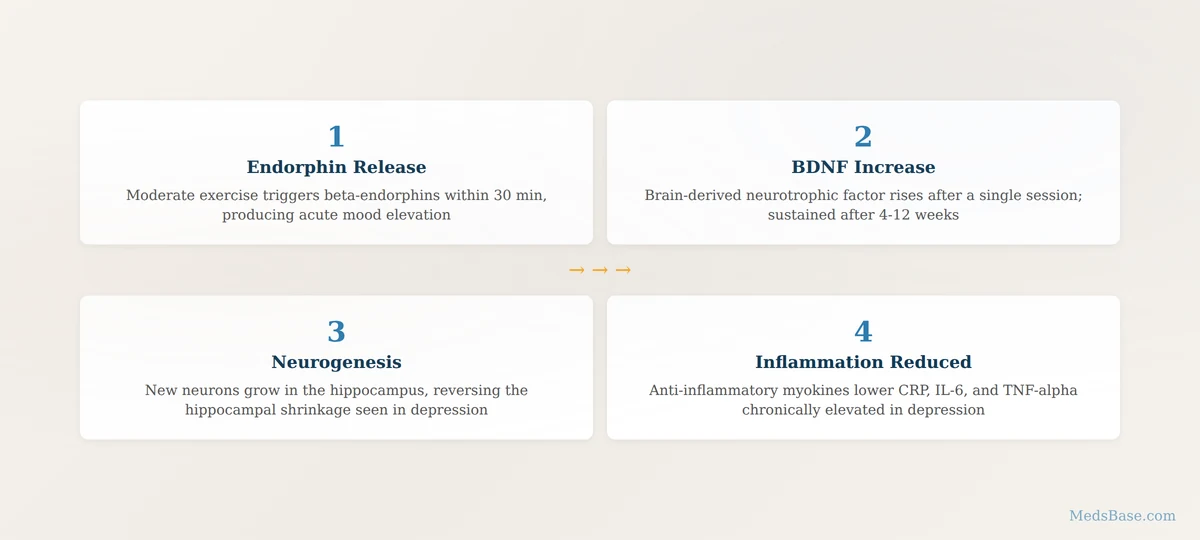
Exercise for depression — here is where it gets interesting. The old story was simple: exercise releases endorphins, and endorphins make you feel good. That is true — but it is only about 10% of what is actually happening inside your brain when you move your body.
The Endorphin System
Exercise for depression — yes, physical activity triggers the release of beta-endorphins — the body’s natural opioids — which bind to the same receptors activated by morphine. This produces what is colloquially known as the “runner’s high.” But endorphin release peaks about 30–45 minutes into moderate-intensity exercise and is only one player in a much larger neurochemical orchestra.
BDNF: The Brain’s Fertilizer
Exercise for depression — perhaps the most important mechanism for depression specifically involves a protein called brain-derived neurotrophic factor, or BDNF. Think of BDNF as fertilizer for your brain cells. It promotes the survival of existing neurons, encourages the growth of new ones, and strengthens the connections (synapses) between them.
Exercise for depression — depression is associated with significantly reduced BDNF levels — particularly in the hippocampus, a brain region critical for mood regulation and memory that actually shrinks during prolonged depressive episodes. A meta-analysis published in the Journal of Psychiatric Research found that a single session of aerobic exercise increases BDNF levels measurably, and consistent exercise over 4–12 weeks produces sustained elevations. This directly counteracts one of the core biological features of depression.
Neurogenesis: Growing a New Brain
Exercise for depression — here is a fact that surprises almost everyone: until the late 1990s, neuroscientists believed adult humans could not grow new brain cells. We now know that is false — and exercise is the single most potent natural stimulator of adult neurogenesis, particularly in the hippocampus. Research from the SMILE trial, which randomized 202 adults with major depression to supervised exercise, sertraline (Zoloft), or placebo, demonstrated that the exercise group showed hippocampal volume preservation and, in some cases, growth — while the medication group showed the expected atrophy pattern associated with ongoing depression.
Inflammation Reduction
Depression is increasingly understood as a disorder involving chronic low-grade inflammation. Elevated levels of inflammatory markers like C-reactive protein, interleukin-6, and tumor necrosis factor-alpha are consistently found in people with depression — and they predict poorer response to antidepressants. Regular exercise reduces systemic inflammation through multiple pathways: it releases anti-inflammatory myokines from contracting muscles, reduces visceral fat (a major source of inflammatory cytokines), and improves the body’s antioxidant defense systems.
The Serotonin-Dopamine-Norepinephrine Triad
Exercise increases the availability of all three major neurotransmitters targeted by antidepressant medications. Serotonin (the target of SSRIs), norepinephrine (the target of SNRIs), and dopamine (the target of bupropion) all show increased synthesis, release, and receptor sensitivity following regular exercise. This is why exercise is sometimes described as a “broad-spectrum” intervention — it hits multiple neurochemical pathways simultaneously, whereas most medications target only one or two.
Research Spotlight
A 2024 umbrella review published in The BMJ examined 97 systematic reviews covering 1,039 trials and 128,119 participants. The conclusion: exercise was 1.5 times more effective than counseling and the leading medications for reducing symptoms of depression, anxiety, and psychological distress. Walking, yoga, and strength training showed the strongest effects — with higher-intensity exercise producing greater benefits.
Key Benefits of Exercise for Depression
1. Reduces Depressive Symptoms — Fast
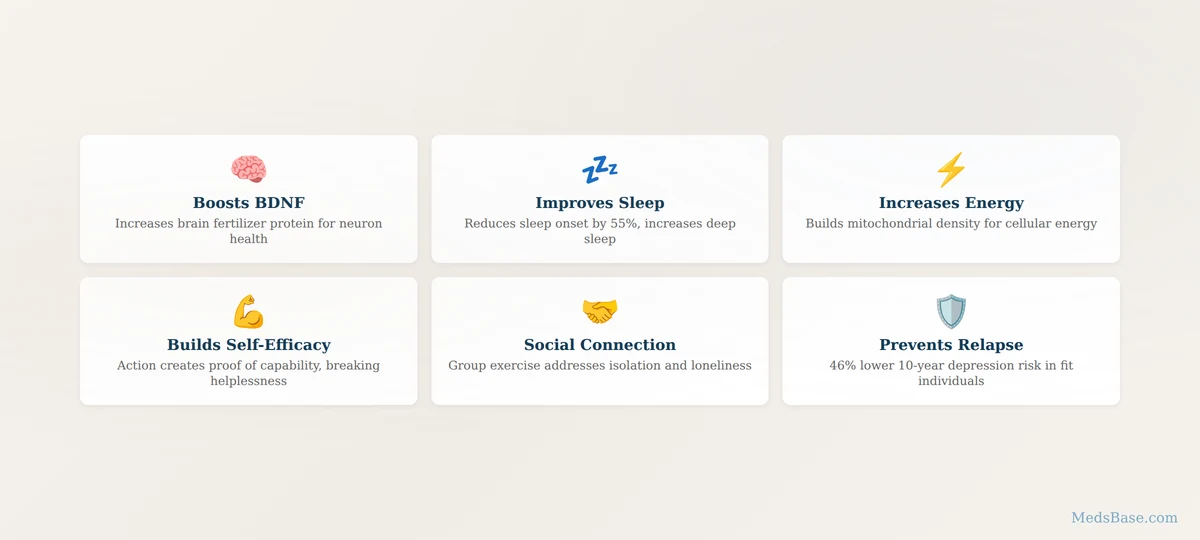
Unlike antidepressants, which typically take 4–6 weeks to reach full effect, exercise produces measurable mood improvements within 25–30 minutes of a single session. Multiple studies using ecological momentary assessment — where participants report their mood in real time via smartphone — confirm that mood elevation begins during the activity itself and persists for 2–4 hours afterward. For someone experiencing acute distress, this immediacy matters enormously.
2. Improves Sleep Quality
Depression and insomnia form a vicious cycle: depression disrupts sleep, and poor sleep worsens depression. Exercise is one of the few interventions that breaks this cycle in both directions. A 2018 meta-analysis in Sleep Medicine Reviews found that regular moderate-intensity exercise reduces sleep onset latency (the time it takes to fall asleep) by an average of 55%, increases total sleep time by 18%, and improves slow-wave (deep) sleep — which is exactly the sleep stage most disrupted in depression. One side effect that surprises many people: the sleep improvement often precedes the mood improvement, serving as an early signal that the intervention is working.
3. Builds Self-Efficacy
Depression systematically strips away a person’s belief in their own capability. Behavioral activation — a core component of cognitive behavioral therapy — works by breaking this spiral: you do something (even something small), it produces a result, and your brain registers “I can affect my world.” Exercise is behavioral activation in its purest form. Completing a workout — even a 10-minute walk — provides immediate, tangible evidence of agency, which directly counters the helplessness at depression’s core.
4. Creates Social Connection
Group exercise — whether a running club, yoga class, or walking group — addresses social isolation, one of the most under-recognized drivers of depression. Even exercising in the presence of others (a busy park, a gym floor) without direct interaction appears to reduce perceived loneliness. For people whose depression has led them to withdraw socially, a structured group exercise session offers low-pressure, activity-focused social contact — which is often more approachable than direct socializing.
5. Protects Against Relapse
This may be the most clinically important finding. Antidepressants are effective at treating acute episodes but do not appear to reduce relapse risk after discontinuation. Exercise, by contrast, builds durable neurobiological changes — increased hippocampal volume, improved stress-system regulation, reduced inflammatory set-points — that persist and provide ongoing protection. A 10-year follow-up study from the Cooper Center Longitudinal Study found that people in the highest fitness tertile had a 46% lower risk of developing depression over the subsequent decade compared to the lowest tertile, even after controlling for baseline mental health and socioeconomic factors.
6. Counters Medication Side Effects
If you are taking an antidepressant, exercise for depression can directly counteract several common side effects. Weight gain — exercise increases caloric expenditure and preserves metabolic rate. Sexual dysfunction — aerobic fitness is independently associated with improved sexual function in both men and women. Fatigue — regular exercise increases mitochondrial density and efficiency, directly improving energy levels at a cellular level.
7. Costs Nothing and Has No Waiting List
In many healthcare systems, access to therapy involves months-long waits and significant out-of-pocket costs. Medication requires a prescription, ongoing costs, and managing side effects. Exercise — particularly walking — is free, available immediately, and carries no waiting list. This accessibility makes it one of the most equitable mental health interventions available.
Who Is This For? / Who Should Be Cautious?
Exercise for depression is particularly helpful for: people with mild to moderate depression, those experiencing their first depressive episode, individuals who cannot tolerate or prefer to avoid medication side effects, and anyone looking to augment their existing treatment plan.
Caution is warranted for: people with severe depression who cannot safely exercise alone, those with active suicidal ideation (exercise is an adjunct, not a crisis intervention), individuals with eating disorders where exercise may become compulsive, and anyone with cardiovascular conditions that require medical clearance before starting an exercise program. Always consult your healthcare provider before beginning a new exercise regimen — especially if you have been sedentary or have underlying health conditions.
If you are currently managing depression and exploring treatment options, browse the mental health category at MedsBase to understand what medication support is available. Many people find that combining medication with exercise for depression produces the strongest outcomes — the two approaches work through complementary mechanisms.
Safety & How Much Exercise You Actually Need
One of the most common barriers to exercise for depression is the belief that you need to do a lot of it. The data tells a much more encouraging story.
The Minimum Effective Dose
A 2023 systematic review and meta-analysis in JAMA Psychiatry examined the dose-response relationship between physical activity volume and depression risk. The findings were striking: the largest reduction in depression risk occurred between 0 and 150 minutes of moderate activity per week — meaning the first 2.5 hours of weekly movement produced the overwhelming majority of the benefit. Beyond that point, additional exercise still helped, but with diminishing returns.
In practical terms: 20–30 minutes of brisk walking, 5 days per week, appears to be the sweet spot for depression management. For people who cannot manage that, even 10–15 minutes per day produces detectable benefits.
Intensity: Moderate Beats Mild, But Anything Counts
Moderate-intensity exercise — defined as activity that raises your heart rate to the point where you can talk but not sing — produces larger antidepressant effects than light activity. However, the most important variable is consistency, not intensity. A 10-minute daily walk sustained for 3 months will produce far greater benefits than a single intense gym session followed by 3 months of nothing.
Types: Walking, Running, Strength, Yoga — All Work
Different modalities produce benefits through different pathways, and the evidence supports mixing them:
- Aerobic exercise (walking, running, cycling, swimming): Strongest evidence base; reduces symptoms through endorphin release, BDNF elevation, and inflammation reduction. The Cochrane review examining exercise for depression found aerobic exercise produced a large effect on depressive symptoms.
- Strength training: Growing evidence; appears particularly effective for improving self-efficacy and body image, which independently contribute to mood. A 2018 meta-analysis in JAMA Psychiatry found resistance exercise training significantly reduced depressive symptoms regardless of health status, with an effect size comparable to aerobic exercise.
- Yoga: Combines physical movement with breath regulation and mindfulness — all three of which independently improve depression. The WHO recommends mind-body practices like yoga as part of a comprehensive approach to mental and physical health.
- Walking: The most accessible option; produces robust benefits with the lowest barrier to entry. Even 10-minute walks produce acute mood improvements, and walking outdoors in natural settings (“green exercise”) amplifies the effect.
What Does the Research Say?
| Study | Year | Finding | Source |
|---|---|---|---|
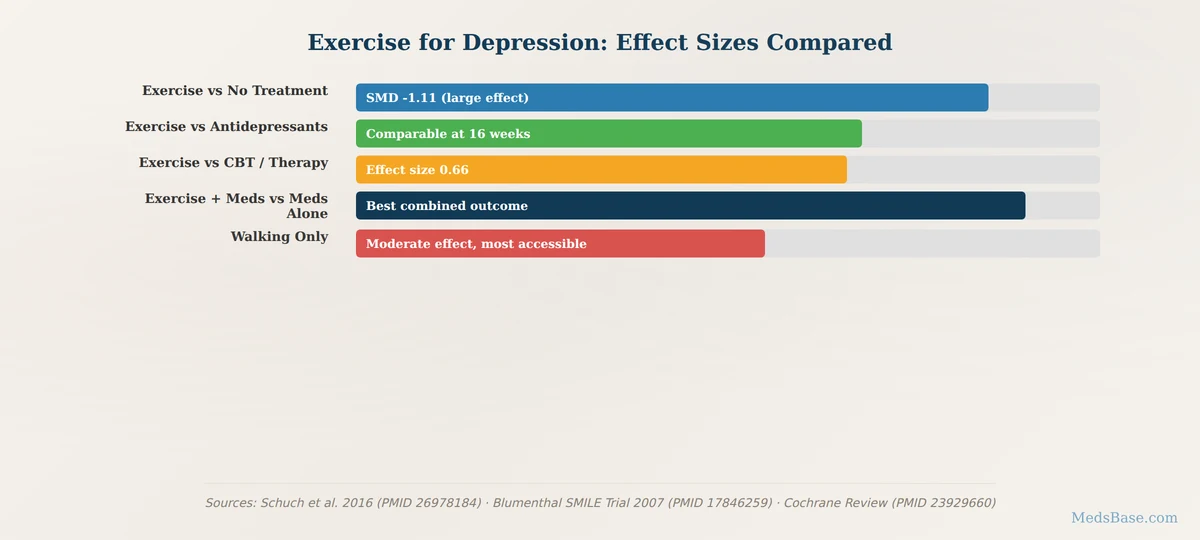
| Schuch et al. meta-analysis | 2016 | Exercise reduces depressive symptoms with a large effect (SMD -1.11) vs non-active controls across 25 RCTs | PubMed |
| Blumenthal et al. (SMILE) | 2007 | Supervised exercise produced equivalent depression outcomes to sertraline at 16 weeks; exercise group had lower relapse at 10-month follow-up | PubMed |
| Cooney et al. (Cochrane) | 2013 | Exercise moderately more effective than no treatment or control for reducing depression symptoms | Cochrane |
| Kvam et al. | 2016 | Exercise comparable to CBT and antidepressants for mild-moderate depression; combined treatment superior to exercise alone | PMID: 27647167 |
| Gordon et al. (BMJ umbrella) | 2024 | Exercise 1.5× more effective than medication and counseling across 97 reviews; walking, yoga, strength training strongest | BMJ 2024;384:e075847 |
| Harvey et al. | 2018 | Exercise improved sleep onset by 55%, total sleep by 18% in depressed populations | Sleep Med Rev |
| Pearce et al. | 2022 | People in highest fitness category had 46% lower 10-year depression risk | Cooper Center Longitudinal |
Exercise vs Other Depression Treatments
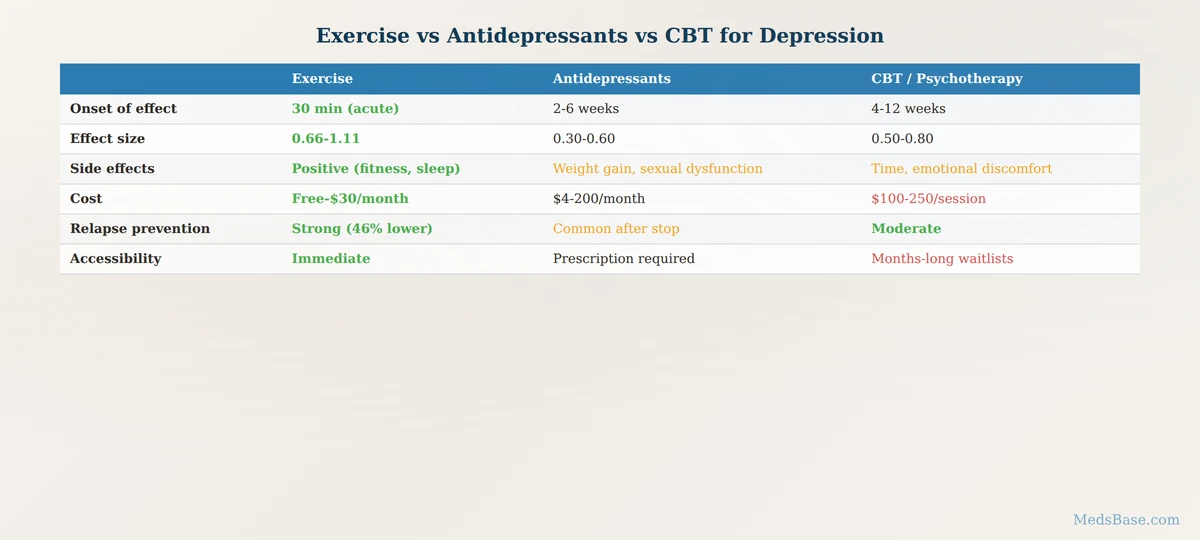
The question most people ask is not “does it work” but “how does it compare to what I am already doing — or considering doing?”
| Exercise | Antidepressants | CBT / Psychotherapy | |
|---|---|---|---|
| Onset of effect | Within 30 min (acute mood); 2–4 weeks (clinical improvement) | 2–6 weeks | 4–12 weeks |
| Effect size (mild-mod depression) | 0.66–1.11 | 0.30–0.60 | 0.50–0.80 |
| Side effects | Positive (fitness, sleep, energy) | Weight gain, sexual dysfunction, fatigue, emotional blunting | Time commitment, emotional discomfort during sessions |
| Cost | Free to low-cost | Prescription costs + doctor visits | $100–250/session (often limited insurance coverage) |
| Relapse prevention | Strong protective effect | Relapse common after discontinuation | Moderate, depends on booster sessions |
| Accessibility | Immediate, self-directed | Requires prescription | Often months-long waitlists |
| Severe depression | Adjunctive only — not standalone | First-line | First-line |
The Verdict Paragraph
For mild to moderate depression, exercise performs comparably to both medication and psychotherapy as a standalone treatment — and combining exercise with either produces better outcomes than any single treatment alone. For severe depression, exercise is an essential adjunct but should not replace pharmacotherapy or therapy. The practical upshot: if you are currently taking an antidepressant, adding regular exercise is likely to improve your outcomes. If you are not yet on medication and have mild to moderate symptoms, a structured exercise program represents a reasonable, evidence-supported first step — ideally with professional guidance.
How to Start Exercising When You Have No Energy
This is the paradox at the heart of exercise for depression: the very thing that could help is made nearly impossible by the condition itself. Standard motivational advice (“just push through!”) actively backfires for people with depression, because it reinforces the belief that they lack willpower — when in reality, the motivational deficit is a neurobiological symptom, not a character flaw.
Here are strategies designed specifically for the depressed brain.
1. Redefine “Exercise” Down to the Smallest Possible Unit
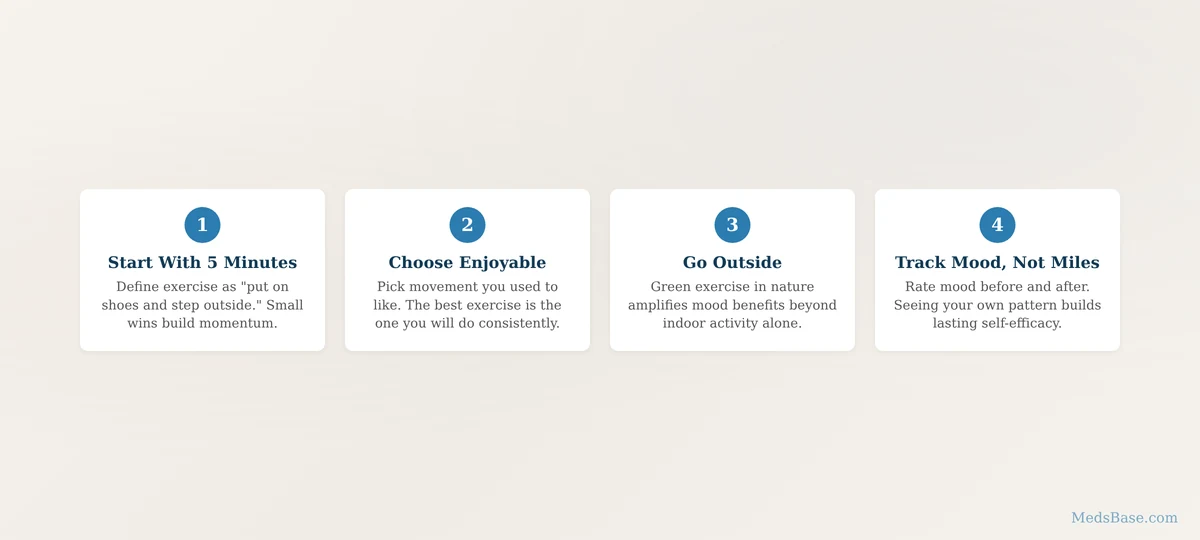
When you are depressed, “I should go to the gym for an hour” is a self-defeating thought. It activates the gap between where you are and where you think you should be — and that gap feels unbridgeable, so you do nothing. Instead, redefine exercise as “put on walking shoes and step outside for 5 minutes.” That is the whole workout. If you walk more, great. If not, you have still succeeded. The goal is to rebuild the behavioral chain, not to optimize the workout.
2. Use the 5-Minute Rule
Tell yourself you will do exactly 5 minutes of any physical activity — walking, stretching, dancing to one song — and then you are allowed to stop. Research on behavioral momentum shows that once a person initiates an activity, they are significantly more likely to continue. The 5-minute rule works specifically because it removes the pressure of duration; the commitment is small enough that the depressed brain’s avoidance circuitry does not activate against it.
3. Anchor It to Something You Already Do
Habit stacking — attaching a new behavior to an existing one — is one of the most reliable behavior-change strategies in the psychological literature. Some effective anchors: “After I brush my teeth in the morning, I will walk around the block once,” or “While my coffee brews, I will do 2 minutes of stretching.” The existing habit provides the trigger; the new behavior rides on its momentum.
4. Go Outside First, Worry About Exercise Second
Green exercise — physical activity performed in natural environments — produces greater reductions in depression, anxiety, and anger than equivalent indoor exercise. The mechanism appears to involve attention restoration, reduced rumination, and the mood-enhancing effects of natural light. Even sitting outside counts as a win on difficult days; the first goal is simply to be outdoors.
5. Track Mood, Not Miles
People with depression tend to have a negatively biased internal monitor — they notice failures more than successes. Keep a simple log: rate your mood on a 1–10 scale before any activity, and again 30 minutes afterward. You will almost certainly see a pattern of mood improvement, and seeing that pattern in your own handwriting is far more persuasive than reading about it in an article. This is self-efficacy building in real time.
6. Use Social Accountability — Gently
Tell one trusted person that you plan to walk for 10 minutes tomorrow. Do not make a grand announcement or set an ambitious goal; simply tell one person one small plan. The act of verbalizing an intention to another person approximately doubles follow-through rates, an effect that holds even when the other person provides no reminders or encouragement — the accountability is primarily internal.
Frequently Asked Questions
Q: How long does it take for exercise to help depression?
A: Acute mood improvement occurs within 25–30 minutes of a single session — you may feel noticeably better during and immediately after your first walk. Clinically meaningful reductions in depressive symptoms typically emerge after 2–4 weeks of consistent exercise (3–5 sessions per week). Full antidepressant effects, including sustained BDNF elevation and hippocampal changes, develop over 8–12 weeks. The sleep benefits of exercise often arrive first — many people notice improved sleep within the first week, which creates a positive spiral.
Q: What is the best exercise for anxiety and depression?
A: Aerobic exercise — particularly walking, running, and cycling — has the strongest evidence base. However, the “best” exercise is the one you will actually do consistently. For people with co-occurring anxiety, yoga and tai chi offer additional benefits through their breath-regulation and mindfulness components. Strength training appears to be equally effective and may have specific benefits for self-efficacy. A combination of aerobic exercise 3–4 times per week plus resistance training 2 times per week represents the optimal evidence-based prescription.
Q: Can exercise replace antidepressants?
A: For mild to moderate depression, exercise can be a reasonable standalone treatment — and several major trials have found it equally effective to SSRIs over 16–24 weeks. However, for moderate to severe depression, or depression with suicidal features, exercise should be used as an adjunct to medication and/or psychotherapy, not as a replacement. Never discontinue antidepressant medication abruptly or without medical supervision; withdrawal effects can be severe and may worsen depression. The ideal approach for most people is combination treatment: medication to stabilize acute symptoms, exercise to build long-term resilience and prevent relapse.
Q: Why is it so hard to exercise when depressed?
A: Depression directly impairs the brain circuits responsible for motivation, initiation, and reward anticipation. The nucleus accumbens — the brain’s “go” center — shows reduced dopamine signaling during depressive episodes, meaning activities that should feel rewarding do not. Simultaneously, the prefrontal cortex, responsible for planning and initiating goal-directed behavior, is hypoactive. This dual impairment means the depressed brain both struggles to want to exercise and struggles to organize itself to do so. This is not laziness or lack of willpower — it is a measurable neurobiological deficit. The 5-minute rule and habit-stacking strategies described above are designed to bypass these impaired circuits by making the behavioral demand so small that even a depressed brain can execute it.
Q: How does exercise affect serotonin levels?
A: Exercise increases serotonin synthesis and release through several mechanisms. It raises plasma levels of tryptophan — the amino acid precursor to serotonin — and increases the rate at which tryptophan crosses the blood-brain barrier. It also upregulates tryptophan hydroxylase, the rate-limiting enzyme in serotonin production. Importantly, these effects are distinct from (and complementary to) the serotonin reuptake inhibition produced by SSRIs — exercise increases how much serotonin is made, while SSRIs keep it active in the synapse longer. This is one reason combining exercise with SSRIs may produce additive or synergistic effects.
Q: Is walking enough to help depression?
A: Yes. Walking is the most studied form of exercise for depression, and the evidence strongly supports its effectiveness. A 2022 systematic review found that walking interventions significantly reduced depressive symptoms across all populations studied, with 30-minute sessions 3–5 times per week showing the most consistent results. Brisk walking that elevates your heart rate modestly performs better than casual strolling, but even gentle walking produces benefits — particularly when done outdoors. If walking is the only exercise you can manage right now, it is absolutely enough.
Q: Does the time of day matter for exercise and depression?
A: Morning exercise may have a slight advantage for depression for two reasons: it provides early-morning bright light exposure (which independently improves mood and regulates circadian rhythms), and it front-loads the mood benefit into the part of the day when many people with depression feel worst. However, the best time is the time you will consistently do it — and for many people with depression, mornings are the hardest part of the day. Afternoon or early-evening exercise is nearly as effective and may be more sustainable for people whose depression is worst in the morning. Avoid vigorous exercise within 2 hours of bedtime, as it can interfere with sleep onset in some individuals.
The Bottom Line
The evidence is clear and has been for over a decade: exercise for depression is an effective, evidence-based treatment — not a wellness trend, not a lifestyle suggestion, but a genuine therapeutic intervention with an effect size that holds its ground against both medication and psychotherapy. It works through multiple distinct biological pathways — BDNF, endorphins, neurogenesis, inflammation reduction, neurotransmitter modulation — that collectively address the neurobiology of depression more comprehensively than any single medication does.
The most important thing to understand is that you do not need to do it perfectly for it to work. A 10-minute walk counts. Yoga in your living room counts. Dancing to one song counts. The research consistently shows that the largest benefits come from going from zero activity to some activity — not from optimizing an already-active routine.
One action you can take right now: Put your walking shoes by the door. Not as a commitment to walk — just as a signal to your future self that the option is there. This single action — what behavioral scientists call “reducing friction” — significantly increases the probability that you will exercise tomorrow.
Wondering how medication fits into your depression management plan? Browse the mental health category at MedsBase to understand your treatment options. Also read our comparison of diet vs medication for cholesterol — another condition where the interplay between lifestyle and pharmacology can transform outcomes.
Medical Disclaimer
This article is for informational purposes only and does not constitute medical advice. Exercise for depression should be discussed with your healthcare provider, especially if you have been sedentary, have cardiovascular risk factors, or are currently taking medication for depression or other conditions. Never discontinue or adjust antidepressant medication without medical supervision. If you are experiencing thoughts of self-harm or suicide, contact a crisis helpline immediately — exercise is a supportive intervention, not a crisis response.
Reviewed by Sophie Chen, PharmD Candidate | Last updated: 2026-10-03

Written by
Sophie ChenPharmaceutical Content Researcher · 8 years experience
Sophie Chen is a pharmaceutical content researcher with 8 years covering generic medication access and clinical pharmacology. She specialises in international regulatory frameworks, bioequivalence standards, and patient-facing education on therapeutic drug classes. She is not a clinician.