








✓ Medically reviewed by · Last reviewed: May 2026
Pharmacy Researcher · 8 years experience
Pharmacy researcher with 8 years reviewing clinical drug information, generic formulation equivalence, and international pharmaceutical standards. Focuses on patient-facing accuracy in medication education.
diet vs medication for cholesterol — Diet vs Medication for Cholesterol — Which Lowers LDL More, and When Do You Need Both?. Read on for an evidence-backed guide covering everything you need to know.
Hero Intro
Diet vs medication for cholesterol — every day, approximately 2,200 Americans are told they have high cholesterol — and the moment that LDL number comes back high, a single question dominates the mind: “Can I fix this with food, or do I need medication?” It is the right question. It is also a question that the internet answers terribly, oscillating between “statins are poison, eat oatmeal instead” on one end and “diet does not work, just take the pill” on the other. Neither extreme is accurate, and both can cause harm.
Diet vs medication for cholesterol — here is what the data actually shows: a carefully constructed diet can lower LDL cholesterol by 25–35% — a magnitude that rivals moderate-intensity statins. Statins lower LDL by 30–50% (or more, depending on intensity). And the most powerful approach — the one that reduces heart attacks and strokes most dramatically — is doing both. By the end of this article, you will know exactly how much each strategy can lower your numbers, when diet alone is a reasonable first move, when delaying medication is dangerous, and the specific foods that produce statin-level LDL reductions.
Key Takeaways
- A Portfolio Diet can lower LDL by up to 35% — nearly matching a moderate-intensity statin — but most people’s “I’ll eat better” plan only achieves 5–10%
- Diet and statins work through different mechanisms, meaning their effects are largely additive — combining them produces the largest LDL reductions
- Whether you need medication depends less on your LDL number alone and more on your 10-year ASCVD risk — one factor most online cholesterol discussions ignore entirely
- The 4 specific food categories that produce the largest LDL reductions are not what most people guess — and simply “cutting out eggs” barely moves the needle
- Starting both diet and medication simultaneously and then potentially tapering the medication if diet succeeds is a strategy most guidelines support but few patients know about
What Is the Diet vs Medication for Cholesterol Debate?
The diet vs medication for cholesterol question is essentially a risk-benefit calculation that every person with elevated LDL faces. On one side: dietary modification, which carries no drug side effects, costs nothing beyond groceries, and produces meaningful LDL reductions — but requires sustained behavior change and typically delivers smaller, slower reductions than medication. On the other side: cholesterol-lowering medications (primarily statins), which reduce LDL reliably within weeks, have decades of cardiovascular outcomes data, and require minimal daily effort — but carry side-effect risks (muscle pain, elevated liver enzymes, a small increase in diabetes risk) and a lifetime commitment for most patients.
Diet vs medication for cholesterol — the debate is not really “diet OR medication” — it is “when is diet alone sufficient, and when does the evidence say you need medication regardless of what you eat?” This distinction matters because the health consequences of delaying necessary medication to try diet alone can be significant: every 1 mmol/L (38.7 mg/dL) reduction in LDL cholesterol translates to a roughly 22% reduction in major cardiovascular events over 5 years. If diet alone cannot get you to your target, every month spent trying is a month your arteries continue accumulating plaque at an elevated rate.
How Does Diet Lower Cholesterol? — Diet vs medication for cholesterol Explained
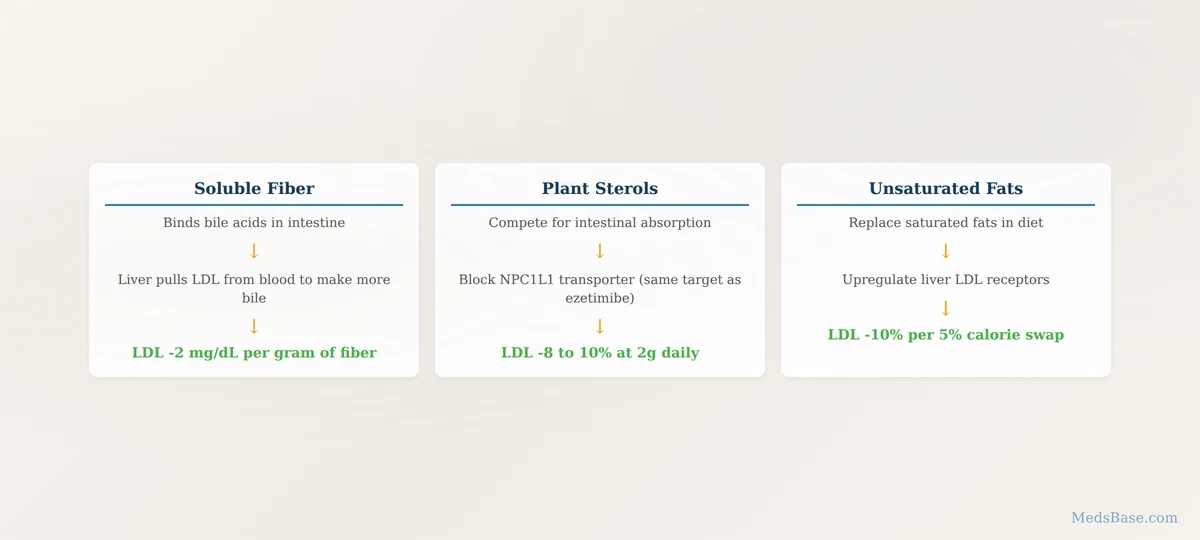
Understanding the diet vs medication for cholesterol decision starts with understanding the mechanisms — because they are not the same, and that is why combining them works so well.
Dietary Mechanism: Reducing Cholesterol Inflow and Increasing Clearance
Diet vs medication for cholesterol — diet lowers LDL cholesterol through three primary pathways:
1. Soluble fiber binds bile acids in the gut. Bile acids are made from cholesterol in the liver and secreted into the intestine to help digest fats. Normally, most bile acids are reabsorbed and recycled. Soluble fiber — found in oats, barley, legumes, apples, and psyllium — traps bile acids and carries them out of the body in stool. The liver, sensing a bile acid deficit, pulls LDL cholesterol from the bloodstream to make more. Every gram of soluble fiber you consume reduces LDL by approximately 0.05–0.06 mmol/L (about 2 mg/dL).
2. Plant sterols and stanols block cholesterol absorption. These naturally occurring compounds, structurally similar to cholesterol, compete for absorption in the intestinal lining. When you consume 2 grams of plant sterols daily — from fortified foods like certain margarines, or from nuts and seeds — LDL drops by 8–10%. The mechanism is competitive inhibition: plant sterols occupy the NPC1L1 transporter (the same protein targeted by ezetimibe, a cholesterol medication) and physically prevent dietary and biliary cholesterol from entering the bloodstream.
3. Unsaturated fats upregulate LDL receptors. Replacing saturated fat with polyunsaturated and monounsaturated fats increases the expression of LDL receptors on liver cells. More receptors mean faster clearance of LDL particles from circulation. This is why the Mediterranean diet — rich in olive oil, nuts, and fatty fish — consistently outperforms standard low-fat diets for cholesterol reduction: it is not just about removing “bad” foods, but about adding foods that actively drive LDL clearance.
Research Spotlight: The Portfolio Diet
Diet vs medication for cholesterol — in 2011, Dr. David Jenkins and colleagues at the University of Toronto published a landmark study testing what they called the “Portfolio Diet” — a dietary pattern combining all four proven cholesterol-lowering food components: (1) soluble fiber from oats and barley, (2) plant sterols from fortified margarine, (3) soy protein replacing animal protein, and (4) almonds and tree nuts. The result: LDL cholesterol dropped by 35% in the metabolic ward setting (where all food was provided) and by 13–15% in the real-world setting (where participants prepared their own food). The metabolic ward results matched a moderate-intensity statin. The real-world results, while lower, were still clinically meaningful — illustrating both the potential of dietary intervention and the challenge of adherence outside controlled conditions.
Source: Jenkins et al., JAMA, 2011
How Do Cholesterol Medications Work?
Statins: The HMG-CoA Reductase Inhibitors
Statins (atorvastatin, rosuvastatin, simvastatin, and others) are the cornerstone of cholesterol-lowering pharmacotherapy. They work by inhibiting HMG-CoA reductase — the rate-limiting enzyme in the liver’s cholesterol synthesis pathway. When the liver cannot make as much cholesterol, it compensates by pulling more LDL from the bloodstream via upregulated LDL receptors. The Cholesterol Treatment Trialists’ Collaboration, analyzing data from 170,000 participants across 26 randomized trials, found that each 1 mmol/L (38.7 mg/dL) LDL reduction with statin therapy reduced major vascular events by 22% — an effect that grows larger with longer treatment duration.
Ezetimibe: The Absorption Blocker
Ezetimibe blocks the NPC1L1 transporter in the small intestine, reducing cholesterol absorption from both diet and bile by about 54%. It lowers LDL by 15–20% as monotherapy and adds another 15–20% reduction when combined with a statin. This is relevant to the diet vs medication for cholesterol discussion because ezetimibe’s mechanism — blocking intestinal cholesterol absorption — is essentially a pharmacological version of what plant sterols do naturally in dietary approaches.
PCSK9 Inhibitors: The Receptor Protectors
PCSK9 inhibitors (alirocumab, evolocumab) are injectable monoclonal antibodies that block PCSK9, a protein that marks LDL receptors for destruction. By preserving LDL receptors, these medications can lower LDL by 50–60% on top of statin therapy — producing total reductions of 70% or more when combined. They are typically reserved for people with familial hypercholesterolemia or those who cannot reach LDL targets on statins alone.
Key Diet Strategies That Actually Lower Cholesterol
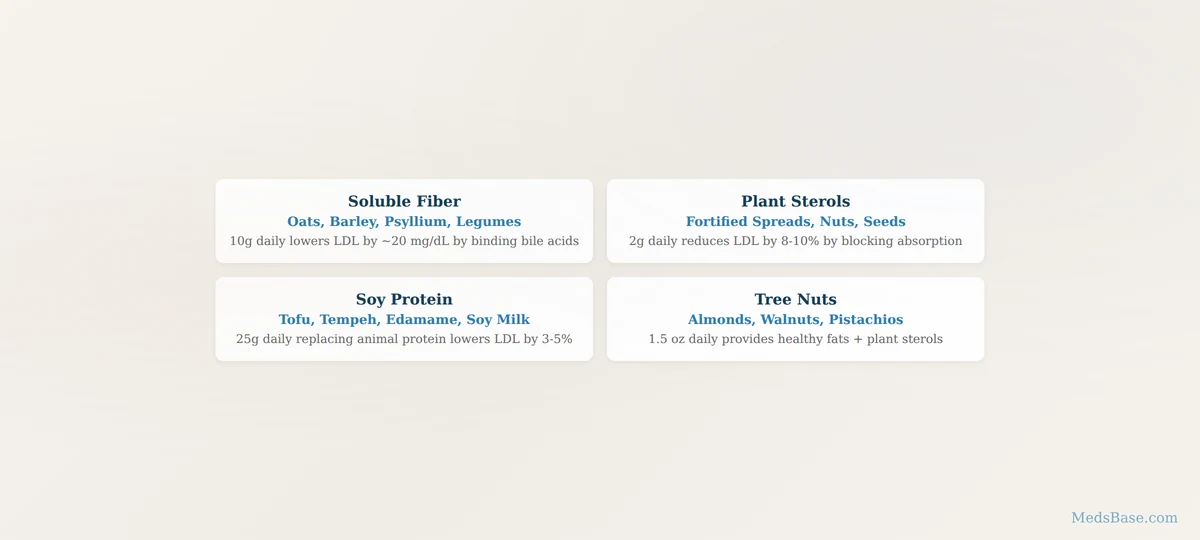
Many people trying the diet vs medication for cholesterol approach make the mistake of focusing on what to remove — eggs, butter, red meat — while ignoring what to add. The evidence shows that adding cholesterol-lowering foods is at least as important as removing cholesterol-raising foods.
1. Soluble Fiber: 5–10 Grams Daily
The most underrated dietary intervention for cholesterol. Oats, barley, legumes, apples, citrus fruits, eggplant, okra, and psyllium husk are all rich sources. The target is 5–10 grams of soluble fiber per day — which means about 1.5 cups of cooked oatmeal plus an apple, or 3 tablespoons of psyllium husk. Each gram of soluble fiber reduces LDL by about 2 mg/dL, meaning 10 grams daily can independently lower LDL by 20 mg/dL — roughly the same as a low-dose statin.
2. Plant Sterols and Stanols: 2 Grams Daily
Achievable through fortified foods (certain margarines, yogurts, and juices) or by emphasizing naturally sterol-rich foods like nuts, seeds, and whole grains. Two grams daily — approximately 30 almonds plus a serving of fortified spread — reduces LDL by 8–10%. Higher intakes do not produce proportionally larger reductions, so the target is exactly 2 grams, not more.
3. Replace Saturated Fats with Unsaturated Fats
This is not about cutting fat — it is about swapping fat types. Replacing 5% of calories from saturated fat (butter, coconut oil, fatty red meat) with polyunsaturated fat (sunflower oil, walnuts, fatty fish) reduces LDL by approximately 10%. The PREDIMED trial, one of the largest dietary intervention studies ever conducted, found that a Mediterranean diet supplemented with extra-virgin olive oil or nuts reduced major cardiovascular events by approximately 30% compared to a standard low-fat diet — despite producing only modest LDL reductions. The takeaway: the Mediterranean diet’s cardiovascular benefits extend beyond LDL lowering to include anti-inflammatory and endothelial effects.
4. Soy Protein: 25 Grams Daily
Replacing animal protein with soy protein — from tofu, tempeh, edamame, or soy milk — independently lowers LDL by 3–5%. The effect is modest on its own but additive with the other strategies.
5. Weight Loss: 5–10% of Body Weight
For people who are overweight or obese, losing 5–10% of body weight can reduce LDL by 5–15%, lower triglycerides by 20–30%, and raise HDL modestly. Weight loss amplifies the effects of dietary composition changes — the combination of the Portfolio Diet plus weight loss can produce LDL reductions approaching 40%.
What Does the Research Say?
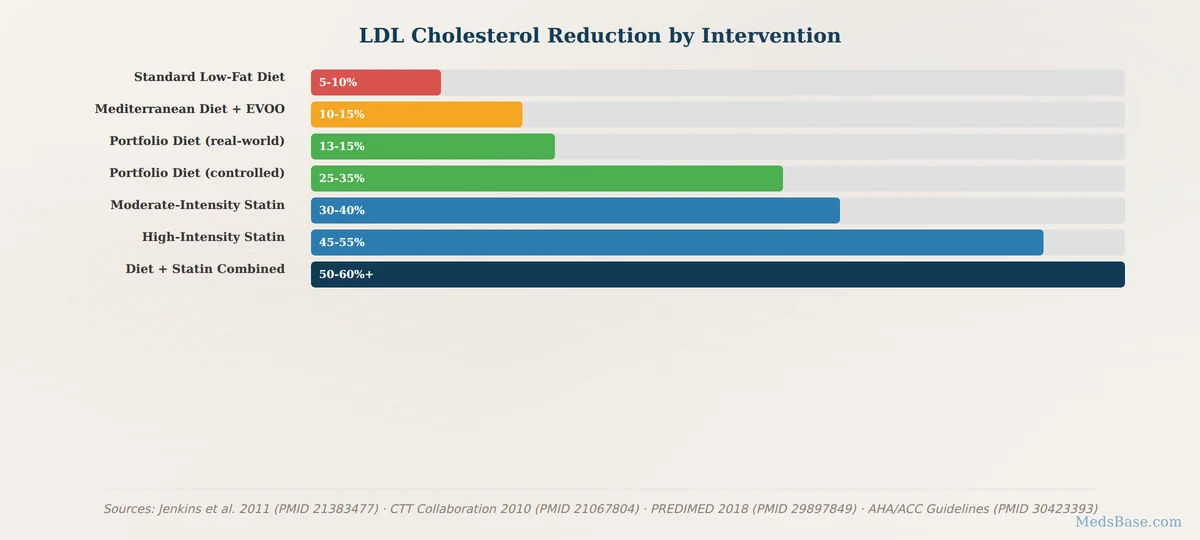
| Intervention | LDL Reduction | Evidence Level | Source |
|---|---|---|---|
| Standard low-fat diet | 5–10% | High (multiple RCTs) | AHA/ACC guidelines |
| Mediterranean diet + EVOO/nuts | 10–15% | High (PREDIMED) | PREDIMED |
| Portfolio Diet (controlled setting) | 25–35% | Moderate (single-center metabolic ward) | Jenkins et al. |
| Portfolio Diet (real-world) | 13–15% | Moderate | Jenkins et al. |
| Moderate-intensity statin | 30–40% | Very high (26+ RCTs, 170K participants) | CTT Collaboration |
| High-intensity statin | 45–55% | Very high (multiple RCTs) | AHA/ACC guidelines |
| Ezetimibe (added to statin) | +15–20% | High (IMPROVE-IT) | IMPROVE-IT, NEJM 2015 |
| PCSK9 inhibitor (added to statin) | +50–60% | High (FOURIER, ODYSSEY) | FOURIER, NEJM 2017 |
| Portfolio Diet + moderate statin | 50–60% | Theoretical (additive mechanisms) | Extrapolated from individual effect sizes |
| Weight loss (5–10% of body weight) | 5–15% | High (multiple trials) | AHA/ACC |
Diet vs Medication for Cholesterol — Head-to-Head Comparison
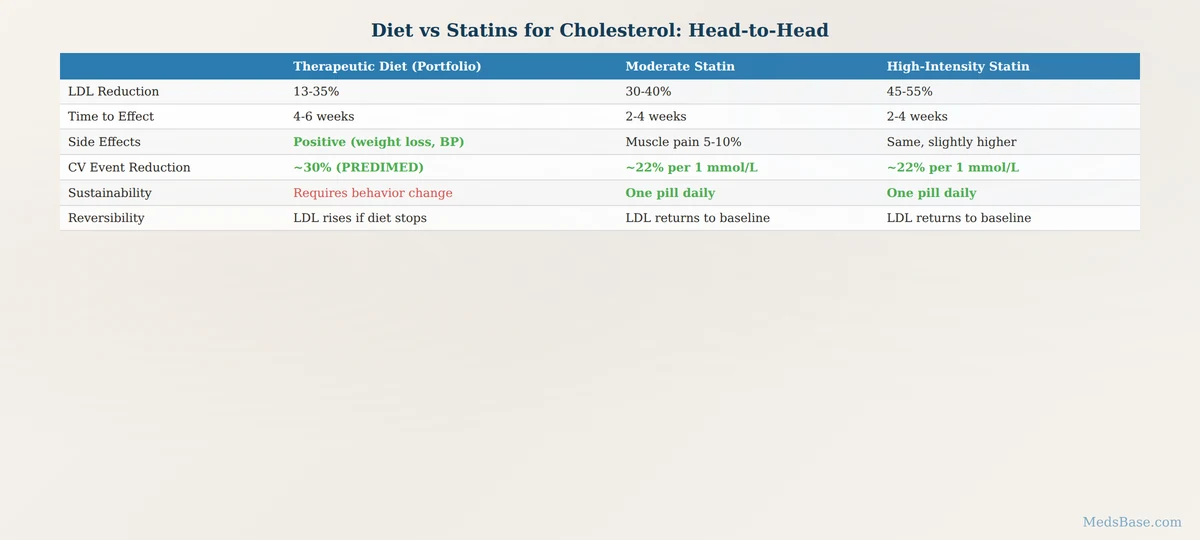
| Therapeutic Diet (Portfolio) | Moderate-Intensity Statin | High-Intensity Statin | Diet + Statin Combined | |
|---|---|---|---|---|
| Average LDL reduction | 13–35% | 30–40% | 45–55% | 50–60%+ |
| Time to maximum effect | 4–6 weeks | 2–4 weeks | 2–4 weeks | 4–6 weeks |
| Cardiovascular event reduction | ~30% (Med diet, PREDIMED) | ~22% per 1 mmol/L LDL drop | ~22% per 1 mmol/L LDL drop | Largest reduction (additive) |
| Side effects | None (positive side effects: weight loss, BP reduction) | Muscle pain (5–10%), liver enzyme elevation (1–3%), diabetes risk (+9% relative) | Same as moderate, slightly higher rates | Diet offsets some statin side effects |
| Cost | Grocery cost increase | $4–20/month (generic) | $4–20/month (generic) | Combined |
| Sustainability | Requires ongoing behavior change | One pill daily | One pill daily | Diet harder to sustain; pill easy |
| Reversibility | LDL rises if diet stops | LDL returns to baseline if stopped | LDL returns to baseline if stopped | Both must continue |
| Additional benefits | Weight loss, BP reduction, anti-inflammatory, improved glycemic control | Plaque stabilization, anti-inflammatory (independent of LDL) | Same, stronger anti-inflammatory | Comprehensive risk reduction |
| Limitations | Adherence challenging outside controlled settings | Does not address dietary root causes; side effects in some | Same | Requires commitment to both lifestyle and medication |
The Verdict
The most honest answer to the diet vs medication for cholesterol question: do both, unless you have a specific reason not to. Diet addresses the root cause for many people — the dietary pattern that contributed to elevated cholesterol in the first place. Medication provides the magnitude and reliability of LDL reduction that diet alone often cannot achieve in real-world conditions. The diet vs medication for cholesterol discussion is not a competition; they work best together.
When Diet Alone Is Enough — and When Medication Is Essential
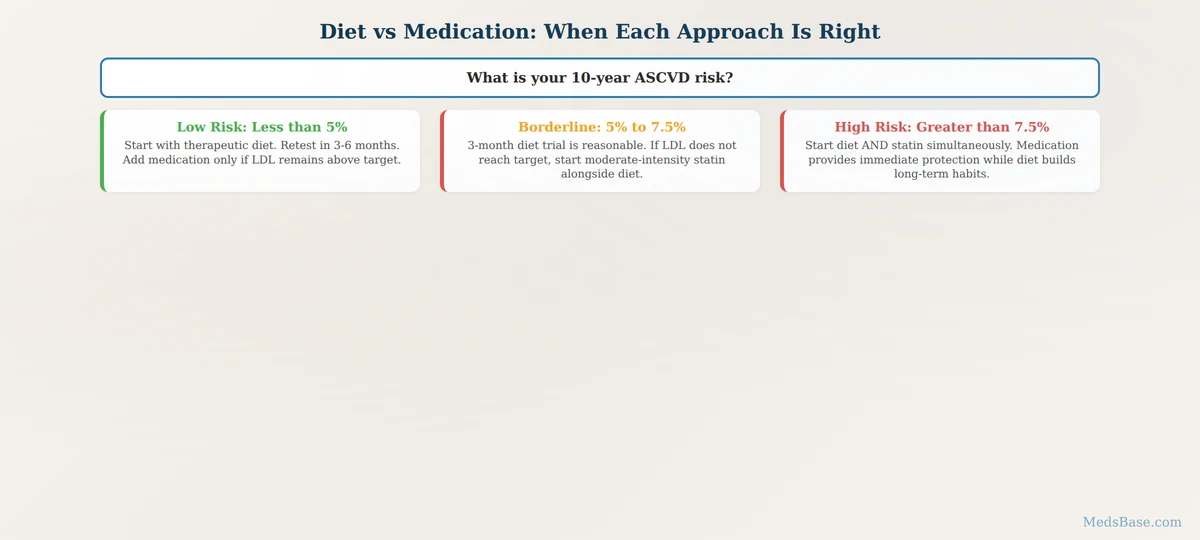
The diet vs medication for cholesterol decision has practical consequences every step of the way. The answer depends almost entirely on your estimated 10-year risk of atherosclerotic cardiovascular disease (ASCVD) — a number your doctor can calculate using your age, sex, race, total cholesterol, HDL, systolic blood pressure, treatment status, diabetes status, and smoking status.
When a 3–6 Month Diet Trial Is Reasonable
The AHA/ACC cholesterol guidelines support a trial of therapeutic lifestyle changes — specifically diet and exercise — as a first step when:
- Your 10-year ASCVD risk is borderline (5% to <7.5%) and you have no risk enhancers (family history of premature CVD, chronic kidney disease, chronic inflammatory conditions, etc.)
- Your LDL is moderately elevated (130–160 mg/dL) without other major risk factors
- You are under age 40 with elevated LDL but no additional risk factors
- You have expressed a strong preference for avoiding medication and your doctor agrees it is safe to try
During a diet trial, retest your lipid panel after 3–6 months. If LDL drops to your target, continue and retest annually. If LDL remains above target, start medication — the guidelines are clear that delay beyond 3–6 months is not supported when the numbers do not respond.
When Medication Should Start Immediately
You should strongly consider starting a statin (typically alongside diet) without a trial period if:
- You have established atherosclerotic cardiovascular disease (prior heart attack, stroke, peripheral artery disease, or coronary revascularization) — statins reduce recurrent events by 25–35% in this population, and every month of delay carries measurable risk
- Your LDL is ≥190 mg/dL (suggesting possible familial hypercholesterolemia) — lifelong exposure to LDL this high causes accelerated atherosclerosis; diet alone virtually never reduces LDL enough from this starting point
- You have diabetes (type 1 or type 2) and are aged 40–75 with LDL ≥70 mg/dL — diabetes is considered a cardiovascular risk equivalent in most guidelines
- Your 10-year ASCVD risk is ≥7.5% and you have risk enhancers
- Your 10-year ASCVD risk is ≥20% — this places you in the high-risk category where statins are strongly recommended
The “Start Both, Taper Later” Strategy
One approach many lipid specialists use that is rarely discussed in patient-facing content: start a statin and an intensive diet simultaneously. Once LDL reaches target and the dietary changes are well-established (typically 3–6 months), you can try reducing the statin dose or, if LDL was only mildly elevated to begin with and dropped dramatically, discontinuing the statin to see if diet alone sustains the improvement. This avoids the common scenario where someone tries diet alone, fails to reach target after 6 months, then needs to start a statin anyway — effectively losing 6 months of vascular protection.
Take Sarah, 52, who learned her LDL was 155 mg/dL during a routine physical. Her 10-year risk was calculated at 6.2% — borderline. She committed to the Portfolio Diet, walking 30 minutes daily, and lost 8 pounds. At her 4-month follow-up, her LDL had dropped to 118 — a 24% reduction. Her doctor agreed she could continue without medication, with annual monitoring. Sarah’s case illustrates when diet alone works.
Contrast this with Michael, 58, a former smoker with treated hypertension whose LDL came back at 142. His 10-year risk was 15.8%. Even if diet dropped his LDL by 25%, he would remain in the statin-benefit zone. His doctor started atorvastatin 20 mg and referred him to a dietitian simultaneously. Six months later, his LDL was 68 — a 52% reduction. Michael’s case illustrates when medication is essential regardless of diet, and why combining both produces the best absolute numbers.
Frequently Asked Questions
Q: How much can diet lower cholesterol?
A: A standard “heart-healthy” diet (reduce saturated fat, increase fruits and vegetables) lowers LDL by 5–10%. The Mediterranean diet reduces LDL by 10–15%. The Portfolio Diet — combining soluble fiber, plant sterols, soy protein, and nuts — can lower LDL by up to 35% in controlled settings and 13–15% in real-world conditions. For context, a moderate-intensity statin lowers LDL by 30–40%. The key insight: what you specifically eat matters enormously — generic dietary advice produces generic results, while targeted therapeutic diets can rival low-dose medication.
Q: Can you avoid statins with diet?
A: Sometimes — but it depends entirely on your starting LDL, your target LDL (which is determined by your overall cardiovascular risk, not a one-size-fits-all number), and your ability to adhere to a therapeutic diet. If you need a 20–25% LDL reduction and can commit to the Portfolio Diet, diet alone may suffice. If you need a 40%+ reduction, have established cardiovascular disease, or have diabetes, the evidence strongly favors medication — usually alongside diet. The AHA/ACC guidelines support a 3–6 month trial of diet alone for people with borderline risk and moderate LDL elevations. Beyond that window, if LDL remains above target, evidence-based guidelines recommend starting medication.
Q: What foods lower cholesterol the most?
A: The four food categories with the strongest evidence for LDL reduction are: (1) Soluble fiber sources — oats, barley, psyllium, legumes, apples, and citrus (each gram lowers LDL by ~2 mg/dL). (2) Nuts — particularly almonds and walnuts (1.5 ounces daily lowers LDL by ~5%). (3) Foods fortified with plant sterols/stanols — certain margarines, yogurts, and juices (2 grams daily lowers LDL by 8–10%). (4) Soy protein — tofu, tempeh, edamame, soy milk (25 grams daily lowers LDL by 3–5%). Notably absent from this list: simply cutting out eggs. Dietary cholesterol has a much smaller effect on blood cholesterol than saturated fat and lack of LDL-lowering foods.
Q: When are cholesterol medications necessary?
A: Cholesterol medications (primarily statins) are considered necessary when your 10-year ASCVD risk is ≥7.5% with risk enhancers, when it is ≥20%, when you have established cardiovascular disease, when LDL is ≥190 mg/dL, or when you have diabetes and are aged 40–75. They are also necessary when a 3–6 month trial of therapeutic diet fails to bring LDL to target. The decision is risk-based, not LDL-number-based — someone with “mildly elevated” LDL and many risk factors may need medication more urgently than someone with “high” LDL and zero other risk factors.
Q: Can diet and statins be combined?
A: Yes — and this produces the best outcomes. Diet and statins lower cholesterol through different mechanisms, so their effects are largely additive. A Portfolio Diet plus a high-intensity statin can reduce LDL by 50–65%, which for many people means achieving LDL levels below 70 mg/dL — the target for very high-risk individuals. Additionally, diet changes can mitigate some statin side effects: the Portfolio Diet’s emphasis on fiber, healthy fats, and plant protein supports metabolic health, which may reduce the small statin-associated diabetes risk.
Q: How long does it take for diet to lower cholesterol?
A: Significant LDL reductions from dietary changes are typically seen within 4–6 weeks, and this is when the diet vs medication for cholesterol comparison becomes clinically relevant. The liver’s cholesterol synthesis and LDL receptor expression adjust to dietary changes rapidly — within days to weeks, not months. This is why follow-up lipid panels after a diet intervention are typically scheduled at 3 months: it is enough time for the full dietary effect to manifest and for the new eating pattern to stabilize. If after 3–6 months of consistent effort your LDL has not dropped meaningfully, the diet approach may not be sufficient for your physiology — some people are “hypo-responders” to dietary changes due to genetic factors, and medication becomes the appropriate next step in your diet vs medication for cholesterol journey.
The Bottom Line
The diet vs medication for cholesterol debate has a clear resolution in the evidence: both work, they work through different mechanisms, and the best results — the largest reductions in heart attacks, strokes, and cardiovascular death — come from combining them. A properly constructed therapeutic diet like the Portfolio Diet can rival a moderate statin in LDL-lowering power. A statin adds reliability, magnitude, and decades of cardiovascular outcomes data. When considering diet vs medication for cholesterol, the question is not which to choose individually, but how to sequence and combine them for your specific risk profile.
The diet vs medication for cholesterol evidence supports a pragmatic approach: start both Use medication to protect your arteries immediately while you build the dietary habits that may eventually reduce or replace the need for it. Retest in 3–6 months. If diet alone is sustaining target LDL, discuss dose reduction with your doctor. If not, you are already on the regimen that gives you the best odds.
One action you can take right now: Calculate your 10-year ASCVD risk using a free online calculator (search “ACC ASCVD Risk Estimator”). Above all, the diet vs medication for cholesterol decision should be shaped by your personal risk profile Bring that number to your next doctor’s appointment.
Wondering what cholesterol-lowering options are available to you? Browse the cholesterol medications at MedsBase to understand your treatment options. Next, read about exercise for depression — another condition where lifestyle and medication form a powerful combination.
Medical Disclaimer
This article is for informational purposes only and does not constitute medical advice. Decisions about cholesterol management — including whether to start, continue, or discontinue medication — should be made in consultation with your healthcare provider based on your individual risk profile, medical history, and treatment goals. Never stop taking prescribed cholesterol medication without medical supervision. Statins can have serious side effects in some individuals; discuss any concerns with your doctor.
Reviewed by Sophie Chen, PharmD Candidate | Last updated: 2026-10-03

Written by
Sophie ChenPharmaceutical Content Researcher · 8 years experience
Sophie Chen is a pharmaceutical content researcher with 8 years covering generic medication access and clinical pharmacology. She specialises in international regulatory frameworks, bioequivalence standards, and patient-facing education on therapeutic drug classes. She is not a clinician.