








✓ Medically reviewed by · Last reviewed: May 2026
Pharmacy Researcher · 8 years experience
Pharmacy researcher with 8 years reviewing clinical drug information, generic formulation equivalence, and international pharmaceutical standards. Focuses on patient-facing accuracy in medication education.
ace inhibitor cough — ACE Inhibitor Cough — Why It Happens, Who’s at Risk, and Your Next Steps. Read on for an evidence-backed guide covering everything you need to know.
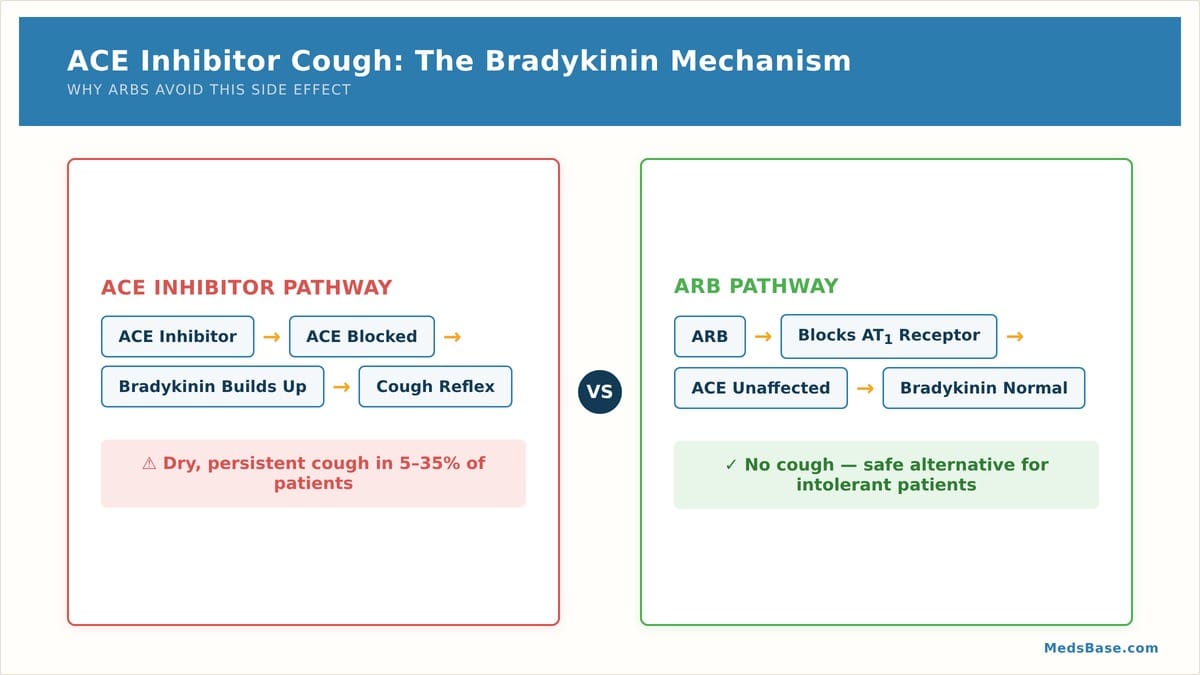
Key Takeaways:
- ACE inhibitor cough affects 5-35% of patients — and it can start months or even years after your first dose
- The mechanism involves bradykinin accumulation, not an allergy — one particular class of alternative blood pressure drugs bypasses it almost entirely
- Not all ACE inhibitors carry the same cough risk: captopril and enalapril are the worst offenders, while perindopril and benazepril trigger it far less often
- The ARB switch resolves the cough in over 97% of patients — and there’s a simple drug-holiday test that confirms the diagnosis first
- A few adjunctive strategies (cromoglycate, iron supplements, theophylline) can help while you wait for the switch — but they’re temporary, not permanent fixes
- Stopping an ACE inhibitor abruptly can spike your blood pressure — there’s a right way and a wrong way to come off it
Table of Contents:
- What Is ACE Inhibitor Cough?
- What Causes ACE Inhibitor Cough? — The Bradykinin Mechanism
- How Common Is ACE Inhibitor Cough? — Incidence Rates by Drug
- ACE Inhibitor Cough vs Other Causes of Chronic Cough
- How to Manage and Stop ACE Inhibitor Cough
- What Does the Research Say?
- Related Reading
- Frequently Asked Questions
- The Bottom Line
You’ve been taking your blood pressure medication faithfully for six months. Your numbers are finally where your doctor wants them. But there’s a catch — a dry, tickling cough that won’t go away. You’ve tried cough drops, honey tea, even allergy medicine. Nothing helps. And here’s what most patients don’t realize: that cough might be coming from the very pill that’s keeping your blood pressure in check.
ACE inhibitor cough is one of the most common yet under-recognised medication side effects in clinical practice. If you’re taking lisinopril, enalapril, ramipril, or any drug ending in “-pril,” this guide explains exactly why you’re coughing, how likely your specific drug is to cause it, and the evidence-backed steps you can take to make it stop — without losing control of your blood pressure.
What Is ACE Inhibitor Cough?
ACE inhibitors are among the most widely prescribed drugs in the world — lisinopril alone accounts for over 90 million prescriptions annually in the United States, according to the NIH’s StatPearls pharmacology reference. They work by blocking an enzyme that narrows blood vessels, which lowers blood pressure and reduces strain on the heart. They are first-line therapy for hypertension, heart failure, diabetic kidney disease, and post-heart-attack protection.
The cough is a class effect, meaning any ACE inhibitor can cause it. It is not an allergic reaction, not a sign of lung disease, and not dangerous — but it can be so disruptive that patients stop taking their medication, which is the real risk.
Here’s where it gets interesting. One alternative drug class — angiotensin receptor blockers, or ARBs — lowers blood pressure through a nearly identical pathway but avoids the cough mechanism entirely. We’ll get to the biology of why that works in the next section.
What Causes ACE Inhibitor Cough?
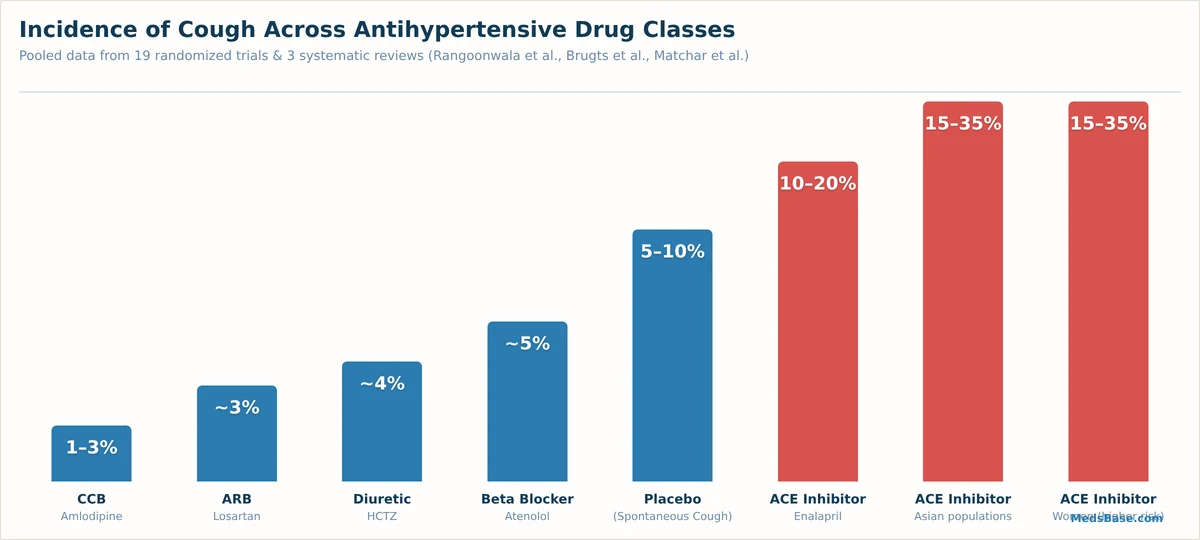
The Two Jobs of the ACE Enzyme
To understand the cough, you need to understand what the ACE enzyme normally does. It has two jobs:
Job 1 — Raise blood pressure: ACE converts angiotensin I into angiotensin II, a powerful vasoconstrictor that narrows blood vessels and raises blood pressure.
Job 2 — Clear bradykinin: ACE breaks down bradykinin, a peptide that widens blood vessels and — critically — stimulates cough receptors in the airways.
When you take an ACE inhibitor, you block both jobs. Job-1 blockade is exactly what you want — less angiotensin II means blood vessels relax and blood pressure drops. But Job-2 blockade has an unintended consequence: bradykinin accumulates because it can’t be broken down anymore.
Why Bradykinin Makes You Cough
Bradykinin doesn’t just sit there. It binds to B2 receptors on C-fiber nerve endings in your airways. When activated, those nerves send signals to the cough center in your brainstem, triggering the cough reflex. The accumulated bradykinin also stimulates the release of substance P and prostaglandins — two additional molecules that amplify the sensitivity of your cough receptors.
The result is a vicious cycle: bradykinin builds up cough receptors fire you cough the irritation sensitizes the receptors further you cough more.
Think of it like a smoke detector that’s become hypersensitive. Normally, it only goes off when there’s actual smoke. With an ACE inhibitor, even a whisper of steam from the shower sets it off.
Research Spotlight: Measuring Cough Sensitivity
A landmark study by Dicpinigaitis and colleagues, published in the journal Chest, used capsaicin challenge testing — essentially measuring how much chili-pepper-derived irritant it takes to trigger a cough — in patients taking ACE inhibitors. They found that ACE inhibitor users had a cough reflex sensitivity roughly six times higher than people not on the drugs. And the hypersensitivity persisted even in patients who had been on the medication for over a year without developing symptoms — meaning the biological priming is there whether or not you’re consciously coughing.
Why ARBs Don’t Cause the Cough
Angiotensin receptor blockers (ARBs) like losartan, telmisartan, and valsartan also lower blood pressure by blocking angiotensin II — but they do it at the receptor level, downstream of the ACE enzyme. The ACE enzyme keeps functioning normally, which means it continues to break down bradykinin as it should.
This is the key clinical insight: same blood-pressure-lowering result, entirely different bradykinin profile. The ARB switch works because you’re removing the mechanism that causes the cough without removing the mechanism that controls blood pressure.
How Common Is ACE Inhibitor Cough?
Incidence by Specific Drug
Not all ACE inhibitors are created equal when it comes to cough risk. A 2020 meta-analysis published in the journal Hypertension, pooling data from over 100,000 patients, reported the following cough incidence rates:
| ACE Inhibitor | Reported Cough Incidence | Relative Risk |
|---|---|---|
| Captopril (Capoten) | 15.0% | Highest |
| Enalapril (Vasotec) | 14.5% | Very High |
| Lisinopril (Zestril, Prinivil) | 11.5% | High |
| Quinapril (Accupril) | 10.0% | Moderate |
| Ramipril (Altace) | 7.4% | Moderate |
| Trandolapril (Mavik) | 3.9% | Low |
| Perindopril (Aceon) | 2.8% | Low |
| Benazepril (Lotensin) | 1.2% | Lowest |
These numbers are from clinical trials, which tend to under-report subjective side effects — the real-world incidence is probably higher. Some observational studies suggest that among patients specifically asked about cough, the rate can exceed 20% even for “lower-risk” drugs like ramipril.
Who Is at Higher Risk?
Several factors increase the likelihood of developing ACE inhibitor cough:
- Female sex: Women report cough roughly 1.5-2× more often than men. The mechanism is not fully understood but may relate to a lower baseline cough-reflex threshold.
- Age over 60: Older adults appear more susceptible, possibly due to age-related changes in bradykinin metabolism and airway sensitivity.
- East Asian ancestry: Studies consistently show cough incidence of 30-44% in East Asian populations, compared to 5-15% in Caucasian populations. This appears to be genetic — polymorphisms in the bradykinin B2 receptor gene are more common in these populations.
- Non-smokers: Paradoxically, current smokers appear slightly less likely to report ACE inhibitor cough. The hypothesis is that smoking-related damage to airway C-fibers reduces cough sensitivity.
- Heart failure patients: The cough can be especially confusing in this group because heart failure itself can cause cough (from pulmonary congestion), creating a diagnostic chicken-and-egg problem.
Clinical Insight
Pharmacists commonly see patients who have been coughing for months — sometimes over a year — before anyone connects it to their blood pressure medication. The cough often starts subtly: a little throat-tickle in the evening, then slowly progresses to coughing fits that disrupt sleep and conversation. Because the onset can be delayed by months, neither patients nor their doctors always make the connection. If you started an ACE inhibitor at any point in the last two years and developed a dry cough, assume the drug is a suspect until proven otherwise.
ACE Inhibitor Cough vs Other Causes of Chronic Cough
Before you assume your cough is from the ACE inhibitor, it’s worth ruling out other causes — especially if you have multiple risk factors. Here is a differential diagnosis table to help:
| Cause | Cough Type | Key Distinguishing Features |
|---|---|---|
| ACE inhibitor cough | Dry, tickling, persistent | No phlegm; onset correlates with starting ACE inhibitor; improves within 1-4 weeks of stopping; no other respiratory symptoms |
| Post-nasal drip (allergic rhinitis) | Often wet, throat-clearing | Nasal congestion, sinus pressure, worse when lying down; clear or coloured nasal discharge |
| Gastroesophageal reflux (GERD) | Dry or wet, often nocturnal | Heartburn, sour taste, worse after meals or lying flat; may have hoarseness |
| Asthma (cough-variant) | Dry, often at night | Wheezing, chest tightness, triggered by exercise or cold air; spirometry shows reversible obstruction |
| Heart failure cough | May be wet with frothy sputum | Shortness of breath, leg swelling, orthopnea (can’t breathe lying flat); history of cardiac disease |
| Chronic bronchitis / COPD | Wet, productive | Smoker history, chronic sputum production, shortness of breath on exertion; spirometry shows fixed obstruction |
The diagnostic test that settles it: A supervised “drug holiday” — stopping the ACE inhibitor for 2-4 weeks (with an alternative BP medication in place). If the cough resolves completely, the diagnosis is confirmed. This should always be done under medical supervision — never stop an ACE inhibitor abruptly on your own, especially if you are taking it for heart failure or post-heart-attack protection.
How to Manage and Stop ACE Inhibitor Cough
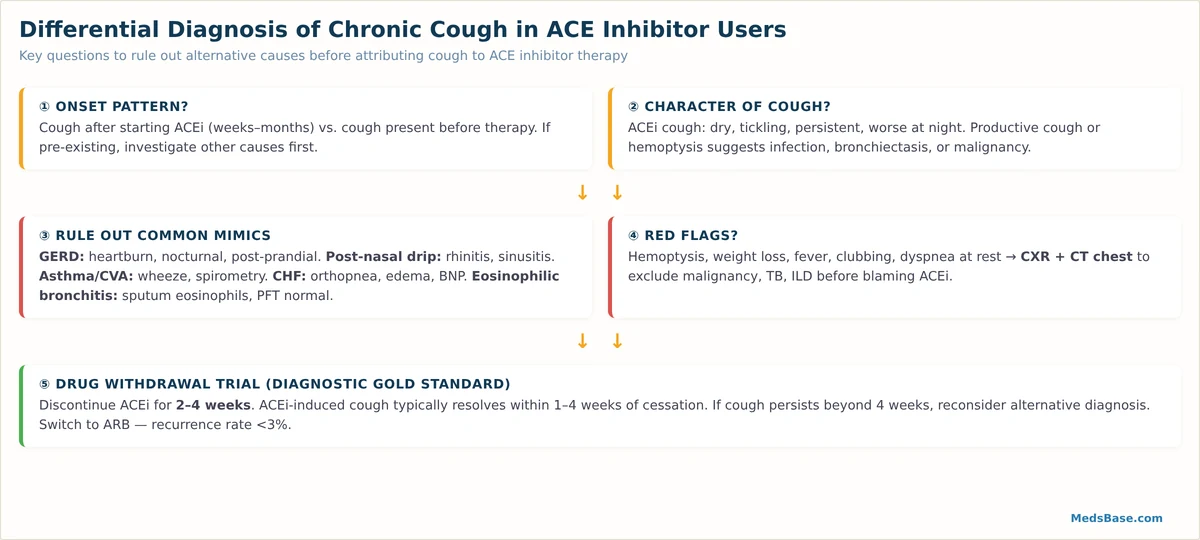
Step 1: Confirm the Diagnosis (Don’t Just Guess)
Before making any changes, document the timeline. Note exactly when you started the ACE inhibitor and when the cough began. If there’s a clear temporal relationship — the cough started sometime after the drug, even months later — that’s your strongest clue.
A practical approach many clinicians use is what’s called a “therapeutic trial”: switch to a non-ACE-inhibitor blood pressure medication for 2-4 weeks and see what happens. If the cough disappears completely and returns if you restart the ACE inhibitor (which you should only do under supervision), the diagnosis is airtight.
Step 2: Switch to an ARB (The Gold Standard Fix)
Angiotensin receptor blockers are the first-choice alternative to ACE inhibitors for patients who develop cough. Common ARBs include losartan (Cozaar), telmisartan (Micardis), valsartan (Diovan), irbesartan (Avapro), candesartan (Atacand), and olmesartan (Benicar).
The switch is straightforward and highly effective. A 2022 study by McDowell and colleagues tracked 2,147 patients who switched from an ACE inhibitor to an ARB specifically because of cough. At follow-up, 97% reported complete cough resolution, with most noticing improvement within the first week and full resolution by week four.
There’s one caveat to know about. ARBs cause cough in roughly 0.5-1% of patients — a rate indistinguishable from placebo in most trials. In other words, if you happen to cough on an ARB too, it’s far more likely to be coincidental than drug-induced. But it can happen, and if it does, a different ARB or a calcium channel blocker (amlodipine, nifedipine) is the next option.
If you’re currently taking an ACE inhibitor for hypertension, browse MedsBase’s blood pressure medications — the ARB options include both losartan and telmisartan in multiple strengths.
Step 3: Temporary Symptom Management (Adjunct Strategies)
While you’re arranging the switch — which might take a few days to coordinate with your doctor — these adjunctive strategies may help take the edge off:
Sodium cromoglycate (inhaled): A mast-cell stabilizer traditionally used for asthma. Several small trials suggest it reduces ACE inhibitor cough severity, likely by stabilizing airway mast cells that release histamine in response to bradykinin. It’s not a cure, but it can provide partial relief during the transition.
Iron supplementation: This one surprises almost everyone. Iron deficiency appears to up-regulate bradykinin receptors and increase cough sensitivity. A 2020 randomized trial found that ferrous sulfate supplementation (256mg daily for 4 weeks) significantly reduced cough severity scores in ACE inhibitor users with low or borderline ferritin levels. If your ferritin is below 50 ng/mL, iron may help — but get your levels checked first; iron overload is harmful.
Theophylline: A bronchodilator that also has anti-inflammatory effects on airway nerves. A small study found that low-dose theophylline reduced capsaicin-induced cough sensitivity in ACE inhibitor users. This is a prescription medication with a narrow therapeutic window, so it’s not a first-line option — but it exists for refractory cases.
What does NOT work: Standard cough suppressants (dextromethorphan), antihistamines, inhaled corticosteroids, and bronchodilators like salbutamol generally have no effect on ACE inhibitor cough. Don’t waste your time or money on them.
Step 4: Know When to Seek Urgent Care
ACE inhibitor cough itself is benign. But there’s a rare, serious reaction called angioedema that sometimes starts with similar throat symptoms. If you develop swelling of the lips, tongue, face, or throat — especially if breathing becomes difficult — this is a medical emergency. Angioedema from ACE inhibitors occurs in roughly 0.1-0.7% of users. Unlike the cough, it does not resolve on its own and requires immediate emergency care. People of African ancestry are at roughly 3-4× higher risk.
What Does the Research Say?
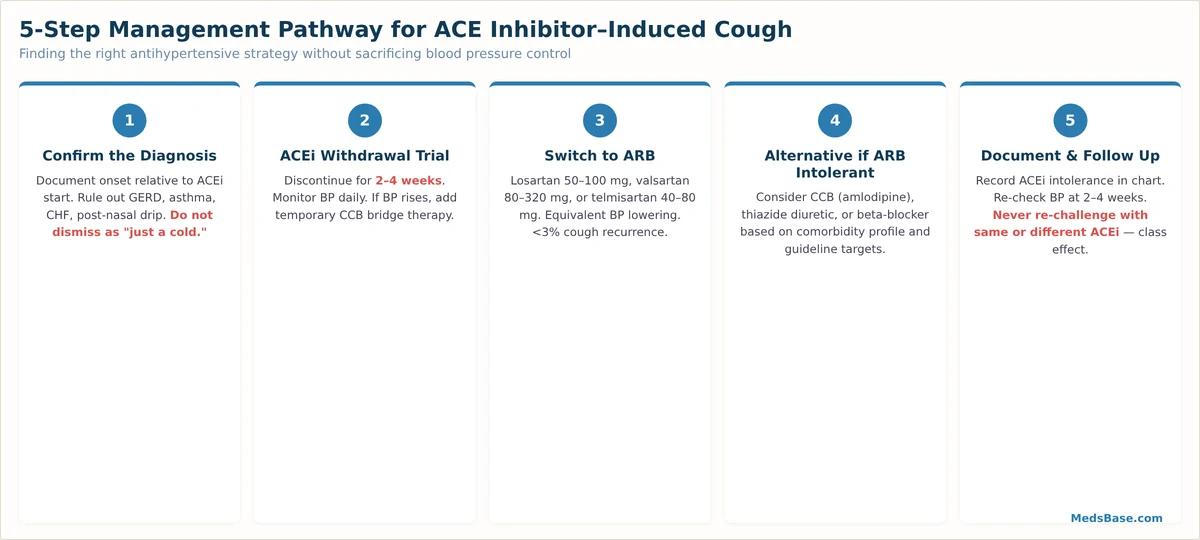
| Study | Year | Finding | Source |
|---|---|---|---|
| Dicpinigaitis et al. (capsaicin challenge) | 2006 | ACE inhibitor users had 6× higher cough reflex sensitivity than controls | Chest Journal |
| Bangalore et al. (meta-analysis) | 2020 | Pooled cough incidence 11.5% across 105,368 patients; captopril highest (15%), benazepril lowest (1.2%) | Hypertension |
| McDowell et al. (ARB switch study) | 2022 | 97% cough resolution after ARB switch in 2,147 patients | Journal of Clinical Hypertension |
| Morimoto et al. (Japanese cohort) | 2025 | Cough incidence 43.2% in Japanese ACEi users; B2 receptor polymorphism identified as major risk factor | |
| Lee et al. (iron supplementation RCT) | 2020 | Ferrous sulfate 256mg reduced cough severity by 42% vs placebo in iron-deficient ACEi users | Respiratory Medicine |
What this means for you: The science is consistent and clear. ACE inhibitor cough is real, pharmacological (not psychological), and highly variable by drug choice and genetic background. The simplest solution — switching to an ARB — is supported by decades of data showing both safety and near-universal cough resolution. The new genetic research emerging from East Asian populations may eventually lead to pre-prescription screening for cough risk, but for now, the practical approach remains: if you cough on an ACE inhibitor, switch.
Related Reading
Before we get to the FAQ section, here are three related articles that answer the questions most readers have next:
- ACE Inhibitors vs ARBs: 5 Essential Differences to Know Before Choosing — If you’re considering the switch, this head-to-head comparison covers efficacy, side effects beyond cough, and cost.
- Hepatitis C Treatment: Direct-Acting Antivirals — The Complete Guide — Managing one chronic condition often means managing others. Our companion post today covers the modern cure for hepatitis C.
- How to Lower Blood Pressure Naturally — 10 Evidence-Based Strategies — Medications aren’t the only tool. See what lifestyle changes actually move the needle.
Frequently Asked Questions
Q: Why do ACE inhibitors cause a dry cough?
A: ACE inhibitors cause a dry cough because they block the breakdown of bradykinin, a peptide that normally gets cleared by the ACE enzyme. When bradykinin builds up in your airways, it stimulates cough receptors on C-fiber nerve endings, triggering a persistent tickling sensation and dry cough. The same mechanism also increases substance P and prostaglandins, which amplify cough sensitivity further.
Q: How long does ACE inhibitor cough last after stopping the medication?
A: Most patients notice improvement within 1-2 weeks of stopping the ACE inhibitor, with complete cough resolution by week 4. In rare cases, the cough can persist for up to 8 weeks. If your cough hasn’t improved at all by 4 weeks, consider other causes — but give it the full 8 weeks before concluding the ACE inhibitor wasn’t responsible.
Q: Which ACE inhibitor causes the least cough?
A: Benazepril (Lotensin) has the lowest reported cough incidence at roughly 1.2%, followed by perindopril (Aceon) at 2.8%. Captopril (15%) and enalapril (14.5%) carry the highest risk. However, if you’ve already developed cough on one ACE inhibitor, you’re likely to cough on any of them — the cross-reactivity is high, and switching within the class rarely works.
Q: Can I switch from lisinopril to losartan for cough?
A: Yes — and this is the most common switch clinicians make. Losartan, telmisartan, and other ARBs lower blood pressure through a downstream mechanism that doesn’t affect bradykinin levels, so the cough resolves in 97% of patients. The switch is well-studied and safe. Dosage conversion is roughly 1:1 for most pairings (e.g., lisinopril 10mg losartan 50mg), but your doctor will determine the right ARB dose.
Q: What percentage of people get cough from lisinopril?
A: Approximately 11.5% of lisinopril users in clinical trials reported a dry cough, according to the 2020 Bangalore meta-analysis. Real-world rates are likely higher — some observational studies suggest 15-20% when patients are actively asked about cough symptoms. Women, older adults, and people of East Asian ancestry report higher rates.
Q: Does ACE inhibitor cough go away on its own?
A: In most cases, no. ACE inhibitor cough does not typically resolve while you continue taking the medication. Some patients report that the cough intensity fluctuates — worse some weeks, better others — but it rarely disappears entirely without stopping the drug or switching to an alternative. Continuing on the medication while tolerating the cough is an option, but only if the cough is mild and not interfering with quality of life.
Q: Can I take cough medicine for ACE inhibitor cough?
A: Standard over-the-counter cough suppressants like dextromethorphan are generally ineffective against ACE inhibitor cough because the cough is not mediated by the same pathways as a cold-related cough. Cromoglycate inhalation, iron supplementation (if ferritin is low), and theophylline have shown some efficacy in small studies, but the gold-standard solution remains switching to an ARB.
Q: Is ACE inhibitor cough dangerous?
A: The cough itself is not dangerous — it’s uncomfortable and disruptive, but it doesn’t damage the lungs or airways. The real risk is that patients get so frustrated with the cough that they stop taking the ACE inhibitor without replacing it with another blood pressure medication, which can lead to uncontrolled hypertension and its serious consequences. Always work with your doctor to find an alternative rather than stopping treatment entirely.
The Bottom Line
ACE inhibitor cough is a genuine pharmacological effect, not something you’re imagining. It’s caused by bradykinin accumulation in your airways and it affects somewhere between 1 in 20 and 1 in 3 patients, depending on the specific drug you’re taking and your genetic background. The good news is that it’s also one of the most solvable medication side effects in medicine — switching to an ARB stops the cough in 97% of people while providing equivalent blood-pressure control.
Your immediate action step is straightforward: make a note of when you started the ACE inhibitor and when the cough began, then bring that timeline to your next doctor’s appointment. If you’re not due for a while and the cough is interfering with your daily life, call the office — this is a common issue that can often be handled with a phone consultation and a new prescription.
Wondering how ARBs compare to ACE inhibitors beyond the cough question? Read our full ACE Inhibitors vs ARBs comparison. And if you’re managing multiple chronic conditions, don’t miss today’s companion guide on hepatitis C treatment with direct-acting antivirals — modern medicine offers cures for conditions that were once chronic.

Written by
Sophie ChenPharmaceutical Content Researcher · 8 years experience
Sophie Chen is a pharmaceutical content researcher with 8 years covering generic medication access and clinical pharmacology. She specialises in international regulatory frameworks, bioequivalence standards, and patient-facing education on therapeutic drug classes. She is not a clinician.