








✓ Medically reviewed by · Last reviewed: May 2026
Pharmacy Researcher · 8 years experience
Pharmacy researcher with 8 years reviewing clinical drug information, generic formulation equivalence, and international pharmaceutical standards. Focuses on patient-facing accuracy in medication education.
antidepressants and weight gain — Antidepressants and Weight Gain: Which Medications Affect Your Weight the Most. Read on for an evidence-backed guide covering everything you need to know.
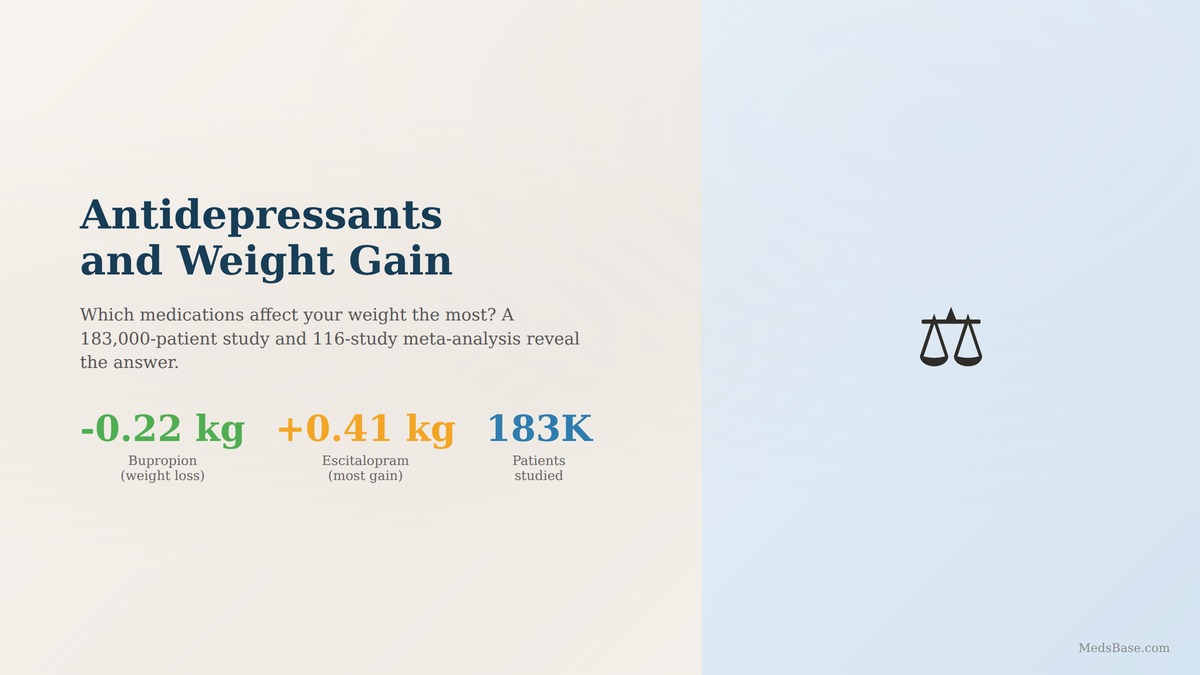
Antidepressants and weight gain — you start an antidepressant hoping to feel better — and you do. But three months later, your jeans don’t fit. The number on the scale has crept up 5, 10, 15 pounds. You’re not imagining it. Antidepressants and weight gain go hand in hand for millions of people — and the frustration is real. The connection between antidepressants and weight gain is one of the most common concerns patients raise with their doctors.
Antidepressants and weight gain — here’s the good news: not all antidepressants affect weight the same way. A massive 2024 study of 183,000 patients — the largest investigation of antidepressants and weight gain ever conducted — the largest of its kind — quantified exactly how much each first-line antidepressant changes your weight. And a comprehensive meta-analysis of 116 studies explains why.
By the end of this article, you’ll know which antidepressants are most likely to cause weight gain, which ones are weight-neutral or even promote weight loss, why these changes happen, and — most importantly — what you can do about it.
Key Takeaways:
- Bupropion is the only first-line antidepressant consistently associated with weight loss — patients lost an average of 0.22 kg at 6 months in the largest study
- Escitalopram and paroxetine lead to the most weight gain — about 0.4 kg over 6 months, with differences continuing to widen over time
- The mechanisms involve serotonin, histamine, and dopamine receptors — not just “increased appetite”
- Weight differences between antidepressants become more pronounced at 12 months, so short-term studies underestimate the real impact
What Are Antidepressants and How Do They Work? — Antidepressants and weight gain Explained
Antidepressants are medications that treat depression, anxiety disorders, and several other mental health conditions by modulating neurotransmitter levels in the brain. The most commonly prescribed are SSRIs (selective serotonin reuptake inhibitors), which increase serotonin availability. Other classes include SNRIs (serotonin-norepinephrine reuptake inhibitors), atypical antidepressants like bupropion, and older classes such as tricyclic antidepressants.
The same neurochemical pathways that relieve depression can also affect appetite, metabolism, and body weight. This is not a side effect of “weakness” or “lack of willpower” — it’s a direct pharmacological effect of the medication on your brain’s weight-regulation systems.
Why Do Antidepressants Cause Weight Gain? — Antidepressants and weight gain Explained
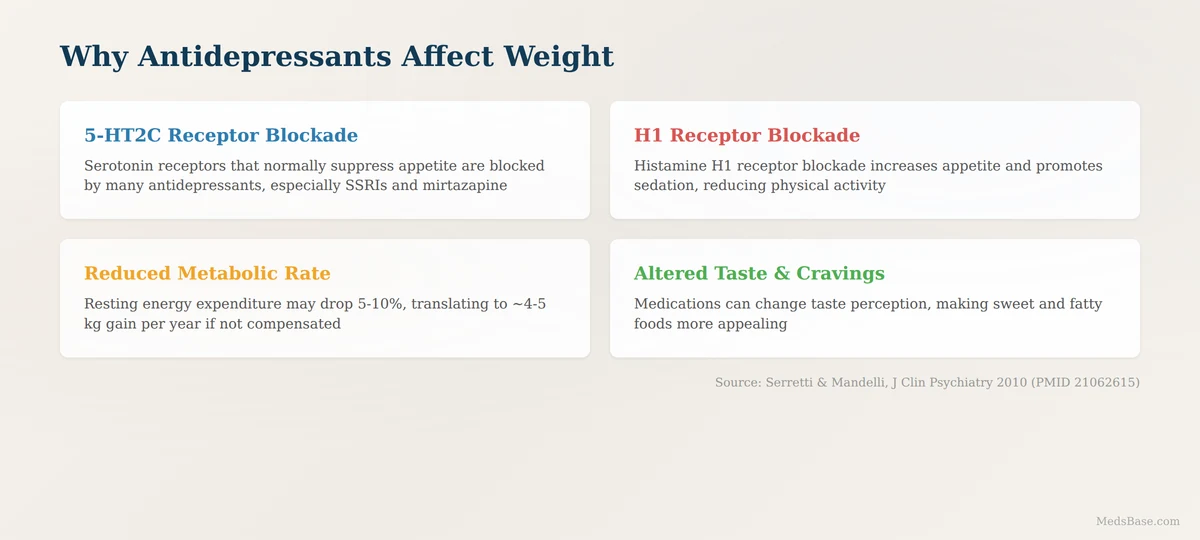
The link between antidepressants and weight gain is not about one simple mechanism. Understanding antidepressants and weight gain requires looking at multiple receptor-level effects. It’s about multiple receptor-level effects converging on the body’s weight-regulation system:
Serotonin 5-HT2C receptor blockade. Many antidepressants, particularly SSRIs and mirtazapine, block the 5-HT2C serotonin receptor. This receptor normally helps suppress appetite. When it’s blocked, the brain’s appetite-suppression signal is weakened, and cravings — particularly for carbohydrates — can increase.
Histamine H1 receptor blockade. Mirtazapine and some tricyclic antidepressants are potent H1 receptor blockers. Histamine receptors in the brain regulate wakefulness and feeding behavior. Blocking them can increase appetite and promote sedation, which reduces physical activity — a double hit on weight.
Dopamine and norepinephrine effects. Bupropion, which increases dopamine and norepinephrine, has the opposite effect — it tends to suppress appetite and may slightly increase metabolic rate. This is why bupropion is the only commonly prescribed antidepressant consistently associated with weight loss rather than gain.
Metabolic rate changes. Some antidepressants may reduce resting energy expenditure — the calories your body burns at rest — by 5–10%. This effect is subtle but cumulative: a 100-calorie-per-day deficit in energy expenditure translates to roughly 4–5 kg of weight gain over a year if not compensated by reduced food intake.
Taste and food preference shifts. Antidepressants can alter how you perceive taste, sometimes making sweet and fatty foods more appealing. This is a receptor-level effect, not a failure of self-control.
Research Spotlight: The comprehensive meta-analysis published in the Journal of Clinical Psychiatry reviewed 116 studies and found that weight effects vary dramatically across antidepressants. Amitriptyline, mirtazapine, and paroxetine were associated with the greatest risk of weight gain, while bupropion and fluoxetine (in the short term) were associated with weight loss. The authors noted that individual variation is substantial — the same medication can cause significant weight gain in one person and none in another.
Which Antidepressants Cause the Most Weight Gain? — Antidepressants and weight gain Explained
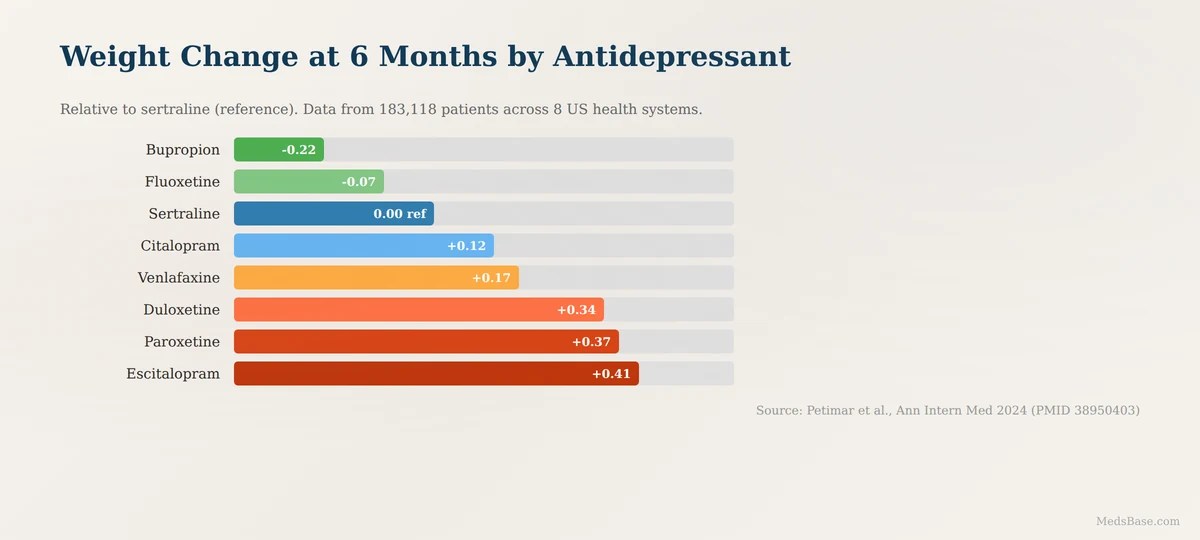
The gold-standard data on antidepressants and weight gain comes from a 2024 study published in the Annals of Internal Medicine that analyzed electronic health records from 183,118 patients across 8 US health systems. The study compared weight changes at 6 months after starting treatment, using sertraline as the reference point.
Here’s what they found, ranked from most weight gain to least:
| Medication | Weight Change at 6 Months (vs sertraline) | 5% Weight Gain Risk | Clinical Significance |
|---|---|---|---|
| Escitalopram (Lexapro) | +0.41 kg (0.31–0.52) | 10–15% higher risk | Most weight gain |
| Paroxetine (Paxil) | +0.37 kg (0.20–0.54) | 10–15% higher risk | High weight gain |
| Duloxetine (Cymbalta) | +0.34 kg (0.22–0.44) | 10–15% higher risk | Moderate weight gain |
| Venlafaxine (Effexor) | +0.17 kg (0.03–0.31) | Similar to sertraline | Modest weight gain |
| Citalopram (Celexa) | +0.12 kg (0.02–0.23) | Similar to sertraline | Modest weight gain |
| Sertraline (Zoloft) | 0.00 (reference) | Reference | Reference |
| Fluoxetine (Prozac) | -0.07 kg (-0.19 to 0.04) | Similar to sertraline | Weight-neutral |
| Bupropion (Wellbutrin) | -0.22 kg (-0.33 to -0.12) | 15% reduced risk | Weight loss |
What this means for you: The differences between antidepressants are real but modest at 6 months — about 0.6 kg (1.3 pounds) separates the highest-gain from the lowest-gain medication. However, this is an average across thousands of patients. Individual responses vary widely, and the differences tend to widen over time.
The 12-month follow-up study in JAMA Psychiatry of 22,610 patients confirmed that weight differences become more pronounced with longer treatment. Bupropion showed a significantly decreased rate of weight gain compared to citalopram over 12 months, while escitalopram and paroxetine continued to diverge upward.
How Long Does Antidepressant Weight Gain Last?
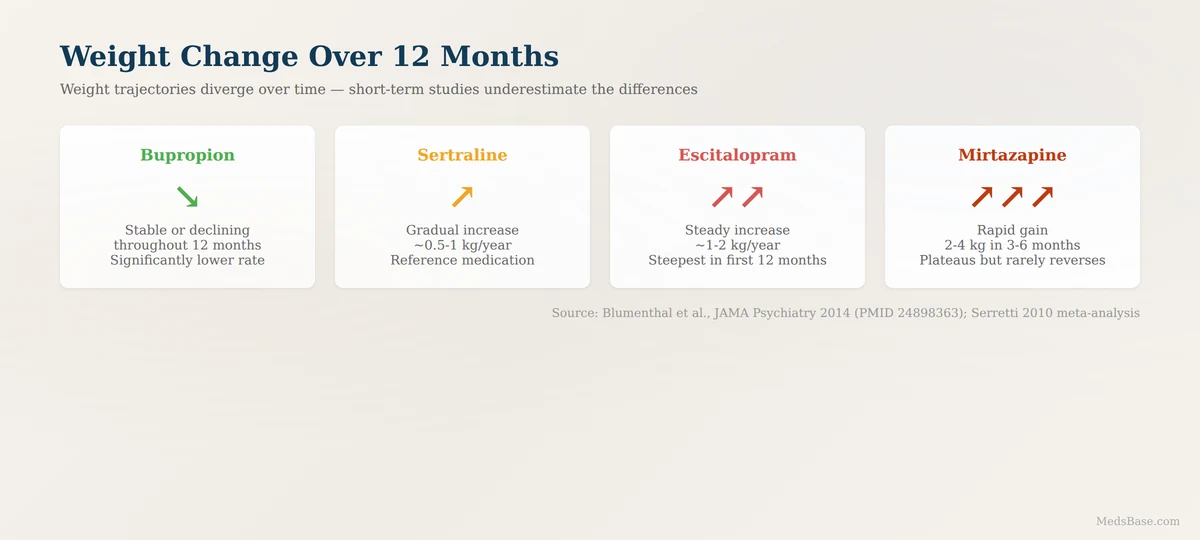
Weight gain from antidepressants is not usually a one-time effect, and this is a core finding in the antidepressants and weight gain research — the research on antidepressants and weight gain shows a gradual, cumulative pattern. The JAMA Psychiatry study on antidepressants and weight gain found that weight tends to increase gradually over the first 6–12 months of treatment and can continue at a slower rate beyond that.
The trajectory differs by medication:
- Bupropion: Weight generally stays stable or decreases slightly over the first year and remains stable thereafter.
- Fluoxetine: May cause initial weight loss (first 4–6 months), with weight returning to baseline or slightly above after 12 months.
- Sertraline, citalopram: Gradual weight gain of approximately 0.5–1 kg per year after the first 6 months.
- Escitalopram, paroxetine: Steady weight gain of approximately 1–2 kg per year, with the steepest increase in the first 12 months.
- Mirtazapine: Rapid weight gain in the first 3–6 months — often 2–4 kg — which may plateau but rarely reverses.
The 116-study meta-analysis on antidepressants and weight gain noted that weight gain “generally became more evident in the long term to a variable degree across compounds.” Short-term studies of 6–12 weeks — the typical duration of drug approval trials — systematically underestimate the weight impact of long-term antidepressant use.
Who Is at Highest Risk?
Not everyone gains weight on antidepressants. The data suggest several risk factors:
- Female sex: Women tend to gain more weight on antidepressants than men, particularly with SSRIs.
- Normal or low baseline weight: People who start treatment at a lower body weight tend to gain more.
- Longer treatment duration: The risk of clinically significant weight gain (≥5% of baseline body weight) increases with treatment duration.
- Specific genetic factors: Variants in serotonin receptor and transporter genes may influence individual susceptibility to weight gain on SSRIs.
- Concurrent medications: Antipsychotics, mood stabilizers, and some blood pressure medications can compound weight gain.
How to Manage Weight on Antidepressants
If you’re gaining weight on an antidepressant and it’s distressing you, the evidence on antidepressants and weight gain gives you options, the research on antidepressants and weight gain offers several evidence-based strategies, you have options. None of them involve stopping your medication abruptly — which can trigger the antidepressant discontinuation syndrome and potentially worsen your depression.
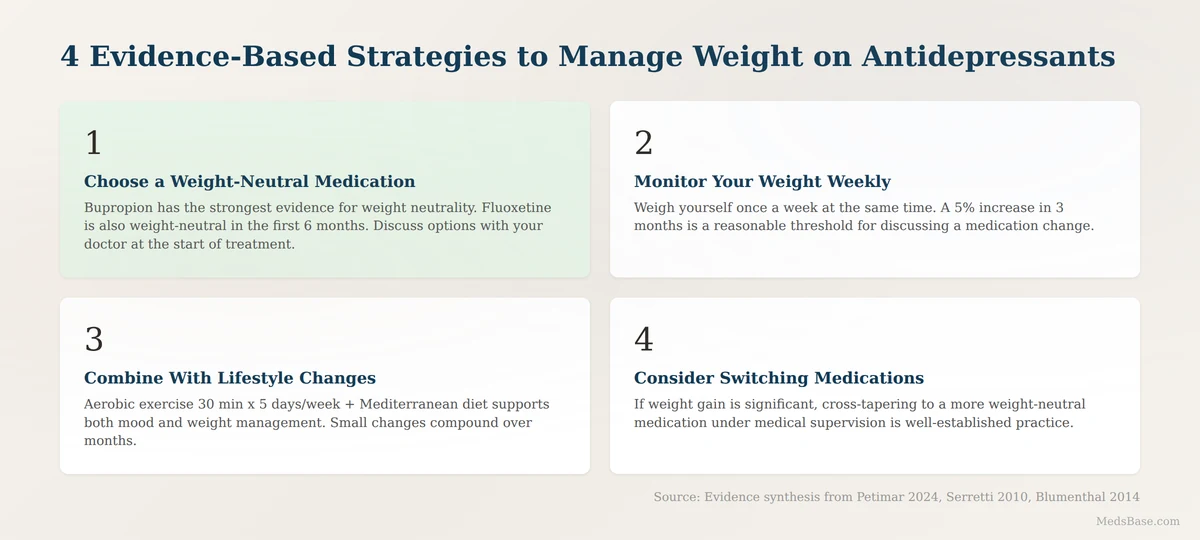
Strategy 1: Choose a Weight-Neutral Medication From the Start
If you’re just starting antidepressant treatment and weight is a concern, discuss medication choice with your doctor. Bupropion has the strongest evidence for weight neutrality or weight loss. Fluoxetine is also relatively weight-neutral, especially in the first 6 months. If an SSRI is clearly indicated, sertraline may be a reasonable middle ground.
Strategy 2: Monitor Your Weight
Weigh yourself once a week at the same time of day. A 5% increase in body weight within 3 months of starting an antidepressant is a reasonable threshold for discussing a medication change with your doctor. Catching the trend early — before 10–15 pounds accumulate — makes it easier to address.
Strategy 3: Combine With Lifestyle Interventions
The same lifestyle changes that support mental health — regular exercise, a balanced diet, adequate sleep — also help manage weight. Aerobic exercise (30 minutes, 5 days per week) has the dual benefit of supporting mood and burning calories. A Mediterranean-style diet rich in vegetables, whole grains, and lean proteins supports both brain health and weight management.
Strategy 4: Consider Adjunctive Medication
In some cases, adding a medication to counteract weight gain may be appropriate. Metformin, a diabetes medication, has been studied for antipsychotic-induced weight gain and may have some benefit for antidepressant-related weight gain as well. However, this is an off-label use and should only be considered under medical supervision.
Strategy 5: Switch Medications
If weight gain is significant and other strategies haven’t helped, switching to a more weight-neutral antidepressant — under medical supervision — is a well-established approach. Cross-tapering (gradually reducing one while starting the other) minimizes the risk of withdrawal symptoms and depression relapse.
Antidepressant Weight Changes vs Other Psychiatric Medications
It’s worth noting that antidepressants are not the only psychiatric medications that affect weight. Antipsychotics — particularly olanzapine and clozapine — can cause far more dramatic weight gain (5–10 kg or more in the first year). Mood stabilizers like lithium and valproate also contribute to weight gain. In context, the weight changes associated with most antidepressants are modest by comparison.
But for the person experiencing it, any weight gain that feels out of their control can be deeply distressing — and that distress is valid, regardless of how the numbers compare to other drug classes.
Frequently Asked Questions
Q: Which antidepressants cause the most weight gain?
A: Escitalopram (Lexapro) and paroxetine (Paxil) are consistently associated with the most weight gain among first-line antidepressants. A 2024 study of 183,118 patients found that escitalopram led to 0.41 kg more weight gain at 6 months compared to sertraline, and paroxetine led to 0.37 kg more. Mirtazapine (Remeron), which is not a first-line SSRI, causes even more rapid and significant weight gain — often 2–4 kg in the first 3–6 months.
Q: Which antidepressants cause weight loss?
A: Bupropion (Wellbutrin) is the only first-line antidepressant consistently associated with weight loss. In the 2024 study, patients on bupropion lost an average of 0.22 kg at 6 months and had a 15% lower risk of gaining 5% or more of their baseline body weight. Fluoxetine (Prozac) is approximately weight-neutral, with a slight weight loss trend in the first 6 months that may reverse with longer-term use.
Q: Why do antidepressants cause weight gain?
A: Antidepressants affect weight through multiple mechanisms, which is why antidepressants and weight gain is more complex than simple appetite changes: (1) blockade of serotonin 5-HT2C receptors, which normally suppress appetite, (2) histamine H1 receptor blockade (particularly with mirtazapine), which increases appetite and promotes sedation, (3) reduced resting energy expenditure by 5–10%, and (4) altered taste perception that can increase cravings for carbohydrates and sweets. These are pharmacological effects, not a failure of willpower.
Q: How long does antidepressant weight gain last?
A: Weight gain from antidepressants tends to be gradual and cumulative — a pattern consistently observed across the antidepressants and weight gain literature. Most weight gain occurs in the first 6–12 months of treatment and can continue at a slower rate thereafter. The differences between medications become more pronounced at 12 months than at 3 months. Weight gain generally does not reverse while continuing the medication, although it may plateau after 1–2 years.
Q: Can you prevent weight gain on antidepressants?
A: Several strategies can help: (1) choose a weight-neutral antidepressant like bupropion or fluoxetine when clinically appropriate, (2) monitor your weight weekly and catch trends early, (3) combine medication with regular exercise and a healthy diet, (4) discuss adjunctive medications like metformin with your doctor if weight gain is significant, and (5) consider switching to a more weight-neutral medication if weight gain becomes distressing.
Q: Is SSRI weight gain permanent?
A: Weight gained during SSRI treatment is generally not permanent. Most people who stop an SSRI lose some or all of the weight they gained — although the timeline varies and some individuals do not return to their pre-treatment weight. However, stopping an antidepressant without medical supervision can cause withdrawal symptoms and depression relapse. Any decision to stop should be made with your doctor.
Q: Do all SSRIs cause weight gain?
A: No. SSRIs vary significantly in their weight effects. Paroxetine and escitalopram are the most likely to cause weight gain. Sertraline and citalopram have moderate effects. Fluoxetine is approximately weight-neutral, especially in the first 6 months. The mechanism is not fully understood but may involve differences in how strongly each SSRI blocks the 5-HT2C receptor.
Q: Is bupropion better for weight than SSRIs?
A: Yes, bupropion is consistently associated with less weight gain — and often weight loss — compared to SSRIs. In the 2024 study of antidepressants and weight gain across 183,118 patients, bupropion was the only first-line antidepressant with a statistically significant weight loss at 6 months. This makes bupropion a preferred option for patients concerned about weight, provided it is clinically appropriate for their depression type. Bupropion is not recommended for people with seizure disorders, eating disorders, or significant anxiety.
Related Reading
- Sertraline vs Fluoxetine: Which SSRI Is Right for You?
- Antidepressant Discontinuation Syndrome: Symptoms, Timeline, and How to Taper Safely
- How to Lower Uric Acid Naturally and With Medication
The Bottom Line
Antidepressants and weight gain is a real, pharmacologically driven phenomenon — and the evidence on antidepressants and weight gain is now robust enough to guide clinical decisions — not a myth or a failure of willpower. But the weight effects vary dramatically across medications. Bupropion is associated with weight loss. Fluoxetine is weight-neutral. Sertraline and citalopram cause modest gains. Escitalopram and paroxetine lead to the most gain among SSRIs. And mirtazapine, while highly effective for some types of depression, can cause rapid weight gain.
The most important takeaway from the antidepressants and weight gain research: you have options. If your antidepressant is working well for your mood but causing distressing weight gain, you don’t have to choose between your mental health and your physical health. A conversation with your doctor about switching to a more weight-neutral medication, adding a lifestyle intervention, or considering adjunctive treatment can help you find a path that works for both.
If you’re curious about how specific SSRIs compare, read our sertraline vs fluoxetine comparison. And if you’re considering stopping your medication, our guide to antidepressant discontinuation syndrome covers what you need to know about tapering safely.

Written by
Sophie ChenPharmaceutical Content Researcher · 8 years experience
Sophie Chen is a pharmaceutical content researcher with 8 years covering generic medication access and clinical pharmacology. She specialises in international regulatory frameworks, bioequivalence standards, and patient-facing education on therapeutic drug classes. She is not a clinician.