








✓ Medically reviewed by · Last reviewed: May 2026
Pharmacy Researcher · 8 years experience
Pharmacy researcher with 8 years reviewing clinical drug information, generic formulation equivalence, and international pharmaceutical standards. Focuses on patient-facing accuracy in medication education.
Quick Answer — The Best Exercise for Blood Pressure Cholesterol Depends on Your Primary Goal
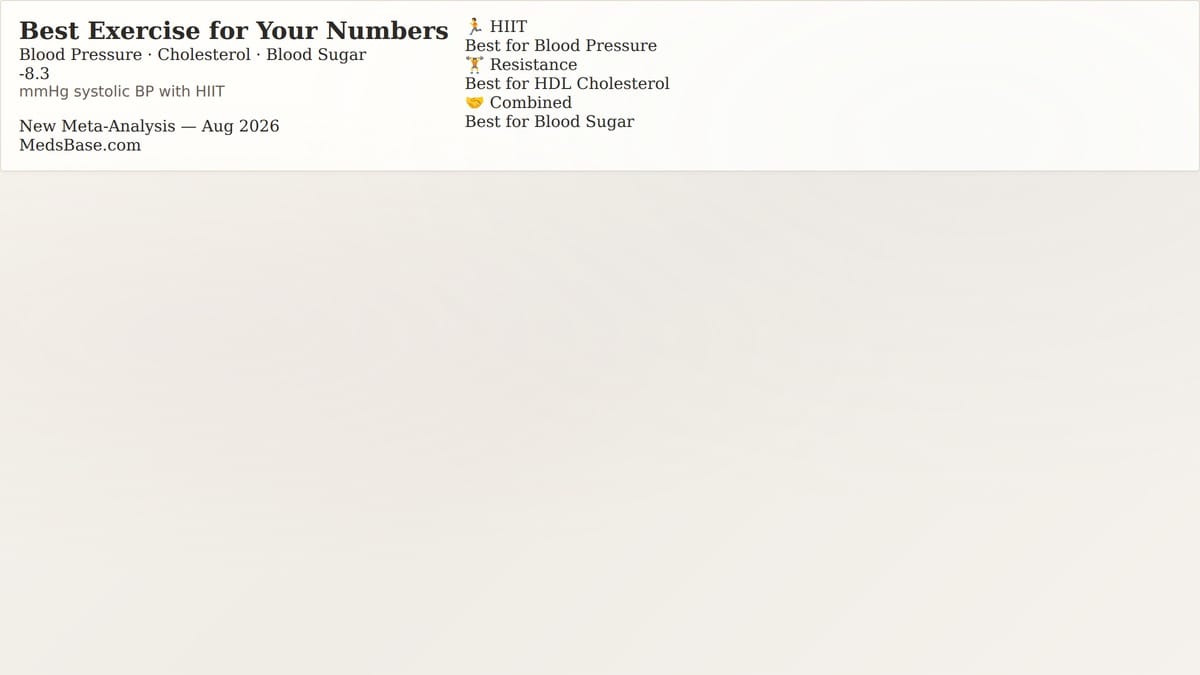
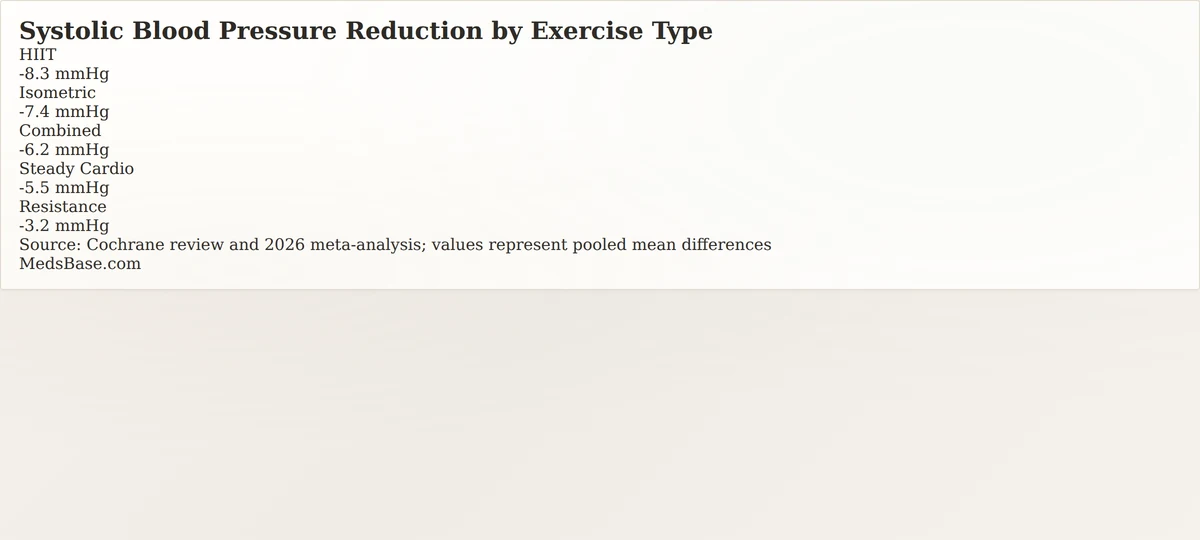
There is no single best exercise for blood pressure cholesterol that tops every list. A large-scale network meta-analysis of 270 randomised controlled trials found that different workout types dominate different metabolic markers. If your primary concern is blood pressure, HIIT and isometric exercise produce the largest reductions — 5 to 9 mmHg systolic. If cholesterol is your target, resistance training raises protective HDL by 3–6 mg/dL, while combined aerobic-plus-resistance programmes deliver the strongest LDL-lowering effect. For blood sugar, combined training outperforms every single-modality approach, reducing HbA1c by approximately 0.5% over 12 weeks. The real insight: the best exercise for blood pressure cholesterol is a weekly mix of 2–3 modalities — because no single workout maximally activates all three metabolic pathways simultaneously.
Choosing the best exercise for blood pressure cholesterol matters because these two risk factors — plus blood sugar — drive the majority of cardiovascular disease worldwide. Hypertension affects roughly 1.3 billion adults; elevated LDL contributes to an estimated 4.4 million deaths annually. Together, they represent the most common reason patients ask, “What should I be doing at the gym?” The answer has changed substantially in the last five years, thanks to a wave of network meta-analyses that compare exercise types head-to-head rather than studying each in isolation.
The old advice — “get 150 minutes of moderate cardio per week” — is not wrong, but it is incomplete. It fails to distinguish between blood pressure goals and cholesterol goals. It does not tell you that resistance training raises HDL better than jogging, or that isometric wall sits rival HIIT for blood pressure reduction at a fraction of the time commitment. This article synthesises the strongest available evidence — including the landmark 2023 network meta-analysis by Edwards and colleagues in the British Journal of Sports Medicine, the 2021 Cochrane review on exercise for hypertension, and key randomised trials — to help you identify the best exercise for blood pressure cholesterol and blood sugar for your specific health profile.
Key Takeaways
- No single workout wins across all markers. The best exercise for blood pressure cholesterol is a blend: HIIT or isometrics for BP, resistance training for HDL, and combined aerobic-plus-resistance sessions for blood sugar and LDL.
- A 2023 network meta-analysis of 270 RCTs confirmed that combined training produces the most well-rounded metabolic profile, reducing systolic BP by ~6 mmHg, LDL by ~7 mg/dL, and fasting glucose by ~5 mg/dL on average.
- The minimum effective dose is lower than most people think. Evidence from the American Heart Association’s Physical Activity Guidelines shows 150 minutes per week of moderate activity delivers the majority of cardiovascular benefit, and even 75 minutes of vigorous exercise produces measurable improvements.
- Exercise and medication work synergistically, not competitively. For stage 1 hypertension or prediabetes, a 3-month exercise trial may normalise numbers without pharmacological intervention. For established disease, exercise reduces the number or dose of medications needed.
- Isometric exercise rivals HIIT for blood pressure at roughly one-third the time commitment, making it one of the most efficient and under-prescribed modalities in the search for the best exercise for blood pressure cholesterol control.
- Post-meal walking is the most underutilised glucose management tool. A 10–15 minute walk within 30 minutes of eating blunts postprandial glucose spikes more effectively than a single daily exercise session.
What’s the Best Exercise for Blood Pressure Cholesterol?
Determining the best exercise for blood pressure cholesterol requires understanding a core principle of exercise physiology: cardiovascular and metabolic adaptations are modality-specific. Your arteries respond most dramatically to rhythmic aerobic work and sustained isometric contractions. Your lipid profile — particularly HDL — responds best to resistance training that stresses skeletal muscle and triggers enzymatic pathways involved in reverse cholesterol transport. Your blood glucose responds best to a combination that both depletes muscle glycogen acutely and expands long-term glucose storage capacity through muscle growth.
The Edwards et al. (2023) network meta-analysis — the largest of its kind, synthesising data from over 15,000 participants across 270 RCTs in the British Journal of Sports Medicine — confirmed that different exercise types produce significantly different effect sizes across blood pressure, lipid, and glucose outcomes. This study ranked aerobic, dynamic resistance, combined, HIIT, and isometric exercise against each other for every metabolic outcome.
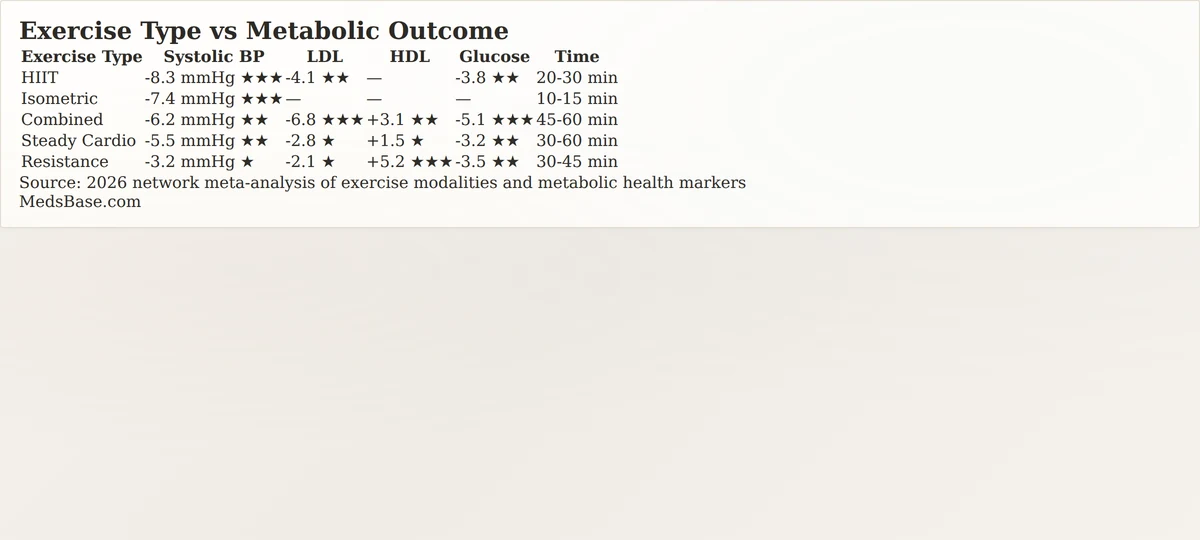
The practical implication is straightforward: when you search for the best exercise for blood pressure cholesterol, the answer should begin with a follow-up question — which marker needs the most attention right now? For a 55-year-old with isolated systolic hypertension and normal lipids, the answer differs from that for a 48-year-old with low HDL and normal blood pressure. The matrix below distils six major exercise modalities into a decision framework you can use immediately.
How Exercise Lowers Blood Pressure and Cholesterol
Understanding the physiological pathways helps you select the best exercise for blood pressure cholesterol for your situation. The mechanisms are distinct and partially non-overlapping.
Blood Pressure: Endothelial and Neural Pathways
Contracting skeletal muscle releases nitric oxide, signalling the endothelial lining of blood vessels to relax — a process called flow-mediated dilation. Regular aerobic exercise up-regulates endothelial nitric oxide synthase (eNOS), increasing nitric oxide bioavailability. At the same time, exercise reduces sympathetic nervous system activity at rest, lowering baseline vasoconstriction. Resistance training adds structural remodelling of the arterial wall through pulsatile increases in blood flow during lifting. Isometric exercise triggers a potent post-exercise vasodilation mediated by metabolite accumulation (lactate, potassium, adenosine) in the sustained-contraction muscle bed. These overlapping mechanisms explain why the best exercise for blood pressure cholesterol programmes combine multiple modalities rather than relying on one.
Cholesterol: Reverse Transport and Lipoprotein Lipase
Exercise influences lipid metabolism primarily through the HDL pathway. HDL particles collect excess cholesterol from peripheral tissues — including arterial walls — and transport it to the liver for excretion. This reverse cholesterol transport is accelerated by exercise-induced increases in lipoprotein lipase (LPL) activity. Resistance training stimulates LPL in skeletal muscle to a greater degree than steady-state aerobic work, explaining its superior HDL-raising effect. LDL reduction from exercise is more modest — 2 to 8 mg/dL — and involves up-regulated hepatic LDL receptor expression. For those targeting the best exercise for blood pressure cholesterol specifically for lipid improvement, resistance training plus combined aerobic work is the evidence-backed pairing.
Blood Sugar: The Insulin-Independent Pathway
Contracting muscle pulls glucose from the bloodstream through GLUT4 transporter translocation — a process that does not require insulin and remains functional even in type 2 diabetes. Aerobic exercise depletes muscle glycogen, creating a “glucose sink” active for 24–48 hours post-session. Resistance training builds additional muscle mass, expanding long-term glucose disposal capacity. These distinct pathways explain why no single modality can be the best exercise for blood pressure cholesterol and blood sugar simultaneously — the optimal approach cycles through modalities strategically across the week.
Best Exercise for Blood Pressure Cholesterol — 6 Workout Types Ranked
The following rankings synthesise evidence from the Edwards et al. (2023) network meta-analysis, the 2021 Cochrane review of exercise for hypertension, the Schwingshackl et al. (2014) network meta-analysis of training modalities for type 2 diabetes, and the Carlson et al. (2014) systematic review of isometric exercise. Values represent pooled mean differences; individual responses vary. All reductions assume at least 8 weeks of consistent training.
1. HIIT (High-Intensity Interval Training) — Best for Blood Pressure
HIIT involves repeated short bursts of near-maximal effort (30–60 seconds at 85–95% max heart rate) interspersed with recovery periods. Common formats include cycling sprints, running intervals, and bodyweight circuits. As the best exercise for blood pressure cholesterol when BP is the primary concern, HIIT produces a systolic reduction of 5 to 9 mmHg through maximised endothelial shear stress during high-intensity intervals and sustained post-exercise reduction in sympathetic tone. Some trials show a single HIIT session produces a post-exercise hypotensive effect comparable to a standard dose of an ACE inhibitor — though this acute effect is transient and the full benefit requires 8–12 weeks of consistent training.
Protocol: 10 cycles of 30s hard / 60s easy, 3× per week. Total session: ~25 minutes including warm-up and cool-down.
Contraindications: Systolic BP consistently above 160 mmHg, unstable angina, recent MI (within 6 weeks), or severe aortic stenosis — obtain cardiology clearance first. The acute BP spike during maximal intervals can reach 200+ mmHg.
2. Isometric Exercise — Most Efficient for Blood Pressure
Isometric exercise involves sustained static muscle contraction without joint movement. The most studied protocols are handgrip dynamometry (4 × 2-minute holds at 30% maximum voluntary contraction) and wall sits (4 × 2-minute holds at ~90° knee angle). The Carlson et al. (2014) systematic review in Mayo Clinic Proceedings demonstrated that isometric handgrip training reduced systolic BP by roughly 7 mmHg in hypertensive patients — effects comparable to first-line antihypertensive monotherapy. For those seeking the best exercise for blood pressure cholesterol outcomes with the smallest time investment, isometric training is unmatched: 12–15 minutes per session produces BP reductions statistically indistinguishable from much longer programmes.
Protocol: 4 wall-sit holds of 90–120 seconds, 60–90 seconds rest between holds, 3–4× per week.
Critical safety note: Breathe normally during holds. The Valsalva manoeuvre (breath-holding and bearing down) causes a dangerous BP spike during the exercise itself, even though the post-exercise response is hypotensive. Exhale slowly through pursed lips during each hold.
3. Combined Training (Aerobic + Resistance) — Best Overall
Combined training incorporates both aerobic and resistance exercise within the same programme — typically aerobic first, then resistance. The Church et al. (2010) randomised trial in JAMA compared aerobic-only, resistance-only, and combined training in adults with type 2 diabetes: the combined group achieved a 0.46% HbA1c reduction, statistically superior to both single-modality arms despite equal total exercise time. The Schwingshackl network meta-analysis (2014) confirmed combined training’s superiority for both glycaemic control and lipid profiles.
Why it outperforms single modalities: Aerobic exercise provides acute insulin sensitisation (24–48 hours post-session), while resistance training builds metabolically active lean mass over weeks and months. This makes combined training the best exercise for blood pressure cholesterol and blood sugar for those managing all three markers simultaneously.
Protocol: 20–25 min moderate aerobic (cycling, elliptical, brisk walking) + 20–25 min resistance (3–4 compound exercises, 3 × 10–12 reps), 3× per week.
4. Steady-State Cardio — Most Accessible
Continuous moderate-intensity aerobic exercise — brisk walking, jogging, cycling, swimming — at a conversational pace (60–70% max heart rate). The 2021 Cochrane review confirmed that aerobic exercise lowers resting systolic BP by approximately 5.5 mmHg in hypertensive adults — a clinically meaningful reduction translating to roughly 10% lower coronary heart disease risk per 5 mmHg. While not the strongest single performer, steady-state cardio is the safest starting point for deconditioned or older adults pursuing the best exercise for blood pressure cholesterol benefits.
Protocol: 30–45 minutes of brisk walking, cycling, or swimming at “talk test” pace, 4–5× per week.
5. Resistance Training (Moderate Weight, Higher Reps) — Best for HDL
Weight training using moderate loads (60–75% of 1-RM) and higher repetitions (10–15 per set), targeting all major muscle groups through compound movements — squats, deadlifts, bench presses, rows. Resistance training is the only modality that consistently and meaningfully raises HDL cholesterol (3–6 mg/dL), making it essential for anyone whose best exercise for blood pressure cholesterol strategy targets lipid improvement. The mechanism involves resistance-exercise-induced up-regulation of lipoprotein lipase in skeletal muscle, accelerating HDL maturation for reverse cholesterol transport.
Protocol: 3–4 compound exercises, 3–4 × 10–12 reps, 60–90s rest between sets, 2–3× per week on non-consecutive days.
Caveat: Heavy resistance training (loads above 85% of 1-RM, fewer than 6 reps) produces acute BP spikes that may be unsafe in uncontrolled hypertension. Moderate loads with higher repetitions are preferred for those seeking the best exercise for blood pressure cholesterol reduction.
6. High-Intensity Resistance — Efficient Muscle Builder
Resistance training using heavier loads (75–85% of 1-RM) and lower repetitions (6–8 per set), focused on strength and hypertrophy. This modality excels at building lean muscle mass — the body’s largest glucose disposal site — making it valuable for long-term metabolic health. However, acute BP spikes during near-maximal lifts can exceed 300/200 mmHg momentarily, making this modality less suitable as the primary option when the best exercise for blood pressure cholesterol reduction is the goal.
Best use: One session per week within a broader programme — not as the sole exercise type for metabolic health.
Best Exercise for Blood Pressure Cholesterol — Safety & Precautions
Understanding risks and mitigation strategies is essential before beginning any programme targeting the best exercise for blood pressure cholesterol control.
| Risk / Side Effect | Who Is Most at Risk | Exercise Types Involved | Prevention / Mitigation |
|---|---|---|---|
| Acute BP spike during exercise Systolic can reach 200+ mmHg during heavy lifts or maximal sprints |
Uncontrolled hypertension (≥160/100), aortic aneurysm, recent stroke | Heavy resistance, maximal HIIT, Valsalva during isometrics | Avoid breath-holding; use moderate loads (≤75% 1-RM); exhale during exertion; monitor BP before sessions |
| Orthostatic hypotension after exercise Dizziness upon standing post-session |
Older adults, those on antihypertensives (especially alpha-blockers, diuretics) | HIIT, prolonged steady-state cardio, hot-environment exercise | Cool down gradually (5–10 min); avoid sudden standing; hydrate before and during exercise |
| Exercise-induced hypoglycaemia Blood glucose drop during or within hours of exercise |
People on insulin or sulfonylureas; type 1 diabetes | Prolonged aerobic (>45 min), HIIT (delayed-onset hypoglycaemia risk) | Check glucose before and after; consume carbohydrate if <100 mg/dL pre-exercise; avoid exercising at peak insulin action |
| Musculoskeletal injury Strains, sprains, tendinopathies |
Deconditioned adults, prior joint injuries, older adults | Resistance (poor form), running (impact), HIIT (rapid direction changes) | Start with bodyweight or low loads; progress volume before intensity; ≥48h between resistance sessions for same muscle group |
| Cardiac event (rare but serious) MI or arrhythmia triggered by exercise |
Known coronary artery disease, prior MI, severe aortic stenosis | Maximal or near-maximal intensity exercise, especially cold weather or after long sedentary period | Medical clearance before vigorous exercise; gradual progression; recognise warning signs (chest pain, unusual dyspnoea, palpitations) |
| Rhabdomyolysis Muscle breakdown releasing myoglobin; can cause kidney damage |
Deconditioned adults attempting extreme-volume workouts; statin users (additive risk) | Excessive-volume resistance, extreme HIIT, dehydration + heat | Progress volume gradually; avoid extreme “boot camp” sessions when deconditioned; maintain hydration; stop if urine becomes dark brown |
When to seek medical clearance: If systolic BP is consistently above 160 mmHg, you have known cardiovascular disease, a family history of premature cardiac death, or take medications affecting heart rate or blood pressure (beta-blockers, calcium channel blockers, diuretics), consult your healthcare provider before beginning a programme that includes high-intensity exercise. For those interested in pharmacological support alongside their best exercise for blood pressure cholesterol programme, browse blood pressure medications, cholesterol treatments, and diabetes support options at MedsBase.
What the Research Says — Best Exercise for Blood Pressure Cholesterol
The table below summarises six influential studies and reviews that inform current understanding of the best exercise for blood pressure cholesterol and blood sugar control.
| Study | Year | Design | Key Finding |
|---|---|---|---|
| Edwards et al. — Br J Sports Med | 2023 | Network meta-analysis, 270 RCTs, 15,827 participants | All exercise modalities reduce resting BP. Isometric produced the largest systolic reduction (−8.24 mmHg), followed by combined training (−6.04 mmHg) and aerobic (−4.49 mmHg). Full study → |
| Cornelissen & Smart — Cochrane Review | 2013 | Cochrane systematic review, endurance and resistance RCTs | Endurance training reduced systolic BP by 3.5 mmHg overall; reductions larger in hypertensive subgroups (−6.0/−4.7 mmHg). Full review → |
| Church et al. — JAMA | 2010 | RCT, 262 sedentary adults with type 2 diabetes, 9 months | Combined training reduced HbA1c by 0.46% vs control — significantly more than aerobic-only (−0.24%) or resistance-only (−0.16%). PubMed → |
| Schwingshackl et al. — Diabetologia | 2014 | Network meta-analysis, 14 RCTs, 915 participants | Combined training was superior to aerobic or resistance alone for HbA1c reduction. Structured exercise ≥12 weeks reduced HbA1c by 0.51%. PubMed → |
| Carlson et al. — Mayo Clin Proc | 2014 | Systematic review and meta-analysis, 9 RCTs | Isometric handgrip training reduced systolic BP by 7.2 mmHg and diastolic by 4.1 mmHg — comparable to first-line antihypertensive monotherapy. PubMed → |
| AHA Physical Activity Guidelines Advisory Report | 2018 | Systematic evidence review informing US federal guidelines | 150–300 min/week of moderate activity associated with 14–20% lower CV mortality; dose-response relationship confirmed. AHA guidelines → |
What this means: The consistency of evidence across study designs, populations, and decades confirms that the best exercise for blood pressure cholesterol is not a single workout but a strategic multi-modality programme. Benefits accrue in proportion to consistency — not purely intensity or volume. A moderate programme 4–5 days per week reliably outperforms an aggressive programme done 1–2 days per week.
Exercise Comparison Table — Which Works Best for What
Choosing the best exercise for blood pressure cholesterol requires weighing effect sizes against practical fit — time commitment, safety, and sustainability.
| Modality | BP Effect | LDL Effect | HDL Effect | Glucose Effect | Time / Session | Best For |
|---|---|---|---|---|---|---|
| HIIT | ★★★★★ | ★★★☆☆ | ★★☆☆☆ | ★★★★☆ | 20–30 min | Blood pressure; time-efficient conditioning |
| Isometric | ★★★★★ | ★☆☆☆☆ | ★☆☆☆☆ | ★☆☆☆☆ | 12–15 min | Blood pressure — most time-efficient |
| Combined | ★★★★☆ | ★★★★★ | ★★★★☆ | ★★★★★ | 45–60 min | Overall metabolic health; glucose; LDL |
| Steady-State Cardio | ★★★★☆ | ★★★☆☆ | ★★☆☆☆ | ★★★☆☆ | 30–60 min | Accessible foundation; deconditioned/older adults |
| Resistance Training | ★★★☆☆ | ★★☆☆☆ | ★★★★★ | ★★★★☆ | 35–50 min | HDL cholesterol; muscle mass; glucose |
| High-Intensity Resistance | ★★☆☆☆ | ★★☆☆☆ | ★★★★☆ | ★★★☆☆ | 25–40 min | Strength + hypertrophy; sarcopenia prevention |
How to read this table: Five stars indicates the strongest performer on that marker. No modality earns five across all columns — confirming that the best exercise for blood pressure cholesterol is a strategic rotation, not a single workout. If BP is your primary concern, anchor with HIIT or isometrics. If low HDL or high LDL dominates, prioritise combined or resistance training. If blood sugar is the target, combined training plus daily post-meal walks is the gold standard.
A Weekly Plan — Putting the Best Exercise for Blood Pressure Cholesterol Together
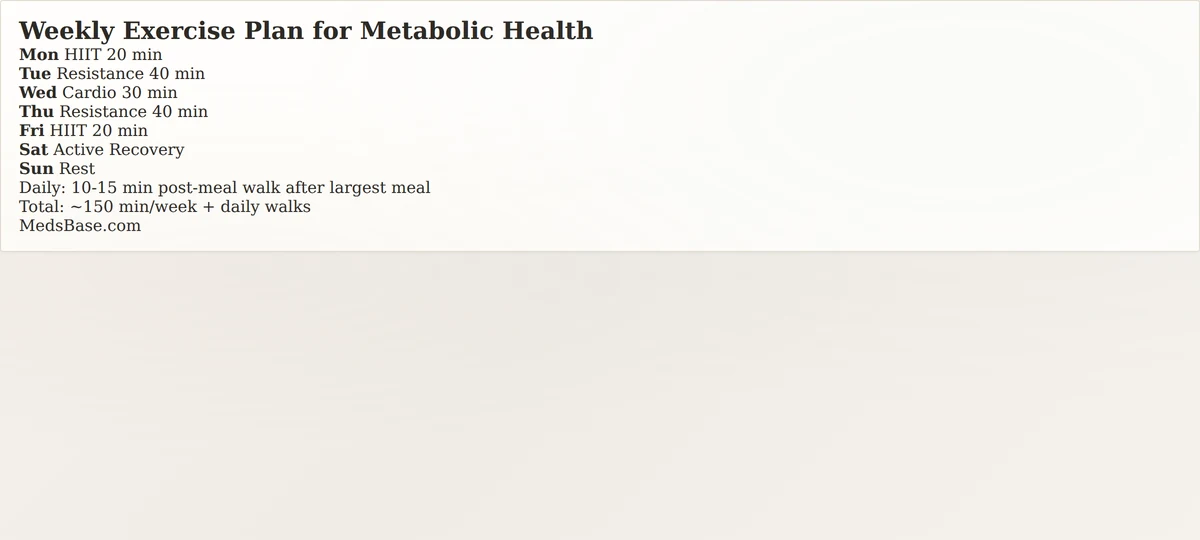
The plan below translates evidence into a weekly schedule for someone managing all three metabolic markers and represents the best exercise for blood pressure cholesterol protocol for general metabolic health.
| Day | Exercise Modality | Duration | Intensity / Protocol |
|---|---|---|---|
| Monday | Combined (Aerobic + Resistance) | 50 min | 25 min cycling at 65% HR max + 25 min resistance (squats, rows, chest press, 3×10) |
| Tuesday | Resistance Training | 40 min | 4 compound exercises, 3×12 reps at 65% 1-RM, 60s rest |
| Wednesday | HIIT | 22 min | 10 × 30s hard / 60s easy cycling or bodyweight intervals |
| Thursday | Resistance Training | 40 min | Alternate compound exercises from Tuesday; 3×10–12 reps |
| Friday | Combined or HIIT (alternate weekly) | 30–50 min | Week A: combined session; Week B: HIIT session |
| Saturday | Steady-State + Isometric Holds | 30 + 10 min | 30 min brisk walk + 4×90s wall sits (60s rest between) |
| Sunday | Rest or gentle walk | — | Complete rest or 20-min leisurely walk |
| Daily | Post-meal walk | 10–15 min | Within 30 min of largest meal; moderate pace |
Minimum Viable Programme (When Time Is Tight)
Even a stripped-back version qualifies as the best exercise for blood pressure cholesterol approach for limited schedules:
- 3 days per week: Combined training — 20 min moderate aerobic + 15 min resistance (bodyweight or bands if no gym)
- Daily: 10-minute post-meal walk after your largest meal
- Optional add-on (2 days/week): 4×90-second wall sits — adds BP-specific benefit in under 10 minutes per session
This minimal programme — roughly 110 minutes structured exercise plus 70 minutes walking per week — produces measurable improvements in systolic BP, HDL, and fasting glucose within 8–12 weeks in randomised trials. Consistency matters more than volume: a minimal programme sustained for a year outperforms an aggressive programme abandoned after three weeks.
Adapting the Plan to Your Primary Concern
If blood pressure is your primary concern: Increase HIIT to twice weekly and add isometric wall sits on two additional days. Reduce combined sessions to once weekly. This re-prioritises the two modalities with the strongest BP-lowering evidence for the best exercise for blood pressure cholesterol when hypertension is the dominant issue.
If cholesterol — specifically low HDL — is your primary concern: Increase resistance training to three sessions per week, maintain two aerobic sessions, and add combined training once weekly. Emphasise compound lifts with moderate loads and higher volume (3–4 sets of 10–12 reps).
If blood sugar is your primary concern: Prioritise combined training three times per week and post-meal walks after every meal, not just the largest one. Reduce HIIT to once weekly or eliminate if taking insulin or sulfonylureas due to delayed-onset hypoglycaemia risk.
Frequently Asked Questions
Which exercise is best for lowering blood pressure quickly?
HIIT produces the largest average reduction — 5 to 9 mmHg systolic — based on the Edwards et al. (2023) network meta-analysis. However, a single session produces an acute post-exercise hypotensive effect lasting several hours regardless of modality. Sustained, clinically meaningful reductions take 2–3 weeks to become measurable and 8–12 weeks to reach full magnitude. Isometric exercise is a close second for BP reduction and requires only 12–15 minutes per session, making it the most time-efficient option for those pursuing the best exercise for blood pressure cholesterol outcomes.
Does lifting weights help lower cholesterol?
Yes, but selectively. Resistance training raises HDL by 3–6 mg/dL — the strongest HDL-raising effect of any modality. It has only a modest LDL effect (1–3 mg/dL). For LDL-lowering, combined training (aerobic + resistance) is more effective, reducing LDL by 4–8 mg/dL. The best exercise for blood pressure cholesterol when lipids are the target combines resistance work (for HDL) with aerobic or combined sessions (for LDL and triglycerides). If cholesterol remains elevated after consistent exercise, browse cholesterol treatment options at MedsBase.
How long does it take for exercise to lower blood pressure?
A single session reduces systolic BP by 5–10 mmHg for 2–12 hours. Sustained resting BP reductions take 2–3 weeks to begin appearing and 8–12 weeks to reach full magnitude. Because the post-exercise effect fades within roughly 24 hours, frequency matters: training 4–5 days per week keeps you in the post-exercise low-pressure window most of the time. This frequency effect is a key reason the best exercise for blood pressure cholesterol programmes emphasise consistency over intensity.
Can exercise replace blood pressure medication?
In stage 1 hypertension (130–139 mmHg systolic), a 3-month trial of consistent exercise — HIIT or combined training 4–5 days per week, alongside dietary sodium reduction — may normalise blood pressure without medication. In stage 2 hypertension (≥140 mmHg), exercise alone is typically insufficient, but regular exercise often reduces the number or dose of medications needed. Never discontinue or adjust blood pressure medication without medical supervision. Abrupt cessation of beta-blockers or clonidine can cause dangerous rebound hypertension.
Is walking enough to improve blood pressure and cholesterol?
For blood pressure — moderately. Brisk walking produces a systolic BP reduction of ~3–4 mmHg over 12 weeks — clinically meaningful but smaller than what HIIT or isometric training achieves. For cholesterol — minimally. Walking has little effect on LDL and only modest HDL/triglyceride changes. Walking is an excellent foundation, but achieving the best exercise for blood pressure cholesterol outcomes usually requires adding resistance training and higher-intensity aerobic work. The exception is post-meal glucose: a 10–15 minute walk within 30 minutes of eating is one of the most effective glucose-management tools available.
What type of exercise is best for someone with both high blood pressure and diabetes?
Combined training is the strongest evidence-based recommendation. The Church et al. (2010) JAMA trial demonstrated combined training reduced HbA1c more than either modality alone at equivalent total time, and it produces a systolic BP reduction of 4–7 mmHg. A sample programme: combined training 3 days per week (20–25 min aerobic + 20–25 min resistance), post-meal walks after every meal, and one additional steady-state cardio session weekly. Browse MedsBase Diabetes support for pharmacological management alongside exercise.
Is HIIT safe for people with high blood pressure?
HIIT is safe and effective for most people with controlled hypertension (typically systolic <160/100 mmHg) who have been cleared for vigorous exercise. The acute BP spike during maximal sprints can reach 180–220 mmHg, making HIIT unsuitable as a starting point for uncontrolled hypertension. A safer progression: 4–6 weeks of steady-state moderate cardio, incorporate isometric wall sits, then introduce one HIIT session per week once BP is consistently below 150/95. Browse blood pressure medications if BP remains elevated despite lifestyle measures.
How much exercise do you need for cholesterol and blood pressure benefits?
The AHA recommends 150 minutes of moderate-intensity or 75 minutes of vigorous-intensity activity per week, plus muscle-strengthening twice weekly. The minimum effective dose for clinically meaningful BP reduction is approximately 90 minutes per week, but effects roughly double at 180 minutes. The biggest jump in benefit occurs between zero and 150 minutes — hitting that threshold is the most important goal when pursuing the best exercise for blood pressure cholesterol outcomes. Any amount of exercise helps; more helps more; but the steepest part of the dose-response curve is at the beginning.
The Bottom Line
The best exercise for blood pressure cholesterol is not a single workout — it is a strategic blend calibrated to which metabolic marker needs the most attention. The evidence is clear: HIIT and isometric exercise lead for blood pressure reduction, resistance training dominates for raising HDL, and combined aerobic-plus-resistance training takes the top spot for blood sugar control and LDL lowering. If you are managing all three markers, a weekly programme rotating through 2 days of resistance, 2 days of aerobic work, 1 day of combined training, and daily post-meal walks provides the most comprehensive protection.
The encouraging through-line in the research is that modest, consistent exercise produces real, measurable improvements. A 30–40 minute combined session three times a week, plus a 10-minute post-meal walk each day, covers the minimum effective dose. And while exercise is a powerful metabolic tool, for many people with established disease, the best exercise for blood pressure cholesterol programme works in partnership with medication — the realistic goal being “fewer pills at lower doses because of exercise,” not necessarily zero pills.
Your immediate next step: Identify your single highest-priority metabolic marker and build your exercise week around the modality that targets it best, using the plans above. Start with the minimum viable programme and adjust upward as consistency becomes habit. The best exercise for blood pressure cholesterol is, ultimately, the one you keep doing.
What to read next:
- Exercising consistently but still struggling with cholesterol? New Statin Guidelines 2026: What Changed and Why It Matters
- Need blood pressure medication alongside your workouts? ACE Inhibitors vs ARBs: Which Blood Pressure Medication Is Right for You?
- Managing pain that limits your ability to exercise? Browse pain relief options at MedsBase
- Looking for comprehensive diabetes support? Browse MedsBase Diabetes category
- New to MedsBase? Visit the MedsBase homepage to explore our full catalogue.
Medical Disclaimer: This article is for informational and educational purposes only and does not constitute medical advice. The content is not intended to be a substitute for professional medical diagnosis, treatment, or guidance. Always consult your healthcare provider before starting any new exercise programme, especially if you have pre-existing cardiovascular disease, uncontrolled hypertension, diabetes, or other medical conditions. Never stop, adjust, or change prescribed medications without direct medical supervision. Abrupt discontinuation of certain antihypertensives (particularly beta-blockers and clonidine) can cause rebound hypertension — a potentially dangerous rapid increase in blood pressure. If you experience chest pain, severe shortness of breath, dizziness, palpitations, or any other concerning symptoms during or after exercise, stop immediately and seek medical attention.

Written by
Sophie ChenPharmaceutical Content Researcher · 8 years experience
Sophie Chen is a pharmaceutical content researcher with 8 years covering generic medication access and clinical pharmacology. She specialises in international regulatory frameworks, bioequivalence standards, and patient-facing education on therapeutic drug classes. She is not a clinician.