








✓ Medically reviewed by · Last reviewed: May 2026
Pharmacy Researcher · 8 years experience
Pharmacy researcher with 8 years reviewing clinical drug information, generic formulation equivalence, and international pharmaceutical standards. Focuses on patient-facing accuracy in medication education.
new statin guidelines 2026 — New Statin Guidelines 2026: 9 Changes That Affect Who Takes Statins. Read on for an evidence-backed guide covering everything you need to know.
Key Takeaways
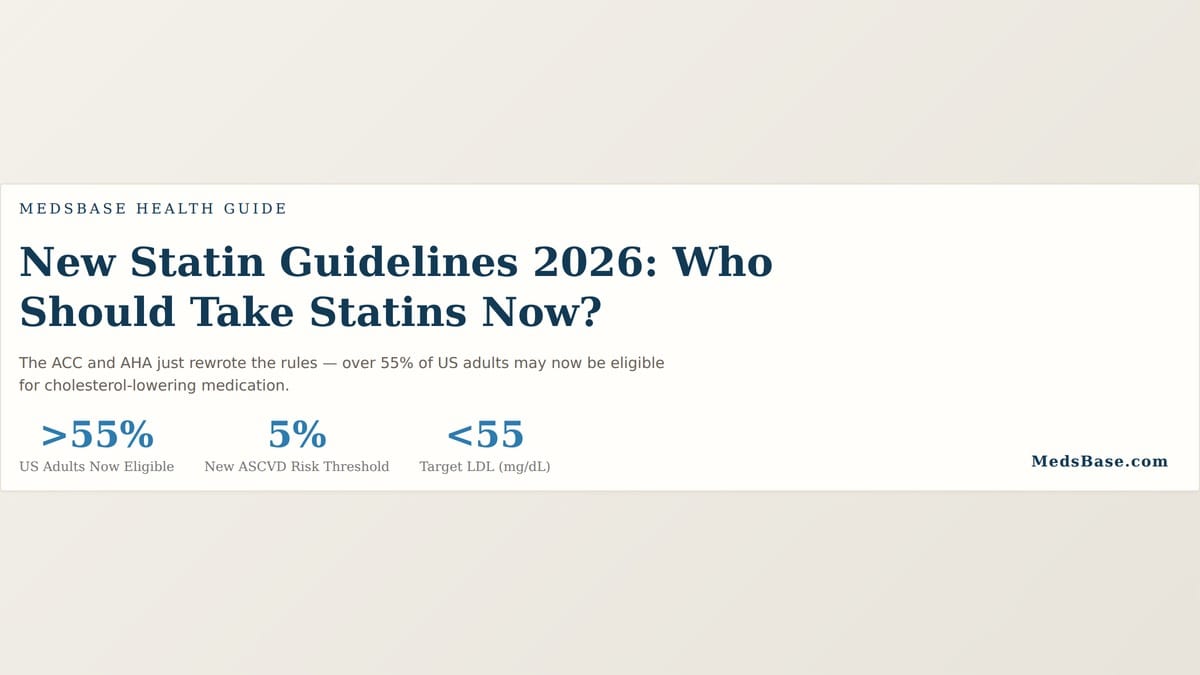
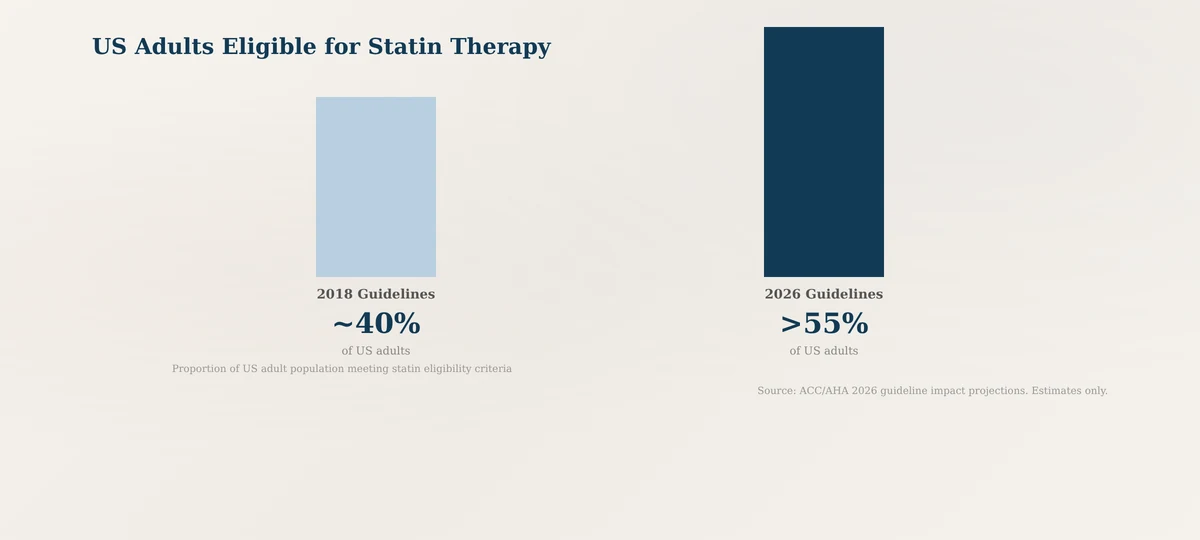
- The 2026 ACC/AHA cholesterol guideline update expanded statin eligibility — early estimates suggest over 55% of US adults now meet the criteria, up from roughly 40% under the old rules
- The biggest changes involve lower LDL thresholds for primary prevention, stronger recommendations for adults aged 40–75 with borderline risk, and expanded diabetes-based criteria — but one controversial age group was surprisingly excluded
- If you were told “your cholesterol isn’t high enough for statins” in the past, the new guidelines may have changed that answer for you
- Lifestyle changes (diet, exercise, smoking cessation) still come first — statins are added when lifestyle alone is insufficient
- Understanding the guidelines is step one; the actual decision belongs to you and your doctor — but knowing what changed puts you in control of the conversation
Half of American adults carry a cholesterol number that, under the rules that governed until this year, did not qualify them for medication. The question was always: should they?
In 2026, the American College of Cardiology (ACC) and the American Heart Association (AHA) published in Circulation a definitive revision. Their updated cholesterol treatment guideline expanded statin eligibility to tens of millions more people — people who previously fell into the grey zone between “your cholesterol is fine” and “you definitely need medication.”
If you have ever been told your cholesterol was “borderline” and sent home with a diet sheet, the 2026 guidelines may have changed the answer for you. By the end of this article, you will know exactly what changed, how to check if you are now eligible, and what to discuss with your doctor.
What Are the New Statin Guidelines 2026?
The 2026 ACC/AHA Guideline on the Management of Blood Cholesterol represents the first major update since 2018 — the CDC and NHS statins guidance both inform clinical practice. It is the product of a multidisciplinary expert panel that reviewed hundreds of clinical trials, meta-analyses, and real-world data sets to determine who benefits from cholesterol-lowering medication — and who does not.
Quick Answer: The new statin guidelines lower the LDL cholesterol threshold for starting statins, broaden the age range, strengthen recommendations for people with diabetes and borderline risk scores, and explicitly include more women and people from diverse ethnic backgrounds in treatment considerations. The net effect: millions more adults now meet the criteria for statin therapy.
The guidelines do not say “everyone should take statins.” They say: the evidence for benefit now extends to populations that were previously considered too low-risk, too young, or too old. The benefits of statins in reducing heart attacks, strokes, and cardiovascular death are now the most extensively documented in medical history — over 30 years of randomized controlled trial data across millions of patient-years.
Why the Guidelines Changed — The Evidence That Drove It
Between 2018 and 2026, several major developments reshaped the evidence landscape:
More primary prevention data. Multiple large meta-analyses published since 2020 confirmed that statins reduce major cardiovascular events in people without existing heart disease — the “primary prevention” population. The benefit was most pronounced when LDL cholesterol was lowered by at least 30–50% from baseline, regardless of the starting level.
Longer follow-up from landmark trials. Extended follow-up data from trials like JUPITER (rosuvastatin), HOPE-3 (rosuvastatin), and the Cholesterol Treatment Trialists’ (CTT) Collaboration provided 15–20 year outcome data showing persistent benefit.
Better risk stratification tools. The Pooled Cohort Equations were recalibrated with more diverse population data, improving risk prediction in women, Hispanic Americans, and Asian Americans — groups previously under-represented in risk calculators.
Real-world evidence on safety. Post-marketing surveillance and large observational studies provided reassuring long-term safety data, particularly on concerns like new-onset diabetes (a small but real risk that the guidelines now explicitly address) and muscle symptoms (which appear to be less common than patient surveys suggested).
Research Spotlight — The CTT Meta-Analysis
This growing body of evidence shifted the expert panel’s risk-benefit calculus: the threshold at which the benefits of statins outweigh the risks moved lower.
9 Key Changes in the 2026 Guidelines
1. Lower LDL Threshold for Primary Prevention
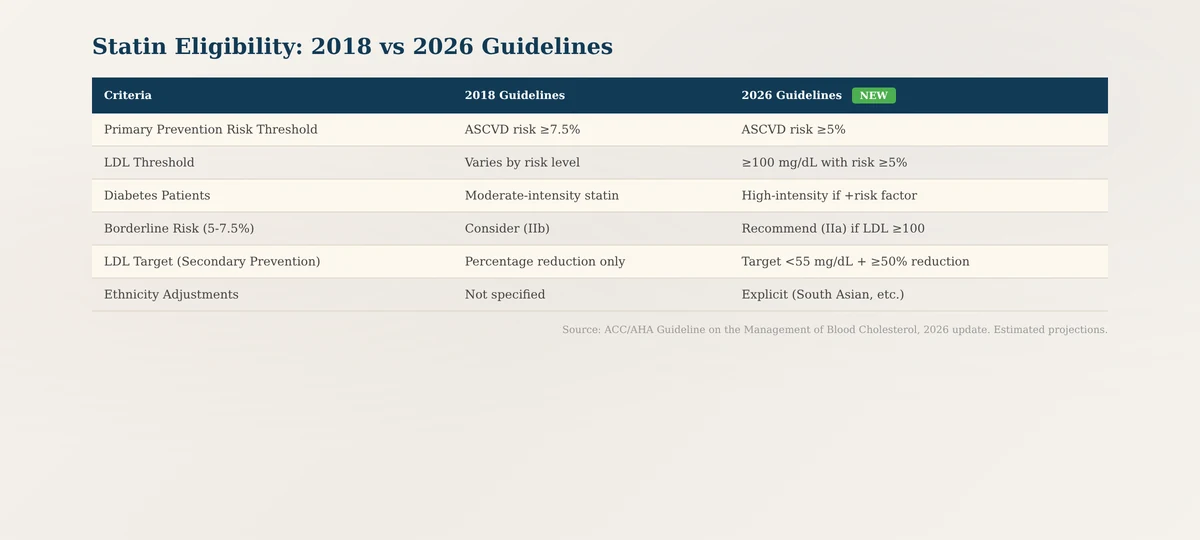
The most impactful change: the 2026 guidelines now recommend considering statin therapy for adults aged 40–75 with LDL cholesterol ≥100 mg/dL (2.6 mmol/L) and a 10-year ASCVD risk of ≥5%, down from the previous ≥7.5% threshold. This single change captures millions of adults previously classified as not-yet-eligible.
2. Expanded Diabetes Recommendations
Under the 2018 guidelines, all adults aged 40–75 with diabetes and LDL ≥70 mg/dL were recommended for moderate-intensity statin therapy. The 2026 update strengthens this: adults with diabetes and any additional risk factor (hypertension, smoking, albuminuria, or family history of premature ASCVD) are now recommended for high-intensity statin therapy regardless of their calculated risk score.
3. Borderline Risk — Stronger “Consider” to “Recommend”
Previously, adults with a 10-year ASCVD risk of 5% to <7.5% (the “borderline risk” group) were given a “consider statin” recommendation with shared decision-making. The 2026 guidelines upgrade this to a stronger class IIa recommendation (“reasonable to initiate”) when LDL ≥100 mg/dL and risk-enhancing factors are present.
4. Age Range: 40–75 Remains Core, Young Adults Get More Attention
The primary prevention age range of 40–75 remains unchanged. However, the 2026 guidelines devote new attention to adults aged 20–39 with severely elevated LDL (≥190 mg/dL or 4.9 mmol/L) or a strong family history of premature ASCVD — recommending earlier lipid-lowering intervention than previous guidelines.
5. Adults Over 75 — A Controversial Gap
This is the change that did NOT happen, and it has generated debate. The 2026 guidelines maintain a cautious approach to initiating statins in adults over 75 without existing cardiovascular disease or diabetes, citing limited randomized trial data in this age group. The recommendation remains “shared decision-making based on individual risk factors and patient preference.” Some cardiologists argue this leaves a high-risk population under-treated; the panel argues the evidence does not yet support a blanket recommendation.
6. Women Are Explicitly Addressed
Previous guidelines acknowledged sex differences in ASCVD risk but did not provide sex-specific recommendations. The 2026 guidelines explicitly address pregnancy-related risk enhancers (pre-eclampsia, gestational diabetes, preterm delivery), menopause-related lipid changes, and the under-treatment of women with ASCVD — now recommending the same intensity targets for women as for men.
7. LDL Targets — More Specific
The 2026 guidelines define treatment goals more precisely: for secondary prevention (people who already have cardiovascular disease), the target LDL is now <55 mg/dL (1.4 mmol/L) with at least a 50% reduction from baseline. For primary prevention in high-risk individuals, the target is <70 mg/dL (1.8 mmol/L). These numerical targets give doctors and patients clearer treatment endpoints than previous percentage-reduction-only guidance.
8. Risk-Enhancing Factors Get More Weight
Conditions like chronic inflammatory diseases (rheumatoid arthritis, psoriasis, lupus), chronic kidney disease, HIV, South Asian ancestry, and persistently elevated triglycerides now carry more weight in the risk calculus. A 45-year-old with “normal” cholesterol but rheumatoid arthritis and a family history of early heart attack now has a clearer path to statin eligibility than before.
9. Ethnicity-Specific Adjustments
The 2026 guidelines include ethnicity-adjusted risk thresholds for the first time. South Asian individuals, who have disproportionately high ASCVD risk at any given LDL level, are flagged for earlier intervention. The guidelines also note that Black Americans and Hispanic Americans have been under-represented in statin trials and call for equitable treatment access.
Who Is Now Eligible? A Self-Check Guide
The following table summarises the key eligibility criteria. If you check any of these boxes, the 2026 guidelines support a discussion with your doctor about starting a statin.
| Category | Criteria | Action | Strength |
|---|---|---|---|
| Clinical ASCVD | Prior heart attack, stroke, bypass, stent | High-intensity statin | Class I (Strong) |
| LDL ≥190 mg/dL | Any age ≥20 years | High-intensity statin | Class I (Strong) |
| Diabetes (age 40-75) | LDL ≥70 mg/dL | Moderate-intensity statin | Class I (Strong) |
| Diabetes + risk factor | Plus HTN, smoking, albuminuria, family history | High-intensity statin | Class IIa |
| Primary prevention (age 40-75) | LDL ≥100 mg/dL + ASCVD risk ≥5% | Moderate- to high-intensity | Class IIa |
| Borderline risk (age 40-75) | LDL ≥100 mg/dL + risk 5–7.5% + enhancers | Consider statin | Class IIa |
| Age 20-39, LDL ≥190 | Severe hypercholesterolemia | Initiate lipid-lowering | Class I |
| Age >75, existing ASCVD | Has prior CVD | Continue or initiate | Class IIb |
If your LDL cholesterol is above 100 mg/dL and you are between 40 and 75 years old, you now have a guideline-supported reason to discuss statin therapy — even if your overall risk score is moderate. The previous gatekeeping at 7.5% risk has been lowered to 5%.
Statin Safety: Addressing the Concerns
Statins have been the subject of more safety research than almost any other drug class. The concerns that circulate online — muscle damage, diabetes, memory loss, liver toxicity — each have a factual basis, but the magnitude of risk is widely misunderstood.
Muscle symptoms (myalgia). This is the most common reason patients stop statins. In randomized controlled trials, muscle symptoms occur in about 5–10% of statin users — but they also occur at similar rates in placebo groups. The nocebo effect (expecting side effects and therefore experiencing them) is well-documented. When muscle symptoms do occur, switching to a different statin, lowering the dose, or trying alternate-day dosing resolves them in most cases.
New-onset diabetes. Statins modestly increase the risk of developing type 2 diabetes — approximately 1 additional case per 255 patients treated over 4 years, according to a 2010 meta-analysis. The risk is concentrated in people already predisposed (overweight, pre-diabetic, metabolic syndrome). However, in these same patients, the cardiovascular benefit of statins outweighs the diabetes risk by roughly 5:1 — for every case of diabetes caused, approximately 5 heart attacks or strokes are prevented.
Liver enzyme elevation. Statins can raise liver enzymes (ALT/AST) in about 1–3% of patients, but clinically significant liver injury is extremely rare — approximately 1 in 100,000 patient-years. Routine liver function monitoring is no longer recommended by the FDA; baseline testing and testing if symptoms develop is sufficient.
Cognitive effects. Early anecdotal reports of memory loss or “brain fog” with statins led to an FDA label change in 2012. Subsequent large-scale studies, including a 2021 systematic review in the Journal of the American College of Cardiology, found no consistent evidence that statins cause cognitive impairment. The FDA removed the cognitive warning from most statin labels.
| Safety Concern | Actual Risk | Evidence Quality | Clinical Response |
|---|---|---|---|
| Muscle symptoms | ~5-10% (similar to placebo in blinded trials) | High | Switch statin, lower dose, or alternate dosing |
| New-onset diabetes | ~0.4% absolute increase over 4 years | High | Benefit outweighs risk ~5:1; monitor glucose in at-risk patients |
| Liver injury | <0.001% clinically significant | High | No routine monitoring needed; check if symptoms |
| Cognitive effects | No consistent evidence of harm | High | Reassure; FDA removed warning from most labels |
| Hemorrhagic stroke | Slight increase in those with prior stroke | Moderate | Net benefit still favors statin use in most patients |
Statins vs Alternatives: What Else Is Available?
The 2026 guidelines acknowledge that not everyone can or wants to take statins. Here is how the alternatives compare:
| Option | LDL Reduction | Key Advantage | Key Limitation | Approximate Cost |
|---|---|---|---|---|
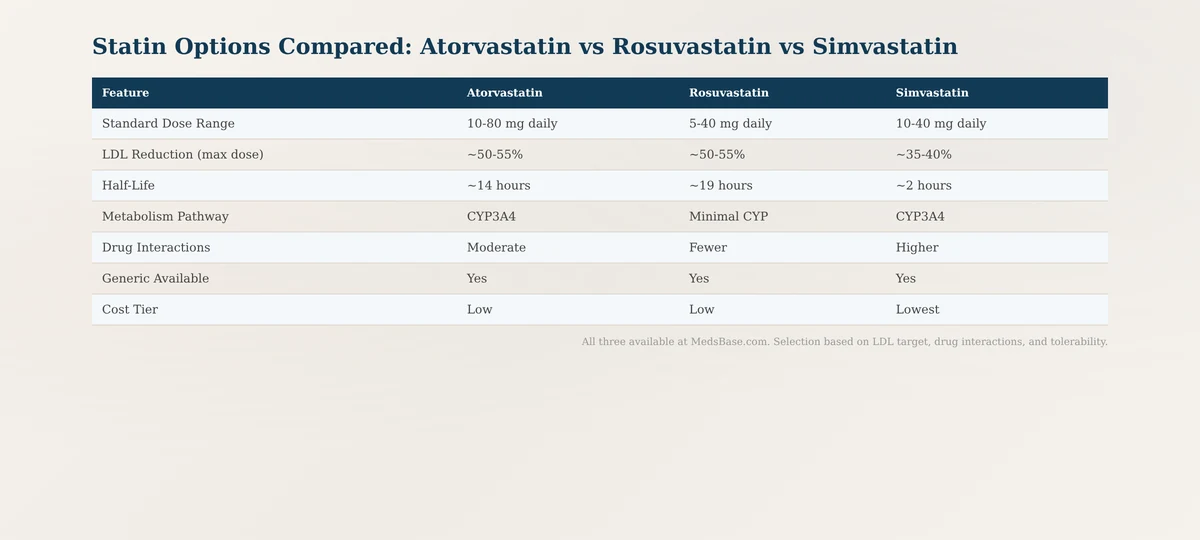
| Atorvastatin 10-80 mg | 30-55% | Most data, generic, once-daily | Drug interactions (CYP3A4) | Low (generic) |
| Rosuvastatin 5-40 mg | 35-55% | Most potent per mg, fewer CYP interactions | Slightly higher muscle risk at 40 mg | Low (generic) |
| Simvastatin 10-40 mg | 25-40% | Very low cost, long history | More drug interactions, lower potency | Lowest (generic) |
| Ezetimibe 10 mg | 15-20% | Additive to statin, no muscle risk | Standalone LDL reduction modest | Moderate |
| PCSK9 inhibitors (injectable) | 50-65% | Very potent, 2-4 week dosing | Injection, cost, prior auth | High |
| Bempedoic acid | 15-25% | Oral, no muscle symptoms | Newer, less long-term data | Moderate |
| Lifestyle alone | 5-15% | No medication needed, multiple health benefits | Most cannot reach LDL target alone | Free |
Which situation fits which approach? For most people with elevated LDL needing primary prevention, a generic statin (atorvastatin or rosuvastatin) is the first-line choice — it is effective, inexpensive, and supported by the most evidence. If statin intolerance due to muscle symptoms occurs, switching to a different statin or adding ezetimibe is the next step. PCSK9 inhibitors are reserved for very high-risk patients who cannot reach LDL targets with statins plus ezetimibe.
How to Use Statins — Practical Guidance
If you and your doctor decide that a statin is right for you, here is how to get started:
1. Get a baseline lipid panel. Before starting, know your total cholesterol, LDL, HDL, and triglycerides. This is your reference point.
2. Choose the right statin and dose. Your doctor will select based on how much LDL reduction you need. A 50% reduction typically requires high-intensity therapy (atorvastatin 40–80 mg or rosuvastatin 20–40 mg). A 30–50% reduction can be achieved with moderate-intensity therapy.
3. Take it consistently — timing matters. Most statins are taken once daily. Simvastatin and lovastatin are best taken in the evening (cholesterol synthesis peaks overnight). Atorvastatin and rosuvastatin can be taken any time of day, as their longer half-lives make timing less critical.
4. Recheck lipids in 4–12 weeks. After starting, a follow-up lipid panel tells you if the dose is adequate. If target LDL is not reached, the dose can be increased or a second agent added.
5. Do not stop without checking. If you experience side effects, talk to your doctor before stopping. Muscle aches may be unrelated to the statin, and stopping abruptly removes the cardiovascular protection.
6. Lifestyle is not optional. Statins reduce risk by about 25–35% — they do not eliminate it. A Mediterranean-style diet, regular exercise, smoking cessation, and blood pressure control multiply the benefit.
Related Reading
- Atorvastatin vs Rosuvastatin: Which Statin Is Right for You?
- How to lower uric acid
- Wondering about the new PCSK9 pill? Read: oral PCSK9 inhibitor
Frequently Asked Questions
Q: What are the new statin guidelines for 2026?
A: The 2026 ACC/AHA cholesterol guidelines lowered the LDL threshold for primary prevention statin therapy from a 7.5% to a 5% 10-year ASCVD risk, expanded diabetes-based recommendations, introduced explicit LDL targets (<55 mg/dL for secondary prevention, <70 mg/dL for high-risk primary prevention), and added ethnicity-specific risk adjustments for the first time.
Q: Who is eligible for statins under the new guidelines?
A: You are now eligible if you (1) have clinical ASCVD, (2) have LDL ≥190 mg/dL at any adult age, (3) have diabetes and are age 40–75, or (4) are age 40–75 with LDL ≥100 mg/dL and a 10-year ASCVD risk ≥5%. Additionally, certain risk-enhancing factors (chronic inflammatory disease, family history, South Asian ancestry) strengthen the case for treatment even at lower calculated risk.
Q: How did the cholesterol guidelines change in 2026?
A: The biggest changes include lowering the primary prevention risk threshold from 7.5% to 5%, upgrading the “consider statin” for borderline risk to a stronger recommendation, adding explicit LDL targets for the first time, expanding high-intensity statin recommendations for diabetes patients with additional risk factors, and incorporating ethnicity-adjusted risk assessment.
Q: What LDL level requires statin treatment now?
A: For primary prevention, LDL ≥100 mg/dL combined with a 5% or higher 10-year ASCVD risk now supports statin therapy. For secondary prevention (existing cardiovascular disease), the target is LDL <55 mg/dL with at least 50% reduction from baseline — meaning virtually all patients with ASCVD should be on a statin regardless of starting LDL. If LDL is ≥190 mg/dL at any adult age, statin therapy is recommended regardless of calculated risk.
Q: Are more people now eligible for statins?
A: Yes, significantly. The 2018 guidelines covered an estimated 40% of US adults. Early projections from the 2026 update suggest over 55% of US adults now meet at least one statin-eligibility criterion. The biggest newly eligible groups are adults with “borderline” cholesterol and a 5–7.4% risk score, and people with risk-enhancing factors like chronic inflammatory conditions.
Q: When should you start taking statins?
A: You should start statins when your doctor determines that your cardiovascular risk justifies treatment — typically when lifestyle changes alone are insufficient to reach your LDL target. The 2026 guidelines support starting earlier than previous guidelines did: at age 40 with risk factors, or at any adult age if LDL is very high (≥190 mg/dL). The decision to start is always individual and should include a discussion of your specific risk factors, preferences, and potential side effects.
Q: Are statins safe for long-term use?
A: Yes. Statins have been studied for over 30 years in millions of patients. The most common side effect is mild muscle aches (which occur at similar rates in placebo groups). The risk of serious side effects (severe muscle damage, liver injury, new-onset diabetes) is low, and the cardiovascular benefit consistently outweighs these risks in appropriately selected patients.
Q: Do the new guidelines apply outside the United States?
A: The ACC/AHA guidelines are US-specific. Other regions have their own guidelines — the European Society of Cardiology (ESC), the UK’s National Institute for Health and Care Excellence (NICE), and others. However, the underlying evidence (the clinical trials and meta-analyses) is global, and international guidelines have similarly trended toward lower LDL targets and broader statin eligibility. If you are outside the US, consult your local health authority’s recommendations.
The Bottom Line
The 2026 ACC/AHA statin guideline update is a substantial shift — not because statins are a new drug, but because the evidence for their benefit now extends to millions of people — as documented in the NHS statins patient guide who were previously told they did not need them. If your LDL cholesterol is above 100 mg/dL and you are between 40 and 75 years old, the conversation with your doctor about statins has probably changed.
The guidelines do not mandate treatment. They inform a shared decision between you and your doctor. The best thing you can do today is know your numbers — get a lipid panel if you have not had one recently — and ask whether the new guidelines apply to you.
If you are considering statin therapy and want to compare your options, we have a detailed breakdown: Atorvastatin vs Rosuvastatin — which statin is right for you?. Or browse our full range of cholesterol treatments to see availability and dosing options.
Medical Disclaimer: This article is for informational purposes only and does not constitute medical advice. Statins are prescription medications. Do not start, stop, or change any medication without consulting a qualified healthcare provider. Cardiovascular risk assessment and treatment decisions should be made in partnership with your doctor.

Written by
Sophie ChenPharmaceutical Content Researcher · 8 years experience
Sophie Chen is a pharmaceutical content researcher with 8 years covering generic medication access and clinical pharmacology. She specialises in international regulatory frameworks, bioequivalence standards, and patient-facing education on therapeutic drug classes. She is not a clinician.