








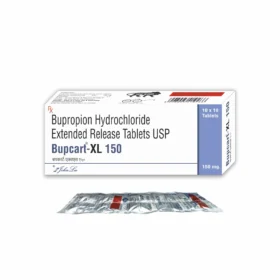
Bupcart-XL 150
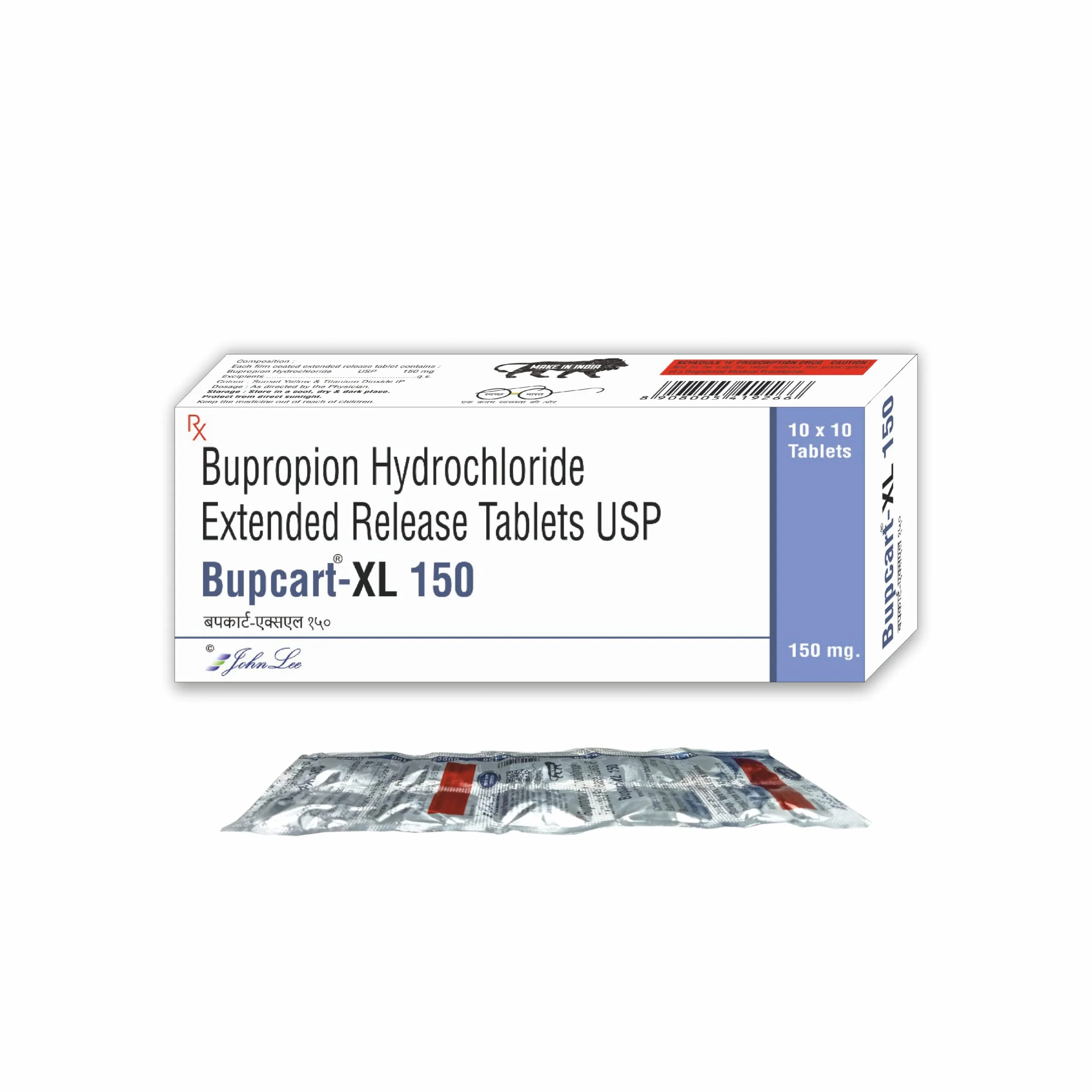
Bupcart-XL 150 (Bupropion 150 mg XL) — NDRI antidepressant for major depression and smoking cessation. once-daily XL — better adherence than SR.
✓ Medically reviewed by Morgan Ellis — Pharmacy Researcher · 8 years experience · Last reviewed: May 2026
⚡ Quick Answer
Bupcart-XL 150 (Bupropion 150 mg, extended-release (XL)) is a dopamine-noradrenaline reuptake inhibitor (NDRI) used for major depression, smoking cessation (Zyban indication), and seasonal affective disorder. Distinct profile: stimulating rather than sedating, weight-neutral or weight-reducing, no sexual side effects. XL is once-daily — better adherence than the BID SR formulation.
📦 Every order is covered by our Reshipment Assurance Policy — if your parcel does not arrive within 20 business days, we reship it.
Why order from MedsBase
Bupcart-XL 150 at MedsBase is supplied directly from a WHO-GMP certified manufacturer in plain, discreet packaging. Every order is covered by our Reshipment Assurance Policy — 20-business-day arrival window or we reship at no charge — and qualifies for our customer loyalty programme. Worldwide shipping is available to most destinations.
What Bupcart-XL 150 is and how it works
Bupcart-XL 150 is a 150 mg bupropion extended-release (XL) tablet supplied by Cardinal Healthcare. Bupropion is the only widely-prescribed antidepressant whose primary action is dopamine-noradrenaline reuptake inhibition — not serotonin reuptake. This makes it pharmacologically distinct from SSRIs/SNRIs/TCAs and explains its different side-effect signature.
The clinical translation: bupropion does not cause sexual dysfunction, does not cause weight gain (often weight loss), and is activating rather than sedating. The trade-off is a meaningful increase in seizure risk at high doses, an absolute contraindication in eating disorders, and an insomnia/anxiety burden in some patients.
Indications and dosing
| Indication | Starting | Target | Max |
|---|---|---|---|
| Major depression — XL | 150 mg OD morning | 300 mg OD | 450 mg |
| Major depression — SR | 150 mg OD × 3 d → BID | 150 mg BID | 200 mg BID |
| Smoking cessation | 150 mg OD × 3 d → BID (SR) or 150 mg OD × 1 wk → 300 mg (XL) | 150 mg BID or 300 mg OD × 7–12 weeks | — |
| Seasonal affective disorder (XL) | 150 mg OD autumn start | 300 mg OD | — |
| SSRI sexual dysfunction (off-label) | 75–150 mg OD | 150 mg OD | 300 mg |
Important safety considerations
Bupropion lowers seizure threshold. Absolute contraindications: any seizure disorder, current or historical anorexia nervosa or bulimia, abrupt withdrawal from alcohol or sedatives. The seizure risk at 300 mg/day is approximately 0.1%; at 450 mg/day it is approximately 0.4% — a 4-fold rise. Single doses must not exceed 150 mg (SR) or 450 mg total (XL).
Anorexia and bulimia are absolute contraindications — both because eating-disorder physiology lowers seizure threshold (electrolyte derangement, ketotic state) and because bupropion’s appetite-suppressant effect can entrench restrictive behaviour. This is one of the few clear “do not use” boxes in psychiatry.
14-day washout each direction. Concurrent use risks hypertensive crisis.
All antidepressants carry an FDA black-box warning for increased suicidal ideation in patients under 25.
Common side effects
- Stimulating profile: insomnia (avoid evening dosing), dry mouth, headache, agitation, tremor.
- Cardiovascular: small BP rise, tachycardia, palpitations.
- Weight: weight loss is common — bupropion is one of the components of the Contrave anti-obesity combination.
- Sexual function: none; often improves SSRI-induced sexual dysfunction when added.
- GI: nausea (worse with high single doses), constipation.
- Skin: rash, occasionally serious cutaneous reactions.
Drug interactions
- MAOIs — absolute contraindication.
- Strong CYP2B6 inducers/inhibitors (rifampicin, ritonavir, efavirenz, ticlopidine, clopidogrel, prasugrel) — alter bupropion levels; CYP2B6 inhibition by clopidogrel reduces hydroxybupropion (active metabolite) — modest clinical impact.
- CYP2D6 substrates (most TCAs, many antipsychotics, type 1c antiarrhythmics, codeine, tramadol, tamoxifen) — bupropion is a strong CYP2D6 inhibitor; raises substrate levels.
- Other seizure-threshold-lowering drugs (tramadol, fluoroquinolones, theophylline, antipsychotics) — additive risk.
Pregnancy, breastfeeding, paediatric
Pregnancy: limited data; not first-line antidepressant in pregnancy but no clear teratogenic signal. Breastfeeding: passes into milk; sometimes preferred for postpartum depression where weight gain or sedation would be problematic. Paediatric: not first-line; off-label use for ADHD is described.
Storage
Store at 15–25 °C in original packaging.
Frequently Asked Questions
Why is Bupcart-XL 150 sometimes preferred over SSRIs?
Three reasons: no sexual side effects, weight-neutral or weight-reducing, and activating rather than sedating. Patients who develop SSRI-induced sexual dysfunction or weight gain often do well on bupropion, alone or as augmentation.
Can Bupcart-XL 150 be used to quit smoking?
Yes — bupropion is FDA-approved for smoking cessation under the trade name Zyban. The dose schedule is the same as for depression (300 mg/day). Start 1–2 weeks before the planned quit date and continue for 7–12 weeks. The mechanism for nicotine cessation is partly noradrenergic withdrawal-symptom suppression and partly dopamine-mediated craving reduction.
How is Bupcart-XL 150 different from a stimulant?
Bupropion has weak stimulant properties but is not a controlled substance, does not produce euphoria at therapeutic doses, and has no abuse potential in oral form. Recreational misuse via insufflation has been described but is rare and unrewarding compared to true stimulants.
Can Bupcart-XL 150 cause anxiety?
Yes — the activating profile produces anxiety, jitteriness, or insomnia in some patients, particularly in the first 1–2 weeks. This is why bupropion is generally not first-line for depression with prominent anxiety symptoms. Take in the morning to minimise insomnia.
Why is Bupcart-XL 150 contraindicated in eating disorders?
Anorexia and bulimia produce electrolyte derangement and ketotic state, both of which lower seizure threshold. Bupropion further lowers seizure threshold, and the combination produced unacceptable seizure rates in early trials. The contraindication is absolute, not relative.
Will Bupcart-XL 150 keep me awake at night?
If taken in the evening, often yes. Standard practice is to take Bupcart-XL 150 in the morning; for SR, BID dosing is morning and early afternoon (not evening).
How do I stop Bupcart-XL 150?
Bupropion has a relatively short half-life and modest withdrawal — but a taper over 1–2 weeks is still the conservative move. Halve the dose for 1–2 weeks, then stop.
Can Bupcart-XL 150 be combined with an SSRI?
Yes — common combination, particularly when adding bupropion to an SSRI to counter sexual side effects or to augment partial response. Both drugs influence different neurotransmitter systems; combination is well-tolerated. Specialist supervision recommended.
What is the seizure risk?
At 300 mg/day (typical target dose), seizure risk is approximately 0.1% per year — low but real. At 450 mg/day, the risk rises to approximately 0.4%. The risk is concentrated in patients with predisposing factors: head injury history, seizure disorder, eating disorder, alcohol or sedative withdrawal.
What if I miss a dose?
Take as soon as remembered the same day. Do not double up — the dose-dependent seizure risk is the reason. If close to next dose, skip.
Other Mental Health Medications
- Mirtaz (Mirtazapine NaSSA)
- Agoprex (Agomelatine — melatonergic)
- Flunil (Fluoxetine SSRI)
- Duvanta (Duloxetine SNRI)
- Champix (Varenicline — smoking cessation alternative)
More options in Mental Health and Psychiatric Medications
Ranked by recent MedsBase order volume — what other customers in this category are picking.
| Strength | 150 mg |
|---|---|
| Quantity | 30 Tablet/s, 60 Tablet/s, 90 Tablet/s, 180 Tablet/s, 360 Tablet/s |
 Bupcart-XL 150
Q & A
Bupcart-XL 150
Related products








Reviews
There are no reviews yet