








✓ Medically reviewed by · Last reviewed: May 2026
Pharmacy Researcher · 8 years experience
Pharmacy researcher with 8 years reviewing clinical drug information, generic formulation equivalence, and international pharmaceutical standards. Focuses on patient-facing accuracy in medication education.
cardiovascular-kidney-metabolic syndrome — Cardiovascular-Kidney-Metabolic Syndrome: 7 Proven Facts About CKM Stages and Prevention. Read on for an evidence-backed guide covering everything you need to know.
Nearly 8 in 10 young adults already show signs of cardiovascular-kidney-metabolic syndrome — but most have never heard of it.
A landmark analysis published in September 2026 found that 79% of adults in their 20s show at least one sign of cardiovascular-kidney-metabolic (CKM) syndrome, a newly defined condition that links dysfunction in the heart, kidneys, and metabolic system. If you have high blood pressure, elevated blood sugar, or excess body weight — even mildly — you may already be in one of the four CKM stages.
By the end of this article, you will understand exactly what cardiovascular-kidney-metabolic syndrome is, which stage you might be in, what the research says works to slow or reverse it, and the medications that can protect multiple organs at once. One fact in the treatment section surprises almost everyone.
Key Takeaways
- Cardiovascular-kidney-metabolic syndrome is a new framework that links heart, kidney, and metabolic health into four progressive stages — and most adults are already in stage 1 or 2.
- The AHA introduced CKM staging in 2023 because treating one organ in isolation misses the bigger picture — the three systems are deeply interconnected.
- 79% of young adults show signs — but early-stage CKM syndrome is largely reversible with lifestyle changes and, when needed, the right medications.
- Some medications protect all three systems at once (one drug class stands out for this — covered in the treatment section).
- The CKM framework just expanded in September 2026 to include the liver, revealing an even broader picture of metabolic-organ crosstalk.
- What Is Cardiovascular-Kidney-Metabolic Syndrome?
- The 4 Stages of CKM Syndrome
- What Causes CKM Syndrome? Risk Factors
- How Is CKM Syndrome Diagnosed?
- How Is CKM Syndrome Treated?
- What Does the Research Say?
- How to Prevent CKM Syndrome
- Frequently Asked Questions
- The Bottom Line
What Is Cardiovascular-Kidney-Metabolic Syndrome?
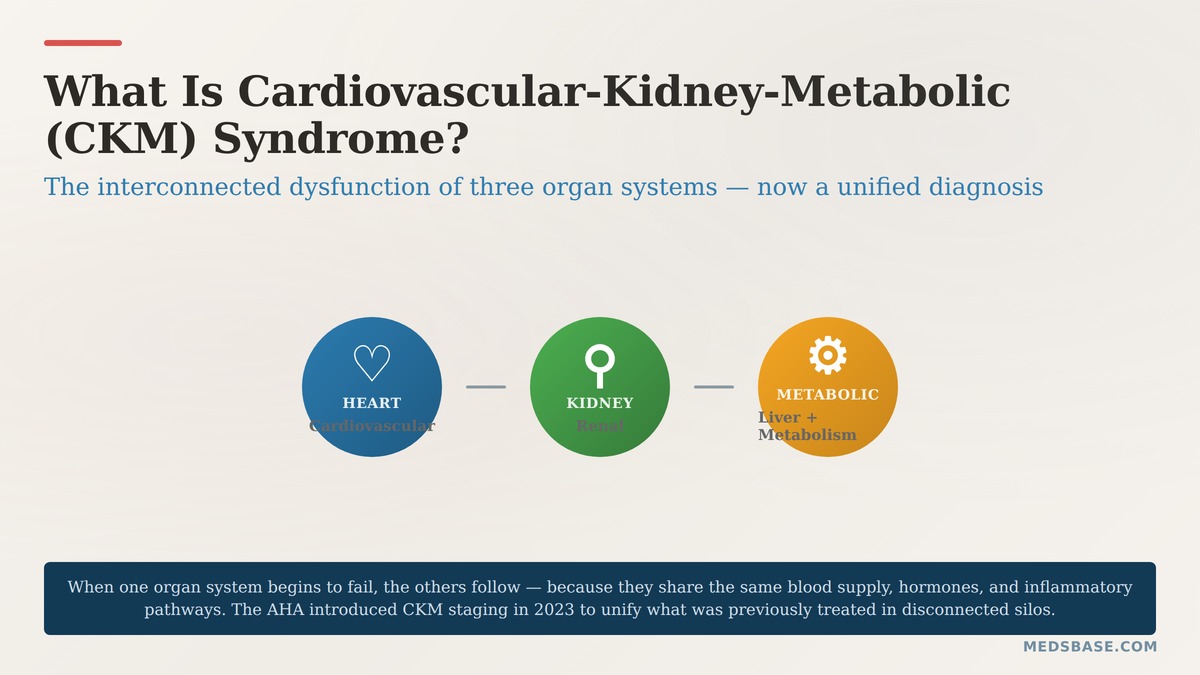
Cardiovascular-kidney-metabolic syndrome is a health condition defined by the American Heart Association in 2023 that describes the progressive, interconnected dysfunction of the heart, blood vessels, kidneys, and metabolic system. Rather than treating high blood pressure, elevated blood sugar, and reduced kidney function as separate problems, the CKM framework recognizes them as different faces of the same underlying disease process.
In plain terms: your heart, kidneys, and metabolism do not fail in isolation. When one starts to struggle, the others follow — because they share the same blood supply, the same hormones, and the same inflammatory pathways. The CKM model finally gives doctors and patients a unified way to think about and treat what was previously managed in disconnected silos.
The concept has exploded in the research world. A bibliometric analysis published in July 2026 found that CKM syndrome publications — the acronym for cardiovascular-kidney-metabolic syndrome — grew from zero in early 2023 to 717 papers in 2025 alone — and the pace is still accelerating. A review published just yesterday (September 2, 2026) formally proposed integrating the liver into the CKM framework, expanding it to a four-organ model.
Quick Answer: Cardiovascular-kidney-metabolic syndrome is the AHA’s unified framework for understanding how heart disease, kidney disease, and metabolic disorders (obesity, diabetes, high cholesterol) are biologically connected and progress together through four stages. Most adults are already in stage 1 or 2 without knowing it.
Cardiovascular-kidney-metabolic syndrome: The 4 Stages of CKM Syndrome
The American Heart Association defined four progressive stages of cardiovascular-kidney-metabolic syndrome. Knowing your stage is the first step to understanding what you can do about it.
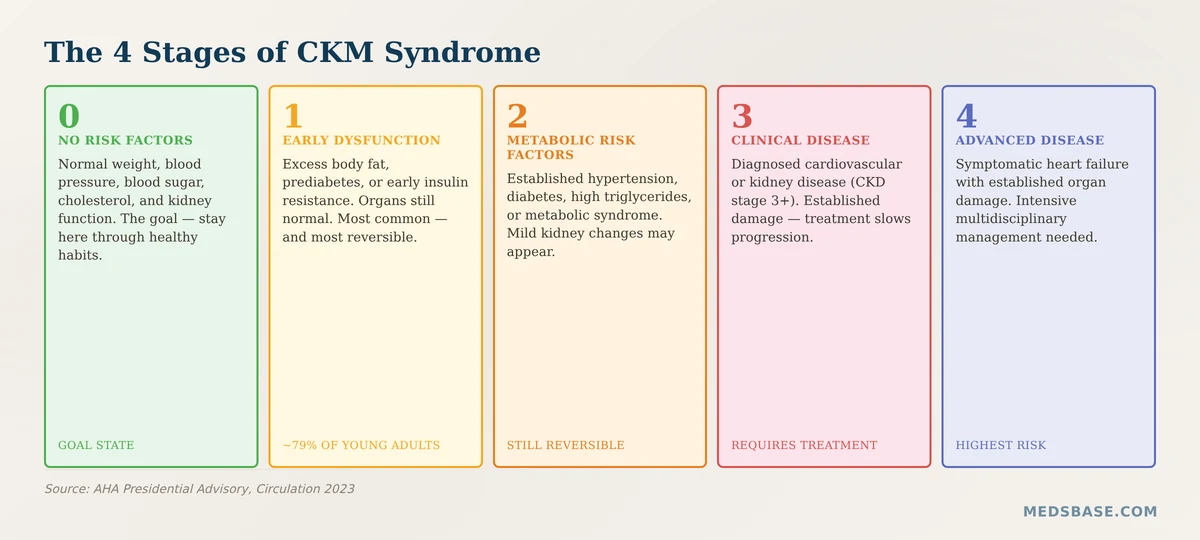
Stage 0 — No Risk Factors You have normal weight, normal blood pressure, normal blood sugar, normal cholesterol, and no evidence of kidney or cardiovascular disease. This is the goal — stay here through healthy habits.
Stage 1 — Excess Body Fat or Early Metabolic Dysfunction You carry excess body fat (especially around the abdomen), may have impaired fasting glucose (prediabetes), or show early signs of insulin resistance. Your blood pressure and kidney function are still normal. This is the most common stage — and the most reversible.
Stage 2 — Metabolic Risk Factors Present You now have one or more established metabolic risk factors: high blood pressure, high triglycerides, type 2 diabetes, or metabolic syndrome. Your kidneys may show mildly reduced function (eGFR slightly below normal), but there is no established cardiovascular or advanced kidney disease yet. Many people in their 30s and 40s sitting in a doctor’s office with “mild hypertension” or “borderline diabetes” are in stage 2.
Stage 3 — Clinical Cardiovascular or Kidney Disease You have diagnosed cardiovascular disease (coronary artery disease, heart failure, stroke history) or chronic kidney disease (stage 3 or higher). At this stage, the damage is established, but treatment can still slow or halt progression.
Stage 4 — Advanced Disease with Heart Failure This is the most severe stage, defined by symptomatic heart failure in the setting of established cardiovascular and/or kidney disease. Patients in stage 4 need intensive multidisciplinary management.
Here is where it gets interesting: the 79% figure from the September 2026 study means the vast majority of the population is somewhere in stages 1 through 3. But many people in stage 1 or early stage 2 can reverse course completely with the right combination of lifestyle changes and, when needed, medication.
Cardiovascular-kidney-metabolic syndrome: What Causes CKM Syndrome? Risk Factors
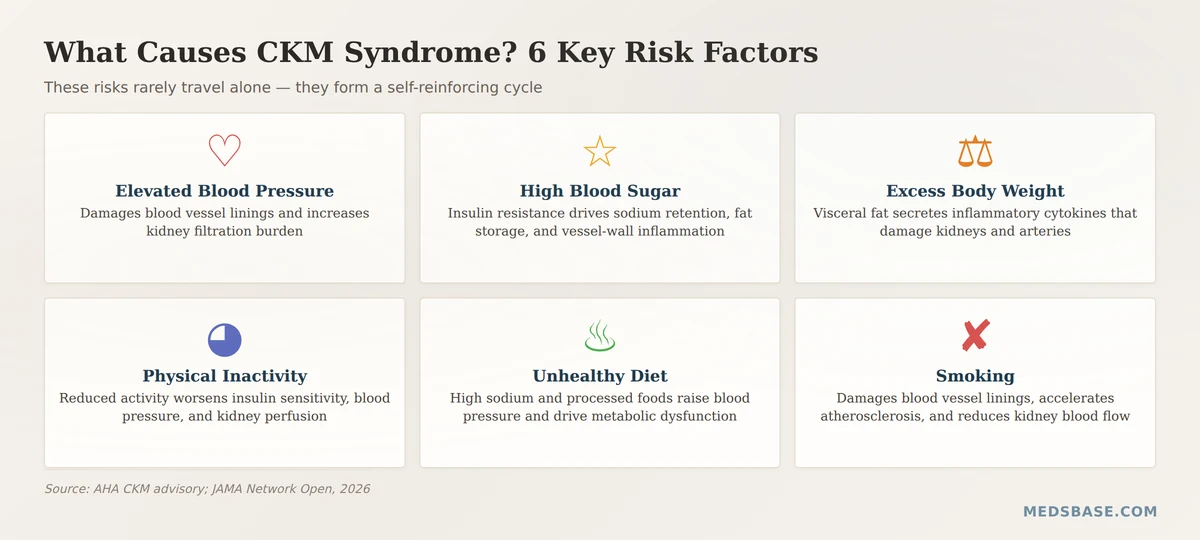
Cardiovascular-kidney-metabolic syndrome does not have a single cause. It is driven by a cluster of risk factors that feed each other in a vicious cycle.
Insulin resistance. When your cells stop responding normally to insulin, your pancreas produces more to compensate. Excess insulin promotes sodium retention by the kidneys (raising blood pressure), fat storage (worsening metabolic dysfunction), and inflammation of blood vessel walls (accelerating atherosclerosis). Insulin resistance is arguably the central driver of cardiovascular-kidney-metabolic syndrome.
Chronic low-grade inflammation. Excess body fat — especially visceral fat around the organs — secretes inflammatory molecules called cytokines. These cytokines damage the delicate lining of blood vessels, impair kidney filtration, and worsen insulin resistance. The result is a self-reinforcing loop: inflammation drives metabolic dysfunction, which drives more inflammation.
Oxidative stress. When your body’s antioxidant defences cannot keep up with free-radical production, oxidative stress damages proteins, fats, and DNA in kidney cells, heart muscle, and blood vessels. This accelerates the progression through CKM stages.
Sodium and fluid overload. High dietary sodium intake raises blood pressure, increases the filtration burden on the kidneys, and — over time — stiffens the arteries. Even modest sodium reduction can produce measurable improvements in blood pressure and kidney function.
But there is a catch: these risk factors rarely travel alone. A person with insulin resistance often has high blood pressure. A person with high blood pressure often has reduced kidney function. This clustering is why the CKM framework exists in the first place — treating one risk factor while ignoring the others typically fails.
How Is CKM Syndrome Diagnosed?
There is no single “CKM test.” Diagnosis involves assessing where you sit across all three organ systems using routine measurements your doctor likely already orders:
Metabolic assessment: Body mass index (BMI), waist circumference, fasting blood glucose, HbA1c, lipid panel (LDL, HDL, triglycerides).
Kidney assessment: Estimated glomerular filtration rate (eGFR) from a blood creatinine test, and urine albumin-to-creatinine ratio (UACR) to check for protein leakage — often the earliest sign of kidney stress.
Cardiovascular assessment: Blood pressure (both in-office and ideally home monitoring), and if indicated, an echocardiogram or coronary calcium score for people in stage 2 or higher.
The key insight of the CKM framework is that you cannot interpret any single number in isolation. A person with “borderline” blood pressure who also has prediabetes and mildly elevated UACR is at substantially higher risk than someone with the same blood pressure but normal metabolic and kidney markers. The whole picture matters.
How Is CKM Syndrome Treated?
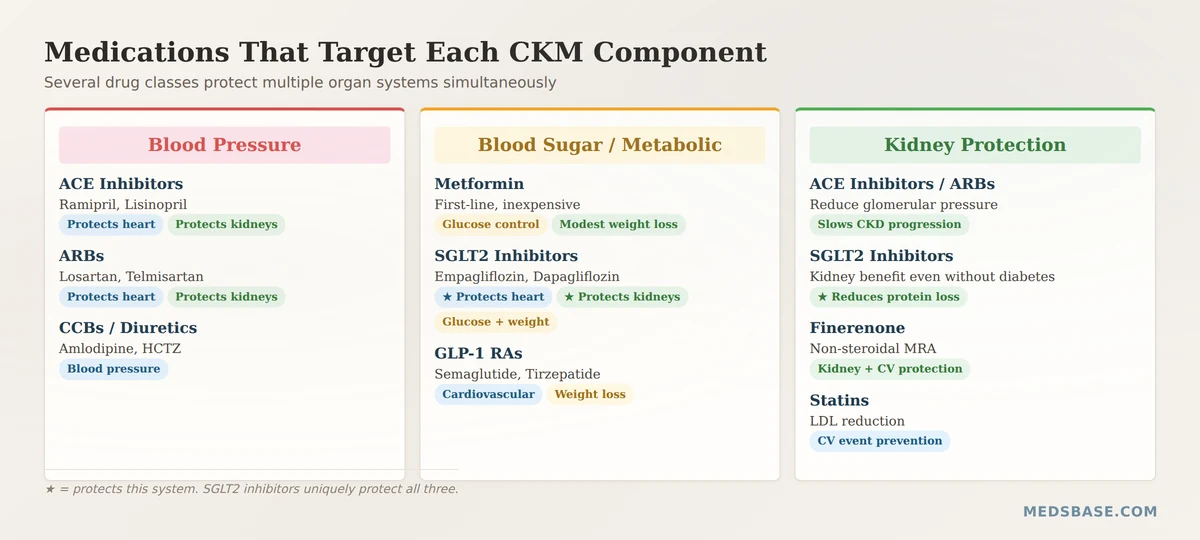
Treatment for cardiovascular-kidney-metabolic syndrome is not about picking one medication — it is about choosing therapies that address as many of the interconnected systems as possible with as few drugs as necessary. This is the principle of organ-protective prescribing.
Blood pressure management. Blood pressure control is foundational. ACE inhibitors (like ramipril, lisinopril) and angiotensin receptor blockers (ARBs, like losartan, telmisartan) are often used first because they lower blood pressure AND directly protect the kidneys by reducing pressure inside the glomeruli. If you need blood pressure medications, you can browse the full range at MedsBase.
Blood sugar control. For people with prediabetes or type 2 diabetes, metformin is the usual first-line choice. It is inexpensive, well-studied, and has modest weight-loss benefits. But one drug class stands out for its multi-organ protection: SGLT2 inhibitors.
SGLT2 inhibitors (empagliflozin, dapagliflozin) were originally developed as diabetes drugs, but large trials showed they also reduce heart failure hospitalizations and slow kidney disease progression — even in people WITHOUT diabetes. They protect the heart, kidneys, and metabolic system simultaneously, making them a cornerstone of cardiovascular-kidney-metabolic syndrome treatment. GLP-1 receptor agonists (semaglutide, tirzepatide) provide similar multi-organ benefits with additional weight loss.
Kidney protection. Beyond blood pressure and glucose control, medications that directly reduce protein loss in the urine (ACE inhibitors, ARBs, SGLT2 inhibitors, and in some cases finerenone) are central to preserving kidney function. The goal is not just “normal labs” — it is slowing the rate of decline.
Cholesterol management. Statins remain the first-line lipid-lowering therapy. For people who cannot tolerate statins or need additional LDL reduction, alternatives like ezetimibe or newer oral PCSK9 inhibitors (recently FDA-approved) are available. Lipid targets in CKM syndrome are often more aggressive than standard guidelines because these patients have compound risk.
The medication overlap. Here is what surprises most people: many of the drugs used to treat one CKM component actively protect the others. An ACE inhibitor lowers blood pressure AND protects the kidneys. An SGLT2 inhibitor lowers blood sugar AND reduces heart failure risk AND slows kidney decline. This overlap is not coincidence — it reflects the shared biology of CKM syndrome. For diabetes management options that protect the whole metabolic-cardiovascular system, you can explore MedsBase diabetes options.
Research Spotlight: The SGLT2 inhibitor drug class is one of the most important therapeutic advances in CKM syndrome management. Originally approved for type 2 diabetes, these drugs were subsequently shown in large randomized trials to reduce hospitalization for heart failure by approximately 30% and slow the progression of chronic kidney disease — benefits that occur independently of their glucose-lowering effects.
What Does the Research Say?
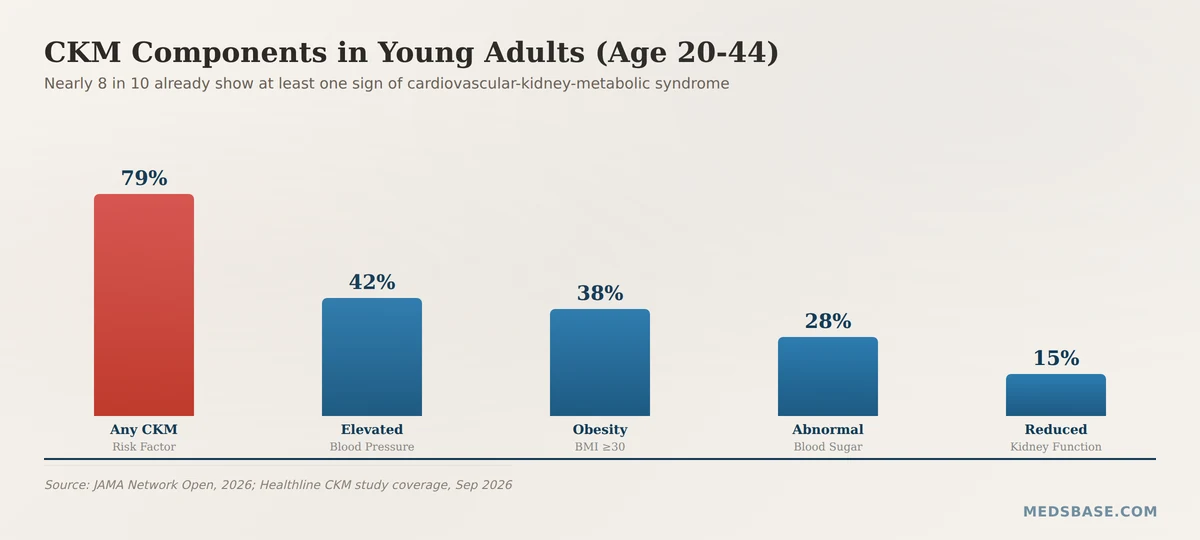
The evidence base for cardiovascular-kidney-metabolic syndrome is growing rapidly, with major findings published just in the last few months.
| Study | Year | Finding | Source |
|---|---|---|---|
| AHA Presidential Advisory | 2023 | Defined the 4-stage CKM syndrome framework; called for integrated screening | Circulation |
| CKM in Young Adults | 2026 | 79% of adults aged 20-44 showed at least one CKM component; associated with early arterial changes | JAMA Network Open / Healthline |
| GDM and Postpartum CKM | 2026 | Gestational diabetes significantly increased risk of postpartum obesity, hypertension, hyperlipidemia, T2D, metabolic syndrome, CKD, and CVD | JAMA Network Open |
| Liver Integration into CKM | 2026 | Proposed formally adding the liver (via MASLD) as a fourth organ system in the CKM construct | Current Opinion in Nephrology and Hypertension |
| Bibliometric Analysis of CKM | 2026 | 717 papers published in 2025; field identified as one of the fastest-growing in preventive medicine | Frontiers in Endocrinology |
What this means for you: The research is not theoretical. Large-scale studies show that early identification of CKM syndrome — even in people who feel healthy — predicts future heart attacks, kidney failure, and premature death. But the same research shows that treating the components aggressively can dramatically change that trajectory. The window for intervention is wider than most people think.
How to Prevent CKM Syndrome
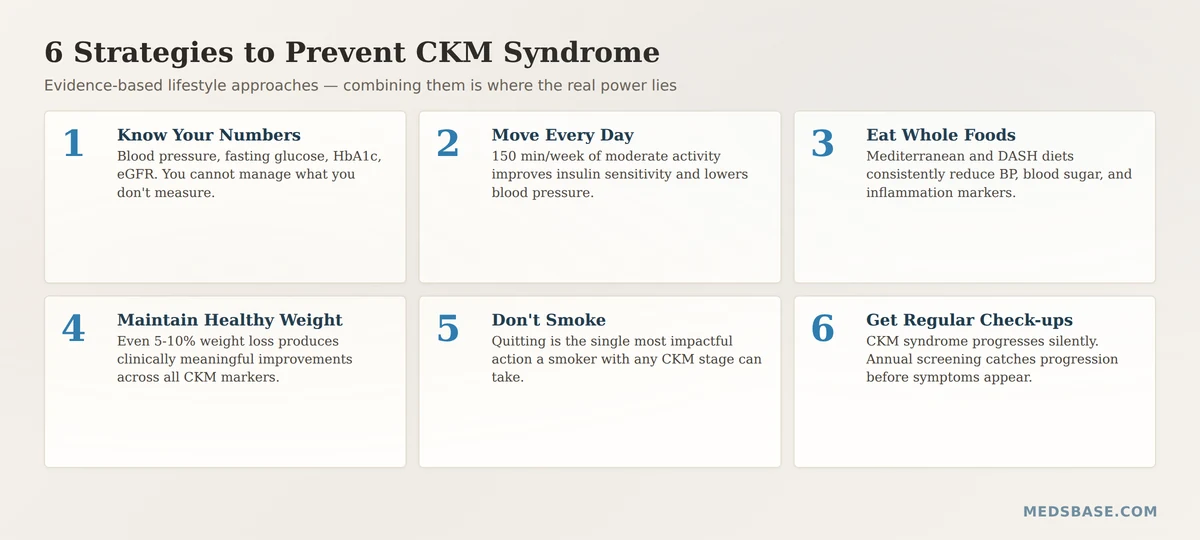
Prevention of cardiovascular-kidney-metabolic syndrome comes down to six evidence-backed strategies. None of them are secrets — but combining them is where the power lies.
1. Know your numbers. You cannot manage what you do not measure. At minimum, know your blood pressure, fasting blood glucose, HbA1c, and eGFR. If you have not had these checked in the last year, schedule them. Stage 1 CKM syndrome has zero symptoms — the only way to catch it is through screening.
2. Move every day. Physical activity improves insulin sensitivity, lowers blood pressure, reduces inflammation, and supports healthy kidney function — all through independent mechanisms. The recommendation is 150 minutes of moderate activity per week, but even 30 minutes of walking daily provides measurable protection.
3. Eat whole foods, mostly plants. Diets rich in vegetables, fruits, whole grains, legumes, and healthy fats (olive oil, nuts, fish) consistently reduce blood pressure, improve blood sugar control, and lower inflammation markers. The Mediterranean and DASH diets have the strongest evidence base for CKM prevention.
4. Maintain a healthy weight. Excess body fat — particularly visceral fat — drives insulin resistance, inflammation, and the hormonal dysregulation at the heart of CKM syndrome. Even modest weight loss (5-10% of body weight) produces clinically meaningful improvements in blood pressure, glucose control, and kidney function markers.
5. Do not smoke. Smoking damages blood vessel linings, accelerates atherosclerosis, reduces kidney blood flow, and worsens insulin resistance. Quitting is the single most impactful thing a smoker with any CKM stage can do.
6. Get regular medical check-ups. CKM syndrome progresses silently. Annual screening with a primary care provider — including the blood and urine tests listed above — is the only reliable way to catch stage progression before symptoms appear.
Who Is This For? Anyone with a family history of heart disease, diabetes, or kidney disease; anyone carrying excess weight; anyone with “borderline” blood pressure or blood sugar numbers; and anyone in their 30s or 40s who wants to understand their actual cardiovascular risk rather than waiting for a crisis.
Who Should Take Extra Caution? If you already have diagnosed heart disease, kidney disease, or diabetes, you are in stage 3 or 4 of CKM syndrome. Treatment at this point focuses on slowing progression and preventing complications — and it works best when all three systems are managed together. Do not stop or change any prescribed medication without consulting your doctor.
Related Reading
- How to Manage Blood Pressure Naturally
- Diabetes Management: Medications and Lifestyle
- Living Well with Chronic Conditions
- Inhaler Technique Mistakes: Are You Getting Your Full Dose? — if you have respiratory comorbidities alongside CKM syndrome
Frequently Asked Questions
Q: What is cardiovascular-kidney-metabolic syndrome?
A: Cardiovascular-kidney-metabolic syndrome is a unified health framework defined by the American Heart Association that recognizes heart disease, kidney disease, and metabolic disorders (obesity, diabetes, high cholesterol) as biologically connected conditions that progress together through four stages. It shifts the focus from treating each organ in isolation to managing the whole interconnected system.
Q: How many stages of CKM syndrome are there?
A: There are five stages in total — Stage 0 (no risk factors) through Stage 4 (advanced disease with symptomatic heart failure). Stage 0 is the goal. Stages 1 and 2 are the most common and the most reversible. Stages 3 and 4 involve established organ damage and require intensive multidisciplinary management.
Q: Can young adults have CKM syndrome?
A: Yes. A large 2026 study found that 79% of adults in their 20s already show at least one measurable sign of cardiovascular-kidney-metabolic syndrome — most commonly excess body weight, elevated blood pressure, or abnormal blood sugar. The condition is not reserved for older adults. Early detection in young adulthood provides the widest window for reversal.
Q: What medications treat CKM syndrome?
A: Treatment typically involves medications that target multiple organ systems simultaneously: ACE inhibitors or ARBs (blood pressure + kidney protection), SGLT2 inhibitors (blood sugar + heart failure reduction + kidney protection), GLP-1 receptor agonists (blood sugar + weight loss + cardiovascular protection), and statins (cholesterol). The goal is organ-protective prescribing — choosing drugs that address as many CKM components as possible.
Q: How do you prevent CKM syndrome?
A: Prevention centers on six evidence-based strategies: know your blood pressure, glucose, and kidney numbers through regular screening; maintain 150 minutes of physical activity per week; eat a Mediterranean or DASH-style diet rich in whole foods; maintain a healthy weight; do not smoke; and get annual medical check-ups that include blood and urine testing. Early-stage CKM syndrome is largely reversible with these measures.
Q: Is CKM syndrome reversible?
A: In stages 1 and early stage 2, yes — cardiovascular-kidney-metabolic syndrome is largely reversible through weight loss, improved diet, increased physical activity, and blood pressure and glucose control. Once established organ damage occurs (stages 3-4), the goal shifts from reversal to slowing progression and preventing complications, but significant improvements in quality of life and life expectancy are still achievable.
Q: Does CKM syndrome include the liver?
A: The original 2023 AHA framework did not include the liver, but a review published on September 2, 2026 formally proposed integrating the liver — specifically metabolic dysfunction-associated steatotic liver disease (MASLD) — as a fourth organ system in the CKM construct. The framework is actively evolving as research reveals deeper connections between metabolic and organ health.
Q: What is the difference between CKM syndrome and metabolic syndrome?
A: Metabolic syndrome is a cluster of risk factors (high blood pressure, high blood sugar, excess abdominal fat, abnormal cholesterol/triglycerides). CKM syndrome is a broader, more recent framework that adds the cardiovascular system and kidneys to the picture and defines progressive stages of organ damage. Metabolic syndrome is essentially part of CKM stage 2 — CKM captures the full arc from risk to disease.
The Bottom Line
Cardiovascular-kidney-metabolic syndrome is not a rare disease — it is the framework that best describes how most chronic disease develops in the modern world. The 79% prevalence figure in young adults is a wake-up call, but it is also an opportunity: the earlier you identify where you sit on the CKM spectrum, the more you can do to change your trajectory.
The single most impactful action you can take today is to know your numbers — blood pressure, fasting glucose, HbA1c, eGFR, and UACR. These five values tell you more about your long-term health risk than any symptom ever will. If you are carrying extra weight, have borderline blood pressure or blood sugar, or have a family history of any CKM component, talk to your doctor about a comprehensive screening. And if you need medications to manage any component of cardiovascular-kidney-metabolic syndrome, MedsBase carries a wide range of generics across blood pressure, diabetes, and chronic disease categories.
What to read next:
- Wondering how your blood pressure medication compares to alternatives? Read: ACE Inhibitors vs ARBs: Which Blood Pressure Medication Is Right for You?
- Managing a chronic respiratory condition alongside metabolic issues? Read: Inhaler Technique Mistakes — Are You Getting Your Full Dose?
Medical Disclaimer: This article is for educational purposes only and does not constitute medical advice. Do not stop, start, or change any medication without consulting your healthcare provider. If you have concerns about your heart, kidney, or metabolic health, speak with your doctor about appropriate screening and treatment options.

Written by
Sophie ChenPharmaceutical Content Researcher · 8 years experience
Sophie Chen is a pharmaceutical content researcher with 8 years covering generic medication access and clinical pharmacology. She specialises in international regulatory frameworks, bioequivalence standards, and patient-facing education on therapeutic drug classes. She is not a clinician.