








✓ Medically reviewed by · Last reviewed: May 2026
Pharmacy Researcher · 8 years experience
Pharmacy researcher with 8 years reviewing clinical drug information, generic formulation equivalence, and international pharmaceutical standards. Focuses on patient-facing accuracy in medication education.
CKM syndrome in young adults — CKM Syndrome in Young Adults — What the 79% Statistic Means for Your Health. Read on for an evidence-backed guide covering everything you need to know.
[Key Takeaways box]
[TABLE OF CONTENTS]
- What Is CKM Syndrome? — The 30-Second Definition
- Why Do the Heart, Kidneys, and Metabolism Form a Single Syndrome?
- What Are the 4 Stages of CKM Syndrome? — Stage by Stage
- 79% of Young Adults Affected — How Reliable Is That Number?
- How Is CKM Syndrome in Young Adults Diagnosed?
- What Does the Research Say About CKM?
- How to Reverse Early-Stage CKM — Evidence-Based Steps
- CKM Syndrome vs Individual Risk Factors — Why the Syndrome Label Matters
- Related Reading
- Frequently Asked Questions
- The Bottom Line
Hero Intro
CKM syndrome in young adults — most people believe you are either healthy or you are not — that disease arrives like a switch being flipped, one day you are fine and the next you have a diagnosis. The reality, as modern medicine is increasingly revealing, is far more nuanced. For decades, doctors treated high blood pressure, kidney dysfunction, and metabolic problems like obesity and diabetes as separate conditions that occasionally overlapped. But a growing body of evidence — culminating in a landmark 2023 advisory from the American Heart Association — shows that these conditions are not separate at all. They are manifestations of a single, interconnected disease process called cardiovascular-kidney-metabolic syndrome, or CKM syndrome. And the most startling finding to emerge since then is that the vast majority of young adults are already on its earliest stages, whether they know it or not.
CKM syndrome in young adults — by the time you finish reading, you will understand what CKM syndrome is, which of its four stages you might be in, the simple tests that can detect it years before symptoms appear, and the evidence-based steps that researchers say can halt or even reverse its progression. One specific blood test — which most people under 40 have never had — reveals more about your long-term health trajectory than almost anything else in your annual physical. We will cover it in the diagnosis section.
What Is CKM Syndrome? — The 30-Second Definition {#what-is-ckm}
Quick Answer: Cardiovascular-kidney-metabolic (CKM) syndrome is a condition defined by the American Heart Association in 2023 that recognizes heart disease, kidney disease, and metabolic disorders (obesity, type 2 diabetes, insulin resistance) as a single, progressive disease spectrum rather than three separate problems. The condition is staged from 0 to 4 based on the number and severity of risk factors present. CKM syndrome in young adults is alarmingly common because early-stage metabolic dysfunction — excess body fat, borderline blood sugar, slightly elevated blood pressure — starts accumulating years before anyone notices.
CKM syndrome in young adults — the key insight behind CKM syndrome is that cardiovascular disease, chronic kidney disease, and metabolic dysfunction do not just coexist by coincidence. They actively fuel each other. Excess visceral fat releases inflammatory molecules that damage blood vessel linings and kidney filtration units simultaneously. Insulin resistance forces the kidneys to retain sodium, which raises blood pressure, which in turn damages both the heart and the kidneys further. It is a vicious cycle, and by the time a patient presents with one of these conditions in isolation — say, hypertension at age 45 — the other components have often been silently progressing for years.
CKM syndrome in young adults — the AHA introduced the CKM framework specifically to address this. Instead of waiting for a heart attack, a dialysis referral, or a diabetes diagnosis, CKM staging gives clinicians and patients a way to identify where they sit on the disease spectrum early — when intervention is most effective.
Why Do the Heart, Kidneys, and Metabolism Form a Single Syndrome? {#why-single-syndrome}
CKM syndrome in young adults — here is where the biology gets fascinating — and why treating these as separate problems has failed so many patients.
CKM syndrome in young adults — your cardiovascular system, your kidneys, and your metabolism are linked by shared blood supply, shared hormonal signaling, and shared pathways of damage. The kidneys receive roughly 20% of your cardiac output — more blood flow per gram of tissue than almost any other organ. This means they are exquisitely sensitive to changes in blood pressure, and they are among the first organs to show damage when blood vessels start to stiffen or narrow.
CKM syndrome in young adults — at the same time, metabolic dysfunction — particularly excess visceral fat — is not a passive condition. Fat tissue, especially the fat surrounding your internal organs, is hormonally active. It secretes inflammatory cytokines (like TNF-alpha and IL-6), disrupts insulin signaling, and releases free fatty acids into the bloodstream. Those fatty acids deposit in places they should not: in the liver (contributing to non-alcoholic fatty liver disease, or NAFLD), in skeletal muscle (worsening insulin resistance), and in the kidneys (driving glomerular damage).
CKM syndrome in young adults — the kidneys then respond to insulin resistance by retaining sodium, which raises blood pressure. The elevated blood pressure damages the delicate filtration units in the kidneys (the glomeruli), reducing kidney function. Reduced kidney function means less effective clearance of metabolic waste products, which further promotes inflammation and oxidative stress system-wide — including in the arteries of the heart and brain. And so the cycle tightens.
What Are the 4 Stages of CKM Syndrome? — Stage by Stage {#stages}
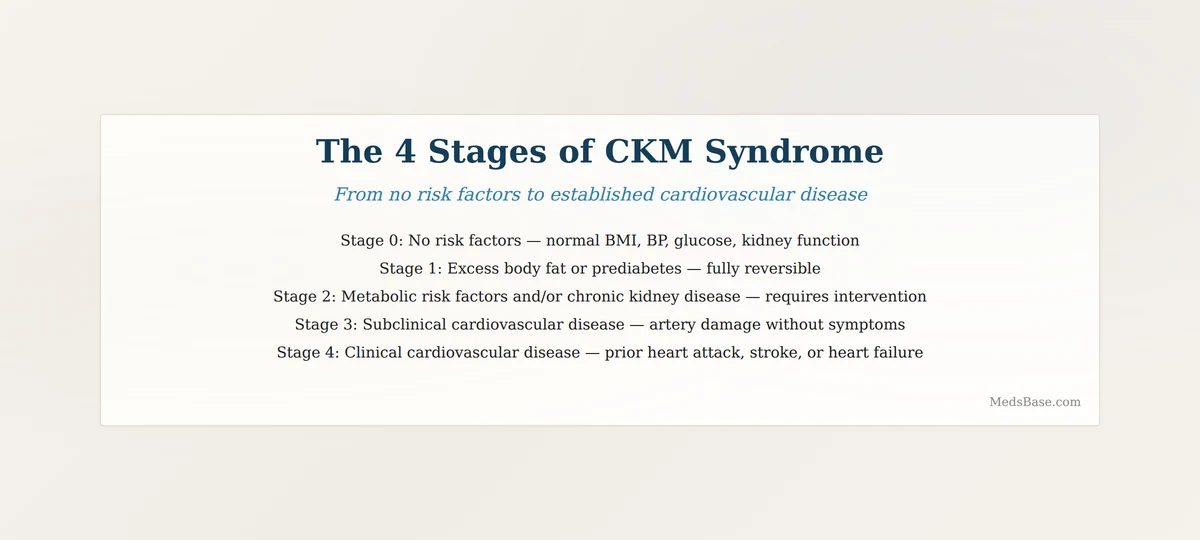
CKM syndrome in young adults — the AHA framework defines CKM syndrome across four stages. Understanding where you sit on this spectrum is the first step toward doing something about it.
Stage 0 — No CKM Risk Factors
CKM syndrome in young adults — in Stage 0, a person has normal body weight, normal blood pressure, normal blood glucose, normal kidney function, and normal lipid levels. They meet the criteria for ideal cardiovascular health as defined by the AHA’s Life’s Essential 8. In research cohorts, people in Stage 0 have the lowest lifetime risk of cardiovascular events and the longest healthspan. Stage 0 is the goal — but among adults over 20, it is increasingly rare.
Stage 1 — Excess or Dysfunctional Adiposity
CKM syndrome in young adults — stage 1 is defined by the presence of excess body fat, particularly visceral adiposity, or impaired glucose tolerance (prediabetes), without other overt cardiovascular or kidney disease. Key markers include a BMI of 25 or higher, a waist circumference exceeding 88 cm (women) or 102 cm (men), or an HbA1c between 5.7 and 6.4%. Stage 1 CKM syndrome in young adults is where the 79% stat lives: the vast majority of people in their twenties and thirties already carry at least one of these markers. The crucial point is that Stage 1 is fully reversible through lifestyle change alone in most people.
Stage 2 — Metabolic Risk Factors and/or Kidney Disease
CKM syndrome in young adults — stage 2 involves established metabolic risk factors — type 2 diabetes, hypertension, hypertriglyceridemia, or metabolic syndrome — and/or the presence of chronic kidney disease (CKD). CKD at this stage is defined by either a reduced estimated glomerular filtration rate (eGFR below 60 mL/min/1.73m²) or the presence of albuminuria (elevated protein in the urine). Stage 2 is where medical intervention typically begins, and the goal shifts from pure prevention to slowing progression.
Stage 3 — Subclinical Cardiovascular Disease
CKM syndrome in young adults — stage 3 is defined by the presence of subclinical (asymptomatic) cardiovascular disease. This means imaging or biomarker tests reveal arterial damage — such as coronary artery calcification detected on a CT scan, carotid plaque on ultrasound, or elevated cardiac biomarkers like high-sensitivity troponin or NT-proBNP — but the patient has not yet had a heart attack, stroke, or heart failure diagnosis. Stage 3 is a critical window because cardiovascular events are imminent but still preventable with aggressive risk factor management.
Stage 4 — Clinical Cardiovascular Disease
Stage 4 is established clinical cardiovascular disease: a prior heart attack, stroke, heart failure hospitalization, peripheral artery disease, or atrial fibrillation. At this stage, the goal of treatment shifts to secondary prevention — preventing the next event and slowing further kidney and metabolic deterioration. CKM syndrome in young adults reaching Stage 4 is rare, but when it happens, it is usually driven by a combination of severe, untreated Stage 2 risk factors — particularly early-onset hypertension and diabetes — layered on a genetic predisposition.
| Stage | Definition | Key Markers | Reversible? |
|---|---|---|---|
| Stage 0 | No risk factors | Normal BMI, BP, glucose, lipids, kidney function | N/A (ideal state) |
| Stage 1 | Excess adiposity / prediabetes | BMI ≥25, HbA1c 5.7-6.4%, increased waist circumference | Yes, through lifestyle |
| Stage 2 | Metabolic risk factors / CKD | Hypertension, Type 2 DM, hypertriglyceridemia, CKD (eGFR <60 or albuminuria) | Partially, with medical + lifestyle intervention |
| Stage 3 | Subclinical CVD | Coronary calcium, carotid plaque, elevated cardiac biomarkers | Slowed significantly, some regression possible |
| Stage 4 | Clinical CVD | Prior MI, stroke, heart failure, PAD, AFib | Progression slowed; events prevented |
| Source: AHA Presidential Advisory, Circulation 2023 |
79% of Young Adults Affected — How Reliable Is That Number? {#reliability}
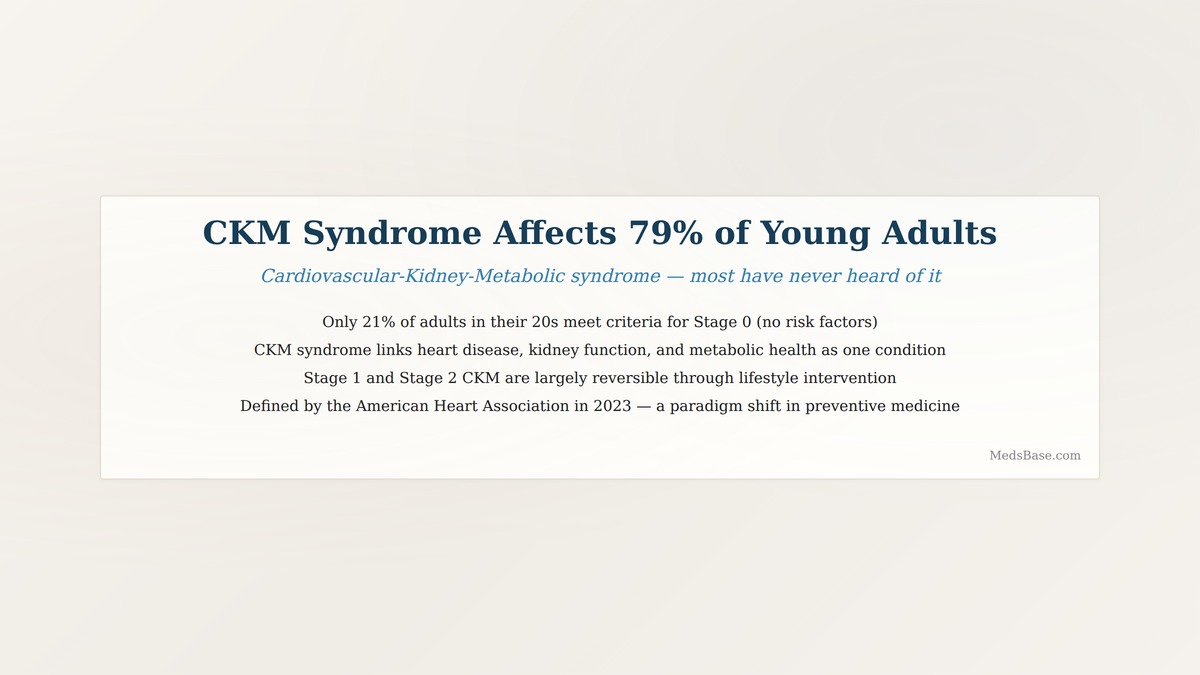
The 79% figure comes from a large cross-sectional analysis that assessed CKM syndrome stages in a nationally representative sample of U.S. adults. When researchers applied the AHA definition to adults aged 20-29, they found that only 21% met criteria for Stage 0 — meaning 79% already had at least Stage 1 markers.
It is worth unpacking what this statistic really means, because it is easy to misinterpret. The study defined Stage 1 as having a BMI of 25 or higher, an elevated waist circumference, or prediabetes (HbA1c 5.7-6.4%). Since approximately 74% of U.S. adults are overweight or obese, it follows almost mathematically that the vast majority of young adults would fall into Stage 1 or higher. The statistic is not saying that 79% of young adults have failing kidneys or blocked arteries. It is saying that 79% have the initial metabolic and adiposity markers that, left unaddressed, set the stage for the progression to later-stage disease.
This does not make the finding less important — it makes it more actionable. Stage 1 is the stage you can walk back. It is Stage 2 and Stage 3 where the damage becomes harder — and eventually impossible — to fully reverse.
How Is CKM Syndrome in Young Adults Diagnosed? {#diagnosis}
Quick Answer: CKM syndrome is diagnosed using a combination of standard measurements — blood pressure, BMI, waist circumference, fasting glucose or HbA1c, and a lipid panel — plus two kidney tests that many young adults have never had: an eGFR (estimated glomerular filtration rate) from a basic metabolic panel, and a urine albumin-to-creatinine ratio (UACR). Together, these tests map a person to one of the four CKM stages.
Here are the specific tests that matter, ranked from most commonly done to most commonly overlooked.
Blood pressure measurement: A reading of 130/80 mmHg or higher on two separate occasions places you at Stage 2 or higher. Blood pressure should be measured after 5 minutes of quiet sitting, with an appropriately sized cuff, on an empty bladder. Single elevated readings in a doctor’s office should be confirmed with home monitoring.
BMI and waist circumference: BMI of 25 or higher or waist circumference above 88 cm (women) or 102 cm (men) qualifies for at least Stage 1. Waist circumference is arguably more important than BMI because it specifically captures visceral adiposity — the hormonally active fat that drives CKM progression.
HbA1c and fasting glucose: An HbA1c of 5.7-6.4% indicates prediabetes (Stage 1-2). An HbA1c of 6.5% or higher indicates diabetes (Stage 2 or higher). Fasting glucose of 100-125 mg/dL = prediabetes; 126 mg/dL or higher on two occasions = diabetes.
Lipid panel: Triglycerides of 150 mg/dL or higher, HDL cholesterol below 40 mg/dL (men) or 50 mg/dL (women), and LDL cholesterol above guideline targets all contribute to CKM staging and cardiovascular risk assessment.
eGFR (estimated glomerular filtration rate): This is calculated from your serum creatinine level, age, and sex, and it appears on most basic metabolic panels — but people rarely look at it. An eGFR below 90 mL/min/1.73m² may indicate early kidney impairment, especially in young adults whose expected eGFR is well above 90. An eGFR below 60 mL/min/1.73m² is the threshold for Stage 3 CKD and places you in CKM Stage 2 or higher.
Urine albumin-to-creatinine ratio (UACR): This is the test most young adults have never had — and it is the one that matters most for catching early CKM. Albuminuria (UACR of 30 mg/g or higher) is often the earliest detectable sign of kidney involvement in CKM syndrome, appearing long before eGFR drops. It signals damage to the glomerular filtration barrier and is a powerful independent predictor of future cardiovascular events. The AHA advisory recommends UACR screening for all adults with any CKM risk factor.
Coronary artery calcium (CAC) score: A CAC scan is a low-radiation CT that measures calcified plaque in the coronary arteries. A score greater than 0 places a person in CKM Stage 3. CAC scoring is not recommended as a population-wide screening tool but can be useful for risk stratification in people with intermediate risk — particularly adults in their 40s and 50s with multiple Stage 2 risk factors.
If you have not had your eGFR checked or your urine tested for albumin in the past two years, and you carry any of the Stage 1 markers (overweight, elevated waist circumference, prediabetes), these are the tests to ask about at your next visit. MedsBase carries a range of generic medications across the conditions that CKM syndrome encompasses — from blood pressure treatments to diabetes management — and understanding where you are on the CKM spectrum is the first step toward making informed treatment decisions.
What Does the Research Say About CKM? {#research}
The CKM framework is new, but the research underpinning it spans decades. Here are the key studies.
| Study | Year | Key Finding | Source |
|---|---|---|---|
| AHA CKM Presidential Advisory | 2023 | Formal definition of CKM syndrome; 4-stage framework; screening and treatment recommendations linking heart, kidney, and metabolic care | Circulation |
| CKM prevalence in U.S. adults | 2026 | 79% of adults aged 20-29 have Stage 1+ CKM; only 21% are Stage 0; prevalence increases with age | JAMA |
| Chronic Kidney Disease Prognosis Consortium | 2024 | eGFR below 60 and UACR above 30 mg/g independently predict cardiovascular mortality; risk is multiplicative when both are abnormal | The Lancet |
| SGLT2 inhibitor cardiovascular outcomes trials | 2023 | SGLT2 inhibitors reduce cardiovascular death and kidney disease progression across the full spectrum of CKM — from diabetes to heart failure to CKD | New England Journal of Medicine |
| GLP-1 receptor agonists and CKM outcomes | 2024-2025 | GLP-1 RAs reduce major adverse cardiovascular events by 14-20% in people with type 2 diabetes and established CVD; emerging evidence for kidney protection | The Lancet Diabetes & Endocrinology |
How to Reverse Early-Stage CKM — Evidence-Based Steps {#reverse}
If you are in Stage 1 or early Stage 2, the evidence strongly supports that progression can be halted and often reversed. The strategy is built around the AHA’s Life’s Essential 8, adapted for CKM specifically.
1. Optimize Blood Pressure — Target Below 130/80 mmHg
Every 10 mmHg reduction in systolic blood pressure translates to a significant reduction in cardiovascular events and slower kidney function decline. For Stage 1, lifestyle alone — sodium reduction, increased physical activity, weight loss — often suffices. For Stage 2, medication may be necessary. The good news is that generic blood pressure medications are effective, affordable, and widely available — browse options at MedsBase’s blood pressure category.
2. Reduce Visceral Adiposity — Waist Circumference Matters More Than Weight
A 5-10% reduction in body weight produces measurable improvements across all CKM domains: blood pressure drops, insulin sensitivity improves, triglycerides fall, and inflammatory markers decline. Waist circumference is a better CKM predictor than BMI because it specifically captures the metabolically active visceral fat that drives the syndrome. Target: below 88 cm for women, below 102 cm for men.
3. Control Blood Glucose — Prediabetes Is Reversible
For Stage 1 CKM, prediabetes (HbA1c 5.7-6.4%) can often be reversed through weight loss and increased physical activity. A 2022 meta-analysis found that lifestyle intervention reduced the progression from prediabetes to type 2 diabetes by roughly 40-58%. For Stage 2, metformin remains the first-line pharmacotherapy, with SGLT2 inhibitors and GLP-1 receptor agonists offering additional cardiovascular and kidney protection.
4. Move Daily — 150 Minutes Minimum, Plus Resistance Training
Aerobic exercise directly reduces blood pressure, improves insulin sensitivity, and lowers systemic inflammation. Resistance training adds the benefit of increasing lean muscle mass, which improves metabolic rate and glucose disposal. The AHA recommends at least 150 minutes of moderate-intensity aerobic activity plus two sessions of resistance training per week.
5. Monitor Kidney Function — eGFR and UACR Annually
If you have any CKM risk factors, annual kidney function testing is recommended. An eGFR decline of more than 5 mL/min/1.73m² per year is a red flag that warrants nephrology referral. UACR should be below 30 mg/g; values above this threshold indicate kidney involvement and place you in CKM Stage 2 or higher regardless of other parameters.
6. Address Diet Quality — Not Just Calories
The DASH (Dietary Approaches to Stop Hypertension) diet and the Mediterranean diet have the strongest evidence for CKM benefit. Both emphasize vegetables, fruits, whole grains, lean protein sources, and healthy fats while limiting sodium, added sugars, and processed foods. A 2024 meta-analysis found that higher adherence to either diet was associated with significantly lower rates of progression from Stage 1-2 to Stage 3-4 CKM.
CKM Syndrome vs Individual Risk Factors — Why the Syndrome Label Matters {#why-label-matters}
You might reasonably ask: if CKM syndrome is just a new name for having high blood pressure, diabetes, and kidney problems — conditions doctors already treat — what is the point of bundling them together? The answer lies in how medicine is practiced and how risk accumulates.
When conditions are treated as separate entities, they are managed by separate specialists — a cardiologist for blood pressure, an endocrinologist for diabetes, a nephrologist for kidney function — often with little communication between them. A patient with Stage 2 CKM might have their hypertension well controlled but have never had a urine albumin test, missing the kidney component entirely. Another patient might have their diabetes managed aggressively but still smoke and have untreated sleep apnea, unknowingly accelerating CKM progression through non-glycemic pathways.
The CKM label forces integration. It says: if you have one component, screen for the others. If you are treating one, consider medications that benefit all three domains — which is exactly what the newer drug classes like SGLT2 inhibitors and GLP-1 receptor agonists do. And it gives patients a single, coherent framework for understanding their health rather than a fragmented list of separate problems.
Related Reading {#related-reading}
- Stroke in Young Adults: 8 Causes & Warning Signs Most People Miss — CKM syndrome is a major driver of the rising stroke rates in people under 50. Understand the full picture of young-adult cerebrovascular risk.
- Blood Pressure Medications: A Complete Guide — Compare the major antihypertensive drug classes and find the right option for your CKM management.
- Once-Weekly Insulin and Diabetes Management Advances — Stay current on how diabetes treatment is evolving, with direct relevance to the metabolic component of CKM syndrome.
Frequently Asked Questions {#faq}
Q: Is CKM syndrome the same thing as metabolic syndrome?
A:
A: Not exactly, though they overlap significantly. Metabolic syndrome is defined by the clustering of abdominal obesity, hypertension, high triglycerides, low HDL cholesterol, and elevated fasting glucose. CKM syndrome in young adults is broader — it incorporates metabolic syndrome but adds explicit kidney disease staging (eGFR and albuminuria) and cardiovascular disease staging (subclinical and clinical CVD). Metabolic syndrome is essentially the metabolic component of Stage 2 CKM. The CKM framework also includes Stage 1 (excess adiposity alone) and Stage 3 (subclinical CVD), which metabolic syndrome does not capture.
Q: Can you have CKM syndrome if you are thin?
A:
A: Yes. While excess adiposity — particularly visceral adiposity — is the most common driver of Stage 1 CKM syndrome in young adults, it is possible to have metabolic dysfunction at a normal BMI. This is sometimes called “metabolically obese normal weight” or “normal-weight obesity.” These individuals have a normal BMI but elevated body fat percentage, central adiposity, and metabolic abnormalities including insulin resistance and dyslipidemia. Additionally, CKM can progress through hypertension or kidney disease pathways that are less dependent on obesity — for example, a lean person with genetic hypertension and early kidney impairment would qualify for Stage 2 CKM.
Q: What blood tests should I ask for to screen for CKM syndrome?
A:
A: The core screening panel for CKM syndrome in young adults is: blood pressure (at rest), BMI/waist circumference, HbA1c (or fasting glucose), a standard lipid panel, a basic metabolic panel that includes creatinine (to calculate eGFR), and a urine albumin-to-creatinine ratio (UACR). If you have elevated risk, your doctor may also check high-sensitivity CRP (an inflammation marker) and consider a CAC score if you are over 40 with multiple risk factors. The UACR is the most commonly missed test — make sure it is included.
Q: How fast does CKM syndrome progress from one stage to the next?
A:
A: Progression of CKM syndrome in young adults varies widely depending on the number and severity of risk factors and whether they are treated. Without intervention, progression from Stage 1 to Stage 2 typically occurs over years to a decade. From Stage 2 to Stage 3 (subclinical CVD), the timeline can be 5-15 years depending on risk factor control. The key variable is whether risk factors are identified and managed. Well-controlled Stage 2 CKM — where blood pressure, glucose, and lipids are all at target — can remain stable for decades. Poorly controlled Stage 2 CKM can progress to Stage 4 within 5-10 years.
Q: Is CKM syndrome genetic?
A:
A: There is a strong genetic component to many of the individual elements of CKM syndrome in young adults — including predisposition to hypertension, type 2 diabetes, and certain forms of kidney disease. However, the rapid rise in CKM prevalence in recent decades cannot be explained by genetics alone. The primary drivers are environmental: the food environment, sedentary lifestyles, and rising obesity rates. Even people with a strong family history of CKM-related conditions can significantly delay or prevent progression through the lifestyle and medical interventions discussed above. Genetics loads the gun; environment pulls the trigger.
Q: Do SGLT2 inhibitors and GLP-1 drugs help with CKM specifically?
A:
A: Yes, and this is one of the most important developments in preventive medicine in the past decade. SGLT2 inhibitors (empagliflozin, dapagliflozin) were originally developed as diabetes drugs, but large cardiovascular outcomes trials showed they reduce heart failure hospitalizations and slow kidney disease progression even in people without diabetes. GLP-1 receptor agonists (semaglutide, tirzepatide) produce significant weight loss and have been shown to reduce major adverse cardiovascular events in people with established CVD. Both drug classes now have guideline recommendations that span the cardiovascular, kidney, and metabolic domains — exactly the integrated approach that the CKM framework calls for.
Q: If I am in Stage 1, do I need medication or can lifestyle alone reverse it?
A:
A: For Stage 1 CKM syndrome in young adults, lifestyle intervention alone — weight loss, increased physical activity, dietary improvement — is the first-line strategy and is often sufficient. The evidence from diabetes prevention trials shows that lifestyle intervention can reduce progression from prediabetes to diabetes by 40-58%, which keeps people in Stage 1 or returns them to Stage 0. Medication is typically reserved for Stage 2 and above, or for Stage 1 individuals with very high genetic risk or rapidly worsening markers. The general principle is: Stage 1 = lifestyle first; Stage 2+ = lifestyle plus medication.
Q: Is CKM syndrome a recognized diagnosis that my doctor will know about?
A:
A: The CKM framework was published as an AHA Presidential Advisory in 2023, and awareness of CKM syndrome in young adults has grown rapidly since then, particularly among cardiologists, endocrinologists, and nephrologists. However, it has not yet permeated every primary care practice, and the term may still be unfamiliar to some general practitioners. The individual components — hypertension, diabetes, CKD, obesity — are of course well recognized, but the unifying CKM label and staging system may not be. You can absolutely bring the concept to your doctor: “I read about CKM syndrome — cardiovascular-kidney-metabolic syndrome — and I would like to understand what stage I might be in based on my numbers.”
The Bottom Line
CKM syndrome in young adults is not a fringe concern or a headline looking for an audience. It is arguably the single most important preventive health concept to emerge in the past decade. The idea that cardiovascular, kidney, and metabolic health are three facets of one disease process — and that nearly 8 in 10 young adults are already on its earliest rung — changes how you should think about every blood pressure reading, every lab value, and every lifestyle choice you make in your twenties and thirties.
The takeaway is not that 79% of young adults are sick. It is that the vast majority have an opportunity to course-correct while the damage is still reversible. Stage 1 and Stage 2 CKM are not life sentences — they are waypoints on a road you can choose to exit.
Your most immediate action: at your next physical, ask for the full CKM screening panel — blood pressure, waist circumference, HbA1c, lipids, eGFR, and UACR. If you do not have a physical scheduled, book one. If any single number is out of range, treat it not as an isolated problem but as a signal that the CKM cycle may have begun — and that now, before symptoms appear, is the time to break it.
What to read next:
- Stroke in Young Adults: 8 Causes & Warning Signs Most People Miss — CKM syndrome is a direct contributor to the rising stroke rates in younger populations. See how the pieces fit together.
- Orlistat vs Semaglutide for Weight Loss: Which Medication Fits You? — If weight management is part of your CKM strategy, understand the differences between two very different weight loss medication approaches.
Medical Disclaimer: This article is for informational purposes only and does not constitute medical advice. The CKM syndrome staging framework is a clinical tool intended for use by healthcare professionals. Do not use this information to self-diagnose or self-treat. Always consult a qualified healthcare provider for personalized medical advice, diagnosis, and treatment.

Written by
Sophie ChenPharmaceutical Content Researcher · 8 years experience
Sophie Chen is a pharmaceutical content researcher with 8 years covering generic medication access and clinical pharmacology. She specialises in international regulatory frameworks, bioequivalence standards, and patient-facing education on therapeutic drug classes. She is not a clinician.