








✓ Medically reviewed by · Last reviewed: May 2026
Pharmacy Researcher · 8 years experience
Pharmacy researcher with 8 years reviewing clinical drug information, generic formulation equivalence, and international pharmaceutical standards. Focuses on patient-facing accuracy in medication education.
orlistat vs semaglutide for weight loss — Orlistat vs Semaglutide for Weight Loss — Which Medication Fits Your Situation?. Read on for an evidence-backed guide covering everything you need to know.

[Key Takeaways box]
[TABLE OF CONTENTS]
- What Are Orlistat and Semaglutide? — The 30-Second Definitions
- How Do They Work? — Mechanisms Compared
- Orlistat vs Semaglutide for Weight Loss — What the Research Shows
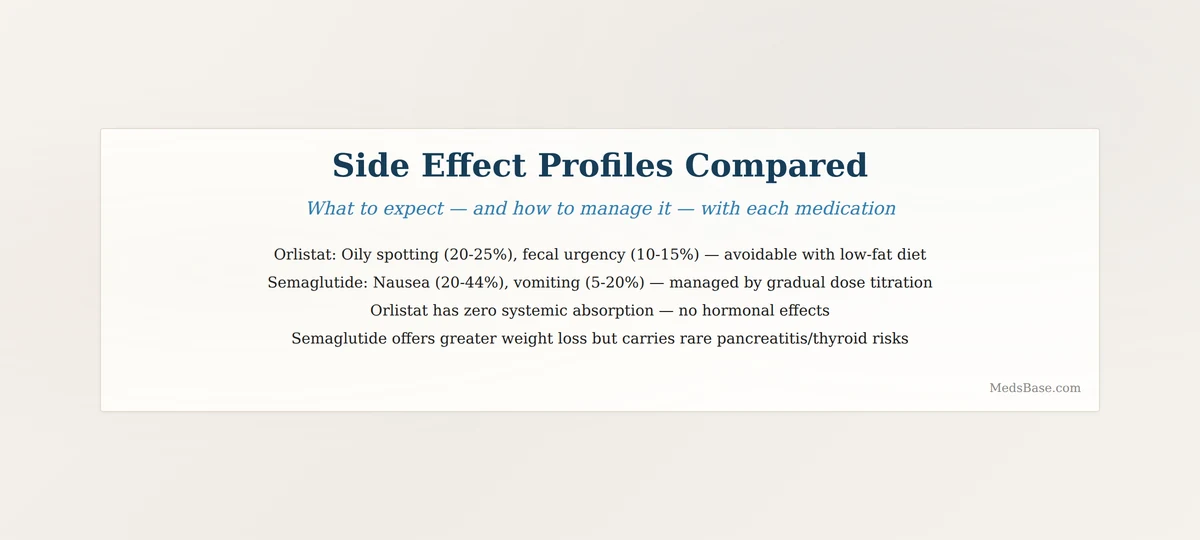
- Side Effects — What to Actually Expect
- Cost Comparison — What You Will Pay
- Who Should Choose Orlistat? Who Should Choose Semaglutide?
- Can You Take Orlistat and Semaglutide Together?
- Related Reading
- Frequently Asked Questions
- The Bottom Line
Hero Intro
Orlistat vs semaglutide for weight loss — you have been researching weight loss options for weeks. You have read about medications that suppress appetite by targeting brain receptors. You have heard about a pill that blocks fat absorption and has been available for over two decades. You are not looking for hype or miracle promises — you want an honest breakdown of how these two very different approaches compare, so you can have an informed conversation with your doctor and choose the path that actually fits your life. If that sounds familiar, you are exactly who this article was written for.
Orlistat vs semaglutide for weight loss — orlistat and semaglutide represent two fundamentally different philosophies of weight loss medication. One works mechanically in your gut, never entering your bloodstream. The other works hormonally, rewiring the appetite signals between your brain and your body. By the time you finish reading, you will understand exactly how each one works, what results to expect, which side effects are common versus rare, what you will actually pay, and — most importantly — which medication fits your specific situation. One particular side effect of orlistat catches nearly every new user off guard, and knowing about it in advance makes all the difference — we will cover it in the side effects section.
What Are Orlistat and Semaglutide? — The 30-Second Definitions {#what-are-they}
Quick Answer — Orlistat: Orlistat is a lipase inhibitor — a medication that blocks the enzymes in your gut responsible for breaking down dietary fat, preventing your body from absorbing approximately 30% of the fat you eat. It is taken as a 120mg capsule with each main meal (up to 3 times daily), stays entirely within the gastrointestinal tract, and has no systemic absorption. It is available as a prescription medication and, at a lower 60mg dose, over the counter in some countries.
Quick Answer — Semaglutide: Semaglutide is a GLP-1 (glucagon-like peptide-1) receptor agonist — a medication that mimics a natural hormone your gut releases after eating. By activating GLP-1 receptors in the brain, it reduces appetite and food cravings. By acting on the stomach, it slows gastric emptying so you feel fuller longer. By acting on the pancreas, it enhances insulin secretion in response to meals. For weight loss, it is administered as a once-weekly subcutaneous injection (2.4mg dose for the Wegovy brand, though lower doses are also used). An oral tablet formulation (Rybelsus) exists but is approved for type 2 diabetes at lower doses, not specifically for obesity.
The fundamental difference in the orlistat vs semaglutide for weight loss comparison could not be more important to understand: orlistat works mechanically in your gut and never enters your bloodstream; semaglutide is a systemic hormone that affects multiple organ systems, including your brain. This distinction explains almost everything about how the two drugs differ in efficacy, side effects, and patient experience.
How Do They Work? — Orlistat vs Semaglutide for Weight Loss Mechanisms {#how-they-work}
How Orlistat Works: A Mechanical Approach
Orlistat vs semaglutide for weight loss — think of your digestive system as a processing plant. Dietary fats arrive in the small intestine in large globules that your body cannot absorb directly. Pancreatic lipase — an enzyme — breaks those fat globules into smaller fatty acids and monoglycerides that can pass through the intestinal wall into your bloodstream.
Orlistat vs semaglutide for weight loss — orlistat binds to lipase enzymes and disables them. With lipase out of commission, roughly 30% of the fat you consume passes through your digestive system undigested and is excreted in your stool. The medication itself stays in your gut — it is not absorbed into your body in any meaningful amount. This is what pharmacologists mean when they call orlistat a “non-systemic” drug.
Orlistat vs semaglutide for weight loss — the elegance of this mechanism is its simplicity. Because orlistat never enters your bloodstream, it cannot cause the systemic side effects — nausea, fatigue, hormonal changes — that systemically absorbed medications can. The trade-off is that its mechanism is purely calorie-reduction through fat malabsorption. It does not reduce your appetite, address emotional eating, or change your metabolic rate. You still feel hungry; you simply absorb fewer calories from the fat you eat.
How Semaglutide Works: A Hormonal Approach
Orlistat vs semaglutide for weight loss — semaglutide is a synthetic version of GLP-1, a hormone your body naturally produces in the gut after eating. GLP-1 has several jobs. It signals to your brain — specifically to the hypothalamus and brainstem — that you have eaten and are satisfied. It tells your stomach to slow down its emptying, which prolongs the feeling of fullness after a meal. And it tells your pancreas to release insulin when blood glucose rises, helping your body use glucose efficiently.
Orlistat vs semaglutide for weight loss — semaglutide is engineered to be much longer-lasting than natural GLP-1. Natural GLP-1 is broken down within minutes. Semaglutide resists degradation and stays active for days, which is why it can be administered as a once-weekly injection. When you inject semaglutide, you are essentially maintaining a constant GLP-1-like signal — your brain perceives that you are fed, your stomach stays fuller longer, and your insulin response improves.
Orlistat vs semaglutide for weight loss — the power of this mechanism is that it addresses appetite directly — the biological drive to eat — rather than simply reducing calorie absorption. This is why semaglutide produces larger average weight loss than orlistat. The trade-off is that because GLP-1 receptors exist throughout the body, semaglutide affects multiple systems, and this broader reach comes with a broader side-effect profile.
Orlistat vs semaglutide for weight loss — here is where it gets interesting: orlistat and semaglutide attack the weight loss problem from completely opposite directions. Orlistat reduces calories absorbed; semaglutide reduces calories consumed. In theory, these mechanisms could complement each other — in practice, as we will see in the FAQ section, combining them is rarely recommended and is not supported by clinical trial data.
Orlistat vs Semaglutide for Weight Loss — What the Research Shows {#research-results}
Orlistat vs semaglutide for weight loss — let us look at the actual numbers from the major clinical trials, presented without spin.
| Metric | Orlistat (120mg 3× daily) | Semaglutide (2.4mg weekly injection) |
|---|---|---|
| Mean weight loss at 1 year | 5-10% of body weight | ~15% of body weight |
| Patients achieving ≥5% weight loss | 35-55% | 86% |
| Patients achieving ≥10% weight loss | 20-30% | 69% |
| Patients achieving ≥15% weight loss | 5-10% | 50% |
| Diabetes prevention (4 years) | 37% risk reduction | 67% risk reduction (STEP trials subset) |
| Waist circumference reduction | 6-7 cm | 13-14 cm |
| Systolic BP reduction | 2-4 mmHg | 5-6 mmHg |
| HbA1c reduction (in T2DM) | 0.4-0.6% | 1.0-1.5% |
| Study duration (longest) | 4 years (XENDOS) | 2 years (STEP 5) |
| Source | XENDOS trial, pooled meta-analyses | STEP 1-5 clinical trials |
What These Numbers Mean for You
Orlistat vs semaglutide for weight loss — semaglutide clearly produces greater average weight loss. The gap between a 5-10% reduction and a 15% reduction is clinically meaningful — it is the difference between moving from obesity to overweight versus reaching a normal BMI range for many patients. But averages hide individual variation. Some people lose very little on semaglutide (the ~14% who did not achieve even 5% weight loss in STEP 1). Some people lose substantially on orlistat (the 20-30% who achieved ≥10% weight loss). Your individual response depends on factors we still do not fully understand — genetics, baseline metabolic profile, adherence, and lifestyle context all play a role.
Orlistat vs semaglutide for weight loss — equally important: these are trial results achieved in structured clinical settings with regular follow-up, dietary counseling, and, in the semaglutide trials, an exercise prescription. Real-world results tend to be somewhat lower across the board. Set expectations accordingly.
Side Effects — What to Actually Expect {#side-effects}
Orlistat vs semaglutide for weight loss — this is the part that determines whether someone stays on a medication or quits. Let us be completely candid about what each drug’s side-effect profile actually looks like.
Orlistat Side Effects — The GI Trade-Off
| Side Effect | Frequency | Severity | What to Do |
|---|---|---|---|
| Oily spotting on underwear | 20-25% | Mild (messy, not dangerous) | Wear a panty liner; decreases with lower-fat diet |
| Flatus with discharge | 15-20% | Mild-moderate | Reduce dietary fat to <30% of calories per meal |
| Fatty/oily stools | 15-20% | Mild | Normal consequence of mechanism; decreases over time |
| Fecal urgency | 10-15% | Mild-moderate | More predictable with a consistent eating schedule |
| Increased defecation frequency | 10-15% | Mild | Usually stabilizes within 2-4 weeks |
| Abdominal pain / bloating | 5-10% | Mild-moderate | Take with meals; avoid very high-fat meals |
| Fat-soluble vitamin deficiency | 2-5% (with long-term use) | Moderate (preventable) | Take a multivitamin (A, D, E, K) at bedtime, at least 2 hours apart from orlistat |
| Liver injury (rare) | <0.1% | Severe (rare) | Report jaundice, dark urine, or severe abdominal pain immediately |
Orlistat vs semaglutide for weight loss — here is the side effect that catches people off guard: orlistat does not distinguish between a scheduled bowel movement and an unexpected one. If you eat a high-fat meal — a burger and fries, a cheesy pasta, a rich dessert — the undigested fat can exit unpredictably, sometimes with urgency and an oily discharge. This is not dangerous. It is the medication working exactly as designed. But it is unpleasant, embarrassing, and the #1 reason people stop taking orlistat.
The fix: keep dietary fat below 30% of calories per meal. This is not just about avoiding side effects — orlistat works best when combined with a reduced-fat diet, because the medication’s calorie-blocking mechanism is additive with dietary change, not a replacement for it.
Semaglutide Side Effects — The GI and Systemic Profile
| Side Effect | Frequency | Severity | What to Do |
|---|---|---|---|
| Nausea | 20-44% | Mild-moderate | Start at 0.25mg, increase slowly over 16-20 weeks; take with bland foods |
| Vomiting | 5-20% | Mild-moderate | Dose timing matters; taking at night can help; stay hydrated |
| Diarrhea | 15-30% | Mild-moderate | Often transient; avoid high-fat meals |
| Constipation | 15-25% | Mild-moderate | Increase water and fiber intake; consider OTC stool softener |
| Abdominal pain | 10-15% | Mild | Usually resolves within 4-8 weeks of dose stabilization |
| Fatigue | 5-15% | Mild-moderate | Often improves over time; adequate protein and calorie intake helps |
| Gallbladder disease | 1-2% | Variable | Report severe upper abdominal pain (especially right-sided) |
| Pancreatitis | <0.5% | Severe (rare) | Report severe, persistent abdominal pain radiating to the back immediately; stop medication |
| Medullary thyroid cancer (animals) | Not seen in humans to date | Boxed warning (precautionary) | Contraindicated in personal/family history of medullary thyroid carcinoma or MEN2 |
The nausea is dose-dependent and largely manageable. Starting at the lowest dose (0.25mg weekly) and increasing gradually over 16-20 weeks — not faster — is the key to minimizing GI side effects. Most patients who follow the proper titration schedule find that nausea peaks in the first 4-8 weeks and then subsides. Eating smaller, blander meals and avoiding high-fat, spicy, or very large meals during the titration period also helps.
The more concerning risks — pancreatitis, gallbladder disease, and the theoretical thyroid cancer risk — are rare. But they are more serious than anything in orlistat’s profile. This is the trade-off: semaglutide offers greater efficacy but carries a small risk of serious adverse events that orlistat, as a non-systemic drug, does not.
The Honest Comparison on Tolerability
Neither drug wins a tolerability contest. Orlistat’s side effects are predictable, localized to the gut, and largely avoidable through diet choices — but they can be socially embarrassing. Semaglutide’s side effects are systemic, often resolve over time, and are more manageable than they first appear — but the nausea can be genuinely debilitating for a small subset of patients, and the rare but serious risks demand awareness.
Cost Comparison — What You Will Actually Pay {#cost}
Cost is one of the most important real-world differentiators between orlistat vs semaglutide for weight loss, and it is rarely discussed honestly in comparison articles. Here is the breakdown.
Orlistat (generic, prescription 120mg)
Orlistat is available as a generic medication. Because it has been off-patent for years, competition among generic manufacturers keeps prices low. A month’s supply of generic orlistat 120mg (90 capsules — 3 per day) is typically one of the most affordable prescription weight loss medications on the market. Many patients pay well under $50 per month out of pocket, and insurance coverage — while variable — is often easier to obtain for a long-established generic than for a newer brand-name drug. At MedsBase, generic orlistat products like Slimtop and Orlijohn are available at competitive prices.
Semaglutide (brand-name injectable, 2.4mg)
Semaglutide for weight loss (Wegovy) remains under patent protection. The branded product list price is substantial — typically several hundred to over a thousand dollars per month without insurance. Insurance coverage for weight loss medications is inconsistent: some plans cover semaglutide for obesity with prior authorization, many do not. Even with coverage, copays can be significant. For patients paying out of pocket, generic semaglutide alternatives from international pharmacies — including MedsBase — offer a substantially lower-cost option, though still typically more expensive than generic orlistat.
The Real-World Cost Equation
For many patients, the choice between orlistat and semaglutide comes down to this: are you willing and able to pay significantly more for roughly twice the average weight loss? For some people, the answer is an unambiguous yes — the additional efficacy justifies the cost. For others, orlistat represents a rational, affordable first step: try the more affordable option, see how your body responds, and escalate to a GLP-1 agonist only if orlistat does not produce adequate results. There is no wrong answer — only the answer that fits your budget and your goals.
Who Should Choose Orlistat? Who Should Choose Semaglutide? {#who-should-choose}
Based on the evidence profile, the side-effect profile, and the cost difference, here is a practical decision framework.
Consider Orlistat First If:
- You prefer a drug with zero systemic absorption — one that never enters your bloodstream
- You are needle-averse and strongly prefer an oral pill over an injection
- Cost is a primary concern and you are paying out of pocket
- You have a history of pancreatitis, gallbladder disease without cholecystectomy, or a family history of medullary thyroid carcinoma or MEN2 (all relative or absolute contraindications for GLP-1 agonists)
- Your weight loss goal is moderate (5-10% of body weight) and you are committed to dietary fat reduction as part of your strategy
- You want to start with a long-established medication that has 25+ years of post-marketing safety data
Consider Semaglutide First If:
- You have significant weight to lose (BMI ≥30, or ≥27 with weight-related comorbidities) and want the medication with the strongest average efficacy
- You are comfortable with once-weekly self-injection
- Appetite control — not just calorie blocking — is your primary challenge (you struggle with hunger, cravings, and portion control, not just dietary fat intake)
- Cost is manageable through insurance coverage or affordable sourcing
- You have no personal or family history of medullary thyroid cancer or MEN2
- You are willing to commit to the gradual 16-20 week dose titration to minimize GI side effects
The Third Option — Sequential Approach
Some clinicians recommend a sequential strategy: start with orlistat for 3-6 months. If you tolerate it and achieve meaningful weight loss, continue. If you do not achieve at least 5% weight loss, or if side effects are intolerable, then transition to semaglutide after a washout period. This approach maximizes the chance of finding an effective, tolerable option while starting with the lower-cost, lower-systemic-risk medication. Discuss this strategy with your healthcare provider.
Can You Take Orlistat and Semaglutide Together? {#can-you-take-both}
The short answer is: this combination is not recommended outside of a clinical trial setting, and no published studies have evaluated it. Here is why.
On paper, combining a lipase inhibitor (orlistat) with a GLP-1 agonist (semaglutide) seems logical — they target different mechanisms, and their side-effect profiles do not directly overlap. In practice, there are several reasons for caution.
First, both drugs cause gastrointestinal side effects, albeit through different mechanisms. Orlistat causes fat malabsorption and its associated GI symptoms. Semaglutide slows gastric emptying and causes nausea, vomiting, and altered bowel habits. Combining them could produce additive or synergistic GI distress that makes adherence impossible.
Second, orlistat’s fat malabsorption could theoretically reduce the absorption of semaglutide if the oral tablet formulation (Rybelsus) were used, since semaglutide oral absorption is already low and dependent on specific conditions in the stomach. Even with the injectable form, the concern is less about direct drug interaction and more about the combined GI burden.
Third, the combination has never been studied in a clinical trial. Without safety and efficacy data, the risk-benefit calculation is unknown.
If you are interested in combining weight loss medications, the more established combinations — such as phentermine/topiramate or naltrexone/bupropion — have published data. Combining orlistat and semaglutide would be experimental. Discuss any combination approach with a specialist in obesity medicine.
Related Reading {#related-reading}
- CKM Syndrome in Young Adults: What the 79% Statistic Means — Weight management is a cornerstone of CKM syndrome reversal. Understand the broader metabolic picture that weight loss medications fit into.
- Stroke in Young Adults: 8 Causes & Warning Signs — Obesity and metabolic syndrome are major drivers of rising stroke rates in younger populations.
- Microdosing GLP-1 Medications — What the Research Says — If semaglutide’s full dose concerns you, explore the growing microdosing conversation — what we know, what we do not, and who it might suit.
Frequently Asked Questions {#faq}
Q: How much more effective is semaglutide than orlistat for weight loss?
A:
A: In the major clinical trials comparing orlistat vs semaglutide for weight loss, semaglutide 2.4mg produced mean weight loss of approximately 15% of body weight at 68 weeks (STEP 1), compared to 5-10% mean weight loss with orlistat 120mg three times daily at 1 year (XENDOS and pooled analyses). This means the average patient loses roughly 1.5-2 times more weight with semaglutide. However, the range of individual responses is wide for both drugs. About 14% of semaglutide users do not achieve even 5% weight loss, while 20-30% of orlistat users achieve 10% or more. Individual response — not the group average — is what matters for your treatment decision.
Q: Which medication has fewer side effects — orlistat or semaglutide?
A:
A: This depends on what “fewer” means to you. In the orlistat vs semaglutide for weight loss side-effect comparison, orlistat’s side effects are predictable, localized to the gut, and largely avoidable by keeping dietary fat low — but the oily spotting and fecal urgency can be socially distressing. Semaglutide’s side effects (primarily nausea, vomiting, constipation) are systemic and can be more physically uncomfortable during the titration period, but they are also less socially visible and often resolve over time. Serious adverse events (pancreatitis, gallbladder disease) are rare with semaglutide but essentially absent with orlistat. Neither drug has an unambiguously better side-effect profile — they have different profiles, and the right choice depends on which profile you would rather live with.
Q: Can orlistat help me lose weight if I do not change my diet?
A:
A: Minimally. A key insight from any honest orlistat vs semaglutide for weight loss comparison is that both medications amplify dietary effort rather than replace it. Orlistat blocks about 30% of dietary fat from being absorbed, which translates to approximately 150-200 fewer calories absorbed per day on a typical diet. Over a year, that alone might produce 5-10 pounds of weight loss — not the 5-10% body weight reduction seen in trials. The substantial weight loss seen in orlistat trials occurred in the context of structured dietary intervention (a reduced-calorie, reduced-fat diet) and increased physical activity. Orlistat is a tool that amplifies dietary effort; it is not a replacement for it.
Q: If I stop taking semaglutide, will I regain the weight?
A:
A: The available evidence strongly suggests yes, for most people — and this applies equally to both sides of the orlistat vs semaglutide for weight loss equation. The STEP 1 extension study found that patients who stopped semaglutide after 68 weeks regained approximately two-thirds of their lost weight within one year. GLP-1 receptor agonists treat obesity by modulating appetite and metabolic signaling — they do not permanently reset your body weight set point. This is true of orlistat as well: weight regain after discontinuation is the norm across all weight loss medications. The implication is that obesity pharmacotherapy, for many patients, is a long-term treatment, not a short-term course. This does not make the medications any less valid — we do not question whether antihypertensives “really work” because blood pressure rises when you stop them.
Q: Is generic orlistat as effective as the brand-name version?
A:
A: Yes. In the orlistat vs semaglutide for weight loss cost-value analysis, generic orlistat 120mg is bioequivalent to the brand-name version (Xenical). The active ingredient is identical, and generic manufacturers must demonstrate equivalent absorption and clinical effect to receive regulatory approval. The only meaningful difference is price. This is one of orlistat’s strongest advantages — as a long-off-patent drug, effective generic versions are widely available at a fraction of the original brand-name cost.
Q: Does semaglutide cause muscle loss, and is orlistat better in that regard?
A:
A: All weight loss, regardless of method, involves some loss of lean mass alongside fat mass. In the orlistat vs semaglutide for weight loss comparison on body composition, the STEP trials showed approximately 30-40% of the weight lost on semaglutide was lean mass — a proportion similar to what is seen with lifestyle-only weight loss and with bariatric surgery. Orlistat, by virtue of producing slower, more modest weight loss, tends to result in a slightly higher proportion of fat loss to lean mass loss, but the difference is modest. The key protective strategy — adequate protein intake and resistance training — applies regardless of which medication you are using. Read our guide on GLP-1 medications and muscle loss for specific protein and exercise recommendations.
Q: Which has more long-term safety data — orlistat or semaglutide?
A:
A: In the orlistat vs semaglutide for weight loss safety data comparison, orlistat has been on the market since 1999, with over 25 years of post-marketing surveillance and a 4-year randomized controlled trial (XENDOS). Its safety profile is extremely well characterized. Semaglutide was first approved for type 2 diabetes in 2017 (Ozempic) and for weight management in 2021 (Wegovy). It has approximately 8 years of market experience, with the longest dedicated trial (STEP 5) running 2 years. Both are considered safe when used as directed in appropriate patients, but orlistat’s longer track record provides greater certainty about very long-term effects. For a patient who prioritizes safety data maturity, orlistat has the edge here.
The Bottom Line
The orlistat vs semaglutide for weight loss comparison is not a simple “which one is better” question. It is a question of which mechanism, which side-effect profile, and which cost equation fits your life.
Semaglutide produces substantially greater average weight loss — roughly 15% of body weight versus 5-10% — and addresses appetite directly through hormonal pathways that orlistat does not touch. It is the more effective drug by the numbers. But it costs significantly more, requires weekly injections, carries a small risk of serious adverse events, and demands a gradual 4-5 month dose-titration period that some patients find difficult.
Orlistat is the simpler, less expensive option. It stays in your gut, has no systemic absorption, and has 25+ years of safety data behind it. Its side effects are predictable, dose-dependent on dietary fat intake, and entirely avoidable with dietary discipline. For the right patient — someone with moderate weight loss goals, a preference for non-systemic medication, and a budget-conscious approach — orlistat is not a “lesser” choice. It is a rational, evidence-based first step.
Your most immediate action: review the decision framework in the “Who Should Choose” section. Identify which profile describes you. Then discuss that choice with a healthcare provider who can review your medical history, check for contraindications, and help you start safely. MedsBase carries both medications — browse the weight loss category to see your options, and always consult a qualified healthcare provider before starting any weight loss medication.
What to read next:
- CKM Syndrome in Young Adults: What the 79% Statistic Means — Weight management sits at the center of the cardiovascular-kidney-metabolic syndrome that affects most young adults.
- GLP-1 Medications and Muscle Loss: How to Protect Your Strength — If you choose semaglutide, understanding how to preserve lean mass during weight loss is critical for long-term metabolic health.
Medical Disclaimer: This article is for informational purposes only and does not constitute medical advice. Orlistat and semaglutide are prescription medications that should only be used under the supervision of a qualified healthcare provider. Never start, stop, or change a weight loss medication regimen without consulting your doctor. All medication carries risks; the information here is intended to support informed discussions with your provider, not to replace them.


Written by
Sophie ChenPharmaceutical Content Researcher · 8 years experience
Sophie Chen is a pharmaceutical content researcher with 8 years covering generic medication access and clinical pharmacology. She specialises in international regulatory frameworks, bioequivalence standards, and patient-facing education on therapeutic drug classes. She is not a clinician.