








Cystone
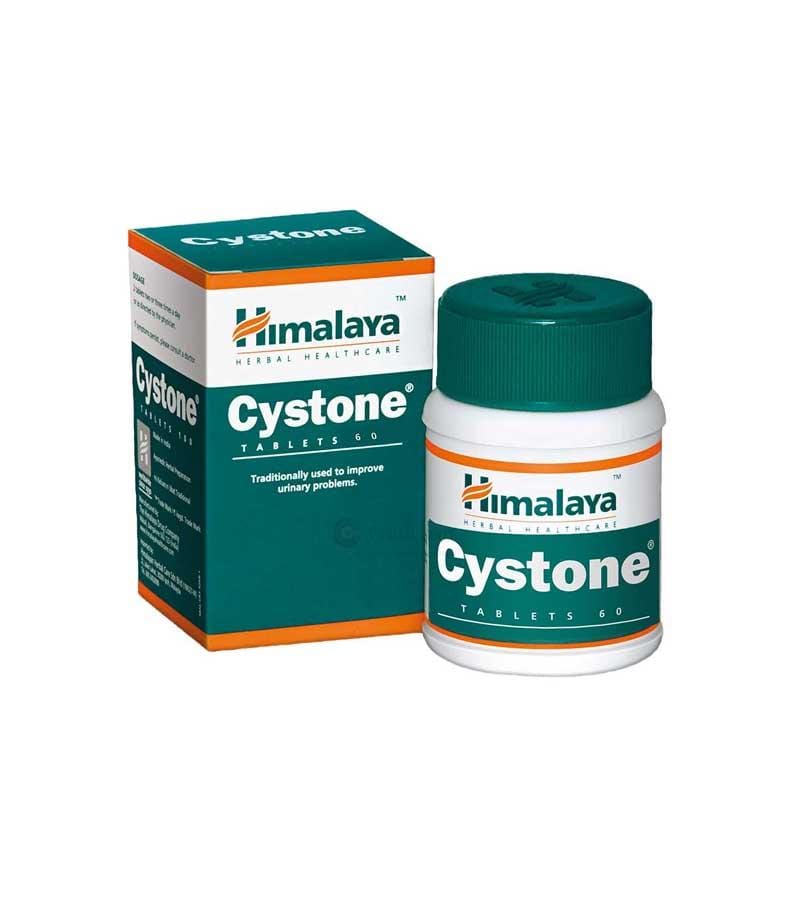
✅ Dissolves kidney stones
✅ Prevents stone formation
✅ Alleviates urinary discomfort
✅ Supports urinary tract health
✅ Promotes kidney function
Cystone contains Ayurvedic composition.
✓ Medically reviewed by Morgan Ellis — Pharmacy Researcher · 8 years experience · Last reviewed: May 2026
Quick Answer — What is Cystone?
Cystone is a polyherbal Ayurvedic preparation by Himalaya Wellness traditionally used as an adjunct in the management of urinary calculi (kidney stones, ureteric stones, bladder stones), recurrent urinary tract infection, and crystalluria. The formulation contains Pasanabheda (Bergenia ligulata), Shilapushpa (Didymocarpus pedicellatus), Hajrul Yahood Bhasma (purified silicates), Gokshura (Tribulus terrestris), and several other traditional anti-lithiatic herbs. Standard adult dose: 2 tablets twice daily for stone management or recurrent UTI prophylaxis; halve for prevention/maintenance. Take with water. Cystone is generally well-tolerated and is sold over-the-counter in India and many countries. Used as an adjunct, not a substitute, for medical or surgical stone management. Stones >5 mm are unlikely to pass with herbal therapy alone — urological assessment is essential for stones causing obstruction, infection, or significant pain. Cystone is NOT an antibiotic and does not treat active urinary tract infection — appropriate antibiotic therapy remains the standard of care for symptomatic UTI. Cystone may have a role in reducing recurrence rates as an adjunct.
📦 Every order is covered by our Reshipment Assurance Policy — if your parcel does not arrive within 20 business days, we reship it.
Why order from MedsBase
Every batch is sourced from a WHO-GMP certified manufacturer. Orders are dispatched in plain, unbranded packaging from our fulfilment partners and covered by our Reshipment Assurance Policy: if a parcel does not arrive within 20 business days we send a free reshipment, no questions asked.
What is Cystone?
Cystone is a polyherbal proprietary Ayurvedic medicine produced by Himalaya Wellness Company (Himalaya Drug Company), one of India’s largest herbal-pharmaceutical manufacturers. It has been on the market since 1937 and remains one of Himalaya’s flagship urological products.
Cystone is sold over-the-counter in India and through urological / general medicine clinics in many other countries (regulatory status as a herbal/dietary supplement varies). It is positioned for two main use cases: (1) urinary calculi (stone) management, both acute passage and recurrence prevention, and (2) recurrent urinary tract infection prophylaxis.
Pack sizes available at MedsBase: 1, 2, 3 or 6 bottles (each bottle typically 60 or 100 tablets).
Composition & key herbal ingredients
Each Cystone tablet contains a proprietary combination of:
- Shilapushpa (Didymocarpus pedicellatus) — traditionally used to dissolve and prevent crystal formation
- Pasanabheda (Bergenia ligulata) — “stone-breaker”; long-standing Ayurvedic anti-lithiatic
- Indravaruni (Cucumis trigonus)
- Vrikshamla (Garcinia indica)
- Pinda khajura (Phoenix dactylifera)
- Hajrul Yahood Bhasma — purified silicates; traditional component of urological Ayurvedic formulations
- Gokshura (Tribulus terrestris) — mild diuretic, traditionally used for urinary symptom relief
- Punarnava (Boerhavia diffusa) — mild diuretic
- Several other supporting herbs (Sahadevi, Saxifraga ligulata, Lapis judaicus, Achyranthes aspera processed Bhasma forms, etc.)
How Cystone is believed to work
The proposed mechanisms (based on in vitro studies, animal models, and several small clinical trials) include:
- Antilithiogenic activity — reduces crystal nucleation, aggregation, and growth (calcium oxalate and uric acid stones)
- Mild diuretic effect — increases urine output, helping to flush small crystals and stones
- Antispasmodic effect on ureteric smooth muscle — may aid the passage of small stones (similar mechanism to alpha-blockers used in medical expulsive therapy)
- Anti-inflammatory and antimicrobial activity — some constituents have been shown to inhibit common uropathogens in vitro
- Urinary alkalinisation — modest effect that may benefit uric acid and cystine stone-formers
Traditional & reported uses
- Adjunct therapy for renal calculi (kidney stones) <5 mm — to support spontaneous passage
- Recurrence prevention in patients with a history of recurrent stone formation
- Crystalluria — reduction of microscopic crystal load in urine
- Recurrent uncomplicated lower UTI — as an adjunct to lifestyle measures and standard medical management
- Adjunct in interstitial cystitis — symptom relief in some patients
- Post-lithotripsy support — to aid clearance of stone fragments after extracorporeal shockwave lithotripsy or ureteroscopy
- Burning urination, dysuria, urinary discomfort — symptomatic relief in mild cases
What the evidence says — honest assessment
Cystone has been the subject of multiple small clinical studies, mostly conducted in India, generally showing benefit for urolithiasis recurrence prevention and adjunct stone passage. The studies are typically not blinded, often without rigorous control groups, and rarely large multicentre trials of the kind that would establish Cystone as standard-of-care globally.
What the evidence does support:
- Reasonable safety profile from decades of widespread use
- Modest benefit as an adjunct in stone passage and recurrence prevention
- Reasonable adjunct option for patients with a history of recurrent stones who want a long-term low-risk preventive intervention
What the evidence does NOT support:
- Cystone as a substitute for evaluation and management of obstructing or symptomatic stones — large stones, complete obstruction, infected stones, and stones causing severe pain require urological intervention
- Cystone as a treatment for active UTI — appropriate antibiotics remain standard of care; Cystone may be used as an adjunct or for recurrence prevention but does not replace antibiotics
- Cystone as a treatment for chronic kidney disease, hypertension, or any non-urinary condition
Dosage & how to take
- Adults — therapeutic dose: 2 tablets twice daily, with water, after meals
- Adults — maintenance/prevention: 1 tablet twice daily, with water, after meals
- Children 6-14 years: 1 tablet twice daily (consult paediatrician)
- Drink at least 2 litres of water per day — the diuretic effect of Cystone only works if you provide adequate fluid intake
- Course duration: 4-6 weeks for acute episodes; long-term (3-6+ months) for recurrence prevention with periodic medical review
- Pregnancy / breastfeeding: use only on the advice of a qualified clinician; herbal products in pregnancy require individual assessment
Side effects & safety
Cystone has a long-standing reputation for good tolerability. Reported side effects are uncommon and usually mild:
- Mild gastrointestinal discomfort (nausea, mild abdominal discomfort)
- Allergic reactions to one of the herbal components — rare; rash, itching
- Theoretical concern about heavy-metal contamination or batch variability with any traditional Ayurvedic preparation — Himalaya products are subject to standard manufacturing quality controls but not to the same regulatory scrutiny as conventional pharmaceuticals in many jurisdictions
When NOT to use Cystone alone
Cystone is an adjunct, not a substitute, for medical evaluation. Seek prompt medical care — do not rely on Cystone alone — if you have any of the following:
- Severe flank or loin pain (renal colic) — especially with nausea, vomiting, fever, or chills
- Visible blood in urine (gross haematuria)
- Fever associated with urinary symptoms (suggests infection — potentially obstructed and infected stone is a urological emergency)
- Reduced urine output (suggests obstruction)
- Stone >5 mm seen on imaging (low likelihood of spontaneous passage; urological intervention often needed)
- Persistent UTI symptoms beyond 48-72 hours of starting any treatment
- Diabetes mellitus, immunosuppression, or pregnancy with UTI symptoms (complicated UTI; need formal antibiotic course)
- Single kidney, prior renal transplant, or known structural urological abnormality
Drug interactions
Cystone is not known to have specific drug interactions, but as a herbal product some considerations apply:
- Diuretics (furosemide, hydrochlorothiazide) — Cystone has mild diuretic activity; theoretical additive effect; monitor electrolytes if combined long-term
- Lithium — the diuretic effect could affect lithium clearance; monitor lithium levels
- Anticoagulants (warfarin) — theoretical interaction with herbal components; monitor INR if added to warfarin therapy
- Antibiotic UTI therapy — Cystone is commonly co-administered with antibiotics for UTI; no known adverse interaction
Storage & shelf life
Store Cystone tablets below 25°C in the original sealed bottle. Protect from moisture and direct sunlight. Replace the cap tightly after each use. Keep out of reach of children. Do not use after the expiry date printed on the bottle.
Frequently Asked Questions
Will Cystone dissolve my kidney stone?
Cystone may help small stones (<5 mm) pass spontaneously by reducing crystal aggregation, increasing urine output, and relaxing ureteric smooth muscle. It is unlikely to dissolve or pass larger stones — for stones >5 mm, particularly those causing obstruction or pain, urological evaluation is essential. Possible interventions include extracorporeal shockwave lithotripsy (ESWL), ureteroscopy with stone fragmentation, or percutaneous nephrolithotomy.
How long do I need to take Cystone?
For acute stone passage support: typically 4-6 weeks alongside medical follow-up. For recurrence prevention in stone-formers: 3-6 months or longer, with periodic medical review. For recurrent UTI prophylaxis: usually 3-6 months. There is no harm in long-term use given Cystone’s good safety record, but the benefit beyond 6-12 months is uncertain.
Is Cystone an antibiotic?
No — Cystone is a polyherbal preparation with mild antimicrobial activity in vitro but not clinically equivalent to a conventional antibiotic. If you have an active UTI you need an appropriate antibiotic (nitrofurantoin, fosfomycin, trimethoprim-sulfamethoxazole, or based on culture); Cystone may be added as an adjunct but does not replace antibiotic therapy.
Can children take Cystone?
Yes — for ages 6 and above, typically 1 tablet twice daily. Use should be supervised by a paediatrician, particularly for stone disease (which often has an underlying metabolic cause in children that needs investigation).
Can I take Cystone in pregnancy?
Use only on the advice of a qualified clinician. Pregnancy is associated with increased UTI risk and altered urinary dynamics; both UTI and stone management in pregnancy need individualised assessment. Standard antibiotic management (with pregnancy-safe agents like nitrofurantoin in the second trimester or fosfomycin in any trimester) takes priority.
Are there scientific studies supporting Cystone?
Yes — multiple small clinical trials, mostly conducted in India, have shown modest benefit for stone-recurrence prevention and adjunct stone-passage support. The studies are typically not blinded and not at the scale of large multicentre randomised controlled trials. The evidence supports Cystone as a reasonable adjunct option but not as a substitute for conventional urological care.
Can I take Cystone with prescription medications?
Generally yes — no major drug interactions are known. If you take diuretics, lithium, or anticoagulants, mention Cystone to your doctor or pharmacist for individualised advice. There is no known interaction with the antibiotics commonly used for UTI.
Where can I order Cystone online?
You can order Cystone (Himalaya) bottles from MedsBase. Orders ship worldwide with discreet packaging. Cystone is sold over-the-counter in India and as a herbal/dietary supplement in many countries; regulatory status varies.
Related Alternatives
Other products in General Health that customers also view:
More options in Bladder Prostate
Ranked by recent MedsBase order volume — what other customers in this category are picking.
| Quantity | 1 Bottle/s, 2 Bottle/s, 3 Bottle/s, 6 Bottle/s |
|---|
 Cystone
Q & A
Cystone
Related products



Reviews
There are no reviews yet