








✓ Medically reviewed by · Last reviewed: May 2026
Pharmacy Researcher · 8 years experience
Pharmacy researcher with 8 years reviewing clinical drug information, generic formulation equivalence, and international pharmaceutical standards. Focuses on patient-facing accuracy in medication education.
eczema treatment options — 7 Eczema Treatment Options That Actually Work — Tiered Guide. Read on for an evidence-backed guide covering everything you need to know.
If you have been cycling through eczema treatment options without real relief — your elbows raw, your sleep interrupted by itching, your bathroom cabinet a graveyard of creams that did not deliver — you are not alone, and you are not out of answers. You have tried the moisturizer in the tub, the one with the pump, the one the pharmacist swore by. You switched to fragrance-free laundry detergent and started showering in lukewarm water even though you miss hot showers. And yet the itch still arrives at 2 a.m., the flakes are on your pillow in the morning, and you are starting to wonder whether anything actually works on this condition. Most people stop their search at the drugstore aisle, but the reality is that eczema treatment options range from simple barrier creams all the way to targeted biologic therapies that can produce clear or almost-clear skin in moderate-to-severe cases within weeks. This guide maps every evidence-based tier of eczema treatment options so you can understand what your dermatologist is likely to suggest next — and why. By the end, you will know which eczema treatment options match your severity level, how each category works at the cellular level, and what to ask at your next appointment.
Key Takeaways
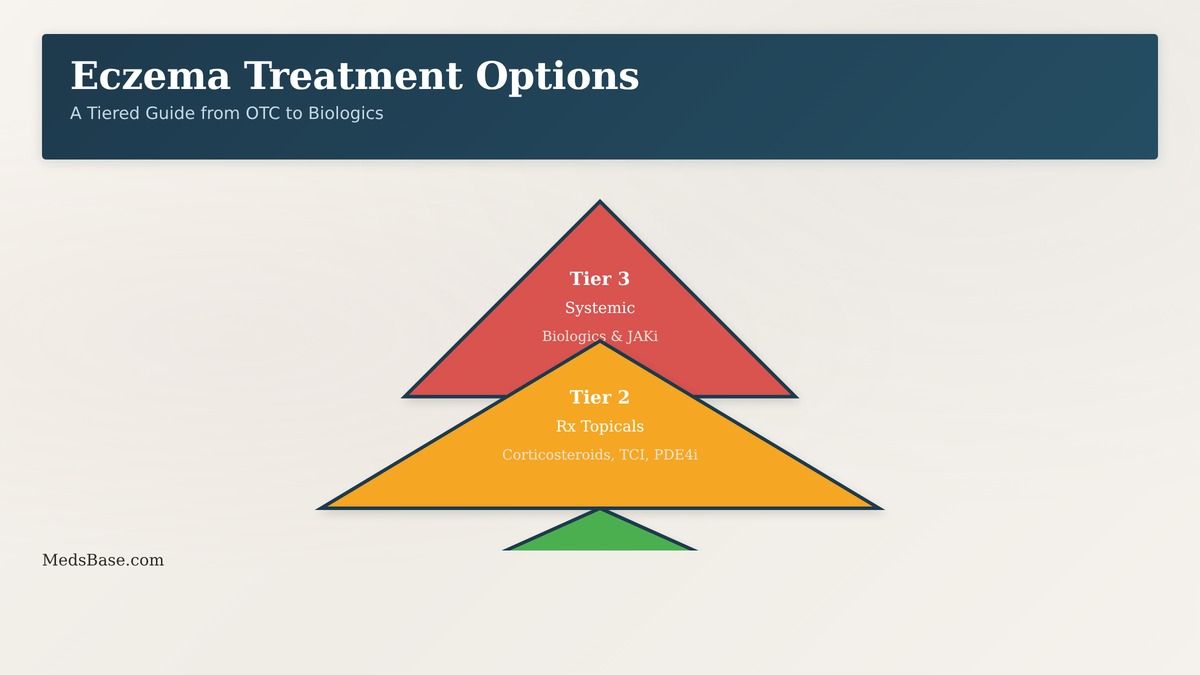
- Eczema treatment options are organized on a three-tier ladder: over-the-counter basics, prescription topicals, and systemic/advanced therapies.
- Most people with mild eczema can control symptoms with consistent moisturizing and occasional OTC 1% hydrocortisone cream.
- Prescription topical corticosteroids remain the first-line medical option, with topical calcineurin inhibitors and PDE4 inhibitors offering alternatives for sensitive zones.
- Biologics such as dupilumab (Dupixent) have produced EASI-75 clearance rates above 50% in clinical trials for severe, treatment-resistant atopic dermatitis.
- Lifestyle adjustments — trigger avoidance, wet wrap therapy, dietary awareness — amplify the effectiveness of every tier of eczema treatment options.
- The right treatment depends on severity, body area affected, age, and how you have responded to previous eczema treatment options.
Table of Contents
- What Are Eczema Treatment Options?
- Tier 1 — Over-the-Counter Eczema Treatment Options
- How Moisturizers and Barrier Creams Work
- Tier 2 — Prescription Topical Eczema Treatment Options
- Tier 3 — Systemic and Advanced Eczema Treatment Options
- Eczema Treatment Options by Body Area
- Natural and Lifestyle Eczema Treatment Options
- Frequently Asked Questions
- The Bottom Line
Eczema Treatment Options: A Step-by-Step Guide From Moisturizers to Biologics
What Are Eczema Treatment Options?
Eczema treatment options encompass all medical, over-the-counter, and lifestyle interventions used to control the itching, inflammation, skin-barrier dysfunction, and recurrent flares that define atopic dermatitis — the most common form of eczema. These options fall into a structured, stepwise approach that clinicians call a “treatment ladder.” The ladder begins with daily moisturizers and trigger avoidance, progresses through prescription-strength topical medications, and reaches systemic therapies — oral pills, injectable biologics, and phototherapy — for moderate-to-severe disease that does not respond to topical eczema treatment options alone.
The reason eczema treatment options are organized this way is straightforward: safety and proportionality. Someone with one small patch of dry skin on the wrist does not need an injectable biologic. Someone whose entire body is covered with oozing, bleeding plaques is unlikely to get relief from moisturizer alone. Understanding the full range of eczema treatment options helps you and your doctor match the right intervention to your disease severity — and move up the ladder only when necessary.
Below, we walk through every major category of eczema treatment options, from the pharmacy shelf to the infusion clinic, with research-backed detail on what each tier offers, how well it works, and who it suits best.
Tier 1 — Over-the-Counter Eczema Treatment Options
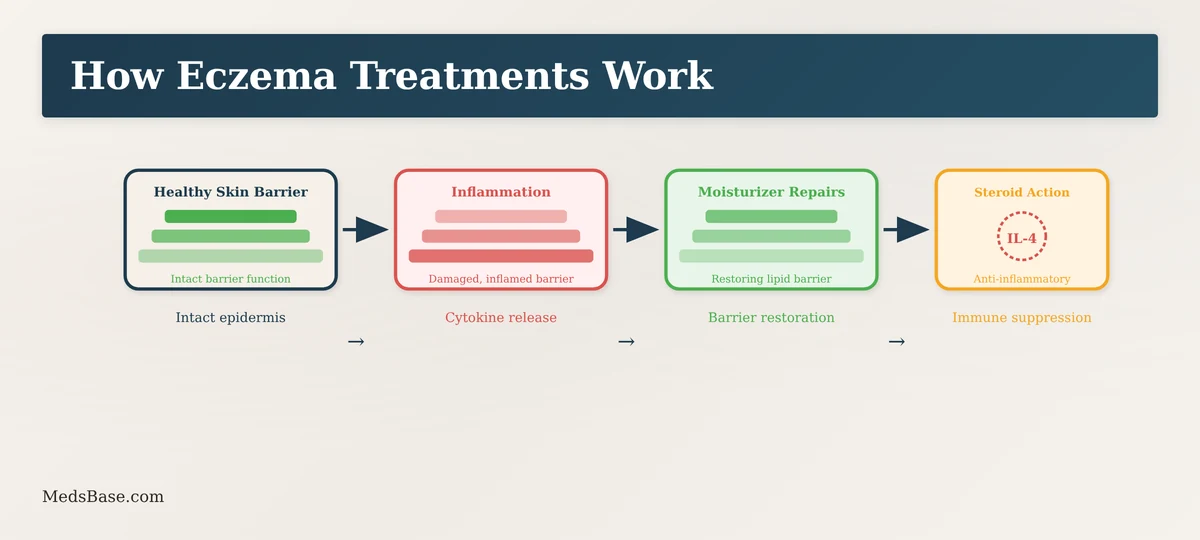
How eczema treatment options target the compromised skin barrier and underlying inflammation.
For most people, the first eczema treatment options they try live in the skincare aisle. These over-the-counter eczema treatment options do not require a prescription, are generally inexpensive, and form the foundation on which all higher-tier treatments depend. It is worth stating plainly: if you skip Tier 1, everything above it works less well. Consistent moisturizing is not optional — it is the bedrock of every eczema management plan.
Moisturizers and Emollients
Moisturizers are the single most-studied and universally recommended of all eczema treatment options. Their job is not glamorous: they replace missing lipids in the stratum corneum, the outermost layer of skin, which in people with eczema is genetically weaker and leaks moisture faster than healthy skin. The NHS treatment guidance for atopic eczema recommends applying emollients at least twice daily, even when the skin looks clear, and using an emollient as a soap substitute during washing (NHS, 2024). Three broad types exist: ointments (highest oil content, most occlusive — petroleum jelly, mineral-oil-based balms), creams (medium oil content, more spreadable, often contain preservatives that can sting on broken skin), and lotions (lowest oil content, least occlusive, but most pleasant to apply on large areas). For most people, ointments at night and creams during the day is a practical split that makes this group of eczema treatment options sustainable.
Oatmeal Baths and Colloidal Oatmeal Products
Colloidal oatmeal — finely ground oats suspended in water — is one of the oldest eczema treatment options with modern evidence behind it. The avenanthramides in oats are phenolic compounds that block the release of histamine and other pro-inflammatory cytokines from mast cells in the skin. A 20-minute soak in lukewarm (not hot) water with a cup of colloidal oatmeal can reduce itching within hours, making it a useful rescue tool among over-the-counter eczema treatment options during acute flares. Pat the skin dry — do not rub — and apply moisturizer within three minutes of leaving the bath to trap the hydration.
OTC 1% Hydrocortisone Cream
In most countries, 1% hydrocortisone cream is available without a prescription and represents the mildest corticosteroid-based eczema treatment options available. It is suitable for short-term use (up to 7 consecutive days) on small areas of mild eczema — particularly on the face, where stronger steroids are avoided. Hydrocortisone reduces local inflammation by suppressing phospholipase A2, the enzyme that releases arachidonic acid from cell membranes and kicks off the inflammatory cascade in the skin. If 1% hydrocortisone does not produce visible improvement within a week, or if you need it more than twice a month to stay comfortable, that is a clear signal to explore prescription eczema treatment options with a doctor.
How Moisturizers and Barrier Creams Work
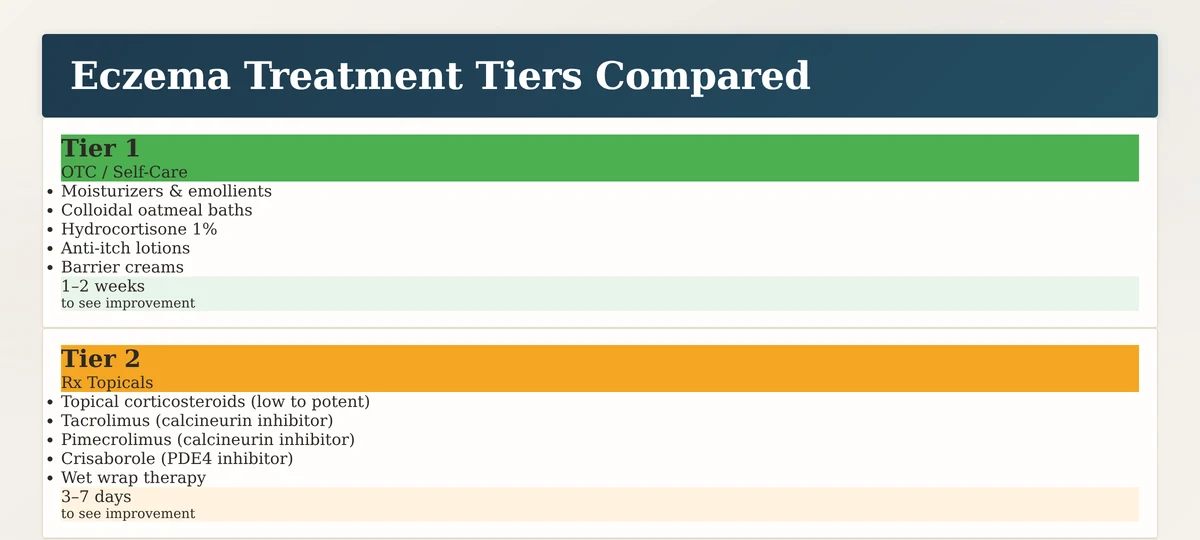
Side-by-side comparison of the three tiers of eczema treatment options with expected time to results.
Understanding the mechanism behind the most basic eczema treatment options helps explain why moisturizing frequency matters far more than moisturizer brand. The skin barrier — the stratum corneum — consists of flattened, dead skin cells (corneocytes) embedded in a lipid matrix of ceramides, cholesterol, and free fatty acids. In eczema, a genetic deficiency in filaggrin — a protein that helps aggregate keratin filaments and produce natural moisturizing factor — means the corneocytes are loosely packed and the lipid matrix is depleted. Water evaporates unchecked. Allergens and irritants penetrate deeper. The immune system reacts, and the itch-scratch cycle begins.
Research Spotlight: Ceramide-Based Moisturizers
A randomized controlled trial published in the Journal of the American Academy of Dermatology compared a ceramide-dominant barrier cream to a standard petrolatum-based moisturizer in children with mild-to-moderate atopic dermatitis. The ceramide group showed significantly greater improvement in SCORAD scores at 3 weeks and maintained benefit at the 12-week follow-up (PubMed). Ceramide-containing formulations are now among the most evidence-supported eczema treatment options in the moisturizer category. Look for products listing ceramide NP, ceramide AP, or ceramide EOP in the first five ingredients.
The practical takeaway from the mechanism research is that moisturizers are not just cosmetic — they are a genuine therapeutic intervention among eczema treatment options, and they work by physically plugging the barrier defect. Using them immediately after bathing, when the stratum corneum is hydrated and the lipid matrix is at its most receptive, roughly doubles moisture retention compared with application on dry skin.
Tier 2 — Prescription Topical Eczema Treatment Options
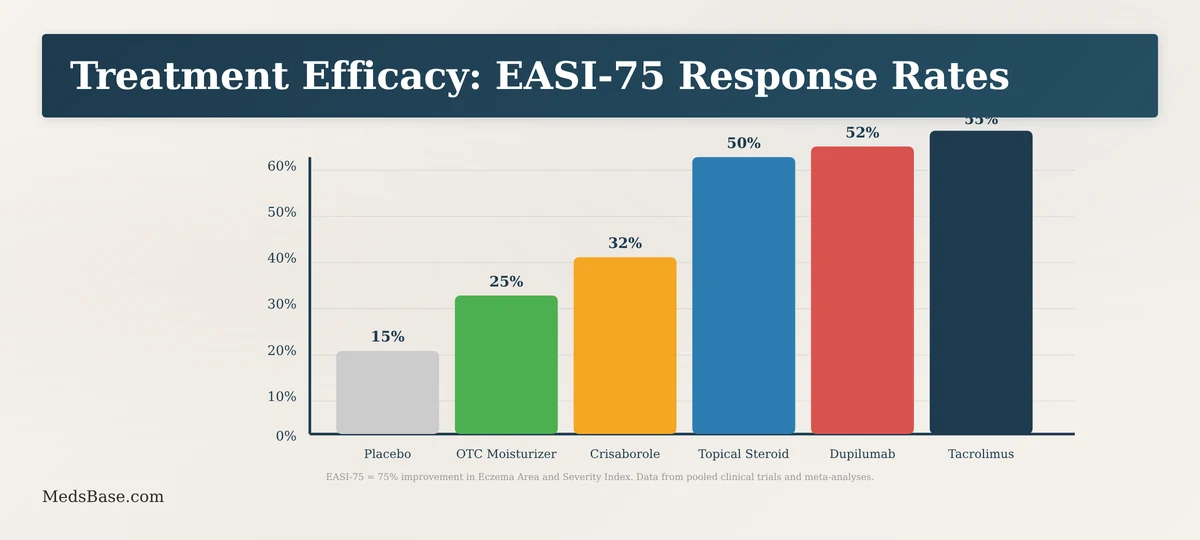
EASI-75 response rates for major eczema treatment options based on published clinical trial data.
When over-the-counter eczema treatment options are no longer enough — frequent flares, disrupted sleep, skin that bleeds from scratching — the next step is prescription topical therapy. These prescription eczema treatment options are applied directly to the skin, typically once or twice daily, and fall into three pharmacological classes: corticosteroids, calcineurin inhibitors, and PDE4 inhibitors.
Topical Corticosteroids
Topical corticosteroids have been the backbone of prescription eczema treatment options since the 1950s, and for good reason: they work quickly. A systematic review of 83 randomized controlled trials confirmed that topical corticosteroids are significantly more effective than vehicle (placebo cream) for clearing atopic dermatitis lesions, with potent and very potent formulations producing the largest effect sizes (PubMed). Corticosteroids work by binding to glucocorticoid receptors inside skin cells, which then translocate to the nucleus and switch off the transcription of pro-inflammatory genes — IL-4, IL-5, IL-13, and TNF-α among them.
Clinicians group topical corticosteroids by potency, and understanding this ladder is one of the most practical pieces of knowledge anyone navigating eczema treatment options can have:
| Potency Class | Example Agent | Typical Use Area | Max Duration |
|---|---|---|---|
| Mild (Class VII) | Hydrocortisone 1%–2.5% | Face, groin, children | 2 weeks continuous |
| Moderate (Class IV–V) | Triamcinolone 0.1%, betamethasone valerate 0.1% | Trunk, limbs | 2–4 weeks |
| Potent (Class II–III) | Mometasone furoate 0.1%, fluocinonide 0.05% | Thick-skinned areas, palms/soles | 2 weeks |
| Very Potent (Class I) | Clobetasol propionate 0.05% | Short courses only, resistant plaques | 1 week, small areas |
Side effects of topical corticosteroids — skin thinning (atrophy), striae, telangiectasia, and adrenal suppression — are real but overwhelmingly associated with prolonged use of potent agents on thin skin, especially the face and skin folds. Used correctly and for appropriate durations, topical corticosteroids remain among the safest and most effective eczema treatment options available.
Topical Calcineurin Inhibitors
Topical calcineurin inhibitors — tacrolimus ointment (Protopic) and pimecrolimus cream (Elidel) — represent the second major class of prescription topical eczema treatment options. They work by a fundamentally different mechanism than steroids: instead of broadly suppressing inflammation, they selectively inhibit calcineurin, a phosphatase enzyme that T-cells need to activate and produce inflammatory cytokines. Because they do not cause skin atrophy — even with prolonged use — they are the preferred steroid-sparing eczema treatment options for areas where skin thinning is a major concern: the eyelids, perioral area, neck, and skin folds.
A meta-analysis of 25 randomized controlled trials found that tacrolimus 0.1% is comparable in efficacy to a moderately potent topical corticosteroid and superior to pimecrolimus 1% for moderate atopic dermatitis (PubMed). The main drawbacks are a burning or stinging sensation during the first few days of application — usually transient — and a boxed warning from the FDA regarding a theoretical lymphoma risk, though large post-marketing studies have not confirmed a causal link. In practice, topical calcineurin inhibitors are widely used, effective eczema treatment options for maintenance therapy and sensitive-skin zones.
PDE4 Inhibitors — Crisaborole
Crisaborole (Eucrisa) is a non-steroidal topical ointment that inhibits phosphodiesterase-4, an enzyme that breaks down cyclic AMP inside inflammatory cells. By blocking PDE4, crisaborole raises intracellular cAMP levels, which in turn reduces the production of TNF-α, IL-12, and other pro-inflammatory cytokines. Two identical phase 3 trials (AD-301 and AD-302) demonstrated that crisaborole produced clear or almost-clear skin (ISGA score 0/1) in roughly 32% of patients versus 25% for vehicle at day 29 — a modest but statistically significant difference that makes it one of the newer prescription eczema treatment options suitable for mild-to-moderate disease (PubMed). Application-site stinging is common but usually resolves within the first week.
Who Is This For? / Who Should Avoid It?
Prescription topicals are for: people whose eczema is not controlled by OTC moisturizing and 1% hydrocortisone alone; those with moderate itching that disrupts sleep; those with visible plaques on multiple body areas; and anyone whose eczema recurs within days of stopping OTC treatment.
Use with extra caution in: pregnant or breastfeeding individuals (consult a doctor — mild/moderate steroids are generally considered safe but require medical guidance); infants under 3 months for any prescription eczema treatment options; and anyone with a known skin infection at the treatment site — treat the infection first.
Tier 3 — Systemic and Advanced Eczema Treatment Options
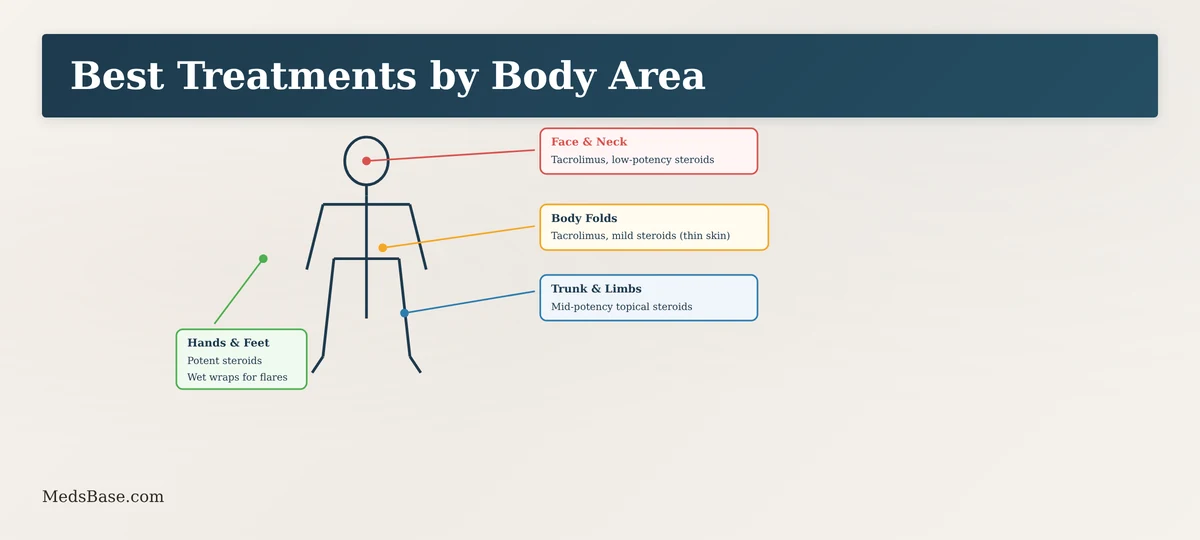
Recommended eczema treatment options vary by body area — face, hands, folds, and trunk each need a different approach.
For the roughly 10–20% of people with atopic dermatitis whose disease is moderate to severe and does not respond adequately to topical eczema treatment options, systemic therapies become necessary. These advanced eczema treatment options work from inside the body — through the bloodstream or by controlled light exposure — and can produce dramatic improvements even in cases where topical treatments have failed for years.
Oral Immunosuppressants
Before biologics entered the atopic dermatitis landscape, the only systemic eczema treatment options for severe disease were traditional oral immunosuppressants: cyclosporine, methotrexate, azathioprine, and mycophenolate mofetil. Cyclosporine remains the fastest-acting among them, often producing visible improvement within 2 weeks. However, its use is limited by nephrotoxicity and hypertension risk, and it is typically reserved for short-term flare control (8–12 weeks) rather than long-term maintenance. Methotrexate and mycophenolate mofetil work more slowly — onset of 6–12 weeks — but are safer for longer-term use when blood monitoring is maintained. All oral systemic eczema treatment options require regular lab work: liver function, kidney function, and complete blood counts.
Biologics — Dupilumab (Dupixent)
Dupilumab is an injectable monoclonal antibody that blocks the shared receptor subunit (IL-4Rα) for interleukin-4 and interleukin-13 — the two key Th2 cytokines that drive atopic dermatitis inflammation. It was the first biologic approved for moderate-to-severe atopic dermatitis and remains the most evidence-backed of all advanced eczema treatment options for severe disease. In the pivotal SOLO 1 and SOLO 2 trials, 36–38% of patients receiving dupilumab 300 mg every 2 weeks achieved clear or almost-clear skin (IGA 0/1) at week 16, compared with 8–10% on placebo; EASI-75 improvement was achieved by 51–52% of dupilumab patients versus 15% on placebo (PubMed).
Dupilumab is self-administered by subcutaneous injection every 2 weeks after an initial loading dose. The most common side effects are injection-site reactions and conjunctivitis (eye redness and irritation), the latter occurring in 10–20% of patients and usually manageable with artificial tears or short courses of ophthalmic drops. Unlike oral immunosuppressants, dupilumab does not require routine lab monitoring — a major practical advantage that has made it a preferred option among advanced eczema treatment options for eligible patients.
JAK Inhibitors
Janus kinase inhibitors — upadacitinib (Rinvoq) and abrocitinib (Cibinqo) — are the newest class of systemic eczema treatment options. These oral tablets block one or more JAK enzymes (JAK1, JAK2, JAK3, TYK2) that transmit inflammatory signals from cytokine receptors on the cell surface to the nucleus. Because they interrupt the signaling pathway further downstream than dupilumab, JAK inhibitors tend to work faster — some patients report reduced itching within 2–3 days. JAK inhibitors carry boxed warnings for serious infections, malignancy, major cardiovascular events, and thrombosis, based on safety data from the rheumatoid arthritis population. They are typically used when dupilumab has not provided adequate relief or when a patient prefers an oral route over injections.
Phototherapy (Light Treatment)
Narrowband UVB phototherapy, administered 2–3 times per week in a clinic, is a non-drug option among systemic eczema treatment options. UVB light penetrates the epidermis and directly induces apoptosis in activated T-cells while boosting the skin’s production of vitamin D and antimicrobial peptides. It is particularly useful for patients with widespread eczema who have contraindications to systemic medications — for example, during pregnancy or in adolescents. The main practical barriers are the time commitment (2–3 clinic visits per week for 12–16 weeks), geographic access to a phototherapy unit, and an increased long-term risk of skin cancer with cumulative UV exposure — though narrowband UVB carries less risk than older broadband or PUVA protocols.
Research Summary: Key Clinical Trials for Advanced Eczema Treatment Options
| Treatment | Trial / Study | IGA 0/1 Rate | EASI-75 Rate | Peak Itch Reduction (NRS) |
|---|---|---|---|---|
| Dupilumab 300 mg q2w | SOLO 1/2, wk 16 | ~37% | ~51% | −4.3 points |
| Upadacitinib 30 mg | Measure Up 1/2, wk 16 | ~62% | ~80% | −5.0 points |
| Abrocitinib 200 mg | JADE MONO-1/2, wk 12 | ~44% | ~63% | −4.3 points |
| Crisaborole 2% | AD-301/302, day 29 | ~32% | N/A (mild-mod) | N/A |
| Narrowband UVB | Multiple RCTs, wk 12 | ~30–50% | ~40–55% | Variable |
IGA = Investigator Global Assessment (clear/almost clear). EASI-75 = ≥75% improvement in Eczema Area and Severity Index. NRS = Numerical Rating Scale for itch (0–10). Data from published phase 3 trials; individual results vary.
Selecting among these eczema treatment options depends on disease severity, previous treatment response, comorbidities, injection tolerance, insurance coverage, and personal preference. A dermatologist will typically start with dupilumab for biologic-naive patients with moderate-to-severe disease, step to JAK inhibitors for non-responders or those who need rapid itch relief, and preserve oral immunosuppressants for situations where cost or access limits biologic or JAK inhibitor use.
While this site does not stock biologic medications, you can Browse medicated creams for eczema and psoriasis that support skin recovery when used alongside medical therapies.
Eczema Treatment Options by Body Area
Not all eczema treatment options are appropriate everywhere on the body. Skin thickness, sensitivity to atrophy, and absorption rate vary dramatically across different body zones. One of the most common mistakes people make with eczema treatment options is using the same potency steroid on the face that they use on their hands — a decision that can lead to permanent thinning of facial skin within weeks. Here is how evidence-based eczema treatment options map to the major body areas affected by atopic dermatitis.
| Body Area | Skin Characteristics | Preferred Eczema Treatment Options | Treatments to Avoid |
|---|---|---|---|
| Face and Eyelids | Thinnest skin, highest absorption, visible | Mild TCS (hydrocortisone 1–2.5%), TCIs (tacrolimus, pimecrolimus), crisaborole, frequent moisturizing | Moderate or potent TCS, prolonged use of any steroid beyond 5–7 days without a break |
| Hands | Thick stratum corneum, frequent washing, occupational irritant exposure | Potent TCS for flares, ointment-based moisturizers under cotton gloves at night, TCIs for maintenance | Lotions (too weak), infrequent moisturizing |
| Body Folds (elbows, knees, groin) | Occlusion increases absorption ~10×; prone to fungal co-infection | TCIs (no atrophy risk), mild-to-moderate TCS for short courses, antifungal if suspected | Potent or very potent TCS, thick ointments that trap sweat |
| Trunk and Limbs | Moderate thickness, larger surface area | Moderate-to-potent TCS, TCIs, liberal moisturizer use, phototherapy candidate | Very potent TCS on large areas without monitoring |
| Scalp | Hair blocks creams; follicles increase absorption | Steroid lotions or solutions (not creams), tar-based shampoos, TCI for maintenance | Ointments (messy, hard to apply), moisturizing creams that mat hair |
The body-area principle applies to all eczema treatment options — not just topicals. For instance, phototherapy is excellent for widespread truncal eczema but cannot treat the scalp effectively because hair blocks UV light. Dupilumab works systemically regardless of body area, which is one reason it is a preferred option when eczema affects multiple sensitive zones simultaneously.
Natural and Lifestyle Eczema Treatment Options
Lifestyle-based eczema treatment options do not replace medical treatment for moderate-to-severe eczema, but they can meaningfully reduce flare frequency, lessen dependence on prescription medications, and improve quality of life. What distinguishes evidence-supported lifestyle eczema treatment options from internet folklore is the presence of controlled data — and several interventions meet that standard.
Trigger Identification and Avoidance
The NIAMS highlights that environmental factors — tobacco smoke, air pollutants, fragrances, and excessively dry air — can trigger or worsen atopic dermatitis by disrupting the skin barrier and activating the immune system (NIAMS). Common triggers include fragranced soaps and detergents, wool and synthetic fabrics, dust mites, pet dander, pollen, stress, sweat, and sudden temperature changes. Keeping a simple flare diary for 4–6 weeks — noting what you ate, wore, did, and were exposed to in the 24 hours before each flare — often reveals patterns that make trigger avoidance among the most personalized eczema treatment options available.
Diet and Eczema
Food allergies are more common in people with atopic dermatitis than in the general population, but the relationship is often misunderstood. For most adults with eczema, food is a flare amplifier rather than a root cause. If a specific food consistently triggers a flare within hours of ingestion — eggs, cow’s milk, peanuts, soy, and wheat are the most common culprits — an elimination diet under medical supervision can be a useful addition to other eczema treatment options. Unsupervised elimination diets, especially in children, risk nutritional deficiencies and are not recommended. Probiotic supplementation has shown mixed results: a Cochrane review found no consistent evidence that probiotics improve established eczema, though some studies suggest a modest preventive effect when given to pregnant women and infants in high-risk families (Cochrane Library).
Wet Wrap Therapy
Wet wrap therapy — applying moisturizer or a topical corticosteroid beneath a layer of damp cotton bandages or clothing, followed by a dry outer layer — is an intensification technique among eczema treatment options rather than a standalone treatment. It works by physically cooling the skin, preventing scratching, and dramatically increasing drug penetration into the epidermis. Wet wraps are typically used for 3–7 days during severe flares, applied at night or changed every 8–12 hours, and are most effective when the inner product is prescribed by a doctor rather than chosen off the shelf. For young children with severe atopic dermatitis, wet wraps can reduce the need for systemic eczema treatment options by delivering topical therapies more effectively.
Stress Management
The connection between psychological stress and eczema flares is bidirectional: stress triggers flares through cortisol-mediated immune dysregulation, and the visible, itchy nature of eczema causes stress. Mindfulness-based stress reduction, cognitive behavioral therapy, and adequate sleep hygiene are low-risk adjunct eczema treatment options that address this feedback loop. A small but growing body of clinical trials suggests that psychological interventions can reduce eczema severity scores in motivated patients, though they are unlikely to replace pharmacotherapy for moderate-to-severe disease.
Bleach Baths
Dilute bleach baths — roughly half a cup of regular 6% household bleach in a full standard bathtub (40 gallons) — bypass the skin’s colonization with Staphylococcus aureus. People with atopic dermatitis are disproportionately colonized with S. aureus, and the bacterial density correlates with disease severity. By reducing the bacterial load on the skin surface, bleach baths can decrease the frequency of secondary infections and, in some patients, reduce eczema severity. A 10-minute soak twice weekly is the typical regimen. Bleach baths are not a first-line among eczema treatment options — they are a targeted tool for people who get frequent skin infections or whose eczema does not settle despite adequate topical therapy.
If you are managing eczema alongside other skin conditions, the skin care category includes products that support general skin health and barrier repair.
Related Reading
- Eczema and Psoriasis Treatment Options at MedsBase — Browse topical treatments for inflammatory skin conditions.
- Skin Care Products and Barrier Support — Moisturizers, cleansers, and emollients for daily skin maintenance.
- Chronic Condition Management — Long-term strategies for managing persistent health conditions.
Frequently Asked Questions
What are the most effective eczema treatment options for mild eczema?
For mild eczema — occasional dry, itchy patches without open skin or sleep disruption — the most effective eczema treatment options are consistent moisturizing with a lipid-rich emollient (ointment or thick cream) applied at least twice daily, fragrance-free cleansers instead of soap, and short courses of OTC 1% hydrocortisone cream for active patches. The NHS recommends applying emollients immediately after bathing and using them as a soap substitute during washing to maximize barrier repair. Avoiding known triggers — fragranced products, wool, overheating — amplifies these basic eczema treatment options and often keeps mild disease from progressing.
Do eczema treatment options differ for the face versus the body?
Yes, significantly. The facial skin is much thinner and more vascular than the skin on the trunk or limbs, which means topical medications absorb faster and the risk of skin thinning (atrophy) from corticosteroids is higher. For facial eczema, the preferred eczema treatment options are mild topical corticosteroids (1% hydrocortisone) for short courses, topical calcineurin inhibitors (tacrolimus or pimecrolimus) for longer-term use, or crisaborole. Potent or very potent steroids should be avoided on the face unless a dermatologist directly instructs otherwise for a specific, time-limited reason.
How long do prescription eczema treatment options take to work?
Timelines vary by class. Topical corticosteroids typically reduce redness and itching within 2–5 days of starting; visible plaque clearance may take 1–2 weeks. Topical calcineurin inhibitors take slightly longer — 1–2 weeks for noticeable improvement, with continued gains over 4–6 weeks. Among systemic eczema treatment options, dupilumab usually produces noticeable itch reduction within 2–4 weeks and visible skin improvement by weeks 4–8. JAK inhibitors like upadacitinib can reduce itching within 2–3 days and produce visible clearance within 1–2 weeks — faster than any other eczema treatment options in the moderate-to-severe category. Phototherapy requires consistency: improvement typically begins at weeks 4–6, with optimal results at weeks 12–16.
Are there eczema treatment options that do not involve steroids?
Yes, there are multiple effective non-steroidal eczema treatment options. Topical calcineurin inhibitors (tacrolimus, pimecrolimus) and the PDE4 inhibitor crisaborole are prescription-strength non-steroidal topicals suitable for ongoing use on sensitive areas. For systemic therapy, dupilumab is a biologic, not a steroid, and JAK inhibitors are oral targeted therapies. Phototherapy is entirely drug-free. Moisturizers, wet wrap therapy, trigger avoidance, and oatmeal baths are over-the-counter non-steroidal eczema treatment options that form the foundation of management. Steroid-free does not mean less effective — in many cases, non-steroidal options are preferred for long-term maintenance precisely because they avoid the atrophy and tachyphylaxis risks associated with chronic steroid use.
Can eczema treatment options cure eczema permanently?
No currently available eczema treatment options can cure atopic dermatitis — it is a chronic condition with a genetic component. However, effective eczema treatment options can produce long periods of clear skin (remission) and dramatically reduce the frequency and severity of flares. Many children outgrow eczema as their skin barrier matures around puberty. For adults whose eczema persists, the goal of treatment is sustained control, not a one-time fix. The good news is that modern eczema treatment options — particularly biologics and JAK inhibitors — produce deeper and more durable remissions than were achievable even a decade ago.
What is the best eczema skin care routine to support eczema treatment options?
An effective eczema skin care routine has three simple steps: cleanse gently, medicate as prescribed, and moisturize generously. Use a fragrance-free, non-foaming cleanser or an emollient wash in lukewarm water (hot water strips lipids from the skin). Pat dry, do not rub. Apply any prescription topical medication to active eczema patches while the skin is still slightly damp — this improves absorption. Then apply a thick moisturizer or ointment to the entire body — not just the visible eczema — within three minutes of leaving the bathroom. This “soak and seal” method maximizes the benefit of all eczema treatment options by locking hydration into the skin barrier at its most receptive moment.
Are natural eczema treatment options supported by evidence?
Some natural or lifestyle-based eczema treatment options have clinical evidence behind them: colloidal oatmeal baths (avenanthramides block histamine release), wet wrap therapy (enhances drug delivery and prevents scratching), bleach baths (reduce S. aureus colonization), and sunflower seed oil (contains linoleic acid, which has anti-inflammatory properties in the skin). Others — coconut oil as a primary treatment, apple cider vinegar soaks, and most herbal supplements — lack rigorous trial data and should be viewed as complementary at most. No natural eczema treatment options have been shown to match the efficacy of prescription medications for moderate-to-severe atopic dermatitis. The wisest approach is to use evidence-supported lifestyle eczema treatment options alongside, not instead of, medical therapy.
When should I move from OTC to prescription eczema treatment options?
Move from over-the-counter to prescription eczema treatment options if any of these apply: OTC 1% hydrocortisone no longer controls flares within 5–7 days; you need OTC hydrocortisone more than twice a month; eczema covers more than 10% of your body surface area; itching regularly disrupts sleep; skin is cracked, oozing, or showing signs of infection (yellow crusting, increased pain, warmth); or eczema on the face, neck, or skin folds is not improving with conservative care. These are all signals that the inflammatory process has outpaced what basic eczema treatment options can manage, and a doctor should evaluate whether prescription therapy is warranted.
The Bottom Line
Eczema treatment options span a wide and well-studied spectrum — from twice-daily moisturizers that cost a few dollars to biologic therapies backed by large randomized controlled trials. The treatment you need depends on your disease severity, which body areas are affected, how you have responded to previous eczema treatment options, and your tolerance for side effects or monitoring requirements. What matters most is not finding the single “best” product but understanding the structure of the treatment ladder and moving up it methodically when lower-tier eczema treatment options stop working.
Start at Tier 1: a high-lipid moisturizer applied twice daily, fragrance-free living, and trigger awareness. If that is not enough, add Tier 2: a prescription topical — a steroid, calcineurin inhibitor, or PDE4 inhibitor — matched to the body area being treated. If topical eczema treatment options still fall short, Tier 3 systemic therapies — biologics, JAK inhibitors, or phototherapy — offer robust, data-backed paths to clear or near-clear skin. The vast majority of people with atopic dermatitis achieve satisfactory control within Tiers 1 and 2. For those who need Tier 3, the arrival of targeted biologics and JAK inhibitors over the past decade has transformed what severe eczema patients can expect from treatment.
If you are managing mild-to-moderate eczema with topical medications, See eczema and psoriasis treatment options at MedsBase. For broader skin support, explore the skin care range. And if you take other long-term medications — for blood pressure, cholesterol, or diabetes — the problem of prescribing cascades is worth understanding: adding a new drug to treat the side effect of an existing one is surprisingly common, and eczema can sometimes be the skin manifestation of that cycle.
Medical Disclaimer
This article is for informational purposes only and does not constitute medical advice. Eczema treatment options should be selected in consultation with a qualified healthcare provider who can evaluate your individual circumstances, medical history, and disease severity. Do not start, stop, or change any prescription eczema treatment without discussing it with your doctor. If you experience signs of skin infection — increased pain, swelling, warmth, yellow crusting, or fever — seek medical attention promptly.
—

Written by
Sophie ChenPharmaceutical Content Researcher · 8 years experience
Sophie Chen is a pharmaceutical content researcher with 8 years covering generic medication access and clinical pharmacology. She specialises in international regulatory frameworks, bioequivalence standards, and patient-facing education on therapeutic drug classes. She is not a clinician.