







Emoderm Cream
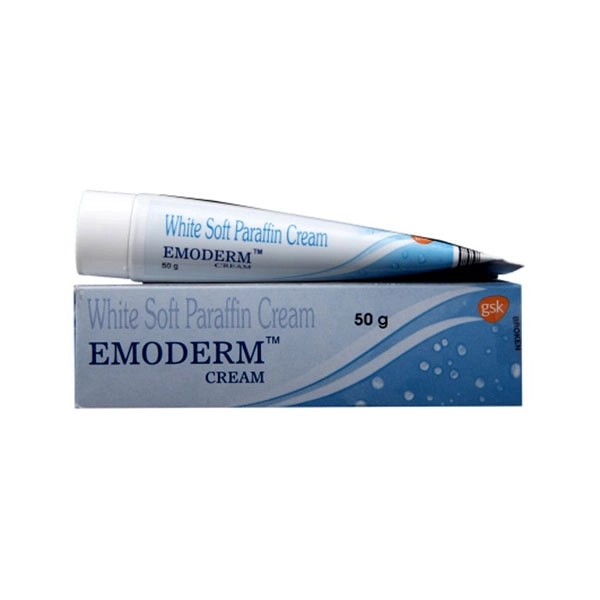

✅ Heals dry skin
✅ Soothes skin irritation
✅ Promotes skin regeneration
✅ Provides intense moisturization
✅ Protects against environmental damage
✓ Medically reviewed by Morgan Ellis — Pharmacy Researcher · 8 years experience · Last reviewed: May 2026
💡 Quick Answer — What is Emoderm Cream?
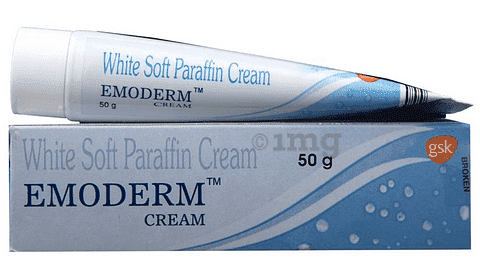
Emoderm Cream contains light liquid paraffin 13.2% + white soft paraffin 10.2% — a topical emollient and skin-barrier moisturiser for dry skin, atopic dermatitis (eczema), ichthyosis, xerosis of ageing, and post-inflammatory dryness. Apply liberally 2–4 times daily, particularly after bathing while skin is still damp. Continue indefinitely for chronic dry-skin conditions; reduces flare rate by ~50%. Emollients are the foundation of dry-skin and eczema management — they are not a “treatment” of inflammation but reduce baseline severity and steroid requirement.
📦 Every order is covered by our Reshipment Assurance Policy — if your parcel does not arrive within 20 business days, we reship it.
Why order from MedsBase
Our generic medications are sourced from WHO-GMP certified manufacturers and shipped worldwide in discreet, plain packaging — no medication name on the parcel exterior. Card payments are routed through a regulated processor (statement descriptors include a regulated card-payment processor — never “MedsBase” or any medication name). Crypto and SEPA bank transfer are also accepted. Every order is backed by our Reshipment Assurance Policy.
Why order from MedsBase
Choosing Emoderm Cream from MedsBase:
- WHO-GMP certified manufacturer — sourced from a regulated facility, finished pack with batch number and expiry.
- Discreet packaging — plain envelope, no medication name on the outside.
- Worldwide shipping with Reshipment Assurance — if your parcel does not arrive within 20 business days we re-ship at no cost (subject to policy terms).
- Loyalty points — 1 point per $1 spent (excludes peptides); 100 points = $5 off.
What Emoderm Cream is and how it works
Emoderm Cream contains light liquid paraffin 13.2% + white soft paraffin 10.2%. Light and white soft paraffin form an occlusive barrier on the skin surface, reducing transepidermal water loss by ~50%. Heavy occlusive emollients are most effective for very dry skin and are the mainstay of eczema management. Manufacturer: Curatio (WHO-GMP certified).
Indications
- Dry skin (xerosis) — generalised or focal.
- Atopic dermatitis (eczema) — daily emollient is the foundation of management; reduces flare frequency by ~50% and reduces topical steroid requirements.
- Ichthyosis — congenital and acquired.
- Hyperkeratotic skin — palms, soles, heels (urea-based formulations).
- Post-inflammatory dryness — after eczema flare, sunburn, peel, or laser.
- Senile xerosis — age-related skin dryness.
How to apply
- Apply liberally 2–4 times daily, including immediately after bathing while skin is still damp (locks in moisture).
- Use generous amounts — adults typically need 250–500 g per week for whole-body eczema management.
- Apply in the direction of hair growth to reduce folliculitis.
- Soap-substitute use: also use Emoderm Cream as a cleanser (avoid foaming soaps that strip natural lipids).
- For heel and elbow hyperkeratosis: apply at night, occlude with cotton socks/gloves overnight.
Side effects
- Very rare: contact dermatitis to a fragrance or preservative excipient (rare with emollients).
- Folliculitis: can occur with occlusive heavy emollients — apply in direction of hair growth and avoid overuse on hairy areas.
- Greasy clothing/bedding stains: particularly with paraffin-based emollients — wear cotton; the staining is harmless.
⚠️ Paraffin emollients & flammability — Paraffin-based emollients (white soft paraffin, liquid paraffin) are flammable. Patients using large amounts on bedding or clothing should avoid open flames and smoking — there are reported cases of clothing or bedding fires in heavy emollient users. Wash clothes and bedding regularly to remove residue.
Contraindications
- Known hypersensitivity to formulation excipients (very rare).
- Open infected wounds (use medical-grade dressings instead).
Pregnancy & breastfeeding
Emollients are safe in pregnancy and breastfeeding. They are the preferred dry-skin treatment in this context. Avoid breast/nipple before feeding.
Storage
Store below 25 °C. Keep container closed.
Frequently Asked Questions
How is Emoderm Cream different from a regular moisturiser?
Therapeutic emollients are formulated for damaged or compromised skin barriers — higher lipid content, fewer fragrances, gentler preservatives, and a clinically-evidenced role in eczema management. Cosmetic moisturisers are for normal skin and may contain irritants.
How much do I need?
Adults with whole-body eczema typically need 250–500 g per week — much more than people initially apply. Underuse is the main cause of perceived emollient failure.
Should I apply moisturiser before or after my steroid?
Both work. The current consensus: apply the steroid to the inflamed area FIRST (so it reaches the skin), wait 15 minutes, then moisturise. Some prefer moisturiser first → wait 15 min → steroid. Avoid mixing them in the hand before application — this dilutes the steroid.
Can Emoderm Cream replace topical steroids?
No — emollients reduce flare rate by ~50% and reduce steroid need, but do not treat active inflammation. Active flares need topical steroid or calcineurin inhibitor.
Is Emoderm Cream safe for babies?
Yes — emollients are first-line for infant atopic dermatitis. Apply liberally, several times a day, especially after bathing.
How long after applying can I dress?
5–10 minutes. Wear cotton clothing — synthetic fabrics trap heat and worsen eczema.
My skin feels greasy — am I using too much?
A film of emollient is intentional. If your skin still feels dry after 30 minutes, you need MORE emollient, not less. If it feels uncomfortably greasy, switch to a lighter formulation.
Can I use Emoderm Cream on my face?
Yes — but lighter formulations are usually more cosmetically acceptable on face. Heavy paraffins can cause folliculitis on facial skin.
Why must I apply after bathing?
Bathing removes the natural skin lipids; applying emollient on damp skin within 3 minutes locks in moisture and partially restores the barrier. Bathing without emollient afterwards worsens dry skin.
Can I use Emoderm Cream as a soap substitute?
Yes — and it is recommended for severe dry skin and eczema. Replace foaming soaps and shower gels with emollient as a cleanser; foaming detergents strip lipids and worsen barrier dysfunction.
See also: Lox 2% Jelly — Neon Labs lidocaine 2% topical gel for haemorrhoids, urinary catheterisation, premature ejaculation and minor procedures.
Other Beauty & Skin Care Medications
- Melalite Forte Cream — hydroquinone 4% for melasma
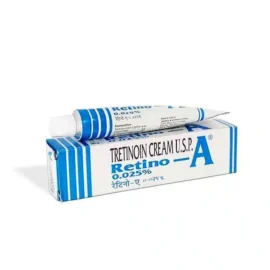
- Retino-A Cream — tretinoin for acne and ageing
- Melacare Cream — Kligman triple for melasma
- Permite Cream — permethrin 5% for scabies
- Tenovate Cream — clobetasol 0.05% for severe inflammation
Medical disclaimer. This content is for general information about the product and is not medical advice or a substitute for advice from a qualified healthcare professional. Use any topical or oral medication only under appropriate medical supervision; misuse can cause serious harm.
More options in Beauty & Skin Care
Ranked by recent MedsBase order volume — what other customers in this category are picking.


| Strength | 50 mg |
|---|---|
| Quantity | 1 Tube/s, 3 Tube/s, 6 Tube/s |
| Pharma Form | Cream/s |
| Manufacturer | Glaxo SmithKline |
| Treatment | White Soft Paraffin |
| Generic Brand | Propylene glycol |
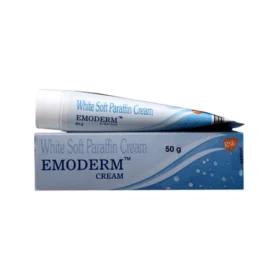 Emoderm Cream
Q & A
Emoderm Cream
Related products

Reviews
There are no reviews yet