







Endogest
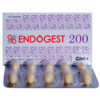
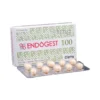
✅ Hormone balance support
✅ Menstrual cycle regulation
✅ Fertility enhancement
✅ Pregnancy maintenance
✅ Menopausal symptom relief
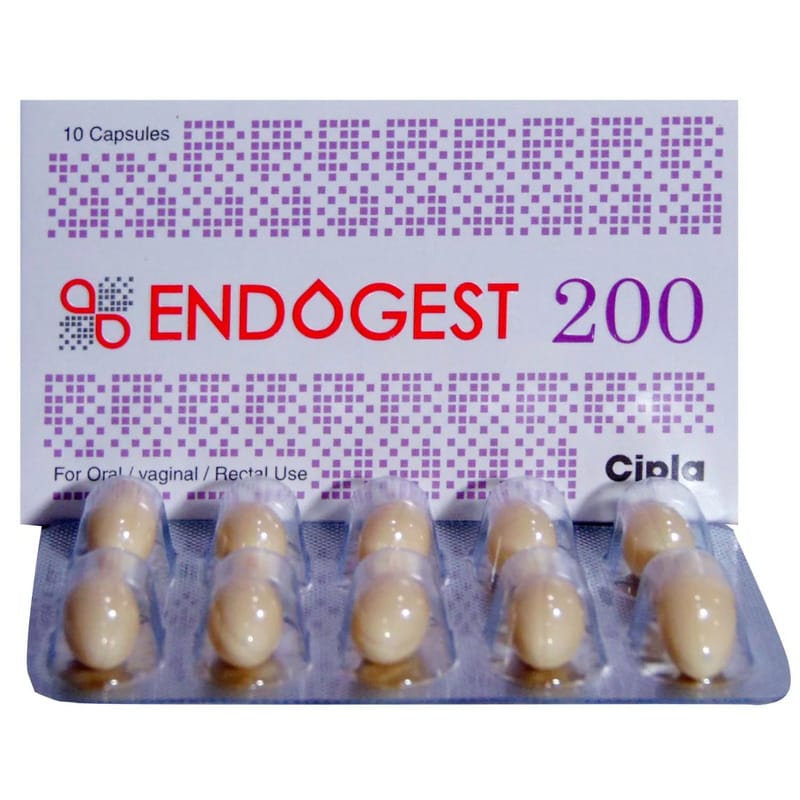
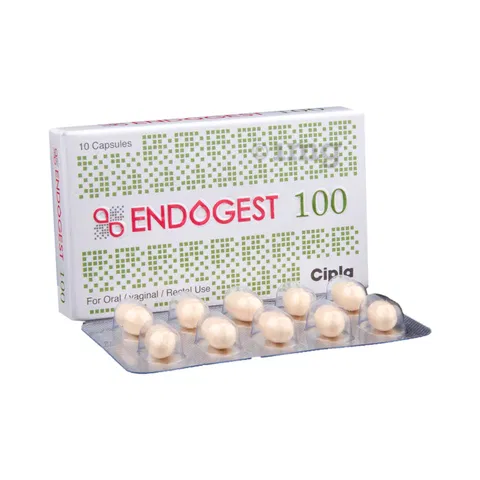
Endogest contains Progesterone.
✓ Medically reviewed by Morgan Ellis — Pharmacy Researcher · 8 years experience · Last reviewed: May 2026
💡 Quick Answer
Endogest is micronized (natural) progesterone 100 mg in oral capsule/tablet form. Uses: progestin opposition in HRT, luteal phase support (IVF, recurrent miscarriage), secondary amenorrhoea, endometrial hyperplasia treatment, and premenstrual support. Micronized progesterone is bioidentical and has a more favourable cardiovascular and breast-cancer profile than synthetic progestins (medroxyprogesterone). Take at bedtime — causes drowsiness (a common indication for HRT sleep).
📦 Every order is covered by our Reshipment Assurance Policy — if your parcel does not arrive within 20 business days, we reship it.
Why order from MedsBase
Every MedsBase order ships from a WHO-GMP certified manufacturer in plain, fully discreet packaging — nothing on the outside identifies the contents or the pharmacy. Card payments run through a regulated crypto on-ramp; the statement descriptor on your bank record is the processor name (a regulated card-payment processor) — never “MedsBase” or anything pharmacy-related. Crypto payments via Plisio stay fully anonymous. Every parcel is covered by our Reshipment Assurance Policy.
What Is Endogest?
Endogest is a branded generic of micronized progesterone, a bioidentical form of the natural progesterone hormone produced by the ovaries. “Micronized” means the progesterone particles are reduced to tiny sizes to improve oral absorption (regular crystalline progesterone is poorly absorbed).
Micronized progesterone differs from synthetic progestins (medroxyprogesterone, norethindrone, levonorgestrel). Synthetic progestins have stronger androgenic or anti-androgenic effects and have been linked in large trials (WHI) to higher breast cancer risk when combined with estrogen. Bioidentical progesterone, in contrast, appears to have a neutral or slightly favourable profile in observational studies (E3N, French cohort) — though RCT evidence is less robust.
Strength: 100 mg. Manufactured by Zydus Cadila.
Clinical Uses
- Progestin opposition in HRT: 100 mg daily (continuous-combined) or 200 mg for 10–14 days per cycle (sequential) when taking systemic estrogen in women with a uterus.
- Luteal phase support in IVF and assisted reproduction: 200–600 mg daily starting after egg retrieval.
- Recurrent miscarriage (selected cases, based on PRISM and PROMISE trial data — benefit in women with ≥3 previous miscarriages and current bleeding, not all-comers).
- Secondary amenorrhoea: progesterone challenge test to assess endometrial proliferation.
- Endometrial hyperplasia (simple, without atypia): 100–200 mg cyclical progesterone.
- Premenstrual syndrome / PMDD (limited evidence; less effective than SSRIs or drospirenone-containing COCs).
How to Take
- Take at bedtime — progesterone causes drowsiness (via GABA-A receptor activity of its metabolite allopregnanolone). Many women use this sleep-inducing effect as a helpful HRT adjunct.
- Swallow whole with water. With or without food — food slightly increases absorption.
- HRT cyclic regimen: 100–200 mg daily on days 15–28 of each 28-day cycle (withdrawal bleed follows).
- HRT continuous-combined regimen: 100 mg daily (every day, every month). No withdrawal bleed after 3–6 months.
- Luteal support: 200–400 mg/day starting after egg retrieval or ovulation; vaginal administration is also used (off-label, better bioavailability, avoids drowsiness).
- Do not crush — micronized formulation requires intact capsule for absorption properties.
Side Effects
Common: drowsiness (actually often desirable — see above), dizziness, fatigue, headache, breast tenderness, irregular bleeding (sequential regimen), bloating, mild mood effects.
Less common: vaginal discharge, joint/muscle aches, allergic reactions.
Rare: cholestasis, jaundice, acute pancreatitis, increased risk of thrombosis (much less than synthetic progestins), dysphoric mood changes.
Who Should Not Take Endogest
- Current or recent breast cancer (individualised — discuss with oncologist)
- Active liver disease
- Known or suspected pregnancy (unless used as pregnancy support with clinician guidance)
- Undiagnosed vaginal bleeding
- Known hypersensitivity to progesterone or excipients (peanut oil is a common excipient — beware if peanut-allergic)
- History of VTE — caution; synthetic progestins are higher risk than micronized
Micronized vs Synthetic Progestins — Why It Matters
| Feature | Micronized progesterone (natural) | Medroxyprogesterone acetate (synthetic) |
|---|---|---|
| Breast cancer risk (in HRT) | Neutral in French E3N cohort | Increased (WHI data) |
| Cardiovascular | Neutral | Possibly unfavourable |
| Sleep effect | Sedative (GABA-A metabolite) | Minimal |
| Mood effects | Often neutral or soothing | Can worsen mood in some women |
| Endometrial protection | Adequate at 100 mg daily or 200 mg cyclical | Established |
Storage
Store at room temperature (15–25 °C / 59–77 °F), away from moisture and sunlight. Keep in original container. Keep out of reach of children.
Frequently Asked Questions
Why take Endogest at bedtime?
Progesterone is metabolised to allopregnanolone, which activates GABA-A receptors and causes drowsiness. Bedtime dosing turns a common side effect into a sleep benefit — many women report better sleep on cyclic progesterone as part of HRT.
Micronized vs synthetic progestin — which is better?
Micronized (bioidentical) progesterone appears to have a more favourable safety profile in observational studies (E3N French cohort), particularly for breast cancer. Synthetic progestins (medroxyprogesterone, levonorgestrel, norethindrone) are well-studied and effective but with slightly higher breast-cancer signal in large HRT trials (WHI). Discuss with a clinician.
Can I use Endogest vaginally?
Yes — off-label vaginal use is common in IVF and fertility practice. Vaginal route bypasses first-pass metabolism, giving higher uterine concentrations and fewer side effects. For HRT use, oral is typical; discuss with a gynaecologist.
Do I need Endogest if I've had a hysterectomy?
No. Progestin opposition is only needed to protect the uterine lining from estrogen-induced hyperplasia. Post-hysterectomy, estrogen alone is sufficient.
What if I get breakthrough bleeding?
Some breakthrough bleeding is normal in the first 3–6 months of continuous-combined HRT. Persistent or heavy bleeding beyond 6 months warrants clinical review (ultrasound +/- endometrial biopsy).
Can Endogest help premenstrual symptoms?
Evidence is mixed. Some women benefit from cyclic progesterone for PMS/PMDD, but SSRIs (fluoxetine, sertraline) and drospirenone-containing COCs have stronger trial support. Progesterone is a reasonable option when SSRIs are not tolerated.
Does Endogest cause weight gain?
Micronized progesterone is generally weight-neutral. Some women report mild fluid retention that resolves within 1–2 cycles.
Can I take Endogest during pregnancy?
Progesterone is often used in early pregnancy for luteal support (IVF, recurrent miscarriage with current bleeding per PRISM trial). Use in pregnancy should be guided by a fertility specialist or obstetrician.
Related Hormone & Women’s Health Products
- Premarin (Conjugated Estrogens)
- Premarin Cream (Vaginal Estrogen)
- Progynova (Estradiol Valerate)
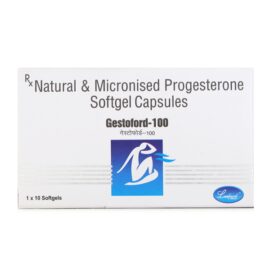
- Gestoford (Progesterone 100 mg)
- Gestheal (Progesterone 200 mg)
- Susten Capsule (Progesterone)
- Susten Injection (Progesterone)
⚕️ Medical Disclaimer: Information is educational and does not replace medical advice. Hormone therapies carry specific risks (breast cancer, VTE, stroke, endometrial cancer if unopposed estrogen) — consult a clinician before starting, stopping, or changing any hormone medication. Individual risk–benefit depends on personal and family medical history.
Related Alternatives
Other products in Women's Health that customers also view:
More options in Hormone Replacement Therapy (HRT) Medication for Menopause
Ranked by recent MedsBase order volume — what other customers in this category are picking.
| Strength | 100 mg, 200 mg |
|---|---|
| Quantity | 30 Tablet/s, 60 Tablet/s, 90 Tablet/s, 180 Tablet/s |
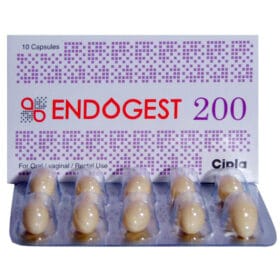 Endogest
Q & A
Endogest
Related products






Reviews
There are no reviews yet