








✓ Medically reviewed by · Last reviewed: May 2026
Pharmacy Researcher · 8 years experience
Pharmacy researcher with 8 years reviewing clinical drug information, generic formulation equivalence, and international pharmaceutical standards. Focuses on patient-facing accuracy in medication education.
mini stroke TIA warning signs and prevention — Mini-Stroke (TIA): 8 Warning Signs You Must Not Ignore and How to Prevent a Full Stroke. Read on for an evidence-backed guide covering everything you need to know.
Quick Answer: A mini stroke (TIA) is a temporary blockage of blood flow to the brain that resolves within minutes to hours — but it is not harmless. A TIA is your single most important warning that a full, disabling stroke may be imminent. Approximately 1 in 3 people who have a TIA will eventually have a full stroke, with the highest risk in the first 48 hours. The good news: recognizing the mini stroke TIA warning signs and prevention steps — and acting on them immediately — can cut that risk by up to 80%. The BEFAST acronym (Balance, Eyes, Face, Arms, Speech, Time) is the universal tool for spotting a TIA or stroke. If you or someone near you shows any of these signs, call emergency services immediately — even if the symptoms go away.
Key Takeaways
- A TIA (transient ischaemic attack) is a temporary stroke — symptoms resolve, but the danger does not.
- 1 in 3 people who have a TIA go on to have a full stroke, with the highest risk in the first 48 hours.
- A 2026 study found that TIA survivors face a 34% higher risk of developing dementia compared to those who never had one.
- The BEFAST acronym is the gold standard for recognizing mini stroke TIA warning signs and prevention begins the moment you spot them.
- Medication adherence — antiplatelets, antihypertensives, and statins — after a TIA can reduce recurrent stroke risk by as much as 80%.
- Intensive blood pressure control (targeting below 120/80 mmHg) is the single most powerful prevention strategy.
- Never dismiss symptoms that disappear — a TIA is a medical emergency, not a close call to be grateful for.
Table of Contents
- What Is a Mini-Stroke (TIA)?
- How Does a TIA Happen?
- 8 Warning Signs of a Mini-Stroke TIA
- Why a TIA Is a Medical Emergency
- What Happens After a TIA?
- Medications for Mini Stroke TIA Warning Signs and Prevention
- Lifestyle Changes That Lower Your Stroke Risk
- TIA vs Full Stroke
- Frequently Asked Questions
- The Bottom Line
Mini stroke TIA warning signs and prevention — many people think a mini-stroke is no big deal because the symptoms disappear. They brush it off as a dizzy spell, a migraine, or just being overtired — and they never tell their doctor. The research tells a different story. A transient ischaemic attack, or TIA, is not a “near miss” to be grateful for. It is a blaring alarm that your brain’s blood supply is compromised, and without immediate action, a full stroke — one that causes permanent brain damage, disability, or death — may be days or even hours away.
And yet, most people cannot name all the mini stroke TIA warning signs and prevention strategies that could save their life. One symptom in particular is so commonly mistaken for something else that emergency departments report patients delaying care by hours or even days — losing the critical window when intervention is most effective. By the end of this article, you will know exactly what that symptom is, how to recognize all eight warning signs, and the evidence-based mini stroke TIA warning signs and prevention steps that lower your risk of a catastrophic stroke.
What Is a Mini-Stroke (TIA)? — Mini stroke TIA warning signs and prevention Explained
Mini stroke TIA warning signs and prevention — a mini-stroke — medically called a transient ischaemic attack or TIA — is a temporary interruption of blood flow to a part of the brain. Unlike a full ischaemic stroke, where the blockage persists long enough to kill brain cells, a TIA resolves on its own, typically within minutes to an hour. The defining characteristic is that symptoms are transient: they appear suddenly, last anywhere from a few seconds to several hours (though most resolve within 60 minutes), and then disappear completely.
Mini stroke TIA warning signs and prevention — the American Heart Association and American Stroke Association (AHA/ASA) define a TIA as “a transient episode of neurological dysfunction caused by focal brain, spinal cord, or retinal ischaemia, without acute infarction” — meaning no permanent brain tissue death is visible on imaging [AHA/ASA, 2009]. In plain language: the blood supply was cut off long enough to cause symptoms, but the blockage cleared before brain cells died.
Mini stroke TIA warning signs and prevention — this is exactly why the term “mini-stroke” is so dangerous. It sounds minor. It sounds like something you can sleep off. But pathophysiologically, a TIA and an ischaemic stroke are the same process — a clot or narrowing in a blood vessel that starves brain tissue of oxygen — differing only in duration and outcome. A TIA is the same fire, extinguished just in time. The next one may not go out on its own.
Globally, the incidence of TIA is estimated at approximately 1.1 per 1,000 people per year, though this figure is almost certainly an underestimate because so many TIAs go unrecognised or unreported. Among those who do seek care, roughly 10-15% will have a full stroke within 90 days, and nearly half of those strokes occur within 48 hours of the initial TIA. These numbers make understanding mini stroke TIA warning signs and prevention not just useful information — but potentially life-saving knowledge.
How Does a TIA Happen?
To understand mini stroke TIA warning signs and prevention, you first need to understand the mechanism. A TIA occurs through one of three main pathways:
1. Embolic TIA (most common). A small blood clot — or a fragment of atherosclerotic plaque — breaks off from somewhere else in the body (most often the carotid arteries in the neck or the heart) and travels through the bloodstream until it lodges in a brain artery too narrow to let it pass. The clot blocks blood flow downstream, causing immediate neurological symptoms. Because the clot is small, the body’s natural fibrinolytic system dissolves it quickly — typically within minutes — and blood flow is restored before permanent damage occurs.
2. Thrombotic TIA. A blood clot forms directly inside a brain artery that has already been narrowed by atherosclerosis (fatty plaque buildup). The clot partially or fully occludes the vessel, but natural clot-busting mechanisms dissolve it before infarction occurs. This mechanism is more common in people with poorly controlled blood pressure, high cholesterol, or diabetes.
3. Haemodynamic TIA. A severe narrowing (stenosis) in a major artery — such as the internal carotid artery — reduces blood flow to a watershed area of the brain. When systemic blood pressure drops temporarily (for example, upon standing up too quickly or during a cardiac arrhythmia), the brain region supplied by that narrowed vessel does not receive enough oxygen, triggering TIA symptoms. This type is less common but is a red flag for advanced vascular disease.
Research Spotlight
Why does one person have a TIA while another has a full stroke? Research points to three key variables: clot size, clot composition, and the efficiency of the body’s endogenous thrombolytic system. Smaller, fibrin-rich clots dissolve more readily than larger, platelet-rich ones. Some individuals also have natural variations in fibrinolytic activity that affect how quickly clots break down. This is why antiplatelet therapy — which targets platelet aggregation — is the cornerstone of mini stroke TIA warning signs and prevention: it reduces the likelihood that a platelet-rich clot will form in the first place [Kernan et al., 2014].
The critical takeaway is that the underlying disease process — atherosclerosis, hypertension, atrial fibrillation, or a combination of all three — does not go away just because the TIA symptoms resolved. The vessel wall is still damaged. The plaque is still there. The next clot may not dissolve. This is why every TIA must be treated as a medical emergency, and why the full spectrum of mini stroke TIA warning signs and prevention measures must be deployed immediately after the event.
8 Warning Signs of a Mini-Stroke TIA — Your Mini Stroke TIA Warning Signs and Prevention Checklist
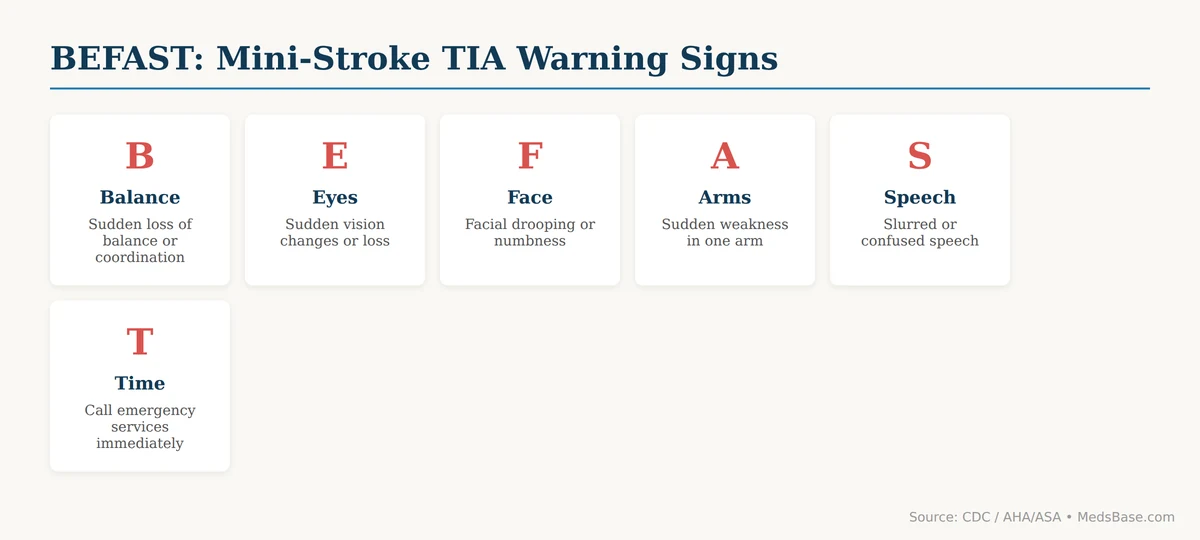
The BEFAST acronym covers all mini stroke TIA warning signs: Balance, Eyes, Face, Arms, Speech, and Time to call emergency services.
The BEFAST acronym, expanded from the original FAST framework by the CDC and stroke organisations worldwide, is the most widely taught tool for recognising stroke and TIA symptoms. It captures the eight critical mini stroke TIA warning signs and prevention begins the moment any one of them appears.
Here is each sign in detail — including the one most people dismiss.
1. Balance — Sudden loss of balance or coordination. A person experiencing a TIA may suddenly feel unsteady on their feet, as if the room is tilting or they have been pushed sideways. They may stumble, veer to one side when walking, or be unable to stand without support. This is not the gradual dizziness of an inner-ear problem; it is abrupt and disorienting. The cerebellum and brainstem, which control balance, are highly sensitive to even brief interruptions in blood flow.
2. Eyes — Sudden vision changes. This is the symptom most commonly dismissed as something else. A TIA can cause sudden blurred vision, double vision, or — most strikingly — temporary blindness in one eye (amaurosis fugax). Patients describe it as “a curtain coming down” over one eye, or a grey shadow that obscures part of the visual field. Because it resolves within minutes, people often attribute it to eye strain, a migraine aura, or simply being tired. They do not connect it to the brain. But sudden, painless vision loss in one eye is a classic TIA warning sign — the ophthalmic artery, a branch of the internal carotid artery, has been temporarily blocked. If you experience this, even once, you need an emergency evaluation. The vision came back this time. Next time, it may not.
3. Face — Facial drooping or numbness on one side. One side of the face may suddenly feel numb, heavy, or appear to droop. Ask the person to smile: if one side of the mouth does not move or the smile is uneven, this is a red flag. The facial droop of a TIA is typically unilateral (one-sided) and affects the lower half of the face more than the forehead, because the upper face receives nerve supply from both hemispheres of the brain.
4. Arms — Sudden weakness or numbness in one arm (or leg). The person may be unable to raise both arms to the same height, or one arm may drift downward when held outstretched. The weakness is typically unilateral and may affect the arm, the leg, or both on the same side. Some people describe a “dead weight” sensation — the limb feels heavy and unresponsive, even though they can technically still move it weakly.
5. Speech — Slurred speech or difficulty speaking. Speech may become slurred (dysarthria), or the person may have trouble finding words (aphasia), producing garbled or nonsensical sentences despite knowing what they want to say. In some cases, they may be unable to understand what others are saying (receptive aphasia). Ask the person to repeat a simple sentence like “The sky is blue today.” If they cannot, or if the words come out wrong, this is a medical emergency.
6. Time — Time to call emergency services. The “T” in BEFAST stands for Time, and it is arguably the most important element. Every minute a TIA or stroke goes untreated, brain cells are at risk. Even though TIA symptoms resolve, you cannot know in the moment whether you are experiencing a TIA or the beginning of a full stroke. Call emergency services immediately. Do not drive yourself to the hospital. Do not wait to see if symptoms go away. Do not take aspirin pre-emptively unless instructed by a dispatcher or doctor — some strokes are haemorrhagic (bleeding), and aspirin would worsen them.
7. Sudden severe headache with no known cause. While more commonly associated with haemorrhagic stroke, a sudden, severe headache — often described as “the worst headache of my life” or a “thunderclap headache” — can also accompany a TIA, particularly when the posterior circulation (vertebrobasilar system) is involved. Unlike a tension headache or migraine, this comes on in seconds, reaches maximum intensity almost immediately, and may be accompanied by neck stiffness, nausea, or altered consciousness.
8. Sudden confusion or trouble understanding. The person may appear disoriented, unable to process what is being said to them, or unable to perform simple tasks they normally handle without thought — such as dialling a phone number or reading a clock. This cognitive disruption can be subtle; a spouse or colleague may notice that the person “isn’t making sense” or “seems confused” in a way that is out of character and abrupt in onset.
When in doubt, act. You do not need to have all eight signs. One is enough. And you do not need to be certain it is a TIA — that is the emergency department’s job. The window for effective stroke intervention is measured in hours, not days. Time lost to hesitation is brain lost to ischaemia. This is the most important lesson of mini stroke TIA warning signs and prevention: recognition must trigger immediate action, without exception.
Why a TIA Is a Medical Emergency
The single most dangerous misconception about TIA is that because the symptoms went away, the danger has passed. It has not. The statistics are sobering:
- 10-15% of TIA patients have a full stroke within 90 days.
- Nearly half of those strokes occur within the first 48 hours.
- The 7-day stroke risk after TIA is approximately 5-8% without treatment.
- With prompt evaluation and evidence-based treatment, that 90-day risk drops to approximately 2% — an 80% reduction.
These numbers are why public health campaigns emphasise that a TIA is a medical emergency — not a transient inconvenience. Every hour you delay seeking care after a TIA increases the probability that the next event will be a full, irreversible stroke.
But there is a newer, equally alarming reason to take TIAs seriously. In September 2026, researchers published findings showing that individuals who have experienced a TIA face a 34% higher risk of developing dementia compared to those who have never had one [Medical News Today, September 2026 — EDITOR: verify specific PMID upon publication]. The mechanism is not yet fully understood, but the leading hypothesis is that each TIA represents a micro-insult to the brain’s vascular network — even when standard imaging shows no visible infarction, there may be subtle, cumulative damage to white matter tracts and small vessels that, over time and repeated events, degrades cognitive reserve.
This is a paradigm shift in how we think about TIA. It is no longer just a warning shot for stroke. It is an independent risk factor for cognitive decline. The same mini stroke TIA warning signs and prevention strategies that protect you from a catastrophic stroke — blood pressure control, antiplatelet therapy, statin therapy, and lifestyle modification — are also your best defence against post-TIA dementia. The brain you protect today is the brain you live with tomorrow.
The emergency department’s role after a suspected TIA is to answer three urgent questions: Is it actually a TIA (and not a stroke mimic like a seizure, migraine, or hypoglycaemia)? What caused it? And what is the immediate risk of recurrence? This workup must happen within hours, not days, because the risk is front-loaded. Understanding mini stroke TIA warning signs and prevention means understanding that the clock starts ticking the moment symptoms resolve — and it does not stop until you are on the right treatment plan.
What Happens After a TIA?
If you arrive at the emergency department with a suspected TIA, here is what to expect and why each step matters for mini stroke TIA warning signs and prevention:
Rapid clinical assessment. A neurologist or emergency physician will take a detailed history of exactly what symptoms you experienced, how long they lasted, and whether you have any ongoing deficits. They will calculate your ABCD2 score — a validated risk-stratification tool that estimates your short-term stroke risk based on Age, Blood pressure, Clinical features, Duration of symptoms, and Diabetes status. A score of 4 or above indicates high risk and typically triggers hospital admission for expedited workup.
Brain imaging. You will receive a non-contrast CT scan of the head — primarily to rule out haemorrhage or a stroke mimic like a tumour. In many centres, you will also receive an MRI with diffusion-weighted imaging (DWI), which is far more sensitive for detecting ischaemic injury. A “DWI-negative” scan supports the diagnosis of TIA (no permanent infarction), while a DWI-positive scan suggests a minor stroke rather than a true TIA — though the clinical management is often similar.
Vascular imaging. Ultrasound of the carotid arteries (carotid Doppler) checks for significant stenosis (narrowing) that could be the source of emboli. CT or MR angiography may be used to visualise the intracranial and extracranial vessels. If carotid stenosis of 50-70% or more is found on the same side as the TIA symptoms, carotid endarterectomy or stenting may be recommended — a surgical intervention that can dramatically reduce recurrent stroke risk.
Cardiac evaluation. An electrocardiogram (ECG) is performed to check for atrial fibrillation — a heart rhythm disorder that is one of the most common and most treatable causes of embolic TIA and stroke. If atrial fibrillation is detected, the prevention strategy shifts from antiplatelet therapy to anticoagulation (blood thinners), which is far more effective at preventing clot formation in the left atrial appendage. You may also receive an echocardiogram to look for structural heart disease, valve abnormalities, or a patent foramen ovale (a hole between the heart chambers that can allow clots to bypass the lungs and travel directly to the brain).
Blood tests. A full panel checks for diabetes, high cholesterol, clotting disorders, and other contributing factors. These results guide the medication plan and the lifestyle targets you will need to meet.
Medication initiation. Before you leave the hospital — sometimes within hours of arrival — you should be started on antiplatelet therapy (typically aspirin plus clopidogrel for the first 21 days, then clopidogrel alone or aspirin alone thereafter) unless there is a contraindication. If you are found to have atrial fibrillation, you will be started on an anticoagulant instead. Blood pressure medication and a statin are also typically initiated or intensified. This immediate, multi-pronged approach — antiplatelet, antihypertensive, statin — is what drives the 80% reduction in early recurrent stroke risk after TIA. It is the most concrete, evidence-backed example of why mini stroke TIA warning signs and prevention must be followed by immediate, protocol-driven treatment.
Medications for Mini Stroke TIA Warning Signs and Prevention After a Mini-Stroke
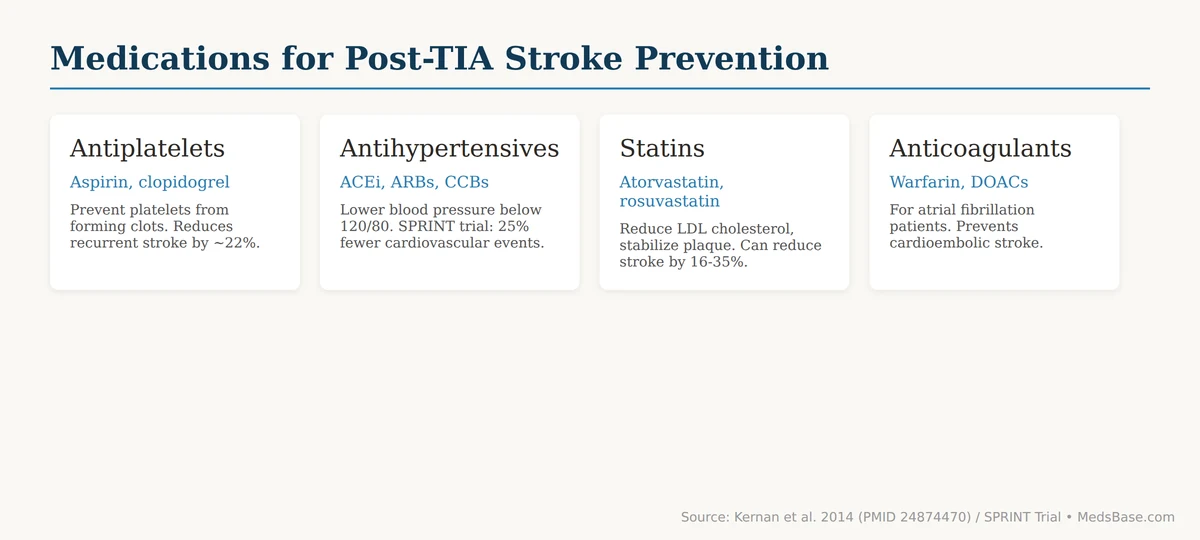
Medication adherence is the single most powerful tool in mini stroke TIA warning signs and prevention. Studies consistently show that patients who take their prescribed medications as directed after a TIA have dramatically lower rates of recurrent stroke, myocardial infarction, and vascular death. The challenge — and the reason so many preventable strokes still occur — is that these medications work silently. You do not “feel” them working, so it is easy to skip doses or stop altogether. Understanding what each medication does and why it is non-negotiable can help.
| Medication Class | Examples | What It Does | Why It Matters |
|---|---|---|---|
| Antiplatelets | Aspirin, Clopidogrel, Aspirin/Dipyridamole | Prevent platelets from clumping together to form clots | Reduces recurrent stroke risk by approximately 22% [Kernan et al., 2014] |
| Anticoagulants | Warfarin, Apixaban, Rivaroxaban, Dabigatran | Interfere with the coagulation cascade to prevent clot formation; essential for atrial fibrillation | In AF-related TIA, anticoagulants reduce stroke risk by 60-70% compared to antiplatelets alone |
| Antihypertensives | ACE inhibitors, ARBs, Calcium channel blockers, Diuretics, Beta-blockers | Lower blood pressure to reduce stress on blood vessel walls | Intensive BP control (target <120/80) reduces cardiovascular events by 25% [SPRINT trial, 2015] |
| Statins | Atorvastatin, Rosuvastatin, Simvastatin | Lower LDL cholesterol and stabilise atherosclerotic plaques so they are less likely to rupture | High-intensity statin therapy reduces recurrent stroke risk by 16-25% independent of cholesterol lowering |
Do not stop these medications without speaking to your doctor. The protective effect of these drugs is cumulative and continuous. Stopping an antiplatelet or anticoagulant — even for a few days — can trigger a “rebound” pro-thrombotic state that sharply increases stroke risk. If you experience side effects, there are almost always alternatives within the same class or a different class that can achieve comparable protection with better tolerability. Medication adherence is not just a personal choice after a TIA — it is the difference between living independently and living with disability, or not living at all, after the stroke that follows.
For readers who require ongoing access to blood pressure medications, browse blood pressure medications — always under a doctor’s supervision and with a confirmed prescription plan. No prescription is needed to browse or learn about available options, but a healthcare provider must guide your specific treatment choices. For a deeper understanding of how blood pressure control protects your brain, read our detailed analysis: intensive blood pressure control and dementia risk. And for the link between anticoagulant use and long-term brain health, see: blood thinners and cognitive decline — what the evidence shows.
Lifestyle Changes That Lower Your Stroke Risk
Medications are essential, but they work best when combined with lifestyle changes that address the root causes of vascular disease. The same interventions that reduce stroke risk after a TIA also reduce the risk of heart attack, kidney disease, and — as the new 2026 research suggests — dementia. Here are the highest-impact lifestyle modifications, ranked by the strength of evidence supporting them:
1. Lower your blood pressure — aggressively. The SPRINT trial demonstrated that targeting a systolic blood pressure below 120 mmHg (intensive treatment) reduced major cardiovascular events by 25% and all-cause mortality by 27% compared to the standard target of below 140 mmHg [SPRINT, 2015]. For someone who has already had a TIA, this is the single highest-impact intervention. Invest in a validated home blood pressure monitor. Take readings at the same time each day (morning, before medications, after sitting quietly for 5 minutes). Keep a log. Bring it to every doctor’s appointment. Blood pressure management is not a one-time fix — it is a daily practice, and home monitoring is the foundation of mini stroke TIA warning signs and prevention over the long term.
2. Adopt a DASH-style or Mediterranean diet. The DASH (Dietary Approaches to Stop Hypertension) diet — rich in fruits, vegetables, whole grains, lean protein, and low-fat dairy, while low in sodium, saturated fat, and added sugars — has been shown to lower systolic blood pressure by 8-14 mmHg, an effect comparable to a single antihypertensive medication. The Mediterranean diet adds an emphasis on olive oil, nuts, and fatty fish, providing anti-inflammatory omega-3 fatty acids that may independently reduce stroke risk. Practical first step: reduce sodium intake to less than 2,300 mg per day (ideally 1,500 mg). This alone can lower blood pressure measurably within weeks.
3. Exercise — every day if possible. The AHA/ASA recommends at least 150 minutes per week of moderate-intensity aerobic activity (brisk walking, swimming, cycling) or 75 minutes of vigorous activity, spread across at least three days per week. After a TIA, the goal is consistency, not intensity. A daily 30-minute walk is more protective than a single weekend gym session because the vascular benefits of exercise — improved endothelial function, lower blood pressure, better glucose control — are transient, lasting roughly 24 hours. Daily movement renews those benefits every day.
4. Quit smoking — completely. Smoking doubles the risk of ischaemic stroke by accelerating atherosclerosis, increasing blood viscosity, promoting platelet aggregation, and raising blood pressure. The good news: within 2-5 years of quitting, stroke risk returns to nearly that of a never-smoker. Nicotine replacement therapy, varenicline, bupropion, and counselling all increase quit rates; combining pharmacotherapy with behavioural support yields the highest long-term success.
5. Manage diabetes and blood sugar. Diabetes independently increases stroke risk by 1.5 to 2 times, and the combination of diabetes and hypertension is particularly damaging to cerebral small vessels — the very vessels most often implicated in lacunar strokes and TIAs. Target an HbA1c below 7.0% (or the target your doctor sets for you), and remember that tight blood sugar control protects both large and small blood vessels throughout the body.
6. Limit alcohol. Heavy alcohol consumption (more than 2 drinks per day for men, more than 1 for women) is associated with increased stroke risk through multiple mechanisms: elevated blood pressure, atrial fibrillation, and a pro-thrombotic state. Moderate intake (up to 1 drink per day) may have a neutral or mildly protective effect for ischaemic stroke, but the evidence is inconsistent, and no one should start drinking for “health benefits.” If you do not drink, do not start. If you do, keep it within guideline limits.
7. Maintain a healthy weight. Obesity, particularly central obesity (excess abdominal fat), is an independent risk factor for stroke, mediated through its effects on blood pressure, cholesterol, diabetes, and inflammation. A weight loss of just 5-10% of body weight can produce clinically meaningful improvements in blood pressure, lipid profile, and insulin sensitivity.
These seven lifestyle changes, combined with faithful medication adherence, form the complete picture of mini stroke TIA warning signs and prevention as a long-term strategy — not a one-time response. Every day you live these habits, you are actively reducing the probability that your brain will suffer another ischaemic event.
TIA vs Full Stroke — What Is the Difference?
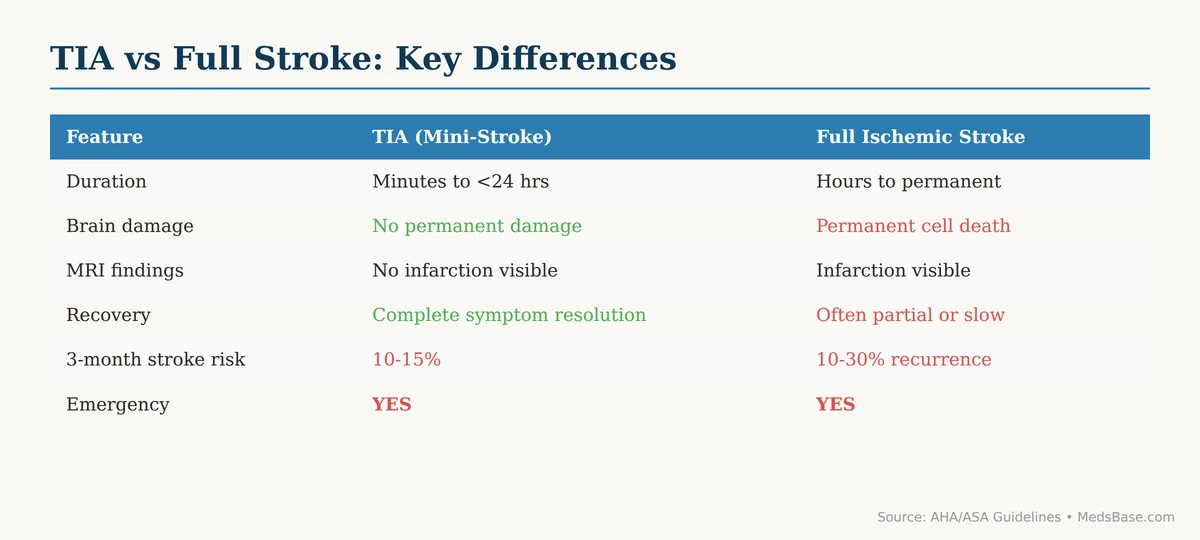
Many people are confused about the distinction between a TIA and a full stroke, which is understandable — they are fundamentally the same disease process, differing only in duration and outcome. Here is a direct comparison:
| Feature | TIA (Mini-Stroke) | Full Ischaemic Stroke |
|---|---|---|
| Duration of symptoms | Minutes to hours; typically <60 min; resolves completely | Hours to permanent; symptoms persist without treatment |
| Brain damage | No permanent infarction visible on standard imaging | Permanent brain tissue death (infarction) visible on CT/MRI |
| MRI (DWI) findings | Typically negative (no restricted diffusion) | Positive — bright area on DWI indicating cytotoxic oedema |
| Residual deficits | None — full neurological recovery within 24 hours (usually much sooner) | Persistent weakness, speech difficulty, vision loss, cognitive impairment, or other deficits |
| 90-day stroke risk | 10-15% without treatment; ~2% with prompt treatment | Varies by cause; generally 3-10% for recurrence within 90 days |
| Dementia risk | 34% higher than general population (per 2026 study) | Substantially elevated — post-stroke dementia affects ~20-30% of survivors |
| Emergency treatment | Urgent diagnostic workup + immediate antiplatelet + risk factor management | Thrombolysis (tPA within 4.5 hours) or mechanical thrombectomy + same long-term measures |
| Long-term outlook | Excellent — if treated aggressively and risk factors controlled | Variable — depends on stroke size, location, rehabilitation access, and secondary prevention |
The most important thing to understand from this comparison is that a TIA and a stroke sit on the same disease spectrum. A TIA is not a “different thing” from a stroke — it is a stroke that resolved before causing permanent damage. This is precisely why mini stroke TIA warning signs and prevention are so urgent: the difference between a TIA and a full stroke can be measured in minutes and millimetres, and the only thing standing between you and the latter is how aggressively you pursue the former’s warning.
Related Reading
Frequently Asked Questions
What are the warning signs of a mini stroke TIA?
The warning signs of a mini stroke TIA follow the BEFAST acronym: sudden loss of Balance, sudden vision changes (Eyes), Facial drooping or numbness on one side, Arm weakness or numbness on one side, Speech difficulty (slurred or unable to find words), and Time — meaning it is Time to call emergency services immediately. Two additional signs are a sudden severe headache with no known cause and sudden confusion or difficulty understanding others. Any one of these signs, even if it resolves within minutes, requires emergency evaluation. The full set of mini stroke TIA warning signs and prevention measures depends on recognizing these symptoms and acting without delay.
How long does a mini stroke TIA last?
Most TIAs last less than an hour, and many resolve within 5-15 minutes. By definition, symptoms must resolve completely within 24 hours — but the overwhelming majority last well under 60 minutes. The brevity of symptoms is precisely why they are so often dismissed. If you experience any of the mini stroke TIA warning signs and prevention is your goal, the duration of symptoms is irrelevant — even a 2-minute episode of one-sided weakness or vision loss demands an emergency department visit. A TIA that lasts 5 minutes carries the same underlying pathology and the same urgency as one that lasts an hour.
Can a TIA be detected on an MRI?
A true TIA, by definition, does not show infarction (permanent tissue damage) on standard brain imaging. A CT scan is typically normal. An MRI with diffusion-weighted imaging (DWI) may or may not show a small area of restricted diffusion; if it does, the event is technically classified as a minor ischaemic stroke rather than a TIA, though the clinical distinction does not change management significantly. The more important imaging in the TIA workup is vascular imaging — carotid ultrasound, CT angiography, or MR angiography — which looks for the source of the clot (stenosis in the carotid arteries or intracranial vessels) rather than the footprint of damage in the brain tissue itself.
What should I do if I think I had a mini stroke TIA yesterday?
Go to the emergency department or your doctor today. Even if symptoms have completely resolved, you need an urgent workup. The highest risk of stroke after a TIA is in the first 48 hours, but the elevated risk persists for weeks to months. Delaying by a day is better than delaying by a week — and delaying by a week is better than never seeking care at all. The mini stroke TIA warning signs and prevention protocol still applies, even if the acute event has passed: you need brain imaging, vascular imaging, cardiac evaluation, blood tests, and initiation of antiplatelet and risk-factor-modifying therapy as soon as possible.
How can I prevent a stroke after a TIA?
Stroke prevention after a TIA involves four pillars: (1) antiplatelet or anticoagulant therapy to prevent clot formation, (2) aggressive blood pressure control targeting below 120/80 mmHg, (3) high-intensity statin therapy to stabilise atherosclerotic plaques and lower LDL cholesterol, and (4) lifestyle modification — DASH or Mediterranean diet, regular exercise, smoking cessation, weight management, and diabetes control. These four interventions, pursued simultaneously, can reduce recurrent stroke risk by up to 80%. This comprehensive approach is the evidence-based core of mini stroke TIA warning signs and prevention as a long-term strategy.
Is a TIA the same as a silent stroke?
No. A TIA causes noticeable symptoms that resolve completely. A silent stroke causes permanent brain damage (visible on imaging) but without any symptoms the person was aware of at the time — it is “silent” only in the sense that it went unnoticed. Silent strokes are discovered incidentally on brain imaging performed for another reason. Both are dangerous: a TIA warns of future symptomatic stroke, while silent strokes accumulate over time and are a major contributor to vascular dementia and cognitive decline. The new 2026 research linking TIA to a 34% increase in dementia risk suggests that TIAs may not be as “silent” in their long-term effects as previously believed, even when visible infarction is absent.
Can stress cause a mini stroke TIA?
Acute emotional or physical stress can transiently raise blood pressure and heart rate, which may trigger a TIA in someone who already has underlying vascular disease — for example, significant carotid stenosis or atrial fibrillation. However, stress alone is rarely the sole cause; it acts as a trigger on top of a pre-existing substrate of atherosclerosis, hypertension, or arrhythmia. Chronic stress may contribute to stroke risk indirectly by promoting unhealthy behaviours (poor diet, smoking, alcohol, medication non-adherence) and through sustained activation of the sympathetic nervous system, which raises blood pressure and inflammatory markers over time. Stress management — through exercise, adequate sleep, mindfulness, or professional counselling — is a valuable adjunct to the medical and lifestyle components of mini stroke TIA warning signs and prevention.
Do I need to take medication for life after a TIA?
In the vast majority of cases, yes. A TIA is a signal that you have established vascular disease — a chronic condition that requires lifelong management. Antiplatelet therapy, blood pressure medication, and statin therapy are typically recommended indefinitely, not for a fixed duration. Stopping these medications, even years after a TIA, can allow the underlying disease process to re-emerge and produce another event. The goal of mini stroke TIA warning signs and prevention is not to treat a one-off incident but to manage a chronic, progressive condition — atherosclerosis and its complications — for the rest of your life. Think of these medications the same way you think of insulin for type 1 diabetes: they are not a temporary course of treatment; they are a permanent part of your health maintenance.
The Bottom Line
A TIA is not a near miss. It is a direct hit — one that your brain survived, but only just. The data is unambiguous: without treatment, 1 in 3 people who have a TIA will eventually have a full stroke, and the clock starts ticking the moment the symptoms resolve. With treatment — immediate antiplatelet therapy, aggressive blood pressure control, statin therapy, and sustained lifestyle change — that risk collapses to a fraction of what it would otherwise be.
The research published in September 2026 adds a new dimension to this urgency: TIA is now linked to a 34% higher long-term risk of dementia, independent of whether a full stroke ever occurs. The same prevention strategies that protect you from stroke — particularly intensive blood pressure control and medication adherence — protect your cognitive future as well.
Understanding mini stroke TIA warning signs and prevention means understanding three things: recognize the BEFAST signs without hesitation, seek emergency care without delay, and commit to lifelong medication and lifestyle management without exception. A TIA is your brain’s loudest and clearest warning. How you respond to it determines whether it remains a warning — or becomes a prelude.
Medical Disclaimer: This article is for informational purposes only and does not constitute medical advice. A TIA is a medical emergency — if you or someone near you is experiencing symptoms, call emergency services immediately. Do not delay. The medication information provided here is educational and should not replace consultation with a licensed healthcare provider. Treatment decisions, including the choice and dosing of antiplatelet, anticoagulant, antihypertensive, and statin therapies, must be made by a qualified physician based on your individual medical history and risk profile.

Written by
Sophie ChenPharmaceutical Content Researcher · 8 years experience
Sophie Chen is a pharmaceutical content researcher with 8 years covering generic medication access and clinical pharmacology. She specialises in international regulatory frameworks, bioequivalence standards, and patient-facing education on therapeutic drug classes. She is not a clinician.