








✓ Medically reviewed by · Last reviewed: May 2026
Pharmacy Researcher · 8 years experience
Pharmacy researcher with 8 years reviewing clinical drug information, generic formulation equivalence, and international pharmaceutical standards. Focuses on patient-facing accuracy in medication education.
intensive blood pressure control dementia risk — Intensive Blood Pressure Control and Dementia Risk: What the SPRINT MIND Trial Reveals. Read on for an evidence-backed guide covering everything you need to know.
Nearly half of all dementia cases worldwide may be preventable — and the single most powerful lever you can pull sits in your blood pressure cuff.
The 2024 Lancet Commission on dementia identified 14 modifiable risk factors that together could prevent or delay up to 45% of dementia cases. Among them, hypertension — high blood pressure — stands out as the most prevalent and the most actionable. An estimated 1.28 billion adults worldwide have hypertension, and only about 1 in 5 have it under control.
The question is no longer whether high blood pressure damages the brain — decades of research have settled that. The question is: how low should you go to protect it?
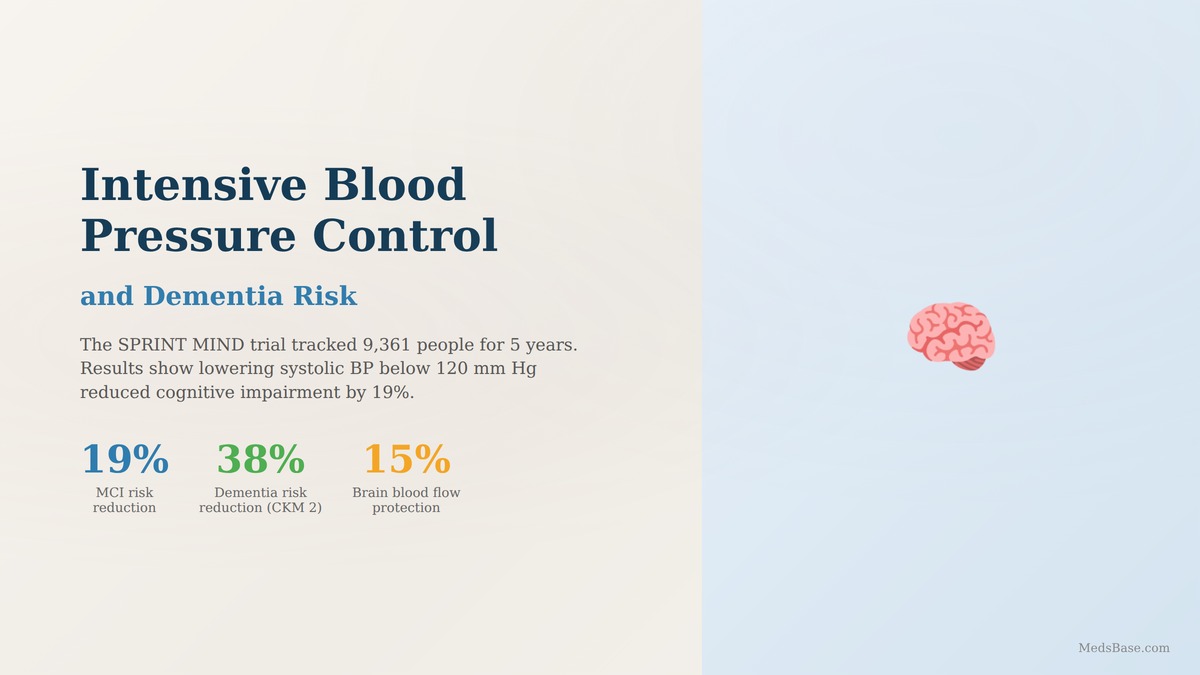
The SPRINT MIND trial — a landmark study of 9,361 people followed for over 5 years — provides the most rigorous answer yet on intensive blood pressure control dementia risk. And new 2026 research adds a critical twist: the brain-protective benefit of intensive blood pressure control may depend on your overall cardiovascular-kidney-metabolic health.
Key Takeaways:
- Intensive blood pressure control (systolic target <120 mm Hg) reduced the combined risk of mild cognitive impairment or dementia by 15% — but its effect on dementia alone was not statistically significant in the full trial population
- A 2026 subanalysis found that in people with non-advanced CKM syndrome, intensive control reduced probable dementia risk by 38% — a finding most news coverage missed
- The concern about low diastolic blood pressure harming the brain has been largely debunked by a 2025 secondary analysis
- Blood pressure management is the single most evidence-based strategy for reducing dementia risk available today
What Is Intensive Blood Pressure Control? — Intensive blood pressure control dementia risk Explained
Intensive blood pressure control means treating hypertension to a systolic blood pressure target, and it is the intervention most directly linked to reducing intensive blood pressure control dementia risk of less than 120 mm Hg — lower than the standard target of less than 140 mm Hg that most guidelines formerly recommended.
The current American Heart Association guidelines define hypertension as a systolic pressure of 130 mm Hg or higher. Standard treatment usually aims for below 140 mm Hg (or below 130 mm Hg in higher-risk patients). Intensive control pushes further — below 120 mm Hg — and typically requires more medications and closer monitoring to achieve.
The concept was tested in the landmark SPRINT trial, the study that ultimately established the evidence base for intensive blood pressure control dementia risk (Systolic Blood Pressure Intervention Trial), which enrolled 9,361 adults aged 50 and older with hypertension and at least one additional cardiovascular risk factor. The trial was stopped early in 2015 because the cardiovascular benefits were so clear: intensive control reduced cardiovascular events and all-cause mortality.
But the trial’s cognitive component — SPRINT MIND, which directly measured intensive blood pressure control dementia risk (Memory and Cognition in Decreased Hypertension) — continued tracking participants’ brain health, and its findings are reshaping how we think about blood pressure and dementia.
Intensive blood pressure control dementia risk: How Does Blood Pressure Affect the Brain?
Your brain is hungry for blood. It receives about 15% of your cardiac output despite making up only 2% of your body weight. That blood flows through a delicate network of small vessels — arterioles, capillaries, and venules — that deliver oxygen and nutrients while clearing waste products.
High blood pressure damages this network in several ways:
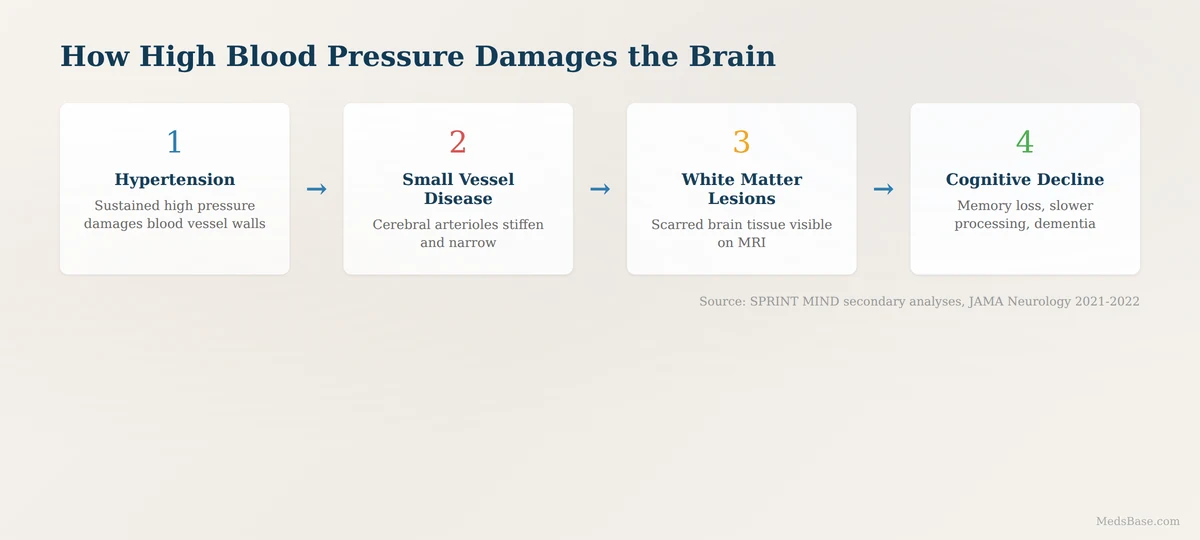
Small vessel disease. Chronic hypertension stiffens and narrows the tiny arteries deep within the brain. Over time, this leads to reduced blood flow (hypoperfusion), microbleeds, and the accumulation of white matter lesions — areas of damaged brain tissue visible on MRI scans.
The blood-brain barrier. Hypertension can disrupt the tight junctions between cells lining brain blood vessels, allowing inflammatory molecules and proteins to leak into brain tissue.
Amyloid clearance. The brain’s glymphatic system — its waste-clearance mechanism — depends on healthy blood vessel pulsation. When vessels stiffen from hypertension, amyloid-beta protein (the hallmark of Alzheimer’s disease) doesn’t clear as efficiently.
Research Spotlight: A SPRINT MIND secondary analysis published in JAMA Neurology found that intensive blood pressure control was associated with slower accumulation of white matter lesions — the brain changes most strongly linked to cognitive decline and dementia. This provides a direct mechanistic link between lowering blood pressure and protecting the brain’s structure.
Here’s where it gets interesting. The brain damage from hypertension doesn’t happen overnight. It accumulates silently over decades. By the time memory problems or cognitive slowing become noticeable, significant structural damage may have already occurred. That’s why preventing or slowing that damage — rather than trying to reverse it — is the goal.
Intensive blood pressure control dementia risk: What Does the Research Say?
The SPRINT MIND Trial: The Foundation
The SPRINT MIND trial, published in JAMA, was a randomized clinical trial that followed 9,361 adults (mean age 67.9 years, 35.6% women) with hypertension but without diabetes or a history of stroke. Participants were randomized to either intensive systolic blood pressure control (target <120 mm Hg) or standard control (target <140 mm Hg).
Over a median follow-up of 5.11 years, here’s what happened:
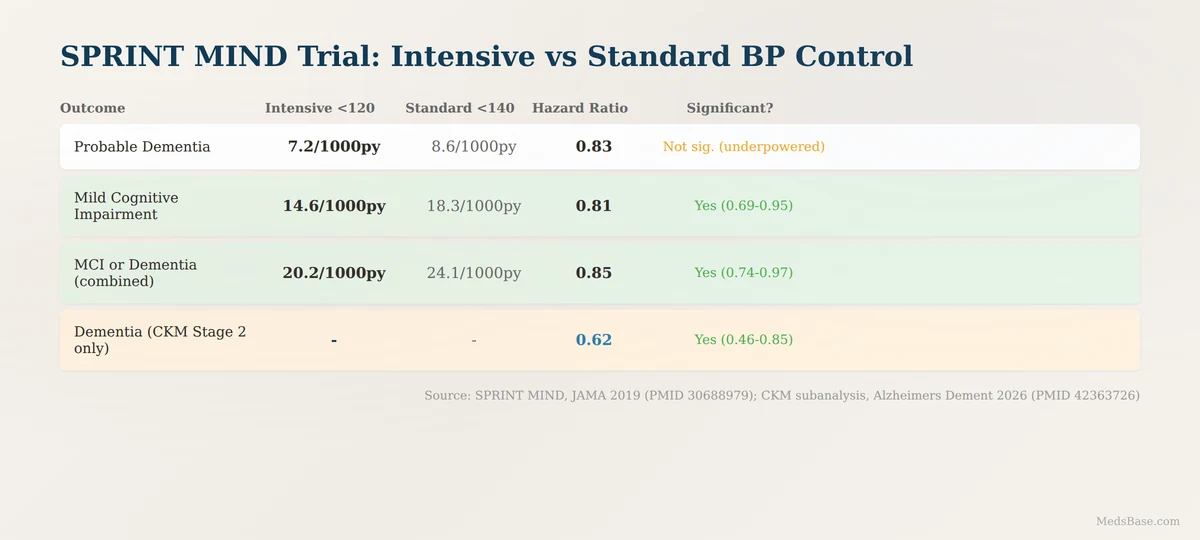
| Outcome | Intensive (<120 mm Hg) | Standard (<140 mm Hg) | Hazard Ratio | 95% CI |
|---|---|---|---|---|
| Probable dementia | 7.2 per 1000 person-years | 8.6 per 1000 person-years | 0.83 | 0.67–1.04 |
| Mild cognitive impairment | 14.6 per 1000 person-years | 18.3 per 1000 person-years | 0.81 | 0.69–0.95 |
| MCI or probable dementia | 20.2 per 1000 person-years | 24.1 per 1000 person-years | 0.85 | 0.74–0.97 |
The takeaway: intensive blood pressure control significantly reduced the risk of mild cognitive impairment by 19% and the combined outcome of MCI or probable dementia by 15%. The reduction in intensive blood pressure control dementia risk — specifically, probable dementia alone (17%) did not reach statistical significance — but the trial was stopped early and had fewer dementia cases than expected, meaning it was likely underpowered for that endpoint.
What this means for you: If you have hypertension and are otherwise healthy, aiming for a systolic blood pressure below 120 mm Hg could meaningfully reduce your risk of developing cognitive impairment. The benefit accumulates over years.
The CKM Twist: Who Benefits Most?
A 2026 post-hoc analysis of SPRINT MIND published in Alzheimer’s & Dementia asked a critical question the original trial didn’t answer: does the brain-protective effect — and the magnitude of intensive blood pressure control dementia risk reduction — depend on your overall cardiovascular-kidney-metabolic (CKM) health?
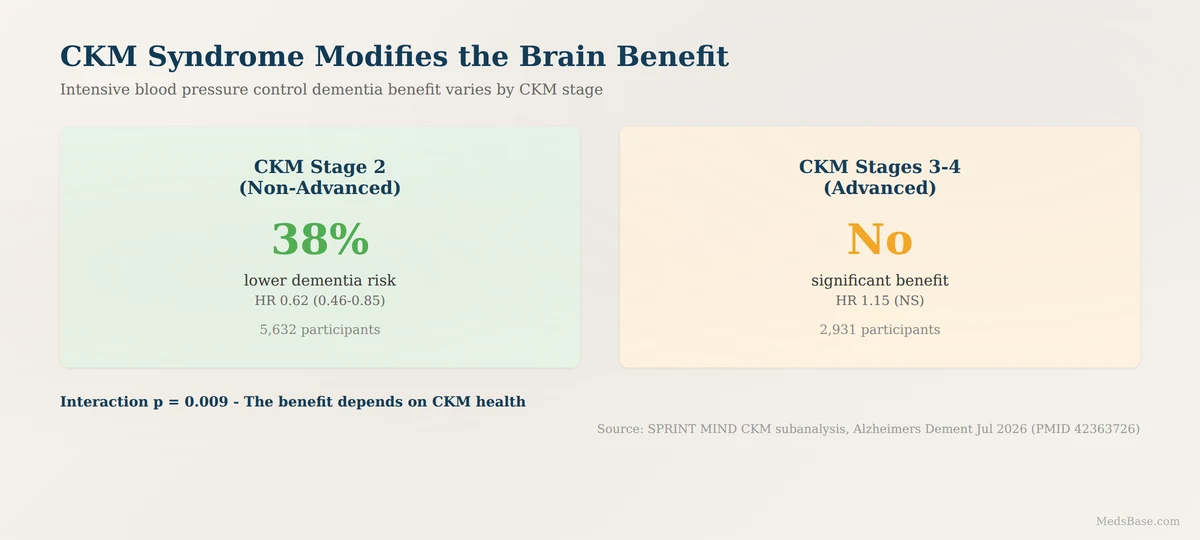
The researchers classified SPRINT MIND participants into two groups to better understand how intensive blood pressure control dementia risk varies by health status: non-advanced CKM (Stage 2, 5,632 people) and advanced CKM (Stages 3–4, 2,931 people). The CKM staging system, developed by the American Heart Association, considers risk factors across the cardiovascular, kidney, and metabolic systems — blood pressure, kidney function, blood sugar, body weight, and cholesterol.
The results were striking:
- Non-advanced CKM: Intensive blood pressure control reduced the risk of probable dementia by 38% — a major finding for intensive blood pressure control dementia risk research (HR 0.62, 95% CI 0.46–0.85) and the combined outcome of MCI or dementia by 26% (HR 0.74, 95% CI 0.62–0.89).
- Advanced CKM: Intensive blood pressure control showed no benefit for probable dementia (HR 1.15) or the combined outcome (HR 0.97).
The interaction between CKM stage and treatment effect was statistically significant for probable dementia (p = 0.009). In plain language: the brain-protective benefit for intensive blood pressure control dementia risk is real — but it’s concentrated in people whose overall cardiometabolic health is still relatively good.
This makes intuitive sense. By the time someone has advanced CKM syndrome — with established kidney disease, diabetes complications, or significant atherosclerotic disease — the brain damage from years of uncontrolled risk factors may be too far along for blood pressure control alone to reverse.
The Diastolic Blood Pressure Question
One persistent concern in the intensive blood pressure control dementia risk literature is the J-curve hypothesis: that lowering diastolic blood pressure too much might actually harm the brain by reducing blood flow during the relaxation phase of the heartbeat.
A 2025 secondary analysis of SPRINT MIND published in Circulation: Cardiovascular Quality and Outcomes directly addressed this question. The researchers analyzed 4,424 participants who achieved a systolic blood pressure below 130 mm Hg and looked at whether their achieved diastolic blood pressure predicted cognitive outcomes.
The finding: After adjusting for all relevant covariates, there was no statistically significant association between achieved diastolic blood pressure and the risk of probable dementia or mild cognitive impairment. In other words, the J-curve concern — that low diastolic pressure might harm cognition — was not supported by the data.
But there was one important nuance: higher achieved diastolic blood pressure was associated with reduced cerebral blood flow over time. For every 5 mm Hg increase in diastolic blood pressure, cerebral blood flow decreased by approximately 1.94 mL per 100 grams of brain tissue per minute. This suggests that elevated diastolic pressure — not low diastolic pressure — is the real concern for brain perfusion.
Cerebral Blood Flow: The Missing Link
A SPRINT MIND secondary analysis in JAMA Neurology directly measured cerebral blood flow in a subset of participants. The study confirmed that intensive blood pressure control did not cause harmful cerebral hypoperfusion — the feared outcome of “over-treating” blood pressure. Instead, the intensive group maintained stable brain blood flow while the standard group showed a gradual decline.
This is a critical finding in the intensive blood pressure control dementia risk literature, important for anyone worried that lowering their blood pressure might starve their brain of oxygen. The evidence says the opposite: uncontrolled hypertension is what slowly chokes off brain blood flow.
Blood Pressure Targets vs Other Brain Health Strategies
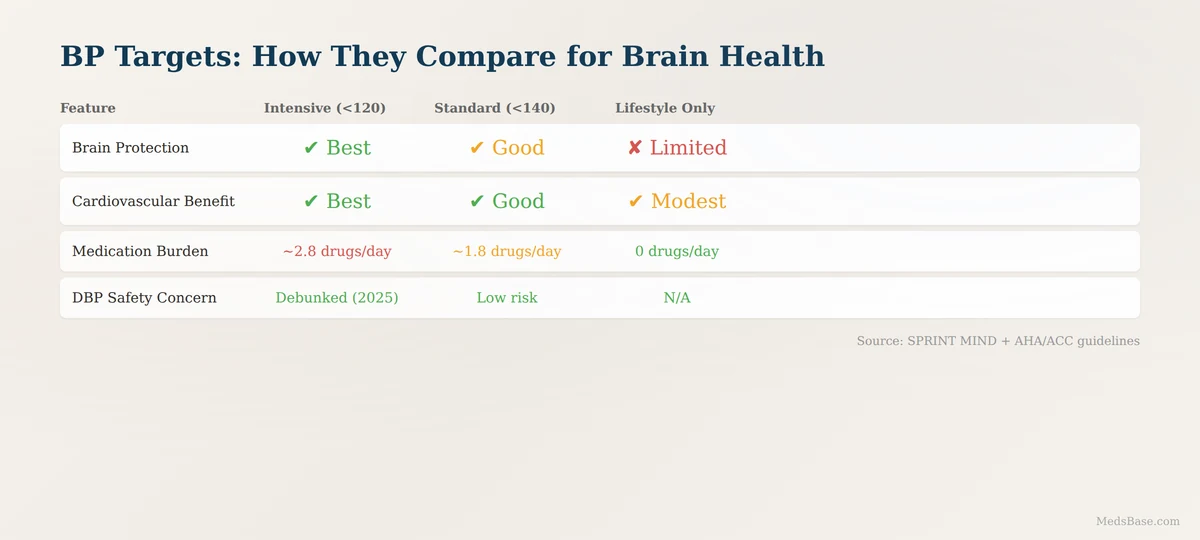
Blood pressure control — and specifically intensive blood pressure control dementia risk reduction — doesn’t exist in a vacuum. The 2024 Lancet Commission identified 14 modifiable risk factors for dementia, and blood pressure management sits alongside several other strategies worth considering:
| Strategy | Evidence Level | Effect Size | Practical Difficulty |
|---|---|---|---|
| Intensive BP control (<120 systolic) | RCT (SPRINT MIND) | 15–38% risk reduction | Moderate — requires medication adherence |
| Hearing loss treatment | Observational | 8% of population attributable fraction | Low — hearing aids widely available |
| Physical activity | Observational + cohort | Consistent association | Moderate — requires sustained habit |
| Mediterranean diet | Observational | Modest but consistent | Moderate — dietary change |
| Smoking cessation | Strong observational | Large effect | High — nicotine addiction |
| Treating depression | Observational | Modest | Moderate |
| Cognitive stimulation | Limited RCT data | Uncertain | Low |
Intensive blood pressure control stands out because it has the strongest evidence base from a randomized controlled trial — the gold standard in medical research. Unlike diet or exercise, where the evidence is largely observational, SPRINT MIND directly tested whether lowering blood pressure reduces cognitive decline and found that it does.
However, blood pressure control is not a silver bullet. In people with advanced CKM syndrome, the 2026 subanalysis suggests it may not be enough on its own. For these individuals, a multi-pronged approach — combining blood pressure control with aggressive management of diabetes, cholesterol, kidney function, and lifestyle factors — is likely necessary.
Practical Guidance: How to Protect Your Brain Through Blood Pressure Control
Step 1: Know Your Numbers
The first step is to know your actual blood pressure. A single reading at a doctor’s office can be misleading — white-coat hypertension (elevated readings in medical settings) affects up to 30% of people. Home monitoring over several days, at the same time each day, provides a more accurate picture.
If your systolic blood pressure is consistently above 130 mm Hg, you have hypertension by current guidelines. If it’s above 140 mm Hg, you’re in the range where standard treatment becomes clearly indicated.
Step 2: Start With Lifestyle
For everyone with elevated blood pressure, lifestyle changes are the foundation. Reducing sodium intake, increasing potassium-rich foods (fruits, vegetables, legumes), maintaining a healthy weight, limiting alcohol, and engaging in regular aerobic exercise can each lower systolic blood pressure by 2–8 mm Hg. Combined, the effect can be substantial — sometimes enough to avoid medication entirely.
See our guide to potassium and blood pressure for specific dietary strategies.
Step 3: Medication When Needed
If lifestyle changes aren’t enough — and for most people with established hypertension, they won’t be on their own — medication becomes necessary. The goal of intensive blood pressure control (systolic below 120 mm Hg) is to reduce intensive blood pressure control dementia risk typically requires an average of 2.8 blood pressure medications in the SPRINT trial, compared to 1.8 in the standard group.
The main classes of blood pressure medications — ACE inhibitors, ARBs, calcium channel blockers, beta blockers, and diuretics — all lower blood pressure effectively. For brain health specifically, some evidence suggests that ARBs and calcium channel blockers may have additional neuroprotective properties beyond their blood pressure-lowering effects, although this is an area of ongoing research.
If you’re curious about which class might be right for you, our beta blockers vs calcium channel blockers comparison covers the differences in detail.
Step 4: Monitor and Adjust
Achieving a systolic blood pressure below 120 mm Hg often requires titration — starting with one medication, checking the response, and adding or adjusting doses over several weeks or months. The key is consistency. The brain-protective benefits of intensive blood pressure control — and the associated reduction in intensive blood pressure control dementia risk — compound over years, not weeks.
Our guide to blood pressure medication adherence covers practical strategies for staying on track with your treatment plan.
Common Mistakes to Avoid
- Checking blood pressure only at the doctor’s office. Home readings are more accurate and representative of your true blood pressure.
- Stopping medication when numbers improve. Blood pressure medications don’t cure hypertension — they control it. Stopping them typically causes blood pressure to rise again within days to weeks.
- Ignoring the diastolic number. While systolic pressure gets most of the attention, the 2025 SPRINT MIND analysis suggests that elevated diastolic pressure may independently impair cerebral blood flow.
- Assuming one medication is enough. Most people who achieve intensive blood pressure control need two or more medications. If your blood pressure remains above target on one drug, the right next step is often adding a second agent rather than maxing out the dose of the first.
Frequently Asked Questions
Q: Does lowering blood pressure actually prevent dementia?
A: The SPRINT MIND trial showed that intensive blood pressure control — the key intervention for intensive blood pressure control dementia risk (targeting systolic below 120 mm Hg) reduced the combined risk of mild cognitive impairment or probable dementia by 15% compared to standard control. The reduction in dementia alone was 17% but did not reach statistical significance — likely because the trial was stopped early and had fewer dementia cases than expected. A 2026 subanalysis found that in people with non-advanced cardiovascular-kidney-metabolic (CKM) syndrome, the benefit was even stronger: a 38% reduction in probable dementia risk.
Q: What is the SPRINT MIND trial?
A: SPRINT MIND, the definitive study of intensive blood pressure control dementia risk, was the cognitive component of the SPRINT (Systolic Blood Pressure Intervention Trial) study, a randomized clinical trial that enrolled 9,361 adults aged 50 and older with hypertension. Participants were randomly assigned to either intensive blood pressure control (systolic target below 120 mm Hg) or standard control (below 140 mm Hg). Researchers tracked cognitive outcomes including probable dementia and mild cognitive impairment over a median of 5.11 years. The trial was published in JAMA in 2019.
Q: What blood pressure target is best for brain health?
A: Based on SPRINT MIND and its secondary analyses, a systolic blood pressure target below 120 mm Hg appears to offer the strongest brain protection — at least for people with non-advanced cardiovascular-kidney-metabolic (CKM) syndrome. In people with advanced CKM (stages 3–4), the benefit of intensive control for brain health is less clear, and a more individualized approach may be appropriate. The current AHA/ACC guidelines recommend a target of less than 130/80 mm Hg for most adults with hypertension.
Q: Is low diastolic blood pressure dangerous for the brain?
A: This concern — known as the J-curve hypothesis — has been largely debunked by a 2025 secondary analysis of SPRINT MIND. The study found no statistically significant association between achieved diastolic blood pressure and the risk of dementia or cognitive impairment after adjusting for relevant covariates. In fact, the data suggested that higher diastolic blood pressure was associated with reduced cerebral blood flow over time, making high diastolic pressure the more concerning finding.
Q: How does high blood pressure affect the brain?
A: High blood pressure damages the brain through several mechanisms. It causes small vessel disease, leading to white matter lesions and reduced blood flow. It can disrupt the blood-brain barrier, allowing inflammatory molecules into brain tissue. It also impairs the brain’s glymphatic system, which clears waste products including amyloid-beta — the protein that accumulates in Alzheimer’s disease. These effects accumulate silently over decades, which is why controlling blood pressure in midlife is particularly important for protecting brain health later.
Q: Can blood pressure medication reverse brain damage from hypertension?
A: There is no strong evidence that blood pressure medication can reverse established brain damage from years of hypertension. However, SPRINT MIND showed that intensive blood pressure control slowed the accumulation of white matter lesions — the brain changes most strongly associated with cognitive decline. The goal of blood pressure control is primarily prevention: stopping or slowing further damage before it becomes clinically significant.
Q: What is CKM syndrome and how does it affect blood pressure and dementia risk?
A: Cardiovascular-kidney-metabolic (CKM) syndrome is a staging system developed by the American Heart Association that classifies people based on their combined cardiovascular, kidney, and metabolic risk. Stage 2 includes people with risk factors like hypertension or prediabetes. Stages 3–4 include people with established disease such as chronic kidney disease, diabetes complications, or known cardiovascular disease. A 2026 SPRINT MIND subanalysis found that intensive blood pressure control reduced dementia risk in people with non-advanced CKM (stage 2) but showed no benefit in advanced CKM (stages 3–4). Read our full guide to CKM syndrome.
Q: What should I do if I’m worried about blood pressure and dementia risk?
A: Start by knowing your blood pressure numbers through home monitoring. If your systolic pressure is consistently above 130 mm Hg, discuss with your doctor whether lifestyle changes or medication are appropriate. If you’re already on blood pressure medication, the SPRINT MIND evidence on intensive blood pressure control dementia risk suggests that pushing toward a lower target (below 120 mm Hg systolic) may offer additional brain protection — but only if you can achieve it safely and you don’t have advanced CKM syndrome. Never adjust your medications without medical supervision.
Related Reading
- Blood Pressure Medication Adherence: 8 Proven Strategies to Stay on Track
- Cardiovascular-Kidney-Metabolic Syndrome: What the New Staging System Means for You
- Beta Blockers vs Calcium Channel Blockers: Which Blood Pressure Medication Is Right for You?
The Bottom Line
The evidence from SPRINT MIND and its follow-up analyses on intensive blood pressure control dementia risk tells a clear story: intensive blood pressure control — and the resulting reduction in intensive blood pressure control dementia risk — is one of the most powerful tools available for protecting brain health and reducing the risk of cognitive decline. The benefit is strongest in people whose overall cardiovascular-kidney-metabolic health is still relatively good — a 38% reduction in dementia risk in the 2026 CKM subanalysis — and the feared J-curve of low diastolic pressure harming the brain has been largely debunked.
But intensive blood pressure control — and managing intensive blood pressure control dementia risk — is not a solo act. It works best as part of a broader brain-health strategy that includes physical activity, a heart-healthy diet, treating hearing loss, and managing other cardiovascular risk factors like cholesterol and blood sugar.
If you have hypertension, the single most important action for reducing intensive blood pressure control dementia risk you can take today is to know your numbers and work with your doctor to get them below 120 mm Hg systolic if it’s safe for you to do so. Your brain will thank you — even if it takes a decade to notice.
Wondering how to actually stick to your blood pressure medication long-term? Read our guide to blood pressure medication adherence. And if you’re curious about how different blood pressure drugs compare, our ACE inhibitors vs ARBs comparison breaks down the evidence.

Written by
Sophie ChenPharmaceutical Content Researcher · 8 years experience
Sophie Chen is a pharmaceutical content researcher with 8 years covering generic medication access and clinical pharmacology. She specialises in international regulatory frameworks, bioequivalence standards, and patient-facing education on therapeutic drug classes. She is not a clinician.