







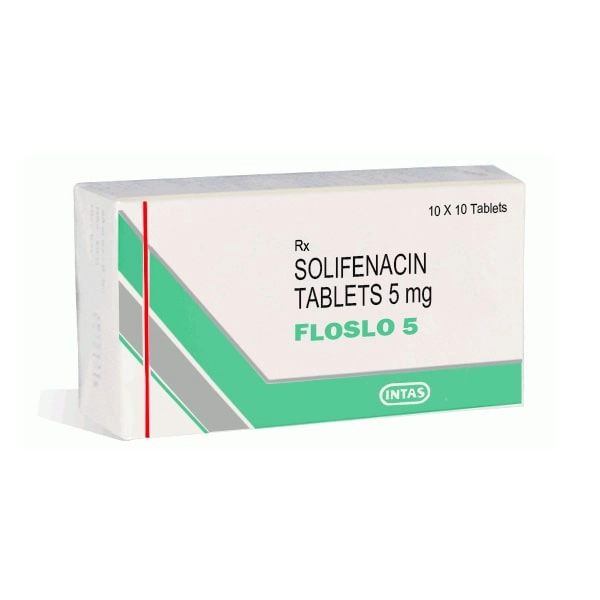
Floslo
✅ Enhances Audio Quality
✅ Easy Installation Process
✅ Compact and Portable
✅ Compatible with Devices
✅ Affordable Pricing
✓ Medically reviewed by Morgan Ellis — Pharmacy Researcher · 8 years experience · Last reviewed: May 2026
Quick Answer
Floslo contains solifenacin succinate 5 mg / 10 mg made by Intas Pharma. It is used for overactive bladder (OAB) symptoms — urgency, frequency and urge incontinence. Take exactly as directed by your clinician — do not adjust the dose yourself.
📦 Every order is covered by our Reshipment Assurance Policy — if your parcel does not arrive within 20 business days, we reship it.
Why order from MedsBase
Every batch is sourced from a WHO-GMP certified manufacturer. Orders ship in plain, unbranded packaging from our fulfilment partners and are covered by our Reshipment Assurance Policy. We have served 1,400+ verified customers with a 4.9/5 average rating across more than 600 medications.
What Floslo is and how it works
Floslo contains solifenacin succinate, a competitive M3-selective muscarinic receptor antagonist. By blocking M3 receptors on the detrusor (bladder smooth muscle), solifenacin reduces involuntary contractions during the storage phase of bladder filling and damps down urgency, frequency and urge-incontinence episodes.
Solifenacin is licensed for the symptomatic treatment of overactive bladder (OAB) with urinary urgency, frequency and urge incontinence. It is one of the most prescribed antimuscarinics for OAB worldwide due to once-daily dosing and a relatively favourable tolerability profile.
Dose and how to take it
| Patient group | Recommended dose |
|---|---|
| Adults with OAB — starting dose | 5 mg once daily |
| Step-up after 4 weeks if needed | Increase to 10 mg once daily |
| Severe renal impairment (eGFR <30) | Cap at 5 mg/day |
| Moderate hepatic impairment (Child-Pugh B) | Cap at 5 mg/day |
| Severe hepatic impairment (Child-Pugh C) | Avoid |
| Concurrent strong CYP3A4 inhibitor | Cap at 5 mg/day |
Swallow whole, with or without food, at the same time each day. Some improvement appears within 1–2 weeks; full effect by 4–6 weeks. Step up to 10 mg only if response at 5 mg is inadequate after 4 weeks — side effects (especially dry mouth and constipation) rise meaningfully at the higher dose.
⚠ Anticholinergic burden — review concurrent medicines
Solifenacin contributes to total anticholinergic load. In older adults, sustained high anticholinergic burden is linked to cognitive decline and increased dementia risk. Audit other anticholinergic medicines (TCAs, sedating antihistamines, oxybutynin, hyoscine, certain Parkinson drugs). Mirabegron (a beta-3 agonist with no anticholinergic effect) is the cleaner alternative if burden is a concern.
Side effects
| Side effect | Frequency at 5 mg | Frequency at 10 mg |
|---|---|---|
| Dry mouth | ~11% | ~28% |
| Constipation | ~5% | ~13% |
| Blurred vision | ~4% | ~5% |
| Indigestion / nausea | ~3% | ~4% |
| Dry eyes | Common | Common |
| Urinary retention | Uncommon | Uncommon |
| QT prolongation | Rare | Avoid in long-QT syndrome |
| Cognitive side effects | Uncommon | Greater in older adults |
| Acute angle-closure glaucoma | Rare | Same-day ophthalmology |
Drug interactions
| Combination | Effect | Action |
|---|---|---|
| Strong CYP3A4 inhibitors (ketoconazole, itraconazole, clarithromycin, ritonavir) | Solifenacin levels rise | Cap at 5 mg/day |
| Strong CYP3A4 inducers (rifampicin, phenytoin, carbamazepine) | Loss of effect | Switch to non-CYP3A4 alternative |
| Other anticholinergics | Additive burden | Avoid stacking |
| QT-prolonging drugs (sotalol, amiodarone, citalopram > 20 mg, methadone) | Additive QT effect | Avoid combination |
| Bisphosphonates | Solifenacin can worsen oesophageal irritation | Take separately, sit upright 30 min after bisphosphonate |
Who should not take Floslo
- Urinary retention or significant bladder-outflow obstruction
- Severe gastrointestinal disease (toxic megacolon, severe ulcerative colitis, paralytic ileus, gastric retention)
- Uncontrolled narrow-angle glaucoma
- Myasthenia gravis
- Severe hepatic impairment (Child-Pugh C)
- Patients on haemodialysis
- Pregnancy / breastfeeding (no human data)
Frequently Asked Questions
How is solifenacin different from oxybutynin?
Solifenacin is M3-selective and dosed once daily. Compared with non-selective oxybutynin IR, it has lower rates of dry mouth, constipation and cognitive side effects, and a longer half-life. Oxybutynin transdermal patch closes some of that gap by avoiding first-pass metabolism.
How quickly will I notice an effect?
Most users see fewer urgency episodes within 1–2 weeks. Full benefit by 4–6 weeks. A 3-day bladder diary at baseline and at week 4 is the cleanest way to measure progress.
When should I move to 10 mg?
Only after 4 weeks at 5 mg with insufficient symptom control, on the advice of your prescriber. Side effects rise meaningfully at the higher dose — many users get adequate relief at 5 mg.
Can I take Floslo with an alpha-blocker for combined BPH and OAB?
Yes, this is a recognised pattern in men whose obstruction has been treated but storage symptoms persist. Post-void residual urine must be measured first; significant retention contraindicates an antimuscarinic.
What about combination with mirabegron?
The SYNERGY and BESIDE trials supported solifenacin + mirabegron for refractory OAB. The combination is initiated by a urologist after monotherapy fails.
Why is dry mouth worse at 10 mg?
Salivary glands have M3 receptors. The higher dose blocks more of them. Hydration, sugar-free gum and avoiding caffeine help — or step back to 5 mg if intolerable.
Is solifenacin safe in older adults?
Use cautiously and at the lowest effective dose. Anticholinergic burden, not solifenacin alone, drives the dementia signal. Mirabegron is preferred if burden is high or memory concerns exist.
Can I drink alcohol while taking it?
Modest amounts are usually fine. Alcohol is a bladder irritant; cutting back often helps independently. Avoid combining with sedating drugs because of additive drowsiness.
What if I miss a dose?
Take it when you remember on the same day. If it is almost time for the next, skip the missed dose — never double up.
Will I have to take it forever?
OAB is usually a chronic condition. Some users can step down or pause once bladder retraining and lifestyle measures take effect. Symptoms typically return within 1–2 weeks of stopping.
Other Bladder & Prostate Medications
- Vesigard (darifenacin XR) — M3-selective antimuscarinic alternative
- Darilong (darifenacin XR) — alternative darifenacin brand
- Urotel XL (tolterodine ER) — once-daily ER antimuscarinic
- Mirago (mirabegron) — beta-3 agonist, no anticholinergic load
- Oxyspas (oxybutynin) — older non-selective antimuscarinic
Medical disclaimer. The information on this page is for general educational purposes only and is not a substitute for advice from a qualified clinician. Discuss any new medication or dose change with your doctor or pharmacist, especially if you are pregnant, breastfeeding, have other medical conditions, or take other medicines.
More options in Bladder Prostate
Ranked by recent MedsBase order volume — what other customers in this category are picking.
| Strength | 5 mg, 10 mg |
|---|---|
| Quantity | 30 Tablet/s, 60 Tablet/s, 90 Tablet/s |
| Pharma Form | Tablet/s |
| Manufacturer | Intas Pharma |
| Treatment | Overactive bladder (OAB) symptoms |
| Generic Brand | Solifenacin Succinate |
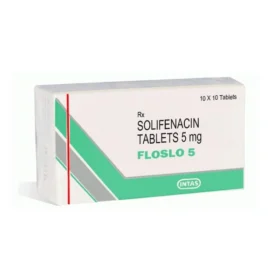 Floslo
Q & A
Floslo
Related products

Reviews
There are no reviews yet