








✓ Medically reviewed by · Last reviewed: May 2026
Pharmacy Researcher · 8 years experience
Pharmacy researcher with 8 years reviewing clinical drug information, generic formulation equivalence, and international pharmaceutical standards. Focuses on patient-facing accuracy in medication education.
GLP-1 medications beyond weight loss — GLP-1 Medications Beyond Weight Loss — 7 Proven Health Benefits You Should Know. Read on for an evidence-backed guide covering everything you need to know.
Key Takeaways
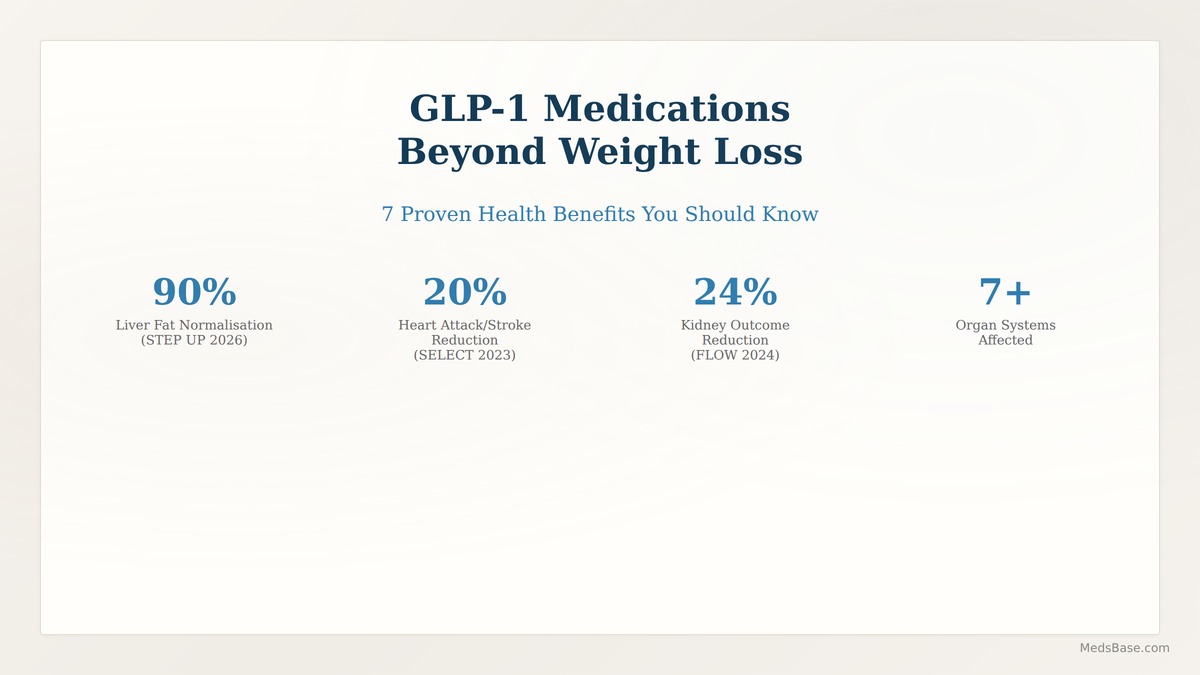
- GLP-1 medications do far more than lower the number on your scale — they protect your liver, heart, kidneys, and potentially your brain.
- Today’s STEP UP trial data shows semaglutide normalised liver fat in 9 out of 10 adults — a finding that could reshape liver disease treatment.
- Cardiovascular protection is the most robustly proven non-weight benefit: landmark trials show 12–20% MACE reduction.
- One side effect actually points to a therapeutic mechanism — and it may explain why these drugs reduce systemic inflammation.
- The newest data (SYNCHRONIZE-2) introduces a dual-agonist approach that could push benefits even further.
- What Are GLP-1 Medications?
- How Do GLP-1 Medications Work Throughout the Body?
- 7 Proven Health Benefits Beyond Weight Loss
- GLP-1 Medications vs Other Metabolic Treatments
- What Does the Research Say?
- Safety, Side Effects, and Practical Considerations
- How to Discuss GLP-1 Medications with Your Doctor
- Frequently Asked Questions
- The Bottom Line
GLP-1 medications beyond weight loss — every few months, a new GLP-1 medication headline breaks — and it’s never just about weight loss anymore. Today, two separate clinical trials dropped findings that expand what we know about these drugs: one showed a GLP-1 drug normalised liver fat in 90% of treated adults. Another demonstrated a next-generation dual agonist that achieved double-digit weight loss while improving blood sugar control. If you think GLP-1 medications are simply appetite suppressants, the research of the last three years — and especially the data released today — suggests you are looking at only one chapter of a much longer story. By the end of this article, you will understand the seven most important health benefits of GLP-1 medications beyond weight loss, which ones are backed by the strongest evidence, and what these drugs might mean for your long-term health beyond whatever the scale says.
What Are GLP-1 Medications?
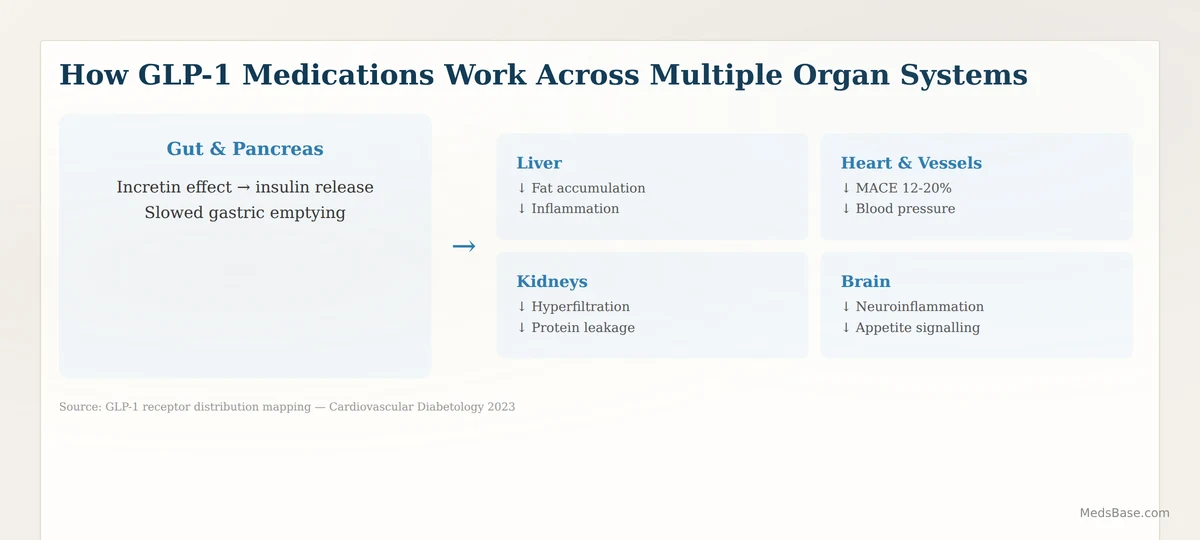
GLP-1 medications beyond weight loss — gLP-1 medications are a class of drugs that mimic glucagon-like peptide-1, a hormone your gut releases after eating. The hormone signals your pancreas to release insulin, slows stomach emptying, and communicates with your brain’s appetite centres. But GLP-1 receptors exist in far more places than your gut and brain — they are found in the liver, heart, blood vessels, kidneys, and even immune cells. That wide receptor distribution is exactly why GLP-1 medications beyond weight loss produce such a broad range of effects.
GLP-1 medications beyond weight loss — the first GLP-1 drug (exenatide) was approved in 2005 for type 2 diabetes. Since then, the class has expanded to include liraglutide (Victoza/Saxenda), semaglutide (Ozempic/Wegovy), dulaglutide (Trulicity), and tirzepatide (Mounjaro/Zepound) — a dual GIP/GLP-1 agonist. The newest investigational agents, like survodutide, add glucagon agonism on top of GLP-1 activation for an even broader metabolic effect.
Quick Answer: GLP-1 medications are receptor agonists that affect at least seven organ systems — not just appetite. They are prescribed primarily for diabetes and obesity, but their benefits span cardiovascular, liver, kidney, and potentially neuroprotective domains.
How Do GLP-1 Medications Work?
GLP-1 medications beyond weight loss — think of GLP-1 as your body’s metabolic conductor. After you eat, it stands at the podium and signals the orchestra: “pancreas, release insulin.” “Stomach, slow down.” “Brain, that’s enough food.” But the podium isn’t in one room — GLP-1 receptors are scattered across your organs. When you take a GLP-1 medication, you are not just turning up the volume on one section but amplifying the entire performance.
GLP-1 medications beyond weight loss — here’s where it gets interesting. Those receptors in the liver, heart, kidneys, and immune cells are not bystanders — they respond. In the liver, GLP-1 signalling reduces fat accumulation. In blood vessel walls, it dampens inflammation and oxidative stress. In the kidney, it improves filtration and reduces protein leakage. This multi-organ effect means GLP-1 medications beyond weight loss produce benefits that cannot be explained by weight reduction alone — clinical trials consistently show organ protection emerges before significant weight loss occurs, suggesting direct tissue-level mechanisms.
Research Spotlight: A 2023 review in Cardiovascular Diabetology mapped GLP-1 receptor expression across 14 human tissue types and found consistent anti-inflammatory signalling in vascular endothelial cells, hepatocytes, and renal podocytes — cells that play key roles in heart disease, fatty liver, and kidney failure respectively. This receptor map is the biological foundation for every benefit described in this article.
7 Proven Health Benefits Beyond Weight Loss
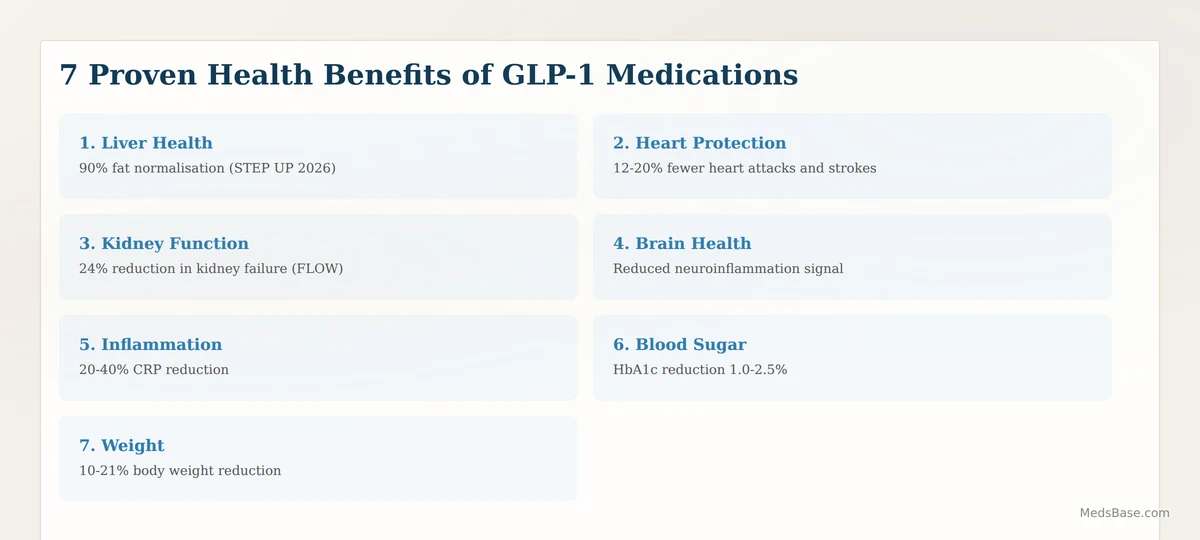
1. Liver Health and Fat Reduction
Of all the benefits of GLP-1 medications beyond weight loss, liver protection is arguably the most dramatic emerging story. The STEP UP trial sub-analysis, released today (October 1, 2026), reported that semaglutide reduced liver fat to normal levels in 9 out of 10 adults with obesity and excess liver fat — a result that rivals or exceeds what has been seen with dedicated liver-disease drugs in development.
GLP-1 medications beyond weight loss — metabolic dysfunction-associated steatotic liver disease (MASLD, formerly NAFLD) affects roughly one in three adults worldwide and has no approved pharmacotherapy. GLP-1 medications reduce liver fat through multiple pathways: they lower body weight, improve insulin sensitivity, reduce de novo lipogenesis (the liver’s fat-production factory), and directly suppress inflammatory signals in liver cells. A 2024 meta-analysis of 12 trials found GLP-1 agonists reduced liver fat content by an average of 32% on MRI — and the STEP UP results suggest newer formulations may push that number much higher.
Who benefits most: Anyone with type 2 diabetes and elevated liver enzymes, or anyone with obesity and evidence of fatty liver on imaging.
2. Cardiovascular Protection
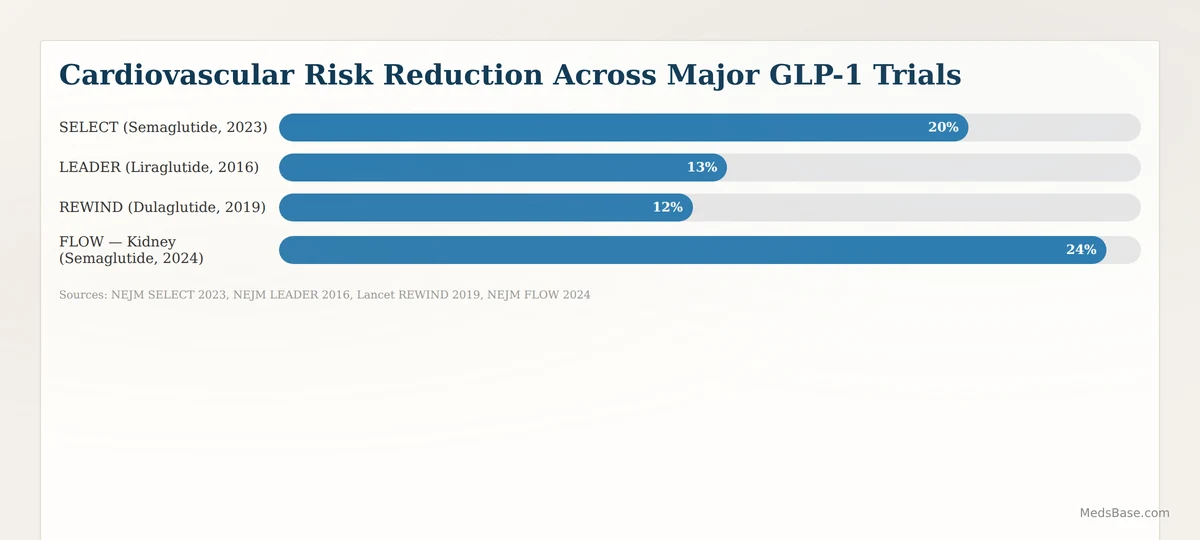
GLP-1 medications beyond weight loss — if liver protection is the emerging story, cardiovascular protection is the established one. The SELECT trial, published in the New England Journal of Medicine in 2023, randomised over 17,000 adults with established cardiovascular disease and overweight/obesity (but without diabetes) to semaglutide or placebo. The result: a 20% reduction in major adverse cardiovascular events (MACE) — a composite of heart attack, stroke, and cardiovascular death.
GLP-1 medications beyond weight loss — this finding is extraordinary for two reasons. First, it was achieved in people without diabetes, proving the cardiovascular benefit is independent of glucose-lowering. Second, the 20% magnitude is in the same league as statins — drugs designed specifically for heart protection. Earlier trials (LEADER with liraglutide, REWIND with dulaglutide) showed consistent 12–13% MACE reductions.
What this means for you: If you have heart disease or multiple cardiovascular risk factors and are overweight, a GLP-1 medication may reduce your heart attack and stroke risk by roughly one-fifth — independentof any weight you lose.
3. Kidney Protection
GLP-1 medications beyond weight loss — kidney disease is the silent complication of diabetes and hypertension. By the time creatinine rises, substantial damage has often already occurred. The FLOW trial, published in 2024, tested semaglutide specifically in people with type 2 diabetes and chronic kidney disease. The trial was stopped early for overwhelming efficacy: semaglutide reduced the composite kidney outcome (kidney failure, ≥50% eGF R decline, or kidney- or cardiovascular-death) by 24%.
GLP-1 medications beyond weight loss — gLP-1 medications protect kidneys through reduced glomerular hyperfiltration (the high-pressure state that damages kidney filters over time), lower blood pressure, weight reduction, and direct anti-inflammatory and anti-fibrotic effects on kidney tissue. This makes GLP-1 medications beyond weight loss a cornerstone of organ protection for anyone with diabetes and early kidney disease.
4. Brain and Neurocognitive Health
GLP-1 medications beyond weight loss — the evidence here is younger and more tentative, but the signals are consistent enough to take seriously. GLP-1 receptors are expressed in multiple brain regions, and GLP-1 analogues cross the blood-brain barrier. Preclinical studies show they reduce neuroinflammation, protect synapses from damage, and promote neuronal survival.
GLP-1 medications beyond weight loss — a 2024 post-hoc analysis of cardiovascular outcomes trials found fewer cases of dementia and cognitive decline in the GLP-1 arm versus placebo, though the absolute numbers were small and the finding needs confirmation in dedicated trials. Phase 3 trials testing semaglutide in early Alzheimer’s disease are underway. The “brain benefit” of GLP-1 medications beyond weight loss is not proven — but it would not be surprising given the receptor distribution and the consistent anti-inflammatory signal.
5. Inflammation Reduction
GLP-1 medications beyond weight loss — chronic low-grade inflammation is now understood as a root contributor to heart disease, diabetes, neurodegeneration, and aging itself. CRP (C-reative protein), a blood marker of systemic inflammation, consistently drops 20–40% in GLP-1 trials — and, critically, the drop occurs before significant weight loss, pointing to a direct anti-inflammatory mechanism rather than a secondary effect of fat reduction.
GLP-1 receptors on immune cells (macrophages, T-cells) directly suppress the release of pro-inflammatory cytokines. This may be the single mechanism that unifies the liver, heart, kidney, and brain benefits — inflammation is the common thread running through all of them.
6. Blood Sugar Control (Beyond Insulin)
This one is obvious but still worth stating: GLP-1 medications lower HbA1c by 1.0–2.0% on average, with the newest dual and triple agonists pushing toward 2.5%. But the how matters. Unlike sulfonylureas or insulin, which can cause hypoglycaemia if you miss a meal, GLP-1s work only when blood sugar is elevated — their insulin release is glucose-dependent. This means a dramatically lower risk of dangerous low blood sugar, which is why GLP-1s are now recommended ahead of many older diabetes drugs in treatment guidelines.
7. Emerging: Polycystic Ovary Syndrome (PCOS), Addiction, and More
Early research suggests GLP-1 medications beyond weight loss may improve ovulation rates and metabolic parameters in women with PCOS independently of weight reduction. Case reports and early observational studies hint at reduced alcohol and nicotine craving — GLP-1 receptors in the brain’s reward centres may dampen addictive signalling. These areas are investigational, not established, but the receptor biology provides plausible mechanisms.
GLP-1 Medications vs Other Metabolic Treatments
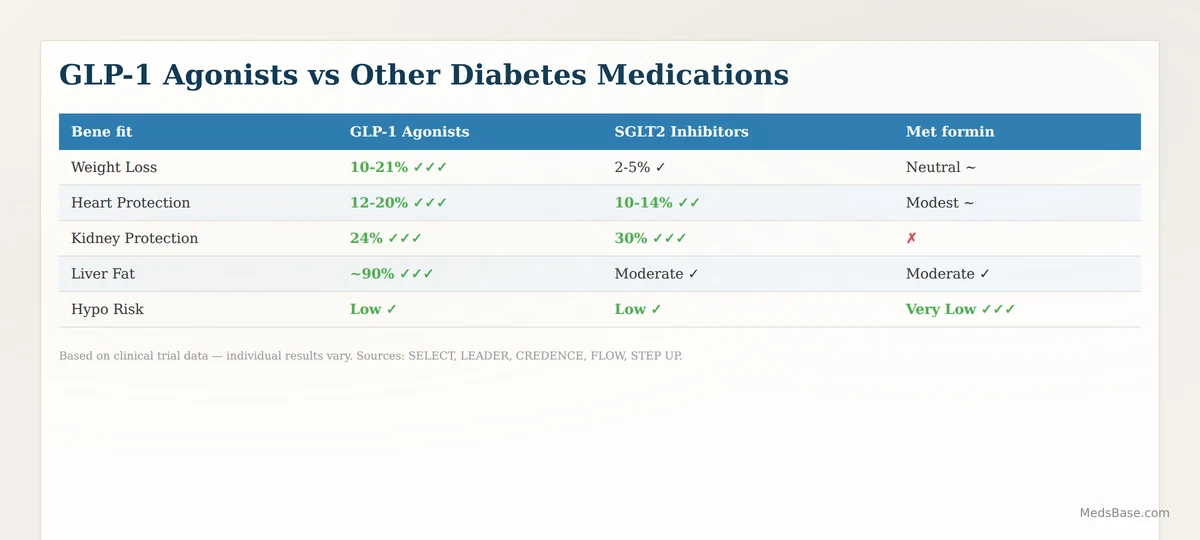
| Benefit | GLP-1 Agonists | SGLT2 Inhibitors | Metformin |
|---|---|---|---|
| Weight loss | (10–21%) | (2–5%) | ~ (neuttral) |
| Heart protection (MACE) | (12–20% RRR) | (10–14% RRR) | ~ (modest) |
| Kidney protection | (FLOW: 24% RRR) | (CREDENCE: 30% RRR) | |
| Liver fat reduction | (STE P UP: ~90% normalisation) | (modest MRI reduction) | (insulin sensitisation) |
| Blood sugar (Hb A1c) | (1.0–2.5% drop) | (0.5–1.0% drop) | (1.0–2.0% drop) |
| Hypoglycamia risk | (low) | (low) | (very low) |
| Route | Injectable (or al) | Oral | Oral |
The GLP-1 class offers the broadest multi-organ protective profile of current metabolic drugs, which is why guidelines increasingly position them as first-line for people with diabetes and established cardiovascular or kidney disease. However, combination therapy — especially GLP-1 + SGTL2 inhibitor — is often the optimal strategy because the mechanisms are complementary: GLP-1s work primarily through metabolic and anti-inflammatory pathways, while SGLT2s work through haemodynamic and metabolic pathways.
What Does the Research Say?
| Study | Year | Drug | Key Finding | Source |
|---|---|---|---|---|
| SELET | 2023 | Semaglutide 2.4mg | 20% MACE reduction in non-diabetic CVD patients | NEJM |
| LEADE R | 2016 | Liraglutide 1.8mg | 13% MACE reduction | NEJM |
| REWIND | 2019 | Dulaglutide | 12% MACE reduction | LAncet |
| FLOW | 2024 | Semaglutide 1.0mg | 24% kidney composite outcome reduction | NEJM |
| STE P UP (liver sub-study) | 2026 | Semaglutide | 90% liver fat normalisation | Reported Oct 1 |
| SYNCHRONIZE-2 | 2026 | Suvrodutide | 13.1% weight loss + glycaemic improvement | Reported Oct 1 |
What this means for you: The evidence base is large, consistent, and spans multiple independent trials and drug molecules. This is not a “promising early signal” — for cardiovascular and kidney protection, the evidence is at the level that changes treatment guidelines. The liver and brain data are earlier-stage but aligning with the same pattern.
Safety, Side Effects, and Practical Considerations
GLP-1 medications have a well-characterised safety profile, but they are not risk-free. The most common side effects are gastrointestinal — nausea, vomiting, diarrhoea, constipation — and they are the leading reason people stop treatment. Here’s the practical breakdown:
| Side Effect | Frequency | Severity | What To Do |
|---|---|---|---|
| Nause a | 20–45% | Mild to moderate | Start low, titrate slow; eat smaller meals; avoid high-fat foods |
| Vo miting | 5–15% | Mild to moderate | Same as nause a; if persistent, discuss dose adjustment |
| Diarhoea | 10–20% | Mild | Usually transient (2–4 weeks); stay hydrated |
| Constipation | 10–20% | Mild to moderate | Increase water and fibre intake; often the body adjusts |
| Injection-site reactions | 1–5% | Mild | Rotate sites; rarely a reason to stop |
| Gallbladder events | 1–2% | Moderate | Report persistent right upper abdominal pain |
| Pancreatitis | <1% | Severe (rare) | Report severe persistent abdominal pain immediately |
| Medullary thyroid cancer | Animal studies only | Theoretical | Contraindicated if personal/family history of MTC or MEN2 |
The nausea deserves a closer look because it is paradoxically a “therapeutic side effect” — it reflects the drug’s action on gastric emptying and brain satiety centres. Most people find nausea peaks during dose escalation and fades within 4–8 weeks. Starting at the lowest dose and titrating monthly (rather than weekly) is the single most effective strategy for minimising GI side effects.
Who should be cautious or avoid GLP-1 medications:
- Personal or family history of medullary thyroid carcinoma or Multiple Endocrine Neoplasia syndrome type 2 — the risk is theoretical (based on rodent studies) but these are labelled contraindications
- History of pancreatitis — discuss with your doctor; most guidelines say use with caution rather than absolute avoidance
- Severe gastroparesis — GLP-1s slow gastric emptying, which could worsen symptoms
- Pregnancy or planned pregnancy — stop at least 2 months before conception (weight loss is not desirable in pregnancy)
How to Discuss GLP-1 Medications with Your Doctor
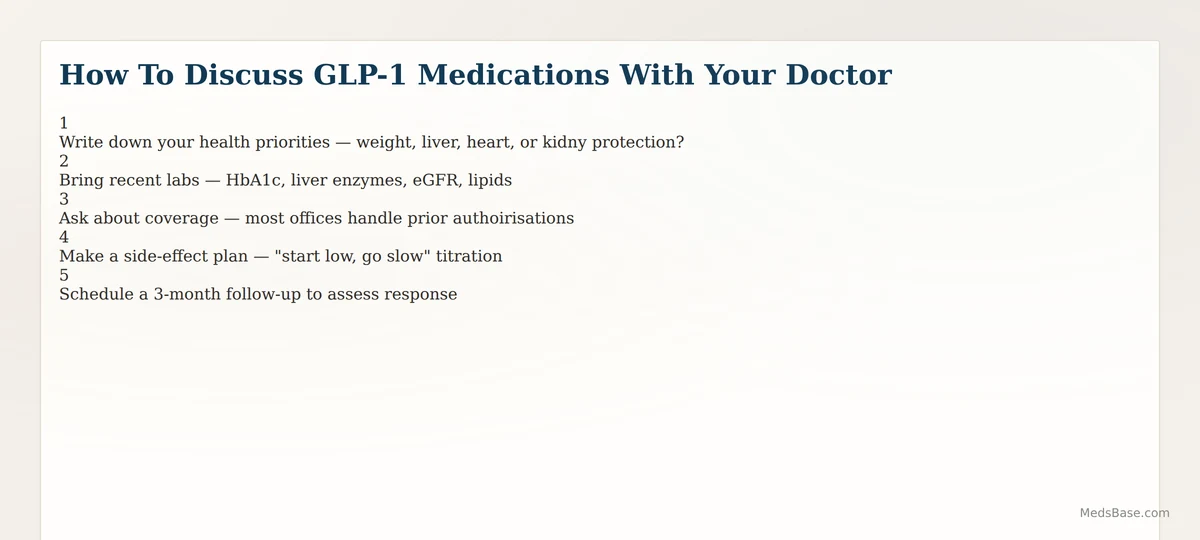
- Write down your health priorities. Is it weight loss? Liver health? Heart protection? Kidney preservation? Knowing what matters most to you helps your doctor choose the right drug in this class — because some have stronger liver data, others stronger kidney data.
- Bring recent lab results. HbA1c, liver enzymes (ALT/AST), eGFR (kidney function), and lipids — these are the numbers your doctor needs to assess whether a GLP-1 is indicated and which one fits best.
- Ask about insurance coverage. GLP-1 medications are expensive without coverage. Ask your doctor’s office if they have experience with prior authoorisations — most do, and a well-written prior auth makes the difference between approval and denial.
- Make a side-effect plan. “Start low, go slow” is the universal rule. Agree on a titration schedule (e.g., 4 weeks at each dose step) and what to do if nausea becomes bothersome.
- Schedule follow-up. A 3-month recheck is standard — it takes that long to reach a therapeutic dose and meaningfully assess HbA1c change and tolerability.
Related reading: For a deeper look at specific drugs in this class, see our Wegovy vs Mounjaro comparison and our article on microdosing GLP-1 medications. If liver health is your primary concern, see our deep dive on Semaglutide for Fatty Liver.
Frequently Asked Questions
Q: What else do GLP-1 drugs do besides weight loss?
A: GLP-1 medications protect the heart (reducing MACE by 12–20%), preserve kidney function, reduce liver fat, lower systemic inflammation, improve blood sugar control with low hypoglycamia risk, and early data suggest possible neuroprotective and anti-addiction effects. These benefits are independent of weight loss and are driven by GLP-1 receptors located throughout the body.
Q: Can GLP-1 medications improve liver health?
A: Yes — and today’s STEP UP trial data strengthens the case dramatically. Semaglutide normalised liver fat in 90% of treated adults with obesity and excess liver fat. Liver fat reduction with GLP-1s is driven by weight loss, improved insulin sensitivity, and direct anti-inflammatory effects on liver cells.
Q: Do GLP-1 drugs protect the heart?
A: Yes. The SELECT trial showed semaglutide reduced heart attack, stroke, and cardiovascular death by 20% in people with established heart disease — even without diabetes. This is a guideline-changing level of evidence comparable to what statins achieve for cholesterol.
Q: Can Ozempic help with kidney disease?
A: The FLOW trial (2024) demonstrated semaglutide reduced kidney failure, substantial eGFR decline, or kidney/cardiovascular death by 24% in people with type 2 diabetes and chronic kidney disease. The benefit was large enough that the trial was stopped early.
Q: Why do GLP-1 medications cause nause a?
A: Nause a results from slowed stomach emptying and direct effects on brain areas controlling nausea and satiety. It is most common during dose increases and typically improves within 4–8 weeks. Starting at a low dose and titrating slowly is the most effective strategy to minimise it.
Q: Are the non-weight-loss benefits of GLP-1s proven or theoretical?
A: Cardiovascular and kidney protection are proven at the highest level of evidence (large randomised controlled trials). Liver fat reduction is well-established, with the newest data pushing toward normalisation-level results. Brain and anti-addiction effects are supported by preliminary evidence and ongoing trials but are not yet considered established indications.
Q: Can I take a GLP-1 medication just for the health benefits even if my weight is normal?
A: Currently GLP-1 medications are indicated for type 2 diabetes and/or obesity (BMI ≥30, or ≥27 with weight-related conditions). The organ-protective benefits have been demonstrated in these populations. Whether they benefit people at normal weight without diabetes is unknown — and off-label use solely for “health optimisation” is not supported by evidence.
Q: What is the STEP UP trial?
A: The STEP UP trial is a Phase 3 study of semaglutide that included a sub-population analysis of liver fat. Results released October 1, 2026 showed that 9 out of 10 adults with obesity and excess liver fat achieved normal liver fat levels on semaglutide. This is among the most impressive liver fat reduction results ever reported for a metabolic drug.
The Bottom Line
GLP-1 medications are not weight-loss drugs that happen to do other things. They are metabolic multi-tools whose weight-loss effect is simply the most visible one. The cardiovascular, kidney, and liver benefits are supported by clinical-trial evidence at the level that should influence treatment decisions — not just curiosity.
If you are already on a GLP-1 medication, know that the benefits extend far beyond what your scale reports. If you are considering one, make your decision based on the full picture — your heart, kidneys, and liver may benefit even if your weight loss is modest.
Your next step: Write down which of the seven benefits matter most to you, and bring that list to your next doctor’s appointment. A medication that protects your weakest organ system is worth more than one that simply lowers a number.
What to read next:
- Wondering how Wegovy compares to Mounjaro specifically? Read our Wegovy vs Mounjaro guide.
- Interested in the liver angle specifically? Our Semaglutide for Fatty Liver article covers that in depth.
- Today we also published How to Treat Eczema at Home — if skincare is on your radar.

Written by
Sophie ChenPharmaceutical Content Researcher · 8 years experience
Sophie Chen is a pharmaceutical content researcher with 8 years covering generic medication access and clinical pharmacology. She specialises in international regulatory frameworks, bioequivalence standards, and patient-facing education on therapeutic drug classes. She is not a clinician.