








Irovel H
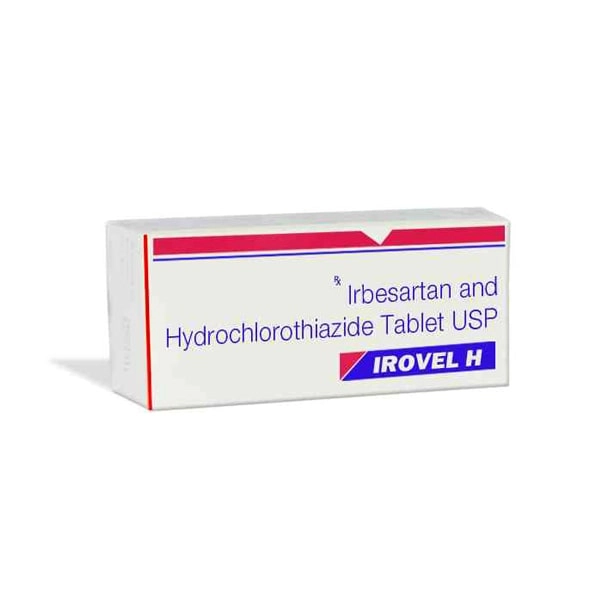
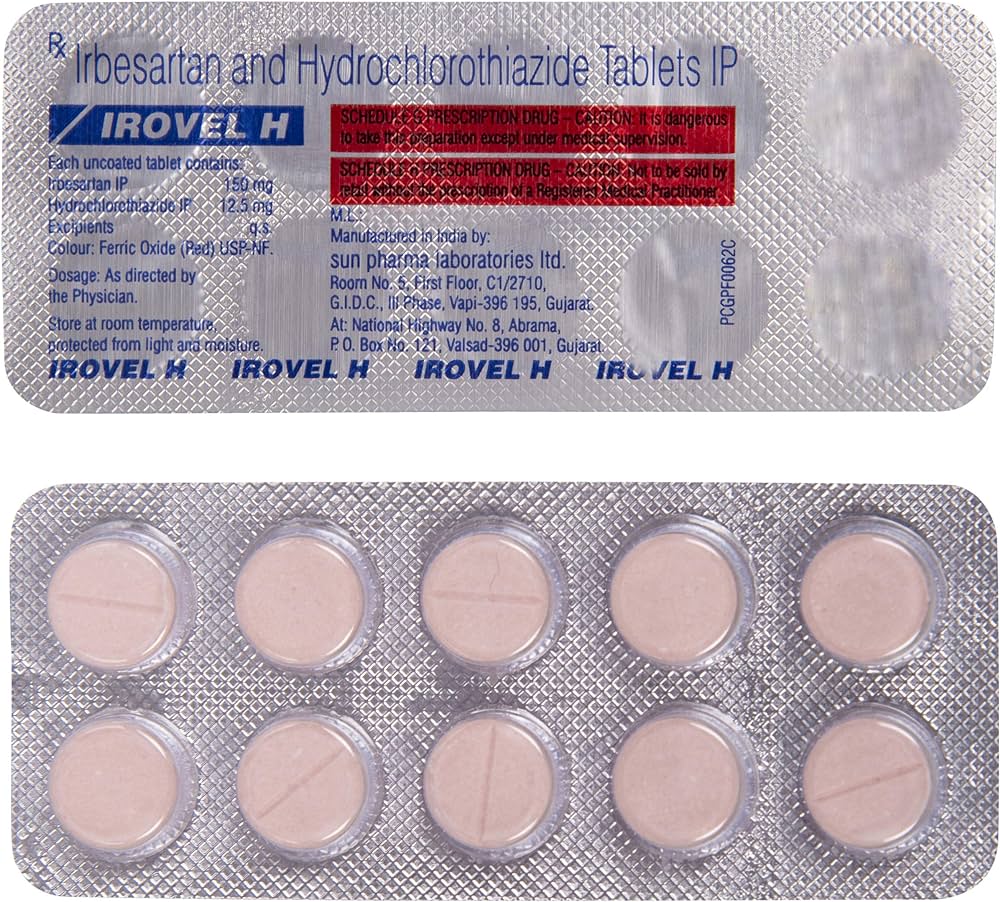
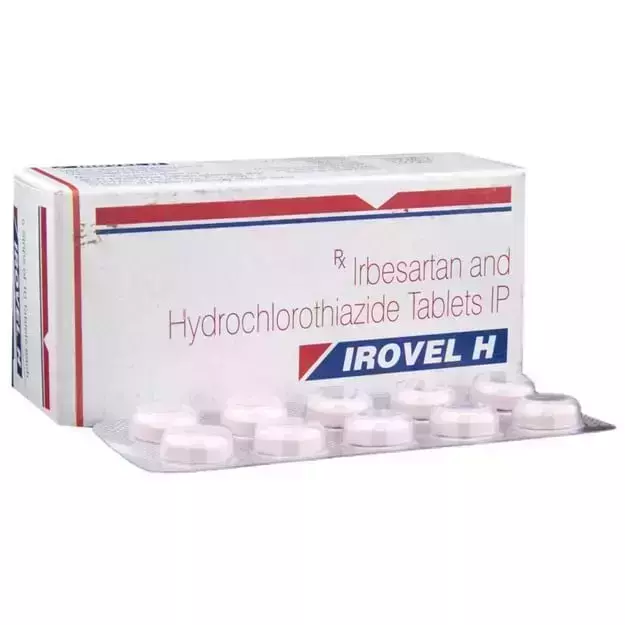
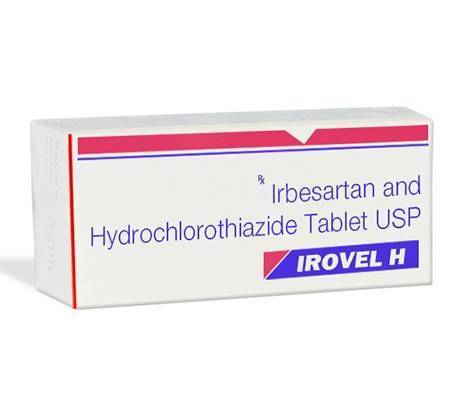

Irovel H is Sun Pharma’s fixed-dose irbesartan 150 mg + hydrochlorothiazide 12.5 mg tablets — step-2 antihypertensive combination. Irbesartan carries the most robust diabetic-nephropathy evidence of any ARB (IDNT 2001 — 20% reduction in creatinine doubling, ESRD, or death; IRMA-2 2001 — 70% reduction in microalbuminuria progression). HCTZ adds 5-10 mmHg systolic BP drop through complementary RAAS-independent mechanisms. Potassium tends to stay neutral (HCTZ lowers, ARB raises). Once-daily morning dosing.
✓ Medically reviewed by Morgan Ellis — Pharmacy Researcher · 8 years experience · Last reviewed: May 2026
⚡ Quick Answer — What is Irovel H?
Irovel H is a 150/12.5 mg fixed-dose tablet of irbesartan 150 mg and hydrochlorothiazide from Sun Pharma — a step-2 antihypertensive combination for patients whose blood pressure is not controlled on Irovel (irbesartan monotherapy) alone. Adding a thiazide diuretic typically yields an additional 5-10 mmHg systolic BP drop beyond ARB monotherapy. The two components work through complementary mechanisms (the ARB blocks the angiotensin-II receptor; HCTZ depletes sodium and induces mild volume contraction) and have mutually balancing side-effect profiles — HCTZ lowers potassium while the ARB tends to raise it, so the combination is less likely to cause either hypokalaemia or hyperkalaemia than either drug alone at equivalent doses. Typical dosing: one tablet once daily. Absolutely contraindicated in pregnancy (both components), anuria or severe renal impairment (eGFR <30), thiazide (sulfonamide) hypersensitivity, and symptomatic hyponatraemia. Monitor potassium, sodium, urate, and creatinine on treatment.
📦 Every order is covered by our Reshipment Assurance Policy — if your parcel does not arrive within 20 business days, we reship it.
Why order from MedsBase
Our generic medications are sourced from WHO-GMP certified manufacturers and shipped worldwide in discreet, plain packaging — no medication name on the parcel exterior. Card payments are routed through a regulated processor (statement descriptors include a regulated card-payment processor — never “MedsBase” or any medication name). Crypto and SEPA bank transfer are also accepted. Every order is backed by our Reshipment Assurance Policy.
What Is Irovel H?
Irovel H is an oral fixed-dose combination tablet supplying irbesartan 150 mg and hydrochlorothiazide (HCTZ) in a single pill, made by Sun Pharma and supplied in 30-90 tablets. It combines two first-line antihypertensive drug classes in a ratio chosen for most patients who have progressed beyond ARB monotherapy. Irbesartan (Sanofi / BMS as Avapro / Aprovel, 1997) binds the AT1 receptor with 11-15 hour half-life and the strongest diabetic-nephropathy evidence of any ARB. Steady-state 150 or 300 mg once daily produces smooth 24-hour BP coverage; no active metabolite required.
Hydrochlorothiazide (HCTZ) is a thiazide diuretic introduced in 1959 (MSD as HydroDiuril). It remains one of the most prescribed antihypertensive drugs worldwide and is the fourth guideline-recommended first-line class for hypertension alongside ARBs, ACE inhibitors, and calcium-channel blockers.
Why Combine an ARB With a Thiazide?
Hypertension is rarely controlled on a single drug at target dose. Trials like ALLHAT, ACCOMPLISH, and ASCOT established that most hypertensive patients need two or three agents from different classes to reach guideline BP targets (<140/90 for most adults, <130/80 for diabetics and CKD). ARB + thiazide is one of the three evidence-based two-drug combinations (the other two being ARB + CCB and CCB + thiazide).
The two components of Irovel H complement each other on four pharmacological axes:
- Complementary BP-lowering mechanisms. The ARB blocks vasoconstriction and aldosterone-driven sodium retention; HCTZ depletes total-body sodium and produces mild volume contraction. Additive BP drop (typically 5-10 mmHg systolic beyond ARB monotherapy).
- RAAS counter-regulation. Thiazides activate the renin-angiotensin-aldosterone system as a compensatory response to sodium loss — this normally blunts their effect. Blocking the AT1 receptor with an ARB prevents that compensatory activation and unlocks the full antihypertensive effect of the thiazide.
- Potassium balance. HCTZ loses potassium through the distal tubule (classic hypokalaemia risk). ARBs raise potassium by blocking aldosterone-mediated potassium excretion. The combination therefore runs at a more physiological potassium level than either agent alone — clinically visible as fewer hypokalaemia episodes on loop diuretic co-therapy and fewer clinically significant hyperkalaemias than ARB monotherapy.
- Volume-activation counter-regulation. ARB-induced vasodilation can trigger sodium retention in salt-sensitive patients (a classic cause of “lost” BP response after weeks of therapy). The natriuresis from HCTZ cuts off that retention loop.
Irbesartan has the most robust renoprotection evidence in type 2 diabetes with overt nephropathy (IDNT and IRMA-2 trials) — useful context for patients with diabetic CKD stage 3 who need both BP control and proteinuria reduction. The irbesartan + HCTZ combination is a standard step-2 choice in diabetic and non-diabetic hypertension where BP is not controlled on irbesartan alone.
Evidence for ARB+HCTZ: IDNT (2001) — irbesartan 300 mg reduced the composite of doubling of serum creatinine, end-stage renal disease, or death by 20% in 1,715 type 2 diabetic patients with overt nephropathy. IRMA-2 (2001) — irbesartan reduced progression from microalbuminuria to overt nephropathy by 70% at 300 mg vs placebo. These renoprotection results are largely BP-independent and establish irbesartan as a preferred ARB in type 2 diabetic nephropathy.
Dosage & Titration
Standard dose: one 150/12.5 mg tablet once daily, typically in the morning (HCTZ causes a mild diuresis; evening dosing can disrupt sleep with night-time urination).
When to start Irovel H:
- BP not controlled on irbesartan 150 mg monotherapy after 4-6 weeks at target dose
- Stage 2 hypertension (≥160/100) as a starting combination — initiating two drugs from different classes is preferred to single-agent titration for severe hypertension per AHA/ACC guidelines
- Stepping up from an ACE-inhibitor/HCTZ combination when the ACE inhibitor has caused cough
Titration: if BP remains uncontrolled after 4-6 weeks on the starting FDC, a higher-strength fixed-dose tablet can be substituted (most manufacturers supply 50/12.5, 100/12.5, 80/12.5, 160/12.5, and 160/25 combinations of the relevant ARB with HCTZ). Alternatively, add a third class — typically a calcium-channel blocker (amlodipine).
Monitoring schedule:
- Baseline: urea, electrolytes (sodium, potassium), creatinine, eGFR, serum urate, fasting glucose, lipids. Home or clinic BP.
- 1-2 weeks after start or dose change: repeat U&E. Expect small creatinine rise (up to 30% is acceptable), small sodium drop (1-3 mmol), small urate rise (partially offset in losartan-containing products). Potassium typically stable in normal range.
- 4-6 weeks: BP review to assess response; repeat U&E if any electrolyte disturbance at earlier timepoint.
- Ongoing: annual U&E, urate, glucose, and lipids once stable. Home BP twice weekly.
- Stop and investigate: symptomatic hyponatraemia (confusion, nausea, lethargy; serum Na <130), potassium <3.0 or >5.5, creatinine rise >30%, new or worsening gout, hypersensitivity rash.
Discontinuation: no withdrawal syndrome, but abrupt stop causes gradual BP rebound over days. Taper by substituting a lower-strength combination or returning to ARB monotherapy under BP monitoring.
Side Effects
Side effects overlap those of both component drugs. The combination is usually better tolerated than either component at maximum monotherapy dose, because the doses used in fixed-dose combinations are lower than peak monotherapy doses.
Common (>1% of users):
- Dizziness, postural hypotension (usually mild; more common in first 1-2 weeks)
- Mild diuresis — increased urination for the first few days, typically settling as volume equilibrates
- Mild hyponatraemia or hypokalaemia in susceptible patients
- Expected small creatinine rise (up to 30%)
- Fatigue, headache, nasopharyngitis
- Hyperuricaemia (typically asymptomatic; rarely precipitates gout — less likely in losartan-containing combinations)
- Photosensitivity rash (thiazide-related)
Uncommon but clinically important:
- Severe hyponatraemia — risk highest in elderly women on low-salt diets, heart failure, or SIADH-prone. Investigate any new confusion, nausea, or falls with serum sodium.
- Precipitation of acute gout — more likely in valsartan+HCTZ or telmisartan+HCTZ than losartan+HCTZ. Switch to losartan-based combination if recurrent.
- Metabolic disturbance — worsening glucose tolerance (5-8 mg/dL average fasting-glucose rise), modest LDL and triglyceride increase. Telmisartan partially offsets this via PPAR-γ activity.
- Angioedema — lower rate than ACE inhibitors but possible. Stop immediately; substitute a non-RAAS agent.
- Acute kidney injury in volume-depleted states or bilateral renal artery stenosis
- Pancreatitis — rare thiazide-class adverse effect; stop immediately on any upper-abdominal pain with lipase rise.
- Acute myopia and angle-closure glaucoma — rare sulfonamide-class reaction, typically within hours to days of starting a new sulfonamide. Stop and seek urgent ophthalmology review if sudden painful eye or visual change.
- Thrombocytopenia, leucopenia — rare thiazide-class reactions
Contraindications
- Pregnancy — ABSOLUTE contraindication at all trimesters. Both components: ARBs cause fetal renal agenesis, oligohydramnios, pulmonary hypoplasia; HCTZ crosses the placenta and can cause fetal or neonatal jaundice and thrombocytopenia. Switch to labetalol, methyldopa, or nifedipine pre-conception.
- Anuria or severe renal impairment (eGFR <30 mL/min/1.73 m2) — HCTZ loses efficacy at low GFR and the ARB risks AKI
- Thiazide or sulfonamide hypersensitivity
- Symptomatic hyponatraemia (Na <130) at baseline — will worsen
- Symptomatic hypokalaemia (K <3.0) or hypomagnesaemia at baseline — correct first
- Hypercalcaemia — HCTZ raises calcium by reducing urinary excretion
- Severe hepatic impairment (Child-Pugh C) — risk of precipitating hepatic encephalopathy via electrolyte shift
- History of angioedema with any ACE inhibitor or ARB (within 4 weeks; longer-term cautious use often acceptable under specialist advice)
- Bilateral renal artery stenosis
- Concurrent sacubitril/valsartan (Entresto) — 36-hour washout required
- Concurrent aliskiren in diabetes or CKD (ALTITUDE harm)
- Concurrent ACE inhibitor — ONTARGET harm without benefit
Breastfeeding: HCTZ is excreted in milk and can suppress lactation at higher doses; generally avoided in the first weeks after delivery of a premature infant. Alternative antihypertensives (propranolol, nifedipine) are preferred when possible.
Drug Interactions
- Lithium — CRITICAL INTERACTION. Thiazides reduce lithium renal clearance and can precipitate lithium toxicity. Avoid the combination if possible; if unavoidable, monitor lithium levels weekly for the first month and reduce lithium dose by 25-50%.
- NSAIDs — “triple whammy” risk. ARB + diuretic + NSAID = high AKI risk in hypovolaemia or concurrent illness (infection, dehydration). Reduce NSAIDs to occasional short-term use; paracetamol preferred.
- Potassium supplements, potassium-sparing diuretics (spironolactone, eplerenone, amiloride) — hyperkalaemia despite HCTZ-driven potassium loss. Monitor closely.
- Digoxin — HCTZ-induced hypokalaemia potentiates digoxin toxicity. Monitor potassium and digoxin levels.
- Oral corticosteroids — additive hypokalaemia and fluid retention (partially offsetting thiazide effect)
- Amphotericin B, stimulant laxatives — additive hypokalaemia risk
- Oral antidiabetic drugs, insulin — thiazides worsen glucose tolerance; diabetic HbA1c may rise 0.1-0.3%. Less of a concern with telmisartan+HCTZ than other ARB+HCTZ combinations (telmisartan’s PPAR-γ activity partially counteracts the thiazide effect).
- Cholestyramine / colestipol — reduce HCTZ absorption by 40-85%. Separate dosing by 4 hours.
- Alcohol — additive postural hypotension, especially when dose-titrating
- Other ACE inhibitors, other ARBs, aliskiren — do not combine
Irovel H vs ARB Monotherapy — When to Step Up
Irovel H is a step-2 agent, not a first-line drug. For new hypertension without complications:
- Start with Irovel (irbesartan monotherapy) (or a calcium-channel blocker; or an ACE inhibitor if no ACEi-cough history)
- Titrate to target dose over 4-6 weeks
- If BP still uncontrolled, move to Irovel H (ARB + thiazide) or add a CCB (ARB + CCB). Both are evidence-based combinations.
- If BP still uncontrolled at 4-6 weeks on combination, move to a triple combination: ARB + CCB + thiazide
- Beyond triple combination, add spironolactone (PATHWAY-2 trial evidence for resistant hypertension) or refer for specialist workup (renal artery stenosis, primary aldosteronism, phaeochromocytoma)
Patients with uncomplicated stage 2 hypertension (≥160/100) may reasonably start directly on Irovel H — current AHA/ACC guidelines prefer early two-drug initiation for severe hypertension over single-drug titration.
Storage
Store Irovel H below 25°C in the original blister pack. Keep out of reach of children.
Frequently Asked Questions
Is Irovel H a first-line blood-pressure drug?
No — fixed-dose ARB/thiazide combinations are step-2 agents. The standard approach is to start with ARB monotherapy (Irovel (irbesartan monotherapy)), titrate to target dose, and move to Irovel H only if BP is not controlled after 4-6 weeks. An exception: stage 2 hypertension (≥160/100) can reasonably start on two-drug therapy directly per AHA/ACC guidelines.
When should I take Irovel H — morning or evening?
Morning is the default. The HCTZ component is diuretic — it increases urine output for 2-4 hours after dosing. Evening dosing can disrupt sleep with night-time urination. Some patients with nocturnal hypertension (dippers who do not dip, chronic kidney disease) may be advised to switch to evening dosing to target early-morning BP; discuss with your physician.
How much extra blood-pressure drop can I expect vs Irovel (irbesartan monotherapy) alone?
Roughly 5-10 mmHg additional systolic and 3-6 mmHg additional diastolic on average, measured 4-6 weeks after starting Irovel H. The additive effect comes from blocking the compensatory RAAS activation that normally blunts thiazide monotherapy; that blockade unlocks HCTZ’s full effect.
My potassium is normal on an ARB — will it drop on Irovel H?
Usually it stays within the normal range. Thiazide-induced potassium loss is partially offset by the ARB’s tendency to raise potassium. A small number of patients do develop hypokalaemia — baseline and 1-2 week follow-up U&E is routine. If potassium drops below 3.5, add a potassium-sparing strategy (eplerenone, a potassium-rich diet, or occasionally potassium supplementation) rather than stopping Irovel H.
Will Irovel H raise my uric acid or trigger gout?
HCTZ raises serum uric acid; Irbesartan is urate-neutral. A rise of 0.5-1.5 mg/dL is common. Gout flares are uncommon but possible in susceptible patients (history of gout, CKD, obesity, heavy alcohol intake). If you develop new gout, ask about switching to a losartan-based ARB+HCTZ combination (Cosart-H, Cozartan-H, Losatec H) — losartan is uricosuric and partially offsets HCTZ’s urate-raising effect.
I have type 2 diabetes — is Irovel H safe?
Yes, but be aware that thiazides modestly worsen glucose tolerance (average fasting-glucose rise 5-8 mg/dL, HbA1c rise 0.1-0.3%). The BP benefit outweighs this effect in most diabetics, and tighter BP control reduces diabetic kidney and eye complications more than the glucose rise increases them. Monitor HbA1c annually. If diabetic control worsens on Irovel H, ask about switching to Telma H (telmisartan + HCTZ), which has partial metabolic-protective activity.
Can I take ibuprofen with Irovel H?
Occasional short-term use is usually fine. Chronic daily NSAIDs (ibuprofen, diclofenac, naproxen) are risky on any ARB + diuretic combination — the “triple whammy” (ARB + diuretic + NSAID) can precipitate acute kidney injury in dehydration, infection, or surgery. For chronic pain use paracetamol; for inflammation discuss alternatives with your physician.
Can I take Irovel H in pregnancy?
No — absolutely contraindicated. Both components are teratogenic: the ARB causes fetal renal agenesis and oligohydramnios; HCTZ crosses the placenta and can cause fetal or neonatal jaundice and thrombocytopenia. Women of childbearing potential should use reliable contraception. For those planning pregnancy, switch to labetalol, methyldopa, or nifedipine before conception.
Will I need to urinate more at night on Irovel H?
Usually no, if you take the tablet in the morning. The diuretic effect peaks 2-4 hours after dosing and has mostly worn off by evening. Patients who switch to evening dosing commonly experience nocturia; switching back to morning dosing resolves this within 1-3 days.
What if I miss a dose?
Take it as soon as you remember, unless it is within a few hours of your next dose — in that case skip the missed dose and continue your normal schedule. Do not double up. A single missed dose does not meaningfully affect BP control. If you miss more than 2 days, your BP will start to climb back; resume at your usual dose (no need to up-titrate).
Where can I buy Irovel H online?
You can buy Irovel H (150/12.5 mg irbesartan + HCTZ, 30-90 tablets) from MedsBase with discreet packaging and worldwide shipping.
Related Antihypertensives on MedsBase
- Aquazide — Hydrochlorothiazide
- Cosart-H — Losartan + HCTZ
- Diovan 160 — Valsartan 160 mg (monotherapy)
- Losatec H — Losartan + HCTZ
- Olmesar — Olmesartan 20/40 mg (monotherapy)
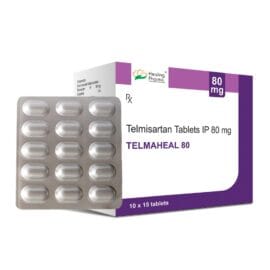
- Telmaheal — Telmisartan 20/40/80 mg (monotherapy)
- Browse all High Blood Pressure Medications
More options in High Blood Pressure Medication
Ranked by recent MedsBase order volume — what other customers in this category are picking.
| Strength | 150 Mg and 12.5 Mg |
|---|---|
| Quantity | 30 Tablet/s, 60 Tablet/s, 90 Tablet/s |
| Pharma Form | Tablet/s |
| Manufacturer | Sun Pharma |
| Treatment | High blood pressure |
| Generic Brand | Irbesartan + Hydrochlorothiazide |
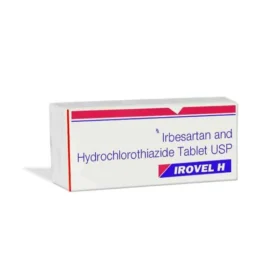 Irovel H
Q & A
Irovel H
Related products


Reviews
There are no reviews yet