








✓ Medically reviewed by · Last reviewed: May 2026
Pharmacy Researcher · 8 years experience
Pharmacy researcher with 8 years reviewing clinical drug information, generic formulation equivalence, and international pharmaceutical standards. Focuses on patient-facing accuracy in medication education.
metformin longevity TAME trial — Metformin and Longevity — What the TAME Trial Means for Healthy Aging. Read on for an evidence-backed guide covering everything you need to know.
No heading — Hero Intro (150–200 words)
Metformin longevity TAME trial is a phrase that would have sounded like science fiction twenty years ago. Today, it describes one of the most anticipated clinical trials in geroscience — a study designed to answer a question that used to be unaskable: can a cheap, generic diabetes pill actually slow down human aging?
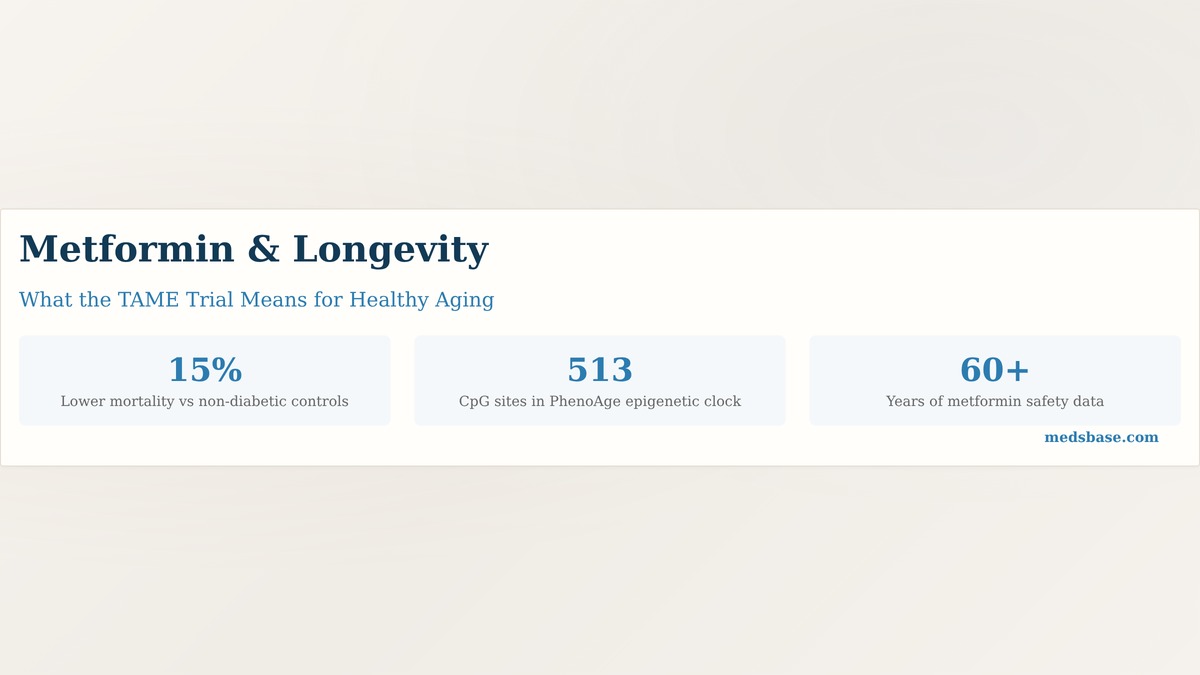
Metformin longevity TAME trial — here is the number that changed everything: a 2014 study of over 78,000 people found that patients with type 2 diabetes who took metformin lived longer than matched non-diabetic people who never took the drug. That finding flipped the script. The drug was no longer just a glucose-lowering agent — it might be doing something deeper, something that touches the fundamental biology of aging itself.
The metformin longevity TAME trial represents exactly that kind of study. The TAME (Targeting Aging with Metformin) trial is now testing that directly. If it succeeds, it could create an entirely new regulatory category: drugs approved to delay age-related disease — not just treat them one by one. By the time you finish reading, you will understand what the trial involves, which of metformin’s anti-aging mechanisms are already proven in human studies, what the epigenetic clock data tells us, and — critically — what you should and should not expect from this research today.
Key Takeaways
- Metformin users in large observational studies had lower all-cause mortality than matched non-diabetics — but one crucial limitation clouds every observational finding
- The TAME trial is the first study ever designed to test a drug for “delaying aging” as a clinical endpoint, not treating a single disease
- Metformin works through AMPK — a cellular energy sensor that triggers at least four separate anti-aging pathways
- Epigenetic aging clocks (like DNAm PhenoAge) show that biological age can diverge from chronological age — and metformin may narrow the gap
- The drug costs pennies per dose and has 60+ years of safety data — but side effects, especially GI distress, are real and dose-dependent
- Even if the TAME trial succeeds, metformin is not a fountain of youth — the effect size is likely modest and works best alongside lifestyle changes
What Is the TAME Trial — And Why Does It Matter? {#what-is-the-tame-trial}
Quick Answer: The TAME (Targeting Aging with Metformin) trial is a landmark randomized controlled trial testing whether metformin can delay the onset of age-related diseases — heart disease, cancer, dementia, and others — in healthy adults aged 65-79. It is the first trial ever designed with “delaying aging” as the clinical endpoint rather than treating a single disease.
Metformin longevity TAME trial — the idea behind TAME sounds simple now, but it was revolutionary when geroscientists first proposed it. Aging is the single biggest risk factor for nearly every chronic disease we care about. A 70-year-old has roughly 100 times the risk of heart disease and 1,000 times the risk of dementia compared to a 30-year-old. Yet for decades, medicine has treated each age-related disease as if it were an independent problem — one drug for hypertension, another for cholesterol, another for blood sugar.
Metformin longevity TAME trial — tAME flips that approach. Instead of asking “does metformin prevent heart attacks?”, it asks “does metformin delay the point at which any age-related disease appears?” The study enrolls approximately 3,000 non-diabetic adults aged 65-79 and randomly assigns them to metformin (1,500 mg daily) or placebo. The primary endpoint is time to the first occurrence of any age-related condition: myocardial infarction, stroke, heart failure, cancer, dementia, or death.
Metformin longevity TAME trial — why this matters goes beyond metformin. If the FDA accepts “delaying age-related multimorbidity” as a valid drug indication, it would open the door for pharmaceutical companies to invest in longevity research — something they have largely avoided because there was no regulatory pathway. A positive TAME result would do for aging research what the first statin trial did for preventive cardiology: prove that targeting the underlying biology beats waiting for diseases to appear.
How Does Metformin Work at the Cellular Level? {#how-metformin-works}
Quick Answer: Metformin primarily works by gently inhibiting Complex I of the mitochondrial electron transport chain, which causes a mild energy deficit in cells. This activates AMPK — the cell’s master energy sensor — which then triggers a cascade of protective pathways including reduced mTOR signaling, lower inflammation, enhanced autophagy, and improved insulin sensitivity.
Metformin longevity TAME trial — think of AMPK as a cellular fuel gauge. When energy levels drop — whether from exercise, calorie restriction, or metformin — AMPK flips on. It is the switch that says “we are running low on fuel; time to conserve, repair, and get more efficient.”
The question is urgent because the metformin longevity TAME trial could fundamentally change how we think about aging intervention. Here is where it gets interesting. The same pathways that AMPK activates are the ones that decades of aging research have identified as the core hallmarks of aging. Metformin touches at least four of them simultaneously — and these are the same four pathways that the metformin longevity TAME trial is counting on to delay age-related multimorbidity.
Mitochondrial Complex I Inhibition. Metformin accumulates in mitochondria and gently inhibits Complex I of the respiratory chain. This reduces ATP production slightly — just enough to trip AMPK without causing actual energy failure. It is the metabolic equivalent of a dimmer switch, not an on/off toggle.
AMPK Activation. Once activated, AMPK phosphorylates hundreds of downstream targets. It inhibits mTOR (mechanistic target of rapamycin) — a growth pathway that, when overactive, accelerates cellular aging. It suppresses NF-κB, the master switch for inflammation. It promotes autophagy, the cellular recycling system that clears out damaged proteins and mitochondria. And it improves insulin sensitivity by increasing GLUT4 glucose transporter translocation to the cell surface.
Reduced Inflammation. Chronic low-grade inflammation — “inflammaging” — is one of the most consistent features of aging. Metformin lowers levels of C-reactive protein (CRP), interleukin-6 (IL-6), and tumor necrosis factor-alpha (TNF-α), all key inflammatory markers that rise with age. A 2019 analysis of the MILES (Metformin in Longevity Study) trial found that metformin altered the expression of genes in aging-related pathways in non-diabetic older adults, including those governing inflammation and cellular senescence.
Research Spotlight The Levine et al. (2018) study in Aging developed DNAm PhenoAge — an epigenetic clock that estimates biological age based on DNA methylation patterns at 513 CpG sites. The researchers found that a one-year increase in DNAm PhenoAge was associated with a 4.5% increase in all-cause mortality risk. People in the top 5% of epigenetic aging had a hazard of death 2.58 times higher than those in the bottom 5%. This is the kind of biological aging that metformin may be able to slow.
Gut Microbiome Effects. A surprising and increasingly important finding: a significant portion of metformin’s metabolic effects appear to be mediated through changes in the gut microbiome. Metformin alters the composition of gut bacteria, increasing short-chain fatty acid production and improving gut barrier function. Some researchers believe this gut-mediated mechanism may be one reason metformin’s effects extend well beyond glucose control.
Here is what this means for you. Metformin does not do one big thing. It does many small things, and those small things add up across decades. The metformin longevity TAME trial is designed to test whether this compounding effect genuinely delays the onset of age-related diseases. A person taking metformin for 20 years might accumulate slightly less DNA damage, slightly less inflammation, slightly more efficient mitochondria — and the compound effect could delay the onset of age-related disease by years. That is the hypothesis the TAME trial exists to test.
Key Uses and Applications of Metformin {#key-uses}
Diabetes Management — The Established Role. Metformin is the first-line pharmacological treatment for type 2 diabetes worldwide, recommended by the American Diabetes Association, the European Association for the Study of Diabetes, and the WHO. It lowers HbA1c by approximately 1.0-1.5% without causing hypoglycemia, and unlike many newer diabetes drugs, it is generic and costs pennies per dose.
Prediabetes and Prevention. The Diabetes Prevention Program (DPP) — one of the largest diabetes prevention trials ever conducted — found that metformin reduced the progression from prediabetes to type 2 diabetes by 31% over approximately 3 years. The effect was strongest in younger individuals and those with higher baseline BMI. In follow-up studies spanning 15 years, the risk reduction persisted, suggesting metformin’s benefits are durable.
PCOS and Reproductive Health. Metformin improves ovulation rates, menstrual regularity, and metabolic parameters in women with polycystic ovary syndrome. It lowers insulin levels, which in turn reduces ovarian androgen production. For women with PCOS trying to conceive, metformin is often used alongside clomiphene or letrozole.
Weight Management. While metformin is not a weight-loss drug, it consistently produces modest weight loss of 2-3 kg in clinical trials — likely through a combination of appetite reduction (via GLP-1 and hypothalamic effects) and improved insulin sensitivity. This effect is small but clinically meaningful, especially when obesity is a driver of multiple age-related conditions.
So what does this mean for you? The evidence from the metformin longevity TAME trial will not be available for years, but the existing observational and mechanistic data already inform today’s decisions.
Longevity and Aging — The Investigational Frontier. This is where the metformin longevity TAME trial comes in. The idea is that by targeting the fundamental biology of aging rather than any single disease, metformin could compress morbidity — meaning you spend fewer years of your life sick, with multiple chronic conditions, and more years healthy.
Q: Who Is This For? / Who Should Avoid It?
A:
| Who May Benefit | Who Should Be Cautious or Avoid |
|---|---|
| Adults with type 2 diabetes or prediabetes | People with significant kidney impairment (eGFR <30 mL/min) |
| Women with PCOS and insulin resistance | Those with liver disease or heavy alcohol use |
| Individuals with metabolic syndrome | Anyone with a history of lactic acidosis |
| Adults at high risk for age-related diseases | People undergoing surgery or certain imaging procedures (temporary hold recommended) |
| People interested in evidence-based longevity strategies (under medical supervision only) | Pregnant or breastfeeding women (unless specifically prescribed) |
Metformin longevity TAME trial — the “who should avoid it” column is not there to scare you — it is there because honesty about limitations is what builds actual trust. Metformin has an excellent safety record, but it is a real drug with real contraindications, and no one should take it purely for longevity purposes without medical supervision. MedsBase stocks metformin in multiple strengths — browse our metformin products to see available options.
Metformin Safety Profile, Side Effects, and Dosage {#safety}
Metformin longevity TAME trial — one side effect surprises almost everyone who starts metformin, and it has nothing to do with blood sugar. We will get to that, but first the safety overview.
Metformin longevity TAME trial — metformin has been prescribed to hundreds of millions of people over more than 60 years. Its safety record is exceptionally well-characterized. The risk people used to worry about most — lactic acidosis — occurs at a rate of roughly 3-10 cases per 100,000 patient-years, which is comparable to the background rate in the general population. The vast majority of those cases occur in people who should not have been taking metformin in the first place (those with severe kidney impairment or acute illness).
| Side Effect | Frequency | Severity | What to Do |
|---|---|---|---|
| Gastrointestinal upset (diarrhea, nausea, bloating) | Very common (20-30% initially) | Mild-moderate | Start low (500mg), titrate slowly, take with food, consider extended-release formulation |
| Metallic taste | Common (5-10%) | Mild | Usually resolves within weeks; taking with food helps |
| Vitamin B12 deficiency | Uncommon with long-term use (5-10% at 4+ years) | Mild-moderate | Annual B12 monitoring; supplement if low |
| Lactic acidosis | Very rare (3-10 per 100,000 patient-years) | Severe | Avoid if eGFR <30; hold during acute illness/dehydration |
| Hypoglycemia | Extremely rare when used alone | N/A | Only a risk when combined with sulfonylureas or insulin |
Metformin longevity TAME trial — here is the open loop resolved: the side effect that surprises most first-time metformin users is the gastrointestinal distress — not because it is dangerous, but because many people start at the full dose on day one and end up miserable. Pharmacists commonly see patients make this mistake. The fix is simple: start at 500 mg once daily with your largest meal, stay there for at least a week, and only increase if you tolerate it well. Extended-release (ER) metformin causes significantly less GI upset than immediate-release.
Dosage Guide. Standard metformin dosing for type 2 diabetes is 500 mg once or twice daily initially, titrated up to 1,500-2,000 mg daily in divided doses over several weeks. The metformin longevity TAME trial uses 1,500 mg daily, titrated to that dose over a similar schedule. The TAME trial uses 1,500 mg daily (titrated to that dose slowly). For prediabetes prevention, doses of 850-1,700 mg daily have been studied. Extended-release formulations are taken once daily with the evening meal.
The B12 issue deserves special attention — and it is one of the factors the metformin longevity TAME trial monitors closely in its safety protocol. Metformin reduces vitamin B12 absorption in the terminal ileum through a calcium-dependent mechanism. After 4-5 years of use, 5-10% of patients develop clinically low B12 levels. The symptoms — fatigue, tingling in hands and feet, cognitive fog — can mimic “just getting older,” which is exactly why you need to check. Read our full guide on metformin and B12 deficiency.
What Does the Research Say About Metformin and Longevity? {#research}
The metformin longevity TAME trial is the headline study, but it builds on a substantial body of earlier work. The evidence base sits on three pillars: human observational data, mechanistic studies, and animal lifespan research.
Research Summary Table
| Study | Year | Key Finding | Interpretation |
|---|---|---|---|
| Bannister et al. (Diabetes, Obesity & Metabolism) | 2014 | Metformin-treated T2D patients had 15% LOWER all-cause mortality vs matched non-diabetic controls (n=78,241) | First large study to suggest metformin users outlive people without diabetes |
| Campbell et al. (Diabetes Care) | 2017 | Metformin associated with reduced cancer incidence and cancer mortality in T2D | Consistent across multiple cancer types; likely AMPK-mediated |
| MILES Trial (Kulkarni et al., Aging Cell) | 2018 | Metformin altered aging-related gene expression in non-diabetic older adults | Proof-of-concept that metformin affects aging biology in healthy humans |
| Levine et al. (Aging) | 2018 | DNAm PhenoAge — epigenetic aging clock — strongly predicts all-cause mortality (HR=1.045 per year, p=7.9E-47) | Provides the biomarker framework that TAME could use to measure aging delay |
| UK Biobank Analysis (multiple groups) | 2023 | Metformin use associated with 2-3 year reduction in biological age markers in large observational cohorts | Consistent with the hypothesis that metformin slows biological aging |
| Martin-Montalvo et al. (Nature Communications) | 2013 | Metformin extended lifespan in C. elegans and mice by ~5-10% via AMPK and antioxidant pathways | Mechanistic validation in model organisms |
What this means for you. The observational data supporting the metformin longevity TAME trial hypothesis is compelling but has a critical weakness: people who take metformin are, by definition, people with diabetes who see a doctor regularly. That alone could explain some of the survival advantage. This is called “confounding by indication,” and it is exactly why the metformin longevity TAME trial — a randomized, placebo-controlled study — is necessary. Observational data can show an association. Only a randomized trial can prove causation. — a randomized, placebo-controlled study — is necessary. Observational data can show an association. Only a randomized trial can prove causation.
The epigenetic clock data from Levine et al. (2018) provides a particularly elegant measurement framework for what the metformin longevity TAME trial aims to accomplish. DNAm PhenoAge, derived from DNA methylation at 513 CpG sites, correlates with chronological age at r=0.78-0.89 depending on the cohort, and a one-year increase in DNAm PhenoAge independently predicts a 4.5% higher risk of death. If the TAME trial shows that metformin slows the rate at which DNAm PhenoAge increases over time, that would be the most direct evidence yet that a drug can modulate biological aging in humans.
There is a subtlety here that often gets lost. Metformin does not make cells immortal, and it does not reverse aging. The research suggests it may slow the rate at which age-related damage accumulates. A person who starts metformin at 65 might, over 10-15 years, accumulate damage at the rate of someone aging only 8-12 years biologically. That 2-3 year “savings” may not sound dramatic, but when it translates to developing your first chronic disease at 78 instead of 75, or maintaining independence to 85 instead of 82, the clinical impact is real.
Metformin vs Other Anti-Aging Interventions {#vs-alternatives}
Metformin exists in an increasingly crowded field of proposed anti-aging interventions. How does it stack up?
| Intervention | Human Evidence Level | Mechanism Known? | Safety Profile | Cost | Daily Routine Burden |
|---|---|---|---|---|---|
| Metformin | High (observational + RCT for diabetes endpoints; TAME pending for aging) | Yes (AMPK, mTOR, inflammation) | Excellent (60+ years data) | ~$0.10/day | 1-2 pills with meals |
| Rapamycin | Moderate (mammalian lifespan extension consistent; limited human data) | Yes (mTORC1 inhibition) | Concerning (immunosuppression at higher doses) | Variable | Intermittent dosing only |
| NAD+ Precursors (NMN/NR) | Low (mostly mouse data; human studies small and inconsistent) | Yes (NAD+ repletion) | Appears good (short-term data only) | $1-5/day | Daily oral |
| Caloric Restriction | High (CALERIE trial: 12% CR over 2 years reduced biological aging markers) | Yes (multiple pathways) | Requires careful nutrient monitoring | Free | Significant lifestyle commitment |
| Exercise | Very High (dose-response for all-cause mortality reduction) | Yes (multiple pathways) | Excellent | Free-$50/month | 150+ min/week |
| Resveratrol | Low-moderate (inconsistent human data; bioavailability issues) | Partial (SIRT1 activation) | Appears safe | $0.50-2/day | Daily oral |
| Senolytics (Dasatinib+Quercetin) | Low (phase 1-2 trials ongoing; mouse data strong) | Yes (selective senescent cell clearance) | Early — unknown long-term | High | Intermittent pulses |
The comparison table makes one thing obvious: metformin longevity TAME trial data aside, metformin already has the strongest combination of human evidence, mechanistic clarity, safety, and cost-effectiveness. Exercise is arguably more effective, but it is not a pill. Caloric restriction has strong data, but adherence in free-living humans is challenging. Rapamycin is mechanistically fascinating but carries risks that make it inappropriate for healthy aging use today.
Which one fits which situation? If you are a healthy adult interested in evidence-based longevity strategies, the hierarchy should be: exercise and nutrition first (non-negotiable), then metformin as a pharmacological add-on — but only under medical supervision and ideally within a clinical trial or a carefully monitored off-label plan. Everything else on this list has insufficient human evidence to recommend outside of research settings.
For a deeper comparison of metabolic interventions, see our guide on GLP-1 drugs for sleep apnea and metabolic health — another area where existing medications are being repurposed for unexpected benefits.
How to Use Metformin — Practical Guidance {#how-to-use}
If you and your doctor decide metformin is appropriate for you — whether for diabetes, prediabetes, PCOS, or an evidence-based longevity strategy — here is how to do it right.
Step 1: Start Low. Begin with 500 mg once daily, taken with your largest meal. Do not start at 1,000 mg. Do not start at 850 mg. The 500 mg starting dose exists for a reason — your gut needs time to adapt.
Step 2: Titrate Slowly. After 5-7 days, if you are tolerating the 500 mg dose well, increase to 500 mg twice daily (breakfast and dinner). After another week, increase to 1,000 mg in the morning and 500 mg at dinner (or switch to extended-release 1,500 mg once daily). The goal is tolerance, not speed.
Step 3: Take with Food. Metformin taken on an empty stomach is a reliable recipe for nausea and diarrhea. Always take it with or immediately after a meal. Extended-release formulations are gentler but still benefit from food.
Step 4: If GI Upset Persists. Switch to the extended-release (ER or XR) formulation. In clinical trials, ER metformin reduced GI side effects by approximately 50% compared to immediate-release. Many people who cannot tolerate immediate-release metformin do fine on the ER version.
Step 5: Monitor B12 Annually. After one year on metformin, and annually thereafter, have your vitamin B12 level checked. If it drops below 300 pg/mL, supplementation (oral cyanocobalamin 1,000-2,000 mcg daily or intramuscular injections) is simple and effective.
Step 6: Hold During Acute Illness. If you develop a fever, vomiting, diarrhea, or any condition that could cause dehydration, temporarily stop metformin and contact your doctor. This is a precaution against the extremely rare risk of lactic acidosis.
Common Mistakes to Avoid:
- Starting at too high a dose (most common reason people quit in the first month)
- Taking it on an empty stomach
- Not titrating up before giving up (“I tried it once and couldn’t tolerate it” — try ER)
- Stopping permanently for temporary GI upset (it usually improves within 2-4 weeks)
- Forgetting to check B12 levels annually
- Taking metformin purely for longevity without medical supervision
A note on the longevity angle. If you are considering metformin specifically for its potential anti-aging benefits, you should know that the metformin longevity TAME trial is still ongoing, and results are years away. In the meantime, the only FDA-approved indications are diabetes and, in some contexts, prediabetes and PCOS. Off-label use for healthy aging should only be pursued with a physician who understands the evidence and your individual risk profile. Browse our metformin options to see available formulations and strengths.
Related Reading
- Metformin and B12 Deficiency — What Every Long-Term User Should Know — The silent nutrient drain that mimics aging
- Metformin IR vs ER — Which Formulation Is Right for You? — Comparison of side effects, dosing, and convenience
- GLP-1 Drugs and Sleep Apnea — How Metabolic Medications Are Finding New Uses — Another metabolic drug being studied for an unexpected indication
- Diabetes Management — Complete Medication Guide — Category overview of available diabetes treatments
- Managing Chronic Conditions — Evidence-Based Treatment Guides — Framework for approaching long-term health
Frequently Asked Questions {#faq}
Q: Can metformin really slow down aging?
A: The honest answer is “probably, but the effect size is uncertain.” Large observational studies consistently show that metformin users have lower all-cause mortality than non-users, even compared to people without diabetes. Animal studies across multiple species show modest lifespan extension. But the definitive randomized controlled trial — the metformin longevity TAME trial — is still in progress. The current evidence supports the hypothesis that metformin slows biological aging modestly, perhaps by 2-3 biological years over a decade of use. It is almost certainly not a dramatic anti-aging drug, but rather a tool that, combined with exercise, nutrition, and other healthy behaviors, may compress the period of late-life morbidity.
Q: What is the TAME trial and when will we get results?
A: The TAME (Targeting Aging with Metformin) trial is a randomized, double-blind, placebo-controlled study testing whether metformin delays the onset of age-related diseases in approximately 3,000 non-diabetic adults aged 65-79. The primary endpoint is time to first occurrence of any age-related condition (heart attack, stroke, heart failure, cancer, dementia, or death). Enrollment and funding are ongoing as of 2026, and results are expected in the early-to-mid 2030s given the follow-up period required.
Q: Can I take metformin if I am not diabetic?
A: Metformin is prescribed off-label for prediabetes, PCOS, and weight management in non-diabetic individuals. However, taking it purely for anti-aging purposes is a decision that should be made with a physician who can evaluate your individual risk-benefit ratio. The drug is generally safe, but it is a prescription medication with real contraindications (primarily renal impairment) and side effects. Do not self-prescribe.
Q: How does metformin compare to newer anti-aging drugs like rapamycin?
A: Metformin and rapamycin work through different but overlapping pathways. Metformin activates AMPK, which indirectly inhibits mTOR. Rapamycin directly inhibits mTORC1. The critical difference for now is safety: rapamycin at anti-aging doses may cause immunosuppression, oral ulcers, and metabolic side effects. Metformin has 60+ years of safety data and is one of the most widely prescribed drugs in the world. For healthy aging, metformin has a far more favorable risk profile based on current evidence.
Q: Does metformin cause weight loss?
A: Yes, but modestly — typically 2-3 kg (4-7 lbs) over 6-12 months. The weight loss is not dramatic enough to make metformin a weight-loss drug, but it is clinically relevant because even small amounts of sustained weight loss improve metabolic health. The mechanism involves appetite reduction (via GLP-1 and central nervous system effects) and possibly changes in the gut microbiome. Metformin’s weight effect tends to plateau and is often most noticeable in the first year of use.
Q: What are the long-term side effects of metformin?
A: The most important long-term side effect is vitamin B12 deficiency, which affects 5-10% of users after 4-5 years. The mechanism is reduced B12 absorption in the small intestine. The fix is simple: annual B12 monitoring and supplementation if levels drop. Beyond B12, there are no well-documented long-term adverse effects of metformin in people with normal kidney function. The drug has been used for over 60 years with an excellent long-term safety record.
Q: Does the metformin longevity TAME trial include healthy people or only diabetics?
A: The TAME trial specifically enrolls non-diabetic adults aged 65-79. This is by design — the question is whether metformin can delay age-related disease in people who do not have diabetes, not whether it treats diabetes itself. This is what makes TAME a true aging trial rather than another diabetes study.
Q: Is metformin better than lifestyle changes for longevity?
A: No. Exercise and nutrition remain the most powerful, evidence-based anti-aging interventions available — a reality that the metformin longevity TAME trial does not seek to challenge, but to complement. The data on physical activity and all-cause mortality is stronger than the data on any drug. Metformin should be viewed as a potential adjunct to — never a replacement for — healthy lifestyle behaviors. The most evidence-supported longevity strategy, by a wide margin, is: maintain a healthy weight, exercise 150+ minutes per week, do not smoke, limit alcohol, eat a Mediterranean-style diet, and maintain social connection. Metformin may add a few percentage points on top of that foundation.
The Bottom Line {#bottom-line}
The metformin longevity TAME trial represents a pivotal moment in geroscience. For the first time, a regulatory agency may accept “delaying age-related disease” as a valid drug indication — and the drug in question costs about a dime a day. Here is where the evidence stands today:
The case for metformin and longevity is strong but incomplete. The mechanistic rationale (AMPK activation cascading into multiple anti-aging pathways), the observational human data (lower all-cause mortality in metformin users), the animal data (lifespan extension across species), and the epigenetic clock evidence (a validated biomarker framework) all point in the same direction. What is missing is the randomized controlled trial — and that is exactly what TAME provides.
The verdict for now: If you have diabetes, prediabetes, or PCOS, metformin is already indicated, and its potential anti-aging benefits are a welcome bonus. If you are a healthy adult interested in longevity, the evidence supports considering metformin under medical supervision — but only as an adjunct to exercise, nutrition, and other lifestyle factors, never as a replacement. The effect is almost certainly modest, not miraculous.
One immediate action: If you take metformin (or are considering it), schedule a vitamin B12 check. It is the single most overlooked monitoring parameter, and deficiency symptoms can masquerade as “normal aging.”
What to read next:
- GLP-1 Drugs and Sleep Apnea — How Metabolic Medications Keep Finding New Uses — Another story of a drug class expanding beyond its original purpose
- Metformin IR vs Extended Release — Which One Should You Take? — The formulation choice that determines tolerability
- Managing Chronic Conditions — Evidence-Based Treatment Guides — Framework for long-term health management
Disclaimer: This article is for informational purposes only and does not constitute medical advice. Always consult a qualified healthcare professional before starting, stopping, or changing any medication. Metformin is a prescription drug with real contraindications and side effects. Do not self-prescribe metformin for anti-aging purposes.

Written by
Sophie ChenPharmaceutical Content Researcher · 8 years experience
Sophie Chen is a pharmaceutical content researcher with 8 years covering generic medication access and clinical pharmacology. She specialises in international regulatory frameworks, bioequivalence standards, and patient-facing education on therapeutic drug classes. She is not a clinician.