







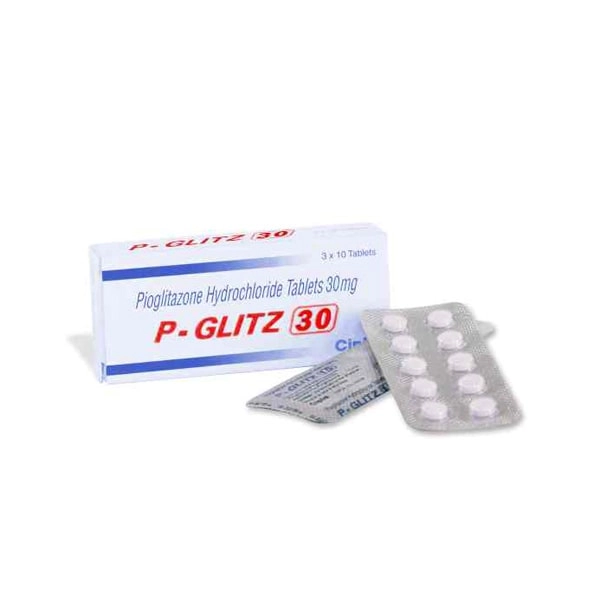
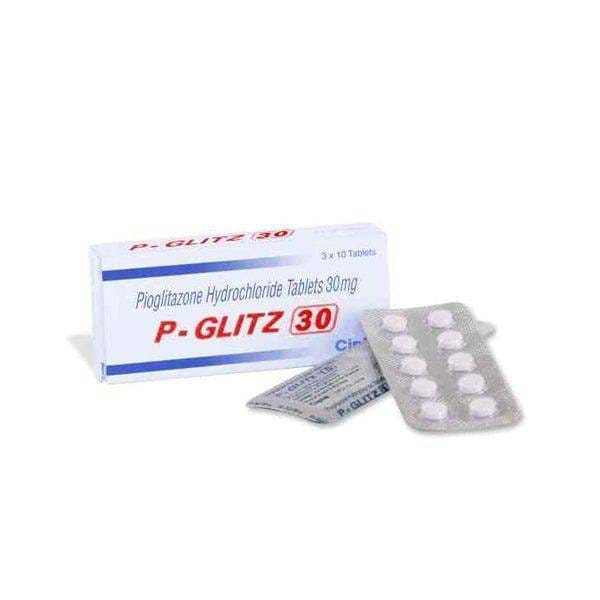
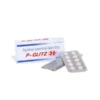
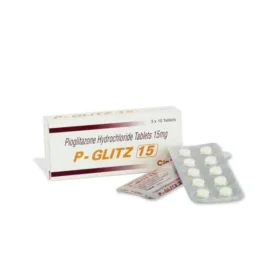
P-Glitz
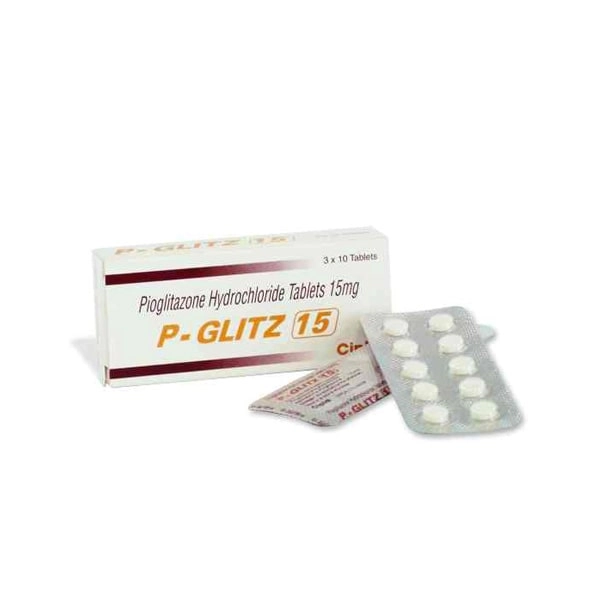
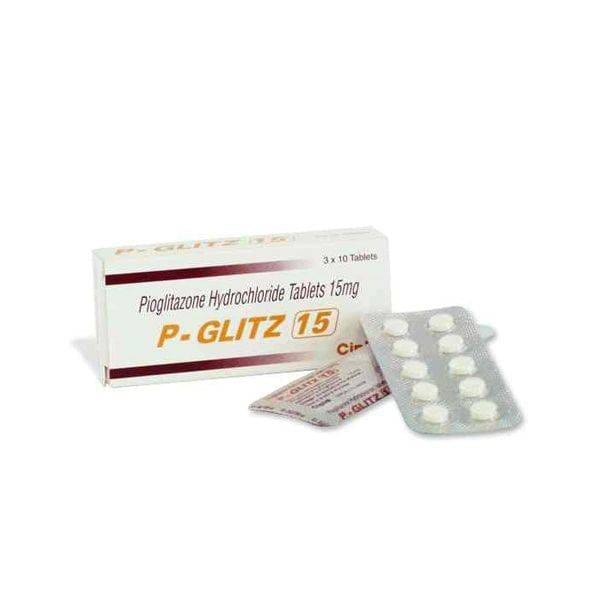
✅ Manages blood sugar levels
✅ Supports diabetes treatment
✅ Improves insulin sensitivity
✅ Convenient once-daily dosing
✅ Enhances glycemic control
P-Glitz contains Pioglitazone Hydrochloride
✓ Medically reviewed by Morgan Ellis — Pharmacy Researcher · 8 years experience · Last reviewed: May 2026
⚡ Quick Answer — What is P-Glitz?
P-Glitz is a brand of pioglitazone (15 mg or 30 mg), a thiazolidinedione (TZD) used to treat type 2 diabetes. It works by activating PPAR-γ receptors, making muscle, fat, and liver cells more responsive to insulin — it addresses insulin resistance directly rather than forcing more insulin out. Unique strengths: strong HbA1c reduction (1.0–1.5 points), durable glycaemic control, favourable lipid effects, and proven cardiovascular benefit in patients with prior stroke or MI (IRIS, PROactive trials). Trade-offs: weight gain (2–4 kg), fluid retention, and mildly increased fracture risk in women. Once-daily dosing. Avoid in heart failure (NYHA class III–IV), active bladder cancer, and severe hepatic impairment. Not for type 1 diabetes.
📦 Every order is covered by our Reshipment Assurance Policy — if your parcel does not arrive within 20 business days, we reship it.
Why order from MedsBase
Our generic medications are sourced from WHO-GMP certified manufacturers and shipped worldwide in discreet, plain packaging — no medication name on the parcel exterior. Card payments are routed through a regulated processor (statement descriptors include a regulated card-payment processor — never “MedsBase” or any medication name). Crypto and SEPA bank transfer are also accepted. Every order is backed by our Reshipment Assurance Policy.
What Is P-Glitz?
P-Glitz is an oral antidiabetic medicine containing pioglitazone (15 mg or 30 mg), manufactured by Cipla Inc. It belongs to the thiazolidinedione (glitazone) class and is used for adults with type 2 diabetes — either alone or in combination with metformin, a sulfonylurea, insulin, or newer agents. Available in packs of 30, 60, 90 or 180 tablets.
Pioglitazone is the only TZD still widely used (rosiglitazone was restricted in many countries in 2010). It is particularly useful for patients with strong insulin resistance, metabolic syndrome, or non-alcoholic fatty liver disease (NAFLD/NASH).
How Does P-Glitz Work?
Pioglitazone activates peroxisome proliferator-activated receptor gamma (PPAR-γ), a nuclear receptor that regulates gene expression in adipose tissue, muscle, and liver. This changes how the body handles insulin:
- Reduces insulin resistance in muscle and fat, helping cells pull glucose out of the blood
- Reduces hepatic glucose output
- Shifts fat storage from visceral (metabolically harmful) to subcutaneous depots
- Raises HDL cholesterol, lowers triglycerides, and modestly reduces atherogenic small-dense LDL
- Improves hepatic steatosis — pioglitazone is one of the few drugs with evidence of benefit in NASH
Unlike sulfonylureas, pioglitazone does not cause hypoglycaemia as monotherapy. Full glucose-lowering effect develops over 8–12 weeks — it is a slow-onset agent. Typical HbA1c reduction: 1.0–1.5 percentage points, with some of the most durable glycaemic control of any oral agent (ADOPT trial).
Dosage and Administration
Starting dose: 15 mg or 30 mg once daily, taken with or without food. Titrate to 30–45 mg once daily if needed after 8–12 weeks. Maximum dose: 45 mg/day.
- Once-daily dosing — time of day is not critical, but pick a consistent time.
- Allow 8–12 weeks before judging effectiveness — pioglitazone is slow to act.
- No dose adjustment needed for renal impairment.
- Monitor ALT at baseline and periodically; check weight and watch for oedema.
- In women of reproductive age: pioglitazone can restore ovulation in PCOS — discuss contraception.
Side Effects
Common:
- Weight gain — typically 2–4 kg (partly fluid, partly fat redistribution)
- Fluid retention / peripheral oedema — most common reason for stopping; worse when combined with insulin
- Headache, upper respiratory infections, myalgia
- Dose-related haemodilution anaemia (small Hb fall)
Uncommon but important:
- Heart failure — pioglitazone does not cause heart failure directly but fluid retention can unmask or worsen it. Avoid in NYHA class III–IV.
- Bone fractures — modestly increased risk of distal limb fractures in women (absolute risk small).
- Bladder cancer — small absolute increase in risk with long-term high-dose use (debated; most meta-analyses show marginal or no significant signal). Avoid in patients with active bladder cancer or unexplained haematuria.
- Macular oedema (rare)
Drug Interactions
- Gemfibrozil — doubles pioglitazone levels (CYP2C8 inhibition). Limit pioglitazone to 15 mg/day if co-prescribed.
- Rifampicin — reduces pioglitazone levels by up to 50%. Clinical effect may be reduced.
- Insulin — additive fluid retention and heart-failure risk. Use lower pioglitazone doses and monitor for oedema.
- Oral contraceptives — pioglitazone may slightly reduce contraceptive effectiveness (minor CYP induction).
- Hepatotoxic drugs — combine caution; monitor ALT.
Who Should Not Take P-Glitz?
- Heart failure (NYHA class III or IV) — absolute contraindication
- Active bladder cancer or previous bladder cancer
- Unexplained macroscopic haematuria — investigate first
- Severe hepatic impairment or ALT > 2.5× upper limit of normal
- Diabetic ketoacidosis
- Type 1 diabetes mellitus
- Pregnancy and breastfeeding
- Known hypersensitivity to pioglitazone
Storage
Store P-Glitz below 30°C in a dry place, in the original blister. Keep out of reach of children.
Frequently Asked Questions
Is pioglitazone a good choice for type 2 diabetes?
For the right patient — yes. Pioglitazone is particularly well-suited to people with strong insulin resistance, metabolic syndrome, NASH/fatty liver, or prior stroke/MI (where it has proven cardiovascular benefit in the IRIS and PROactive trials). It is less suitable for patients at risk of heart failure, those concerned about weight gain, or postmenopausal women at fracture risk.
Does P-Glitz cause weight gain?
Yes — 2–4 kg on average. About half is fluid retention; the rest is subcutaneous fat redistribution. The effect is dose-dependent. Combining with metformin or an SGLT-2 inhibitor offsets some of the weight gain.
Can P-Glitz cause heart failure?
Pioglitazone does not cause heart failure de novo in structurally normal hearts, but fluid retention can unmask or worsen existing left ventricular dysfunction. It is contraindicated in NYHA class III–IV heart failure. Patients with milder symptoms, or on high-dose insulin, should be monitored for oedema and breathlessness.
Does pioglitazone cause bladder cancer?
The evidence is mixed. Early observational data suggested a small increased risk with long-term (> 2 years) high-dose use, but subsequent studies and meta-analyses have been less consistent. Current guidance: avoid in patients with active bladder cancer or unexplained haematuria; discuss the risk–benefit balance for long-term use.
Can P-Glitz be used for PCOS or fatty liver?
Pioglitazone has good evidence in non-alcoholic steatohepatitis (NASH) — the PIVENS trial showed significant improvement in liver histology. It is also effective in PCOS for insulin resistance and ovulation, though metformin is the usual first choice.
How long before I see results?
Pioglitazone is a slow-onset drug. Fasting glucose starts falling in 2–4 weeks, but full HbA1c effect takes 8–12 weeks. Do not stop early — it is one of the most durable oral agents once it works.
Where can I buy P-Glitz online?
You can order P-Glitz (15 mg or 30 mg) from MedsBase in packs of 30, 60, 90 or 180 tablets. We ship worldwide, with discreet packaging and genuine WHO-GMP certified manufacturer stock.
Related Diabetes Medications
- Glycomet SR — Metformin sustained-release
- Januvia — Sitagliptin (DPP-4 inhibitor)
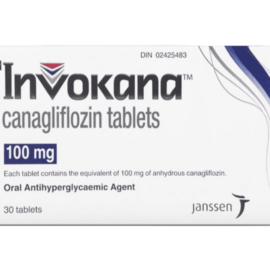
- Jardiance — Empagliflozin (SGLT-2 inhibitor)
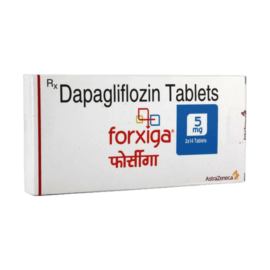
- Forxiga — Dapagliflozin (SGLT-2 inhibitor)
- Amaryl — Glimepiride (sulfonylurea)
- Pioglit MF Forte — Pioglitazone + Metformin combo
- Browse all Diabetes Medications
More options in Diabetes
Ranked by recent MedsBase order volume — what other customers in this category are picking.

| Strength | 15 mg, 30 mg |
|---|---|
| Quantity | 30 Tablet/s, 60 Tablet/s, 90 Tablet/s, 120 Tablet/s |
| Pharma Form | Tablet/s |
| Manufacturer | Cipla Inc |
| Treatment | Type 2 diabetes |
 P-Glitz
Q & A
P-Glitz
Related products


Reviews
There are no reviews yet