








✓ Medically reviewed by · Last reviewed: May 2026
Pharmacy Researcher · 8 years experience
Pharmacy researcher with 8 years reviewing clinical drug information, generic formulation equivalence, and international pharmaceutical standards. Focuses on patient-facing accuracy in medication education.
prescribing cascades in older adults — 7 Prescribing Cascades in Older Adults: What Every Family Must Know. Read on for an evidence-backed guide covering everything you need to know.
When researchers in France analyzed the prescription records of 16.6 million older adults in 2026, they confirmed what makes prescribing cascades in older adults one of the most underrecognized medication safety crises in modern medicine: for every 100 patients started on a calcium channel blocker for high blood pressure, up to 25 were later prescribed a diuretic — not for a new heart condition, but to treat the leg swelling the first drug had caused. That swelling was not a new disease. It was a side effect. And the diuretic was not a new treatment. It was the second link in a chain that researchers call a prescribing cascade.
If that chain sounds familiar — either for your parent or for yourself — you are not alone. A 2026 umbrella review published in Drugs & Aging analyzed decades of research and found that prescribing cascades in older adults are not rare anomalies. They are widespread, underrecognized, and responsible for a significant fraction of the polypharmacy in elderly populations worldwide. The same review catalogued at least 24 distinct clinically relevant prescribing cascades that have been documented across multiple countries and healthcare systems.
Here is the part that matters most to you: in roughly half of all cases, the cascade is potentially reversible. The drugs can be stopped, the side effects can resolve, and the chain reaction can be broken — often without any loss of therapeutic benefit. The challenge is recognizing that a cascade exists in the first place.
By the end of this article, you will know what prescribing cascades in older adults look like, the seven most common patterns documented in the latest research, exactly how to recognize one on your loved one’s medication list, and what to say to the doctor at the next appointment to start unwinding the chain.
Key Takeaways
- A 2026 French study of 16.6 million patients found that 4 out of 7 predefined prescribing cascades in older adults showed significant real-world incidence, with calcium channel blocker edema being the most common
- Prescribing cascades in older adults happen when a drug side effect is mistaken for a new medical condition — and treated with ANOTHER drug instead of addressing the original medication
- At least 24 clinically significant prescribing cascades in older adults have been identified and validated across international research
- The ThinkCascades expert consensus list identifies 9 cascades of the highest clinical relevance to general practice
- Approximately half of all prescribing cascades in older adults are reversible — meaning medications can be stopped or reduced once the cascade is identified
- A structured medication review is the single most effective way to catch prescribing cascades in older adults before they multiply
- What Are Prescribing Cascades in Older Adults?
- How Do Prescribing Cascades Happen?
- 7 Common Prescribing Cascades in Older Adults
- How to Recognize a Prescribing Cascade
- What the Research Says
- Prescribing Cascades vs Drug Interactions
- How to Prevent Prescribing Cascades in Older Adults
- Frequently Asked Questions
- The Bottom Line
What Are Prescribing Cascades in Older Adults?
A prescribing cascade occurs when a medication prescribed for one condition causes a side effect, and that side effect is misinterpreted as a new medical condition — prompting yet another prescription to “treat” it. The original drug is rarely reconsidered. The new drug produces its own risks. The cascade continues. This problem is especially dangerous in older adults because aging changes how the body processes medications, making side effects both more likely and more severe.
Quick Answer: Prescribing cascades in older adults are drug-to-drug chain reactions in which a new medication is added to treat the side effect of an existing medication — rather than recognizing the side effect and adjusting the original prescription. In many cases, the cascade could be stopped entirely by reducing the dose of the first drug or switching to a safer alternative.
The term “prescribing cascade” was first formally defined in the medical literature in the mid-1990s, but it has gained urgent research attention in the last five years. A landmark 2026 umbrella review published by Carollo and colleagues in Drugs & Aging examined the full scope of the problem and concluded that prescribing cascades in older adults are an “underrecognized driver of inappropriate polypharmacy” — meaning they are one of the main reasons older adults end up on too many medications, not too few. Inappropriate prescribing in older adults frequently follows this cascade pattern rather than originating as isolated prescribing errors.
Why are older adults uniquely vulnerable? Three reasons converge. First, age-related changes in kidney and liver function slow drug clearance from the body, meaning standard doses produce higher blood levels and longer-lasting effects. Second, older adults are more likely to be taking multiple medications already — the average American over 65 takes four or more prescription drugs — which multiplies the opportunities for a cascade to begin. Third, older adults are more likely to see multiple specialists, each prescribing independently, with no single doctor maintaining the full medication picture.
The scale of the problem is staggering. The 2026 French national health data study by Gervais and colleagues examined prescribing cascades in older adults across 16.6 million patients and found that several well-known cascades occurred at rates far higher than previous estimates. This research underscores how drug side effects in seniors are frequently misattributed to new diseases, triggering cascades that compound polypharmacy in elderly patients. A 2026 Dutch study by Doherty and colleagues, applying the ThinkCascades framework to general practice data, found that three of nine high-priority prescribing cascades in older adults occurred at measurable and clinically significant rates in routine primary care.
This is not a theoretical concern. It is happening right now, to millions of older adults, in routine doctor’s visits — and in most cases, neither the patient nor the prescriber has connected the dots.
How Do Prescribing Cascades Happen?
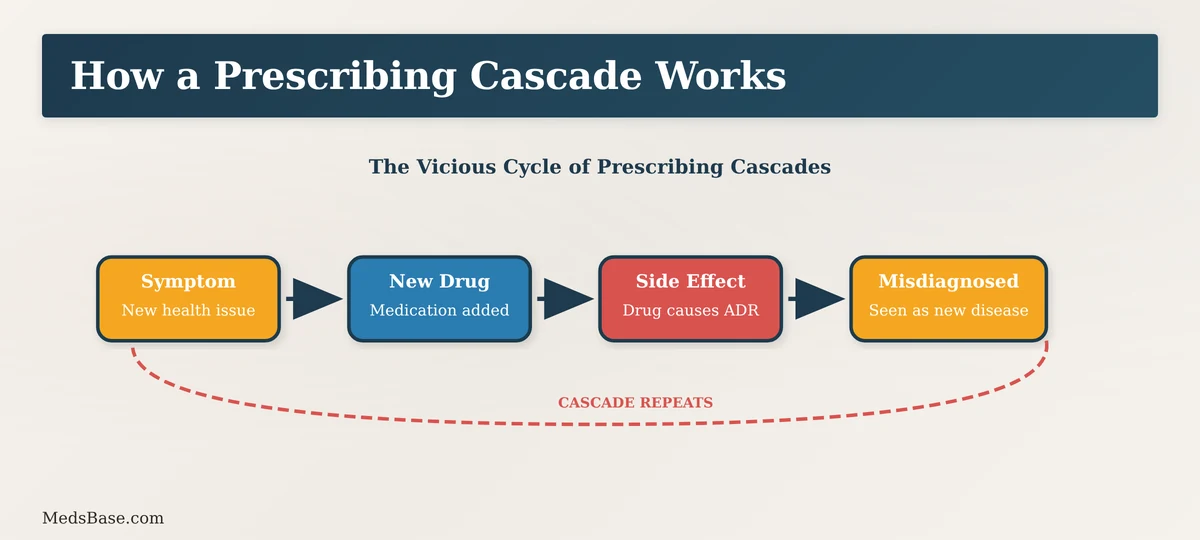
The mechanism behind prescribing cascades in older adults is deceptively simple. It follows a logical — but tragically wrong — clinical reasoning chain that turns one adverse drug reaction cascade into a self-perpetuating cycle.
Step 1: A legitimate medical condition is diagnosed and treated. An older adult develops high blood pressure and is prescribed amlodipine, a calcium channel blocker. The drug works. Blood pressure comes down. Everything looks fine.
Step 2: The medication causes a side effect. Amlodipine causes peripheral edema — fluid retention and swelling in the ankles and feet — in 8 to 25 percent of users. The patient notices puffy ankles and mentions it at a follow-up visit, often not connecting it to the blood pressure medication started months earlier.
Step 3: The side effect is misinterpreted as a new condition. The ankle swelling is noted in the chart as “peripheral edema, new onset.” It is not flagged as a possible drug side effect. The doctor sees a new problem to be solved, not an existing drug to be questioned.
Step 4: A second drug is prescribed to treat the “new condition.” A diuretic — typically furosemide or hydrochlorothiazide — is prescribed to reduce fluid retention. The patient now takes two drugs: one for blood pressure, one to treat the swelling the first drug caused.
Step 5: The second drug produces its own effects. Diuretics cause electrolyte imbalances, dehydration, dizziness, and increased fall risk — all significant dangers for older adults. The cascade has now produced two drug-related problems from what started as one well-managed condition.
Research Spotlight: A comprehensive review examining medication cascade patterns found that the CCB edema diuretic cascade is the single most commonly documented prescribing cascade in older adults worldwide. Gervais and colleagues, analyzing France’s Système National des Données de Santé, found incidence rates ranging from 8% to 25% depending on the specific calcium channel blocker, the patient’s age, and the presence of other risk factors. The cascade was most common among patients aged 80 and older and those already taking five or more medications.
What makes this mechanism so dangerous is that each step makes clinical sense in isolation. The blood pressure needed treatment. The swelling was real. The diuretic is a standard treatment for edema. No single decision was unreasonable. The problem lies in the failure to connect the dots — to see the chain rather than the individual links.
The body changes as it ages in ways that amplify this risk. Kidney function declines by roughly 1% per year after age 40, meaning a 75-year-old may clear drugs at half the rate of a 45-year-old. Liver metabolism slows. Body fat increases and total body water decreases, altering drug distribution. These changes mean that the “standard” adult dose of many medications is effectively an overdose for older adults — and that the side effect threshold is crossed more easily and more dangerously than in younger populations.
For medications that are processed by the kidney or liver, these age-related changes mean that a drug that causes mild ankle swelling in a 40-year-old can cause incapacitating edema, falls from dizziness, or cognitive impairment in an 80-year-old. The cascade is not just more likely in older adults — it is more damaging when it occurs.
7 Common Prescribing Cascades in Older Adults
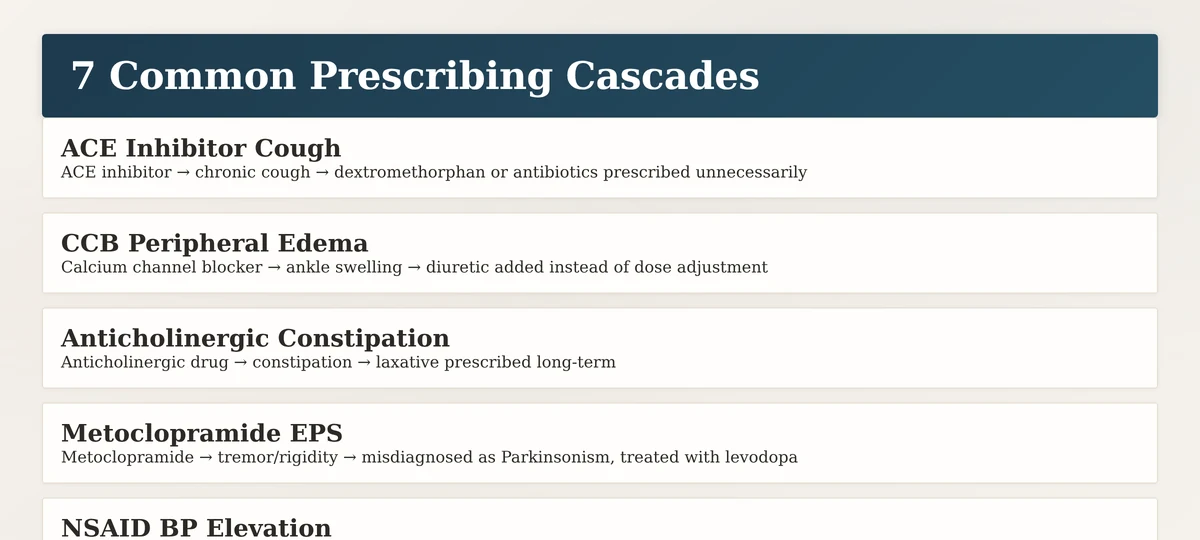
Research has identified at least 24 distinct prescribing cascades in older adults, but seven patterns emerge repeatedly across studies, across countries, and across healthcare systems. These are the cascades every family should know — not because they are the only ones, but because they are the most common and the most preventable.
1. Calcium Channel Blocker Edema Diuretic
This is the most frequently documented prescribing cascade in older adults. Calcium channel blockers — amlodipine, nifedipine, felodipine — are first-line treatments for high blood pressure. They are effective, affordable, and generally well-tolerated. But they cause peripheral edema (ankle and foot swelling) in 8% to 25% of users because they dilate small blood vessels in a way that increases fluid leakage into surrounding tissue.
When the swelling is reported, the prescriber often adds a diuretic — furosemide, hydrochlorothiazide, or chlorthalidone — to flush excess fluid. This treats the symptom but leaves the underlying cause (the calcium channel blocker) untouched. The patient now takes two drugs for blood pressure, one of which was only needed because the first drug caused a side effect. The diuretic adds its own risks: potassium depletion, dehydration, orthostatic hypotension (dizziness when standing), and increased fall risk.
The safer approach: Switching from a calcium channel blocker to an ACE inhibitor or angiotensin receptor blocker (ARB), neither of which causes edema, often eliminates the swelling entirely — and with it, the need for a diuretic. If a calcium channel blocker is truly necessary for blood pressure control, reducing the dose and adding a low-dose ACE inhibitor or ARB may achieve equivalent blood pressure reduction with less edema. This is a textbook avoidable cascade.
2. ACE Inhibitor Cough Cough Suppressant
ACE inhibitors — lisinopril, ramipril, enalapril — are among the most prescribed blood pressure medications worldwide. They cause a persistent, dry, tickling cough in 5% to 35% of patients because they increase levels of bradykinin, a peptide that stimulates cough receptors in the airway. The cough is not dangerous, but it is annoying and persistent. It can last for months and is often worse at night.
When the cough is reported, the prescriber may prescribe dextromethorphan, codeine-based cough syrup, or benzonatate — all of which suppress cough symptoms but do nothing about the bradykinin mechanism causing it. The patient is now on two drugs, the second of which adds sedation, constipation, or dependency risk without solving the problem. Dextromethorphan in particular can cause confusion and dizziness in older adults, especially when combined with other centrally-acting medications.
The safer approach: Switching from an ACE inhibitor to an ARB — such as losartan, valsartan, or candesartan — provides equivalent blood pressure reduction without the bradykinin-mediated cough. ARBs block the same system at a different receptor and do not cause cough. This switch resolves the problem at its source and eliminates the need for cough medication entirely.
3. Anticholinergic Drug for Incontinence Laxative
This cascade is particularly dangerous because anticholinergic medications are among the drugs most likely to cause cognitive impairment, confusion, and falls in older adults. Medications like oxybutynin, tolterodine, and solifenacin are prescribed for overactive bladder and urinary incontinence. They work by blocking acetylcholine, a neurotransmitter that signals bladder muscle contraction. But acetylcholine is also critical for memory, attention, saliva production, and — importantly — bowel motility.
When the bowel slows down, constipation develops. It can become severe. The patient or prescriber then adds a laxative — polyethylene glycol, senna, or docusate — to manage the constipation. The patient is now taking two drugs, one of which causes the problem the other treats. Meanwhile, the anticholinergic continues to affect the brain, increasing the risk of cognitive decline, delirium, and — in long-term users — possibly contributing to dementia risk, as noted in a 2026 systematic review of anticholinergic burden in older adults.
The safer approach: Non-pharmacological treatments for overactive bladder — pelvic floor physiotherapy, bladder training, timed voiding, and reducing bladder irritants like caffeine — should be tried first. If medication is necessary, mirabegron, a beta-3 agonist, treats overactive bladder without anticholinergic effects. It does not cause constipation or cognitive side effects, making it far safer for older adults.
4. Metoclopramide / Antipsychotic Parkinsonism Medication
Metoclopramide is an anti-nausea medication that works by blocking dopamine receptors. Antipsychotics — haloperidol, risperidone, olanzapine — also block dopamine. Both classes can cause drug-induced parkinsonism: tremor, rigidity, slowed movement, and a shuffling gait that looks indistinguishable from Parkinson’s disease.
When these symptoms appear, the prescriber — often a different specialist than the one who started the offending drug — may diagnose Parkinson’s disease and prescribe levodopa/carbidopa. The patient now takes a Parkinson’s drug for symptoms caused by an anti-nausea or antipsychotic drug. This is among the most harmful prescribing cascades in older adults because levodopa has its own significant side effects, including nausea (ironically), orthostatic hypotension, confusion, and impulse control disorders.
The safer approach: Always rule out drug-induced parkinsonism before diagnosing Parkinson’s disease in an older adult taking any dopamine-blocking medication. Stopping the offending drug — metoclopramide or the antipsychotic — often resolves the symptoms within weeks to months. A 2019 review in Drugs & Aging estimated that drug-induced parkinsonism accounts for up to 20% of all parkinsonism cases in older adults, making it one of the most important and most overlooked differential diagnoses in geriatric medicine.
5. NSAID-Induced Hypertension Antihypertensive Escalation
Nonsteroidal anti-inflammatory drugs — ibuprofen, naproxen, diclofenac, celecoxib — are among the most widely used over-the-counter and prescription medications. They are also among the most dangerous for older adults, and their effect on blood pressure is consistently underestimated. NSAIDs cause sodium and water retention, reduce the effectiveness of most blood pressure medications (especially ACE inhibitors, ARBs, and diuretics), and directly raise blood pressure by an average of 5 mmHg.
When an older adult on NSAIDs for arthritis pain shows an elevated blood pressure reading, the prescriber may increase the dose of their existing antihypertensive or add a second blood pressure medication. The NSAID — the root cause of the blood pressure elevation — is not reconsidered. The patient is now taking more blood pressure medication to counteract a drug they may not need at the dose they are taking, or may not need at all.
The safer approach: Reassess the need for the NSAID. If the pain is from osteoarthritis, acetaminophen (paracetamol) at appropriate doses, topical NSAIDs (which have far less systemic absorption than oral forms), or non-drug interventions like physiotherapy and weight management may provide equivalent relief without the cardiovascular risk. If an NSAID is truly necessary, use the lowest effective dose for the shortest possible duration, monitor blood pressure closely, and consider a proton pump inhibitor for gastroprotection rather than escalating antihypertensives.
6. Statin-Induced Myalgia Opioid or NSAID
Statins — atorvastatin, rosuvastatin, simvastatin — reduce cholesterol and cardiovascular risk and are among the most prescribed drug classes in the world. They also cause muscle pain (myalgia) in 5% to 29% of users, with the true incidence likely toward the higher end in clinical practice. The pain is real: it can range from mild achiness to debilitating muscle soreness that interferes with daily activities.
When this muscle pain is reported, the prescriber may prescribe an NSAID or, in more severe cases, an opioid analgesic to manage the pain. The statin continues. The pain medication is added. This cascade has become one of the most concerning prescribing cascades in older adults because it introduces opioids — with all their attendant risks of sedation, constipation, falls, confusion, and dependence — to treat a side effect that could often be managed by adjusting the cholesterol treatment.
The safer approach: The American College of Cardiology and the National Lipid Association both recommend a structured approach to statin-associated muscle symptoms: (1) stop the statin for 2–4 weeks and see if muscle pain resolves, (2) if pain resolves, rechallenge with the same statin at a lower dose or switch to a different statin (rosuvastatin and pravastatin are less likely to cause myalgia than atorvastatin and simvastatin because they are more hydrophilic and penetrate muscle tissue less), (3) if pain recurs, consider non-statin lipid-lowering alternatives like ezetimibe. The key insight: muscle pain that resolves when you stop the statin and returns when you restart it is a statin side effect, not a new rheumatologic condition.
7. Proton Pump Inhibitor B12 Deficiency Workup Cascade
Proton pump inhibitors (PPIs) — omeprazole, esomeprazole, pantoprazole, lansoprazole — are among the most overprescribed medications in older adults. They suppress stomach acid production and are indicated for gastroesophageal reflux disease (GERD), peptic ulcers, and prevention of NSAID-induced gastric injury. But long-term PPI use reduces the absorption of vitamin B12 because stomach acid is required to release B12 from food proteins.
When B12 levels drop — which can happen gradually over months to years of PPI use — the patient may develop fatigue, cognitive fog, peripheral neuropathy (numbness and tingling in the hands and feet), and balance problems. These symptoms can trigger an extensive diagnostic cascade: blood tests, nerve conduction studies, neurology referrals, and MRI scans of the brain and spine to rule out multiple sclerosis, spinal cord compression, or early dementia.
The irony is that the entire workup cascade is driven by a drug side effect — reduced B12 absorption from PPI use — that could have been identified and corrected at the first blood test. The PPI is often never questioned. The B12 deficiency may be treated with injections or high-dose oral supplements, but the root cause — the PPI — remains in place.
The safer approach: Review the ongoing need for the PPI at least annually. Many older adults remain on PPIs for years after the original indication (a healed ulcer, a resolved episode of GERD) has passed. If a PPI is still needed, use the lowest effective dose for the shortest possible duration. For patients on long-term PPIs, monitor B12 levels annually and supplement proactively. When possible, tapering to an H2 blocker (famotidine) or using on-demand rather than continuous PPI therapy can preserve B12 absorption while still controlling symptoms.
How to Recognize a Prescribing Cascade
Recognizing prescribing cascades in older adults is harder than it sounds — not because the concept is complicated, but because modern healthcare is fragmented. An older adult may see a cardiologist for blood pressure, a rheumatologist for joint pain, a urologist for bladder symptoms, and a primary care physician who has 15 minutes per visit to reconcile it all. No single doctor may see the full medication list in context. This is where the patient and family become the most important safety net.
Who Is This For? — This section is for the adult child sitting at the kitchen table with Dad’s medication list, the spouse who noticed that Mom got worse after starting a new pill, and the older adult who suspects something is off but does not know how to articulate it. You do not need medical training to ask the right questions. You need a structured approach and the willingness to ask “why?” for every drug on the list.
Step 1: Write down every single drug. This includes prescriptions, over-the-counter medications, vitamins, supplements, and herbal products. Write the name, dose, how long it has been taken, who prescribed it, and — critically — what condition it was prescribed for. A brown-bag review, where you literally put every medication in a bag and bring it to the doctor, is one of the most effective tools in geriatric medicine. The NICE guideline on medicines optimisation specifically recommends this approach for older adults on multiple medications.
Step 2: Match each drug to a diagnosis. For each drug on the list, ask: what diagnosis was this prescribed for? If you cannot answer that question for a particular drug, that is a red flag — not necessarily a cascade, but a signal that the indication should be verified.
Step 3: Look for drugs that treat side effects of other drugs. This is the heart of cascade detection. Go through the list and ask: could Drug B be treating a known side effect of Drug A? The seven cascades described above are the most common patterns, but the principle applies broadly. If a person is taking a medication for constipation, look at the anticholinergic burden of their other drugs. If they are taking a medication for dizziness, check whether any of their drugs cause orthostatic hypotension.
Step 4: Ask the timeline question. Which drug was started first? If Drug B was started after Drug A, and Drug B treats a known side effect of Drug A, you have strong circumstantial evidence for a cascade. The timeline does not prove causation — side effects can emerge months after starting a drug — but it narrows the field.
Step 5: Bring your findings to a single provider. Ideally, this is the primary care physician or a clinical pharmacist who can perform a structured medication review. Say explicitly: “I am concerned that some of these medications may be treating each other’s side effects rather than separate medical conditions. Can we review this list together?”
This conversation does not require confrontation. Most prescribers welcome a structured medication review — they simply do not have the time to conduct one unprompted in a standard 15-minute visit. By organizing the information in advance and asking focused questions, you make it easy for the doctor to do the right thing.
What the Research Says
| Study | Year | Population | Finding | Source |
|---|---|---|---|---|
| Carollo et al. — Umbrella Review | 2026 | Multiple studies, international | Identified 24 clinically significant prescribing cascades in older adults; concluded PCs are an “underrecognized driver of inappropriate polypharmacy” | Drugs & Aging |
| Gervais et al. — French National Cohort | 2026 | 16.6 million older adults | Four of seven predefined prescribing cascades in older adults showed significant incidence; CCB edema diuretic was most common | Age and Ageing |
| Doherty et al. — ThinkCascades in Dutch GP | 2026 | Primary care cohort, Netherlands | Three of nine ThinkCascades prescribing cascades in older adults occurred at measurable rates in routine general practice | BMC Primary Care |
| Bryła et al. — Cascade as Therapeutic Error | 2026 | Narrative review | Prescribing cascades in older adults are a therapeutic error driven by altered pharmacokinetics, reduced organ reserve, and multimorbidity | Geriatrics |
| ThinkCascades — International Consensus | 2022 | Expert consensus | Nine prescribing cascades in older adults identified as high clinical relevance to general practice via formal consensus methodology | British Journal of Clinical Pharmacology |
| NICE NG5 — Medicines Optimisation | 2015 (updated) | Guideline | Recommends structured medication review for older adults on multiple medications, including STOPP/START criteria for identifying potentially inappropriate prescriptions | NICE |
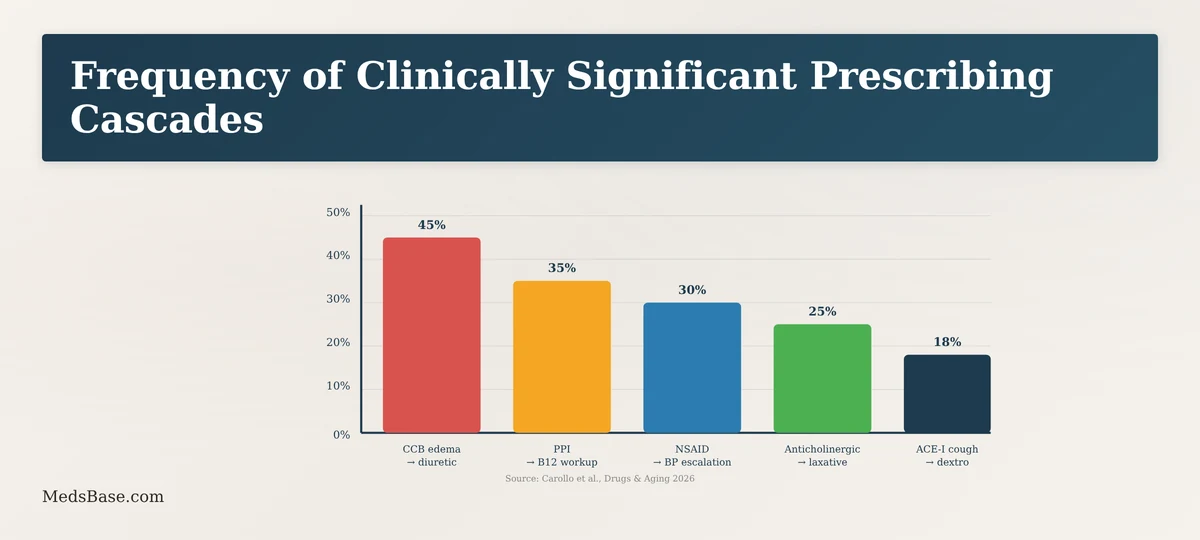
The weight of evidence is clear and growing. The 2026 umbrella review by Carollo and colleagues represents the most comprehensive synthesis of prescribing cascade research to date. It examined the full range of documented prescribing cascades in older adults and found that, across multiple countries and healthcare settings, certain cascade patterns recur with striking consistency. The CCB edema diuretic cascade, the ACE inhibitor cough antitussive cascade, and the anticholinergic laxative cascade appear in study after study as the highest-frequency, highest-impact patterns.
Importantly, the ThinkCascades framework provides a validated, expert-consensus list of nine cascades prioritized for detection in primary care. These nine cascades were selected through a rigorous Delphi process involving international experts in geriatric pharmacotherapy. They represent the cascades most likely to be encountered in routine practice — and most likely to be reversible when identified.
The cumulative message from this research is that prescribing cascades in older adults are not rare events affecting a small minority of patients. They are common, systematic, and driven by structural features of how healthcare is delivered to older adults: fragmented specialist care, short appointment times, and the absence of a single clinician maintaining the full medication picture.
Prescribing Cascades vs Drug Interactions
Many people confuse prescribing cascades in older adults with drug interactions. They are related concepts but fundamentally different problems — and understanding the distinction matters for what you do about each.
| Feature | Prescribing Cascade | Drug-Drug Interaction |
|---|---|---|
| What happens | Drug A causes a side effect side effect is misdiagnosed as new condition Drug B is prescribed | Drug A alters how the body responds to Drug B (or vice versa) |
| Core error | Diagnostic — failure to recognize a drug side effect as a drug side effect | Pharmacological — two drugs affect the same pathway or compete for metabolism |
| Timing | Sequential — Drug B is started AFTER Drug A | Simultaneous — both drugs are active at the same time |
| Detection | Timeline analysis + medication review focused on indication | Drug interaction checker + pharmacokinetic knowledge |
| Solution | Stop or adjust Drug A Drug B may become unnecessary | Adjust dose of one or both drugs, or switch to non-interacting alternatives |
| Example | Amlodipine causes edema furosemide prescribed | Warfarin + NSAID increases bleeding risk |
A prescribing cascade is a clinical reasoning error masquerading as appropriate prescribing. Each step makes sense in isolation, which is why the cascade is so hard to detect without deliberately searching for it. A drug interaction, by contrast, is a pharmacological conflict — two drugs that should not be taken together, or that require dose adjustment when combined, because of how they affect each other in the body.
Both problems are more common in older adults for the same reasons: polypharmacy, age-related changes in drug metabolism, and fragmented care. But the solutions are different. Drug interactions are managed by checking an interaction database, adjusting doses, or switching medications. Prescribing cascades in older adults are managed by asking a different question entirely: “Is this new symptom actually a side effect of a drug you are already taking?” Unlike a drug interaction cascade — where the problem is pharmacological conflict between two active drugs — a prescribing cascade is a diagnostic oversight dressed as appropriate care.
This distinction is clinically important because the standard tools that clinicians use — electronic medical record alerts and drug interaction checkers — are designed to catch drug-drug interactions, not prescribing cascades. A drug interaction checker will flag warfarin plus NSAID. It will not flag amlodipine plus furosemide, because pharmacologically, those two drugs do not directly interact. The cascade is in the clinical reasoning, not the pharmacology. Catching it requires human pattern recognition, not software.
How to Prevent Prescribing Cascades in Older Adults
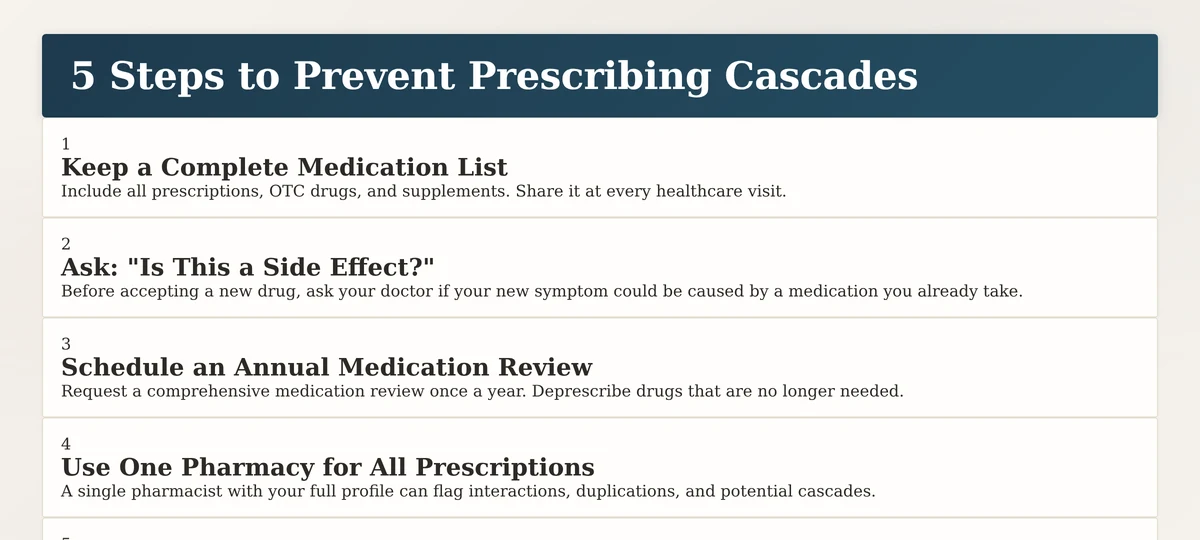
Preventing prescribing cascades in older adults starts with a shift in mindset — from “what can I add to treat this symptom?” to “what might be causing this symptom, and can I subtract something instead?” Here are the five most evidence-supported strategies, from the individual level to the system level.
1. Schedule a structured medication review. The single most effective intervention for identifying and stopping prescribing cascades in older adults is a comprehensive medication review — ideally conducted by a clinical pharmacist in collaboration with the primary care physician. This is not a quick glance at the medication list during a routine visit. To stop prescribing cascade patterns before they multiply, the review must be systematic, appointment-length, and thorough: every drug matched to its indication, every cascade pattern checked, appropriateness assessed using tools like the STOPP/START criteria, and medications identified for deprescribing. The NICE guideline on medicines optimisation recommends structured medication reviews for all older adults taking multiple medications, and the evidence suggests they reduce adverse drug events by 30–50% when conducted properly.
2. Deprescribe where appropriate. Deprescribing is the planned, supervised process of reducing or stopping medications that may no longer be necessary or may be causing harm. In the context of prescribing cascades in older adults, deprescribing means stopping the drug that started the cascade — the calcium channel blocker, the anticholinergic, the PPI — rather than continuing to treat its side effects. Deprescribing must be done gradually, under medical supervision, because some medications (beta-blockers, benzodiazepines, PPIs, corticosteroids) cause withdrawal or rebound symptoms if stopped abruptly. The key principle is that every deprescribing decision starts with a risk-benefit re-evaluation. If a drug was started years ago for a condition that has since resolved or was never clearly diagnosed in the first place, the balance may have shifted.
3. Ask the “Could this be a drug?” question. This is the single most powerful question in geriatric pharmacotherapy. Before any new symptom in an older adult is attributed to a new disease or to “just getting older,” ask: could this be caused by a medication? Fatigue, dizziness, confusion, constipation, falls, weight loss, loss of appetite — every one of these symptoms can be medication-induced. The WHO fact sheet on patient safety notes that medication-related harm affects 1 in every 30 patients in healthcare, and more than half of that harm is preventable. The “could this be a drug?” reflex, applied consistently, would prevent a significant fraction of prescribing cascades in older adults before they start.
4. Use a single pharmacy for all prescriptions. When an older adult fills prescriptions at multiple pharmacies — perhaps a local pharmacy for routine medications and a mail-order pharmacy for specialty drugs — no single pharmacist can see the full medication picture. A single pharmacy provides a single medication record, and many pharmacies now offer medication therapy management (MTM) services specifically designed to catch problems like prescribing cascades in older adults. The pharmacist is an underutilized safety net. They see every prescription and are trained specifically in drug side effects, interactions, and cascade detection.
5. Bring a medication list to every appointment — and ask the cascade question explicitly. Every specialist visit should include an updated medication list. Say to the doctor: “Before we add anything new, can we review whether any of my current medications could be causing this symptom?” This one question reframes the clinical encounter from “what should we add?” to “should we adjust what is already there?” It takes five seconds to ask and can prevent years of cascading prescriptions.
For patients managing chronic conditions, having access to affordable, quality-assured medications from WHO-GMP-certified manufacturers can make it easier to maintain a consistent, manageable medication regimen. You can browse trusted options at MedsBase Chronic Conditions to see available treatments for long-term health needs — but always, always review your full medication list with your doctor before starting, stopping, or changing anything.
Related Reading
- Browse all Blood Pressure medications at MedsBase — Including ACE inhibitors, ARBs, calcium channel blockers, and diuretics
- Browse all Gastro Health medications at MedsBase — Including PPIs, H2 blockers, and digestive health options
- Browse all Chronic Conditions medications at MedsBase — Long-term medication management across multiple health categories
Frequently Asked Questions
Q: What is a prescribing cascade example I can recognize at home?
A: The simplest example of a prescribing cascade is the one millions of families have seen: a parent starts a blood pressure medication (amlodipine), develops swollen ankles, and is then prescribed a water pill (diuretic). The ankle swelling was not a new disease — it was a drug side effect. Recognizing this pattern — a new medication that treats a symptom that only started after the previous medication — is the first step in identifying prescribing cascades in older adults in your own family.
Q: How to stop a prescribing cascade once it has started?
A: Stopping prescribing cascades in older adults begins with a structured medication review. Identify the drug that started the cascade (the one prescribed first), confirm with a healthcare professional that the later drugs are treating side effects of the earlier one, and discuss whether the original drug can be reduced, switched, or stopped. Never stop any medication on your own — especially blood pressure medications, antidepressants, and PPIs, which can cause rebound effects. The deprescribing process should be gradual and supervised, but in roughly half of all documented prescribing cascades in older adults, it is possible to break the chain without loss of therapeutic benefit.
Q: What are the most common prescribing cascades in the elderly?
A: Research consistently identifies several high-frequency prescribing cascades in older adults. The most common are: (1) calcium channel blocker diuretic for edema, (2) ACE inhibitor cough suppressant for dry cough, (3) anticholinergic for incontinence laxative for constipation, (4) metoclopramide or antipsychotic anti-Parkinson medication for drug-induced parkinsonism, (5) NSAID antihypertensive escalation for elevated blood pressure, (6) statin opioid or NSAID for muscle pain, and (7) PPI B12 deficiency testing and treatment cascade. The ThinkCascades expert consensus list identifies 9 high-priority cascades, of which these seven are the most frequently documented.
Q: Who is most at risk for prescribing cascades?
A: Older adults over 75, those taking five or more medications, those seeing multiple specialists, and those with impaired kidney function are at the highest risk for prescribing cascades in older adults. The 2026 French national study by Gervais and colleagues found that cascade incidence increased significantly with age — patients over 80 were at the highest risk — and with each additional medication. Other risk factors include recent hospitalization (when medications are frequently changed), cognitive impairment (which makes it harder for patients to report side effects clearly), and living alone (no family member to notice changes that might signal a cascade).
Q: Can prescribing cascades be reversed?
A: Yes — and this is one of the most hopeful findings in the prescribing cascade literature. Studies consistently show that approximately half of all documented prescribing cascades in older adults are reversible when the cascade is identified and the initiating drug is adjusted or stopped. The edema from a calcium channel blocker resolves when the drug is switched to an alternative. The cough from an ACE inhibitor stops when the patient is transitioned to an ARB. The constipation from an anticholinergic improves when the drug is discontinued. Deprescribing — the planned, supervised process of reducing or stopping medications — is the clinical tool that makes this reversal possible. However, some cascades leave residual effects if they have been in place for a long time. The key is identifying them early.
Q: How to identify a prescribing cascade in a parent’s medication list?
A: To identify prescribing cascades in older adults on a parent’s medication list, follow a simple protocol: (1) Write down every drug, including over-the-counter products and supplements. (2) Note when each drug was started and what condition it was prescribed for. (3) Look for drugs that treat known side effects of other drugs on the list — for example, a drug for fluid retention next to a calcium channel blocker, a drug for constipation next to an anticholinergic, or a cough medication next to an ACE inhibitor. (4) Ask your parent’s doctor or pharmacist: “Could any of these medications be treating side effects of other medications on this list rather than separate conditions?” This question, asked clearly and with the medication list in hand, is the most effective way to initiate a cascade review.
Q: What medications most commonly cause prescribing cascades?
A: The medication classes most frequently implicated in prescribing cascades in older adults are: calcium channel blockers (edema diuretic cascade), ACE inhibitors (cough antitussive cascade), anticholinergic drugs for incontinence (constipation laxative cascade), dopamine-blocking drugs including metoclopramide and antipsychotics (parkinsonism anti-Parkinson drug cascade), NSAIDs (hypertension antihypertensive escalation cascade), statins (myalgia opioid/NSAID cascade), and proton pump inhibitors (B12 malabsorption diagnostic workup cascade). These seven classes account for the majority of documented prescribing cascades in older adults across multiple healthcare systems and should be the first drugs examined during any medication review.
Q: How to prevent prescribing cascades in elderly patients?
A: Preventing prescribing cascades in older adults requires a combination of patient-level and system-level strategies. At the patient level: maintain a single, up-to-date medication list; ask “could this be a drug side effect?” before accepting any new diagnosis or prescription; schedule an annual structured medication review with a clinical pharmacist or primary care physician; use a single pharmacy for all prescriptions; and bring a family member to appointments to serve as a second set of eyes and ears. At the system level, the 2026 umbrella review recommended integrating cascade detection into electronic health record alerts, training prescribers in the STOPP/START criteria, and making deprescribing a standard part of geriatric care rather than an afterthought.
The Bottom Line
Prescribing cascades in older adults are not a niche academic concern. They affect millions of older adults and their families right now — in routine primary care visits, in specialist consultations, and in hospital discharge summaries where new medications are added without reconciling the list. The 2026 French study of 16.6 million patients confirmed what geriatric pharmacists have been saying for years: this is a systematic, measurable, and largely preventable driver of polypharmacy in the older population.
The good news, and it is genuinely good, is that prescribing cascades in older adults are also one of the most actionable medication safety problems. You do not need advanced clinical training to detect them. You need a current medication list, a structured set of questions to ask, and the willingness to say “could this be a side effect?” before accepting a new prescription. In roughly half of all cases, the cascade can be interrupted — the initiating drug adjusted or stopped, the downstream drugs tapered, and the medication list simplified — without any loss of therapeutic benefit.
The research is clear. The tools exist. The international consensus, from the ThinkCascades framework to the NICE medication review guidelines, is aligned: we know how to detect and reverse prescribing cascades in older adults. What remains is for patients and families to bring this knowledge into the exam room.
Your immediate action: This week, gather every medication your parent or you are taking — prescription, over-the-counter, supplement, everything — into a single list. Note when each was started and what it was prescribed for. At the next doctor’s appointment, bring the list and ask: “Could any of these drugs have been started to treat side effects of other drugs on this list?” You may be the first person to connect the dots. And in medication safety, the first person to connect the dots is often the person who breaks the chain.
What to read next:
- Wondering how to safely manage multiple medications for long-term health needs? Browse our Chronic Conditions category — quality-assured medications from WHO-GMP-certified manufacturers, no prescription needed
- On a blood pressure medication and concerned about side effects? Explore Blood Pressure treatment options at MedsBase including ACE inhibitors, ARBs, calcium channel blockers, and alternatives
- Taking a PPI long-term? Learn about Gastro Health alternatives at MedsBase — PPIs, H2 blockers, and digestive support options
Medical Disclaimer: This article is for informational purposes only and does not constitute medical advice. The information provided is not a substitute for professional medical diagnosis, treatment, or advice. Always consult your doctor or other qualified healthcare provider before making changes to any prescribed medication. Never discontinue or adjust your medication dosage without your doctor’s supervision. Prescribing cascades can involve complex clinical decisions — always work with your healthcare provider to evaluate your specific medication regimen.

Written by
Sophie ChenPharmaceutical Content Researcher · 8 years experience
Sophie Chen is a pharmaceutical content researcher with 8 years covering generic medication access and clinical pharmacology. She specialises in international regulatory frameworks, bioequivalence standards, and patient-facing education on therapeutic drug classes. She is not a clinician.