







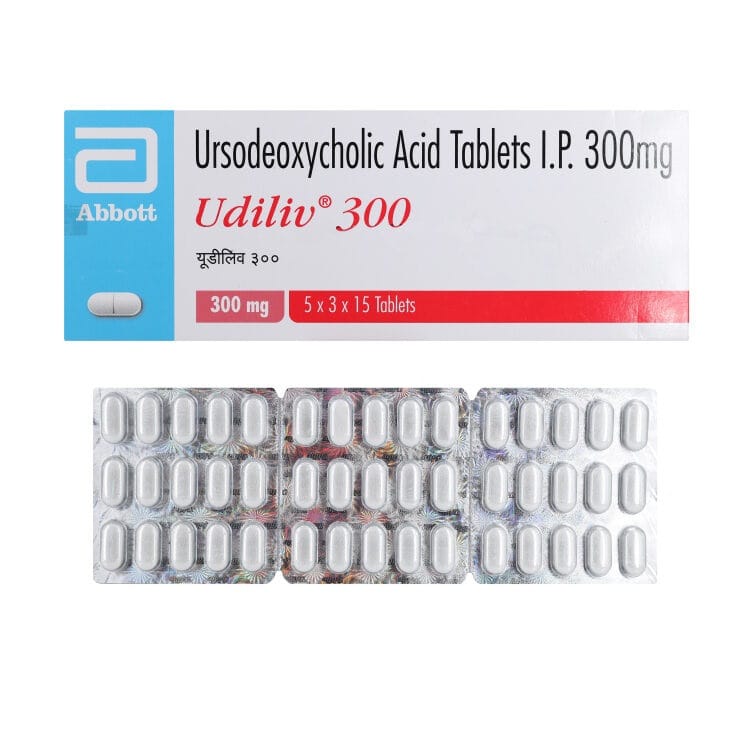
Udiliv
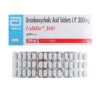
✅ Dissolves gallstones
✅ Relieves bile blockage
✅ Protects liver cells
✅ Reduces liver inflammation
✅ Improves liver function
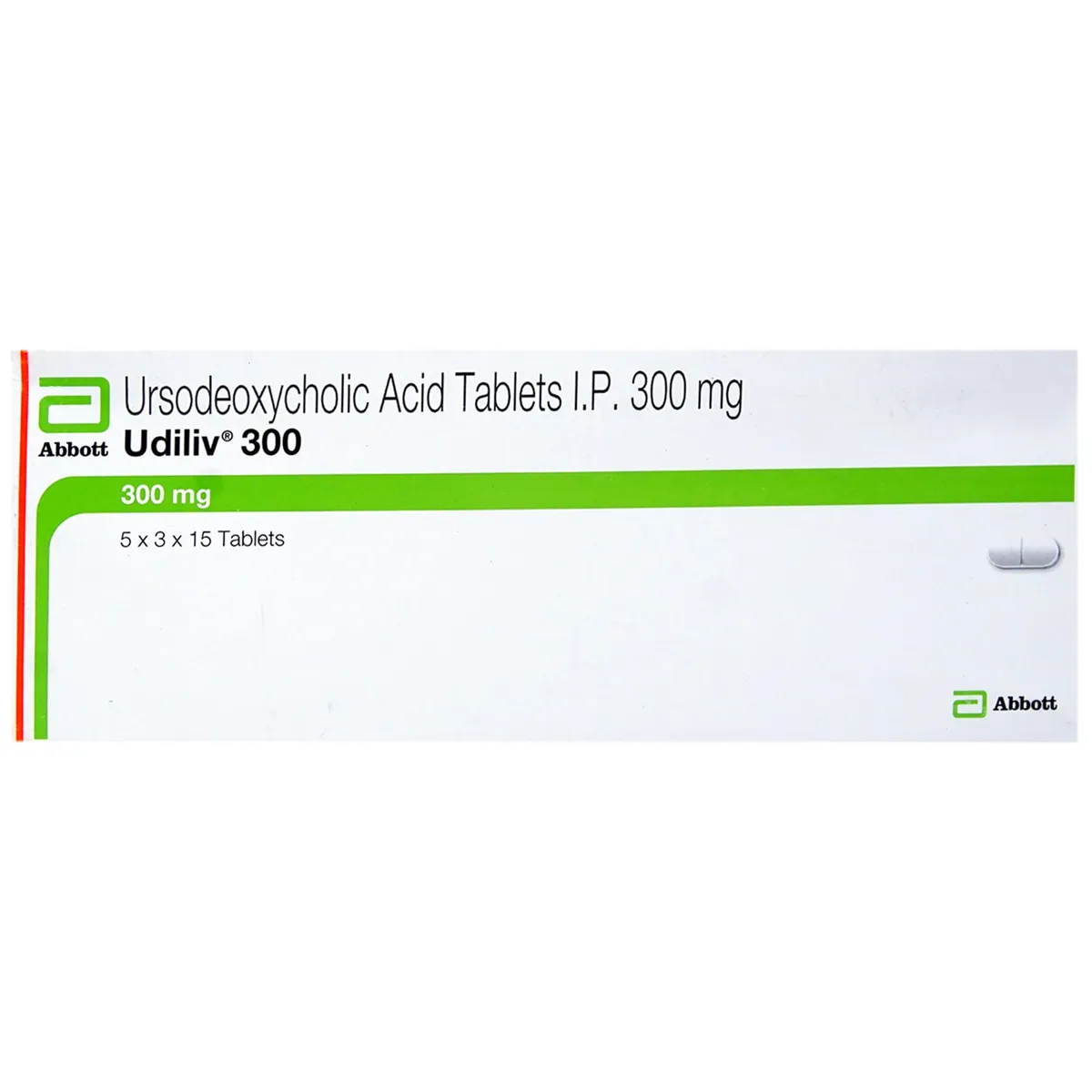
Udiliv contains Ursodeoxycholic Acid.
✓ Medically reviewed by Morgan Ellis — Pharmacy Researcher · 8 years experience · Last reviewed: May 2026
Quick Answer
Udiliv contains ursodeoxycholic acid (UDCA) 300 mg per tablet — the higher-strength form of UDCA for primary biliary cholangitis (PBC), cholesterol gallstone dissolution, intrahepatic cholestasis of pregnancy and other cholestatic liver disorders. The 300 mg strength halves daily pill count compared to the 150 mg form (Ursodec).
📦 Every order is covered by our Reshipment Assurance Policy — if your parcel does not arrive within 20 business days, we reship it.
What ursodeoxycholic acid is
Ursodeoxycholic acid (UDCA, also called ursodiol) is a naturally occurring secondary bile acid. Therapeutically it does three things at once: it displaces cytotoxic hydrophobic bile acids (chenodeoxycholic, deoxycholic, lithocholic) from the bile-acid pool, it reduces biliary cholesterol secretion (which dissolves cholesterol gallstones over months), and it protects cholangiocytes from bile-acid-mediated injury through cytoprotective and immunomodulatory effects. It is the only oral therapy with mortality and transplant-free survival benefit in primary biliary cholangitis (Poupon 1991, 1994; meta-analyses 2002, 2014).
Indications
- Primary biliary cholangitis (PBC) — first-line therapy; 13–15 mg/kg/day in divided doses with meals. ~60–70% biochemical response (alkaline phosphatase normalisation or significant fall) over 12 months. Non-responders are switched or augmented with obeticholic acid or fibrates.
- Cholesterol gallstone dissolution — for radiolucent stones < 15 mm in a functioning gallbladder, in patients who cannot or will not have cholecystectomy. 8–10 mg/kg/day for 6–24 months. Stone recurrence after cessation is significant (≈ 50% at 5 years).
- Primary sclerosing cholangitis (PSC) — improves biochemistry; mortality benefit not proven. High-dose (28–30 mg/kg/day) is associated with worse outcomes and is contraindicated.
- Intrahepatic cholestasis of pregnancy (ICP) — 10–15 mg/kg/day (or 500 mg twice daily); reduces maternal pruritus and bile acid levels; may reduce fetal complications.
- Non-alcoholic fatty liver disease (NAFLD) — biochemistry improves but high-quality histological benefit is unproven; not a first-line NAFLD therapy in current guidelines.
- Cystic fibrosis associated liver disease — used in paediatric and adult CF cholestasis.
Dosing
| Indication | Dose (mg/kg/day) | Schedule |
|---|---|---|
| PBC | 13–15 | 2–3 divided doses with meals |
| Cholesterol gallstone dissolution | 8–10 | 2 divided doses (with the largest dose at bedtime) |
| PSC | 13–15 (do NOT exceed 28 mg/kg) | 2–3 divided doses |
| ICP (pregnancy) | 10–15 | 2 divided doses |
| NAFLD adjunct | 13–15 | 2–3 divided doses |
Avoid in
- Acute cholecystitis, cholangitis or biliary obstruction
- Calcified or pigment gallstones (no dissolution effect)
- Non-functioning gallbladder on oral cholecystography
- Severe hepatic decompensation (Child-Pugh C) — discuss with hepatology
Side effects
Generally very well tolerated. Most common: mild diarrhoea (5–10%), abdominal discomfort, nausea, mild rash. Pruritus may transiently worsen in PBC during the first weeks before improving. Rarely: gallstone calcification (radio-opaque shift) on long courses.
Drug interactions
- Bile acid sequestrants (cholestyramine, colesevelam, colestipol) — bind UDCA in the gut and reduce absorption. Separate by ≥ 4–5 hours.
- Aluminium-containing antacids — bind UDCA. Separate by ≥ 2 hours.
- Oestrogens, oral contraceptives, clofibrate — increase biliary cholesterol saturation and antagonise the gallstone-dissolution effect.
- Ciprofloxacin, dapsone — modestly altered absorption; clinically minor.
Pregnancy and breastfeeding
Used routinely off-label in intrahepatic cholestasis of pregnancy with extensive safety data. Compatible with breastfeeding (excreted in trace amounts in milk; no infant harm reported).
Storage
Store below 25 °C in a dry place, original packaging. Tablets are stable for the full labelled shelf life when kept dry.
Why order from MedsBase
Udiliv is supplied through a WHO-GMP certified manufacturer with full COA documentation. We ship worldwide in plain, discreet packaging, and every order is covered by our Reshipment Assurance Policy. Your statement descriptor when paying by card shows the regulated payment processor (a regulated card-payment processor), never "MedsBase" or any medication name.
Frequently Asked Questions
How long until I see results in primary biliary cholangitis?
Alkaline phosphatase typically falls within 4–8 weeks and the trajectory at 12 months predicts long-term outcome. The Toronto, Paris-1 and Paris-2 criteria define a “biochemical responder” at 1 year by ALP, AST and bilirubin thresholds. Non-responders should discuss obeticholic acid or fibrate add-on with hepatology.
Can UDCA dissolve any kind of gallstone?
Only cholesterol stones, only if radiolucent on imaging, only in a functioning gallbladder, and only if < 15 mm. Calcified, pigment, or partially calcified stones do not respond.
Why does my doctor want me on UDCA forever for PBC?
PBC is a chronic autoimmune cholangitis. UDCA changes the disease trajectory but does not cure it. Stopping UDCA is followed by biochemical relapse within weeks. Lifelong therapy at 13–15 mg/kg/day is standard.
Can I take it during pregnancy?
Yes — UDCA is the standard treatment for intrahepatic cholestasis of pregnancy. Decades of use show no fetal harm, and it reduces maternal pruritus and bile acid levels.
Will UDCA cause weight loss or weight gain?
Neither, in most patients. Mild diarrhoea may cause minor early weight loss in a small fraction.
Does UDCA work for non-alcoholic fatty liver?
It improves biochemistry (ALT, AST). Whether it improves liver histology and outcomes is not established in large trials. Current NAFLD/NASH guidelines do not recommend UDCA as routine therapy.
Can I drink alcohol on UDCA?
Most patients on UDCA have an underlying liver condition. Alcohol is best avoided altogether in PBC, PSC and significant hepatic disease.
What is the difference between UDCA and bile salts in supplements?
UDCA is a specific bile acid (ursodeoxycholic). Generic “bile salt” supplements are mixtures of natural bile acids without therapeutic dose standardisation. Only purified UDCA tablets are used clinically for PBC and gallstone dissolution.
How is UDCA monitored?
For PBC: ALP, ALT, AST, GGT, total bilirubin every 3 months for the first year, then 6-monthly. For gallstone dissolution: ultrasound at 6, 12, and 24 months to track stone size.
Can high-dose UDCA be harmful?
In primary sclerosing cholangitis, doses ≥ 28 mg/kg/day were associated with WORSE clinical outcomes (Lindor 2009 NEJM). Stick to 13–15 mg/kg/day in PSC and never escalate without specialist input.
Other Liver & Hepatology Products
- Ursodec (UDCA 150 mg) — lower-strength UDCA, finer dose granularity
- All Hepatitis & Liver Medications
- Hepcinat (sofosbuvir) — direct-acting antiviral for chronic HCV
- MyHep All (sofosbuvir + velpatasvir) — pan-genotypic HCV
- Celin (vitamin C) — antioxidant adjunct
- L-Glutathione 250 mg — antioxidant for hepatic redox support
Medical Disclaimer
This information is provided for educational purposes only and is not a substitute for medical advice. Always consult a qualified healthcare professional before starting, changing, or stopping any medication.
More options in Hepatitis Medication
Ranked by recent MedsBase order volume — what other customers in this category are picking.
| Strength | 300 mg |
|---|---|
| Quantity | 15 Tablet/s, 30 Tablet/s, 60 Tablet/s, 90 Tablet/s, 180 Tablet/s |
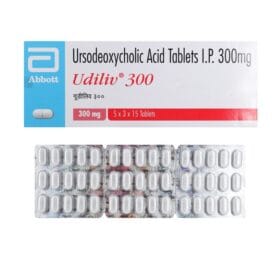 Udiliv
Q & A
Udiliv
Related products
Reviews
There are no reviews yet