








✓ Medically reviewed by · Last reviewed: May 2026
Pharmacy Researcher · 8 years experience
Pharmacy researcher with 8 years reviewing clinical drug information, generic formulation equivalence, and international pharmaceutical standards. Focuses on patient-facing accuracy in medication education.
antipsychotic medication weight gain — Antipsychotic Medication Weight Gain: What the Latest Research Tells You and What Helps. Read on for an evidence-backed guide covering everything you need to know.
Key Takeaways
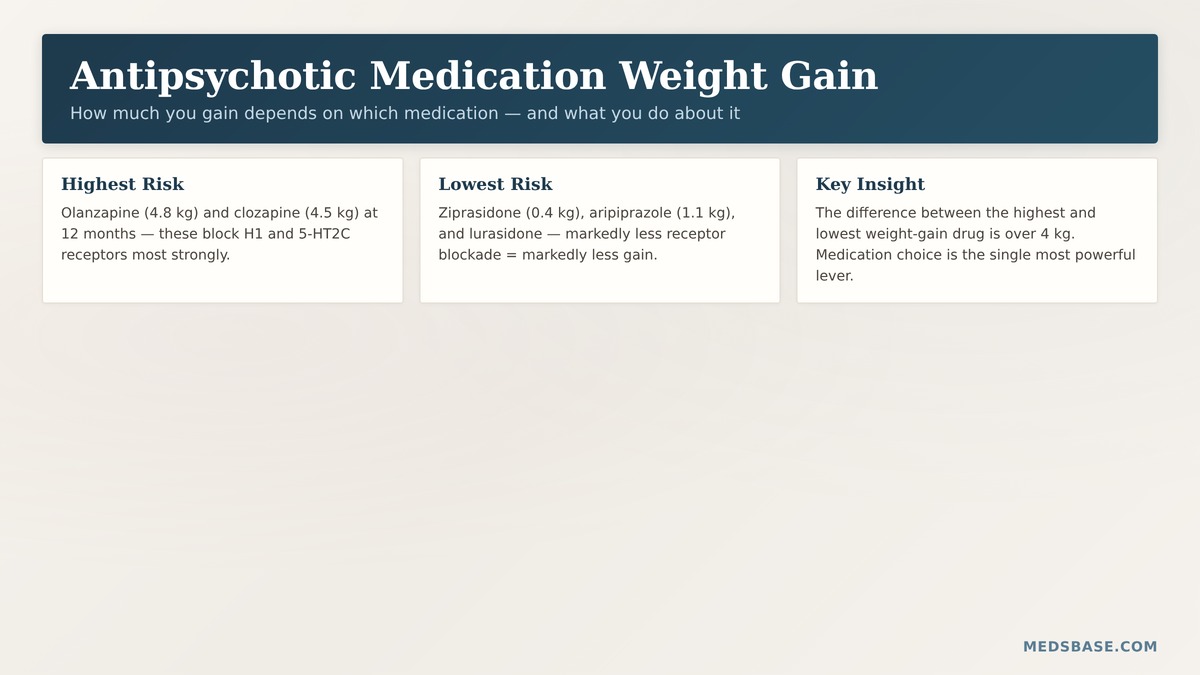
- Most people gain weight on antipsychotic medication — the amount varies dramatically by drug, from under 1 kg to nearly 5 kg in the first year.
- The weight gain isn’t just “eating more” — these medications change appetite signals, metabolism, and insulin sensitivity at a biological level.
- You can lose weight while staying on your medication — but it takes a different approach than standard weight loss.
- Metformin, the diabetes drug, is one of the most studied and effective interventions — reducing antipsychotic-induced weight gain by an average of 3–4 kg.
- Switching medications (with your doctor’s guidance) is often the single most impactful change — the difference between the highest and lowest weight-gain drugs can be over 4 kg.
- What Is Antipsychotic Medication Weight Gain?
- How Does Antipsychotic Medication Cause Weight Gain?
- Which Medications Cause the Most Weight Gain?
- Safety Profile: How Much Weight Should You Expect?
- What Does the Research Say?
- 7 Proven Ways to Manage Antipsychotic Medication Weight Gain
- Frequently Asked Questions
- The Bottom Line
Antipsychotic medication weight gain — you step on the scale and the number is up again — for the fourth week in a row. You haven’t changed what you eat, you haven’t stopped moving, and yet the weight keeps piling on. The only thing that’s different? You started a new antipsychotic medication a few months ago, and it’s genuinely helping your mental health for the first time in years.
Now you’re caught in an impossible choice: stay mentally stable or stop gaining weight.
If this sounds familiar, you’re not alone. Antipsychotic medication weight gain affects the majority of people who take these drugs — anywhere from 40% to 80% depending on the specific medication. It is, by far, the most common physical side effect patients report, and antipsychotic medication weight gain remains one of the leading reasons people discontinue a treatment that is otherwise working for their mental health. It’s one of the most common reasons people stop taking a medication that’s otherwise working. But here’s what most patients don’t hear: there are evidence-based strategies that actually help, and they don’t require choosing between your mind and your body.
This guide walks you through exactly why the weight gain happens, which medications are the biggest offenders, and — most importantly — what you can do about it, backed by clinical research.
What Is Antipsychotic Medication Weight Gain?
Quick Answer: Antipsychotic medication weight gain is a well-documented side effect where patients gain a clinically significant amount of body weight — often 5% to 10% or more of their starting weight — within the first few months to a year of starting treatment. It’s not simply “eating more because you feel better.” These medications directly alter brain chemistry pathways that control hunger, satiety, and how your body stores and burns energy.
Antipsychotic medications are primarily prescribed for schizophrenia, bipolar disorder, and treatment-resistant depression. They work by modulating dopamine and serotonin systems in the brain — which is also why they have profound effects on appetite regulation. The weight gain side effect was first described in the 1950s with first-generation antipsychotics, but it became far more prominent with the introduction of second-generation (atypical) antipsychotics in the 1990s, particularly clozapine and olanzapine.
The weight gain isn’t trivial. Studies consistently show that within 10–12 weeks of starting olanzapine, the average weight gain is 4–5 kg (9–11 lbs). Over a year or longer, some patients gain 10 kg (22 lbs) or more. This is not just a cosmetic concern — it increases the risk of type 2 diabetes, cardiovascular disease, and significantly impacts quality of life and medication adherence.
Q: Who Is This For?
A: – Anyone starting or already taking an antipsychotic medication and noticing weight changes – Family members or caregivers concerned about a loved one’s weight gain on these medications – Clinicians looking for patient-friendly explanations and management strategies
Who Should NOT use this guide to make independent decisions:
- Do not stop or change your medication dose based on this article alone — antipsychotic withdrawal can trigger relapse and requires medical supervision.
- If you’re gaining weight very rapidly (more than 2 kg per week) or developing other symptoms like extreme thirst or frequent urination, see your doctor — these may be signs of emerging diabetes.
How Does Antipsychotic Medication Cause Weight Gain?
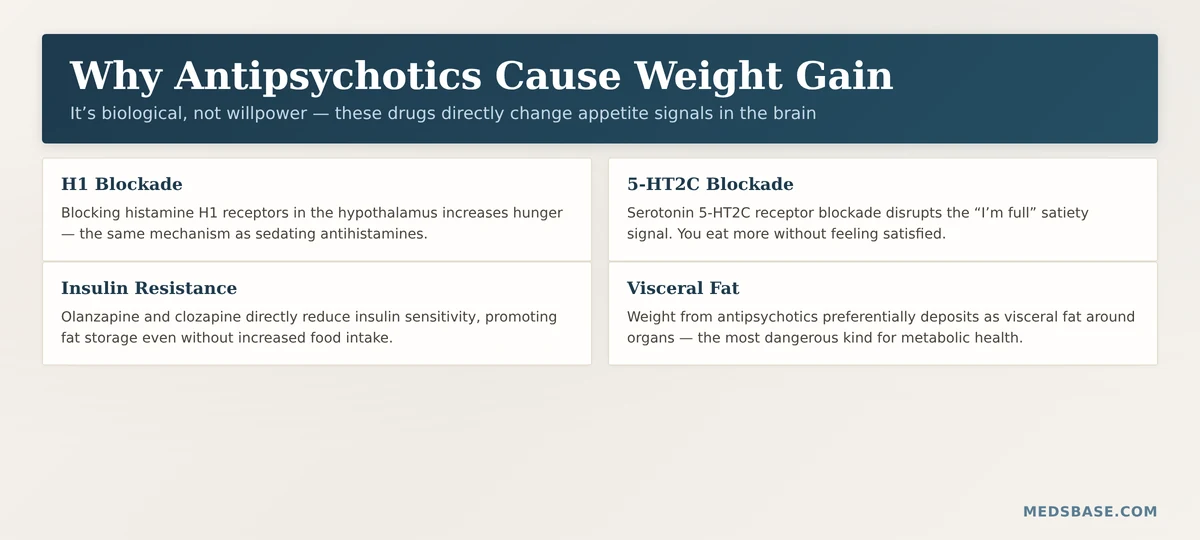
Quick Answer: Antipsychotics cause weight gain primarily by blocking histamine H1 and serotonin 5-HT2C receptors in the brain’s appetite control centers. This increases hunger signals, reduces the feeling of fullness after eating, and in some cases directly alters insulin sensitivity and fat storage. It’s a biological effect, not a willpower problem.
The mechanism behind antipsychotic medication weight gain is complex and involves multiple pathways. Think of it this way: your brain has a sophisticated appetite “thermostat” — a set of receptors in the hypothalamus that constantly balance hunger and satiety signals. Antipsychotic medications, especially the ones that cause the most weight gain, essentially turn the thermostat up.
Research Spotlight: The Receptor Connection
The strongest predictor of weight gain from an antipsychotic is how strongly it binds to histamine H1 and serotonin 5-HT2C receptors. These receptors sit in the hypothalamus — your brain’s appetite control center. When an antipsychotic drug blocks H1 receptors, it mimics the effect of antihistamines (which can also cause weight gain). When it blocks 5-HT2C receptors, it disrupts the “I’m full” signal that serotonin normally sends.
A second mechanism involves metabolic changes that go beyond appetite. Several antipsychotics — particularly olanzapine and clozapine — directly impair insulin sensitivity, meaning your body needs to produce more insulin to keep blood sugar stable. Higher insulin levels promote fat storage, especially around the abdomen. This can happen even without obvious changes in food intake.
What this means for you: You’re not lacking willpower, and you’re not “letting yourself go.” The medication is literally changing the biological signals your brain uses to regulate eating and metabolism. Understanding this is the first step — it means the solution isn’t “just eat less,” which rarely works against a medication-driven appetite surge.
Here’s where it gets interesting: the degree of receptor binding varies enormously between different antipsychotics. A medication that strongly blocks H1 and 5-HT2C (like olanzapine) will cause significant weight gain in most people. One that barely touches those receptors (like aripiprazole or ziprasidone) may cause minimal or no weight gain. This receptor selectivity is why switching medications — under medical supervision — is often the single most effective strategy.
Which Medications Cause the Most Weight Gain?
Not all antipsychotics are equal when it comes to weight gain. The differences are large enough that medication choice, when clinically appropriate, can make a 4–5 kg difference in the first year alone.
Here’s the breakdown of antipsychotic medication weight gain risk, from highest to lowest:
High weight gain risk (average 4–5 kg in first 3–12 months):
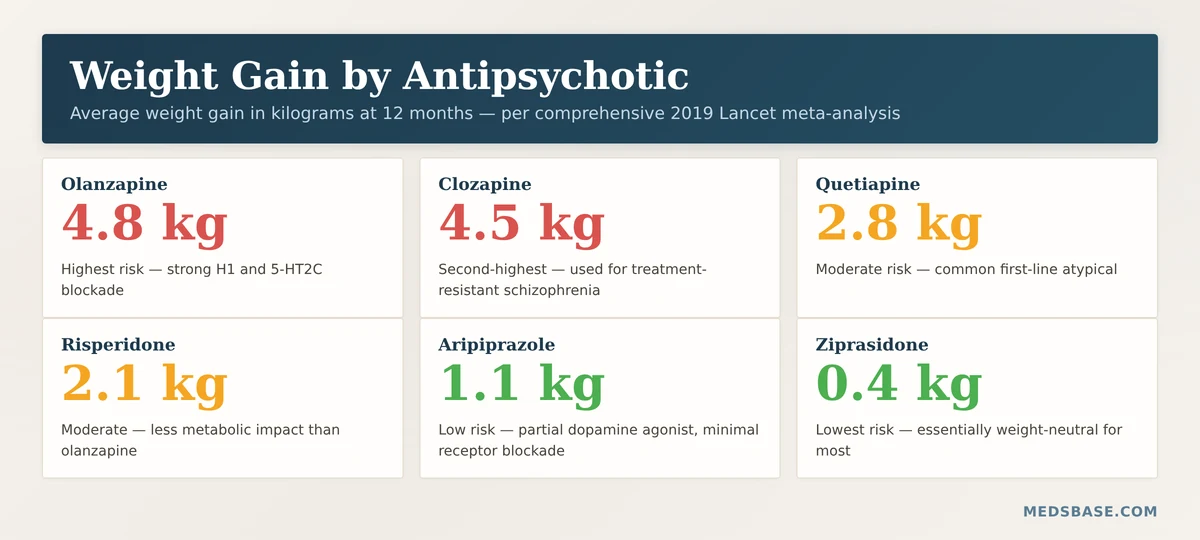
- Olanzapine (Zyprexa) — the highest risk; average gain 4.8 kg at 12 months
- Clozapine (Clozaril) — close second; average gain 4.5 kg at 12 months
Moderate weight gain risk (average 2–3 kg):
- Quetiapine (Seroquel) — average gain 2.8 kg
- Risperidone (Risperdal) — average gain 2.1 kg
- Paliperidone (Invega) — similar to risperidone
Low weight gain risk (average under 1.5 kg):
- Aripiprazole (Abilify) — average gain 1.1 kg
- Brexpiprazole (Rexulti) — similar to aripiprazole
- Lurasidone (Latuda) — minimal gain, often weight-neutral
- Ziprasidone (Geodon) — the lowest; average gain 0.4 kg
First-generation (typical) antipsychotics:
- Haloperidol (Haldol) — generally low risk; average gain ~0.5–1 kg
- Chlorpromazine — moderate risk
The takeaway: if you’re experiencing significant antipsychotic medication weight gain and your clinical situation allows it, discussing a switch to a lower-risk medication with your doctor can be transformative. The difference between the highest and lowest weight-gain drugs is, on average, more than 4 kg over a year — making medication choice the single most powerful lever in managing antipsychotic medication weight gain.
Safety Profile: How Much Weight Should You Expect?
Antipsychotic medication weight gain tends to follow a predictable trajectory. Most of the gain happens in the first 3–6 months of treatment, but it can continue at a slower pace for up to 2 years.
| Timeframe | Expected Weight Change | Notes |
|---|---|---|
| First 4-6 weeks | 1–3 kg | Rapid initial gain as receptors adjust |
| 3–6 months | 3–6 kg (high-risk drugs) | Peak rate of gain; critical window for intervention |
| 6–12 months | Variable; may plateau or continue | Plateaus for some; continues slower for others |
| 1–2 years | 5–12 kg cumulative (high-risk drugs) | Long-term trajectory; metabolic complications emerge |
But there’s a catch: weight gain on antipsychotic medication isn’t just about the number on the scale. It’s about where the weight goes. These medications preferentially increase visceral fat — the dangerous fat that accumulates around internal organs. This visceral fat is strongly linked to insulin resistance, type 2 diabetes, and cardiovascular disease. Some patients who gain “only” 3–4 kg may still develop significant metabolic problems if that weight is predominantly abdominal.
The safety concern is real: second-generation antipsychotics increase the risk of developing type 2 diabetes by approximately 1.5 to 3 times compared to the general population, with olanzapine and clozapine carrying the highest risk. This is why antipsychotic medication weight gain is not just a cosmetic issue — it is a metabolic health issue that deserves the same clinical attention as the psychiatric condition being treated. This is why metabolic monitoring — regular checks of weight, waist circumference, blood sugar, and lipids — is now recommended as standard practice for anyone on long-term antipsychotic treatment.
What Does the Research Say?
The research on antipsychotic medication weight gain is extensive, and new studies continue to refine our understanding of antipsychotic medication weight gain and how best to manage it.
| Study | Year | Key Finding | Source |
|---|---|---|---|
| Leucht et al. meta-analysis | 2019 | Comprehensive comparison of 32 antipsychotics; olanzapine caused most weight gain (4.8 kg), ziprasidone least (0.4 kg) at 12 months | PMID: 30795730 |
| Pillinger et al. systematic review | 2020 | Antipsychotic-naive patients gain 3–5× more weight than previously treated patients; first exposure is highest risk | PMID: 32539747 |
| de Silva et al. Cochrane review | 2016 | Metformin reduces antipsychotic-induced weight gain by 3–4 kg on average; strongest evidence for any intervention | Cochrane CD005148 |
| Mizuno et al. meta-analysis | 2014 | Switching from olanzapine to aripiprazole or lurasidone reduces weight by 2–3 kg over 3–6 months | PMID: 25234815 |
| Correll et al. JAMA Psychiatry | 2015 | Cardiometabolic risk in youth treated with antipsychotics — significant increases in 12 weeks | PMID: 26132699 |
What this means for you: The evidence points to three findings that directly inform what you should do: (1) early intervention matters — the first 6–12 weeks see the fastest gain, so don’t wait; (2) metformin is the best-studied pharmacological intervention and consistently works; (3) medication choice is the most powerful lever — if your mental health allows it, switching to a lower-risk drug often reverses some of the weight gain.
7 Proven Ways to Manage Antipsychotic Medication Weight Gain
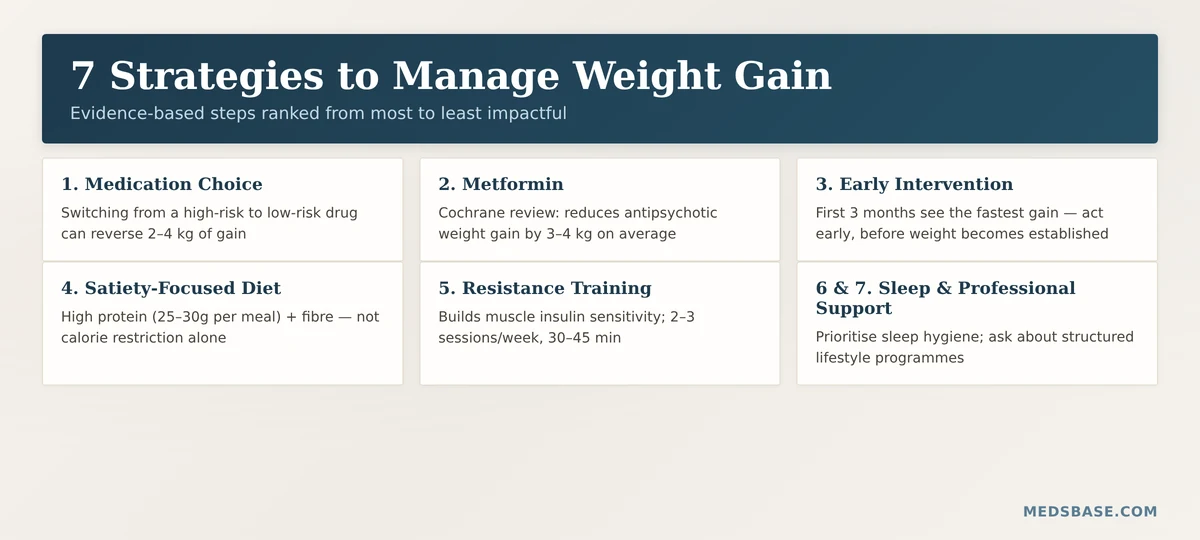
Now for the practical part. Here are seven evidence-based strategies, ranked roughly from most to least impactful.
1. Talk to your doctor about medication choice — before it’s too late
The single most powerful intervention is prevention. If you’re starting antipsychotic treatment or have been on it for only a short time, discuss the weight gain profiles of different options with your clinician. The difference between starting on olanzapine vs aripiprazole could mean 4 kg or more by the end of the year, with no difference in efficacy for many patients. If you’re already on a high-risk medication and gaining weight, ask whether switching to a metabolically friendlier alternative is clinically appropriate. Do not stop or switch medications on your own — antipsychotic withdrawal can trigger severe relapse and must be medically supervised.
2. Ask about metformin
Metformin, a diabetes medication that’s been around for decades, has the strongest evidence base of any intervention for antipsychotic-induced weight gain. A Cochrane review found it reduces weight by an average of 3–4 kg compared to placebo, and it also improves insulin sensitivity and lipid profiles. It’s typically taken at 500–2000 mg per day, starting low and increasing gradually to minimize gastrointestinal side effects. The mechanism involves reducing hepatic glucose production and improving peripheral insulin sensitivity — it partially counteracts the metabolic effects of the antipsychotic. Metformin is prescription-only; talk to your doctor about whether it’s appropriate for you.
3. Track and intervene early
Weight gain on antipsychotic medication accelerates fastest in the first 3 months. The patients who gain the most early on tend to gain the most long-term. Set up a system: weigh yourself weekly at the same time, keep a simple log, and if you gain more than 2–3 kg in the first 6–8 weeks, bring this data to your doctor. Early intervention with metformin or a medication switch is far more effective than trying to reverse 10 kg of established weight gain a year later.
4. Eat for satiety, not restriction
This is counterintuitive but crucial. Because antipsychotics impair satiety signaling (you don’t feel “done” eating), traditional calorie-restriction diets often fail — you’ll be fighting your own biology and losing. Instead, restructure your diet around foods that maximize satiety: high-protein foods (eggs, lean meat, legumes), high-fiber vegetables, and whole-food sources of fat (avocados, nuts, olive oil). Protein has the strongest satiety effect of any macronutrient — aim for 25–30g per meal. High-volume, low-calorie-density foods (vegetables, broth-based soups, salads) help physically fill the stomach, partially compensating for the weakened satiety signal.
5. Incorporate resistance training
While any exercise helps, resistance training (weight lifting, bodyweight exercises, resistance bands) may be particularly valuable for patients on antipsychotics. These medications preferentially increase visceral fat and can reduce insulin sensitivity in muscle tissue. Resistance training directly improves muscle insulin sensitivity and increases resting metabolic rate by building lean mass. Even 2–3 sessions per week of 30–45 minutes each can make a measurable difference. If you’re new to exercise, start with bodyweight movements (squats, push-ups against a wall or on knees, lunges) and build from there.
6. Prioritize sleep and stress management
Many antipsychotic medications are sedating, which can disrupt the natural sleep-wake cycle. Poor sleep independently increases hunger hormones (ghrelin) and decreases satiety hormones (leptin), adding another layer of weight gain risk on top of the medication effect. Prioritize sleep hygiene: consistent bedtimes, a dark cool room, and limiting screen exposure in the hour before bed. Stress — which is often high in the conditions antipsychotics treat — elevates cortisol, which also promotes abdominal fat storage. Brief daily practices like 5–10 minutes of deep breathing or a short walk can meaningfully lower baseline cortisol over time.
7. Consider professional support — dietitian or lifestyle program
Several structured lifestyle intervention programs specifically designed for people on antipsychotic medications have shown positive results. These programs combine nutritional counseling, exercise coaching, and behavioral strategies tailored to the unique challenges of medication-induced weight gain. The STRIDE trial and the ACHIEVE study, both large randomized controlled trials, demonstrated that structured lifestyle programs result in 2–3 kg less weight gain over 6–12 months compared to usual care. If your healthcare system offers such a program, enroll. If not, a registered dietitian familiar with psychotropic medication effects can provide similar guidance one-on-one.
Related Reading:
- Managing the Metabolic Risks of Long-Term Antipsychotic Treatment
- How to Compare Antidepressants for Weight-Neutral Options
- Icotrokinra for Ulcerative Colitis: Why a Once-Daily Pill Changes Treatment
Frequently Asked Questions
Q: Why do antipsychotics cause weight gain?
A: Antipsychotic medications cause weight gain primarily by blocking histamine H1 and serotonin 5-HT2C receptors in the brain’s hypothalamus — the appetite control center. This blockade increases hunger signals and reduces the feeling of fullness after eating. Some antipsychotics (especially olanzapine and clozapine) also directly reduce insulin sensitivity, which promotes fat storage even without increased food intake. The effect is a biological consequence of how these drugs work in the brain, not a failure of willpower.
Q: How much weight do you gain on antipsychotics?
A: It depends heavily on which medication you take. A comprehensive 2019 meta-analysis found average weight gain at 12 months ranged from 0.4 kg (ziprasidone) to 4.8 kg (olanzapine). Clozapine averaged 4.5 kg, quetiapine 2.8 kg, risperidone 2.1 kg, and aripiprazole 1.1 kg. Individual variation is large — some people gain very little even on high-risk drugs, while others gain substantially more than the average.
Q: Can you lose weight while taking antipsychotics?
A: Yes. Multiple studies have demonstrated that weight loss is achievable while continuing antipsychotic treatment. The strongest evidence is for metformin, which reduces weight by an average of 3–4 kg. Switching to a more weight-neutral antipsychotic (under medical supervision) also reduces or reverses weight gain. Structured lifestyle interventions combining diet and exercise counseling have shown 2–3 kg benefits. The key is that standard weight loss approaches often need modification for people on these medications — focusing on satiety-promoting foods rather than simple calorie restriction, and intervening early before large amounts of weight are gained.
Q: Which antipsychotic causes the least weight gain?
A: Among commonly prescribed antipsychotics, ziprasidone (Geodon) consistently shows the least weight gain — averaging just 0.4 kg at 12 months. Aripiprazole (Abilify) averages 1.1 kg, and lurasidone (Latuda) is generally considered weight-neutral for most patients. Haloperidol, a first-generation antipsychotic, also carries a low weight gain risk. None of these are guaranteed to be weight-neutral for every patient — individual response varies — but they carry substantially lower risk than olanzapine or clozapine.
Q: How long does antipsychotic weight gain last?
A: The most rapid weight gain occurs in the first 3–6 months of treatment. After 6–12 months, the rate of gain typically slows but may continue at approximately 0.5–1 kg per year for some patients on high-risk medications. For others, weight plateaus after the first year. The trajectory is highly individual and depends on the specific medication, dose, and personal metabolic factors. Early intervention in the first 3 months — before weight gain becomes established — offers the best chance of preventing long-term problems.
Q: Can antipsychotic weight gain cause diabetes?
A: Yes, second-generation antipsychotics — particularly olanzapine and clozapine — increase the risk of developing type 2 diabetes by approximately 1.5 to 3 times compared to the general population. The mechanism involves both direct impairment of insulin secretion from pancreatic beta cells and indirect effects through weight gain and increased visceral fat. This is why clinical guidelines now recommend regular monitoring of fasting blood glucose, HbA1c, weight, and waist circumference for all patients on long-term antipsychotic therapy. The risk is not inevitable — weight management strategies and metformin can reduce it.
Q: Can I take weight loss medication with antipsychotics?
A: Some weight loss medications may be appropriate alongside antipsychotic treatment, but this must be discussed with your doctor. Metformin is the most studied and has the strongest evidence — it’s often prescribed off-label for antipsychotic-induced weight gain. GLP-1 receptor agonists (such as semaglutide or liraglutide) are an emerging area of research; small studies suggest they can reduce antipsychotic-induced weight gain by 4–6 kg, but larger trials are ongoing. Never combine medications without medical supervision — drug interactions, particularly with clozapine, can be serious.
Q: What foods should I eat to manage antipsychotic medication weight gain?
A: Focus on foods that maximize satiety since antipsychotics dampen your “I’m full” signal. Prioritize high-protein foods (aim for 25–30g per meal from eggs, lean meat, fish, legumes, Greek yogurt), high-fiber vegetables (broccoli, spinach, cauliflower, bell peppers), whole-food fats (avocado, olive oil, nuts in moderation), and high-volume low-calorie-density foods like broth-based soups and leafy salads. Minimize ultra-processed foods, sugary drinks, and refined carbohydrates — these provide calories without satiety, which is exactly the wrong combination when your appetite signals are already compromised.
The Bottom Line
Antipsychotic medication weight gain is real, it’s biological (not a willpower problem), and it can have serious long-term health consequences — but it is not inevitable or irreversible. The evidence is clear on what works for antipsychotic medication weight gain: choosing a lower-risk medication when clinically appropriate, adding metformin, intervening early in the first 3 months when weight gain is fastest, eating for satiety rather than restriction, and incorporating resistance training.
If you’re experiencing antipsychotic medication weight gain, the single most important action you can take today is to bring this concern to your prescribing clinician with data — your weight trend over recent weeks — and ask about the options discussed here. Antipsychotic medication weight gain is addressable, and you do not have to choose between your mental health and your physical health. The right combination of medication choice, lifestyle strategy, and medical support can give you both.
What to read next:
- Wondering about the full metabolic impact of long-term antipsychotic use? Read our detailed guide on managing metabolic risks of antipsychotic treatment.
- If you’re also managing other medications with side effects, our tamoxifen breast cancer treatment guide walks through a different but equally important side effect management approach.
- Curious about how novel oral treatments are replacing injectable biologics for other conditions? Read icotrokinra for ulcerative colitis — a once-daily pill changes treatment.
Medical Disclaimer: This article is for informational purposes only and does not constitute medical advice. Do not stop, change, or adjust your medication without consulting your prescribing clinician. Antipsychotic withdrawal can trigger severe relapse and must be managed under medical supervision. Always consult a qualified healthcare professional before starting any new treatment, supplement, or lifestyle program.

Written by
Sophie ChenPharmaceutical Content Researcher · 8 years experience
Sophie Chen is a pharmaceutical content researcher with 8 years covering generic medication access and clinical pharmacology. She specialises in international regulatory frameworks, bioequivalence standards, and patient-facing education on therapeutic drug classes. She is not a clinician.