









Azopt Eye Drops
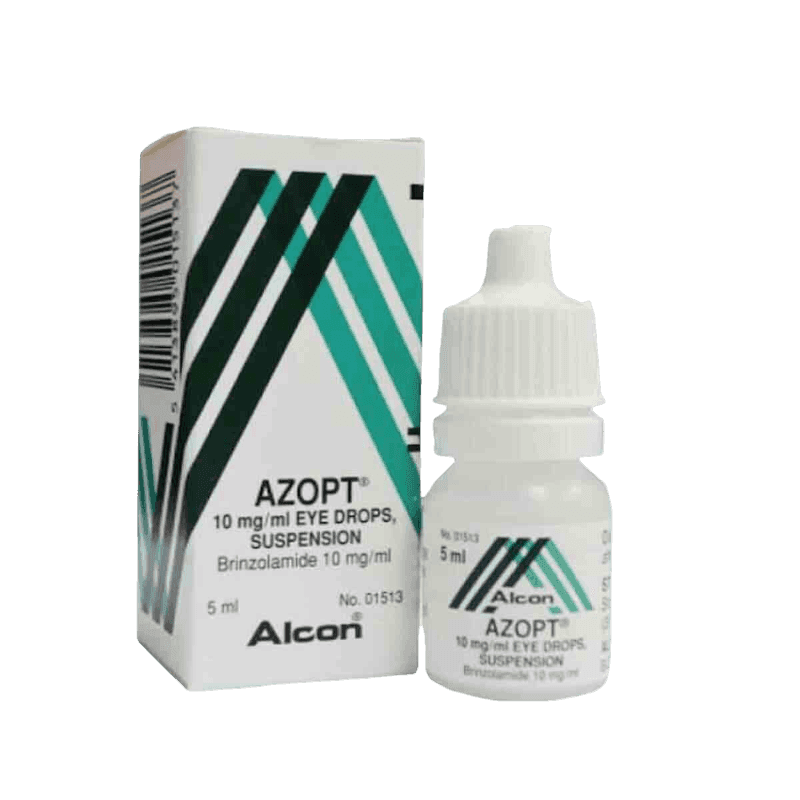
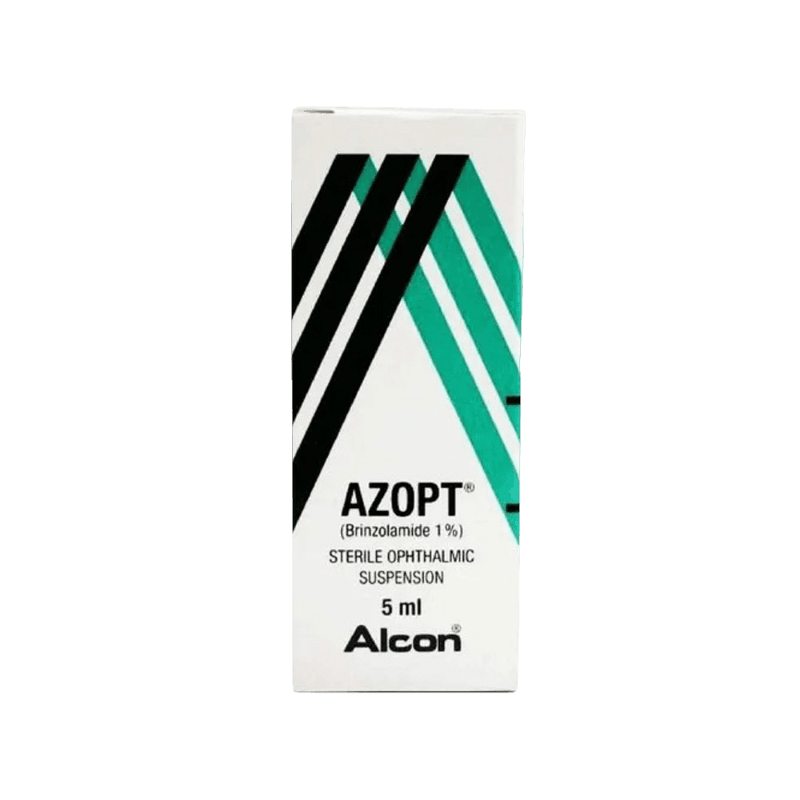
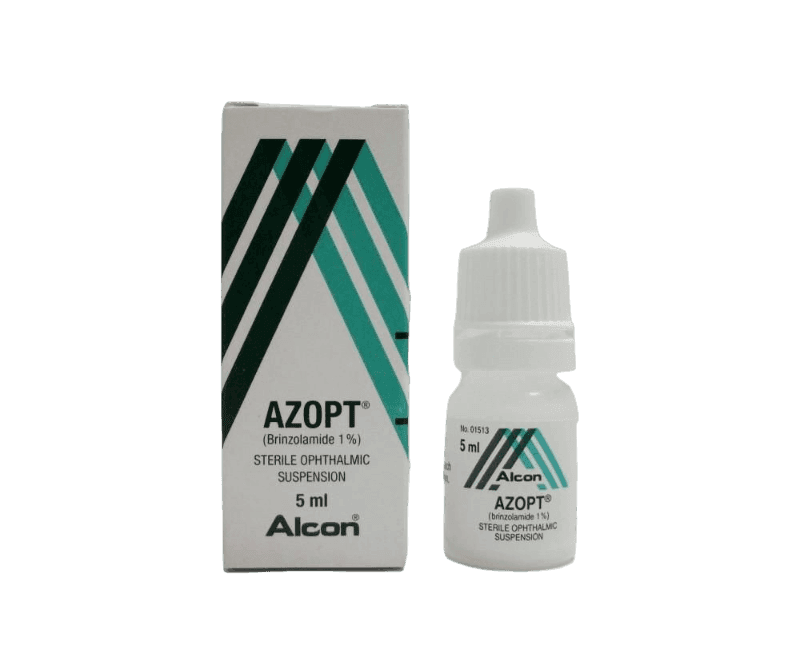
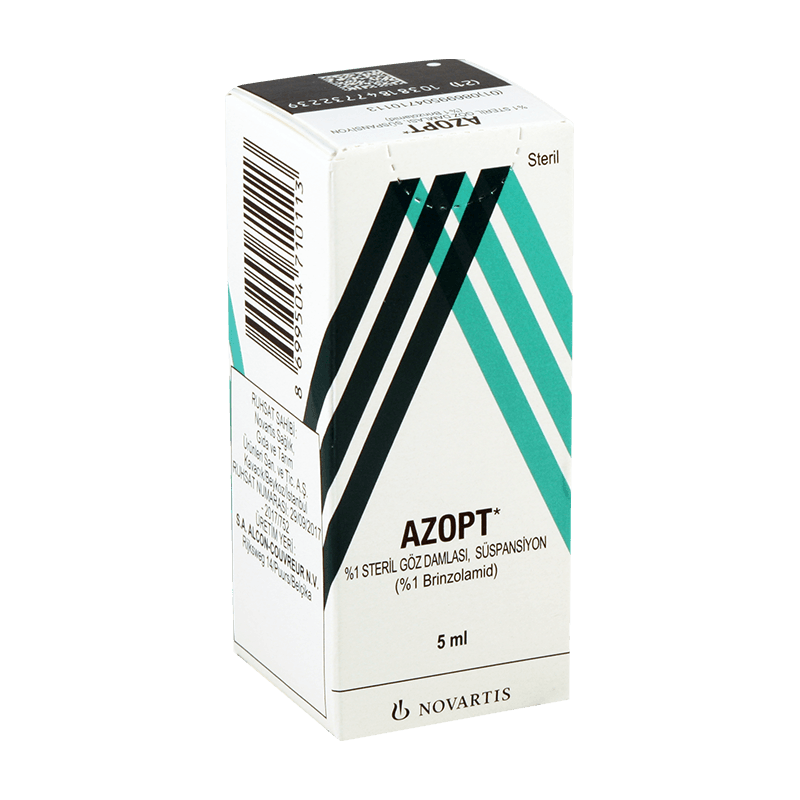
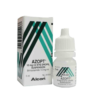


Azopt (brinzolamide 1%) — three-times-daily ophthalmic carbonic anhydrase inhibitor for open-angle glaucoma. Suspension — shake well. Sulfa cross-reactivity caution.
✓ Medically reviewed by Morgan Ellis — Pharmacy Researcher · 8 years experience · Last reviewed: May 2026
⚡ Quick Answer — What is Azopt Eye Drops?
Azopt Eye Drops is Brinzolamide 1%, a carbonic anhydrase inhibitor (CAI) eye drop that lowers eye pressure 18–22% by reducing aqueous humour production. Used three times daily as monotherapy or twice daily as add-on. Avoid in severe sulfa allergy.
📦 Every order is covered by our Reshipment Assurance Policy — if your parcel does not arrive within 20 business days, we reship it.
Why order from MedsBase
Azopt Eye Drops is sourced from a WHO-GMP certified manufacturer and shipped worldwide in plain, discreet packaging. Every order is covered by our Reshipment Assurance Policy — if it has not arrived after 20 business days we reship at no extra cost. Backed by 1,400+ verified customer reviews.
What is Azopt Eye Drops?
Azopt Eye Drops is manufactured by Alcon and contains Brinzolamide 1% as a sterile ophthalmic opaque suspension. It is a topical carbonic anhydrase inhibitor used to lower IOP in glaucoma. Brinzolamide is formulated as a milky-white suspension — shake well before each use. The suspension formulation has a near-neutral pH and tends to sting less than dorzolamide on instillation.
How It Works
Brinzolamide blocks carbonic anhydrase isoenzyme II in the ciliary epithelium, slowing the formation of bicarbonate and the consequent flow of sodium and water into the posterior chamber. The result is reduced aqueous humour production and lower IOP. Topical CAIs reach significant intraocular concentration without the systemic side effects of oral acetazolamide (paraesthesia, kidney stones, taste disturbance).
Indications & Dosing
| Indication | Dose |
|---|---|
| Monotherapy | 1 drop in affected eye(s) three times daily |
| Add-on to a beta-blocker or PGA | 1 drop twice daily |
| If suspension | Shake well before each instillation |
| Multiple drops | Wait 5 minutes between different products |
Side Effects
Local: blurred vision (common with the suspension formulation — blink several times to clear), stinging on instillation (minimal), bitter taste in mouth (drainage through nasolacrimal duct), conjunctival hyperaemia, ocular pruritus, eyelid reactions.
Systemic: headache, fatigue (rare), kidney stones (very rare with topical use, in contrast to oral acetazolamide).
Warnings & Contraindications
- Severe sulfonamide hypersensitivity
- Severe renal impairment (CrCl < 30 mL/min) — accumulation possible
- Severe hepatic impairment
- Concurrent oral CAIs (acetazolamide, methazolamide) — additive but limited extra benefit
- Corneal endothelial dysfunction (Fuchs dystrophy, post-corneal-graft) — CAIs may worsen corneal oedema
- Pregnancy Category C — avoid unless benefit outweighs risk
Storage
Store at 15–25°C. Discard 28 days after first opening. Keep tightly capped between uses.
Frequently Asked Questions
What is the difference between Brinzolamide and acetazolamide?
Both target the same enzyme. Topical Brinzolamide delivers therapeutic levels at the eye with minimal systemic exposure. Oral acetazolamide produces systemic side effects (paraesthesia, taste changes, kidney stones, metabolic acidosis) that often limit long-term use.
Can I use Azopt Eye Drops if I'm allergic to sulfa antibiotics?
If you had Stevens-Johnson syndrome or anaphylaxis to a sulfonamide, avoid topical CAIs. Mild rash with sulfamethoxazole is not an absolute contraindication, but discuss with your ophthalmologist before starting.
Why does Azopt Eye Drops make my mouth taste bitter?
After instillation, the drop drains through the nasolacrimal duct into the throat. Brinzolamide has a recognisable bitter taste. Punctal occlusion (pressing the inner corner of your eye for 1–2 minutes) reduces the effect.
How quickly does Azopt Eye Drops work?
IOP reduction begins within 1 hour of the first dose; steady-state effect at 1–2 weeks. Average reduction is 18–22% from baseline as monotherapy.
Is the blurred vision after instilling Azopt Eye Drops normal?
Yes — brinzolamide is formulated as an opaque suspension, and a few minutes of mild blur after instillation is expected. Blink several times to clear. Avoid driving immediately after dosing.
Can I combine Azopt Eye Drops with other glaucoma drops?
Yes — CAIs are additive with beta-blockers, prostaglandin analogs, and alpha-2 agonists. Wait 5 minutes between different bottles. Fixed combinations such as dorzolamide+timolol exist for adherence.
What if I forget a dose?
Take it as soon as you remember unless the next scheduled dose is close — then skip the missed one. Do not double up.
Can I use Azopt Eye Drops in pregnancy?
Category C. Topical CAIs cross the placenta in small amounts. Avoid unless your ophthalmologist judges the benefit clearly outweighs the risk. Discuss alternatives such as brimonidine or selective laser trabeculoplasty.
Why three times a day instead of twice?
When used as monotherapy, Brinzolamide has an 8-hour duration so three-times-daily dosing maintains 24-hour IOP control. When added to an existing beta-blocker or prostaglandin, twice daily is sufficient because the partner drug provides additional coverage.
What if my eye becomes red or itchy?
Mild conjunctival redness is common in the first 1–2 weeks and usually settles. Persistent redness, swollen lids, or itching may indicate a hypersensitivity reaction — stop the drop and contact your ophthalmologist.
Other Eye-Care Medications
Customers viewing this product also consider these alternatives in our Eye Care range:
- Xalatan Eye Drop (latanoprost)
- Azopt Eye Drops (brinzolamide)
- Alphagan P Drop (brimonidine)
- Iotim Eye Drops (timolol)
- Careprost (bimatoprost)
Medical Disclaimer
The information on this page is for educational purposes only and is not a substitute for medical advice from a qualified ophthalmologist or optometrist. Eye conditions can rapidly threaten sight — sudden vision loss, severe pain, or trauma is an ophthalmology emergency. Always consult an eye-care professional before starting, stopping, or changing any treatment.
More options in Eye Care
Ranked by recent MedsBase order volume — what other customers in this category are picking.
| Strength | 5 ml (Brinzolamide 1%) |
|---|---|
| Quantity | 3 Bottles, 6 Bottles, 12 Bottles, 24 Bottles |
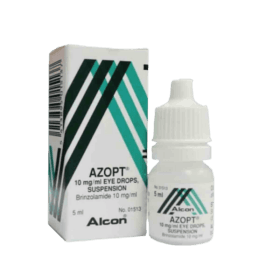 Azopt Eye Drops
Q & A
Azopt Eye Drops
Related products



Reviews
There are no reviews yet