








✓ Medically reviewed by · Last reviewed: May 2026
Pharmacy Researcher · 8 years experience
Pharmacy researcher with 8 years reviewing clinical drug information, generic formulation equivalence, and international pharmaceutical standards. Focuses on patient-facing accuracy in medication education.
hepatitis C treatment — Hepatitis C Treatment — Direct-Acting Antivirals Guide. Read on for an evidence-backed guide covering everything you need to know.
Key Takeaways:
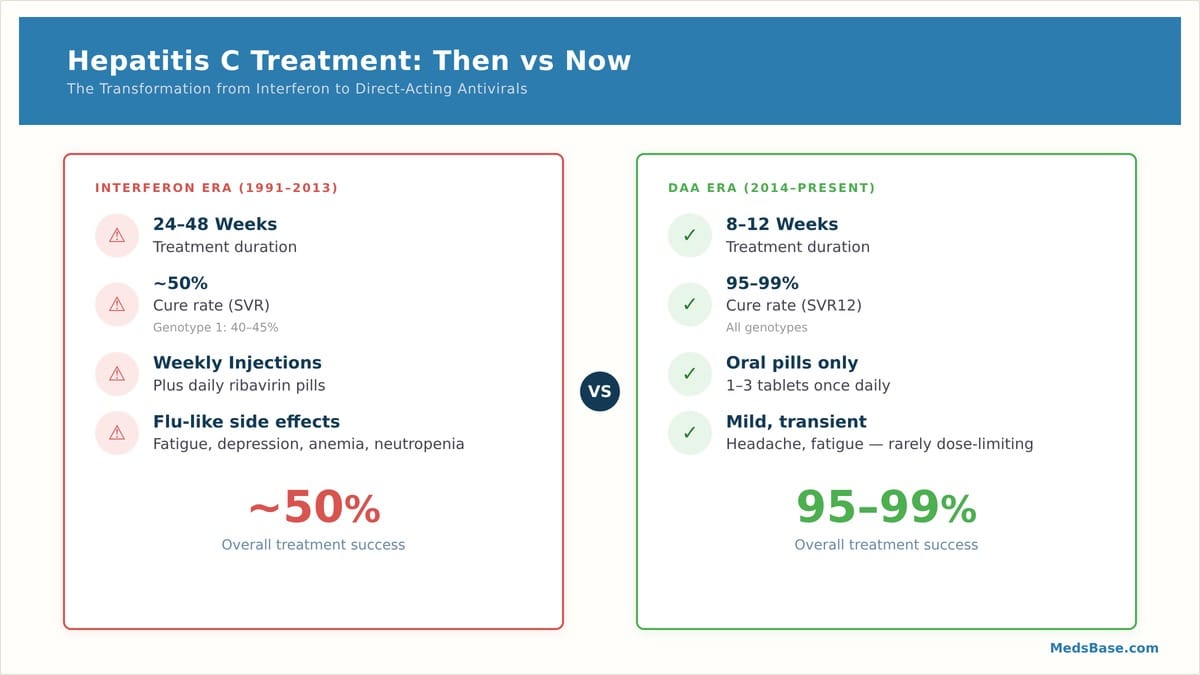
- Hepatitis C treatment now cures 95-99% of patients with oral pills taken for just 8-12 weeks — a transformation from the interferon era when cure rates hovered around 50% with year-long injections
- Direct-acting antivirals (DAAs) target the virus at three specific points in its lifecycle — and the combination locks the door so tightly that resistance barely has a chance
- Your genotype determines which DAA combination is best — but one notable regimen works across all six major genotypes with a single tablet
- Side effects are typically mild (fatigue, headache, nausea) and resolve within days of finishing treatment — nothing like the flu-like misery patients endured with interferon
- Treatment is a one-time course — if you achieve SVR12 (undetectable virus 12 weeks after finishing), you are considered cured, though reinfection is possible through repeat exposure
- The hardest part for many patients isn’t the medication — it’s the cost and access, but generic options have expanded dramatically
Table of Contents:
- What Is Hepatitis C and How Is It Treated Today?
- How Do Direct-Acting Antivirals Cure Hepatitis C?
- Genotype-Specific Hepatitis C Treatment Regimens
- Hepatitis C Treatment Then vs Now — What Changed?
- Side Effects, Safety, and Drug Interactions
- What to Expect During Hepatitis C Treatment
- What Does the Research Say?
- Related Reading
- Frequently Asked Questions
- The Bottom Line
If you were diagnosed with hepatitis C ten years ago, you probably heard two words that sounded more like a prison sentence than a treatment plan: “interferon injections.” Twelve months of weekly shots. Flu-like symptoms that never quite went away. Depression, anemia, hair thinning. And after all that — a coin flip on whether you were actually cured. Today, hepatitis C treatment looks nothing like that. In 2026, the standard of care is 8 to 12 weeks of daily pills, cure rates that exceed 95%, and side effects most people describe as barely noticeable.
This guide walks you through exactly how modern hepatitis C treatment works — which drugs match which genotype, what the treatment journey looks like from diagnosis to cure, what side effects to expect, and how the science got from 50/50 odds to near-certainty in less than a decade.
What Is Hepatitis C and How Is It Treated Today?
Hepatitis C is caused by the hepatitis C virus (HCV), which infects liver cells and uses them as factories to produce more virus. An estimated 58 million people worldwide live with chronic HCV, according to the World Health Organization. The virus is transmitted through blood-to-blood contact — historically through blood transfusions before 1992, shared needles, and inadequately sterilized medical equipment. It is not spread through casual contact, food, water, or breastfeeding.
The infection often produces no symptoms for years or decades, which is why many people discover they have it only through routine blood work — or when liver damage has already begun. The CDC estimates that roughly 40% of people with chronic HCV in the United States are unaware of their infection.
The goal of hepatitis C treatment is simple: sustained virologic response, or SVR. This means no detectable virus in the blood 12 weeks after finishing treatment (SVR12). Achieving SVR12 is functionally equivalent to cure — the virus is gone, liver inflammation begins to heal, and the risk of transmission drops to zero.
How Do Direct-Acting Antivirals Cure Hepatitis C?
The Three Targets
To understand how DAAs work, picture the HCV lifecycle as an assembly line inside a liver cell. The virus enters the cell, releases its genetic material (RNA), and produces a long protein chain that must be cut into functional pieces by an enzyme called NS3/4A protease. Those pieces then assemble into a replication complex driven by NS5B polymerase, which churns out new viral RNA. The NS5A protein coordinates the whole assembly process.
DAAs interrupt this assembly line at three distinct stations:
NS3/4A Protease Inhibitors (drugs ending in “-previr”): These block the enzyme that cuts the viral polyprotein into working parts. No cutting = no functional viral proteins = no replication. Examples: glecaprevir, grazoprevir, voxilaprevir.
NS5A Inhibitors (drugs ending in “-asvir”): NS5A is a multifunctional protein essential for viral RNA replication and assembly of new virus particles. Inhibiting it is like throwing sand in the gears of the entire replication machine. Examples: ledipasvir, velpatasvir, pibrentasvir, elbasvir, daclatasvir.
NS5B Polymerase Inhibitors (drugs ending in “-buvir”): These block the polymerase enzyme that copies the viral RNA — the engine of replication. Examples: sofosbuvir, dasabuvir.
Why Combination Therapy Wins
Modern hepatitis C treatment uses fixed-dose combinations — two or three DAAs in a single daily pill — that hit at least two of these targets simultaneously. This multi-target approach is the reason cure rates jumped from ~50% to >95%. The virus would need to develop resistance mutations at two or three separate targets at the same time — a statistical near-impossibility.
Research Spotlight: The ASTRAL Trials
The ASTRAL program was a series of phase 3 clinical trials that established sofosbuvir/velpatasvir as the first true pangenotypic regimen — one pill for all genotypes. Across ASTRAL-1 (genotypes 1, 2, 4, 5, 6), ASTRAL-2 (genotype 2), and ASTRAL-3 (genotype 3), the combined SVR12 rate was 98.1% after 12 weeks of treatment. For the first time, genotype no longer dictated which treatment a patient received — a single regimen could cover everyone.
Genotype-Specific Hepatitis C Treatment Regimens
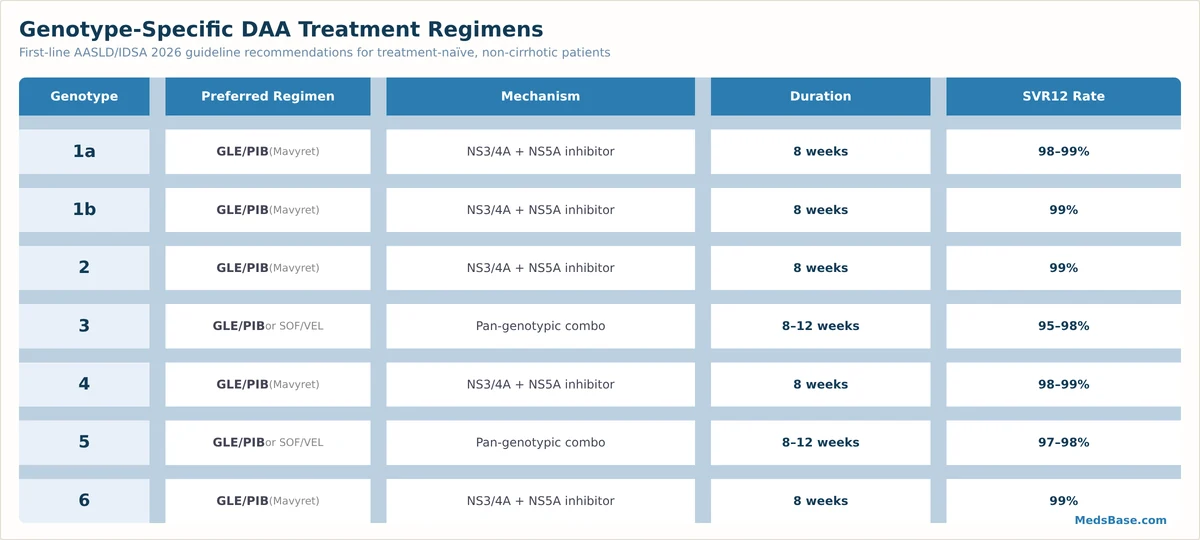
| Genotype | First-Line Regimen | Duration | Expected Cure Rate |
|---|---|---|---|
| Genotype 1 (most common globally) | Ledipasvir/Sofosbuvir OR Elbasvir/Grazoprevir OR Sofosbuvir/Velpatasvir | 8-12 weeks | 96-99% |
| Genotype 2 | Sofosbuvir/Velpatasvir OR Glecaprevir/Pibrentasvir | 8-12 weeks | 97-99% |
| Genotype 3 (historically hardest to treat) | Sofosbuvir/Velpatasvir (12 weeks) OR Glecaprevir/Pibrentasvir (8-16 weeks depending on cirrhosis) | 8-16 weeks | 95-97% |
| Genotype 4 | Sofosbuvir/Velpatasvir OR Glecaprevir/Pibrentasvir OR Elbasvir/Grazoprevir | 8-12 weeks | 96-99% |
| Genotype 5 | Sofosbuvir/Velpatasvir OR Glecaprevir/Pibrentasvir | 8-12 weeks | 97-99% |
| Genotype 6 | Sofosbuvir/Velpatasvir OR Glecaprevir/Pibrentasvir | 8-12 weeks | 97-99% |
What about prior treatment failures? Patients who have failed a previous DAA regimen may need a salvage regimen — typically sofosbuvir/velpatasvir/voxilaprevir (Vosevi) for 12 weeks, which adds a protease inhibitor to cover potential resistance mutations.
What about cirrhosis? Patients with compensated cirrhosis (Child-Pugh A) can usually be treated with the same regimens but may need the longer duration (12 weeks instead of 8). Decompensated cirrhosis (Child-Pugh B or C) requires specialist management and protease inhibitors (like voxilaprevir) are contraindicated.
Hepatitis C Treatment Then vs Now — What Changed?
The transformation in hepatitis C treatment over the past 15 years is one of the most dramatic turnarounds in modern medicine. Here’s how the two eras compare:
| Feature | Interferon Era (pre-2011) | DAA Era (2026) |
|---|---|---|
| Medication type | Injection (weekly) + oral ribavirin | Oral pills (1-3 tablets daily) |
| Duration | 24-48 weeks | 8-12 weeks |
| Cure rate | 40-55% | 95-99% |
| Side effects | Severe: flu-like symptoms, depression, anemia, neutropenia, hair loss, weight loss | Mild: fatigue, headache, nausea — usually resolve after treatment |
| Treatment discontinuation | 10-20% stopped due to side effects | <1% discontinue |
| Genotype coverage | Genotype-specific; some genotypes barely treatable | Pangenotypic regimens available |
| Contraindications | Many: psychiatric illness, autoimmune disease, advanced liver disease, low blood counts | Few: mainly decompensated cirrhosis for protease inhibitors |
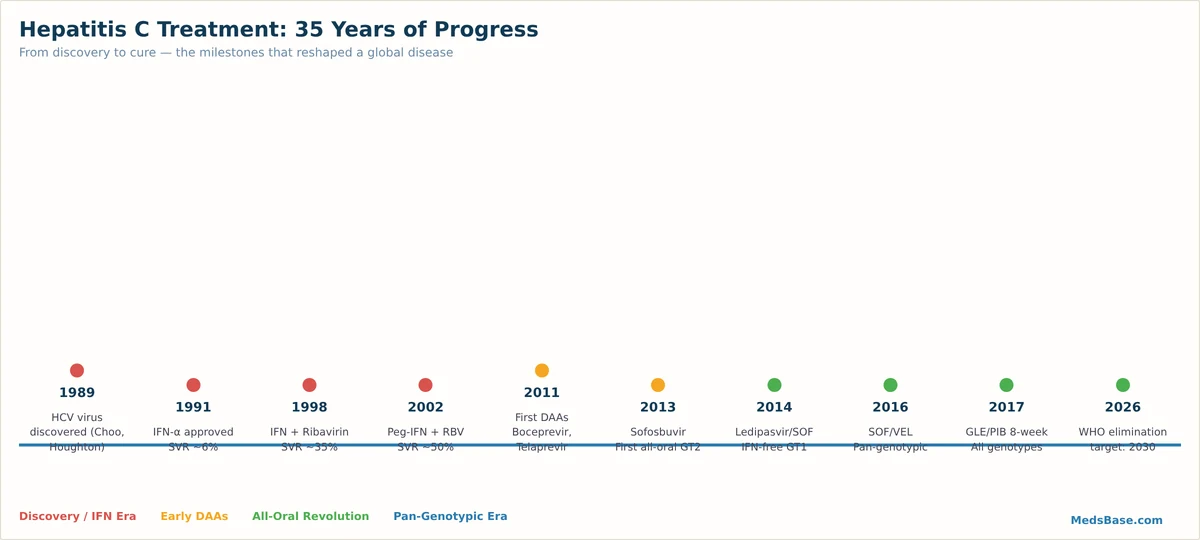
The human cost of the interferon era is hard to overstate. Patients routinely described the treatment as worse than the disease — and many chose to wait, hoping for better options, even knowing their livers were progressively scarring. When sofosbuvir was approved by the FDA in December 2013, hepatologists described it as the moment hepatitis C went from a chronic disease to a curable one. Since then, each new generation of DAAs has pushed treatment shorter, safer, and more accessible.
Side Effects, Safety, and Drug Interactions
Common Side Effects
| Side Effect | Frequency | Severity | What to Do |
|---|---|---|---|
| Fatigue | 15-25% | Mild-moderate | Take medication in the evening if fatigue interferes with daytime activities. Usually improves after week 2. |
| Headache | 10-20% | Mild | Over-the-counter paracetamol is safe. Stay hydrated. |
| Nausea | 5-15% | Mild | Take with food (most regimens recommend this anyway). Ginger tea or small, frequent meals help. |
| Insomnia | 5-10% | Mild | Morning dosing if sleep is affected. Sleep hygiene. |
| Diarrhea | 3-8% | Mild | Usually self-limiting. Stay hydrated. |
| Rash | 1-5% | Mild | Antihistamines if bothersome. Report to clinician if severe or blistering. |
Important Drug Interactions
DAAs interact with several commonly prescribed medications. The most clinically important interactions:
- Acid-reducing medications (PPIs, H2 blockers, antacids): Ledipasvir and velpatasvir require stomach acid for absorption. PPIs (omeprazole, esomeprazole) should be taken at least 4 hours apart from ledipasvir/sofosbuvir. Antacids should be separated by 4 hours. High-dose PPI use may reduce efficacy.
- Amiodarone (heart rhythm medication): Co-administration with sofosbuvir-containing regimens carries a risk of severe bradycardia (slow heart rate). This combination should be avoided if possible; if absolutely necessary, cardiac monitoring is required.
- Statins (cholesterol medications): Atorvastatin and rosuvastatin levels can increase significantly with some DAA regimens, raising the risk of muscle toxicity and rhabdomyolysis. Rosuvastatin dose should not exceed 10mg daily during treatment with most regimens.
- Rifampicin and certain antiepileptics (carbamazepine, phenytoin, phenobarbital): These are strong inducers of the liver enzymes that metabolize DAAs and can reduce DAA levels enough to cause treatment failure.
- St. John’s Wort: Also a strong enzyme inducer — should be discontinued before starting DAA treatment.
Who Should Avoid It? — Contraindications
Modern DAAs have remarkably few absolute contraindications compared to the interferon era. The main ones:
- Decompensated cirrhosis (Child-Pugh B or C): Protease inhibitor-containing regimens (glecaprevir, grazoprevir, voxilaprevir) are contraindicated. Non-protease inhibitor regimens (sofosbuvir/velpatasvir) can be used under specialist supervision.
- Pregnancy: Ribavirin (still used in some combination regimens for genotype 3 or difficult-to-treat cases) is teratogenic and absolutely contraindicated in pregnancy. Women of childbearing potential must use two forms of contraception during and for 6 months after ribavirin-containing treatment.
- Severe renal impairment (eGFR <30): Most DAAs are safe, but sofosbuvir (renally excreted) dosing may need adjustment.
- Prior HBV infection: HBV reactivation has been reported during DAA treatment. All patients should be screened for HBV before starting treatment; those with current or past HBV infection need monitoring.
What to Expect During Hepatitis C Treatment
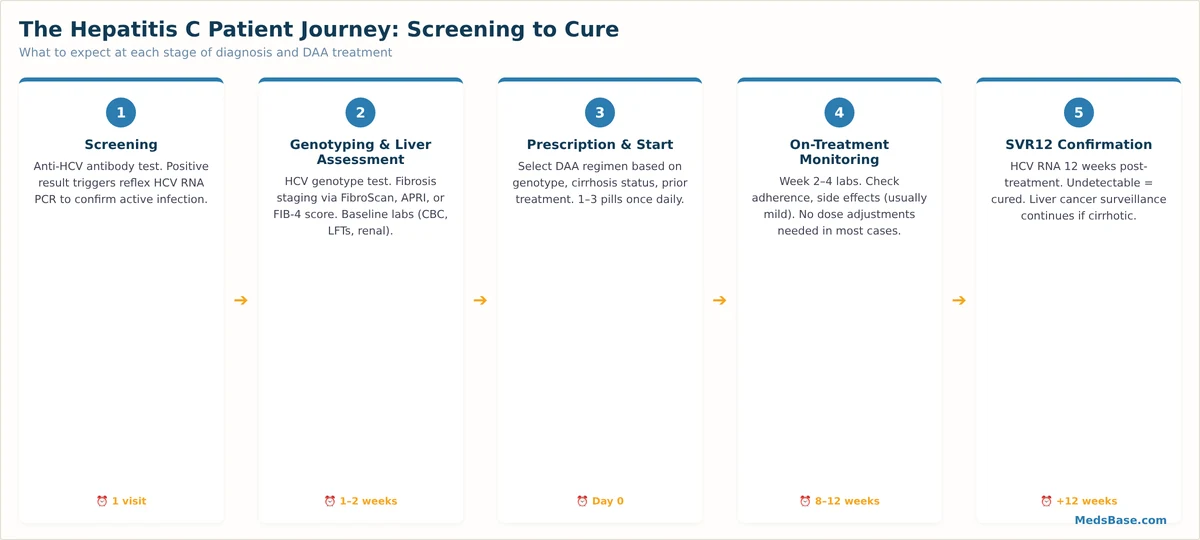
The treatment journey is simpler than most new patients expect. Here is what a typical 12-week course looks like step by step:
Pre-treatment (1-2 weeks before starting): Your doctor orders baseline blood work — HCV RNA (viral load), HCV genotype, liver function tests (ALT, AST, bilirubin, albumin), complete blood count, and a liver fibrosis assessment (FibroScan, FibroSure, or APRI score). You’ll also be screened for HBV, HIV, and kidney function. If you have cirrhosis, an ultrasound to screen for liver cancer may be done. Bring a complete list of all medications and supplements — drug interaction screening is critical.
Week 0 — Day 1: You take your first tablet. Most regimens are one pill once daily, with or without food (check your specific medication). Set a daily alarm — consistent timing helps maintain steady drug levels.
Week 2-4: Viral load is often rechecked at week 4. For many patients, HCV RNA is already undetectable at this point — a strong predictor of eventual cure. Mild side effects (fatigue, headache) typically peak around week 2 and then improve.
Week 8-12: The finish line. If you were prescribed an 8-week course, you’re done. For 12-week courses, you’re in the home stretch. Most patients feel completely normal by this point. Take every dose — even one missed tablet in a short course can theoretically impact cure rates.
Post-treatment — Week 12 (SVR12): The moment of truth — a blood test 12 weeks after your last pill. If HCV RNA is undetectable, you have achieved SVR12 and are considered cured. The virus is gone, liver inflammation begins to subside, and your risk of HCV-related liver cancer drops substantially (though it doesn’t drop to zero if cirrhosis was already present — ongoing surveillance may be needed).
MedsBase stocks hepatitis C medications including sofosbuvir, velpatasvir, daclatasvir, and ledipasvir in generic formulations. Browse the full hepatitis C treatment options.
What Does the Research Say?
| Study | Year | Finding | Source |
|---|---|---|---|
| ASTRAL-1 (Feld et al.) | 2015 | Sofosbuvir/Velpatasvir 12 weeks: 99% SVR12 in genotypes 1,2,4,5,6 (n=624) | New England Journal of Medicine |
| ENDURANCE-1 (Zeuzem et al.) | 2018 | Glecaprevir/Pibrentasvir 8 weeks: 99.1% SVR12 in genotype 1 (n=703) | New England Journal of Medicine |
| POLARIS-2 (Bourlière et al.) | 2017 | Sofosbuvir/Velpatasvir/Voxilaprevir: 96% SVR12 in DAA-experienced patients (n=333) | New England Journal of Medicine |
| Fleming et al. (systematic review) | 2019 | Meta-analysis of 41 studies: pooled SVR12 97.2% across all DAA regimens | Lancet Gastroenterology & Hepatology |
| WHO Global Hepatitis Report | 2025 | 12.7 million people treated with DAAs worldwide 2015-2024; annual HCV-related deaths declining | World Health Organization |
What this means for you: The evidence for DAA efficacy is among the strongest in all of medicine. Cure rates above 95% have been replicated in dozens of randomized trials and real-world cohort studies across every continent, every genotype, and every patient population — including those with HIV co-infection, cirrhosis, and prior treatment failure. If you are eligible for treatment (and almost everyone with chronic HCV is), the odds are overwhelmingly in your favour.
Related Reading
Before the FAQ section, here are three articles that naturally extend what you’ve learned:
- ACE Inhibitor Cough: 7 Proven Facts You Should Know — Managing chronic conditions often means navigating medication side effects. Our companion post today covers one of the most common — and most solvable — drug side effects in cardiovascular medicine.
- HIV Medication: The Complete Guide to Modern Antiretroviral Therapy — HIV/HCV co-infection affects roughly 2.3 million people globally. If you’re managing both, start here.
- How International Online Pharmacies Work — A Practical Guide — If treatment cost is your main concern, this guide covers safe, affordable access routes.
Frequently Asked Questions
Q: Can hepatitis C be cured completely?
A: Yes. Modern hepatitis C treatment with direct-acting antivirals achieves a cure in 95-99% of patients. “Cure” in this context means sustained virologic response (SVR) — no detectable virus in the blood 12 weeks after finishing treatment (SVR12). Once SVR12 is achieved, the virus is gone, it does not come back on its own, and the patient can no longer transmit HCV to others. Reinfection is possible only through repeat exposure to the virus (e.g., continued injection drug use with shared equipment).
Q: How long does hepatitis C treatment take?
A: Most modern hepatitis C treatment courses last 8 to 12 weeks. Uncomplicated cases (no cirrhosis, treatment-naive, favourable genotype) can often be treated in just 8 weeks with glecaprevir/pibrentasvir. More complex cases — cirrhosis, prior treatment failure, genotype 3 — may require 12 to 16 weeks. The era of 48-week interferon courses is over.
Q: What is the best treatment for hepatitis C genotype 1?
A: For genotype 1, the first-line options include ledipasvir/sofosbuvir (Harvoni generic, 8-12 weeks, ~97-99% cure), elbasvir/grazoprevir (Zepatier generic, 12 weeks, ~95-98% cure), and the pangenotypic option sofosbuvir/velpatasvir (Epclusa generic, 12 weeks, ~99% cure). All three are equally appropriate; the choice depends on baseline resistance testing, cirrhosis status, and prior treatment history.
Q: What are the side effects of hepatitis C medication?
A: Modern DAAs cause mild side effects in a minority of patients: fatigue (15-25%), headache (10-20%), nausea (5-15%), and insomnia (5-10%). These are typically most noticeable in the first 1-2 weeks and improve as treatment continues. Unlike interferon-era treatment, DAAs rarely cause depression, anemia, hair loss, or flu-like symptoms. Less than 1% of patients discontinue treatment due to side effects.
Q: Is hepatitis C treatment expensive?
A: Brand-name DAAs in the United States can cost $24,000-$95,000 per treatment course without insurance. However, generic versions of sofosbuvir, velpatasvir, daclatasvir, and ledipasvir — manufactured under voluntary licenses by WHO-GMP-certified manufacturers — are available at a fraction of the brand price. Many international online pharmacies offer these generic options, making treatment accessible to patients without comprehensive insurance coverage. Insurance coverage varies widely by plan and country.
Q: What happens if hepatitis C is left untreated?
A: Chronic hepatitis C left untreated leads to progressive liver damage over 20-30 years. Roughly 15-30% of people with chronic HCV develop cirrhosis within 20 years of infection. Of those with cirrhosis, 1-4% per year develop hepatocellular carcinoma (liver cancer) and 2-5% per year develop decompensated liver disease (ascites, variceal bleeding, encephalopathy). The WHO estimates that HCV causes roughly 290,000 deaths annually, mostly from cirrhosis and liver cancer. Treatment stops this progression — and achieving SVR reduces liver cancer risk by approximately 75%.
Q: Can I drink alcohol during hepatitis C treatment?
A: No — alcohol during hepatitis C treatment is strongly discouraged. Alcohol independently damages the liver, accelerates fibrosis progression, and can reduce treatment efficacy. Most clinicians recommend complete abstinence during the treatment course and for at least 12 weeks after (until SVR12 is confirmed). Chronic heavy alcohol use is also associated with reduced adherence to the daily pill regimen.
Q: Can I transmit hepatitis C during treatment?
A: Once your viral load becomes undetectable (usually by week 4 of treatment), you cannot transmit hepatitis C to others. However, you are not considered cured until SVR12 is confirmed, so standard precautions (not sharing razors, toothbrushes, or injection equipment) should continue until that confirmation. After SVR12, the risk of transmission is zero unless you are re-exposed to the virus.
The Bottom Line
Hepatitis C treatment in 2026 is one of the genuine triumphs of modern medicine — a viral disease that was chronic, progressive, and barely treatable has become curable with 8 to 12 weeks of daily oral pills. The cure rate across all genotypes exceeds 95%, side effects are mild and transient, and the treatment journey is simpler than most patients ever imagined possible.
Your immediate action: if you’ve been diagnosed with hepatitis C and have been waiting — because you heard the interferon horror stories, or because you thought treatment was unaffordable, or because you felt fine and figured you could wait — talk to a doctor about starting treatment. The medications that exist today are not the medications your uncle took in 2005. They are shorter, safer, and dramatically more effective.
Concerned about managing medication side effects? Read our guide to ACE inhibitor cough — a common but solvable drug side effect you can fix in one doctor’s visit. And if you’re weighing treatment options across different conditions, today’s third post compares oral minoxidil vs topical minoxidil for hair loss — how to choose the right formulation.

Written by
Sophie ChenPharmaceutical Content Researcher · 8 years experience
Sophie Chen is a pharmaceutical content researcher with 8 years covering generic medication access and clinical pharmacology. She specialises in international regulatory frameworks, bioequivalence standards, and patient-facing education on therapeutic drug classes. She is not a clinician.