







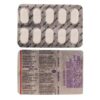
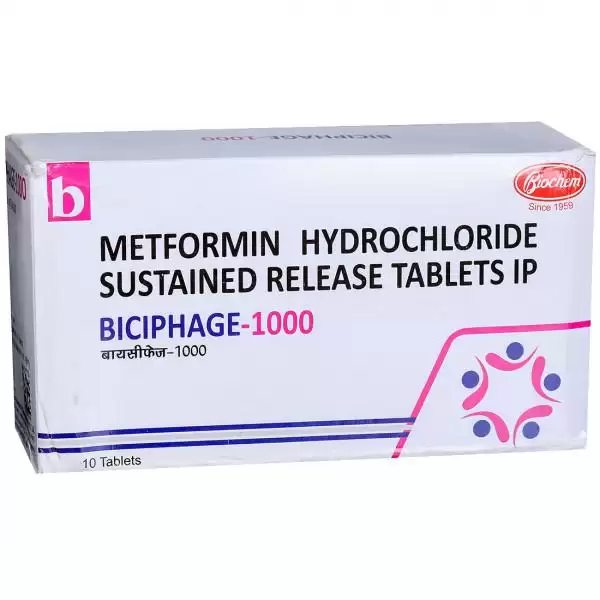
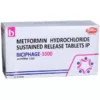
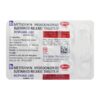
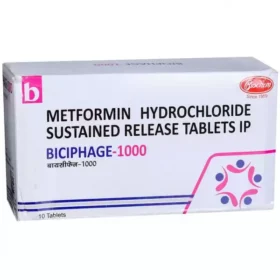
Biciphage 1000 SR
✅ Lowers blood sugar
✅ Manages type 2 diabetes
✅ Supports weight management
✅ Improves insulin sensitivity
✅ Reduces risk of complications
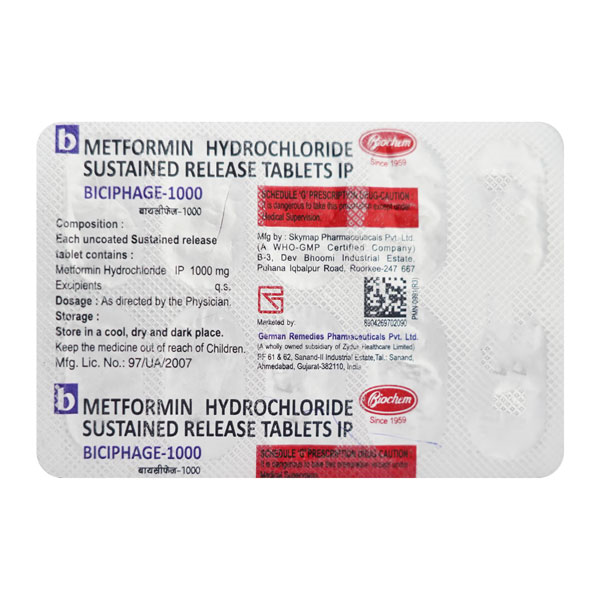
Biciphage 1000 SR contains Metformin.
✓ Medically reviewed by Morgan Ellis — Pharmacy Researcher · 8 years experience · Last reviewed: May 2026
⚡ Quick Answer — What is Biciphage 1000 SR?
Biciphage 1000 SR is a brand of metformin hydrochloride (1000 mg SR), a first-line oral medicine for type 2 diabetes. It works by reducing glucose production in the liver and improving how the body responds to insulin — it does not cause hypoglycaemia on its own and is weight-neutral or modestly weight-reducing. Metformin is the most widely prescribed antidiabetic worldwide, recommended as first-line therapy by ADA, EASD, NICE and IDF guidelines. Also used off-label for polycystic ovary syndrome (PCOS), prediabetes and gestational diabetes. Take with food to reduce GI upset. Most common side effects: diarrhoea, nausea, metallic taste — usually improve after 1–2 weeks or switching to SR. Avoid in eGFR < 30 mL/min/1.73 m²; dose-reduce if eGFR 30–45. Safe long-term; monitor vitamin B12 annually.
📦 Every order is covered by our Reshipment Assurance Policy — if your parcel does not arrive within 20 business days, we reship it.
Why order from MedsBase
Our generic medications are sourced from WHO-GMP certified manufacturers and shipped worldwide in discreet, plain packaging — no medication name on the parcel exterior. Card payments are routed through a regulated processor (statement descriptors include a regulated card-payment processor — never “MedsBase” or any medication name). Crypto and SEPA bank transfer are also accepted. Every order is backed by our Reshipment Assurance Policy.
What Is Biciphage 1000 SR?
Biciphage 1000 SR is an oral antidiabetic medicine containing metformin hydrochloride (1000 mg SR), manufactured by WHO-GMP certified manufacturer. Sustained-release (SR) formulation — releases metformin gradually over 8–10 hours, reducing GI side effects and allowing once-daily dosing. It is prescribed for adults and children 10 years and older with type 2 diabetes mellitus, typically alongside diet and exercise. Available in packs of 30, 60, 90 or 180 tablets.
Metformin belongs to the biguanide class and has been in clinical use since 1957. It is the single most prescribed diabetes medicine in the world and is on the WHO Essential Medicines List.
How Does Biciphage 1000 SR Work?
Metformin has three overlapping mechanisms that together lower blood glucose without causing hypoglycaemia in non-diabetic states:
- Reduces hepatic glucose production — activates AMP-activated protein kinase (AMPK) in the liver and inhibits mitochondrial glycerophosphate dehydrogenase, cutting gluconeogenesis by roughly one third.
- Improves insulin sensitivity — enhances peripheral glucose uptake in muscle and adipose tissue, letting the body use its own insulin more effectively.
- Slows intestinal glucose absorption — modestly reduces the post-meal glucose spike and may favourably alter gut microbiota.
Metformin typically lowers HbA1c by 1.0–1.5 percentage points as monotherapy. It is weight-neutral or results in modest weight loss (2–3 kg on average) and has favourable cardiovascular outcomes (UKPDS, long-term follow-up).
Dosage and Administration
Metformin SR dosing: Usual starting dose is 500 mg once daily with the evening meal. Titrate up in 500 mg increments weekly if tolerated. Maximum dose is 2,000 mg once daily (or split into two doses of 1,000 mg twice daily if GI upset). Always take Biciphage 1000 SR with or immediately after food — this dramatically reduces the risk of nausea and diarrhoea.
- Start low, titrate slowly. The single biggest predictor of long-term tolerability is a gentle up-titration over 4–6 weeks.
- Miss a dose? Skip it and take the next dose at the normal time — do not double up.
- Renal dosing. eGFR > 60: full dose. eGFR 45–60: monitor renal function 3–6 monthly. eGFR 30–45: halve the dose. eGFR < 30: stop metformin.
- Before contrast imaging or surgery. Hold metformin on the day of IV iodinated contrast if eGFR < 60, and for 48 hours after, restarting once renal function is stable.
Side Effects
Metformin is generally well-tolerated. The most common side effects (affecting 10–25% of users, usually in the first 2 weeks) are:
- Diarrhoea, nausea, abdominal cramps
- Metallic taste in the mouth
- Loss of appetite
- Flatulence
These are usually mild and self-limiting. Switching to an SR formulation or taking with larger meals resolves GI symptoms in most cases.
Uncommon but important:
- Vitamin B12 deficiency — long-term metformin (> 4 years) reduces B12 absorption in 6–30% of users. Check serum B12 annually and supplement if low.
- Lactic acidosis — extremely rare (< 10 cases per 100,000 patient-years) but potentially fatal. Almost always occurs in the setting of acute kidney injury, sepsis, severe dehydration, or hypoxia. Hold metformin during any acute illness with dehydration, vomiting, or reduced intake.
Drug Interactions
- IV iodinated contrast media — hold metformin pre- and post-procedure if eGFR < 60.
- Alcohol — heavy drinking raises lactic acidosis risk. Moderate alcohol is generally safe.
- Cationic drugs (cimetidine, dolutegravir, ranolazine) — compete for renal tubular secretion and raise metformin levels.
- Carbonic anhydrase inhibitors (acetazolamide, topiramate) — additive metabolic acidosis risk.
- Insulin and sulfonylureas — additive glucose-lowering; hypoglycaemia becomes a concern when combined.
- Corticosteroids, diuretics, beta-2 agonists — may raise blood glucose; tighter monitoring needed.
Who Should Not Take Biciphage 1000 SR?
- Severe renal impairment (eGFR < 30 mL/min/1.73 m²)
- Acute or decompensated heart failure requiring hospitalisation
- Severe hepatic impairment
- Acute metabolic acidosis, including diabetic ketoacidosis
- Severe acute illness with risk of tissue hypoxia (sepsis, respiratory failure, recent MI)
- Known hypersensitivity to metformin
In pregnancy, metformin is widely used for gestational diabetes and PCOS and has a strong safety record; discuss with your obstetrician. It passes into breast milk in tiny amounts and is generally considered compatible with breastfeeding.
Storage
Store Biciphage 1000 SR below 25°C in a dry place, in the original blister. Keep out of reach of children.
Frequently Asked Questions
Is Biciphage 1000 SR the same as metformin?
Yes. Biciphage 1000 SR contains the same active ingredient (metformin hydrochloride) as the originator brand Glucophage and every other metformin generic. Bioequivalence is required by regulatory authorities, so clinical effect is the same at the same dose.
Will Biciphage 1000 SR help me lose weight?
Metformin produces modest weight loss (typically 2–3 kg over 6–12 months) in people with type 2 diabetes or insulin resistance. It is not a weight-loss drug in non-diabetic adults — effects are small and most studies show weight loss only in those with elevated insulin levels or PCOS.
Can I take Biciphage 1000 SR for PCOS?
Yes — metformin is widely used off-label for polycystic ovary syndrome to improve insulin sensitivity, restore ovulation, and reduce androgen symptoms. Typical dose is 1,500–2,000 mg/day.
Does Biciphage 1000 SR cause hypoglycaemia (low blood sugar)?
Not on its own. Metformin does not stimulate insulin release, so it does not cause hypoglycaemia as monotherapy. Low blood sugar becomes a concern only when metformin is combined with a sulfonylurea, meglitinide, or insulin.
How long does Biciphage 1000 SR take to work?
Fasting glucose usually falls within 1–2 weeks. Maximal HbA1c effect is seen at 2–3 months. If HbA1c has not fallen by 0.5% or more after 3 months at maximum tolerated dose, additional therapy is usually added.
Can I drink alcohol while taking Biciphage 1000 SR?
Moderate alcohol (1–2 drinks per day) is generally safe. Heavy or binge drinking should be avoided — it increases lactic acidosis risk and can cause hypoglycaemia, especially without food.
Where can I buy Biciphage 1000 SR online?
You can order Biciphage 1000 SR (1000 mg SR) from MedsBase in packs of 30, 60, 90 or 180 tablets. We ship worldwide, with discreet packaging and genuine WHO-GMP certified manufacturer stock.
Biciphage 1000 SR users often add a sulfonylurea step-up tablet once metformin monotherapy is no longer controlling HbA1c; for the bundled first-line + step-up regimen see our Diabetes Starter Pack (Glycomet SR 1000 mg + Glycomet-GP) with both tiers shipped together.
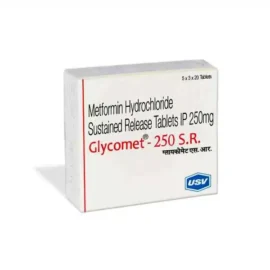
Patients managed on Biciphage 1000 SR who require flexible SR dosing — including 250 mg, 500 mg, or 850 mg strengths — may consider Glycomet SR (metformin hydrochloride 250–1000 mg SR) as a WHO-GMP-certified alternative offering the same extended-release metformin backbone across a broader strength range.
Related Diabetes Medications
- Glycomet SR — Metformin SR 250/500/850/1000 mg
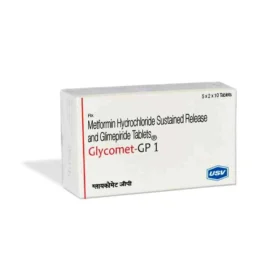
- Glycomet-GP — Metformin + Glimepiride combination
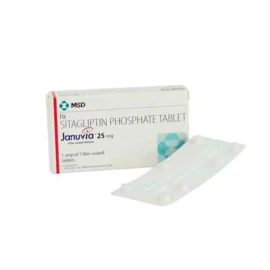
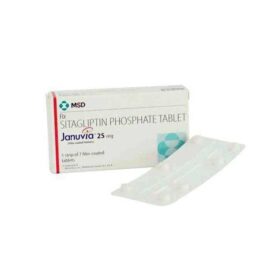
- Januvia — Sitagliptin (DPP-4 inhibitor)
- Jardiance — Empagliflozin (SGLT-2 inhibitor)
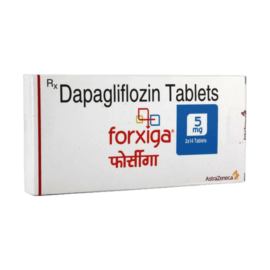
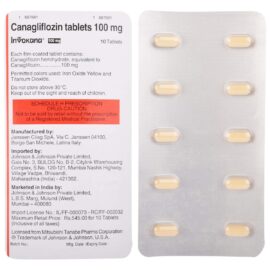
- Forxiga — Dapagliflozin (SGLT-2 inhibitor)
- Amaryl — Glimepiride (sulfonylurea)
- Browse all Diabetes Medications
More options in Diabetes
Ranked by recent MedsBase order volume — what other customers in this category are picking.

| Strength | 1000 mg |
|---|---|
| Quantity | 30 Tablet/s, 60 Tablet/s, 90 Tablet/s, 180 Tablet/s, 360 Tablet/s |
1 review for Biciphage 1000 SR
 Biciphage 1000 SR
Q & A
Biciphage 1000 SR
Related products


This is the place for medical needs.