









Cetislim
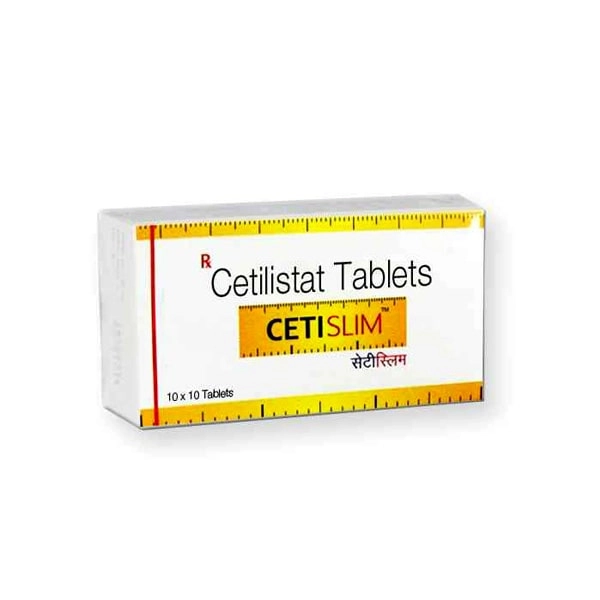
Cetislim (cetilistat 60 mg by Akumentis Healthcare) — newer benzoxazine pancreatic-lipase inhibitor with the same mechanism as orlistat but lower oily-stool side-effect rates in head-to-head trials. Approved India / Japan for adult obesity.
✓ Medically reviewed by Morgan Ellis — Pharmacy Researcher · 8 years experience · Last reviewed: May 2026
Quick Answer
Cetislim contains cetilistat, a benzoxazine pancreatic-lipase inhibitor with the same mechanism as orlistat but a structurally distinct molecule. Approved in India and Japan (not US/EU) for the management of obesity in adults; standard adult dose is 120 mg three times daily with each main meal. Cetilistat’s clinical pitch over orlistat is a lower rate of oily faecal side effects in head-to-head trials at matched lipase inhibition. Stocked at 60 mg.
📦 Discreet packaging
🌍 Worldwide shipping
👥 Trusted by 1,400+ customers — read reviews
📦 Every order is covered by our Reshipment Assurance Policy — if your parcel does not arrive within 20 business days, we reship it.
Why order from MedsBase
Our generic medications are sourced from WHO-GMP certified manufacturers and shipped worldwide in discreet, plain packaging — no medication name on the parcel exterior. Card payments are routed through a regulated processor (statement descriptors include a regulated card-payment processor — never “MedsBase” or any medication name). Crypto and SEPA bank transfer are also accepted. Every order is backed by our Reshipment Assurance Policy.
Why order from MedsBase
MedsBase sources Cetislim directly from Akumentis Healthcare, a WHO-GMP-certified pharmaceutical manufacturer. Cetilistat is approved by India’s CDSCO and by Japan’s PMDA — it is not currently FDA- or EMA-approved, but Indian pharmacopoeia standards apply and the molecule has been on the market in Asia since 2013. Discreet packaging, multiple checkout options (crypto / SEPA / credit card), and our 20-business-day Reshipment Assurance.
How Cetislim works
Cetilistat is a covalent inhibitor of gastric and pancreatic lipase. Like orlistat, it blocks the hydrolysis of triglycerides in the gut lumen, so dietary fat is not broken down into free fatty acids and monoacylglycerols and cannot be absorbed. About 30% of dietary fat is excreted in stool. Systemic absorption is < 1% — the action is entirely luminal, which is why both orlistat and cetilistat have a relatively favourable systemic safety profile compared with centrally-acting weight-loss drugs.
The pharmacological argument for cetilistat over orlistat rests on regional binding selectivity: cetilistat binds with slightly different kinetics that, in head-to-head studies funded by Alizyme/Norgine and a 2014 Indian post-marketing study, produced fewer oily stool / faecal urgency events at matched weight-loss endpoints. Net efficacy is broadly comparable to orlistat 120 mg TID.
Indications and approval status
- India (CDSCO 2013): obesity in adults with BMI ≥ 30, or ≥ 27 with comorbidity, as adjunct to lifestyle change.
- Japan (PMDA 2013): approved for obesity with type 2 diabetes mellitus, dyslipidaemia, or hypertension.
- US / EU / UK: not currently approved — Phase III development paused after Alizyme’s 2008 setback; some formulations have advanced under different sponsors but no marketing authorisation as of 2026.
Comparative pivotal trials in Japanese (Kopelman 2010, Obesity) and Indian (Bansal 2014, Indian J Pharmacol) cohorts showed mean weight loss of 3.85–4.32 kg at 24 weeks on cetilistat 120 mg TID vs 1.86 kg on placebo, broadly equivalent to orlistat 120 mg TID. Cetilistat’s lower rate of oily faecal events is the principal product differentiator.
Dosing
| Indication | Cetislim dose | When |
|---|---|---|
| CDSCO / PMDA-approved adult dose | 120 mg orally TID | With or up to 1 hour after each main meal containing fat |
| Lower-strength Cetislim 60 mg | 60 mg TID (if 60 mg is the only available formulation, two 60 mg tablets per dose to reach 120 mg TID) | As above. Confirm strength on the strip and discuss with your prescriber if unsure |
| Missed meal / fat-free meal | Skip the dose | No benefit if there is no dietary fat to inhibit |
| Multivitamin (mandatory) | Daily dose containing A, D, E, K | At bedtime, ≥ 2 hours separated from any cetilistat dose |
The standard CDSCO-approved cetilistat dose is 120 mg three times daily. If your Cetislim pack supplies 60 mg tablets, the dose is two tablets three times daily with main meals. NICE-style review at 12 weeks: discontinue if weight loss < 5%.
Side effects
- Common: oily/fatty stool, faecal urgency, abdominal pain, flatulence with discharge — lower frequency than orlistat at matched lipase inhibition (head-to-head trial data).
- Uncommon: nausea, headache, raised liver enzymes (transient).
- Rare: hypersensitivity, cholelithiasis, idiosyncratic hepatotoxicity (mechanism class effect — see orlistat literature).
- Long-term: reduced absorption of fat-soluble vitamins A, D, E, K — mandatory bedtime multivitamin.
Drug interactions and contraindications
Drug interactions broadly mirror orlistat — reduced absorption of levothyroxine, ciclosporin, warfarin (vitamin K), anti-epileptics, HIV antiretrovirals, and amiodarone. Pharmacokinetic data on cetilistat-specific interactions are thinner than orlistat’s; treat the orlistat interaction list as a conservative working set.
Contraindications: pregnancy and breastfeeding, chronic malabsorption syndrome, cholestasis, active eating disorder, hypersensitivity, severe hepatic impairment.
Storage
Store Cetislim below 25°C, in the original strip, away from moisture and direct sunlight. Keep out of reach of children.
Frequently Asked Questions
Why isn’t cetilistat approved in the US or EU?
Cetilistat advanced through Phase III trials in 2008 under Alizyme but the original sponsor encountered commercial difficulties before marketing authorisation. Indian (CDSCO 2013) and Japanese (PMDA 2013) regulators approved the molecule based on regional Phase III data. As of 2026 there is no FDA or EMA approval, though the molecule remains in active commercial use across India and Japan with established post-marketing data. Treat cetilistat as a regulatory-region-specific orlistat equivalent — the mechanism is the same.
Is Cetislim more effective than orlistat?
Net weight loss in head-to-head trials is broadly comparable — cetilistat 120 mg TID and orlistat 120 mg TID produce similar 12–24-week weight reduction in obese adults. The cetilistat differentiator is tolerability, not efficacy: lower rates of oily faecal discharge and faecal urgency at matched dose.
Can I switch from orlistat to cetilistat?
Yes — the mechanisms are pharmacologically equivalent, so switching is reasonable when orlistat side effects are intolerable. Stop orlistat and start cetilistat with the next main meal — no washout period is required because both drugs act locally in the gut.
Do I still need to follow a low-fat diet?
Yes. Cetilistat works the same way as orlistat — less than 30% of energy from fat at each main meal is the textbook design. Bingeing on a fat-rich meal still produces a sharp side-effect spike (cetilistat’s tolerability advantage is at moderate fat intake, not at unrestricted intake).
Do I need a multivitamin with cetilistat?
Yes — same rule as orlistat. Take a daily multivitamin containing fat-soluble A, D, E, K at bedtime, separated by ≥ 2 hours from any cetilistat dose.
Can I take cetilistat with diabetes medication?
Yes. Cetilistat is approved in Japan specifically for obesity with type 2 diabetes. As you lose weight your insulin sensitivity will improve and metformin, sulfonylurea, SGLT-2 inhibitor, GLP-1 RA, and insulin doses may need to be reduced. Monitor home glucose weekly for the first month.
Is cetilistat safe in pregnancy or breastfeeding?
No — pregnancy and breastfeeding are contraindications. The fat-soluble vitamin malabsorption mechanism creates the same theoretical fetal/infant risk as orlistat. Stop Cetislim as soon as pregnancy is suspected.
What if cetilistat doesn’t work for me?
NICE-style review at 12 weeks — if weight loss is < 5% of starting weight despite consistent dosing and lifestyle change, discontinue and consider alternatives. Higher-magnitude weight loss generally requires GLP-1 receptor agonists (semaglutide, liraglutide, tirzepatide) or, in severe obesity, bariatric surgery.
Are oily stools a sign cetilistat is working?
Yes — the unabsorbed fat passing through is direct evidence of lipase inhibition. The intensity is dose-dependent on dietary fat content. Mild symptoms after a normal meal mean the drug is working at the expected level. Severe symptoms after every meal usually mean the meals are too high in fat.
How does cetilistat compare with herbal weight-loss supplements?
Cetilistat has Phase III pivotal-trial efficacy data and CDSCO/PMDA approval; herbal supplements (Garcinia cambogia / HCA blends, green tea catechins, conjugated linoleic acid) generally have smaller effect sizes (often statistically significant but clinically modest at < 1 kg over 12 weeks) and weaker safety surveillance. Orlistat and cetilistat are the two evidence-based oral options for medical weight management; herbal adjuncts are best viewed as lifestyle support, not primary therapy.
Other Weight Loss Medications
Medical disclaimer. The information on this page is provided for educational use and should not replace individualised medical advice. Pharmacological weight loss is most effective when combined with structured dietary change and physical activity, and is not appropriate for everyone — pregnancy, breastfeeding, eating disorders, chronic malabsorption, severe psychiatric illness, and uncontrolled cardiovascular disease change the appropriateness of any weight-loss drug. If your BMI is ≥ 40 (or ≥ 35 with significant weight-related comorbidity), discuss bariatric surgery with your GP.
More options in Weight Loss Medication
Ranked by recent MedsBase order volume — what other customers in this category are picking.

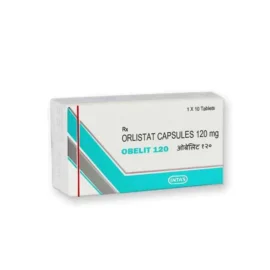
| Strength | 60 mg |
|---|---|
| Quantity | 30 Tablet/s, 60 Tablet/s, 90 Tablet/s |
| Pharma Form | Tablet/s |
| Manufacturer | Akumentis Healthcare |
| Treatment | Obesity |
| Generic Brand | Cetilistat |
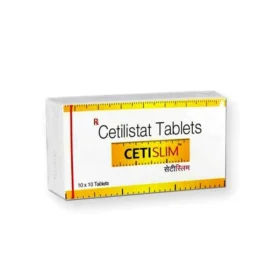 Cetislim
Q & A
Cetislim
Related products


Reviews
There are no reviews yet