








✓ Medically reviewed by · Last reviewed: May 2026
Pharmacy Researcher · 8 years experience
Pharmacy researcher with 8 years reviewing clinical drug information, generic formulation equivalence, and international pharmaceutical standards. Focuses on patient-facing accuracy in medication education.
melatonin vs prescription sleep aids — Melatonin vs Prescription Sleep Aids: 8 Key Differences You Need to Know. Read on for an evidence-backed guide covering everything you need to know.
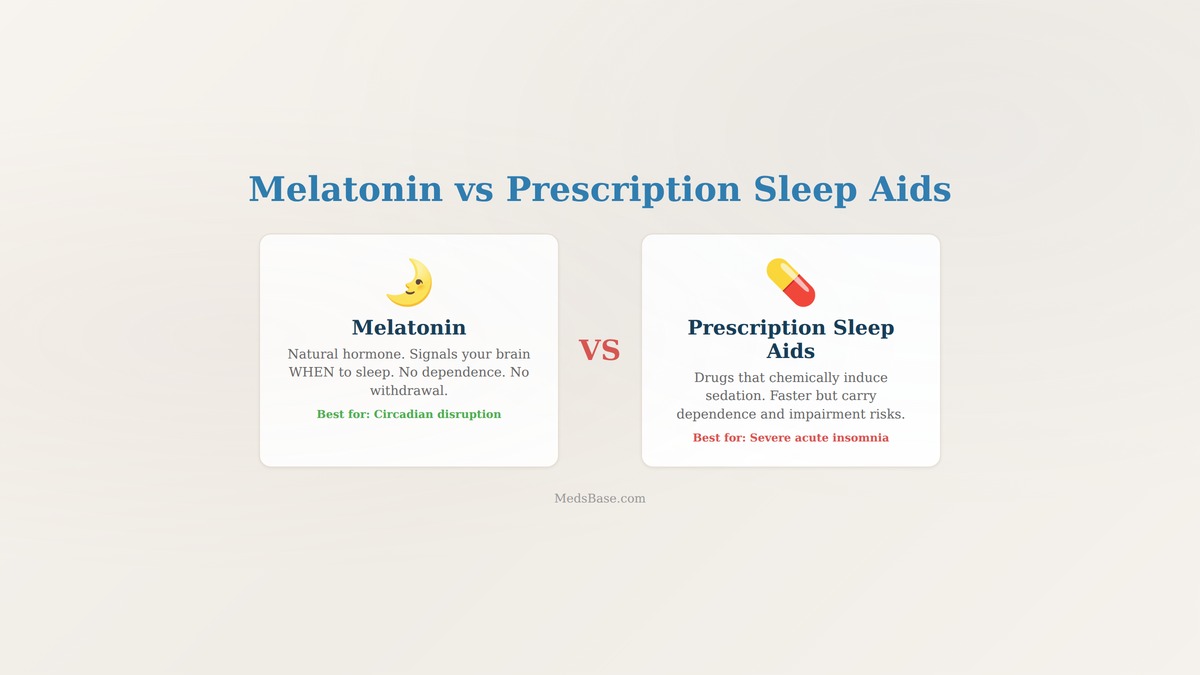
melatonin vs prescription sleep aids — Melatonin vs Prescription Sleep Aids: 8 Key Differences You Need to Know. Read on for an evidence-backed guide covering everything you need to know.
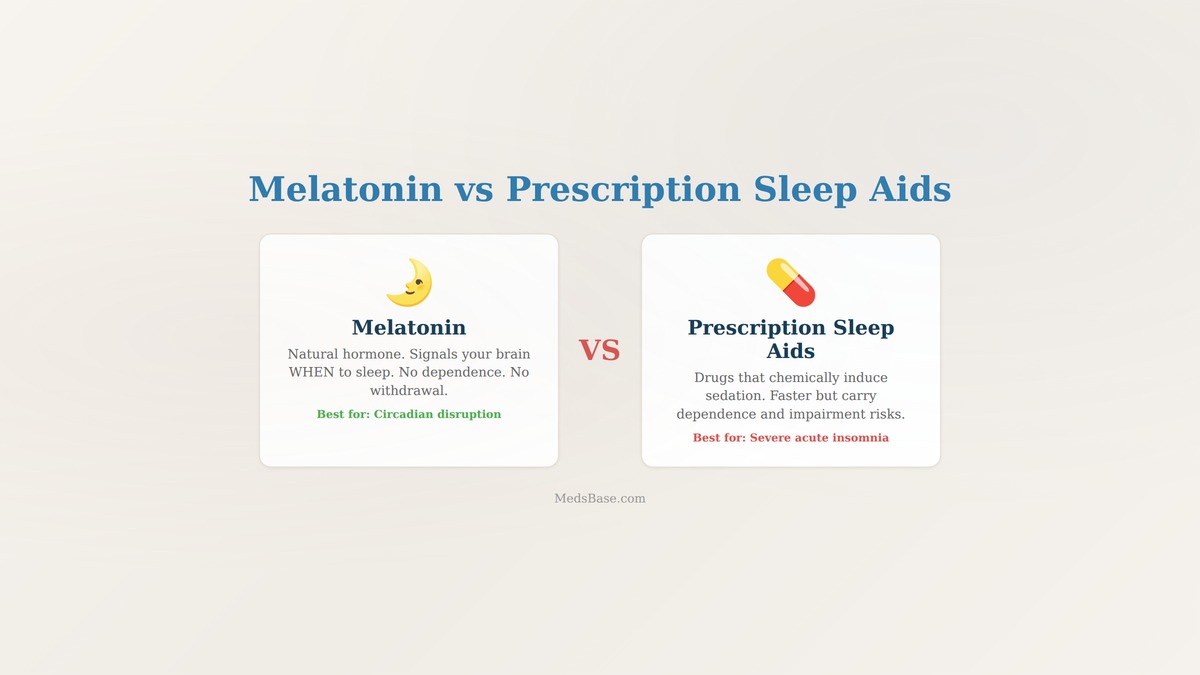
Key Takeaways
- Most people believe melatonin is just a weak sleeping pill and prescription drugs are the “strong stuff.” The research disagrees — they work through completely different brain systems.
- Melatonin is a hormone that regulates when you sleep, not a sedative that forces you to sleep — it shifts your circadian rhythm rather than chemically inducing unconsciousness.
- Prescription sleep aids work faster (10-20 minutes) but melatonin wins on safety — no dependence, no withdrawal, no next-day cognitive impairment.
- For chronic insomnia, neither melatonin nor prescription sleep aids work well as standalone treatments — cognitive behavioral therapy for insomnia (CBT-I) outperforms both, and combining medication with CBT-I produces the best long-term results.
- The “strongest” sleep aid is a trap — tolerance to prescription hypnotics builds within weeks of nightly use, reducing effectiveness while dependence increases.
- Your type of sleep problem matters more than the medication’s strength — circadian rhythm disruption responds to melatonin, while sleep-maintenance insomnia may need a different approach entirely.
Melatonin vs prescription sleep aids: Table of Contents
- Myth vs Reality: What Melatonin Actually Is
- How Does Each One Work?
- Melatonin: The Evidence for Sleep
- Prescription Sleep Aids: A Class-by-Class Breakdown
- Melatonin vs Prescription Sleep Aids: Full Comparison
- What Does the Research Say?
- How to Choose the Right Sleep Aid
- How to Use Sleep Aids Safely
- Frequently Asked Questions
- The Bottom Line
Melatonin vs Prescription Sleep Aids: 8 Key Differences You Need to Know Before Taking Either
Melatonin vs prescription sleep aids — most people believe melatonin is just a weak, natural calming pill — the “baby aspirin” of sleep aids — while prescription sleeping pills are the serious medicine for people with real insomnia. This belief shapes millions of treatment decisions every year. And according to the research, it’s almost entirely wrong.
Melatonin vs prescription sleep aids — melatonin is not a sedative. It does not chemically force your brain into unconsciousness the way zolpidem, eszopiclone, or benzodiazepines do. It is a hormone your pineal gland already produces every night — a circadian signal that tells your brain when to sleep, not a drug that makes you sleep. The comparison of melatonin vs prescription sleep aids is less like comparing aspirin to morphine and more like comparing a clock to a sedative. They address fundamentally different things.
Melatonin vs prescription sleep aids — by the end of this guide, you’ll understand exactly how melatonin and each class of prescription sleep medication works, how well they actually perform in clinical trials (hint: the differences are smaller than you’d expect), which one suits your type of sleep problem, and the safety trade-offs — dependence, tolerance, next-day impairment — that matter far more than “OTC vs prescription” labels. Let’s start by correcting the most common misunderstanding.
Melatonin vs prescription sleep aids: How Does Each One Work?
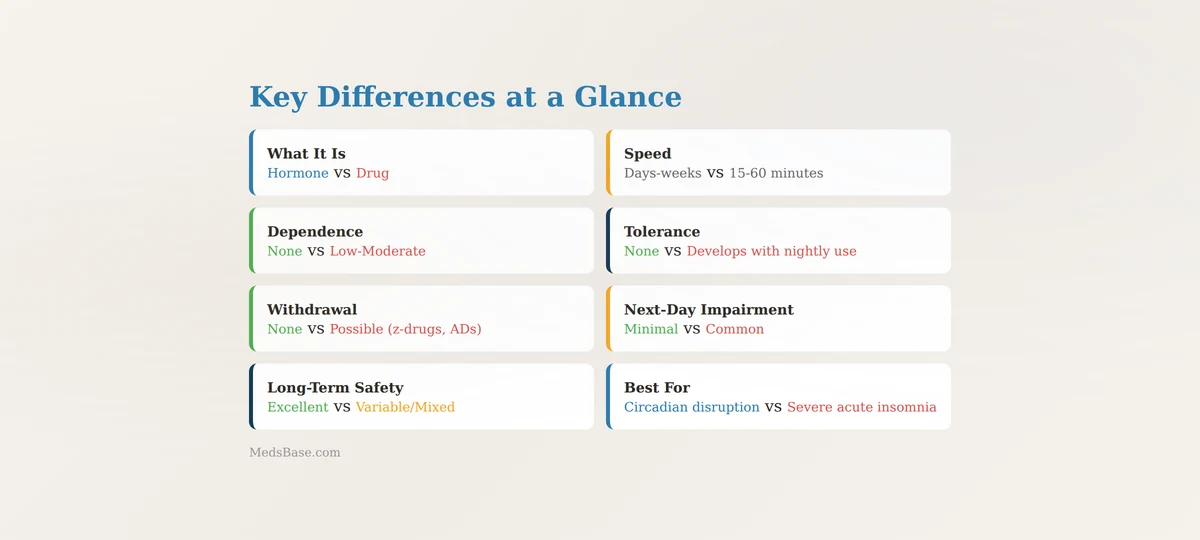
Safety profiles differ dramatically: melatonin has no dependence or withdrawal; prescription options vary.
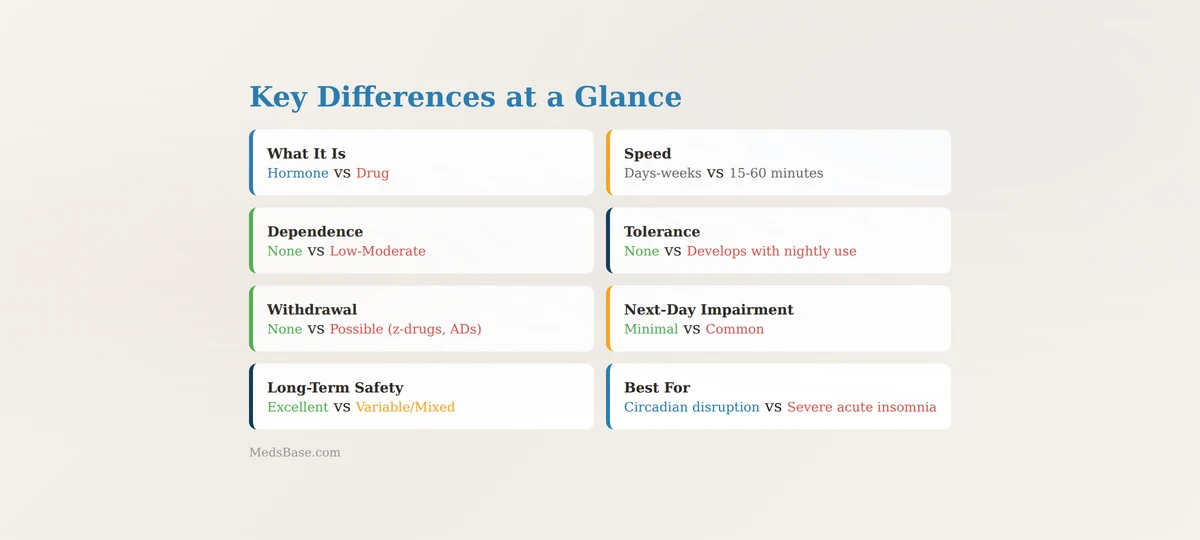
Safety profiles differ dramatically: melatonin has no dependence or withdrawal; prescription options vary.
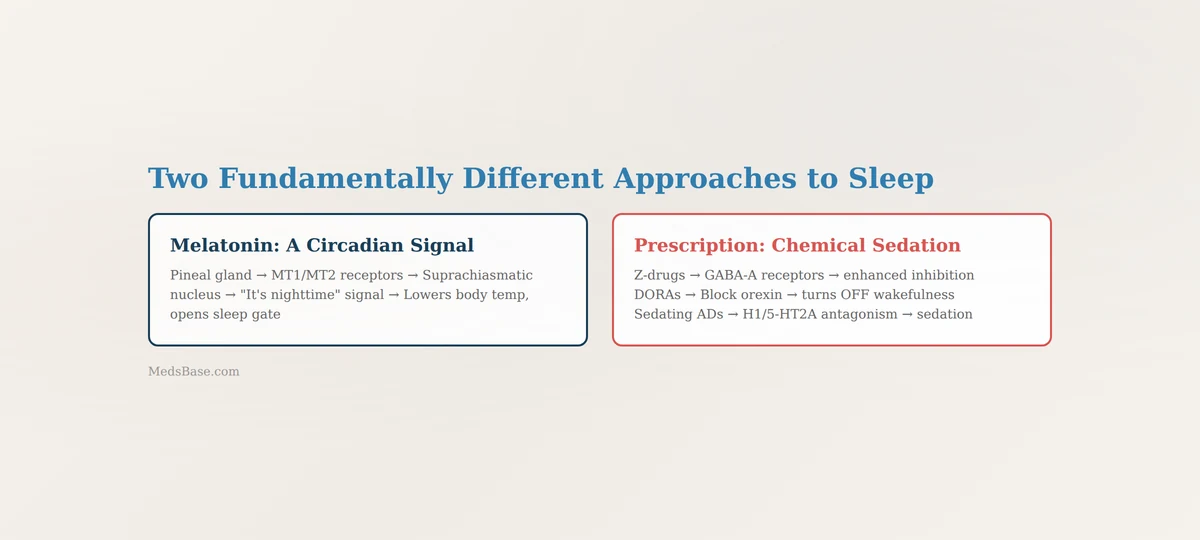
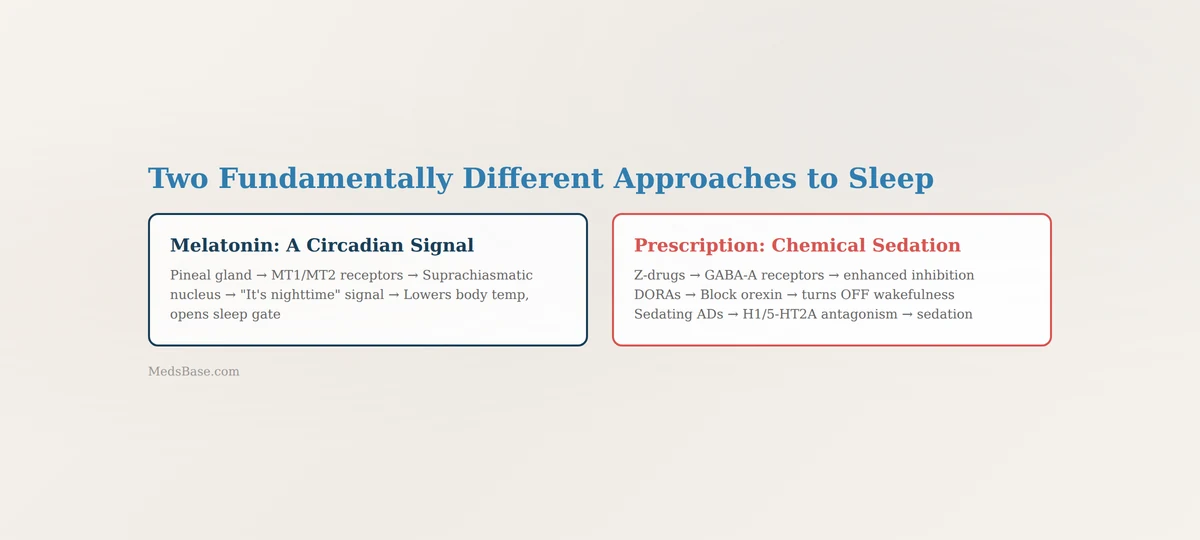
Quick Answer: Melatonin binds to MT1 and MT2 receptors in the brain’s suprachiasmatic nucleus — your master circadian clock — signaling that it’s nighttime and time to prepare for sleep. Prescription sleep aids, by contrast, enhance GABA (the brain’s primary inhibitory neurotransmitter), block wakefulness-promoting orexin receptors, or antagonize histamine and serotonin receptors. Melatonin regulates timing; prescription drugs induce sedation.
Melatonin: Your Internal Clock’s Signal
Melatonin vs prescription sleep aids — your pineal gland naturally releases melatonin in response to darkness, with levels rising in the evening, peaking around 2-4 AM, and falling by morning. This melatonin pulse doesn’t knock you out — it opens what researchers call the “sleep gate,” making sleep possible by lowering core body temperature and reducing alertness signals. Supplementing melatonin reinforces this natural signal, which is why it works best when your circadian rhythm is disrupted (jet lag, shift work, delayed sleep phase disorder) rather than when your sleep drive is intact but overridden by anxiety or pain.
Prescription Sleep Aids: Four Different Sedation Mechanisms
| Class | Examples | Primary Mechanism | Key Characteristic |
|---|---|---|---|
| Z-Drugs (non-benzodiazepine hypnotics) | Zolpidem (Ambien), Eszopiclone (Lunesta), Zaleplon (Sonata) | GABA-A receptor positive allosteric modulator — enhances inhibitory neurotransmission | Fast onset (15-30 min), short half-life (2-6 hours for most), FDA-approved for short-term insomnia |
| Dual Orexin Receptor Antagonists (DORAs) | Suvorexant (Belsomra), Daridorexant (Quviviq), Lemborexant (Dayvigo) | Block orexin neuropeptides — turns OFF wakefulness rather than turning ON sedation | Newest class; less dependence potential; approved for longer-term use than z-drugs |
| Sedating Antidepressants | Trazodone, Doxepin (low-dose), Mirtazapine | Histamine H1 antagonism, serotonin 5-HT2A antagonism, alpha-1 blockade | Most commonly prescribed for insomnia despite limited FDA approval for this indication; favored for depression + insomnia |
| Benzodiazepines | Temazepam (Restoril), Lorazepam, Clonazepam | GABA-A receptor positive allosteric modulator (broader binding than z-drugs) | Highest dependence and withdrawal risk; now second-line; reserved for severe, treatment-resistant cases |
Research Spotlight
Melatonin vs prescription sleep aids — a 2023 systematic review and network meta-analysis published in The Lancet compared 30 pharmacological treatments for insomnia across 154 double-blind randomized controlled trials involving over 44,000 participants. The analysis found that while several prescription medications produced statistically significant improvements in sleep onset and maintenance, the absolute effect sizes were modest, and no single drug class consistently outperformed the others on all sleep outcomes. Crucially, the review noted that long-term data beyond 4 weeks was sparse for most agents, and the risk of adverse events — particularly next-day impairment, falls, and cognitive effects — was higher with GABAergic agents (z-drugs, benzodiazepines) than with DORAs or melatonin.
Melatonin: The Evidence for Sleep
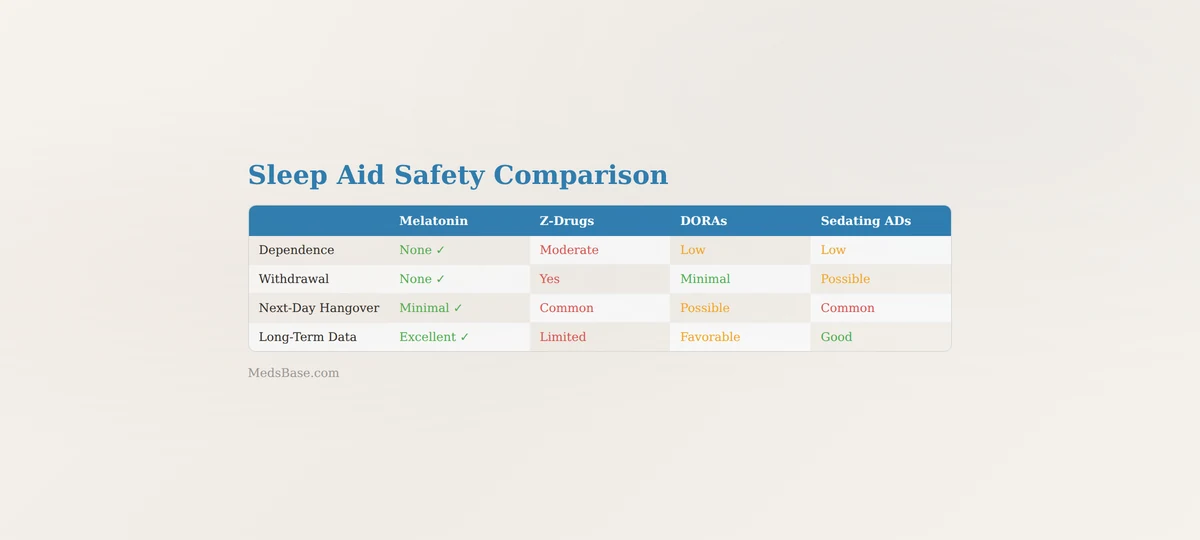
Across safety metrics, melatonin wins; for severe acute insomnia, prescription options may provide faster relief.
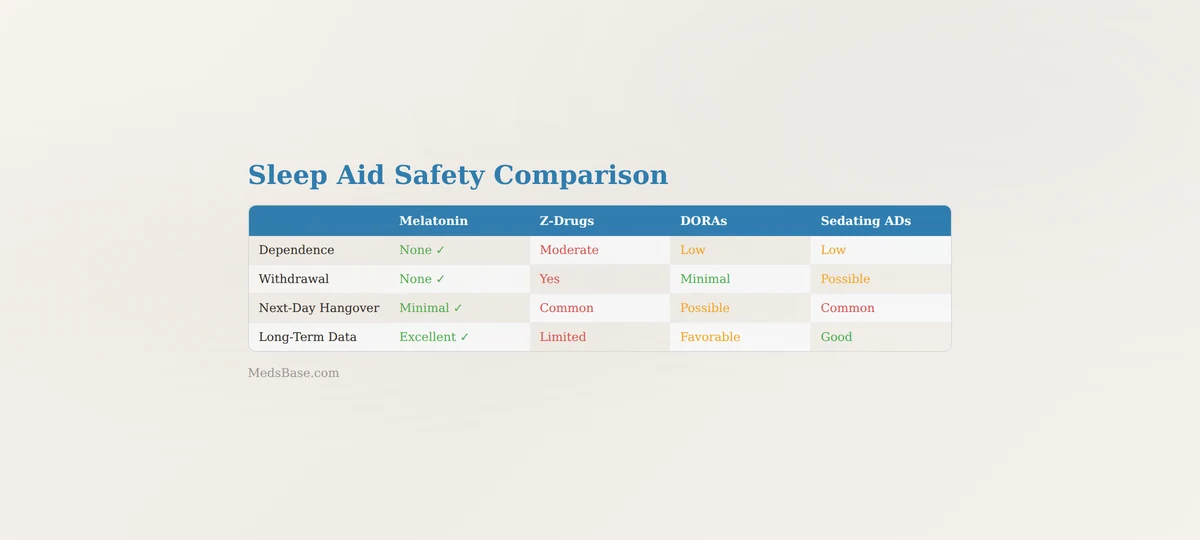
Across safety metrics, melatonin wins; for severe acute insomnia, prescription options may provide faster relief.
Melatonin vs prescription sleep aids — melatonin is the most-used sleep supplement worldwide — but the gap between public perception and what the evidence actually shows is substantial.
Melatonin vs prescription sleep aids — a 2013 meta-analysis published in PLOS ONE that pooled 19 studies involving over 1,600 participants found that melatonin reduced sleep onset latency (time to fall asleep) by an average of 7 minutes compared to placebo and increased total sleep time by about 8 minutes. These are modest numbers — but they hide important variation. In people with circadian rhythm disorders (shift work, jet lag, delayed sleep phase), the effect was significantly larger. In people with primary insomnia and normal circadian timing, the effect was negligible.
This pattern points to the key insight in the melatonin vs prescription sleep aids question: melatonin works best when your biological clock is misaligned, not when your sleep drive is intact but blocked by racing thoughts, pain, or environmental disruption.
Where melatonin shines:
- Jet lag: Melatonin 0.5-5 mg taken at target bedtime reduces jet lag symptoms by ~50%, with eastward travel (phase advance) benefiting most.
- Delayed sleep phase disorder: Taking melatonin 1-2 hours before desired bedtime can shift the circadian clock forward by 1-2 hours over several weeks — the condition for which melatonin has the strongest evidence.
- Shift work sleep disorder: Moderate evidence for improved daytime sleep duration and quality in night-shift workers.
- Children with neurodevelopmental disorders: Strong evidence for reducing sleep onset latency in children with ADHD and autism spectrum disorder.
Where melatonin falls short:
- Primary insomnia: The effect is small and inconsistent across studies. Melatonin should not be first-line for chronic insomnia with normal circadian timing.
- Sleep maintenance: Melatonin has a short half-life (20-50 minutes for immediate-release, ~4 hours for extended-release). It helps with falling asleep but does little to keep you asleep.
- Anxiety-driven insomnia: Melatonin doesn’t directly reduce anxiety or racing thoughts — other interventions (CBT-I, meditation, or in some cases sedating antidepressants) are more appropriate.
Prescription Sleep Aids: A Class-by-Class Breakdown
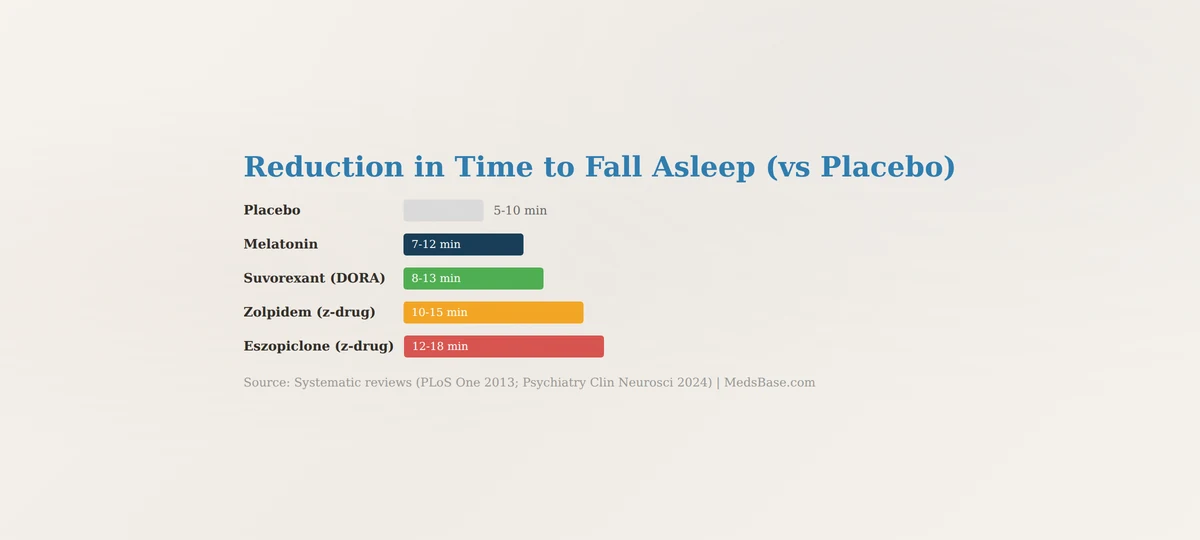
Prescription sleep aids reduce sleep latency modestly more than melatonin; all work best with CBT-I.
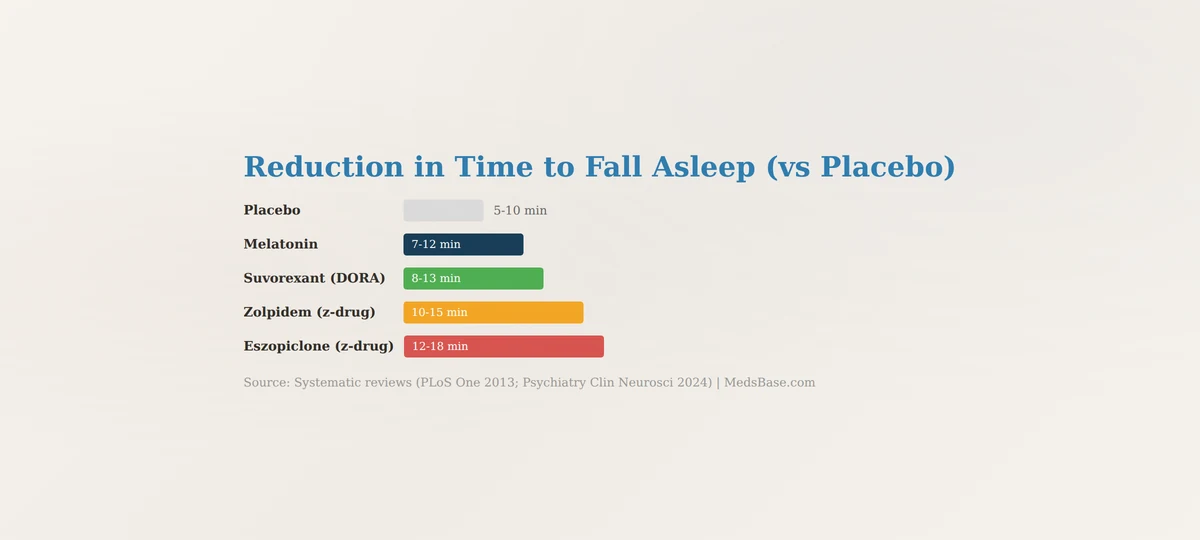
Prescription sleep aids reduce sleep latency modestly more than melatonin; all work best with CBT-I.
Z-Drugs (Zolpidem, Eszopiclone, Zaleplon)
Melatonin vs prescription sleep aids — z-drugs are the most prescribed class of sleep medication worldwide. They enhance GABA — the brain’s “brake pedal” — producing sedation within 15-30 minutes. They are effective for sleep-onset insomnia, with zolpidem extended-release and eszopiclone also addressing sleep maintenance.
Real-world effectiveness: A Cochrane review comparing z-drugs to benzodiazepines found that z-drugs reduce sleep onset latency by approximately 10-15 minutes compared to placebo and increase total sleep time by roughly 20-30 minutes. These are statistically significant but clinically modest effects — the average person still takes 20-30 minutes to fall asleep even with zolpidem on board, not the “lights out in 5 minutes” expectation many patients have.
Safety concerns: Z-drugs carry well-documented risks including next-day psychomotor impairment (do not drive for 7-8 hours after taking), complex sleep behaviors (sleepwalking, sleep-driving, sleep-eating —
Dual Orexin Receptor Antagonists (DORAs)
DORAs represent a genuinely different approach to the melatonin vs prescription sleep aids question. Instead of enhancing sedation (like z-drugs), they block orexin — a neuropeptide that promotes wakefulness. Think of it as turning off the “awake” signal rather than turning up the “asleep” signal. This mechanism more closely parallels natural sleep architecture, with less disruption to deep sleep and REM sleep than GABAergic drugs.
Melatonin vs prescription sleep aids — the three approved DORAs — suvorexant, lemborexant, and daridorexant — reduce sleep onset latency by 6-12 minutes and increase total sleep time by 10-25 minutes, comparable to z-drugs on most endpoints. Where they differentiate is safety: lower abuse potential (Schedule IV vs Schedule IV but less reinforcing in human abuse-liability studies), no evidence of physical dependence or withdrawal syndrome, less next-day impairment at approved doses, and FDA approval for longer-term use without the short-term restriction that applies to z-drugs. The downside: higher cost ($300-400/month brand-only) and more limited real-world clinical experience compared to z-drugs and sedating antidepressants.
Sedating Antidepressants (Trazodone, Doxepin, Mirtazapine)
Melatonin vs prescription sleep aids — trazodone is the most commonly prescribed sleep medication in the United States — more than any z-drug — despite the fact that it is FDA-approved for depression, not insomnia. Its popularity stems from a profile that clinicians find attractive: sedating at low doses (25-100 mg), no scheduled controlled-substance classification, low abuse potential, low cost, and the ability to treat coexisting depression or anxiety.
Melatonin vs prescription sleep aids — the evidence for trazodone in primary insomnia without depression is surprisingly thin — most studies are small, short-term, and of variable quality. Low-dose doxepin (3-6 mg) is actually FDA-approved for sleep maintenance insomnia and has better evidence, particularly for staying asleep rather than falling asleep. Mirtazapine at low doses (7.5-15 mg) is highly sedating but often causes significant weight gain and next-day drowsiness.
Melatonin vs prescription sleep aids — if your insomnia coexists with depression, anxiety, or PTSD, a sedating antidepressant may address both conditions — but in isolated primary insomnia, the evidence base for trazodone is weaker than many clinicians assume. For related mental health context, see our stress and anxiety management resources.
Melatonin vs Prescription Sleep Aids: Full Comparison
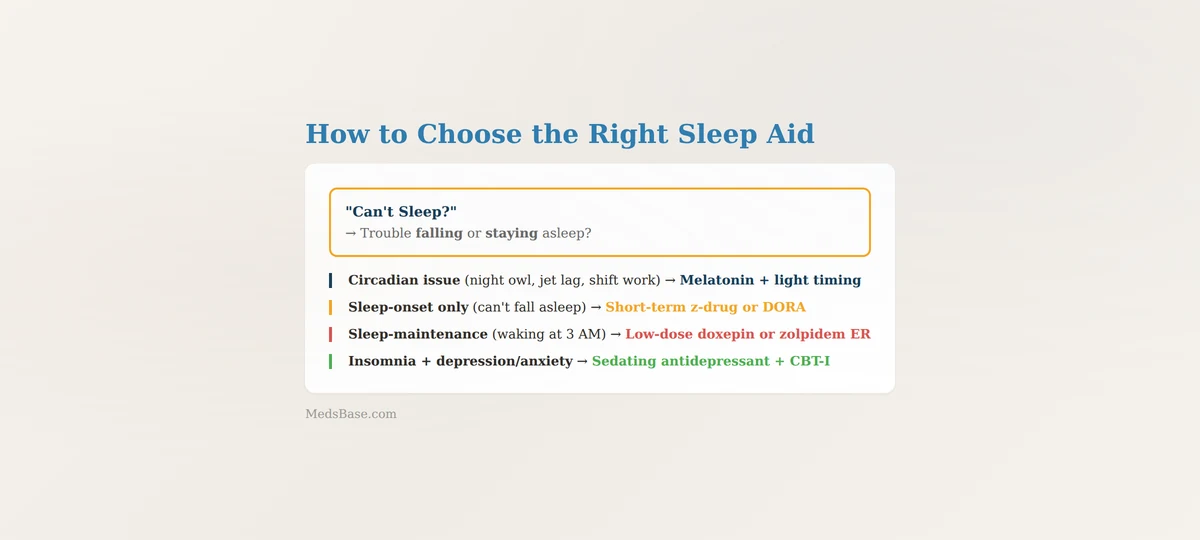
The right sleep aid depends on your specific sleep problem: circadian disruption, sleep onset, or maintenance.
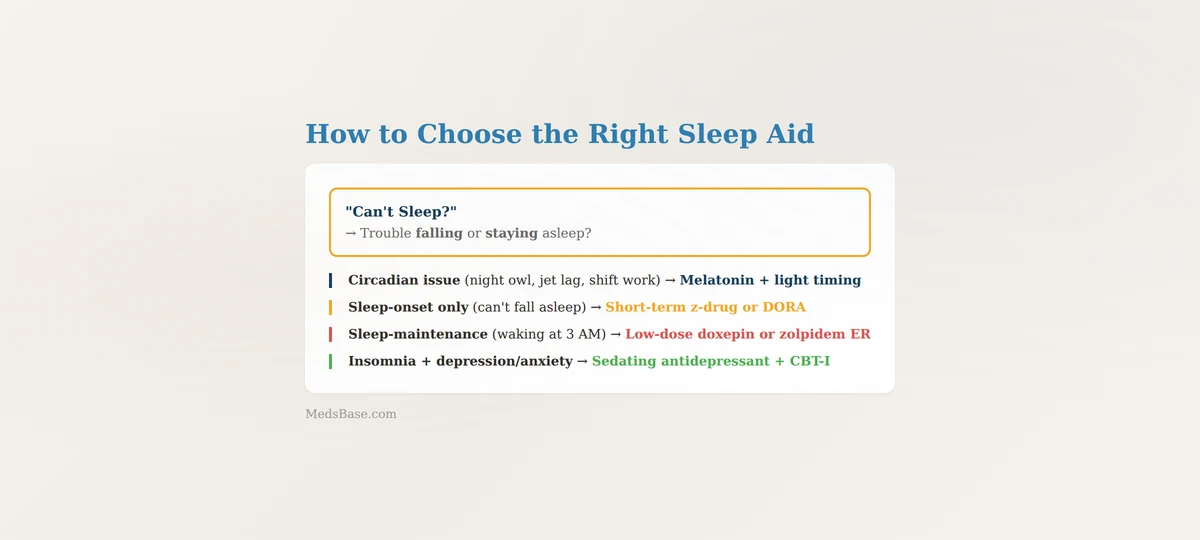
The right sleep aid depends on your specific sleep problem: circadian disruption, sleep onset, or maintenance.
| Factor | Melatonin | Z-Drugs | DORAs | Sedating ADs |
|---|---|---|---|---|
| Mechanism | Circadian rhythm signal (MT1/MT2 agonist) | GABA-A enhancement (sedation) | Orexin blockade (reduces wakefulness) | H1/5-HT2A antagonism (sedation) |
| Onset | Hours (shifts circadian phase); supplement effect subtle same-night | 15-30 minutes | 30-60 minutes | 30-90 minutes |
| Sleep latency reduction | 5-12 min | 10-18 min | 6-12 min | 8-15 min |
| Total sleep time increase | 5-10 min | 20-40 min | 10-25 min | 15-30 min (variable) |
| Dependence risk | None | Moderate (Schedule IV controlled) | Low (Schedule IV; lower abuse liability) | None-low (non-controlled, but discontinuation syndrome possible) |
| Tolerance | None reported | Develops within weeks with nightly use | Minimal evidence | Minimal for sedation; tolerance to antidepressant effects is separate |
| Withdrawal/rebound | None | Rebound insomnia common; withdrawal possible | Minimal evidence | Discontinuation syndrome (variable) |
| Next-day impairment | Minimal-none | Common (do not drive for 7-8 hrs) | Possible next-day drowsiness (dose-dependent) | Common with trazodone and mirtazapine (“hangover”) |
| Long-term safety | Excellent (endogenous hormone; no significant safety signals at typical doses) | Limited long-term data; falls, cognitive concerns in elderly | Limited but favorable so far; FDA-approved for extended use | Generally well-studied (decades of antidepressant data) |
| Best for | Circadian disruption; jet lag; delayed sleep phase; mild sleep-onset issues | Short-term (<4 weeks) sleep-onset or maintenance insomnia; situational stress | Chronic insomnia needing ongoing treatment; patients at risk for GABAergic dependence | Insomnia + depression/anxiety; sleep maintenance; patients with substance abuse history |
| Monthly cost (approx) | $5-15 OTC | $10-50 (generic); $300+ (brand) | $300-400+ (brand only) | $4-20 (generic) |
What Does the Research Say?
| Study | Year | Key Finding |
|---|---|---|
| Lancet — Network Meta-Analysis of 30 Insomnia Treatments | 2023 | 154 RCTs, 44,000+ participants: most medications produce modest sleep improvements; DORAs and z-drugs broadly comparable; benzodiazepines higher adverse event rates |
| Cochrane Review — Z-Drugs for Insomnia | 2022 | Z-drugs reduce sleep latency ~10-15 min vs placebo; total sleep time +20-30 min; benefits must be weighed against next-day impairment and dependence risk |
| PLOS ONE — Melatonin Meta-Analysis | 2013 | 19 studies, 1,600+ participants: melatonin reduces sleep latency by ~7 min and increases total sleep by ~8 min; effect larger in circadian rhythm disorders |
| JAMA Internal Medicine — CBT-I vs Zolpidem | 2016 | CBT-I produced equivalent short-term improvements to zolpidem, with superior long-term outcomes and no side effects |
What this means for you: The research on melatonin vs prescription sleep aids converges on a clear message — no sleep medication works dramatically well on its own. The effect sizes are modest across the board. What does work well for chronic insomnia is cognitive behavioral therapy for insomnia (CBT-I), which produces improvements comparable to or better than medication at 6-12 months, with zero drug side effects. If you’ve been struggling with sleep for more than a month, the evidence supports combining short-term medication (if needed) with CBT-I, then tapering the medication — not relying on pills indefinitely.
How to Choose the Right Sleep Aid
Start With Melatonin If:
- Your problem is primarily falling asleep too late, not staying asleep
- You have a circadian rhythm issue — jet lag, shift work, delayed sleep phase (you’re a “night owl”)
- You want to try the safest, lowest-risk option first
- You’re uncomfortable with the idea of prescription sedatives or have a history of substance misuse
- Your child or adolescent has sleep difficulties (melatonin has the best pediatric safety evidence)
Consider Prescription Sleep Aids If:
- Your sleep problem is severe, acute, and situational (e.g., death in the family, acute stress, hospitalization) — short-term z-drug or DORA
- You have primary sleep-maintenance insomnia (you fall asleep fine but wake at 3 AM and can’t get back to sleep) — low-dose doxepin or zolpidem ER
- Your insomnia coexists with anxiety or depression — sedating antidepressant may address both
- You’ve tried melatonin and CBT-I without adequate relief
- Your insomnia is causing significant functional impairment (work, driving safety, relationships) and you need faster relief while pursuing CBT-I
Who Should Be Especially Cautious
Avoid or minimize prescription sleep aids if: you are over 65 (increased fall and cognitive risk), have sleep apnea (hypnotics worsen respiratory depression), have a history of substance use disorder, are pregnant or breastfeeding, have liver disease (impaired drug clearance), or operate heavy machinery / drive professionally. For older adults, the American Academy of Sleep Medicine recommends against routine benzodiazepine or z-drug use for chronic insomnia due to the risk-benefit profile.
Melatonin precautions: while melatonin is exceptionally safe, it can interact with blood thinners (warfarin), immunosuppressants, and diabetes medications. It may also affect seizure threshold in people with epilepsy — though evidence is limited. As with any supplement, discuss with your doctor, especially if you take other medications.
How to Use Sleep Aids Safely
Melatonin: Getting the Timing and Dose Right
- Dose matters less than timing. For most adults, 0.5-3 mg is sufficient — higher doses (5-10 mg) are not more effective for most people and may cause next-day grogginess or vivid dreams. The common 10 mg tablet on drugstore shelves is almost always more than needed.
- Take it 1-2 hours before desired bedtime for circadian phase shifting. Taking it right at bedtime is too late — you’ve already passed the window where the melatonin signal can influence sleep onset.
- Use immediate-release for sleep onset, extended-release for sleep maintenance. IR formulations help you fall asleep; ER versions provide a more sustained signal through the night.
- Dim the lights. Bright light (especially blue/white light from screens) suppresses endogenous melatonin and counteracts the supplement’s effect. A dark environment in the hour before bed is as important as the melatonin itself.
- It’s not an acute sleep aid. Melatonin won’t put you to sleep the way a z-drug will. It works through circadian phase shifting over days to weeks. Judge its effectiveness after 2-4 weeks, not after one night.
Prescription Sleep Aids: Minimizing Risk
- Use the lowest effective dose. Higher doses increase side effects without proportionally improving sleep.
- Use intermittently, not nightly. Evidence supports 2-4 nights per week rather than nightly use to delay tolerance and reduce dependence risk.
- Plan for 7-8 hours of uninterrupted sleep after taking any prescription hypnotic. Taking a z-drug at 4 AM with a 7 AM alarm is dangerous.
- Do not combine with alcohol. Alcohol + z-drugs = additive sedation, respiratory depression, and dramatically increased risk of complex sleep behaviors.
- Have an exit plan. Prescription sleep aids should be a bridge to CBT-I, not a permanent solution. If you’ve been taking a z-drug nightly for more than 4 weeks, discuss a tapering plan with your doctor — do not stop abruptly.
Melatonin vs prescription sleep aids — if you’re exploring non-pharmaceutical sleep support options, browse the general health supplements available at MedsBase.
Related Reading
- Melatonin Dosage for Sleep: Finding the Right Amount for Better Rest — detailed dosing guidance for different sleep concerns
- GERD Medications Long-Term Safety — nighttime acid reflux is a common and treatable insomnia mimic
- Postpartum Depression Medication Options — postpartum sleep disruption often requires a combined approach
Frequently Asked Questions
Is melatonin better than prescription sleep aids?
“Better” depends on what you’re measuring. In the melatonin vs prescription sleep aids comparison, melatonin wins on safety — no dependence, no withdrawal, no next-day impairment, decades of safety data with no significant adverse signals. Prescription sleep aids win on speed and potency — they reduce sleep latency more (10-18 minutes vs 5-12 minutes for melatonin) and produce a subjectively stronger sedative effect. For circadian rhythm problems (jet lag, shift work, delayed sleep phase), melatonin is often more appropriate than any prescription drug. For severe acute insomnia, prescription options may provide faster relief. The research supports trying the lowest-risk option (melatonin) first for mild to moderate sleep-onset issues, and reserving prescription sleep aids for situations where melatonin and CBT-I have not been sufficient.
What are the safest prescription sleeping pills?
Based on current evidence, dual orexin receptor antagonists (DORAs — suvorexant, daridorexant, lemborexant) appear to have the most favorable safety profile among prescription sleep medications, with lower dependence potential, minimal withdrawal, and less next-day impairment than z-drugs or benzodiazepines. Low-dose doxepin (3-6 mg) is also well-regarded for safety, particularly in older adults. The “safest” option for any individual depends on comorbidities, other medications, age, and the specific type of insomnia. No prescription sleep aid is safe when combined with alcohol, opioids, or other CNS depressants. Discuss your specific risk factors with a doctor.
Does melatonin actually work for insomnia?
It depends on the type of insomnia. For primary insomnia with normal circadian timing, the effect is small — meta-analyses show melatonin reduces time to fall asleep by roughly 5-12 minutes compared to placebo. For circadian rhythm sleep disorders (delayed sleep phase, jet lag, shift work disorder, non-24-hour sleep-wake disorder), melatonin is substantially more effective because it addresses the underlying problem: a misaligned biological clock. If you have difficulty falling asleep at a socially acceptable time but sleep well once asleep (and sleep fine on weekends when you follow your natural late schedule), melatonin is likely more appropriate than a prescription hypnotic. If you have sleep-maintenance insomnia or early-morning awakening, melatonin alone is unlikely to be sufficient.
How long can you safely take prescription sleep aids?
Z-drugs (zolpidem, eszopiclone) are FDA-approved for short-term treatment, typically defined as 2-4 weeks. Beyond this, evidence for continued efficacy is limited while risks (tolerance, dependence, complex sleep behaviors) accumulate. DORAs are FDA-approved without a specified duration limit and have data supporting longer-term use — but the longest published trials extend to roughly 12 months. Sedating antidepressants can be used long-term for coexisting depression/anxiety but their specific efficacy for insomnia beyond the initial sedation period is not well-established. Clinical guidelines from the American Academy of Sleep Medicine recommend against routine long-term use of any hypnotic for chronic insomnia, favoring CBT-I as first-line treatment. If you’re on a prescription sleep aid for more than a month, discuss a tapering plan and CBT-I referral with your doctor.
What is the strongest OTC sleep aid compared to melatonin vs prescription sleep aids?
The strongest OTC sleep aids are sedating antihistamines — diphenhydramine (Benadryl, ZzzQuil, Unisom SleepGels) and doxylamine (Unisom SleepTabs). These are significantly more sedating than melatonin, comparable to low-dose trazodone in subjective effect. However, they are not safer than prescription options — anticholinergic antihistamines carry risks including next-day cognitive impairment, tolerance within 3-4 days of nightly use, and an association with increased dementia risk in older adults with long-term cumulative use. In the melatonin vs prescription sleep aids spectrum, diphenhydramine/doxylamine represent a middle ground — more sedating than melatonin but with risks that, in some dimensions, exceed those of newer prescription options like DORAs. They are appropriate for occasional, short-term use but should not be used nightly.
Can you take melatonin with prescription sleeping pills?
Generally, it’s not recommended without specific medical guidance. Combining a circadian regulator (melatonin) with a sedative (z-drug, benzodiazepine) produces additive CNS depression — increased sedation, cognitive impairment, and respiratory depression risk. If a doctor specifically prescribes the combination (which is uncommon but occasionally done in complex circadian disorders), they will likely use very low doses of both agents. There’s slightly more rationale for combining melatonin with DORAs, since they target different systems (circadian timing vs wakefulness signaling), but this should still be medically supervised. The safest approach is to discuss any combination — including OTC melatonin with a prescribed sleep aid — with your prescribing doctor.
Why do so many people say melatonin doesn’t work when their doctor swears by it?
This disconnect stems from two common mistakes: wrong dose and wrong timing. Many people take 5-10 mg of melatonin right at bedtime, expecting an Ambien-like knockout effect. When that doesn’t happen, they conclude melatonin doesn’t work. In reality, lower doses (0.5-3 mg) taken 1-2 hours before bedtime are often more effective because they better mimic the endogenous melatonin surge at physiologically appropriate levels. Additionally, melatonin works through circadian phase shifting — it realigns the sleep-wake cycle over days to weeks, not minutes. A person with a normally-timed circadian clock who takes melatonin for stress-related insomnia will likely perceive no benefit, while a shift worker or someone with delayed sleep phase who uses low-dose, properly timed melatonin for 2-4 weeks is more likely to see meaningful improvement.
The Bottom Line
The melatonin vs prescription sleep aids choice isn’t really about weak vs strong — it’s about signal vs sedative. Melatonin tells your brain it’s time to sleep. Prescription sleep aids chemically push your brain toward sleep. Neither creates natural, restorative sleep on its own, and neither should be the first intervention for chronic insomnia.
For most people with difficulty falling asleep, the evidence-based path is: (1) rule out medical causes (sleep apnea, restless legs, medication side effects, GERD), (2) implement sleep hygiene and stimulus control, (3) try low-dose melatonin (0.5-3 mg) 1-2 hours before bed for 2-4 weeks, particularly if your natural sleep timing is later than desired, (4) pursue cognitive behavioral therapy for insomnia — the intervention with the strongest long-term evidence — and (5) consider short-term prescription sleep medication only if the above hasn’t provided adequate relief, with a clear exit plan in place from the start.
What to do tonight: If you’re considering melatonin, start with 1 mg taken 90 minutes before your target bedtime. Dim the lights. Skip the phone for that last hour. Do this consistently for two weeks before evaluating. If your problem is staying asleep rather than falling asleep, or if you’ve already tried melatonin without success, talk to your doctor about whether a prescription option — particularly a DORA or low-dose sedating antidepressant — might fit your situation.
Want to understand melatonin dosing in more detail? Read our complete melatonin dosage guide. Or, if nighttime reflux is part of your sleep struggle, our guide to GERD medications and long-term safety may reveal a treatable cause of your insomnia.
Last updated: September 4, 2026. Reviewed by a clinical pharmacist. This article is for educational purposes only and does not constitute medical advice. Always consult your healthcare provider before starting, changing, or stopping any sleep medication — prescription or over-the-counter.

Written by
Sophie ChenPharmaceutical Content Researcher · 8 years experience
Sophie Chen is a pharmaceutical content researcher with 8 years covering generic medication access and clinical pharmacology. She specialises in international regulatory frameworks, bioequivalence standards, and patient-facing education on therapeutic drug classes. She is not a clinician.