








✓ Medically reviewed by · Last reviewed: May 2026
Pharmacy Researcher · 8 years experience
Pharmacy researcher with 8 years reviewing clinical drug information, generic formulation equivalence, and international pharmaceutical standards. Focuses on patient-facing accuracy in medication education.
Here’s a number that reframes the whole experience: in a 2026 analysis of 101 clinical trials covering more than 41,000 people, nausea was the single most common reason patients discontinued a GLP-1 medication — ahead of vomiting and diarrhea. Not lack of results. Not cost. A stomach that wouldn’t settle.
That matters because most of that nausea is manageable. If you’re feeling queasy on Ozempic and wondering whether to push through or quit, this guide gives you the mechanism, the timing, and eight evidence-based ways to calm your stomach — plus the honest line on when nausea stops being “normal” and becomes a reason to call your doctor (we’ll resolve that in the “when to stop” section).
One thing to hold onto from the start: for most people, Ozempic nausea is a phase, not a permanent state. Let’s make that phase as short and mild as possible.
- Nausea isn’t random — it peaks at one predictable point in your treatment, and knowing when changes how you handle it.
- The mechanism behind the queasiness is also the mechanism behind the results — which is why quitting isn’t the only answer.
- A handful of food swaps settle most cases, but one common eating habit makes it dramatically worse.
- Slowing your dose increase can cut nausea without sacrificing weight loss or blood-sugar control, according to 2026 research.
- A small number of symptoms are red flags — we’ll name the exact ones that mean “call your doctor now.”
What Is Ozempic Nausea?
Ozempic nausea is the queasy, over-full, sometimes “food-averse” feeling many people get when taking semaglutide, the active ingredient in Ozempic. It ranges from a mild “I don’t really want dinner” sensation to genuine nausea and, less often, vomiting.
It belongs to a family of GLP-1 side effects — the digestive symptoms that come with all GLP-1 receptor agonists. Nausea leads the pack, followed by vomiting, diarrhea, and constipation. For most people it’s an early, temporary companion rather than a lasting problem.
The key insight? This isn’t your body rejecting the medication. It’s your digestive system adjusting to a drug that deliberately changes how your stomach works. Understand that, and the fixes start to make sense.
Why Does Ozempic Cause Nausea?
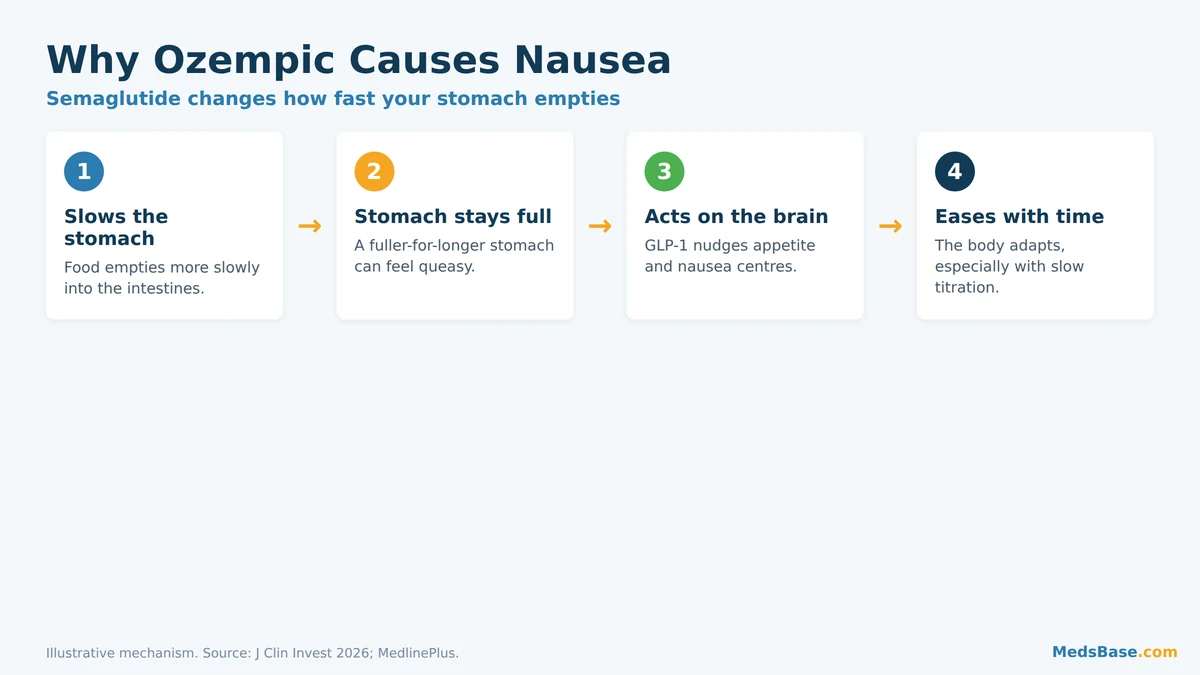
Picture your stomach as a sink with the drain partly closed. Normally, food empties into your intestines at a steady pace. Semaglutide slows gastric emptying — it half-closes that drain, so food lingers longer. That lingering is what makes you feel full sooner and eat less (the point of the drug), but a stomach that stays full longer can also feel queasy.
There’s a second layer. GLP-1 receptors aren’t only in your gut — they’re in the brain regions that regulate appetite and nausea. So semaglutide sends a “you’re full” signal and, as a side effect, can nudge the same circuitry that produces the “you feel sick” signal.
That’s the whole reason nausea has a predictable rhythm. The faster your dose climbs, the harder your stomach has to work to keep up — which is exactly why timing is your biggest lever, as you’ll see next.
Who Gets Nausea Worst — and Who Should Avoid GLP-1s
Ozempic is prescribed for type 2 diabetes, and semaglutide is widely used for weight management. Whatever the reason you’re taking it, nausea risk tends to be higher if you increase your dose quickly, eat large or rich meals, or are simply more sensitive to the drug. Some people breeze through; others need a gentler ramp.
If you’re exploring options in this class, you can browse weight-loss medication options to see how different GLP-1s and formulations compare — but the “who should avoid it” half of the picture matters just as much.
Nausea Timing, Severity & the Red Flags
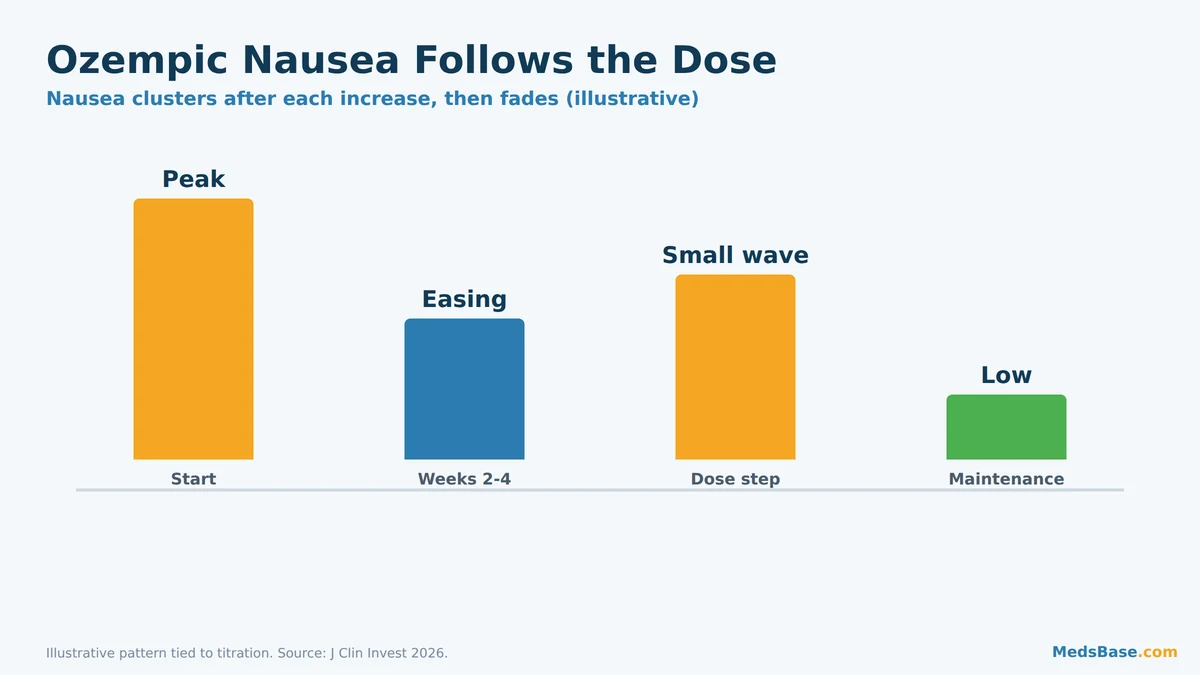
Here’s the pattern that changes everything: Ozempic nausea clusters in the days right after you start and after each dose increase, then settles as your body adapts. It’s not a slow, steady worsening — it’s a series of bumps that flatten out.
For most people, nausea is mild to moderate and short-lived. The problem cases usually involve ramping up too fast or eating through the queasiness with large meals.
| Symptom | How common | Severity | What to do |
|---|---|---|---|
| Mild nausea / early fullness | Very common | Mild | Smaller meals, hydration; usually eases in days |
| Nausea after a dose increase | Common | Mild–moderate | Expected; consider a slower ramp with your doctor |
| Occasional vomiting | Less common | Moderate | Hydrate; if repeated, call your prescriber |
| Constipation or diarrhea | Common | Mild–moderate | Fibre, fluids, movement |
| Severe, persistent abdominal pain (esp. radiating to the back) | Rare | Serious — possible pancreatitis | Stop and seek urgent care |
| Signs of dehydration or inability to keep fluids down | Rare | Serious | Seek medical care |
One bolded takeaway: everyday nausea is a tolerability issue you can manage; severe abdominal pain or relentless vomiting is a medical issue you should never push through. Per MedlinePlus semaglutide guidance, report side effects that are severe or don’t go away.
That resolves the red-flag loop — now let’s look at what the newest evidence says about how common these symptoms really are.
What Does the Research Say?
The 2025–2026 evidence gives us hard numbers instead of anecdotes.
| Study | Year | Key finding | Source |
|---|---|---|---|
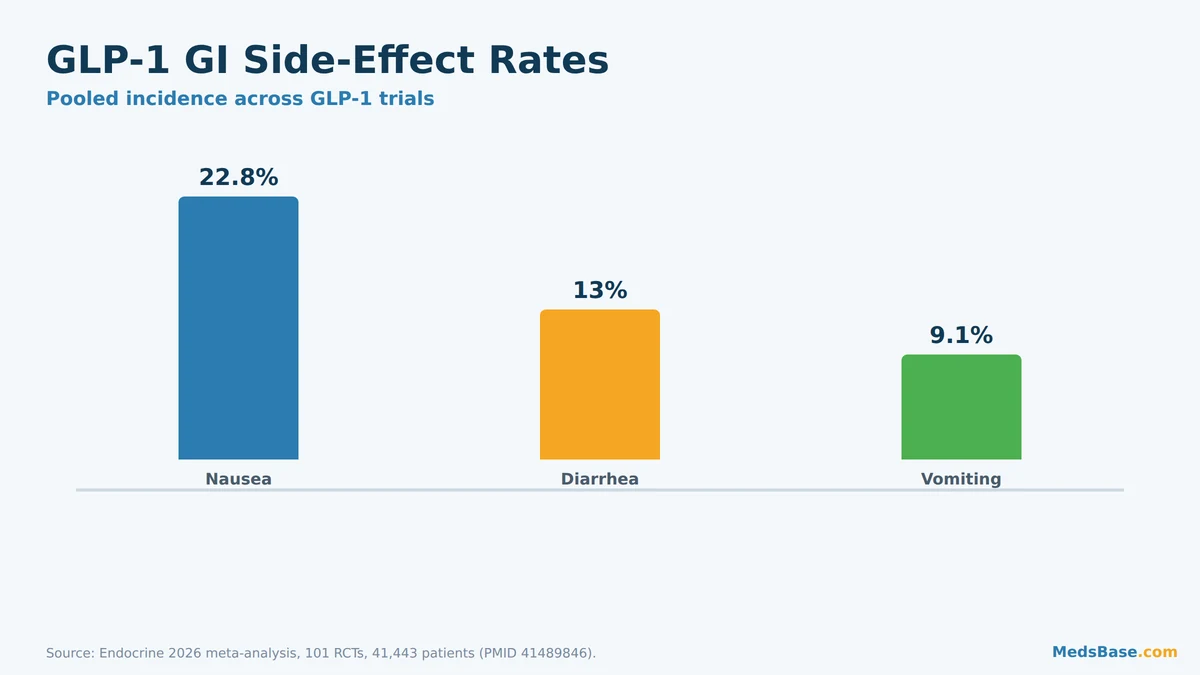
| Endocrine meta-analysis, 101 RCTs, 41,443 patients | 2026 | Nausea incidence ~22.8% (risk ratio ~2.9 vs placebo); vomiting ~9.1%; diarrhea ~13% | PubMed |
| J Clin Invest safety review | 2026 | Nausea ~19% active vs ~6.5% placebo; individualised titration improves tolerance | PMC |
| Int J Obesity network meta-analysis | 2025 | GI risk differs by drug; ranks nausea/vomiting/diarrhea across agents | PMC |
What this means for you: roughly one in five people on a GLP-1 feels nauseous, but vomiting is much less common, and the research consistently points to how you titrate as a modifiable factor. In plain terms — the odds are you’ll feel some queasiness, the odds are good it’s mild, and the odds are strong you can reduce it. Research suggests slower, more flexible dose adjustments lower nausea without compromising weight loss or blood-sugar control.
What to Expect: a Week-by-Week Guide
Nausea feels less frightening when you can see it coming. While everyone is different, GLP-1 therapy tends to follow a recognisable arc tied to the titration schedule — the planned, gradual dose increases.
- Weeks 1–4 (starting dose): This is often the queasiest window as your body first meets the drug. Appetite drops, meals feel larger than they are, and mild nausea is common — usually worst in the first several days, then easing.
- Around each dose increase: Every step up can bring a fresh, smaller wave of nausea for a few days. This is expected, not a setback. The MedlinePlus semaglutide dosing guidance notes doses are typically raised only after about four weeks precisely to give your stomach time to adapt.
- Weeks 8–16: Most people find their stomach has largely settled at each established dose. Nausea that lingers strongly this far in is worth a titration conversation with your prescriber.
- Maintenance: Once you reach your target dose and stay there, nausea usually becomes occasional or disappears. If you want to see the exact escalation steps, our step-by-step dose schedule lays them out.
One bolded takeaway: nausea that follows the dose-increase rhythm is normal and temporary; nausea that steadily worsens or never lets up deserves a call to your prescriber.
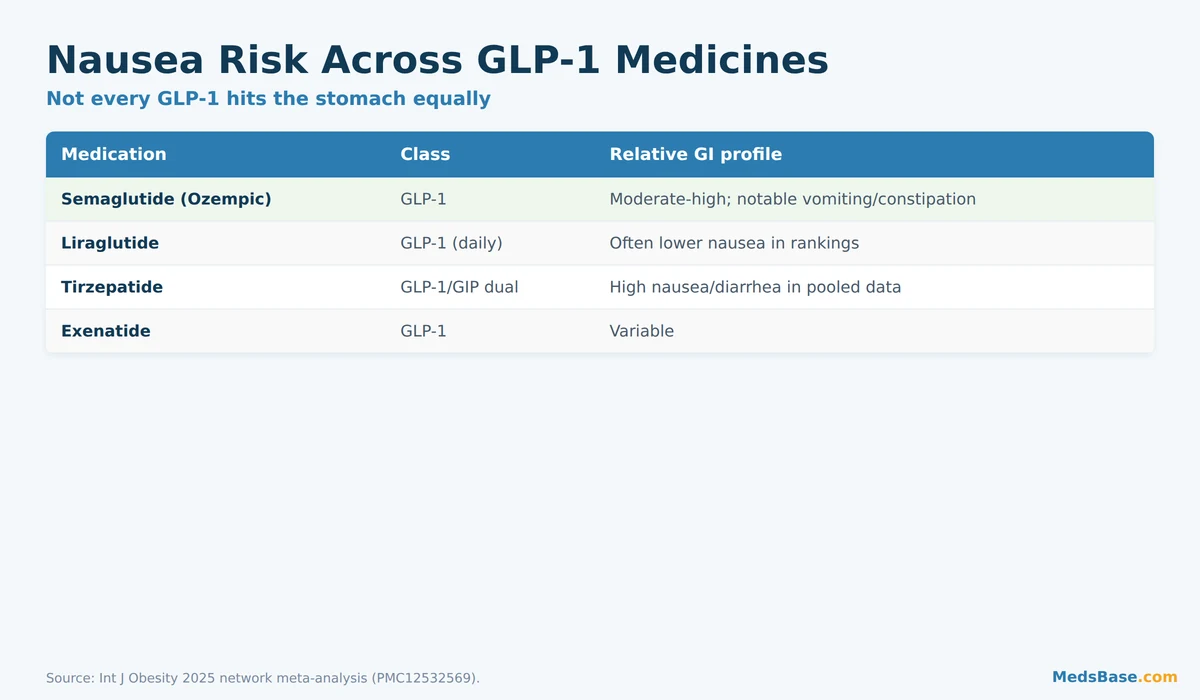
How Ozempic Compares to Other GLP-1s for Nausea
Not every GLP-1 hits the stomach the same way, which is worth knowing if nausea is your dealbreaker.
| Medication | Class | Relative GI profile |
|---|---|---|
| Semaglutide (Ozempic) | GLP-1 | Moderate–high nausea; notable for vomiting/constipation in some analyses |
| Liraglutide | GLP-1 (daily) | Often lower nausea in head-to-head rankings |
| Tirzepatide | GLP-1/GIP dual | High nausea/diarrhea risk in pooled data |
| Exenatide | GLP-1 | Variable |
According to a network meta-analysis ranking GI risk, the agents don’t line up identically for nausea, vomiting, and diarrhea — so a person who can’t tolerate one may do better on another.
Which one fits which situation? If semaglutide’s nausea is intolerable despite a slow ramp and good meal habits, that’s a real conversation to have with your prescriber about an alternative agent or formulation — not a reason to quit the whole class. You can compare our semaglutide options as a starting point for that discussion.
8 Proven Ways to Settle Ozempic Nausea
Here’s the practical toolkit. Most people who combine several of these get meaningful relief.
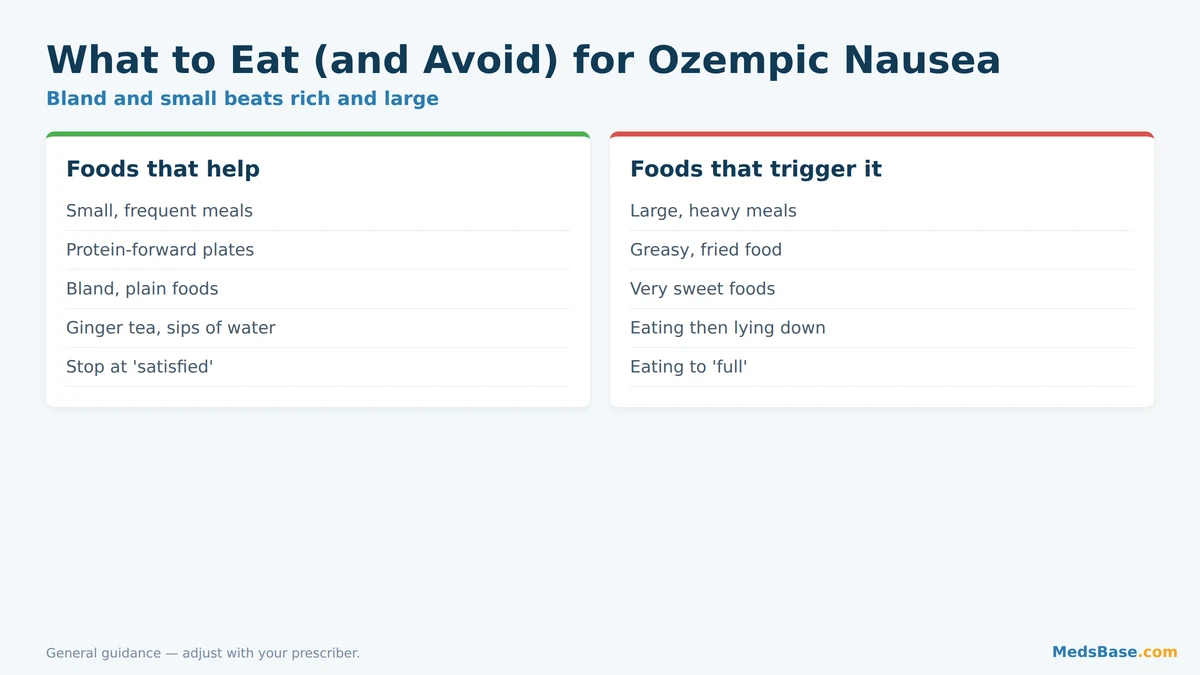
- Eat smaller, more frequent meals. A half-empty stomach is a happier stomach on a GLP-1. Large meals overwhelm your slowed digestion — the single most common mistake.
- Lead with protein, go easy on grease and sugar. Fatty, fried, and very sweet foods sit heaviest. Bland, protein-forward meals move through more comfortably.
- Stop eating at “satisfied,” not “full.” The drug already amplifies fullness; eating to your old fullness point is a fast track to nausea.
- Stay hydrated — sip, don’t gulp. Steady water and cool, clear fluids help; ginger tea is a time-honoured settler.
- Don’t lie down right after eating. Give gravity a chance to help your slowed stomach empty.
- Time your dose thoughtfully. Some people find dosing on a day they can rest, or at a time that puts the peak effect during sleep, reduces the impact.
- Titrate slowly with your doctor. This is the big one. See a step-by-step dose schedule and ask about staying at a lower dose longer if nausea flares — the 2026 evidence supports it.
- Ask about anti-nausea support for the rough patches. For short, difficult windows around a dose increase, your prescriber may suggest options.
- Eating a big meal because you “should” — appetite loss is expected; force-feeding backfires.
- Jumping to the next dose on schedule when your stomach hasn’t caught up.
- Skipping fluids because you feel too queasy — that risks dehydration.
- Assuming nausea means the drug “isn’t working” — the two aren’t linked.
Does nausea mean it’s working? This is one of the most common questions, and the answer is reassuring: no. Nausea is a side effect of slowed digestion, not a gauge of results. Plenty of people lose weight or improve blood sugar with little to no nausea, and feeling sick doesn’t earn you “extra” benefit. So there’s no reason to endure severe queasiness as proof of progress — settling your stomach won’t slow your results. If anything, staying comfortable helps you stick with treatment long enough to see the payoff, and consistency is what drives outcomes on a GLP-1.
It’s also worth knowing that a brief return of nausea after a missed dose or a schedule change is normal — your stomach simply re-adjusts. Treat those moments the same way you treated week one: smaller meals, steady fluids, patience.
For continuing treatment, MedsBase stocks semaglutide options — but pair any GLP-1 with prescriber-guided titration so your dose and your stomach stay in sync.
- What happens when you stop taking Ozempic
- Why GLP-1 results stall around month 4
- Ozempic feet: the surprising side effect people don’t expect
- Medication side-effect companion reads (publishing alongside): the prednisolone eye drops recall guide and ezetimibe vs statins — .
Beyond Nausea: Constipation, Diarrhea & Staying Hydrated
Nausea gets the headlines, but the other GLP-1 side effects deserve a plan too — and managing them well often reduces the queasiness as a bonus.
Constipation is common because slowed digestion means slower movement all the way through. The fixes are the unglamorous classics: more fibre (gradually, so you don’t trade one problem for bloating), plenty of fluids, daily movement, and sometimes a gentle, clinician-approved fibre supplement. Because you’re eating less overall, it’s easy to under-consume both fibre and water without noticing.
Diarrhea is less common but happens, especially early. Small, bland meals and steady hydration usually settle it. If it’s severe or persistent, tell your prescriber — ongoing diarrhea plus reduced fluid intake is how dehydration creeps in.
Hydration is the thread that ties it all together. When you’re eating and drinking less, you can quietly fall behind on fluids and electrolytes, and dehydration itself makes nausea worse — a vicious little loop. Sip water through the day rather than forcing large amounts at once, and consider fluids with some electrolytes if you’ve had vomiting or diarrhea. If you can’t keep fluids down at all, that’s a red flag, not a “tough it out” moment.
One more practical note: because a GLP-1 changes how your gut handles everything, it can also change how you respond to alcohol and to large, rich “celebration” meals. Many people find their tolerance for both drops noticeably. Easing into social meals — smaller portions, slower pace — spares your stomach a rough night.
When to Stop — the Honest Answer
Most nausea does not warrant stopping. It warrants adjusting — slower dose steps, smaller meals, more patience. But honesty matters here, because “push through everything” is bad advice.
Stop and seek care if you have severe or persistent abdominal pain (especially radiating to your back), can’t keep fluids down, show signs of dehydration, or develop severe vomiting. These aren’t ordinary side effects.
And if, after a genuinely slow titration and solid meal habits, nausea still wrecks your quality of life? That’s a legitimate reason to talk to your prescriber about switching agents — not a personal failure. Before you make any change, it’s worth understanding what happens when you stop taking Ozempic, because appetite and weight can rebound.
Frequently Asked Questions
Q: Why does Ozempic cause nausea?
A: Semaglutide slows how quickly your stomach empties and acts on brain centres that control appetite and nausea. Food lingers longer, so you feel full and sometimes queasy. The same mechanism that curbs your appetite is what can trigger nausea, which is why it’s so common early on.
Q: How long does Ozempic nausea last?
A: For most people, nausea is worst in the days after starting and after each dose increase, then eases within days to a few weeks as the body adapts. It tends to be a temporary phase rather than a permanent side effect, especially with slow titration.
Q: What should I eat to avoid Ozempic nausea?
A: Favour small, frequent, protein-forward meals and go easy on greasy, fried, and very sweet foods, which sit heaviest on a slowed stomach. Stop eating at “satisfied” rather than “full,” sip fluids steadily, and try ginger tea. Large meals are the most common nausea trigger.
Q: Does Ozempic nausea go away?
A: In most cases, yes. Nausea usually declines as your body adjusts to each dose, particularly if you titrate slowly. If it persists severely despite a gradual ramp and good meal habits, that’s worth discussing with your prescriber — there may be a better-tolerated option.
Q: Should I stop Ozempic if I feel sick?
A: Not usually. Mild to moderate nausea is expected and manageable, and stopping abruptly can undo your progress. However, severe abdominal pain, relentless vomiting, or dehydration are red flags that mean you should stop and seek medical care right away.
Q: When is Ozempic nausea an emergency?
A: Seek urgent care for severe, persistent stomach pain (especially spreading to your back, a possible sign of pancreatitis), inability to keep fluids down, or signs of dehydration. Everyday queasiness is not an emergency; these specific symptoms are.
The Bottom Line
Ozempic nausea is common, usually mild, and almost always temporary — driven by the same slowed digestion that makes semaglutide work. The evidence is clear that how you titrate and how you eat are your two biggest levers, and most people settle their stomachs without giving up their results.
Your one immediate action: shrink your next meal and stop at “satisfied,” not “full” — then, if nausea flares after a dose step, ask your prescriber about slowing your titration. That combination fixes more Ozempic nausea than anything else.
Curious what comes next on the journey? Read why results stall around month 4, or understand what happens if you stop the medication before making any change.

Written by
Sophie ChenPharmaceutical Content Researcher · 8 years experience
Sophie Chen is a pharmaceutical content researcher with 8 years covering generic medication access and clinical pharmacology. She specialises in international regulatory frameworks, bioequivalence standards, and patient-facing education on therapeutic drug classes. She is not a clinician.