








Hytrin
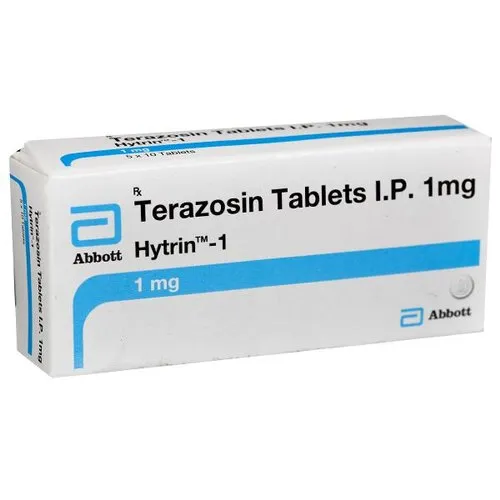
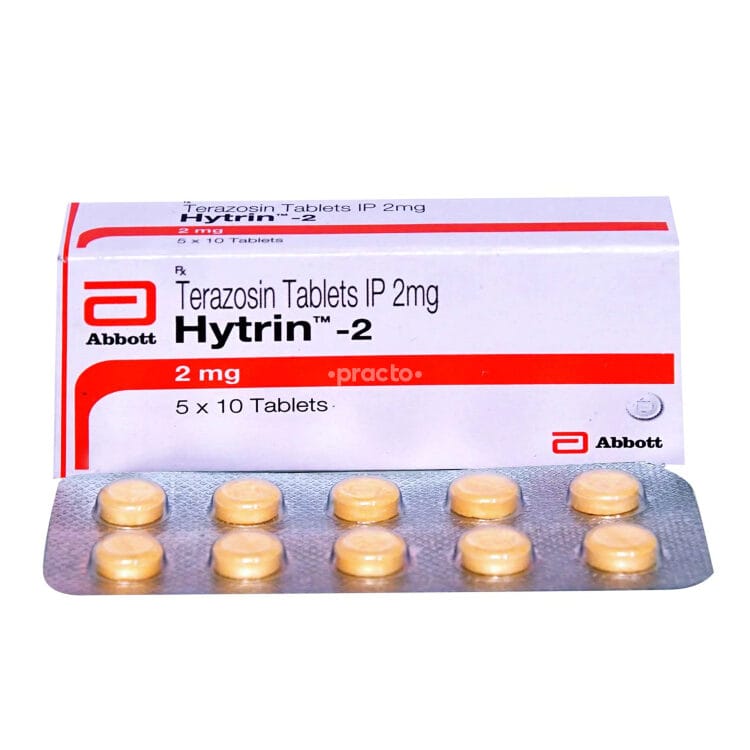
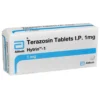
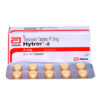
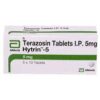
Hytrin is AbbVie’s terazosin 1/2/5 mg tablets — the long-acting alpha-1 adrenergic blocker introduced in 1987 as a once-daily successor to prazosin. Primary indication: benign prostatic hyperplasia (HYCAT trial — 37% IPSS improvement in 2,084 men over 1 year). Secondary: resistant hypertension as fourth/fifth-line add-on, especially where BPH coexists. 12-hour half-life; dose at bedtime to minimise first-dose orthostatic effects. ALLHAT class concerns temper HTN use.
✓ Medically reviewed by Morgan Ellis — Pharmacy Researcher · 8 years experience · Last reviewed: May 2026
⚡ Quick Answer — What is Hytrin?
Hytrin is a 1 / 2 / 5 mg Terazosin tablet from AbbVie — a long-acting selective alpha-1 adrenergic receptor antagonist (quinazoline), acting on post-synaptic alpha-1 adrenergic receptors on arterial smooth muscle and on prostatic/bladder-neck smooth muscle. Terazosin was introduced by Abbott (now AbbVie) in 1987 as Hytrin — developed as a longer-acting successor to prazosin, with a 12-hour half-life that permits once-daily dosing. Structurally a close quinazoline analogue of prazosin. Widely used in the 1990s and 2000s for benign prostatic hyperplasia (BPH) and as an add-on antihypertensive; partially displaced by the prostate-selective alpha-1A blockers (tamsulosin, silodosin) for BPH-only use, but retains a strong position where coexisting hypertension makes a non-selective alpha-blocker appropriate. Half-life 12 hours (once-daily dosing appropriate); onset 1-2 hours; peak 1-2 hours; symptomatic BPH benefit typically at 2-4 weeks. Primary indications: benign prostatic hyperplasia, resistant hypertension as add-on agent. Typical dosing: Hypertension: start 1 mg at bedtime (first-dose phenomenon risk), titrate every 1-2 weeks up to 5-20 mg/day. The longer half-life vs prazosin makes once-daily dosing practical. Not a first-line antihypertensive. ALLHAT stopped the doxazosin arm early for excess HF; terazosin is extrapolated to the same class concern. Reserve for fourth/fifth-line use, especially where BPH coexists. Always start the first dose at bedtime — the “first-dose” phenomenon causes severe orthostatic hypotension in the opening hours. Not a first-line antihypertensive (ALLHAT class concerns) — reserve for fourth/fifth-line use, especially where BPH coexists. For most hypertensive patients, modern treatment starts with an ACE inhibitor/ARB, a calcium-channel blocker, a thiazide, and spironolactone before reaching for an alpha-blocker or centrally-acting agent.
📦 Every order is covered by our Reshipment Assurance Policy — if your parcel does not arrive within 20 business days, we reship it.
Why order from MedsBase
Our generic medications are sourced from WHO-GMP certified manufacturers and shipped worldwide in discreet, plain packaging — no medication name on the parcel exterior. Card payments are routed through a regulated processor (statement descriptors include a regulated card-payment processor — never “MedsBase” or any medication name). Crypto and SEPA bank transfer are also accepted. Every order is backed by our Reshipment Assurance Policy.
What Is Hytrin?
Hytrin is an oral 1 / 2 / 5 mg Terazosin tablet from AbbVie, supplied in 30-180 tablets. Terazosin was introduced by Abbott (now AbbVie) in 1987 as Hytrin — developed as a longer-acting successor to prazosin, with a 12-hour half-life that permits once-daily dosing. Structurally a close quinazoline analogue of prazosin. Widely used in the 1990s and 2000s for benign prostatic hyperplasia (BPH) and as an add-on antihypertensive; partially displaced by the prostate-selective alpha-1A blockers (tamsulosin, silodosin) for BPH-only use, but retains a strong position where coexisting hypertension makes a non-selective alpha-blocker appropriate.
How Terazosin Works
Terazosin acts on post-synaptic alpha-1 adrenergic receptors on arterial smooth muscle and on prostatic/bladder-neck smooth muscle. The downstream effects:
- Arterial and venous vasodilation — blockade of alpha-1 receptors on vascular smooth muscle reduces systemic vascular resistance; venous dilation reduces preload
- Reduced bladder-neck and prostatic smooth-muscle tone — improves urinary flow in BPH (dominant clinical effect for the XL/long-acting forms)
- Improved lipid profile — modest reduction in LDL and triglycerides, small rise in HDL; metabolically distinct from thiazides and beta-blockers
- Improved insulin sensitivity in some studies — an argument for alpha-blockers in hypertensive patients with metabolic syndrome or type 2 diabetes
- No direct effect on renin or electrolytes — potassium, sodium, and creatinine unaffected (contrast with diuretics and RAAS blockers)
- Reflex tachycardia is blunted compared with direct vasodilators (hydralazine, minoxidil) because of some central sympathetic feedback, but still occurs on initiation
Approved and Evidence-Based Uses
- Benign prostatic hyperplasia, resistant hypertension as add-on agent
- Benign prostatic hyperplasia — primary indication; once-daily convenience
- Resistant hypertension as fourth/fifth-line add-on, especially where BPH coexists
Pivotal trial evidence: HYTRIN Community Assessment Trial (HYCAT, 1996) — terazosin improved IPSS by 37% in 2,084 men with symptomatic BPH over 1 year. VA Cooperative BPH Trial (Lepor, NEJM 1996) — terazosin + finasteride no better than terazosin alone in men with smaller prostates, foreshadowing the MTOPS finding that combination therapy helps larger prostates. ALLHAT doxazosin arm (2000) — class-level HF signal.
Hytrin Dosage
Primary dose: Hypertension: start 1 mg at bedtime (first-dose phenomenon risk), titrate every 1-2 weeks up to 5-20 mg/day. The longer half-life vs prazosin makes once-daily dosing practical. Not a first-line antihypertensive. ALLHAT stopped the doxazosin arm early for excess HF; terazosin is extrapolated to the same class concern. Reserve for fourth/fifth-line use, especially where BPH coexists.
Other indications: Benign prostatic hyperplasia: start 1 mg at bedtime, titrate to 5-10 mg once daily over 2-4 weeks. Dose at bedtime indefinitely to minimise orthostatic effects. Symptom benefit typically clear by 4-6 weeks; if inadequate, switch to or add a prostate-selective alpha-1A blocker (tamsulosin) or a 5-alpha-reductase inhibitor (finasteride) for larger prostates (>40 g).
Administration: take once daily at bedtime. Food does not significantly affect absorption.
Monitoring schedule:
- Baseline: supine and standing BP (document postural drop), heart rate, symptom review for dizziness/falls, medication list (check for interacting agents).
- Week 1-2: repeat BP (supine and standing), heart rate, symptom review. Adjust dose up or down based on BP and tolerability.
- Week 4-6: assess target BP; symptom burden; check for BPH symptom response if applicable (IPSS).
- Ongoing: annual BP review, fall/syncope history, cataract history (floppy iris pre-op alert).
- Stop or dose-reduce on: syncope, falls, priapism, floppy iris identification, severe retrograde ejaculation affecting quality of life.
Discontinuation: no rebound syndrome. Alpha-blockers can be stopped but expect some BP rise if they contributed meaningfully to control. Re-initiate at the starting dose (not the previous maintenance dose) if restarting after a gap of >1 week — the first-dose phenomenon returns.
Practical Considerations for Hytrin
- Once-daily dosing is a practical advantage over immediate-release prazosin; patients tolerate the regimen better.
- Floppy iris syndrome — warn the ophthalmologist of any terazosin (or other alpha-blocker) exposure before cataract surgery.
- Non-selective alpha-1 blockade — tamsulosin and silodosin are more prostate-selective (alpha-1A subtype) and cause less orthostatic hypotension. Use terazosin where coexisting hypertension gives the systemic alpha-1 blockade a secondary benefit.
- Generic terazosin is inexpensive — the molecule is long off-patent; branded Hytrin reflects provenance rather than superior product.
- PDE-5 inhibitor caution — maintain a 4-6 hour gap between terazosin and sildenafil/tadalafil/vardenafil; additive hypotension is severe.
Side Effects
Common (>1%):
- Dizziness, orthostatic hypotension (dose-limiting; worst on initiation)
- Asthenia, fatigue
- Headache
- Nasal congestion
- Peripheral oedema
- Somnolence
- Palpitations (reflex tachycardia)
- Retrograde ejaculation (less than with tamsulosin)
- Priapism (rare)
Uncommon but clinically important:
- Syncope with loss of consciousness on first dose or rapid titration — dose at bedtime; warn the patient explicitly.
- Priapism — emergent urological referral for erection >4 hours.
- Intraoperative floppy iris syndrome — may cause cataract-surgery complications; alert the ophthalmologist.
- Paradoxical urinary incontinence in women (rare; alpha-blockade of bladder-neck tone).
- Worsening of heart failure — class concern from ALLHAT; caution in HF patients.
- Severe hypotension with PDE-5 inhibitors (sildenafil, tadalafil, vardenafil) — maintain a 4-6 hour gap.
Contraindications
- Known hypersensitivity to quinazoline alpha-blockers
- History of significant orthostatic hypotension or unexplained syncope
- Concurrent PDE-5 inhibitors without a strict 4-6 hour gap
- Severe aortic stenosis
- Pregnancy and breastfeeding (limited data)
Pregnancy: avoided — limited pregnancy data for alpha-blockers. Switch to methyldopa, labetalol, or nifedipine for pregnancy hypertension.
Breastfeeding: limited data; use with caution. Switch to an agent with better breastfeeding data (labetalol, nifedipine, enalapril) where possible.
Drug Interactions
- PDE-5 inhibitors (sildenafil, tadalafil, vardenafil) — CRITICAL. Combined use causes severe additive hypotension. Maintain a 4-6 hour gap between alpha-blocker and PDE-5 inhibitor doses; daily-dose tadalafil 5 mg for BPH is contraindicated with alpha-blockers.
- Other antihypertensives — additive BP-lowering. Start low, titrate slowly.
- Beta-blockers — reduced reflex tachycardia can mask hypoglycaemia or acute bleed. Combined use is not contraindicated but may require lower alpha-blocker starting dose.
- Non-dihydropyridine CCBs (verapamil, diltiazem) — additive hypotension.
- Diuretics — volume depletion potentiates first-dose hypotension. Hold diuretic the day of first alpha-blocker dose if possible.
- Tricyclic antidepressants — additive orthostatic hypotension.
- NSAIDs — reduce antihypertensive effect (less than with thiazides/ACEi).
- Alcohol — marked additive orthostatic hypotension; warn patients.
Where Hytrin Fits in the Antihypertensive Hierarchy
| Tier | Class / Examples | Role |
|---|---|---|
| First-line | ACE inhibitors (ramipril), ARBs (telmisartan), CCBs (amlodipine), thiazides (indapamide, HCTZ) | Start here for newly diagnosed HTN |
| Second / third agent | Combinations of the above (ACEi+CCB, ARB+thiazide) | When one agent insufficient |
| Fourth agent (resistant HTN) | Spironolactone (PATHWAY-2 evidence); beta-blocker; doxazosin | If BP uncontrolled on three-drug combination at full dose |
| Fifth agent | Alpha-blockers (prazosin, terazosin, doxazosin); centrally-acting agents | Add if spironolactone inadequate or contraindicated; prefer alpha-blockers where BPH coexists |
| Fifth / sixth agent | Centrally-acting agents (clonidine, moxonidine) | Add to bring resistant HTN to target; watch for rebound and sedation |
| Pregnancy first-line | Methyldopa, labetalol, nifedipine | Gestational HTN and pre-existing HTN during pregnancy |
Storage
Store Hytrin below 25°C in the original blister pack. Keep out of reach of children.
Frequently Asked Questions
Why is Hytrin not a first-line blood-pressure drug?
The ALLHAT trial stopped its doxazosin arm three years early after finding a 25% excess of heart failure compared with chlorthalidone. The finding was interpreted as an alpha-blocker class concern. Guidelines now place ACE inhibitors, ARBs, calcium-channel blockers, and thiazides as first-line, reserving alpha-blockers as fourth or fifth-line agents. Alpha-blockers remain preferred add-ons where benign prostatic hyperplasia (BPH) coexists with hypertension — one drug for two problems.
What is the “first-dose phenomenon” and how do I avoid it?
The first dose of any alpha-blocker can cause severe orthostatic hypotension — blood pressure drops on standing, sometimes to the point of syncope, within 30-90 minutes of the dose. Risk is highest in volume-depleted patients (those already on diuretics) or those on beta-blockers. To minimise risk: take the first dose at bedtime, stay in bed for the first 2-3 hours, avoid alcohol, hold the diuretic dose if possible on day 1, and titrate doses weekly rather than daily. The risk falls sharply over the first 7-10 days as autonomic adaptation occurs.
Can I take Hytrin with alcohol?
Light, occasional drinking is usually tolerated. Regular or heavy drinking substantially potentiates the orthostatic hypotension of Hytrin — falls, blackouts, and accidents become more likely. Patients at higher risk (elderly, previous falls, concurrent diuretics or sedatives) should avoid alcohol altogether on this medication.
How long before my urinary symptoms improve?
Most men notice easier initiation of flow, reduced urgency, and fewer nocturia episodes within 1-2 weeks. Full symptom-score benefit (IPSS) usually plateaus at 4-6 weeks. If there is no meaningful improvement by 6-8 weeks on the target dose, switch to or add a prostate-selective alpha-1A blocker (tamsulosin, silodosin) or add a 5-alpha-reductase inhibitor (finasteride, dutasteride) for prostates >40 g. Hytrin does not shrink the prostate; it only reduces the smooth-muscle tone. For larger prostates, combination therapy gives the best durable outcome (MTOPS/CombAT evidence).
What if I miss a dose?
Take it as soon as you remember, unless it is nearly time for your next dose — in that case skip the missed dose and resume at the next scheduled time. Do not double up. A single missed dose does not materially affect long-term BP control.
Can I stop Hytrin if my BP is under control?
Alpha-blockers can be stopped without a dedicated tapering protocol, but BP will usually rise if they contributed meaningfully to control. If restarting after a gap of more than 1 week, re-initiate at the starting dose (not the previous maintenance dose) — the first-dose phenomenon returns after a drug-free break.
Can I take Hytrin in pregnancy?
Generally no. Pregnancy antihypertensives of choice are methyldopa, labetalol, and nifedipine — Hytrin is not first-line in pregnancy. Switch to one of those before conception or as soon as pregnancy is confirmed, under specialist supervision.
Where can I buy Hytrin online?
You can buy Hytrin (1 / 2 / 5 mg terazosin, 30-180 tablets) from MedsBase with discreet packaging and worldwide shipping.
Related Antihypertensives on MedsBase
- Aldactone — Spironolactone 25/50/100 mg (PATHWAY-2 4th-line)
- Amlode — Amlodipine 5/10 mg (CCB)
- Minipress XL — Prazosin ER 2.5/5 mg (Pfizer)
- Prazopress — Prazosin IR 1 mg (Sun Pharma)
- Ramcor — Ramipril 2.5/5/10 mg (ACEi)
- Telma H — Telmisartan + HCTZ combination
- Browse all High Blood Pressure Medications
Related Alternatives
Other products in Chronic Conditions that customers also view:
More options in High Blood Pressure Medication
Ranked by recent MedsBase order volume — what other customers in this category are picking.


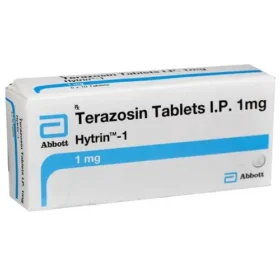
| Strength | 1 mg, 2 mg, 5 mg |
|---|---|
| Quantity | 30 Tablet/s, 60 Tablet/s, 90 Tablet/s, 180 Tablet/s |
 Hytrin
Q & A
Hytrin
Related products










Reviews
There are no reviews yet