









Ivimec
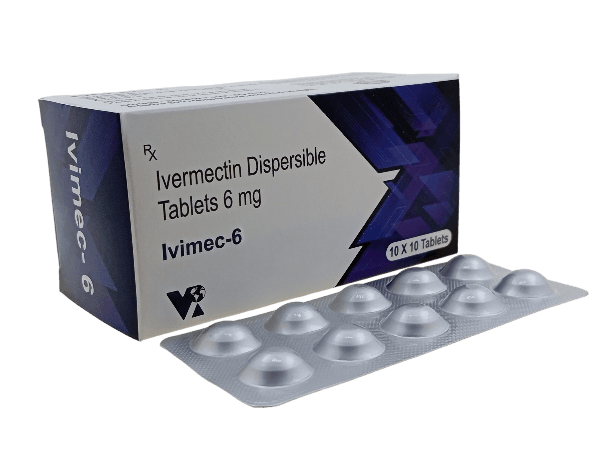
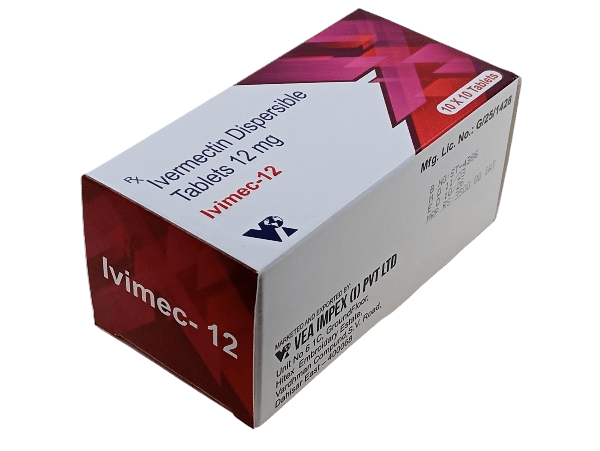
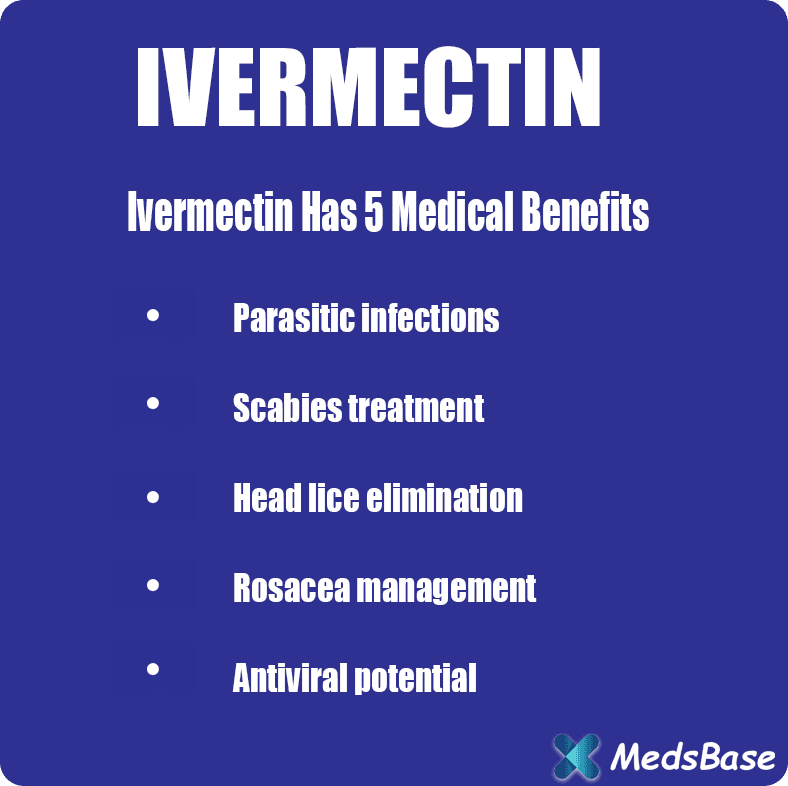
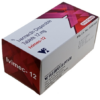
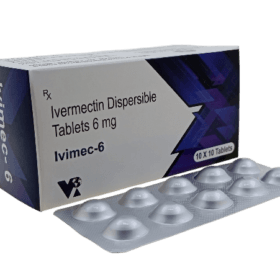
Ivimec (ivermectin 6 / 12 mg dispersible tablet, Lupin) — water-dispersible ivermectin tablets for paediatric and difficult-swallow adult use. Strongyloidiasis, scabies, head lice.
✓ Medically reviewed by Morgan Ellis — Pharmacy Researcher · 8 years experience · Last reviewed: May 2026
Quick Answer — What is Ivimec?
Ivimec is an oral ivermectin 6 mg / 12 mg dispersible tablet from Lupin. Ivermectin is the WHO-listed first-line agent for strongyloidiasis, scabies, head lice, and onchocerciasis (river blindness). Standard adult dose is 200 µg/kg as a single dose, repeated at day 7–14 for scabies. Take on an empty stomach with water.
The dispersible-tablet (DT) format is designed for paediatric and difficult-swallow use — place the tablet in 5–10 ml of water, allow to disperse, and drink immediately.
📦 Every order is covered by our Reshipment Assurance Policy — if your parcel does not arrive within 20 business days, we reship it.
Why order from MedsBase
Our generic medications are sourced from WHO-GMP certified manufacturers and shipped worldwide in discreet, plain packaging — no medication name on the parcel exterior. Card payments are routed through a regulated processor (statement descriptors include a regulated card-payment processor — never “MedsBase” or any medication name). Crypto and SEPA bank transfer are also accepted. Every order is backed by our Reshipment Assurance Policy.
What is Ivimec?
Ivimec is an oral ivermectin product manufactured by Lupin, available in 6 mg / 12 mg strengths. Ivermectin is one of the most important drugs in global health — the 2015 Nobel Prize in Physiology or Medicine recognised its discoverers (William Campbell & Satoshi Ōmura) for the contribution it made to controlling river blindness and lymphatic filariasis. Today ivermectin is on the WHO Model List of Essential Medicines and remains first-line for several human parasitic and ectoparasitic diseases.
Mechanism — how ivermectin kills parasites
Ivermectin binds with high affinity to glutamate-gated chloride channels in invertebrate nerve and muscle cells. This opens the channel, hyperpolarises the cell, and paralyses the parasite. Mammalian cells lack glutamate-gated chloride channels (mammalian GABA channels are the closest relative, but ivermectin does not cross an intact blood-brain barrier in normal doses), which is why ivermectin has a wide safety margin in humans.
Ivermectin is highly lipophilic, peaks in plasma at 4–5 hours, and has an elimination half-life of 16–28 hours. Most of the drug is excreted in faeces.
Ivimec indications
| Indication | Dose | Notes |
|---|---|---|
| Strongyloidiasis | 200 µg/kg single dose | Repeat at 14 days in immunocompromised; pre-emptive screening before steroids |
| Scabies | 200 µg/kg, repeat at day 7–14 | Treat all household contacts simultaneously; topical permethrin alternative |
| Head lice | 200 µg/kg, repeat at day 7 | Useful when topical pediculicides have failed |
| Onchocerciasis | 150 µg/kg single dose, every 6–12 months | WHO mass-drug-administration regimen |
| Lymphatic filariasis | 200 µg/kg with albendazole 400 mg | Annual MDA combination therapy |
| Cutaneous larva migrans | 200 µg/kg single dose | Often a one-shot cure |
Ivimec dosage — weight-based
Ivermectin is dosed at 200 µg per kg of body weight for most indications (150 µg/kg for onchocerciasis). Convert as follows:
| Body weight | Approx. dose | Tablet equivalent |
|---|---|---|
| 15–25 kg | 3 mg | 1 × 3 mg |
| 26–44 kg | 6 mg | 1 × 6 mg or 2 × 3 mg |
| 45–64 kg | 9 mg | 1 × 6 mg + 1 × 3 mg |
| 65–84 kg | 12 mg | 1 × 12 mg |
| 85–104 kg | 15 mg | 1 × 12 mg + 1 × 3 mg |
| 105–120 kg | 18 mg | 2 × 6 mg + 2 × 3 mg |
Take on an empty stomach with a full glass of water (food increases bioavailability roughly 2.5×, which can change the safety margin in patients with high microfilarial load).
Side effects
Ivermectin is generally very well tolerated. The most common side effects are Mazzotti reaction (fever, pruritus, lymphadenopathy, joint pain — caused by dying microfilariae, not the drug itself) in patients with onchocerciasis or lymphatic filariasis. Other reactions:
- Common: mild dizziness, nausea, transient diarrhoea, headache
- Less common: rash, peripheral oedema, abdominal pain
- Rare: hypotension, tachycardia, transient transaminase rise
- Very rare: Stevens-Johnson syndrome, encephalopathy (almost exclusively in Loa loa co-infection)
Drug interactions
Ivermectin is metabolised primarily by CYP3A4. Clinically relevant interactions:
- Strong CYP3A4 inhibitors (ritonavir, ketoconazole, itraconazole, clarithromycin) — raise ivermectin levels
- Strong CYP3A4 inducers (rifampicin, carbamazepine, phenytoin, St John’s wort) — reduce levels
- Warfarin — case reports of INR changes; monitor
- Other GABA-active drugs — theoretical interaction; watch for sedation in patients on benzodiazepines or sodium oxybate
Contraindications
- Hypersensitivity to ivermectin
- Children < 15 kg body weight (limited safety data)
- Loa loa endemic region without pre-screening (severe encephalopathy risk)
- Severe hepatic impairment — use with caution
Storage
Store Ivimec below 30°C in the original blister, away from light and moisture. Keep out of reach of children.
Why order from MedsBase
Ivimec is supplied from a WHO-GMP certified manufacturer, packaged discreetly, and shipped worldwide. Every order is covered by our Reshipment Assurance Policy — you never wear the cost of a lost parcel.
Frequently Asked Questions
Is Ivimec the same as ordinary ivermectin?
Yes. Ivimec is a brand of ivermectin from Lupin. The active ingredient, dose strengths, and pharmacokinetics are the same as any other quality-assured ivermectin product.
Should I take Ivimec on an empty stomach?
Yes. Take Ivimec with a full glass of water at least 1 hour before food or 2 hours after. A fatty meal can increase plasma levels by roughly 2.5×, which is fine for routine dosing but undesirable in patients with high microfilarial loads.
How quickly does Ivimec work for scabies?
Itching and rash improve within several days but take 2–4 weeks to resolve fully because dead mites and eggs remain in the skin. A second 200 µg/kg dose at day 7–14 covers any newly hatched mites that escaped the first dose.
Can I take Ivimec with antibiotics?
Most antibiotics are safe to combine. The macrolide clarithromycin is a strong CYP3A4 inhibitor and may raise ivermectin levels — preferable to use azithromycin or doxycycline if a course is also needed.
Does Ivimec treat COVID-19?
No. Multiple high-quality randomised trials (TOGETHER, ACTIV-6, COVID-OUT) found no clinical benefit of ivermectin in COVID-19. WHO, FDA, and EMA recommend against off-label use for this indication. Ivimec is for parasitic and ectoparasitic disease only.
Is Ivimec safe in pregnancy?
Limited human data; reassuring in mass-treatment programmes. Avoid in the first trimester where alternatives exist. Discuss with a clinician for individualised guidance.
Can I drive after taking Ivimec?
Most patients tolerate ivermectin without sedation. A minority report mild dizziness in the first 24 hours; if so, postpone driving until you feel normal.
How long does Ivimec stay in the body?
Plasma half-life is 16–28 hours; the drug is essentially cleared within 5–7 days. The therapeutic effect on scabies persists longer because the drug accumulates in skin.
Does Ivimec cure all worms?
Ivermectin is most active against nematodes (roundworms, including strongyloides and onchocerca) and ectoparasites (scabies, head lice). It is NOT first-line for tapeworms (use praziquantel or niclosamide) or whipworm (use albendazole).
Can I crush or split Ivimec?
Ivimec is a dispersible tablet — place it in 5–10 ml of water, let it disperse, and drink. Splitting is unnecessary.
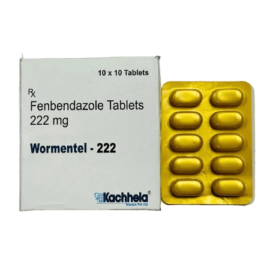
Where ectoparasite and strongyloid coverage from Ivimec (ivermectin 6 / 12 mg) is not the primary need, Wormentel (fenbendazole 222 / 500 mg) offers a complementary benzimidazole option targeting gut helminths including Giardia and tapeworms via tubulin-polymerisation inhibition.
Other Antiparasitic Medications
- Ivermectol (ivermectin 12 mg)
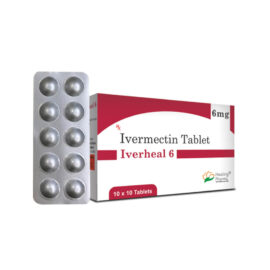
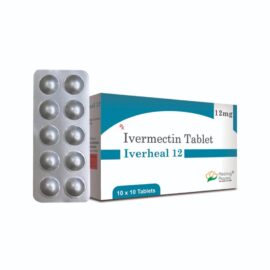
- Iverheal (ivermectin 3/6/12 mg)
- Ivimec (ivermectin 6/12 mg DT)
- ABD 400 (albendazole 400 mg)
- Bandy-Plus (albendazole + ivermectin)
More options in Threadworm Treatment
Ranked by recent MedsBase order volume — what other customers in this category are picking.
| Strength | 6 mg, 12 mg |
|---|---|
| Quantity | 30 Tablet/s, 60 Tablet/s, 90 Tablet/s, 180 Tablet/s, 400 Tablet/s, 800 Tablet/s |
2 reviews for Ivimec
| 5 star | 50% | |
| 4 star | 50% | |
| 3 star | 0% | |
| 2 star | 0% | |
| 1 star | 0% |
 Ivimec
Q & A
Ivimec
Related products

Alles ok, kam auch schnell an
perfetto delivery!