







Melanotan II
✅ Supports skin pigmentation
✅ Enhances melanin production
✅ Promotes photoprotection pathways
✅ Boosts metabolic signaling
✅ Improves cellular function
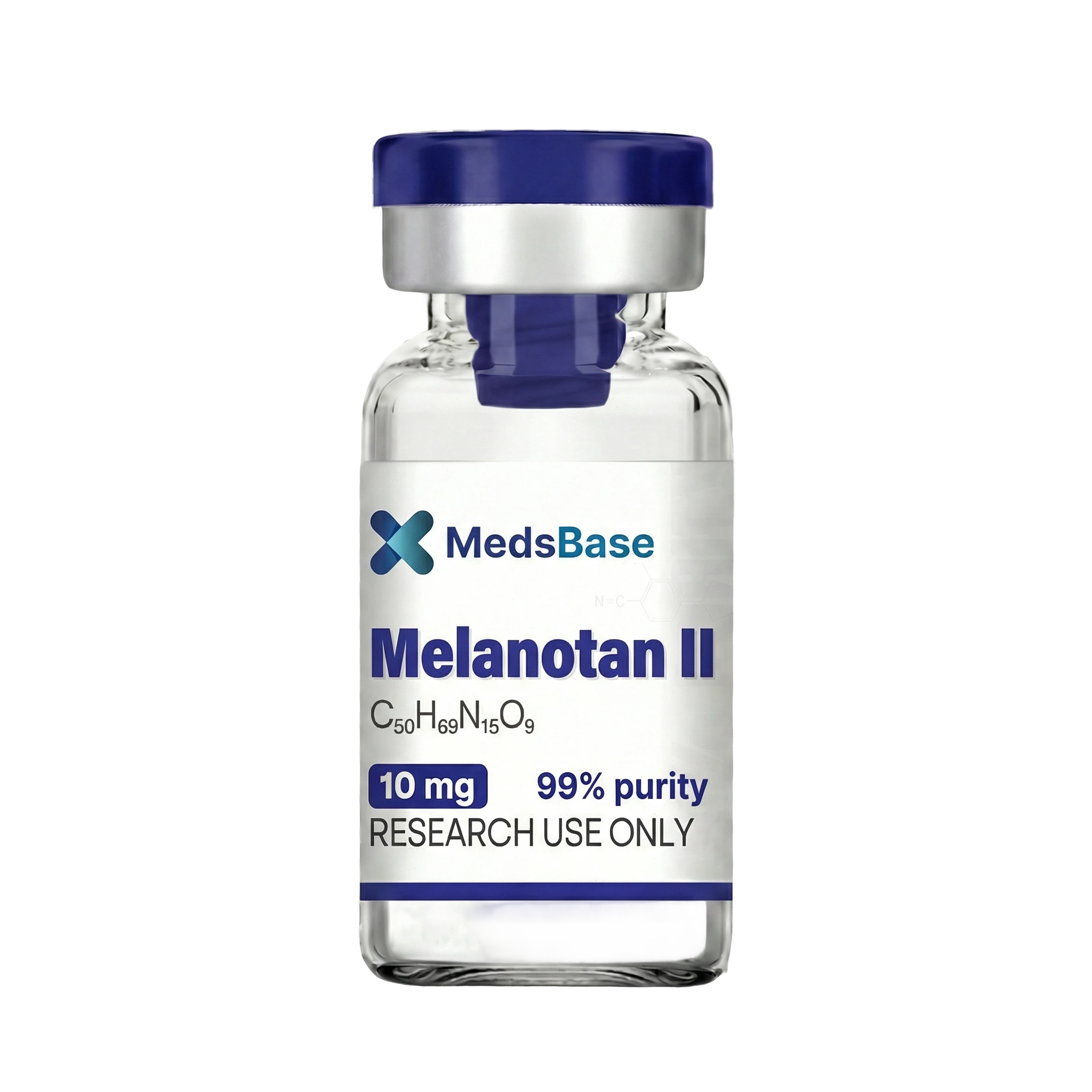
Melanotan II contains synthetic peptide compound.
✓ Medically reviewed by Morgan Ellis — Pharmacy Researcher · 8 years experience · Last reviewed: May 2026
Quick Answer — What is Melanotan II?
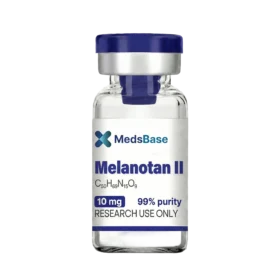
Melanotan II (MTII) is a synthetic seven-amino-acid cyclic analog of alpha-melanocyte stimulating hormone (α-MSH). It is a broad melanocortin agonist with activity at MC1R, MC3R, MC4R, and MC5R — distinguishing it from the more MC4R-selective PT-141. in studies, MTII is studied for melanogenesis, photoprotection, and broader melanocortin pharmacology. Supplied in 10 mg lyophilized vials.
📦 Every order is covered by our Reshipment Assurance Policy — if your parcel does not arrive within 20 business days, we reship it.
| Specification | Detail |
|---|---|
| CAS Number | 121062-08-6 |
| Molecular Formula | C50H69N15O9 |
| Molecular Weight | 1024.18 Da |
| Sequence | Ac-Nle-cyclo[Asp-His-D-Phe-Arg-Trp-Lys]-NH2 |
| Form | Lyophilized powder (or as supplied) |
| Purity | ≥99% (HPLC verified, COA on request) |
| Storage | Lyophilized: 2–8 °C (refrigerator) for working stock; −20 °C for long-term storage of unopened vials. Reconstituted: 2–8 °C, use within ~30 days. Protect from light. Do not freeze–thaw the reconstituted solution. |
| Solubility | Bacteriostatic water (recommended) or sterile water for shorter use windows |
What Is Melanotan II?
Melanotan II (often abbreviated MTII) is a synthetic cyclic heptapeptide analog of alpha-melanocyte stimulating hormone (α-MSH). It was developed in the 1980s at the University of Arizona by Hruby and colleagues as an analog designed to resist enzymatic degradation and cross the blood-brain barrier efficiently — useful tools for melanocortin-receptor pharmacology studies. Sequence (cyclic): Ac-Nle-cyclo[Asp-His-D-Phe-Arg-Trp-Lys]-NH2. Molecular weight approximately 1,024.2 Da. Unlike PT-141 (bremelanotide), which was refined from Melanotan II specifically to reduce MC1R activity (minimal tanning effect) while preserving MC4R-mediated signals, Melanotan II retains broad melanocortin agonism — activity across MC1R, MC3R, MC4R, and MC5R. This pan-receptor profile is the central studies characteristic of MTII: it drives melanogenesis (MC1R) alongside appetite suppression (MC4R), arousal-pathway signaling (MC4R shared with PT-141), and broader melanocortin effects. Supplied as a high-purity lyophilized powder for reconstitution with bacteriostatic water. The US FDA has issued multiple public warnings about unregulated Melanotan II use — it has never received FDA approval and carries documented safety concerns including atypical nevus development, elevated blood pressure, nausea, and focal hyperpigmentation. For deeper mechanism and context, see our full Melanotan II guide.
Mechanism of Action — Broad Melanocortin Agonism
Melanotan II’s pharmacology is defined by its activity across multiple melanocortin-receptor subtypes, each producing a distinct studies-relevant effect:
- MC1R agonism (melanogenesis) — MTII binds MC1R on epidermal melanocytes, activating cyclic-AMP signaling that switches melanin synthesis from pheomelanin to eumelanin. Eumelanin absorbs UV radiation more effectively than pheomelanin, producing the tanning signal that distinguishes MTII from MC1R-selectively-weaker analogs such as PT-141.
- MC4R signaling (CNS pathways) — MTII activates MC4R in hypothalamic regions including the mPOA and arcuate nucleus, producing appetitive-behavior modulation, feeding-behavior effects, and CNS arousal-pathway signaling that partially overlaps with PT-141’s primary use.
- MC3R and MC5R activity — MTII’s broader receptor profile includes activity at MC3R (central energy homeostasis) and MC5R (exocrine-gland and peripheral-tissue effects). This broader activity contributes to the studies observation that MTII produces more heterogeneous effects than MC4R-selective analogs — and to the wider safety-profile concerns.
Because Melanotan II activates multiple melanocortin pathways simultaneously, it has been used in clinical studies across dermatology, neuroscience, endocrinology, and melanocortin pharmacology. The lack of MC-receptor selectivity is also why FDA and dermatological societies have warned about its unregulated use — off-target effects are more common than with selective analogs.
Published Evidence
Melanotan II is used in clinical contexts that investigate:
- Melanogenesis studies — MC1R-driven eumelanin synthesis in cultured human melanocytes and rodent pigmentation-study models (Dorr et al., Life Sci 1996; Langan et al., Br J Dermatol 2010)
- Photoprotection studies — UV-response and melanin-production studies in dermatology models, with a particular studies focus on high-risk-for-skin-cancer populations
- Erythropoietic protoporphyria (EPP) studies — closely related MC1R-agonist studies led to FDA approval of afamelanotide (Scenesse) for EPP — MTII is one of the key reference compounds in this studies lineage
- Melanocortin receptor pharmacology — MC1R/MC3R/MC4R/MC5R selectivity profiling in drug-discovery studies
- CNS arousal-pathway studies — MC4R-mediated CNS effects (partial overlap with PT-141 studies space)
- Appetite / feeding-behavior studies — MC4R modulation of feeding in rodent behavioral models
- Comparative MC-analog studies — side-by-side with PT-141 (bremelanotide) to isolate MC4R-selective vs broad-spectrum effects
For broader context on MC-family peptides see the peptides catalog.
Available Strengths
MedsBase stocks Melanotan II in a single 10 mg lyophilized vial strength, available in 10-vial, 20-vial, or 30-vial pack formats:
| Vial Strength | Typical Use Case | Pack Sizes |
|---|---|---|
| 10 mg | Standard strength — supports approximately 40 administrations at 250 mcg titration dose | 10, 20, or 30 vials |
The 10 mg single-strength format matches typical protocol requirements. Published protocols typically use a titration strategy (starting at 250 mcg and increasing to 500 mcg–1 mg) to manage MTII’s narrow tolerability window. Supplied as lyophilized powder at 99%+ HPLC purity.
How It Compares — Melanotan II vs PT-141
MTII and PT-141 are the two most-studied melanocortin peptides. PT-141 was developed from MTII specifically to narrow the receptor-selectivity profile and reduce off-target effects — the comparison is clinically and mechanistically instructive:
| Criterion | Melanotan II | PT-141 (Bremelanotide) |
|---|---|---|
| Receptor selectivity | Broad: MC1R, MC3R, MC4R, MC5R | MC4R-preferred (reduced MC1R) |
| Primary signal | Melanogenesis, tanning, appetite, arousal | Central arousal pathway |
| Regulatory status | Unapproved (FDA warnings issued) | FDA-approved as Vyleesi (HSDD) |
| Side-effect profile | Broader: pigmentation changes, nausea, BP rises, nevus development | Narrower: nausea, flushing, transient BP |
| Typical dose | 250 mcg titration to 1 mg | 1–1.75 mg as needed |
in studies where receptor selectivity matters (central arousal without tanning), PT-141 is typically preferred. in studies where broad melanocortin activity is the variable of interest (e.g., melanogenesis-focused dermatology studies), MTII remains the canonical reference compound.
Storage and Reconstitution
Before reconstitution: store lyophilized vials refrigerated at 2–8 °C in original packaging, stable up to 36 months. Avoid freeze-thaw cycles on the powder. Reconstitution procedure: inject bacteriostatic water down the side wall of the vial per the chart above. Swirl gently — do not shake — and allow 5–10 minutes for full dissolution. Solution should be clear and colourless. After reconstitution: store refrigerated at 2–8 °C and use within 30 days. Do not freeze reconstituted solution.
Frequently Asked Questions
What is Melanotan II used for in studies?
Melanotan II is used in studies investigating melanogenesis (MC1R-driven eumelanin synthesis), photoprotection, melanocortin-receptor pharmacology, CNS arousal pathways, appetitive-behavior studies, and comparative MC-analog pharmacology (especially versus MC4R-selective PT-141). It is not FDA-approved and is sold here strictly for clinical studies use only.
How is Melanotan II different from PT-141?
PT-141 (bremelanotide) was refined from Melanotan II specifically to reduce MC1R activity (minimal tanning) and sharpen MC4R-mediated arousal-pathway effects. Melanotan II retains broad activity across MC1R, MC3R, MC4R, and MC5R. PT-141 is FDA-approved as Vyleesi for female HSDD; MTII is not approved and carries FDA safety warnings about unregulated use.
Is Melanotan II FDA approved?
No. Melanotan II has never received FDA, EMA, or any regulatory approval for any indication. The US FDA has issued multiple public warnings about unregulated Melanotan II products because documented safety issues include atypical nevus (mole) development, transient hypertension, nausea, and focal hyperpigmentation. All Melanotan II sold by specialist suppliers is for clinical investigation only.
What is the typical Melanotan II dose?
Published preclinical protocols and studies titration schemes typically start at 250 mcg and increase incrementally to 500 mcg or 1 mg per administration. A 10 mg vial reconstituted with 2.0 mL bacteriostatic water yields 5 mg/mL — 5 ticks on a U-100 syringe delivers 250 mcg. The titration approach is standard because MTII has a narrow tolerability window.
Why has the FDA warned about Melanotan II?
The FDA and dermatological societies have flagged MTII because unregulated sales for cosmetic tanning have produced documented safety issues including melanoma-associated atypical nevi, dysplastic nevus syndrome exacerbation, elevated blood pressure, rhabdomyolysis in isolated cases, and focal hyperpigmentation. Lot-to-lot variability between suppliers has been documented. Clinical studies should treat MTII with the same caution as any unapproved compound.
How should Melanotan II be stored?
Lyophilized vials: refrigerated at 2–8 °C in original packaging, stable up to 36 months. Reconstituted solution: refrigerated at 2–8 °C, use within 30 days. Do not freeze reconstituted solution.
How do I reconstitute Melanotan II?
Follow the reconstitution chart above. Add bacteriostatic water down the side wall of the vial, swirl gently, and allow 5–10 minutes for full dissolution. Do not shake. Three dilution options are provided depending on desired per-administration volume.
Is Melanotan II related to afamelanotide or Scenesse?
Yes, indirectly. All three are synthetic α-MSH analogs in the melanocortin family. Afamelanotide (Scenesse) is the FDA-approved implant for erythropoietic protoporphyria (EPP). Melanotan II is a distinct studies analog with different receptor-selectivity and administration route (SC injection vs subcutaneous implant). Some of the mechanistic studies that preceded afamelanotide’s approval involved MTII as a reference compound.
What strengths does MedsBase stock?
MedsBase carries Melanotan II in 10 mg lyophilized vials, available in 10-vial, 20-vial, or 30-vial pack sizes. All vials are supplied at 99%+ HPLC purity with a certificate of analysis on request.
Does Melanotan II cause side reported effects?
Reported effects in published studies and case-report literature include: nausea (especially early in dosing), transient blood-pressure elevation, facial flushing, yawning, appetite suppression, and focal hyperpigmentation. More serious concerns include atypical nevus development and, in isolated case reports, associations with dysplastic nevi or melanoma. These concerns are a primary reason for the FDA warnings and why protocols should use conservative titration.
What is the half-life of Melanotan II?
Melanotan II has an estimated plasma half-life of approximately 33 minutes, with a terminal elimination half-life of around 2 hours based on human pharmacokinetic studies. Study protocols studying acute MC1R/MC4R effects use single-dose administration, while those examining sustained tanning or other endpoints use repeated dosing schedules.
How does Melanotan II differ from PT-141?
Melanotan II is a cyclic α-MSH analog with broad melanocortin receptor (MC1R–MC5R) activity, studied for UV-induced pigmentation, appetite suppression, and arousal studies. PT-141 (bremelanotide) is a metabolite of Melanotan II with reduced MC1R activity and more selective MC4R activity, and has FDA approval for hypoactive sexual desire disorder. MT-II produces more pronounced pigmentation effects; PT-141’s central arousal effects have the more characterised clinical dataset.
Can I order Melanotan II for international shipping?
Yes. MedsBase ships Melanotan II worldwide from our dedicated peptide shipping network. Peptide-only orders qualify for our standalone peptide shipping service. Orders ship in temperature-controlled packaging with full tracking.
Other Peptides for Recovery and Performance
- BPC-157 — Body Protection Compound — tendon, ligament, gut recovery
- TB-500 — Thymosin Beta-4 fragment — soft tissue and vascular recovery
- Ipamorelin — Selective ghrelin agonist — clean GH pulse without cortisol/prolactin
- CJC-1295 with DAC — GHRH analog with extended half-life
- GHK-Cu — Copper peptide — skin and connective tissue regeneration
Further Reading
📖 Learn the science behind this peptide
Read our complete evidence-based guide: Melanotan II — mechanism, melanogenesis & honest studies. Covers MC-receptor pharmacology, the MTII-to-PT-141 lineage, FDA safety warnings, published studies dosing ranges, reconstitution protocols, and comparative analog context.
More options in Peptides
Ranked by recent MedsBase order volume — what other customers in this category are picking.
| Strength | 10 mg |
|---|---|
| Quantity | 10 Vials, 20 Vials, 30 Vials |
 Melanotan II
Q & A
Melanotan II
Related products
Reviews
There are no reviews yet