






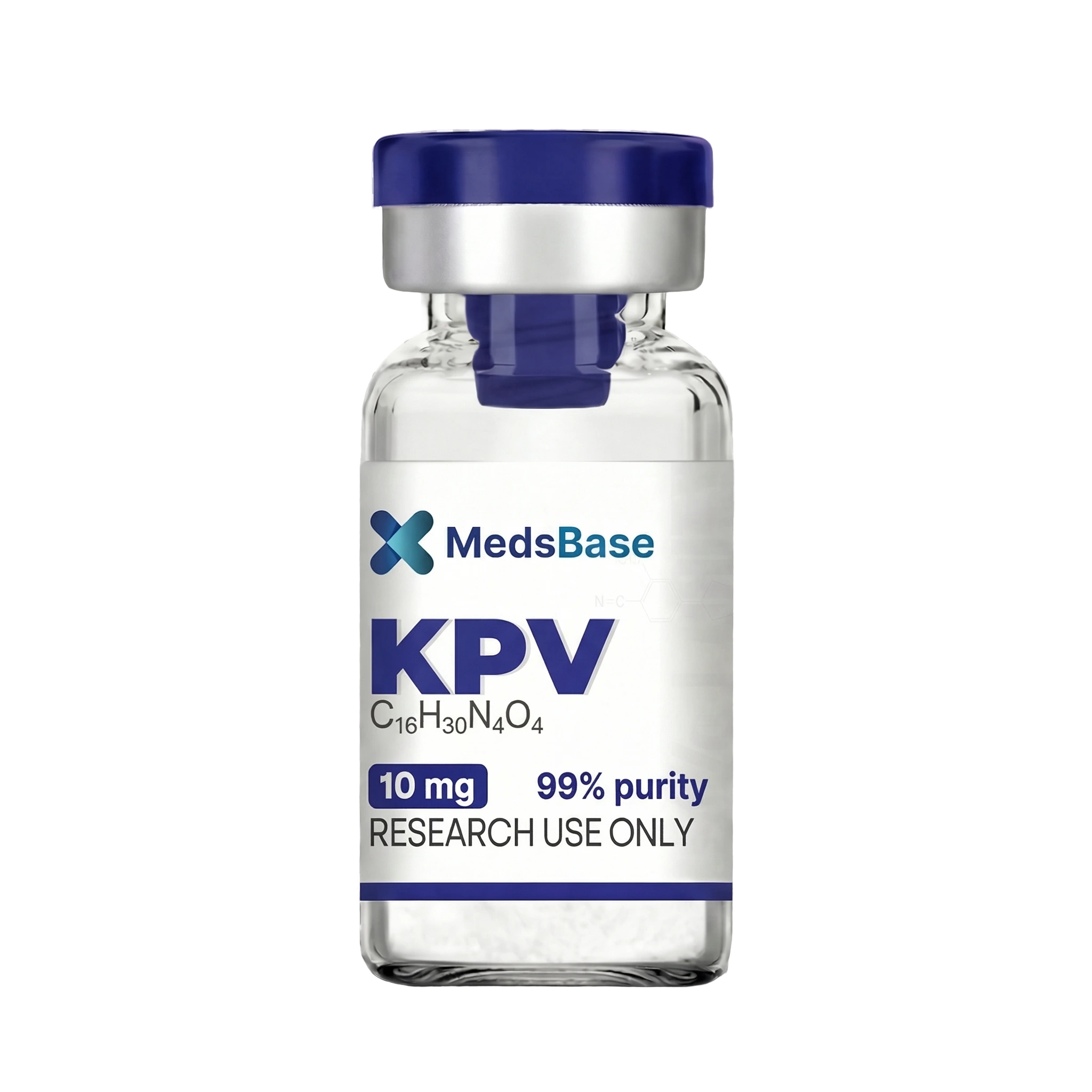
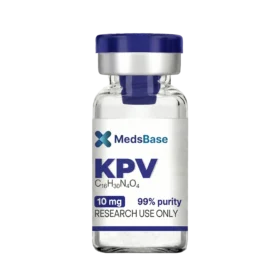
KPV (Lysine-Proline-Valine)
✅ Supports tissue repair
✅ Reduces oxidative stress
✅ Modulates immune response
✅ Promotes cellular resilience
✅ Enhances epithelial integrity
KPV contains synthetic peptide compound.
✓ Medically reviewed by Morgan Ellis — Pharmacy Researcher · 8 years experience · Last reviewed: May 2026
Quick Answer — What is KPV?
KPV is the Lys-Pro-Val tripeptide — the C-terminal anti-inflammatory fragment of alpha-melanocyte stimulating hormone (α-MSH). Unlike broader melanocortin analogs, KPV has no pigmentation activity; its signal is purely anti-inflammatory via NFkB inhibition and mast-cell stabilization. Studied for IBD, allergic inflammation, and skin-inflammation studies. Supplied in 5 mg and 10 mg lyophilized vials.
📦 Every order is covered by our Reshipment Assurance Policy — if your parcel does not arrive within 20 business days, we reship it.
| Specification | Detail |
|---|---|
| CAS Number | 67727-97-3 |
| Molecular Formula | C16H30N4O4 |
| Molecular Weight | 342.43 Da |
| Sequence | Lys-Pro-Val (α-MSH 11–13) |
| Form | Lyophilized powder (or as supplied) |
| Purity | ≥99% (HPLC verified, COA on request) |
| Storage | Lyophilized: 2–8 °C (refrigerator) for working stock; −20 °C for long-term storage of unopened vials. Reconstituted: 2–8 °C, use within ~30 days. Protect from light. Do not freeze–thaw the reconstituted solution. |
| Solubility | Bacteriostatic water (recommended) or sterile water for shorter use windows |
What Is KPV?
KPV is the three-letter one-letter-code shorthand for the Lys-Pro-Val tripeptide — the C-terminal three amino acids (positions 11–13) of alpha-melanocyte stimulating hormone (α-MSH). In the 1980s–1990s, multiple groups noticed that the full α-MSH molecule produced two functionally separable effects: the well-known N-terminal MC-receptor pigmentation/arousal activity, and a C-terminal anti-inflammatory activity. When the C-terminal KPV tripeptide was synthesised and tested in isolation, it reproduced the anti-inflammatory effects without the pigmentation side-effects. Molecular weight approximately 342.4 Da. KPV is one of the smallest peptides in the melanocortin family and one of the most-studied anti-inflammatory studies tripeptides. It is supplied as a high-purity lyophilized powder. For mechanism, IBD studies history, and stacking context, see our KPV guide.
Mechanism of Action — Three Anti-Inflammatory Pathways
KPV’s anti-inflammatory activity operates through at least three complementary pathways, all of which converge on reducing inflammatory signaling without affecting other melanocortin functions:
- NFkB inhibition — KPV blocks the translocation of NFkB into the nucleus, preventing transcription of pro-inflammatory cytokines including TNF-alpha, IL-6, IL-1β, and IL-8. NFkB is the master regulator of inflammatory gene expression, so blocking its activation produces a broad, upstream anti-inflammatory effect.
- Mast-cell stabilization — KPV reduces mast-cell degranulation and histamine release in study models. This is a distinct mechanism from NFkB inhibition and is particularly relevant to allergic-inflammation studies and topical skin-inflammation models.
- Peptide-vs-MSH separation — because KPV is only the C-terminal fragment, it does not activate MC1R (the pigmentation receptor) or MC4R (the arousal/feeding receptor). This mechanistically separates the anti-inflammatory activity from α-MSH’s other effects — distinct from broader MC analogs such as Melanotan II or PT-141.
The practical studies implication: KPV is a “clean” anti-inflammatory tool that produces the α-MSH anti-inflammatory signal without the tanning, arousal, or appetite-modulation effects that complicate interpretation of studies using full-length MC agonists.
Published Evidence
KPV is used in clinical contexts that investigate:
- IBD and colitis studies — inflammatory bowel disease rodent models; KPV is active via both SC and oral routes, making it unusually flexible for GI-inflammation studies (Brzoska et al., Endocr Rev 2008)
- Allergic inflammation — mast-cell stabilization and histamine-release studies in allergy and atopy models
- Skin inflammation — eczema, psoriasis, and contact-dermatitis study models; topical formulations appear in some protocols
- Wound healing — anti-inflammatory phase of wound-healing studies, often paired with BPC-157 for combined anti-inflammatory and growth-factor coverage
- Joint inflammation — arthritis and joint-inflammation rodent study models
- Stacking studies — commonly paired with BPC-157 in GI and connective-tissue studies where anti-inflammatory + tissue-repair coverage is needed
- Melanocortin comparative studies — side-by-side with Melanotan II and PT-141 to isolate the pure anti-inflammatory vs MC-receptor effects
For broader context on anti-inflammatory and healing peptides see the peptides catalog.
Available Strengths and Concentrations
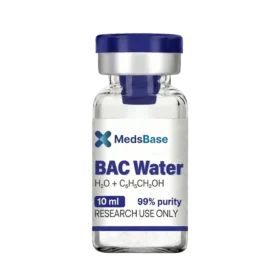
MedsBase stocks KPV in the following lyophilized vial sizes:
| Vial Strength | Typical Use Case | Pack Sizes |
|---|---|---|
| 5 mg | Short protocols, pilot dosing — supports ~10 administrations at 500 mcg | 10, 20, or 30 vials |
| 10 mg | Standard strength — supports ~20 administrations at 500 mcg | 10, 20, or 30 vials |
KPV protocols span a range depending on model system — 200–500 mcg SC daily for systemic anti-inflammatory studies, or topical/oral routes for GI and skin contexts. All strengths are supplied as lyophilized powder at 99%+ HPLC purity.
How It Compares — KPV vs Other Anti-Inflammatory / Melanocortin Peptides
KPV is one of the cleanest anti-inflammatory peptides in use because its activity is so narrow. Compared to related compounds:
| Criterion | KPV | BPC-157 | Melanotan II |
|---|---|---|---|
| Length | 3 amino acids | 15 amino acids | 7 amino acids (cyclic) |
| Primary activity | Anti-inflammatory only | Anti-inflammatory + tissue repair + GH receptor | Broad MC agonist (MC1-5) |
| MC-receptor activity | None (C-terminal only) | None | MC1, MC3, MC4, MC5 |
| Pigmentation effect | None | None | Strong (primary signal) |
| Study applications | IBD, allergy, skin inflammation | Tendon, gut, muscle recovery | Melanogenesis, photoprotection |
For GI-inflammation studies, KPV + BPC-157 is a particularly common combination because KPV provides upstream anti-inflammatory signaling while BPC-157 provides tissue-repair growth-factor activity. This is covered in our BPC-157 guide.
Storage and Reconstitution
Before reconstitution: store lyophilized vials refrigerated at 2–8 °C in original packaging, stable up to 36 months. Avoid freeze-thaw cycles on the powder. Reconstitution procedure: inject bacteriostatic water down the side wall of the peptide vial per the chart above. Swirl gently — do not shake — and allow 5–10 minutes for full dissolution. Solution should be clear and colourless. After reconstitution: store refrigerated at 2–8 °C and use within 30 days. Do not freeze reconstituted solution.
Frequently Asked Questions
What is KPV used for in studies?
KPV is used in studies investigating anti-inflammatory biology, inflammatory bowel disease (IBD) and colitis, allergic inflammation, skin inflammation (eczema/psoriasis models), wound-healing inflammation phase, joint inflammation, and comparative melanocortin pharmacology. It is not FDA-approved and is sold here strictly for clinical studies use only.
How is KPV different from Melanotan II or PT-141?
KPV is only the three-amino-acid C-terminal fragment of alpha-MSH, whereas Melanotan II and PT-141 are full-length or near-full cyclic MSH analogs. This means KPV has no melanocortin-receptor activity and therefore no pigmentation (MC1R), arousal (MC4R), or appetite (MC4R) effects — only anti-inflammatory activity via NFkB and mast-cell pathways.
What is the typical KPV dose?
Published preclinical protocols typically use 200–500 mcg SC daily for systemic anti-inflammatory studies. Some IBD and skin-inflammation uses oral or topical administration. A 10 mg vial reconstituted with 2.0 mL bacteriostatic water yields 5 mg/mL — 10 ticks on a U-100 SC syringe delivers 500 mcg.
Is KPV FDA approved?
No. KPV has not received FDA, EMA, or any regulatory approval. The full alpha-MSH peptide and KPV-related has informed melanocortin drug development broadly, but KPV itself remains. All KPV sold by peptide-studies suppliers is for clinical investigation only.
Can KPV be taken orally for IBD studies?
Yes. Unlike most peptides which are degraded by gastric enzymes, KPV retains some anti-inflammatory activity via the oral route in published IBD and colitis studies. This makes it unusually flexible for GI-inflammation studies where oral delivery targets the GI tract directly. Study protocols vary by model — SC remains the dominant systemic route.
How should KPV be stored?
Lyophilized vials: refrigerated at 2–8 °C in original packaging, stable up to 36 months. Reconstituted solution: refrigerated at 2–8 °C, use within 30 days. Do not freeze reconstituted solution.
How do I reconstitute KPV?
Follow the reconstitution chart above. Add bacteriostatic water down the side wall of the vial, swirl gently, and allow 5–10 minutes for full dissolution. Do not shake.
Can KPV and BPC-157 be stacked in studies?
Yes — this is one of the most common studies combinations for GI and connective-tissue inflammation. KPV provides upstream NFkB-pathway anti-inflammatory signaling; BPC-157 provides VEGF-pathway tissue-repair and growth-factor activity. The mechanisms are complementary rather than overlapping.
What strengths does MedsBase stock?
MedsBase carries KPV in 5 mg and 10 mg lyophilized vials. Each strength is available in 10-vial, 20-vial, or 30-vial pack sizes. All vials are supplied at 99%+ HPLC purity with a certificate of analysis on request.
Does KPV cause side reported effects?
Published preclinical studies has reported a notably clean safety profile. Because KPV has no melanocortin-receptor activity, the pigmentation, arousal, and blood-pressure effects sometimes seen with full MC agonists do not occur with KPV. No significant off-target signals have been identified at typical doses. Long-term human safety data are not available.
What is the half-life of KPV?
KPV (Lys-Pro-Val) is a tripeptide with a short plasma half-life consistent with small unmodified peptides — estimated at under 30 minutes. Its primary application is gastrointestinal, where local delivery studies show effects on gut epithelial cells and immune cell populations that persist beyond plasma detection, attributed to direct receptor interaction at the intestinal mucosa.
How does KPV reduce inflammation in study models?
KPV is the C-terminal tripeptide of α-MSH (alpha-melanocyte stimulating hormone) and retains much of the parent peptide’s anti-inflammatory activity via MC1R activation. In colitis and gut injury models, KPV reduces NF-κB signalling, decreases pro-inflammatory cytokine production (IL-1β, IL-6, TNF-α), and promotes intestinal epithelial barrier integrity. Its small size facilitates direct epithelial cell uptake independent of carrier proteins.
Can I order KPV for international shipping?
Yes. MedsBase ships KPV worldwide from our dedicated peptide shipping network. Peptide-only orders qualify for our standalone peptide shipping service. Orders ship in temperature-controlled packaging with full tracking.
Other Peptides for Recovery and Performance
- BPC-157 — Body Protection Compound — tendon, ligament, gut recovery
- TB-500 — Thymosin Beta-4 fragment — soft tissue and vascular recovery
- Ipamorelin — Selective ghrelin agonist — clean GH pulse without cortisol/prolactin
- CJC-1295 with DAC — GHRH analog with extended half-life
- GHK-Cu — Copper peptide — skin and connective tissue regeneration
Further Reading
📖 Learn the science behind this peptide
Read our complete evidence-based guide: KPV — the C-terminal alpha-MSH fragment for anti-inflammatory studies. Covers NFkB pharmacology, mast-cell stabilization, IBD studies history, oral and SC protocols, and stacking with BPC-157.
More options in Peptides
Ranked by recent MedsBase order volume — what other customers in this category are picking.
| Strength | 5 mg, 10 mg |
|---|---|
| Quantity | 10 Vials, 20 Vials, 30 Vials |
 KPV (Lysine-Proline-Valine)
Q & A
KPV (Lysine-Proline-Valine)
Related products
Reviews
There are no reviews yet