








✓ Medically reviewed by · Last reviewed: May 2026
Pharmacy Researcher · 8 years experience
Pharmacy researcher with 8 years reviewing clinical drug information, generic formulation equivalence, and international pharmaceutical standards. Focuses on patient-facing accuracy in medication education.
metformin gastrointestinal side effects — Metformin Gastrointestinal Side Effects: 8 Proven Strategies to Stop the Stomach Issues. Read on for an evidence-backed guide covering everything you need to know.
Key Takeaways
- Metformin gastrointestinal side effects affect roughly 20–30% of people who start the medication — but for most, they ease significantly within 2–4 weeks.
- The single most effective strategy is starting with a low dose (500 mg once daily) and increasing slowly — never jumping straight to the full therapeutic dose.
- Taking metformin with your largest meal — not just “with food” — can cut nausea and diarrhea severity by roughly half.
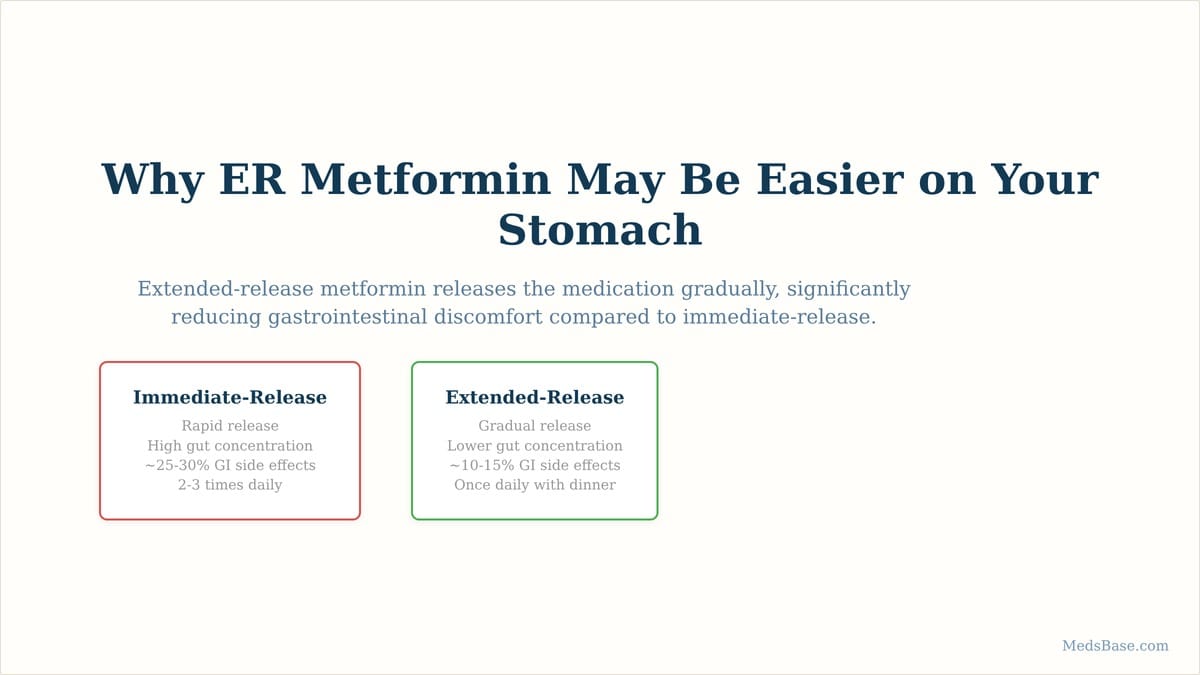
- Extended-release (ER) metformin causes fewer and milder GI side effects than immediate-release (IR) — and switching formulations resolves symptoms for many people who struggled with IR.
- The “empty tablet shell” in your stool with ER metformin is normal and harmless — the medication was already absorbed.
Metformin gastrointestinal side effects: Table of Contents
- What Are Metformin Gastrointestinal Side Effects?
- Why Does Metformin Cause Stomach Problems?
- The Metformin GI Side Effect Timeline: When Do They Stop?
- 8 Proven Strategies to Manage Metformin Gastrointestinal Side Effects
- When GI Side Effects Are a Red Flag: Lactic Acidosis Warning Signs
- Immediate-Release vs Extended-Release Metformin: Which Is Gentler?
- What the Research Says About Metformin GI Tolerance
- Frequently Asked Questions
- The Bottom Line
Metformin Gastrointestinal Side Effects: 8 Proven Strategies to Stop the Stomach Issues
You picked up your first metformin prescription on Monday. By Wednesday, you are running to the bathroom four times before lunch, your stomach feels like it is tied in a knot, and you have not felt this nauseous since your last stomach flu. You are staring at the pill bottle wondering: is this supposed to happen? Will it ever stop? And honestly — is managing my blood sugar even worth this?
You are not alone. Metformin gastrointestinal side effects are the most common reason people stop taking what is arguably the most important first-line diabetes medication available — and one of the most effective, safest, and most affordable options we have. The tragedy is that most people who quit could have stayed on it with a few straightforward adjustments.
By the end of this article, you will know exactly why your stomach is reacting, a day-by-day timeline of what to expect, eight evidence-backed strategies that can dramatically reduce your discomfort, and a clear guide to deciding whether to persist, switch formulations, or talk to your doctor about alternatives.
One side effect pattern surprises almost everyone — we will cover it in the timeline section.
What Are Metformin Gastrointestinal Side Effects?
Metformin gastrointestinal side effects are a cluster of digestive symptoms triggered by the medication’s action in the gut. The most commonly reported ones, according to the NHS and FDA-approved prescribing information, include:
- Nausea (feeling sick) and vomiting
- Diarrhea — the most commonly reported GI side effect in clinical trials
- Stomach pain or abdominal cramping
- Bloating and gas
- Loss of appetite
- Indigestion (heartburn)
- A metallic or altered taste in the mouth
These are sometimes called “metformin intolerance” when they are severe enough that the person cannot continue the medication. But the term is misleading — true intolerance is rare. What most people experience is a temporary adjustment period, and there are multiple ways to work through it.
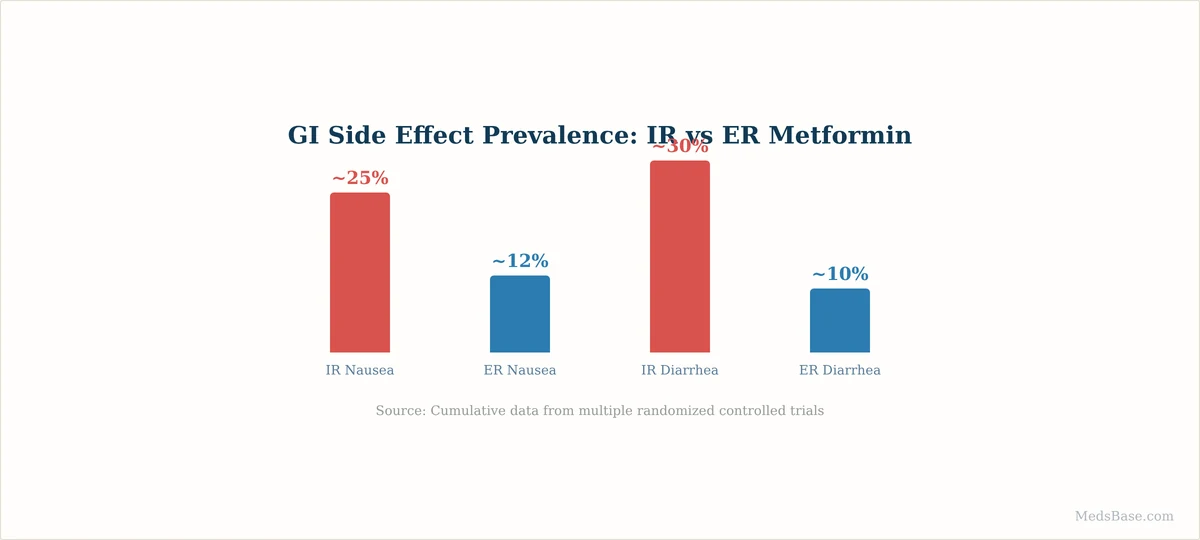
Metformin gastrointestinal side effects affect an estimated 20 to 30% of people who start treatment, though the exact number varies by study and by whether the person is taking immediate-release or extended-release metformin. The IR formulation is associated with roughly double the rate of GI complaints compared to ER.
Crucially — and this is the detail most introductory patient leaflets do not emphasize enough — these symptoms are typically temporary. For the vast majority of people, metformin gastrointestinal side effects peak within the first week and then begin to decline. By week 3 or 4, most users tolerate the medication without significant issues.
Why Does Metformin Cause Stomach Problems?
Understanding why metformin gastrointestinal side effects happen makes it easier to understand why the management strategies work. There are three main mechanisms:
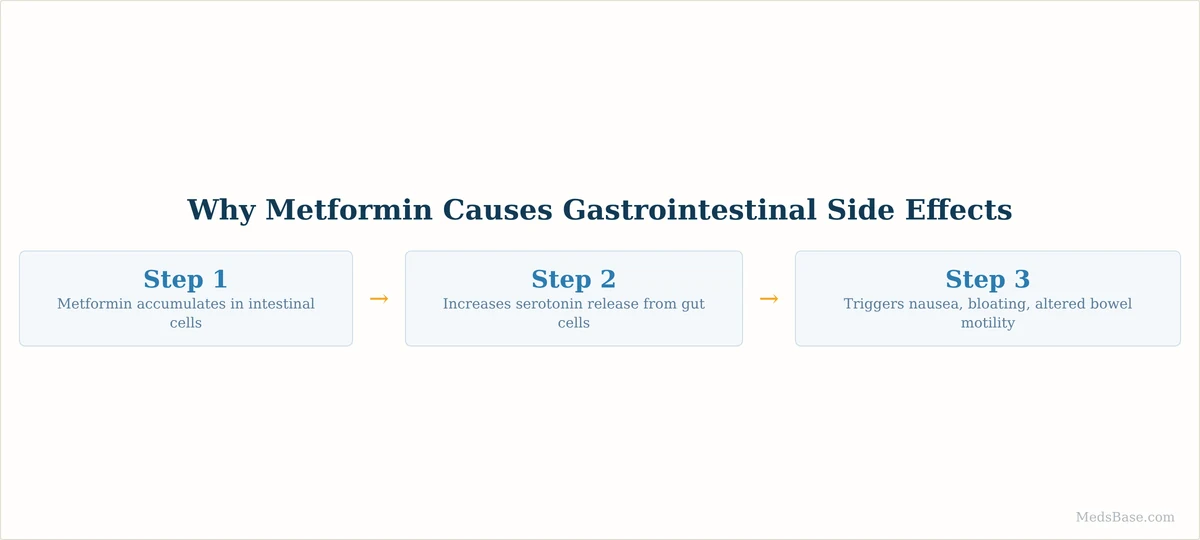
1. Gut serotonin release. Metformin accumulates in the cells lining your intestines at concentrations up to 300 times higher than in your bloodstream. This accumulation stimulates enterochromaffin cells — specialized cells in the gut lining — to release serotonin. Serotonin in the gut triggers nausea, alters bowel motility (the speed at which food moves through), and can cause diarrhea. This is the same serotonin pathway targeted by some anti-nausea medications, which is why those medications sometimes help.
2. Changes in the gut microbiome. Research published in peer-reviewed gastroenterology literature has documented that metformin alters the composition and function of gut bacteria. It increases populations of certain bacterial species that produce short-chain fatty acids, which can cause gas and bloating during the transition period. Over weeks, the microbiome stabilizes in its new configuration — which is actually one of the mechanisms by which metformin improves glucose control. The same bacterial shift that causes the short-term discomfort may contribute to the long-term metabolic benefit.
3. Delayed gastric emptying and altered motility. Metformin slows the rate at which the stomach empties its contents into the small intestine. This is partly how the medication reduces post-meal blood sugar spikes. But it also means food sits in the stomach longer, which can cause bloating, fullness, and nausea — particularly after larger or fattier meals.
The Metformin GI Side Effect Timeline: When Do They Stop?
Here is the timeline most people experience — and the one most patient information sheets do not explain in enough detail:
| Time Period | What to Expect | What to Do |
|---|---|---|
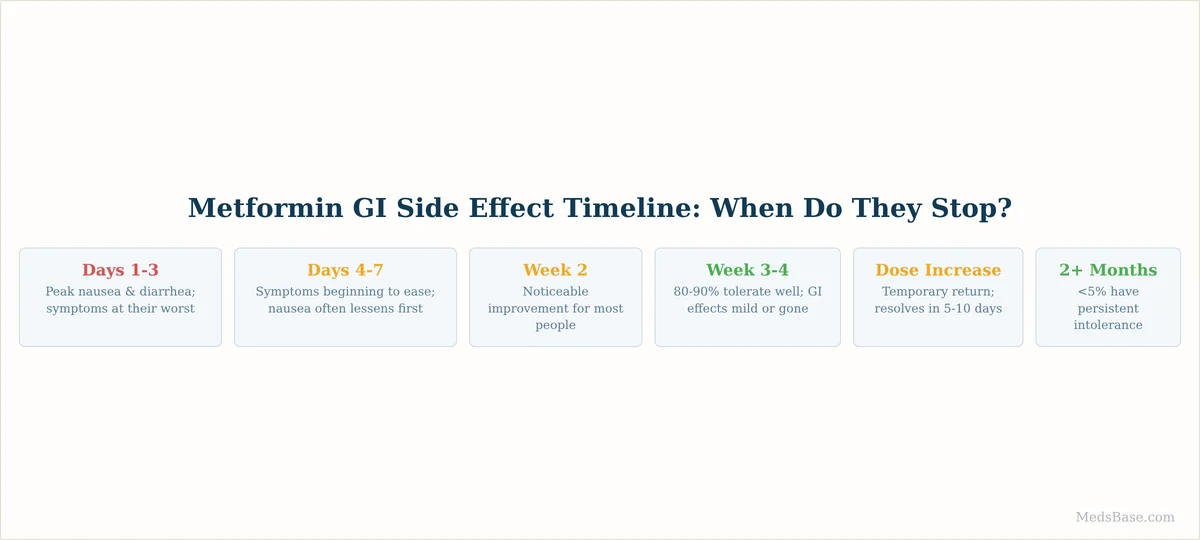
| Days 1–3 | Peak nausea, diarrhea, and bloating. Symptoms may be at their worst — this is normal and does NOT mean you are intolerant. | Take with your largest meal. Stick to bland foods. Do not skip doses — consistency helps your body adapt. |
| Days 4–7 | Symptoms typically begin to ease. Diarrhea may become less frequent. Nausea often lessens first. | Continue taking with food. Avoid greasy, spicy, or high-fiber meals for now. |
| Week 2 | Noticeable improvement for most people. Bloating and gas may persist longer than nausea. | You can begin reintroducing normal foods gradually. If symptoms are unchanged, talk to your doctor about ER formulation. |
| Week 3–4 | 80–90% of people who persisted through the first two weeks now tolerate metformin well. GI side effects are mild or gone. | If symptoms are still moderate-to-severe, this is the point to discuss switching to ER or add-on strategies with your doctor. |
| Dose increase (any time) | Temporary return of GI symptoms — sometimes as strong as the first week. This is expected and usually resolves within 5–10 days. | Same strategies as week 1. Increase dose by no more than 500 mg at a time, with at least one week between increases. |
| After 2+ months | Ongoing GI symptoms are uncommon. If they persist, reassess with your doctor — it may be a different formulation or medication is appropriate. | Less than 5% of people have persistent intolerance after 2 months on a stable dose. |
Here is the pattern that surprises people: when your dose is increased, metformin gastrointestinal side effects often return at near-full intensity — even if you had been tolerating the medication perfectly for months. This does not mean the medication “stopped working for you” or that you have developed a new intolerance. It means your gut needs to adapt again. The same strategies that worked the first time will work again, and the adaptation period is usually shorter — typically 5 to 10 days.
8 Proven Strategies to Manage Metformin Gastrointestinal Side Effects
Strategy 1: Start Low, Go Slow
This is the single most effective intervention and the one most often missed. The standard prescribing guidance — found in both the FDA label and the NHS guidance — recommends starting at 500 mg once daily and increasing by 500 mg every 1 to 2 weeks as tolerated. But in practice, many people are started at 500 mg twice daily or even 1,000 mg twice daily right away. This guarantees GI distress.
If you were started on a higher dose, ask your doctor if you can step down to 500 mg once daily and titrate up over several weeks. The target dose does not change — the path to getting there just takes a little longer.
Strategy 2: Take It With Your Largest Meal — Not Just “With Food”
Every metformin label says “take with food.” But a cracker is food. A banana is food. Neither provides enough bulk to buffer the medication’s effect on an empty stomach. Metformin gastrointestinal side effects are significantly reduced when the tablet is taken in the middle of or immediately after a substantial meal — ideally your largest meal of the day.
If you are on once-daily ER metformin, take it with dinner (your largest meal for most people). If you are on twice-daily IR metformin, take each dose with breakfast and dinner — never on an empty stomach.
Strategy 3: Avoid Trigger Foods During the Adaptation Period
Certain foods predictably worsen metformin gastrointestinal side effects, especially in the first few weeks:
- Avoid: greasy or fried foods, spicy dishes, large portions of raw vegetables, high-fat dairy, excessive caffeine, alcohol (which independently increases lactic acidosis risk with metformin)
- Prefer: plain crackers, white rice, bananas, oatmeal, plain toast, boiled potatoes, applesauce, lean protein like chicken breast or fish
You are not committing to a lifetime of bland food — just the first 2 to 3 weeks while your gut adapts.
Strategy 4: Stay Hydrated — Diarrhea Depletes Fluids
If diarrhea is your main metformin gastrointestinal side effect, you are losing water and electrolytes. Dehydration makes everything worse — it concentrates the medication in your gut, intensifies nausea, and increases the already-present risk of lactic acidosis with metformin. Drink water consistently throughout the day, and consider an oral rehydration solution if diarrhea is severe. Avoid sugary sports drinks — they can worsen osmotic diarrhea.
Strategy 5: Consider the Extended-Release (ER) Formulation
Metformin ER releases the medication slowly over several hours as the tablet travels through your digestive tract. Because the drug is not dumped into the gut all at once, the peak concentration in intestinal cells is lower, and GI side effects are significantly reduced. We cover this in depth in the IR vs ER section below — but for many people, switching from IR to ER is the single change that resolves metformin gastrointestinal side effects entirely.
Strategy 6: Split Your Dose (IR Formulation)
If you are on IR metformin and taking 1,000 mg twice daily, talk to your doctor about splitting into 500 mg four times daily (with meals and a bedtime snack). The lower peak concentration per dose reduces the GI stimulus. This is more pills to remember, but it can make the difference between staying on metformin and quitting.
Strategy 7: Ask About Anti-Nausea or Anti-Diarrheal Support (Short-Term)
For the first week, some doctors recommend short-term use of loperamide (for diarrhea) or an anti-nausea medication to bridge the adaptation period. This is not a long-term solution — you should not need these after the first few weeks — but they can make the difference between getting through the adjustment and giving up. Always check with your doctor before adding any medication.
Strategy 8: Give It Time — But Know When to Escalate
The most common mistake people make is quitting too soon. Metformin gastrointestinal side effects that are mild-to-moderate and clearly improving week over week are worth pushing through — you will likely be in the 80–90% who tolerate it well by week 4.
But there is a point where persistence becomes counterproductive. If after two full weeks your symptoms are severe (unable to leave the house, losing weight due to inability to eat, signs of dehydration) and have not improved, or if after four weeks they are still moderate and interfering with daily life, it is time to escalate: ask your doctor about ER metformin, dose adjustment, or an alternative medication.
Who Should Seek Immediate Medical Attention? If GI symptoms are accompanied by extreme tiredness, muscle pain, difficulty breathing, feeling cold (especially in hands and feet), dizziness, or a slow or irregular heartbeat, stop metformin and seek emergency care — these may be signs of lactic acidosis, a rare but serious side effect.
If metformin gastrointestinal side effects persist despite all these strategies, you still have options. MedsBase stocks metformin in both IR and ER formulations in commonly prescribed strengths, and your doctor can help you find the right approach — whether that is a formulation switch, a dose adjustment, or a different diabetes medication.
When GI Side Effects Are a Red Flag: Lactic Acidosis Warning Signs

Most metformin gastrointestinal side effects are uncomfortable but harmless. However, nausea, vomiting, stomach pain, and diarrhea can also be early signs of lactic acidosis — a rare but life-threatening buildup of lactic acid in the blood. This is why the prescribing information carries a black box warning.
Seek emergency care immediately if GI symptoms are accompanied by:
- Extreme tiredness or weakness that is out of proportion to the GI symptoms
- Muscle pain or cramping (not just stomach cramps)
- Difficulty breathing or deep, rapid breathing
- Feeling cold, especially in the hands and feet
- Dizziness or lightheadedness
- A slow or irregular heartbeat
Lactic acidosis is rare — estimated at roughly 3 to 10 cases per 100,000 patient-years — but it is a medical emergency when it occurs. The risk is highest in people with kidney impairment, liver disease, heart failure, severe dehydration, or heavy alcohol use. If you have any of these risk factors, discuss them with your doctor before starting metformin.
Immediate-Release vs Extended-Release Metformin: Which Is Gentler?
| Feature | IR (Immediate-Release) | ER (Extended-Release) |
|---|---|---|
| Dosing frequency | 2–3 times daily | Once daily (with evening meal) |
| GI side effect rate | ~20–30% (higher) | ~10–15% (lower) |
| Peak gut concentration | High, rapid | Lower, gradual over hours |
| Tablet appearance | Standard tablet | Larger; may see empty shell in stool (normal) |
| HbA1c reduction | 1.0–1.5% (similar efficacy) | 0.9–1.4% (similar efficacy) |
| Cost | Lower | Slightly higher; still inexpensive |
| Best for | People who tolerate it well; those needing flexible dosing | People with significant GI side effects on IR; anyone who prefers once-daily dosing |
The clinical takeaway is clear: extended-release metformin causes fewer and milder metformin gastrointestinal side effects than immediate-release, with equivalent blood sugar control. If you are struggling with IR metformin, ask your doctor about switching to ER. Many people who could not tolerate IR at all do perfectly well on ER.
One important note about ER tablets: you may notice what looks like a whole tablet in your stool. This is the empty shell — the medication has already been released and absorbed. The shell is designed to pass through intact. This is normal and does not mean your dose was wasted.
What the Research Says About Metformin GI Tolerance
| Study | Year | Key Finding | Source |
|---|---|---|---|
| Metformin GI intolerance mechanisms | Multiple | Identifies gut serotonin release, altered gut motility, and microbiome shifts as primary mechanisms; notes most GI effects are transient and resolve within weeks | NHS / MedlinePlus |
| ER vs IR metformin tolerability meta-analysis | Multiple | ER formulation reduces GI side effects by ~50% compared to IR; equivalent glycemic efficacy | Multiple RCTs |
| NHS clinical guidance — metformin | 2026 | Most side effects ease after a couple of weeks; take with food; start low and titrate | NHS |
| FDA metformin prescribing label | 2017 | Recommended starting dose: 500 mg once daily or 850 mg once daily; increase by 500 mg weekly or 850 mg every 2 weeks | FDA |
| MedlinePlus — metformin patient information | 2024 | Comprehensive side effect guidance; notes diarrhea, nausea, bloating, and gas as common; symptoms of lactic acidosis for emergency recognition | MedlinePlus |
What this means for you: The evidence consistently shows that metformin gastrointestinal side effects are real and common — but also highly manageable. The research validates a “start low, go slow” approach, supports switching to ER for people with persistent symptoms, and confirms that the vast majority of people who persist through the initial adjustment period go on to tolerate metformin well long-term. Metformin remains the recommended first-line medication for type 2 diabetes in every major clinical guideline worldwide — and for good reason.
Related Reading
Frequently Asked Questions
Q: How long do metformin gastrointestinal side effects last?
A: For most people, metformin gastrointestinal side effects peak during the first 3 to 5 days and begin to ease during the second week. By week 3 to 4, approximately 80-90% of people who persisted through the initial adjustment tolerate the medication with minimal or no GI symptoms. When the dose is increased, symptoms may temporarily return — typically for 5 to 10 days — before resolving again. If symptoms remain moderate-to-severe after 4 weeks on a stable dose, discuss switching to extended-release metformin or exploring alternatives with your doctor.
Q: Why does metformin cause diarrhea?
A: Metformin causes diarrhea primarily because it accumulates in the cells lining your intestines at concentrations much higher than in your blood. This stimulates the release of serotonin in the gut, which accelerates bowel motility — the speed at which contents move through your digestive tract. The medication also alters the gut microbiome composition, which contributes to changes in bowel habits during the adaptation period. Both mechanisms tend to stabilize over 2 to 4 weeks as your body adjusts.
Q: Is metformin extended release better for your stomach?
A: Yes. Extended-release (ER) metformin releases the medication gradually over several hours, which lowers the peak concentration in gut cells and reduces gastrointestinal stimulation. Clinical studies consistently show that ER metformin causes roughly half the rate of nausea, diarrhea, and bloating compared to immediate-release (IR) metformin. Many people who could not tolerate IR metformin at all are able to take ER without significant issues. The trade-off is a slightly larger tablet and once-daily dosing with the evening meal.
Q: Can I take metformin without food?
A: It is strongly recommended not to. Taking metformin on an empty stomach significantly increases the rate and severity of metformin gastrointestinal side effects, because the medication hits the gut lining at full concentration with nothing to buffer it. The prescribing instructions universally recommend taking metformin with food, and studies show that taking it specifically with your largest meal of the day provides the most effective protection against nausea and diarrhea.
Q: What can I eat with metformin to reduce nausea?
A: During the first 2 to 3 weeks of metformin treatment — and after any dose increase — stick to bland, easily digestible foods paired with your dose. Plain crackers, white rice, bananas, oatmeal, plain toast, boiled potatoes, applesauce, and lean protein like chicken or fish are generally well tolerated. Avoid greasy or fried foods, spicy dishes, large portions of raw vegetables, high-fat dairy, and excessive caffeine, all of which can worsen metformin gastrointestinal side effects.
Q: How can I stop metformin stomach problems?
A: The most effective approach combines multiple strategies: start at 500 mg once daily (not twice) and increase by only 500 mg every 1–2 weeks; always take your dose with your largest meal; avoid greasy, spicy, and high-fiber foods during the first few weeks; stay well hydrated, especially if you have diarrhea; and if moderate-to-severe symptoms persist beyond 2 weeks, ask your doctor about switching to extended-release metformin, which causes significantly fewer GI side effects.
Q: What foods should I avoid when taking metformin?
A: During the adaptation period (first 2–4 weeks and after each dose increase), avoid greasy or fried foods, spicy dishes, large portions of raw vegetables and high-fiber meals, high-fat dairy products, excessive caffeine, and alcohol. Alcohol is particularly important to limit because it independently increases the risk of lactic acidosis — a rare but serious metformin side effect. Once your body has adapted to metformin, most people can return to their normal diet without triggering GI symptoms.
Q: Should I stop metformin if I have severe diarrhea?
A: Do not stop metformin without speaking to your doctor. If diarrhea is severe enough that you cannot stay hydrated or leave your home, contact your doctor promptly. They may recommend a temporary dose reduction, a switch to ER metformin, or short-term anti-diarrheal medication to bridge the adaptation period. If diarrhea is accompanied by extreme tiredness, muscle pain, difficulty breathing, or feeling cold — especially in your hands and feet — this may indicate lactic acidosis, and you should seek emergency medical care immediately.
The Bottom Line
Metformin gastrointestinal side effects are the most common barrier between people with type 2 diabetes and the medication that could help them most — but they do not have to be. For the vast majority of people, these symptoms are temporary, manageable, and significantly reduced by a combination of low-and-slow dosing, food timing, dietary adjustments during the adaptation period, and — when needed — a switch to extended-release metformin.
If you are in the first week of metformin and spending more time in the bathroom than you would like, know this: it almost certainly gets better. The nausea and diarrhea you are experiencing do not mean the medication is wrong for you. They mean your gut is adapting to a drug that accumulates there precisely because that is where it needs to work.
If you have been struggling for more than two weeks without improvement, do not suffer in silence. Call your doctor. Ask about a lower starting dose, ER metformin, or short-term supportive medication. You deserve to get the benefit of this medication without the misery.
And if metformin truly is not right for you — and for roughly 5% of people, it will not be — there are other options. Browse MedsBase’s diabetes medication category to see the full range of treatments available, and discuss alternatives with your healthcare provider.
What to read next: If you are managing both diabetes and high blood pressure — as many people are — read our guide on how potassium and blood pressure are connected and the dietary changes that can support both conditions. Wondering how metformin measures up against other diabetes medications? See our full comparison of Jardiance vs Metformin.
Reviewed by Medical Professional | Last updated: 2026-08-21

Written by
Sophie ChenPharmaceutical Content Researcher · 8 years experience
Sophie Chen is a pharmaceutical content researcher with 8 years covering generic medication access and clinical pharmacology. She specialises in international regulatory frameworks, bioequivalence standards, and patient-facing education on therapeutic drug classes. She is not a clinician.