








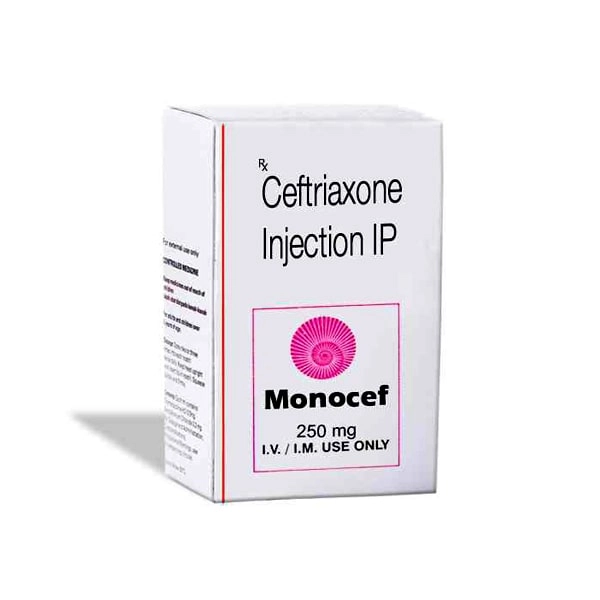
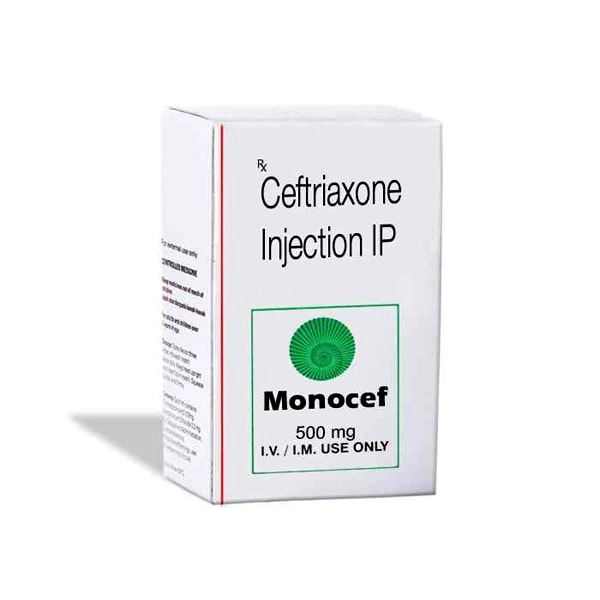
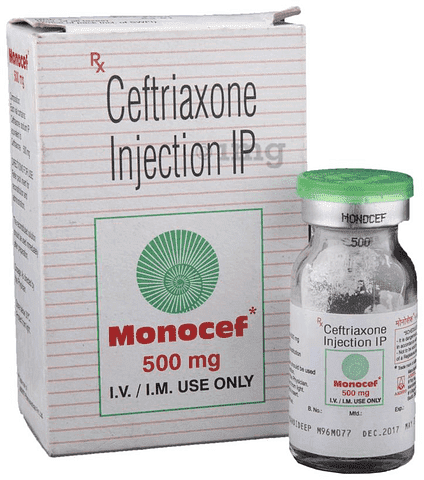
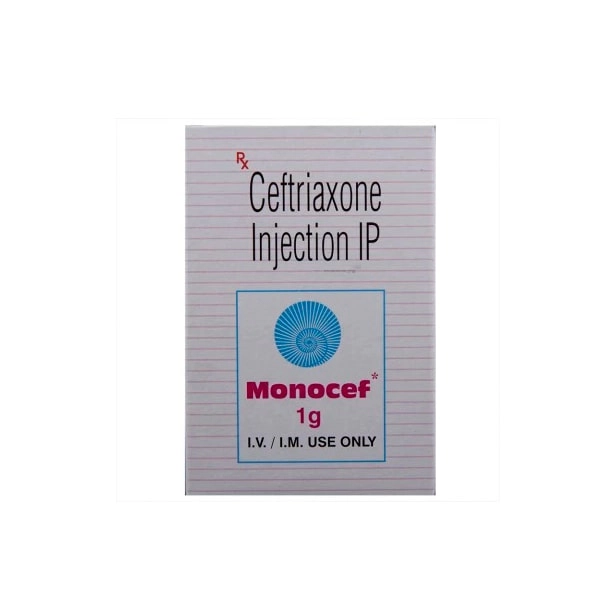
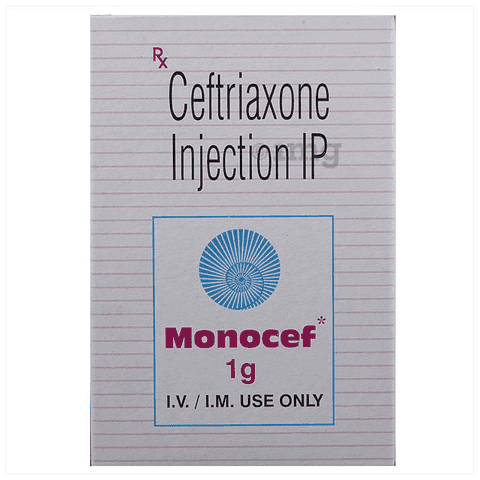
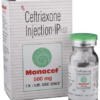
Monocef Injection
✅ Potent antibacterial treatment
✅ Effective against various infections
✅ Rapid symptom relief
✅ Trusted by healthcare professionals
✅ Convenient intravenous administration
Monocef contains Ceftriaxone
✓ Medically reviewed by Morgan Ellis — Pharmacy Researcher · 8 years experience · Last reviewed: May 2026
⚡ Quick Answer — What is Monocef Injection?
Monocef Injection is a ceftriaxone IV / IM injection (Aristo) — a third-generation cephalosporin used in hospitals for community-acquired pneumonia, pyelonephritis, bacterial meningitis, gonorrhoea, and surgical prophylaxis. Standard adult dose 1–2 g once daily IV/IM. Never co-administer with calcium-containing IV fluids in neonates.
📦 Every order is covered by our Reshipment Assurance Policy — if your parcel does not arrive within 20 business days, we reship it.
Why order from MedsBase
Our generic medications are sourced from WHO-GMP certified manufacturers and shipped worldwide in discreet, plain packaging — no medication name on the parcel exterior. Card payments are routed through a regulated processor (statement descriptors include a regulated card-payment processor — never “MedsBase” or any medication name). Crypto and SEPA bank transfer are also accepted. Every order is backed by our Reshipment Assurance Policy.
How Monocef Injection works
Monocef Injection contains Ceftriaxone, a third-generation cephalosporin with strong Gram-negative activity (including many Enterobacteriaceae, Neisseria spp., and Haemophilus influenzae) and good CNS penetration. Streptococcal activity is preserved; staphylococcal activity is weaker than first-generation agents. It is bactericidal via cell-wall inhibition. Resistance arises through extended-spectrum beta-lactamases (ESBLs), AmpC, and reduced porin permeability — none of these cephalosporins should be used empirically when ESBL/AmpC organisms are likely.
Indications & dosing
| Indication | Standard dose | Duration |
|---|---|---|
| Community-acquired pneumonia (CAP, hospitalised) | 1–2 g IV/IM once daily | 5–7 days |
| Pyelonephritis / complicated UTI | 1–2 g IV once daily | 7–14 days |
| Bacterial meningitis (after LP) | 2 g IV every 12 hours (maximum CNS dosing) | 10–14 days |
| Empirical sepsis pre-microbiology | 2 g IV once daily (combine if severe) | Per culture |
| Disseminated gonococcal infection | 1 g IV/IM once daily | 7 days |
| Surgical prophylaxis | 1 g IV at induction | Single dose |
Calcium incompatibility (ceftriaxone): never co-administer with calcium-containing IV solutions in neonates ≤ 28 days — fatal precipitation in lung/kidney has been reported. In older patients, separate by at least 48 hours when both are required.
Renal dose adjustment: all oral cephalosporins require dose extension below CrCl 30 — confirm with a clinical pharmacist for severe renal impairment. Ceftriaxone (which is biliary-excreted) does NOT need renal adjustment.
Side effects
- GI: nausea, diarrhoea (5–10%); higher with cefixime and cefpodoxime than with cephalexin.
- Hypersensitivity: 5–10% cross-reactivity with penicillin allergies (lower than once thought; ~0–2% with non-anaphylactic penicillin reactions).
- Clostridioides difficile colitis: elevated risk versus narrow-spectrum agents — broad cephalosporins are the second-most C. difficile-driving class after fluoroquinolones.
- Haematological: rarely eosinophilia, thrombocytosis, neutropenia.
- Renal: rare interstitial nephritis; dose-dependent rises in serum creatinine reported with high-dose IV cephalosporins.
- Ceftriaxone-specific: biliary pseudolithiasis (gallbladder sludge) — usually asymptomatic, reverses on stopping.
Contraindications
- Previous IgE-mediated cephalosporin allergy.
- Anaphylactic-class penicillin allergy without skin-test clearance.
- Severe renal impairment without dose adjustment (oral cephalosporins).
- Neonates with hyperbilirubinaemia — ceftriaxone displaces bilirubin from albumin (kernicterus risk).
Drug interactions
| Drug | Effect | Action |
|---|---|---|
| Warfarin | Slight INR rise (especially with N-methylthiotetrazole-side-chain cephalosporins) | Check INR mid-course |
| Calcium IV (neonates) | Lethal precipitation with ceftriaxone | Absolute contraindication ≤ 28 days |
| Probenecid | Raises serum levels (oral cephalosporins) | No routine adjustment |
| Antacids / H2 blockers | Reduces absorption of cefpodoxime | Separate by 2 hours |
| Aminoglycosides | Possible additive nephrotoxicity (high-dose IV) | Monitor renal function |
Pregnancy & Breastfeeding
Cephalosporins are FDA category B — extensively used in pregnancy without evidence of fetal harm. They are first-line alternatives in penicillin-allergic patients without an anaphylactic history.
Storage
Store below 25 °C, away from direct sunlight and moisture. Keep in original packaging. Keep out of reach of children. Discard any unused tablets after the printed expiry date — degraded antibiotics can lose potency or release breakdown products.
This medicine is only effective against bacterial infections. Do not use it for viral illnesses (common cold, most sore throats, flu, COVID-19), do not stop early when you feel better, and do not save leftovers for future infections. Misuse drives drug-resistant bacteria like MRSA, ESBL, and CRE — the WHO ranks antimicrobial resistance among the top 10 global public-health threats.
Frequently Asked Questions
Can I take Monocef Injection if I am allergic to penicillin?
It depends on the type of penicillin reaction. If you had anaphylaxis, severe urticaria, angioedema, or Stevens–Johnson syndrome — avoid all beta-lactams without specialist clearance. If your reaction was a mild delayed rash, modern allergy guidance considers cephalosporin use generally safe — discuss with your prescriber.
Why do cephalosporins cause more diarrhoea than penicillins?
Cephalosporins disturb anaerobic gut flora more aggressively, particularly when poorly absorbed (cefixime is ~50% absorbed; cefpodoxime ~40%). This raises C. difficile colonisation pressure. Stop and seek review for new watery diarrhoea, especially with fever or abdominal pain.
How quickly should I feel better?
Most uncomplicated infections improve within 48–72 hours. If you are no better by day 3 — or worse — seek review. The pathogen may be resistant or the diagnosis incorrect.
Can I drink alcohol?
Most cephalosporins do not produce a disulfiram-like reaction. (Older agents like cefamandole and cefoperazone did — these are not used here.) Moderate alcohol is fine; binge drinking weakens immune response.
Should I take it with food?
Cephalexin and cefadroxil are absorbed equally with or without food. Cefpodoxime absorption is increased ~50% by food and decreased by acid suppressants — take it WITH a meal and separate from antacids by 2 hours.
What if I miss a dose?
Take it as soon as you remember. If close to the next scheduled dose, skip the missed one and resume. Never double up.
Can I use Monocef Injection for a viral cold?
No — cephalosporins are bactericidal and have no activity against viruses. Inappropriate use accelerates resistance and disturbs your gut and respiratory flora. Use only for confirmed bacterial infections.
Will Monocef Injection cover Pseudomonas?
No — only ceftazidime and cefepime among cephalosporins have reliable Pseudomonas activity, and neither is used here. Ceftriaxone should not be used empirically when Pseudomonas is suspected.
Will it interact with my warfarin?
Yes — INR may rise. Check INR 3–5 days into therapy and counsel on bleeding signs. Adjust warfarin dose only on physician advice.
Are cephalosporins safe in breastfeeding?
Yes — milk transfer is minimal. WHO and AAP rate cephalosporins as compatible with breastfeeding. Watch the infant for thrush or diarrhoea, but no maternal dose change is needed.
Clinicians treating hospital-acquired pneumonia or complicated UTI sometimes pair the cephalosporin Monocef Injection (ceftriaxone) with an anti-pseudomonal fluoroquinolone, and Lynx Injection (levofloxacin 2 ml IV) is the standard parenteral levofloxacin used for that combination in WHO-GMP-supplied regimens.
Other Antibiotics & Anti-Infective Medications
- Augmentin (Amoxicillin + Clavulanic acid) — beta-lactam alternative
- Azee (Azithromycin) — atypical-pathogen cover
- Levomac (Levofloxacin) — respiratory fluoroquinolone
- Doxt (Doxycycline) — atypical pneumonia / STIs
- Mox (Amoxicillin) — first-line for many community infections
More options in Antibiotics
Ranked by recent MedsBase order volume — what other customers in this category are picking.

| Strength | 250 mg, 500 mg, 1000 mg |
|---|---|
| Quantity | 1 Injection/s, 3 Injection/s, 6 Injection/s |
| Pharma Form | Injection/s |
| Manufacturer | Aristo Pharma |
| Treatment | Bacterial infections |
| Generic Brand | Ceftriaxone |
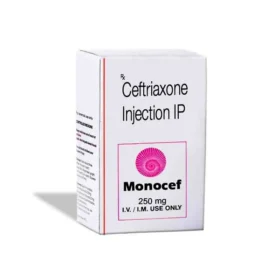 Monocef Injection
Q & A
Monocef Injection
Related products











Reviews
There are no reviews yet