







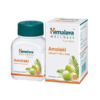
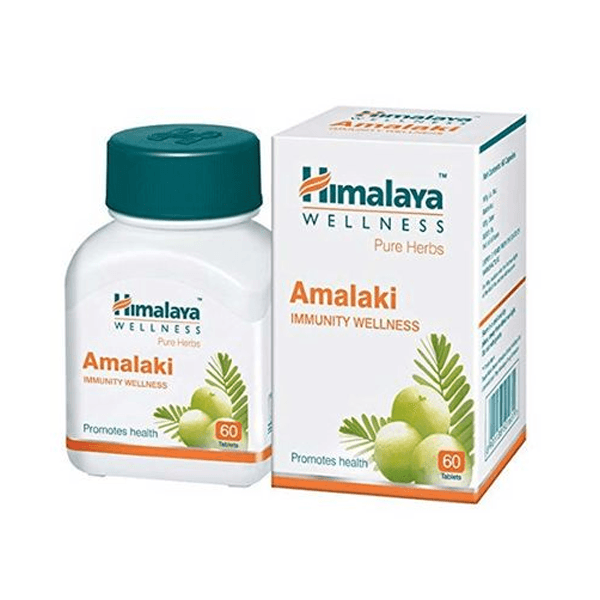
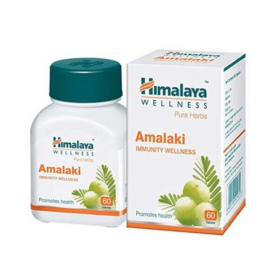
Amalaki
✅ Boosts immunity
✅ Rich in antioxidants
✅ Supports digestion
✅ Enhances skin health
✅ Promotes hair growth
Amalaki contains Ayurvedic composition.
✓ Medically reviewed by Morgan Ellis — Pharmacy Researcher · 8 years experience · Last reviewed: May 2026
⚡ Quick Answer — What is Amalaki?
Amalaki contains Emblica officinalis (amla) standardised fruit extract — a standardised fruit-extract supplement made by Himalaya Wellness. Amalaki (Emblica officinalis, Indian gooseberry) is one of the most-used plants in Ayurvedic medicine, classified traditionally as a Rasayana (rejuvenative) and used for digestive, metabolic, cardiovascular and skin-related concerns. Modern analyses show amla fruit is a dense source of vitamin C, hydrolysable tannins (emblicanin A, emblicanin B, punigluconin), flavonoids, phenolic acids and mineral micronutrients. Typical dose: 1-2 tablets twice daily, with food. Generally well-tolerated — occasional mild gastrointestinal upset, heartburn in high doses, mild laxative effect. This is an over-the-counter herbal supplement, not a prescription medicine; evidence from controlled clinical trials is limited and traditional-use claims should not be mistaken for modern pharmacological indications.
📦 Every order is covered by our Reshipment Assurance Policy — if your parcel does not arrive within 20 business days, we reship it.
Why order from MedsBase
Our generic medications are sourced from WHO-GMP certified manufacturers and shipped worldwide in discreet, plain packaging — no medication name on the parcel exterior. Card payments are routed through a regulated processor (statement descriptors include a regulated card-payment processor — never “MedsBase” or any medication name). Crypto and SEPA bank transfer are also accepted. Every order is backed by our Reshipment Assurance Policy.
What Is Amalaki?
Amalaki is a standardised Emblica officinalis (amla) standardised fruit extract oral supplement from Himalaya Wellness, supplied in packs of 60 tablets. The active ingredient is fruit extract of Emblica officinalis (syn. Phyllanthus emblica) — the Indian gooseberry or “amla” — one of the most heavily-used medicinal plants in the Ayurvedic, Unani and Siddha systems of traditional medicine in South Asia. Amla has a history of documented use in Charaka Samhita and Sushruta Samhita (Ayurvedic texts dating from approximately 700 BCE-400 CE) and has been continuously used in clinical Ayurvedic practice since then.
Modern phytochemical analysis of amla fruit shows a distinctive profile of hydrolysable tannins (emblicanin A, emblicanin B, punigluconin, pedunculagin), vitamin C (notably in a heat-stable form stabilised by the same tannins), flavonoids (quercetin, kaempferol), gallic and ellagic acids, and mineral micronutrients (chromium, copper, zinc). The combination gives a consistent in-vitro antioxidant and anti-inflammatory profile. Modern clinical trial evidence for specific health outcomes is more limited — most evidence comes from small open-label studies, short-duration RCTs, and mechanistic work in animal and cell models rather than large long-term human trials.
How Does Amalaki Work?
The proposed mechanisms of amla in modern pharmacological framing:
- Direct antioxidant activity — emblicanin A/B and other hydrolysable tannins donate hydrogen atoms to reactive oxygen species. In vitro and ex vivo tests show reduced lipid peroxidation and DNA oxidation.
- Vitamin C (ascorbic acid) content — amla is among the most vitamin-C-dense foods known. The tannins in the fruit matrix stabilise vitamin C against heat degradation, so supplementation delivers a bioavailable pool of vitamin C alongside the polyphenolic actives.
- Modulation of lipid metabolism — small human trials suggest modest improvements in total and LDL cholesterol and triglycerides, though effect sizes are smaller than statins and the trial quality is mixed.
- Glycaemic and insulin-sensitivity effects — some evidence of modest lowering of fasting glucose and improvement in insulin sensitivity in pre-diabetic subjects; may potentiate antidiabetic medication (caution if on insulin or oral hypoglycaemics).
- Gastric mucosal protective effects — traditional use in acid-related disorders; some animal data support a gastric-protective effect via tannin-mediated mucosal binding.
- Skin and connective-tissue support — via vitamin C (co-factor for prolyl and lysyl hydroxylases needed for collagen synthesis) and polyphenolic antioxidants.
In Ayurvedic terms, amla is classified as tridoshic (balancing all three doshas), especially effective on pitta. It is a foundational ingredient of Chyavanaprash (the most famous Rasayana formulation) and Triphala (the 3-fruit formulation alongside Terminalia bellirica and Terminalia chebula).
When Amalaki Is Used
Amalaki is used as an over-the-counter supplement for:
- General wellness and antioxidant support — most common reason for taking amla in non-Ayurvedic markets
- Digestive complaints — traditional use in hyperacidity, indigestion, mild constipation (amla has a mild laxative effect due to its tannin and fibre content)
- Skin and hair health — claimed support via vitamin C and polyphenol content; also topically in oils for hair conditioning (not this oral product)
- Cardiometabolic support — modest evidence for small improvements in cholesterol, triglycerides and fasting glucose in pre-diabetic and dyslipidaemic subjects
- Seasonal immune support — traditional use; partly attributable to the high vitamin C content
- As a component of combination Ayurvedic formulations — Chyavanaprash, Triphala, various polyherbals
Amalaki is NOT a replacement for:
- Prescription medication for diabetes, hyperlipidaemia, hypertension or cardiovascular disease
- Proton-pump inhibitors or H2 blockers for confirmed peptic ulcer disease or GORD
- Medical investigation of undiagnosed symptoms — “take amla and see what happens” is not an appropriate response to significant new symptoms
Amalaki Dosage and How to Take
- Adults: 1-2 tablets twice daily, with meals or after food, with water.
- Start at the lower dose (1 tablet twice daily) and increase if needed after 2 weeks. Higher doses increase the risk of GI side-effects (heartburn, loose stool).
- Take with food to reduce gastric irritation — the tannins can cause mild stomach upset on an empty stomach in sensitive individuals.
- Consistency matters more than timing. Benefits (if any) of herbal supplements typically emerge gradually over 4-8 weeks of consistent daily use.
- Stop and reassess at 8-12 weeks if taking for a specific concern — if you have seen no meaningful change in that window, the supplement is unlikely to deliver the hoped-for benefit.
Children: amla is widely used in paediatric Ayurvedic practice in India but standardised-tablet dosing in children should be guided by a qualified practitioner — do not self-dose children. Pregnancy and breastfeeding: amla is widely consumed as food in South Asian pregnancy diets; concentrated pharmacological doses in supplement form during pregnancy have limited controlled-trial data — generally avoid supplement-dose use without specialist advice.
Side Effects
- Common (mild): heartburn, acid reflux, mild stomach upset (especially on empty stomach or at higher doses)
- Uncommon: loose stool (mild laxative effect from the tannin and fibre content), nausea
- Rare: hypersensitivity reactions (skin rash, itching)
- Theoretical: hypoglycaemia in patients on insulin or oral antidiabetics (amla modestly improves glycaemic control — additive with medication)
- Theoretical: additive antiplatelet effect with vitamin C / polyphenol supplementation at very high doses (rarely clinically significant at standard doses)
Contraindications & Precautions
- Known allergy to amla or other members of the Phyllanthaceae family
- Severe active peptic ulcer disease or GORD — the tannin content can aggravate gastric irritation in acute disease
- Perioperative window — the theoretical antiplatelet effect of high-dose polyphenols means many surgeons ask patients to stop herbal supplements 1-2 weeks before elective surgery
- Children — under qualified practitioner supervision only
- Pregnancy and breastfeeding — supplement-dose use not recommended without specialist advice (culinary use is fine)
Drug Interactions
- Insulin and oral antidiabetics (metformin, sulfonylureas, DPP-4 inhibitors, SGLT2 inhibitors) — additive glucose-lowering effect; monitor blood glucose more closely and report persistent hypoglycaemia
- Anticoagulants (warfarin, rivaroxaban, apixaban, dabigatran) and antiplatelets (aspirin, clopidogrel) — theoretical additive effect at high doses; clinically significant interaction is rare at standard doses but worth flagging to the prescriber
- Statins and lipid-lowering agents — may have additive lipid-lowering effect (generally beneficial, not a problem)
- Iron supplements — vitamin C in amla enhances non-haem iron absorption (clinically useful)
- Levothyroxine — separate administration by at least 4 hours (tannins can reduce absorption of thyroid hormone)
Storage and Shelf Life
Store Amalaki below 25°C in a cool dry place, away from direct sunlight and humidity. Keep in the original container. Keep out of reach of children. Use before the printed expiry date.
Frequently Asked Questions
How long before I see any benefit from Amalaki?
Amla is a slow-acting supplement. Subjective effects on digestion or energy may emerge over 2-4 weeks of consistent use. Measurable cardiometabolic effects (cholesterol, glucose) typically take 8-12 weeks in clinical trials. If you have seen no change by 12 weeks of consistent use, the supplement is unlikely to deliver the benefit you are hoping for.
Can I take Amalaki with my diabetes medication?
Amla has a modest glucose-lowering effect that is additive with insulin, metformin and other oral antidiabetics. Most patients will tolerate this without issue, but you should tell your prescriber before starting and monitor blood glucose more frequently in the first 2-4 weeks. Report persistent hypoglycaemia. Dose adjustment of your diabetes medication is occasionally needed.
Is Amalaki the same as Chyavanaprash or Triphala?
No. Chyavanaprash and Triphala are classical polyherbal Ayurvedic formulations that contain amla as one of many ingredients. Amalaki is a single-herb standardised extract — only amla. The single-herb form is easier to evaluate in modern pharmacological terms; polyherbal formulations are traditional and are chosen for multi-target effects that are harder to study individually.
Can I take Amalaki if I have a peptic ulcer?
Avoid during acute peptic ulcer or active GORD. The tannin content can aggravate gastric irritation in acute disease. Once acute disease is resolved, moderate use with food is generally tolerated, but discuss with your gastroenterologist first.
Can pregnant or breastfeeding women take Amalaki?
Amla is widely consumed as food during pregnancy in South Asian diets without any known harm. The concentrated pharmacological dose in a supplement tablet is a different proposition — controlled-trial safety data in pregnancy are limited. Generally avoid supplement-dose use in pregnancy and breastfeeding without specific specialist advice; culinary amla (pickles, candy, juice in moderate amounts) is different and not of concern.
Is Amalaki a vitamin C supplement?
Partly. Amla is one of the most vitamin-C-dense foods known and its tannins stabilise vitamin C against heat degradation, so it delivers a bioavailable pool of C alongside its other actives. If pure vitamin C supplementation is your goal, a cheap plain vitamin C tablet delivers more vitamin C per pound. If you want the broader polyphenolic / tannin / traditional-Ayurvedic profile as well, amla delivers that — but then you are paying for the whole package, not just vitamin C.
Does Amalaki help with hair growth or hair greying?
Amla is traditionally claimed to support hair health and pigmentation. Modern evidence is limited — small studies of amla oil (applied topically) and amla as part of combination formulations have shown some benefit on hair quality parameters, but robust evidence for oral amla on hair growth or greying is sparse. A vitamin C deficiency can cause hair problems, and correcting it helps; treating non-deficient hair loss with amla has modest expected effect.
Where can I order Amalaki online?
You can order Amalaki from MedsBase in standard pack sizes (60 tablets). Orders ship worldwide with discreet packaging. Amla supplements are over-the-counter in most jurisdictions.
Related Wellness and Skin Products on MedsBase
- Hyaluronic Acid — joint and skin hydration supplement
- Retino-A Cream (tretinoin) — prescription topical retinoid for skin texture and anti-ageing
- A-Ret Gel (tretinoin) — tretinoin gel
Helpful reading: MedsBase customer reviews.
Related Alternatives
Other products in General Health that customers also view:
More options in Beauty & Skin Care
Ranked by recent MedsBase order volume — what other customers in this category are picking.



| Quantity | 1 Bottle/s, 2 Bottle/s, 3 Bottle/s, 6 Bottle/s |
|---|
 Amalaki
Q & A
Amalaki
Related products






Reviews
There are no reviews yet